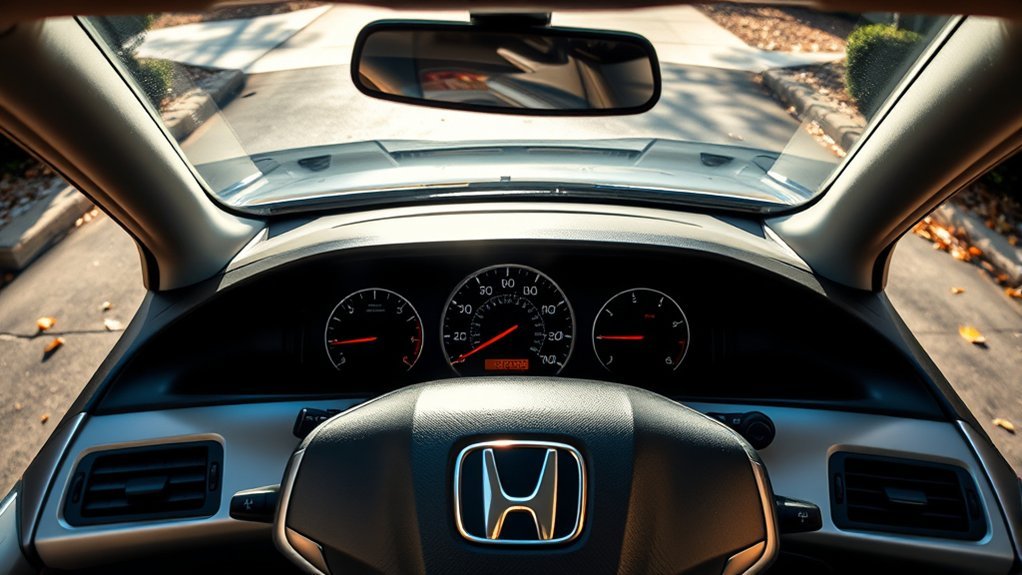
Your Honda Accord’s tire pressure light usually comes on because one or more tires are below the recommended cold PSI, the TPMS needs calibration after tire service, or the system has detected a fault. Start with a tire pressure gauge before you reset anything. A reset should only come after you confirm every tire is properly inflated and safe to drive.
Last updated: July 7, 2026
Quick Answer
A Honda Accord tire pressure light means you should check all tires with a gauge, inflate them to the cold PSI on the driver-side door label, then run TPMS calibration if your model requires it. If the light flashes for about a minute and then stays on, treat it as a TPMS malfunction and schedule service.
Key Takeaways
- Check tire pressure when the tires are cold, ideally before driving or at least three hours after driving.
- Use the PSI on the Accord’s Tire and Loading Information Label, not the maximum PSI printed on the tire sidewall.
- Calibrate TPMS only after all tires are set correctly and you have inspected for visible damage or leaks.
- A flashing TPMS light usually points to a system malfunction, not a simple low-pressure warning.
- Modern Accord TPMS procedures vary by year and trim, so use your owner’s manual if the menu path differs.
At a Glance
| Time Required | 5 to 10 minutes to check and adjust pressure, plus a short drive for TPMS learning if needed |
| Difficulty | Easy for pressure checks and calibration; professional help if the light flashes or returns repeatedly |
| Tools Needed | Tire pressure gauge, air compressor, valve-stem caps, and your Accord owner’s manual |
| Cost | Usually free if you own a gauge and use an air pump; diagnostic cost varies if the TPMS has a fault |
Why Does Your Honda Accord Tire Pressure Light Come On?
Your Honda Accord tire pressure light usually comes on when at least one tire is significantly underinflated. According to NHTSA tire safety guidance, the TPMS symbol means you should inspect the tires and check pressure as soon as possible.
Cold weather, a slow leak, recent tire service, tire rotation, or a pressure adjustment can also trigger the alert. On many Accord models, the TPMS must learn a fresh baseline after you set the tires to the correct pressure. If the system has not been calibrated after service, the light may stay on even when the tires look fine.
Warning: Do not reset or calibrate TPMS before checking the tires. If one tire is low because of a nail, valve leak, cracked wheel, or sidewall damage, resetting the light can hide a real safety problem.
A steady tire pressure light usually points to low pressure or a calibration need. A flashing light that later stays on usually points to a TPMS malfunction. Federal TPMS rules describe this flash-then-steady pattern as a malfunction warning for systems that use a combined low-pressure and malfunction telltale.
What to Check Before Resetting the TPMS Light
Before you reset your Honda Accord TPMS light, confirm that the tires are actually safe. TPMS helps, but it does not replace routine tire pressure checks.
- Park safely and let the tires cool. For the most accurate reading, check pressure when the tires are cold.
- Find the correct PSI. Use the Tire and Loading Information Label on the driver-side doorjamb or your owner’s manual. Do not use the maximum PSI printed on the tire sidewall.
- Check all four tires with a gauge. Add air if a tire is low. Release air slowly if a tire is above the recommended cold PSI.
- Inspect for damage. Look for nails, screws, cuts, bulges, cracked rubber, bent wheels, or missing valve caps.
- Check the spare separately. Most TPMS systems do not monitor the spare tire, but a low spare can leave you stranded.
- Recheck after adding air. Make sure each tire matches the recommended pressure before you start calibration.
Pro Tip: Keep a digital or pencil-style tire pressure gauge in your glove box. Gas-station gauges can be worn, damaged, or inaccurate, so your own gauge gives you a more consistent baseline.
How to Troubleshoot Persistent TPMS Alerts
If your Honda Accord TPMS alert keeps coming back, troubleshoot in the right order. Start with the simple causes before assuming the system has failed.
- Check pressure again when cold. Warm tires can read higher, so a quick check right after driving may hide a low-pressure issue.
- Compare every tire to the door label. Some vehicles use different front and rear pressure values, so do not assume all four are the same.
- Look for a slow leak. A tire that loses pressure again within a few days may have a puncture, valve leak, bead leak, or wheel damage.
- Confirm tire sizes match. Mismatched tire size, uneven tread depth, or incorrect replacement tires can confuse indirect TPMS systems.
- Calibrate after pressure corrections. Many Accord models need TPMS calibration after inflation, rotation, tire replacement, or wheel service.
- Watch the light pattern. A steady light usually means low pressure. A flashing light followed by a steady light points to a system fault.
Honda Accord TPMS design can vary by model year. Some vehicles use direct sensors inside the wheels, while many newer systems use indirect monitoring through wheel-speed and vehicle sensors. That is why “bad sensor battery” is not always the right diagnosis. A shop may need to check the tire pressure system, ABS/wheel-speed data, tire size, or TPMS module depending on your Accord.
[Products Worth Considering]

Replace worn or malfunctioning GM TPMS sensors with this 433MHz pre-programmed sensor set designed for compatibility with many Chevrolet, Buick, GMC, and Cadillac models. It includes guidance for proper OBDII relearning/pairing after installation and supports reliable long-term operation with a high-performance CR2032 battery. Quality tested for durability and performance to help restore accurate tire pressure monitoring.
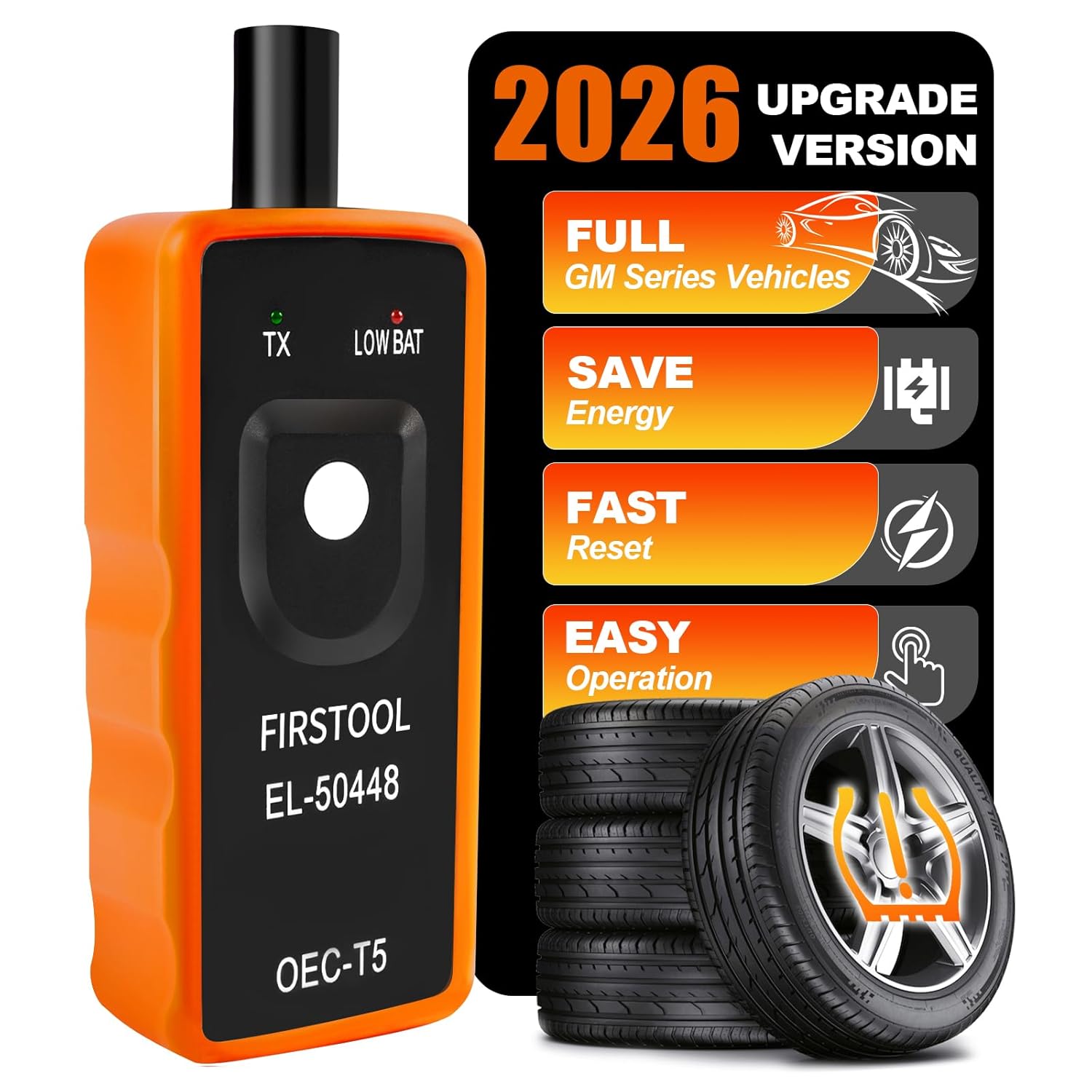
This TPMS relearn tool helps you quickly activate, match, and reset GM tire pressure sensors to keep the vehicle monitoring system working properly. It clears tire pressure alarms and dashboard warning lights after sensor replacement or tire rotation, and supports learning for common 315/433 MHz TPMS sensors. Designed for simple one-button operation, it can help you avoid unnecessary trips to repair shops.

The VEHLIVE SU-50448 II TPMS relearn tool provides a fast activation reset to restore accurate tire pressure monitoring after sensor replacement or tire rotation. It supports 315 MHz and 433 MHz GM series sensors and helps clear dashboard pressure warnings. With simple two-button operation and horn-confirmed relearning order, you can reprogram sensors conveniently at home.
Step-by-Step Guide to Resetting Your Honda Accord’s TPMS Light

Resetting your Honda Accord TPMS light is simple once the tire pressure is correct. The exact menu path depends on the model year, trim, and display system, so use the path that matches your vehicle.
[Products Worth Considering]

Keep your tires properly inflated with this analog VONDIOR tire pressure gauge, designed for fast, easy readings without batteries. The swiveling, two-axis hose and large glow dial help you measure at any tire angle with instant visibility. Built with a protective rubber shield, it supports durable, low-maintenance use for cars and trucks.

This TPMS sensor training and relearn reset tool is customized for Ford, Lincoln, and Mercury vehicles to help activate tire pressure programming after sensor replacement or tire rotation. It can activate individual tire pressure sensors with one-button operation, helping prevent TPMS warning light illumination. It is not a sensor programming tool and cannot program replacement sensors—use it to trigger/activate sensors only.

The Tymate TM2 RV tire pressure monitoring system keeps you informed with a color LCD display, automatic backlight, and solar charging for dependable operation. It supports up to 10 tire positions with four pre-paired sensors, while offering multiple alarm modes for fast leak detection, pressure extremes, temperature alerts, and low-signal warnings. Built-in monitoring uses accurate readings and reliable 433.92MHz communication to help protect your RV, trailer, truck, or SUV.
For Display Audio or Touchscreen Models
- Turn the vehicle on or set it to accessory mode.
- Open the Home screen.
- Select Settings.
- Select Vehicle or Vehicle Settings.
- Choose TPMS Calibration.
- Select Calibrate or confirm the calibration prompt.
- Drive normally so the system can relearn the tire-pressure baseline.
For Driver Information Interface Models
- Use the steering wheel controls to open the driver information menu.
- Scroll to Vehicle Settings.
- Select TPMS Calibration.
- Choose Calibrate or confirm the reset.
- Drive the Accord under normal conditions while the system completes its learning process.
For Older TPMS Button Models
- Set all tires to the correct cold PSI.
- Turn the ignition on without starting the engine, if your model requires that step.
- Press and hold the TPMS button until the tire pressure light blinks or the system confirms calibration.
- Drive normally and watch whether the light turns off and stays off.
If none of these paths match your Accord, check the official Honda owner’s manual lookup for your exact year and trim.
How to Perform a TPMS Calibration After Adjustments
Perform TPMS calibration after you inflate tires, rotate tires, replace a tire, repair a puncture, change wheels, or correct uneven pressure. Calibration tells the system what “normal” looks like for your current tire setup.
| Step | What to Do | Why It Matters |
|---|---|---|
| 1 | Set all tires to the recommended cold PSI. | TPMS needs the correct baseline before it can detect future changes. |
| 2 | Inspect the tires and valve stems for leaks or visible damage. | A reset cannot fix a tire that is losing air. |
| 3 | Start TPMS calibration through the touchscreen, steering wheel menu, or TPMS button. | The system begins learning the corrected tire setup. |
| 4 | Drive normally on mixed roads when possible. | The system needs driving data to confirm the calibration. |
| 5 | Recheck pressure if the light returns. | A returning warning often means a leak, incorrect pressure, tire mismatch, or system fault. |
Note: Calibration is not the same as adding air. Calibration only resets the system baseline after the tires are already set correctly.
[Products Worth Considering]

This 100-piece set of snap-in tubeless tire valve stems is designed for standard 0.453 in (11.5 mm) rim holes and helps maintain reliable, steady tire pressure. Made with ozone-resistant rubber and brass cores, the valves are built for durability and long-term use. Easy to install by hand, they support safe driving and are suitable for cars, light trucks, trailers, and more.

The TYAMATE TM8 solar-powered wireless TPMS delivers real-time tire pressure and temperature monitoring with six alarm modes for safer driving. A vibrant color LCD display shows readings clearly while windshield mounting keeps it hands-free and easy to read. With a wide 0–87 PSI range, strong 433.92 MHz signal transmission, and quick sensor pairing, it’s ideal for RV, sedan, SUV, MPV, and truck use.

Replace your worn or missing TPMS sensors with pre-programmed, direct-fit sensors for compatible Ford, Lincoln, and select Mazda models. Each sensor comes ready to activate with a scan tool, helping restore accurate tire pressure monitoring and trouble-free installation. Built with a long-life CR2032 battery and tested before factory release, this set provides dependable performance with a one-year warranty.
What Causes Your TPMS Light to Stay On?
Your Honda Accord TPMS light can stay on for several reasons. The most common cause is still low tire pressure, especially after a temperature drop or a slow leak. NHTSA notes that cold mornings can make marginally low tire pressure dip below the warning threshold before pressure rises again during driving.
If pressure is correct and the light still stays on, the system may need calibration. This is common after tire rotation, tire replacement, wheel service, pressure correction, or seasonal pressure changes.
If the light flashes for about a minute and then remains on, treat it as a malfunction warning. Possible causes include mismatched tires, incorrect tire size, a wheel-speed sensor issue, TPMS module fault, interference from replacement wheels, or a direct TPMS sensor issue on vehicles equipped with direct sensors.
TPMS is a warning system, not a pressure gauge. Check the actual PSI before you decide whether to reset, inflate, repair, or schedule service.
When Should You Call a Pro About Your TPMS Problems?
Call a professional if basic pressure correction and calibration do not solve the problem. A tire shop or Honda service center can test for leaks, inspect tire condition, scan TPMS-related faults, and confirm whether your Accord uses direct or indirect TPMS.
- The light flashes, then stays on. This usually means the system has detected a malfunction.
- The light returns after you inflate the tires. A tire may have a slow leak or valve issue.
- The warning appears after tire replacement. Tire size, tread depth, wheel compatibility, or calibration may be wrong.
- The steering wheel shakes or the car pulls. You may also need tire balancing, alignment, or suspension inspection.
- You see tire damage. Do not keep driving on a tire with a sidewall bulge, exposed cord, deep cut, or rapid pressure loss.
Do not ignore a persistent TPMS warning before a highway trip. Driving on a significantly underinflated tire can increase heat, reduce handling, shorten tire life, and raise the risk of tire failure.
Best Practices for Maintaining Tire Pressure
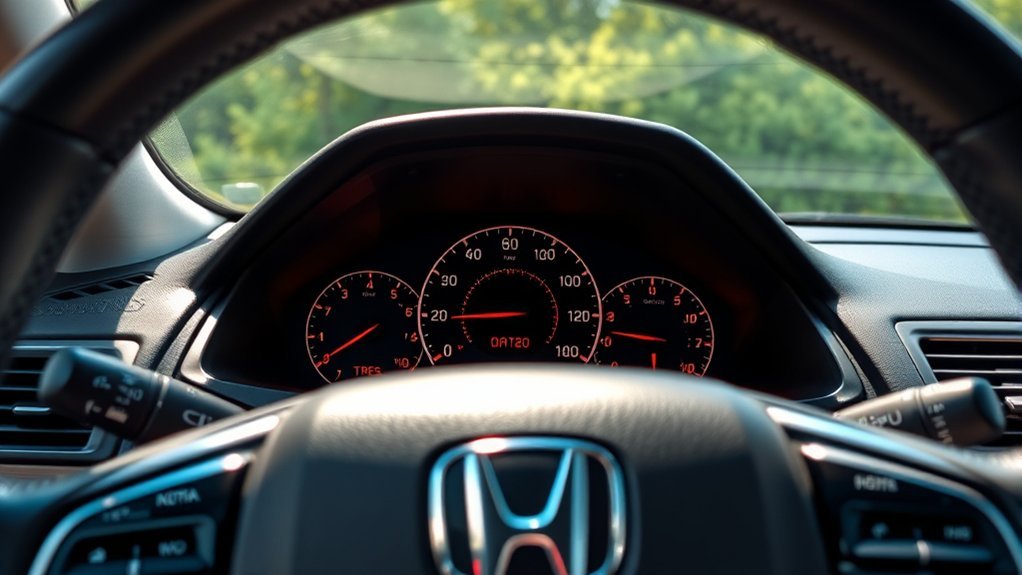
Check your Honda Accord’s tire pressure at least once a month and before long trips. NHTSA recommends checking all tires, including the spare, when they are cold. The correct pressure is listed on the driver-side Tire and Loading Information Label or in your owner’s manual.
Proper inflation also helps fuel economy. FuelEconomy.gov says properly inflated tires are safer, last longer, and can improve gas mileage compared with underinflated tires.
- Check pressure before the first drive of the day when possible.
- Recheck pressure after large weather swings.
- Replace missing valve caps to help keep dirt and moisture out of the valve stem.
- Rotate tires on the schedule in your owner’s manual.
- Inspect tread depth and uneven wear while you check PSI.
- Do not use tire sidewall maximum pressure as your normal inflation target.
Frequently Asked Questions
Why is my tire pressure light blinking even though I have air on my Honda Accord 2016?
A blinking tire pressure light usually means the TPMS has detected a malfunction. First, check all four tires with a gauge and confirm they match the cold PSI on the door label. If pressure is correct and the light flashes for about a minute before staying on, have the TPMS system diagnosed.
Can I drive my Honda Accord with the tire pressure light on?
You can usually drive a short distance to a safe place or air pump if the car feels normal, but you should check pressure as soon as possible. Do not keep driving if a tire looks flat, the car pulls, the steering feels unstable, or you see tire damage.
Why does my Accord tire pressure light come on in cold weather?
Cold weather can lower tire pressure enough to trigger the TPMS warning, especially if a tire was already close to the threshold. Check the tires when cold and inflate them to the pressure listed on the driver-side label.
Should I reset TPMS after rotating tires on a Honda Accord?
Yes, many Accord models should be calibrated after tire rotation, tire replacement, or pressure correction. Set all tires to the correct cold PSI first, then run TPMS calibration through the menu or button that matches your model.
Does TPMS replace checking tire pressure with a gauge?
No. TPMS warns you when pressure is already low enough to trigger the system. You should still check your tires monthly with a gauge because the system may not warn you about mild underinflation, overinflation, uneven tire wear, or spare tire pressure.
Conclusion
Your Honda Accord tire pressure light is not something to ignore or reset blindly. Check every tire with a gauge, use the cold PSI on the driver-side label, inspect for leaks or damage, and then calibrate TPMS if your model requires it. If the light flashes, returns quickly, or stays on after correct pressure and calibration, get the system checked by a qualified technician.
Good tire pressure habits protect handling, braking, fuel economy, and tire life. A few minutes with a gauge can prevent a bigger repair and help keep your Accord safe on the road.
Sources
- NHTSA TireWise: Tire Safety Ratings and Awareness — tire pressure checks, cold PSI, TPMS meaning, and safety guidance.
- 49 CFR 571.138: Tire Pressure Monitoring Systems — federal TPMS performance and malfunction warning requirements.
- FuelEconomy.gov: Keeping Your Vehicle in Shape — tire inflation and fuel-economy guidance.
- Honda Owner’s Manual Lookup — model-year-specific Accord TPMS menu and calibration instructions.