
If the TPMS light on your Honda Accord’s dashboard won’t go away no matter how many times you’ve checked your tires, you’re not alone. The good news is that resetting it usually takes only a few minutes once your tires are at the right pressure — the trick is knowing whether your Accord resets through a touchscreen menu or a physical button, and how long you need to drive afterward for the system to relearn your tire pressures.
Quick Answer
Inflate all four tires (and the spare) to the pressure listed on your driver’s door jamb sticker, typically 32–33 PSI. On touchscreen Accords, go to Settings > Vehicle > TPMS Calibration > Calibrate. On older models, press and hold the TPMS button until the light blinks twice. Either way, drive 10–20 minutes at a steady 30–65 mph to finish the reset.
Key Takeaways
- Most Accords call for 32–33 PSI on the door jamb sticker, though some trims go as high as 35 PSI — always check your own sticker rather than guessing.
- A steady TPMS light usually means low pressure. A light that flashes for about a minute every time you start the car, then stays on, usually means a system malfunction instead.
- Touchscreen Accords reset via Settings > Vehicle > TPMS Calibration > Calibrate; older models use a physical TPMS button held until the light blinks twice.
- After resetting, plan on driving 10–20 minutes at 30–65 mph for the calibration to complete.
- If the light stays on after correct inflation and a proper reset, a worn-out sensor is the likely cause and is worth having checked.
Understanding Tire Pressure Monitoring Systems (TPMS)

Every Honda Accord built since the 2008 model year is required to have a Tire Pressure Monitoring System, which watches your tire pressure and lights up a dashboard icon — typically a tire cross-section with an exclamation point — when something’s off. There are two basic types. Direct TPMS uses a physical pressure sensor inside each wheel and is common on Accords built before the early 2010s. Indirect TPMS, used on most Accords from roughly 2013 onward, has no in-wheel sensors at all; instead it compares wheel-speed signals from the ABS system to spot a tire that’s spinning differently because it’s low.
Whichever system your Accord has, any time you adjust pressure, rotate tires, or swap in a new set, the system needs to be recalibrated so it learns the new baseline. That calibration typically finishes after 10 to 20 minutes of steady driving between 30 and 65 mph. Temperature swings can also set off the light even when nothing’s actually wrong — tires lose roughly 1 PSI for every 10°F drop in air temperature, which is why the light often pops on during the first cold morning of the season. Keeping tires properly inflated also pays off at the pump: the U.S. Department of Energy estimates you can improve fuel efficiency by up to 3% just by keeping tires at the recommended pressure.
Common Reasons Your TPMS Light Is On
A handful of everyday situations can trigger the TPMS light on a Honda Accord:
- Simple low pressure — tires naturally lose 1–2 PSI a month through normal permeation, and a small leak or a cold night can push a tire below the warning threshold faster than you’d expect.
- Temperature swings — a sharp overnight temperature drop is one of the most common, harmless triggers, especially heading into fall and winter.
- Mismatched tires — different tire sizes or types across the four corners can confuse an indirect system that’s comparing wheel-speed signals.
- Uneven loads — a heavy or unevenly distributed load changes how each tire compresses, which an indirect system can misread as a pressure problem.
- Slippery roads — wheel slip on snow or ice can momentarily confuse indirect TPMS readings.
- A failing sensor — direct TPMS sensors run on a sealed battery that typically lasts 5 to 10 years; once it dies, the sensor itself needs replacing.
Regular tire pressure checks catch most of these issues before the light ever comes on.
Note: Pay attention to how the light behaves, not just whether it’s on. A steady light almost always means a tire is underinflated — check pressure first. A light that flashes for about a minute every time you start the car, then stays on solid, is the system telling you something’s wrong with TPMS itself, not the tires. Adding air won’t clear that one; the sensor or system needs to be looked at.
How to Check Your Tire Pressure Manually
Before you touch the reset procedure, confirm your tires actually need it. A few minutes with a gauge tells you more than guessing ever will, and it’s essential for tire health over the long run.
[Products Worth Considering]
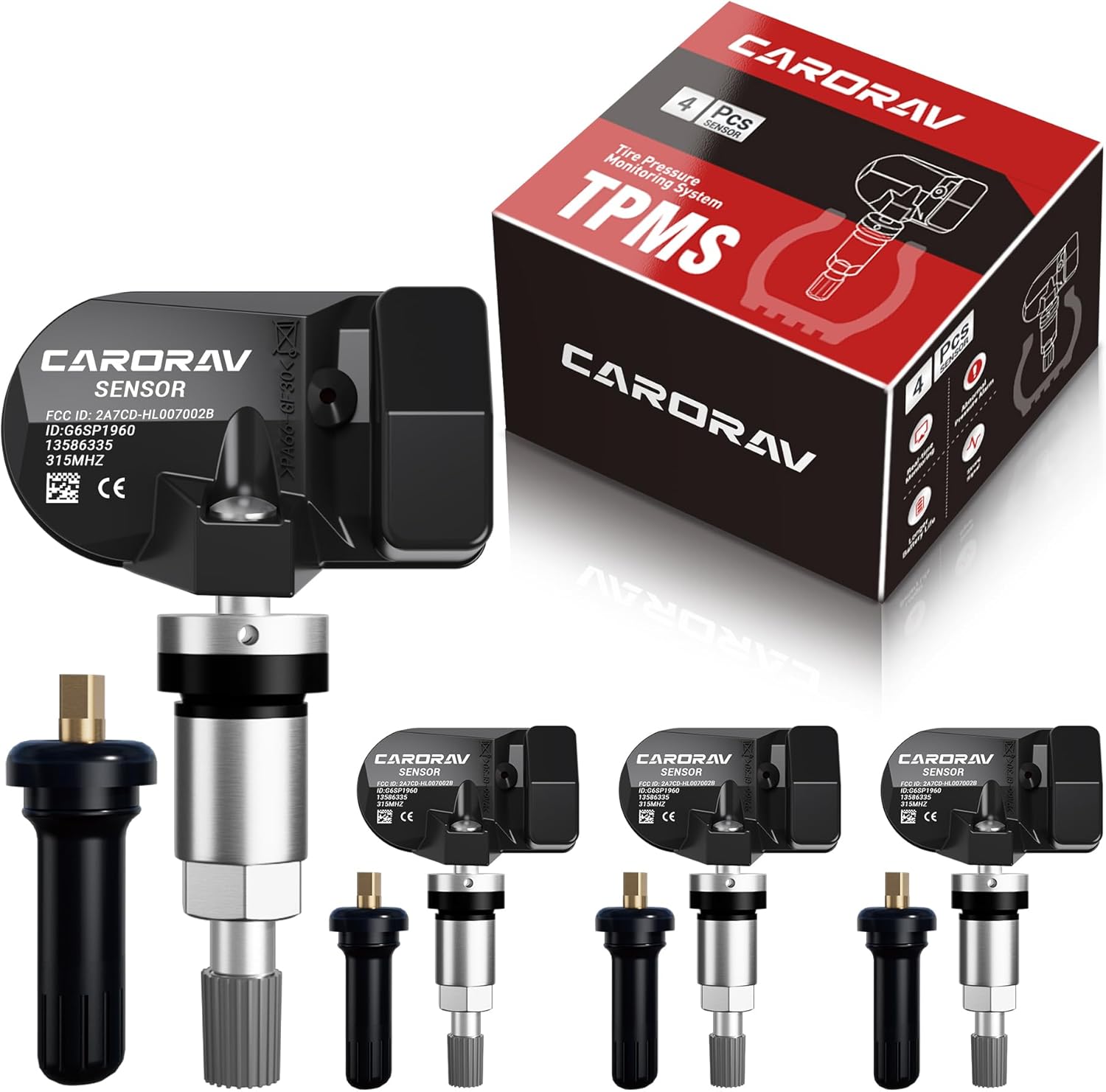
Replace worn or missing TPMS sensors with CARORAV pre-programmed GM-compatible sensors for a smoother installation experience. These 315MHz replacement sensors help monitor tire pressure in real time with long battery life, and they are designed to withstand harsh temperatures. Manual or OBDII relearn may be required to reset the system for proper recognition.
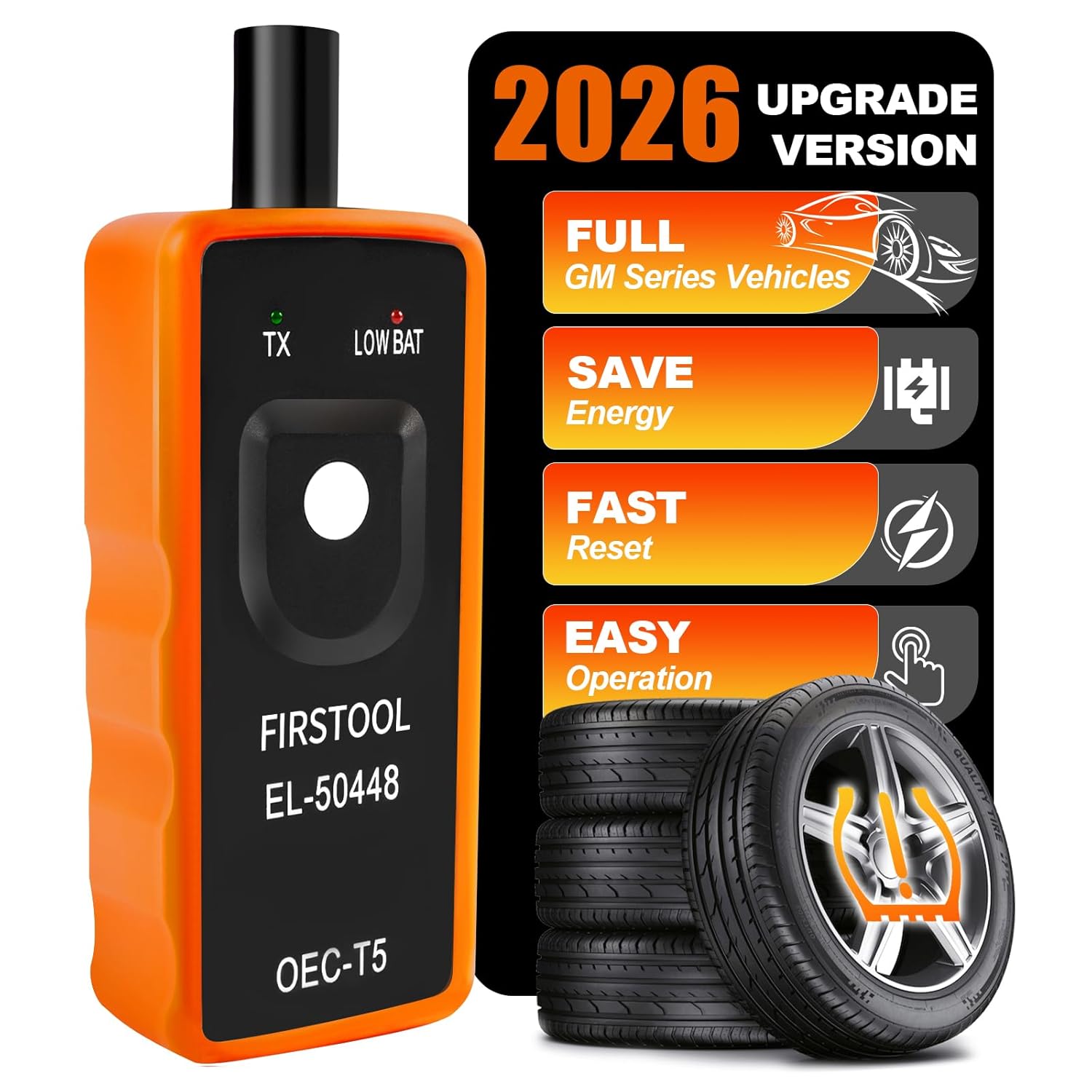
This TPMS relearn tool helps you quickly activate, match, and reset GM tire pressure sensors to keep the vehicle monitoring system working properly. It clears tire pressure alarms and dashboard warning lights after sensor replacement or tire rotation, and supports learning for common 315/433 MHz TPMS sensors. Designed for simple one-button operation, it can help you avoid unnecessary trips to repair shops.

The TYAMATE TM8 solar-powered wireless TPMS delivers real-time tire pressure and temperature monitoring with six alarm modes for safer driving. A vibrant color LCD display shows readings clearly while windshield mounting keeps it hands-free and easy to read. With a wide 0–87 PSI range, strong 433.92 MHz signal transmission, and quick sensor pairing, it’s ideal for RV, sedan, SUV, MPV, and truck use.
Recommended Pressure Levels
Most Honda Accords call for 32 to 33 PSI front and rear, though some trims and wheel packages run slightly higher, up to about 35 PSI. The number that matters is on the yellow or white sticker inside your driver’s door jamb — it’s specific to your exact trim and tire size. Don’t use the number printed on the tire’s sidewall; that’s the tire’s maximum safe pressure, not Honda’s recommended pressure, and it’s almost always higher than what you should actually run.
When to Check Tires
Check pressure when tires are cold — ideally first thing in the morning before you’ve driven more than a mile or two, since driving heats the air inside and temporarily raises the reading. Make it a monthly habit, and check again before any long road trip or whenever the seasons change, since temperature swings of 20–30°F can shift pressure by 2–3 PSI on their own.
Using a Tire Pressure Gauge
A simple digital or dial gauge works fine — remove the valve cap, press the gauge firmly onto the valve stem until the hissing stops, and read the number. Check all four tires plus the spare, and screw the valve cap back on each time to keep out dirt and moisture.
Pro Tip: Keep a gauge in your glove box. TPMS only warns you once pressure has dropped a fair amount, so a quick monthly check often catches a slow leak weeks before the dashboard light ever would.
Reset the TPMS Light on Newer Honda Accord Models
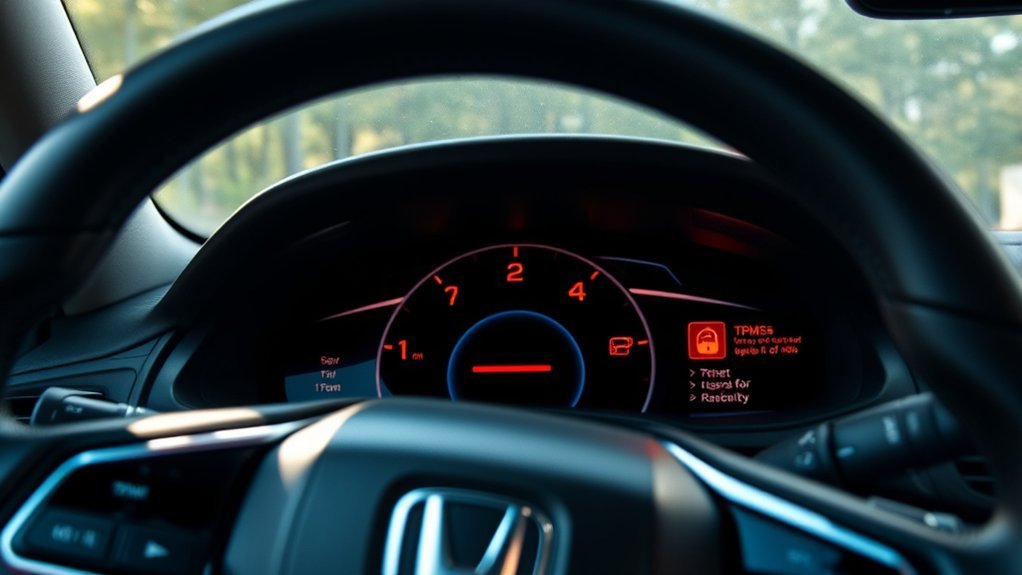
Accords with a touchscreen infotainment system (most 2013-and-newer models) reset TPMS through a settings menu rather than a physical button. Models with a multi-information display but no touchscreen use the same basic menu, navigated with the steering wheel buttons instead.
At a Glance
| Time Required | 10–20 minutes of driving after calibration starts |
| Difficulty | Easy |
| Tools Needed | Tire pressure gauge, air pump or compressor |
| Cost | Free, unless a sensor needs replacing |
To reset:
- Inflate all tires, including the spare, to the pressure on your door jamb sticker.
- Turn the ignition to “ON” without starting the engine (or start the vehicle on push-button models).
- From the home screen, select Settings, then Vehicle, then TPMS Calibration.
- Select Calibrate and confirm.
- Drive normally for 10 to 20 minutes at a steady 30–65 mph to let the system finish learning the new pressures.
Maintaining the correct pressure throughout this process matters for vehicle safety, not just for clearing the light. If it’s still on after a full calibration drive, treat that as a sign something else needs attention rather than repeating the process over and over.
[Products Worth Considering]

Replace worn or malfunctioning GM TPMS sensors with this 433MHz pre-programmed sensor set designed for compatibility with many Chevrolet, Buick, GMC, and Cadillac models. It includes guidance for proper OBDII relearning/pairing after installation and supports reliable long-term operation with a high-performance CR2032 battery. Quality tested for durability and performance to help restore accurate tire pressure monitoring.

Keep your tires properly inflated with this analog VONDIOR tire pressure gauge, designed for fast, easy readings without batteries. The swiveling, two-axis hose and large glow dial help you measure at any tire angle with instant visibility. Built with a protective rubber shield, it supports durable, low-maintenance use for cars and trucks.

Masoll Gen 2 external TPMS sensors are a DIY replacement set of 4 for select GM vehicles made after 2006, helping you shut off the TPMS warning light quickly. Simply screw the sensors onto the tire valves and sync to your car ECU using the included EL-50448 relearn tool. Dual-frequency 315/433 MHz design provides OEM-level performance with accurate readings and replaceable batteries for about two years.
Reset the TPMS Light on Older Honda Accord Models
Older Accords use a physical TPMS button instead of a menu. Inflate your tires to the correct pressure first — anything between roughly 30 and 35 PSI depending on trim, but match your recommended pressure for your specific trim rather than guessing — then follow the steps below.
TPMS Button Location
The TPMS button is usually tucked under the dash to the left of the steering wheel, sometimes marked with a small tire icon or the letters “TPMS.” A few model years, including some 2008–2012 Accords, don’t have a separate button at all — those systems recalibrate automatically once you drive at a steady speed after correcting the pressure. If you’ve searched and can’t find a button, check your owner’s manual; that may simply be why.
Manual Reset Procedure
Turn the ignition to “ON” without starting the engine, then press and hold the TPMS button until the warning light blinks twice — usually 3 to 5 seconds. Release the button, start the car, and drive at a steady 30–65 mph for about 20 to 30 minutes to complete the calibration.
Common Issues Encountered
- Holding the button too briefly — wait for the second blink before releasing.
- Driving too slowly or making frequent stops during the calibration window, which can interrupt the process.
- Assuming a model without a visible button is broken, when it may simply be a self-calibrating system.
- A light that keeps flashing after a complete reset attempt, which usually points to a sensor problem rather than a procedure error.
What to Do If Your TPMS Light Won’t Turn Off
If the light is still on after you’ve confirmed every tire (including the spare) is at the correct pressure and you’ve completed a full calibration drive, the next suspect is the TPMS hardware itself. A sealed sensor battery dying after years of use is the most common cause, and a faulty sensor typically costs somewhere in the range of $50 to $150 per sensor to replace at an independent shop, more at a dealership.
Warning: Don’t keep driving indefinitely on a TPMS light you’ve decided to ignore. A significantly underinflated tire can overheat and fail at highway speed. If the light won’t clear and you can’t rule out low pressure yourself, have the tires and sensors checked before a long trip.
Malfunctioning sensors can mean the system fails to warn you in time, which is part of why persistent lights are worth diagnosing rather than living with.
[Products Worth Considering]

This TPMS sensor training and relearn reset tool is customized for Ford, Lincoln, and Mercury vehicles to help activate tire pressure programming after sensor replacement or tire rotation. It can activate individual tire pressure sensors with one-button operation, helping prevent TPMS warning light illumination. It is not a sensor programming tool and cannot program replacement sensors—use it to trigger/activate sensors only.

Replace your worn or missing TPMS sensors with pre-programmed, direct-fit sensors for compatible Ford, Lincoln, and select Mazda models. Each sensor comes ready to activate with a scan tool, helping restore accurate tire pressure monitoring and trouble-free installation. Built with a long-life CR2032 battery and tested before factory release, this set provides dependable performance with a one-year warranty.
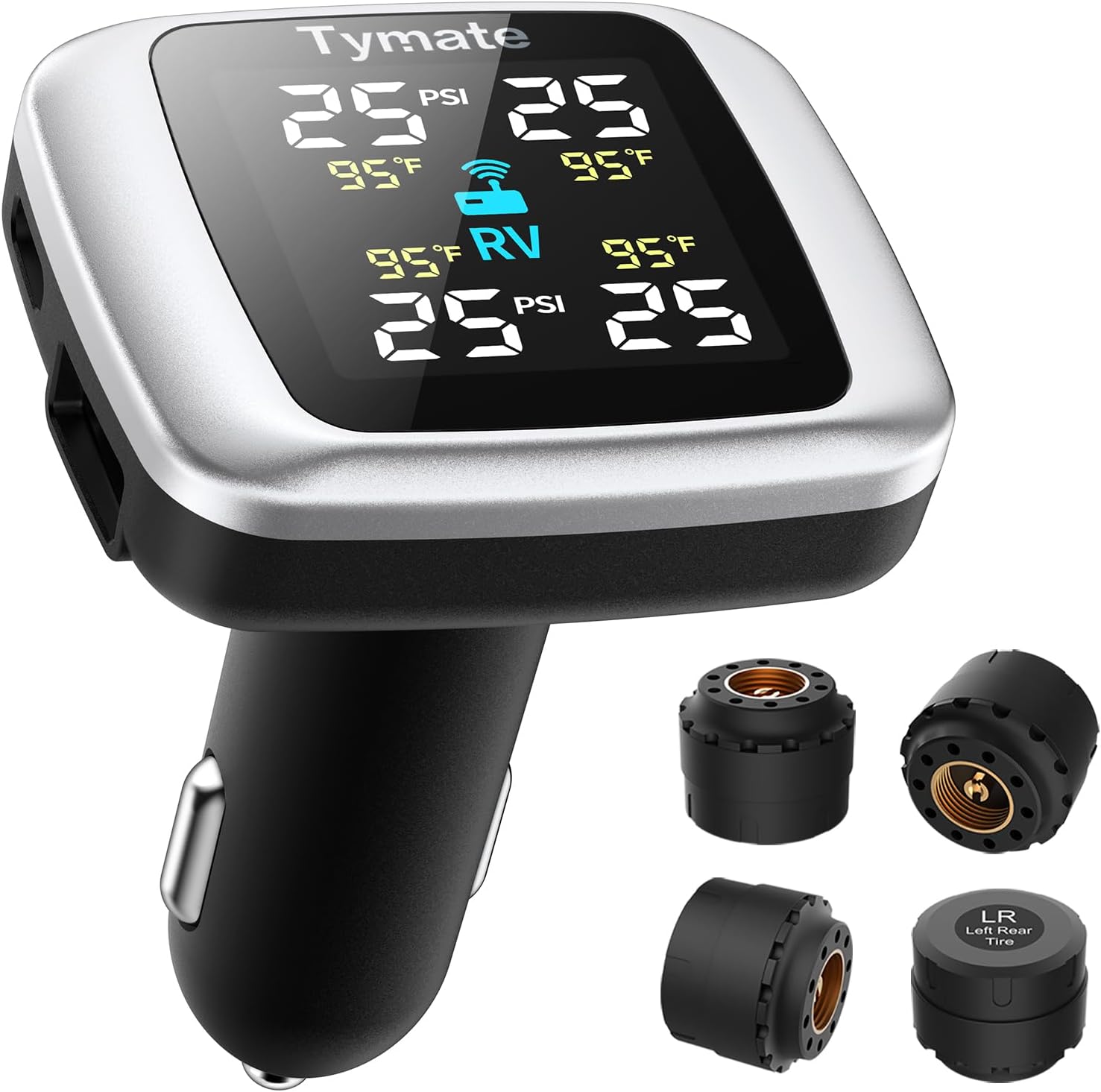
Tymate TM7 is a wireless tire pressure monitoring system that delivers real-time pressure and temperature readings for safer driving. It includes four external sensors, a bright color LCD display with adjustable backlight, and six alarm modes for high/low pressure, fast leakage, high temperature, and sensor signal or battery issues. The system covers a wide 0–144 PSI range and plugs into your vehicle’s cigarette lighter socket for quick DIY setup.
Why Tire Maintenance Matters for Safety
Tire pressure is one of the cheapest, fastest maintenance checks you can do, and it pays off in several ways:
- Can improve fuel efficiency by up to 3%, according to the U.S. Department of Energy.
- Reduces the risk of blowouts caused by underinflation.
- Improves braking distance and overall handling.
- Extends tire life by preventing uneven, premature wear.
- Helps you catch slow leaks before they become flat tires.
Keeping your tires at the recommended pressure can improve fuel economy by up to 3% — one of the simplest savings available to any driver.
Regular checks also help you avoid tire blowouts and poor handling down the road, which matters a lot more than the few minutes it takes to grab a gauge.
Frequently Asked Questions
Why is my tire pressure light still on after filling my tires?
Double-check every tire, including the spare, against the pressure on your door jamb sticker — it’s easy to miss one tire or eyeball it instead of using a gauge. If pressure checks out and the light is still on, the system likely hasn’t finished its calibration drive yet, or there’s a sensor issue that needs a proper reset or inspection rather than just more air.
Is it safe to drive with the TPMS light on?
It’s fine to drive carefully to the nearest place to check your tires, but you shouldn’t ignore it long-term. If pressure turns out to be correct and the light just hasn’t cleared yet, normal driving during the calibration window is fine. If a tire is genuinely low, get it inflated before driving any distance, especially on the highway.
What’s the difference between a steady and a flashing TPMS light?
A steady light means at least one tire is underinflated — check pressure first. A light that flashes for roughly a minute each time you start the car, then stays on solid, indicates the TPMS system itself has a fault, such as a dead sensor battery, rather than a tire pressure problem.
How much does it cost to replace a faulty TPMS sensor?
Expect roughly $50 to $150 per sensor for parts and labor at an independent shop, with dealerships often charging more. Sensors run on a sealed internal battery that typically lasts 5 to 10 years before it needs replacing.
Conclusion
Resetting the TPMS light on a Honda Accord almost always comes down to two things: getting every tire to the correct pressure and giving the system enough time and the right speed to recalibrate. Touchscreen models handle it through a settings menu; older models use a physical button. Either way, if the light keeps coming back after you’ve done both correctly, that’s your sign to get the sensors checked rather than resetting it again and again.
Sources
- NHTSA – Tire Safety (TireWise) — direct vs. indirect TPMS, warning symbols, and federal requirements
- U.S. Department of Energy – FuelEconomy.gov — fuel efficiency impact of proper tire inflation
- DCH Paramus Honda – How to Reset Honda TPMS — touchscreen and button reset steps
- Honda Owners — official owner’s manuals and model-specific vehicle information