
What Is the TPMS on a Toyota RAV4? Tire Pressure Monitoring Guide
The Tire Pressure Monitoring System (TPMS) in a Toyota RAV4 helps warn you when one or more tires are seriously underinflated. It is a safety backup, not a replacement for checking tire pressure with a gauge. To get the most from the system, know what the dashboard light means, where to find the correct PSI, how to add air, and when to reset or initialize the system.
Quick Answer
The RAV4 TPMS uses tire pressure warning valves and transmitters to detect low tire pressure. If pressure drops below a preset level, the system turns on a dashboard warning light and may show a message or individual tire readings, depending on model year, market, and display type.
Key Takeaways
- Use the cold tire pressure listed on the driver-side door placard or in your owner’s manual, not the maximum PSI printed on the tire sidewall.
- A solid TPMS light usually means one or more tires are low; a flashing light often points to a system malfunction or sensor issue.
- Some newer RAV4 models can show individual tire pressures on the multi-information display, while older or different-market models may only show a warning light.
- Reset or initialize the TPMS only after all tires are set to the correct cold pressure.
At a Glance
| Time Required | 5–15 minutes for pressure checks; longer if the system needs to relearn sensor positions |
| Difficulty | Easy |
| Tools Needed | Tire pressure gauge and air compressor or portable inflator |
| Cost | Usually free to a few dollars for air; sensor repairs cost more if needed |
Understanding the Basics of TPMS
TPMS stands for Tire Pressure Monitoring System. On modern U.S.-market passenger vehicles, federal rules require a system that warns the driver when a tire is significantly underinflated. The rule is designed to reduce safety problems linked to low tire pressure, such as poor handling, tire failure, and longer stopping distances.
In the Toyota RAV4, the system uses tire pressure warning valves and transmitters installed at the wheels. These sensors send tire pressure information to the vehicle so the driver can be warned before a low-pressure tire becomes a bigger problem. Toyota’s owner information for the 2024 RAV4 states that the system warns the driver with a screen display and warning light when tire pressure drops below a predetermined level.
Note: TPMS is a warning system, not a tire maintenance system. Toyota recommends checking tire pressure regularly with a quality gauge, because tires may be underinflated before the warning threshold is reached.
[Products Worth Considering]
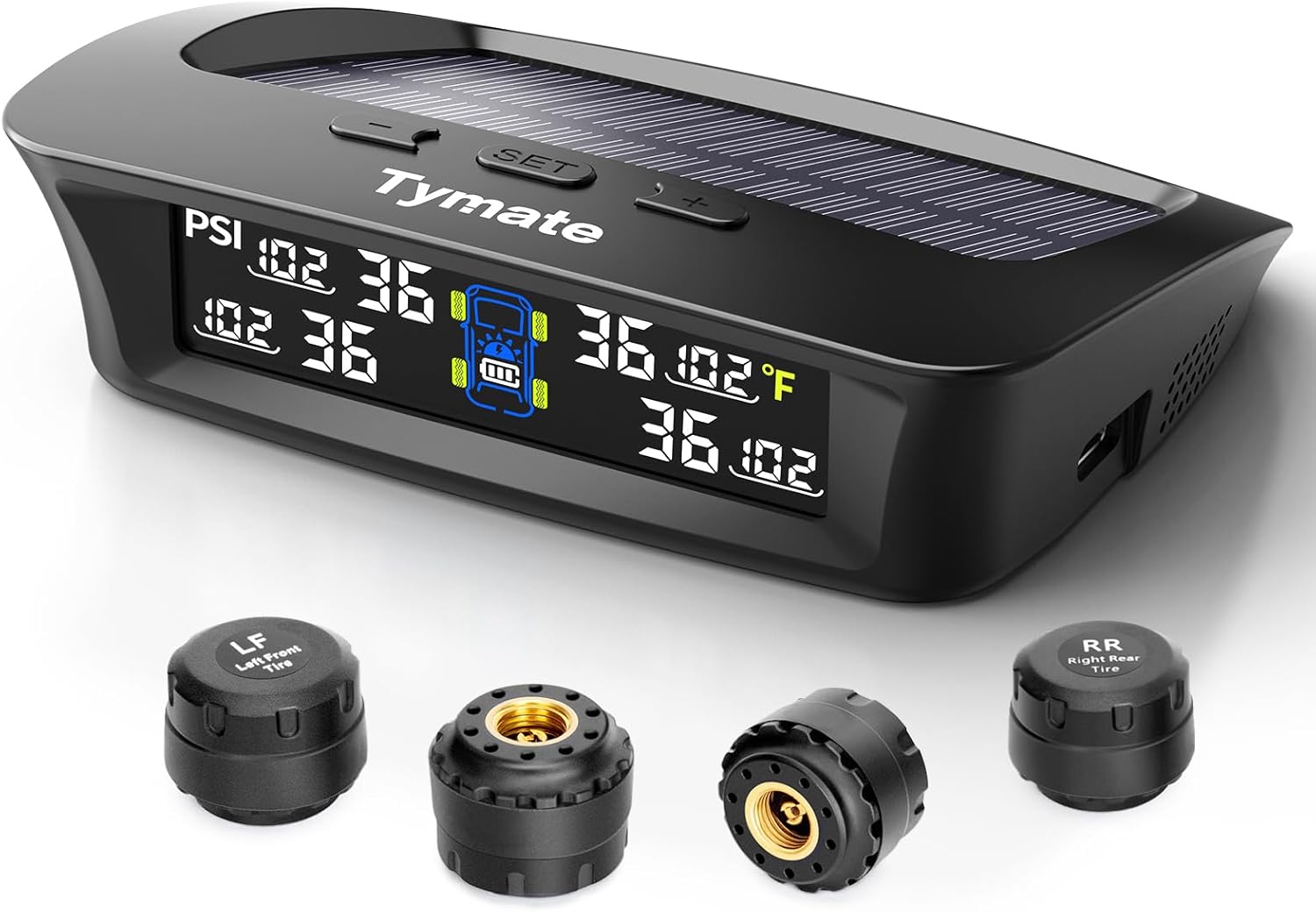
The Tymate TM3 RV TPMS delivers real-time tire pressure monitoring from 0 to 144 PSI with accurate readings and dependable wireless communication. It includes four external sensors with pre-pairing, six alarm modes for rapid leak, pressure extremes, temperature, and signal loss, plus an easy-reference setup for alert thresholds. Solar and USB-C charging help keep the display powered, while the color LCD and adaptive backlight improve visibility for safer driving and towing.

EVOULTES heavy duty tire inflator with an integrated gauge delivers accurate pressure readings from 10–120 PSI, helping you inflate, deflate, and check tires in one tool. The 16.5-inch extended dual-head air chuck with swivel base reaches hard-to-access dual wheel valves on trucks and RVs. A brass trigger core and side-mounted air release valve make operation smooth, with standard 1/4" NPT threading and quick-connect compatibility for easy setup.

The AstroAI 2 pack air chucks provide a heavy-duty, closed-flow locking design that helps keep air flowing during inflation while securely attaching to the valve stem. Built with 250 PSI rated brass components and compatible with Schrader valves, they feature 1/4" female NPT threads for a wide fit with common inflators. The straight tip and locking clip make filling tires and monitoring pressure more convenient.
How TPMS Monitors Tire Pressure in a Toyota RAV4
When your RAV4 is on, TPMS receives pressure data from the tire pressure warning valves and transmitters. The system compares those readings with its stored baseline. If a tire falls below the warning level, the low tire pressure icon appears on the instrument display and the multi-information display may show a warning message.
Direct Sensor Monitoring
Most modern RAV4 models use a direct TPMS design, meaning each monitored wheel has a pressure sensor. This is more specific than older indirect systems that estimate pressure changes using wheel-speed data. Direct sensors help the vehicle identify low tire inflation before it becomes severe.
Displayed Pressure Readings
On many newer RAV4 models, tire pressure can be displayed on the multi-information display. However, the display can take a few minutes to update after pressure is adjusted, and Toyota notes that displayed values may differ from a handheld tire pressure gauge. Your gauge reading, taken when the tires are cold, is the best number to use when adding air.
| TPMS Condition | What It Usually Means | What To Do |
|---|---|---|
| Light off | No low-pressure warning is active | Still check tire pressure monthly |
| Solid TPMS light | One or more tires may be underinflated | Check all tires with a gauge and add air as needed |
| Flashing light, then solid | Possible TPMS malfunction or unregistered sensor | Have the system inspected if it does not clear |
| Pressure dashes on display | System may be learning tire positions or waiting for sensor data | Drive normally and recheck; seek service if it persists |
| High pressure | TPMS may not warn for overinflation | Use a gauge and reduce pressure to the placard PSI when cold |
Warning: Do not ignore a TPMS light. If the vehicle feels unstable, a tire looks flat, or you hear unusual tire noise, pull over safely and inspect the tires before continuing.
Where to Find the Correct RAV4 Tire Pressure
The correct tire pressure for your RAV4 is the cold tire inflation pressure listed on the tire information placard, usually on the driver-side door jamb. You can also find it in the Specifications section of your owner’s manual. Do not use the “maximum pressure” number molded into the tire sidewall as your target; that number is not the vehicle’s recommended everyday pressure.
Check pressure when the tires are cold, meaning the vehicle has been parked for at least three hours or has been driven only a short distance at low speed. Heat from driving raises tire pressure, which can make a warm reading look higher than the true cold pressure.
Impacts of Low Tire Pressure
Low tire pressure affects more than the TPMS light. Underinflated tires can reduce handling stability, increase braking distance, raise tire temperature, worsen tread wear, and reduce fuel economy. Toyota notes that low tire pressure can decrease fuel economy and is a common cause of tire wear.
FuelEconomy.gov states that underinflated tires can lower gas mileage by about 0.2% for every 1 PSI drop in the average pressure of all tires.
That may sound small, but it adds up over time. More important, low pressure increases tire flex and heat buildup, which can contribute to tire damage or failure.
Steps for Adding Air to Your Tires
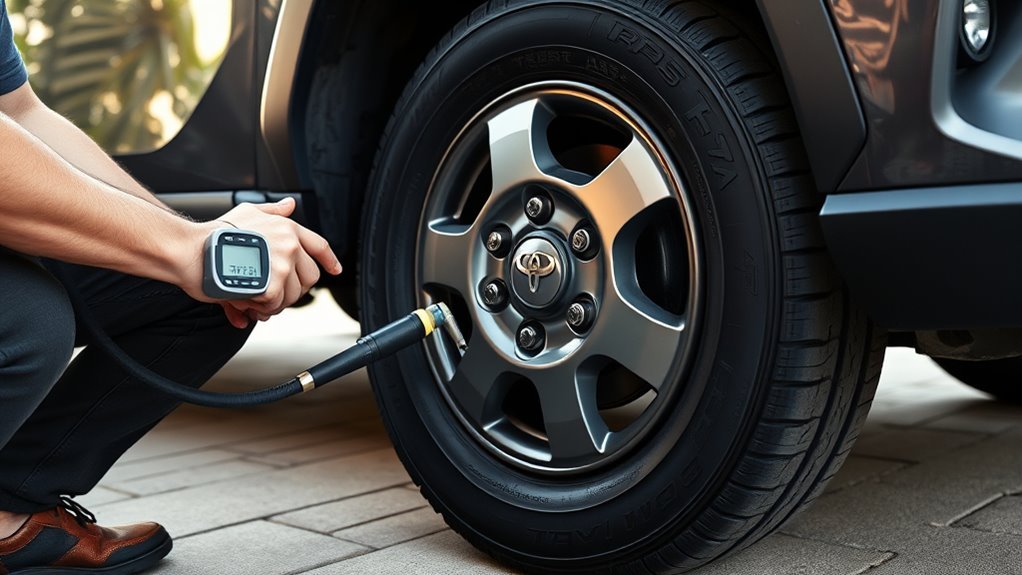
- Park safely and let the tires cool. For the most accurate reading, check tire pressure before driving or after the vehicle has been parked long enough for the tires to cool.
- Find the correct PSI. Look at the tire information placard on the driver-side door jamb or check the owner’s manual.
- Measure each tire. Remove the valve cap, press a quality gauge firmly onto the valve stem, and record the reading.
- Add air gradually. Use a gas station compressor or portable inflator. Add a little air at a time and recheck with your gauge.
- Do not overinflate. If you add too much air, press the valve stem core briefly to release air, then recheck.
- Replace the valve caps. Valve caps help keep dirt and moisture out of the valve stem.
- Recheck the TPMS light. The warning may turn off after the system receives updated pressure data. On some models, you may need to drive for a few minutes.
Pro Tip: Keep a digital tire gauge in your glove box. Gas station inflator gauges are convenient, but they are not always accurate.
When and How to Reset or Initialize the RAV4 TPMS
Resetting or initializing the TPMS tells the RAV4 to use the current tire pressures as its reference point. Only do this after all tires are set to the correct cold pressure. If you initialize the system while the tires are low, the system may treat the wrong pressure as normal.
When Reset Is Needed
- After changing tire pressure to the specified cold level
- After rotating tires, depending on model year and display behavior
- After replacing tires, wheels, or TPMS sensors
- After registering new tire pressure sensor ID codes
- When the system instructs you to initialize TPMS after service
Newer RAV4 Models With a Display Menu
Many newer RAV4 models use the multi-information display rather than a physical reset button. The exact wording varies by year and trim, but the process is generally:
- Park in a safe place and stop the vehicle.
- Adjust all tires to the specified cold tire inflation pressure.
- Start the engine or turn the vehicle to ON, depending on your model’s instructions.
- Use the steering wheel controls to open the settings menu.
- Select the vehicle settings area, then choose the tire pressure warning system or TPWS menu.
- Select “Set Pressure” or the equivalent option and follow the on-screen prompt.
- Drive normally until the system finishes learning the tire pressure data.
Older RAV4 Models With a Reset Button
Some older RAV4 models use a physical TPMS reset button, often located low under the dashboard. After setting all tires to the correct cold pressure, turn the ignition on and press the reset button until the tire pressure warning light blinks three times. Then drive the vehicle so the system can update.
Note: RAV4 reset procedures vary by model year, trim, display type, and market. If your menu wording does not match these steps, use the exact instructions in your owner’s manual.
Troubleshooting Persistent TPMS Warning Lights
If the TPMS light stays on after you add air, do not assume the system is broken. Work through the simple causes first.
[Products Worth Considering]

The JACO FlowPro Tire Inflator measures, inflates, and airs down tires up to 100 PSI with battery-free operation and ±2% accuracy after calibration. It features a glowing pressure dial for night visibility, a heavy-duty steel build with a hybrid hose, and a precision push-to-inflate thumb trigger. The patented Lightning Air Chuck locks on for a secure seal, and the kit includes quick-connect hardware for easy inline use with your air compressor.
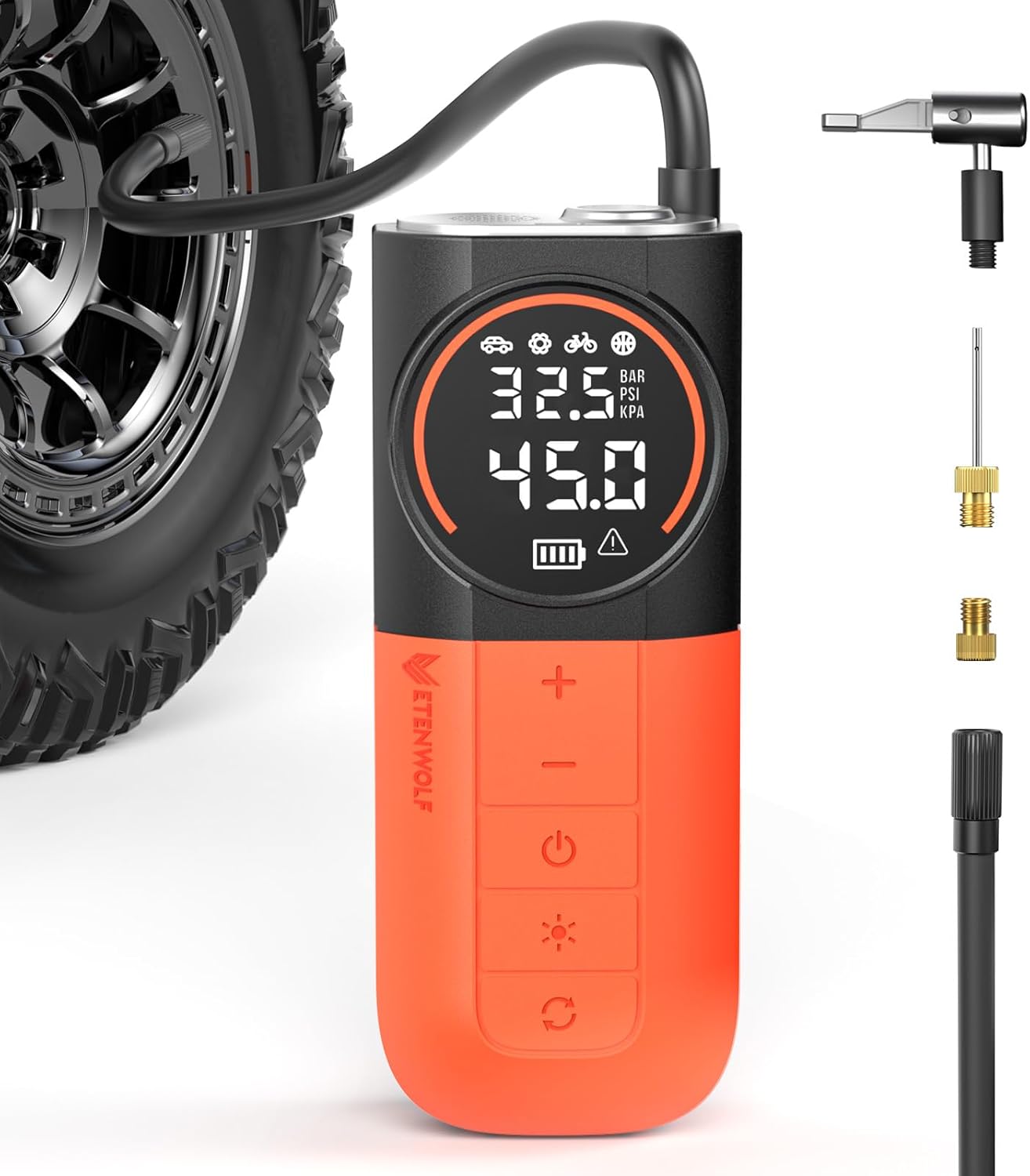
The ETENWOLF S1 cordless tire inflator delivers ultra-fast inflation with up to 160 PSI and a 20 L/min airflow for quicker tire top-offs. Its 5200mAh battery and cooling system support inflating many tires and sports balls on a single charge, while the digital pressure gauge and multi-unit display help you reach the right pressure accurately. With preset modes, pressure memory, an auto-stop feature, and an LED flashlight, it’s built for easy roadside and everyday use.
Solid TPMS Light Stays On
- Recheck all four tires cold. A warm reading can mislead you.
- Confirm the door placard PSI. The correct pressure can differ by tire size and trim.
- Look for a slow leak. Check for nails, screws, damaged valve stems, or sidewall damage.
- Allow time for the display to update. Some readings may take several minutes or a short drive to refresh.
- Check the spare if applicable. Some vehicles or past service setups may involve a monitored spare or sensor-equipped wheel.
Flashing TPMS Light
A flashing TPMS light that later stays solid often points to a system malfunction. Common causes include a dead sensor battery, damaged transmitter, unregistered sensor ID, non-genuine wheel compatibility issue, or a sensor damaged during tire service.
Light After Tire Rotation or Replacement
If tires were rotated while the vehicle was on, or if wheels were replaced without proper sensor registration, the RAV4 may not correctly identify tire positions. Toyota notes that new tire pressure warning valve and transmitter ID codes must be registered when new sensors are installed.
Benefits of Maintaining Proper Tire Pressure
Keeping your RAV4 tires at the correct cold pressure helps the TPMS do its job and improves everyday driving.
| Benefit | Why It Matters | Driver Impact |
|---|---|---|
| Safety | Supports proper handling, braking, and tire temperature control | More stable driving |
| Fuel Economy | Reduces rolling resistance | Less wasted fuel |
| Tire Life | Helps prevent edge wear, center wear, and heat damage | Fewer early tire replacements |
| Ride Quality | Keeps tires closer to their intended shape | Smoother, more predictable ride |
| TPMS Accuracy | Correct pressure helps the warning system use the right baseline | Fewer confusing alerts |
How to Use the Toyota App for Tire Monitoring
The Toyota app can help you stay aware of vehicle health, maintenance alerts, and vehicle alerts when your RAV4 supports the feature and has the required Connected Services access. Available app features vary by vehicle, model year, trim, region, and subscription status.
To check tire-related information in the app, sign in, select your RAV4, and look for the Vehicle Health, Vehicle Status, or maintenance area. If tire pressure data is supported for your vehicle, the app may show pressure readings or alerts. If you do not see tire pressure, use the multi-information display and a handheld gauge instead.
Note: App readings are convenient, but they should not replace a cold tire pressure check with a reliable gauge, especially before a road trip or after a major temperature change.
What Common TPMS Problems Should You Watch Out For?
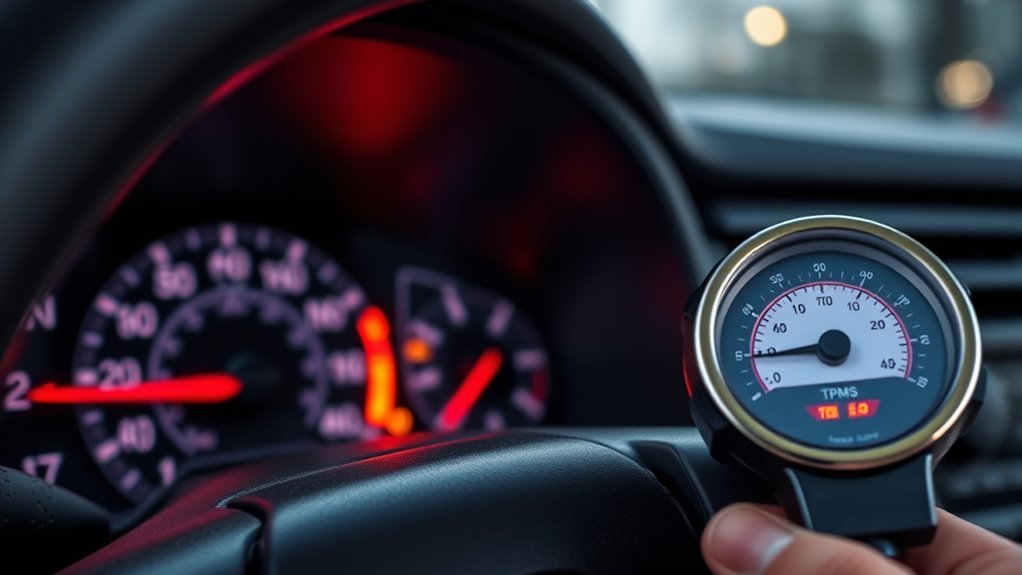
- Temperature-related pressure drops: Cold weather can lower tire pressure enough to trigger the warning light.
- Slow leaks: Nails, damaged valve stems, or bead leaks can make the light return after you add air.
- Sensor battery failure: TPMS sensors have internal batteries that eventually wear out.
- Unregistered sensors: New wheels or sensors must be registered to the vehicle.
- Incorrect initialization: Resetting the system before setting the correct PSI can create false or confusing warnings.
- Non-OE wheels or tire sizes: Some wheels, tires, chains, tint, or heavy snow and ice around the wheel area can interfere with proper TPMS operation.
When to Seek Professional Help for TPMS Issues
Some TPMS issues are simple, but others need a scan tool or sensor service. Contact a Toyota dealer or qualified tire shop if:
- The TPMS light flashes and then stays on. This often signals a system malfunction.
- The light returns soon after inflation. You may have a slow leak or damaged valve stem.
- Pressure readings do not appear after normal driving. A sensor may not be transmitting.
- You recently replaced tires or wheels. Sensor ID registration or initialization may be required.
- You see unusual tire wear or handling problems. The issue may go beyond TPMS and involve alignment, suspension, or tire damage.
Frequently Asked Questions
Does a Toyota RAV4 tell you which tire is low?
Many newer RAV4 models can display individual tire pressures on the multi-information display, but some older models, trims, or markets may only show a general TPMS warning light. If your RAV4 only shows the warning icon, check all four tires with a gauge.
Why is my RAV4 TPMS light on when the tires look fine?
A tire can be several PSI low without looking flat. Use a gauge to check all tires when cold. The light can also come on because of temperature changes, slow leaks, incorrect initialization, or a sensor problem.
Can I drive with the TPMS light on?
You should not ignore it. Pull over when safe, inspect the tires, and check pressure with a gauge. If a tire is very low, damaged, or the vehicle feels unstable, do not keep driving except as needed to reach a safe stop or service location.
Why did the TPMS light come on after cold weather?
Cold air lowers tire pressure. A tire that was barely above the warning threshold in warm weather can drop enough overnight to trigger the TPMS light. Set all tires to the recommended cold PSI on the door placard.
Do I need to reset TPMS every time I add air?
Usually, no. If the tires are simply low, add air to the correct cold pressure and let the system update. Initialize or reset TPMS only when the manual calls for it, such as after tire service, tire rotation, pressure specification changes, or sensor registration.
Conclusion
Your Toyota RAV4 TPMS is a helpful safety feature, but it works best when paired with regular tire checks. Use the door-jamb placard for the correct cold PSI, check pressure at least monthly, add air carefully, and only reset the system after the tires are set correctly. If the light flashes, stays on after proper inflation, or returns repeatedly, have the tires and TPMS sensors inspected by a qualified technician.
Sources
- Toyota 2024 RAV4 Owner’s Manual: Tires and Tire Pressure Warning System — RAV4 TPMS operation, tire pressure display behavior, sensor registration, and system limitations
- Toyota Support: How the Tire Pressure Monitoring System Works — dashboard warning light and low-pressure alert behavior
- Toyota: How to Check Tire Pressure — cold tire pressure checks, adding air, and tire pressure basics
- eCFR 49 CFR 571.138: Tire Pressure Monitoring Systems — federal TPMS performance requirements
- NHTSA TireWise — tire safety, cold pressure guidance, and tire maintenance best practices
- FuelEconomy.gov: Keeping Your Vehicle in Shape — fuel economy impact of underinflated tires

Related Articles

Toyota RAV4 TPMS Reset: Easy Steps That Work
Unlock the secrets to resetting your Toyota RAV4's TPMS effortlessly—discover the essential steps to ensure your tires are always safe.
Read More
Toyota RAV4 Tire Rotation: DIY Steps & Pattern
Take control of your Toyota RAV4's tire maintenance with our simple DIY rotation guide—discover the best steps for optimal performance and longevity!
Read More
Mix Tire Brands on a Toyota RAV4? Expert Guide
Keeping your RAV4 safe? Learn when mixing tire brands risks traction, ABS/TCS and AWD damage — and what exact matches you must insist on.
Read More