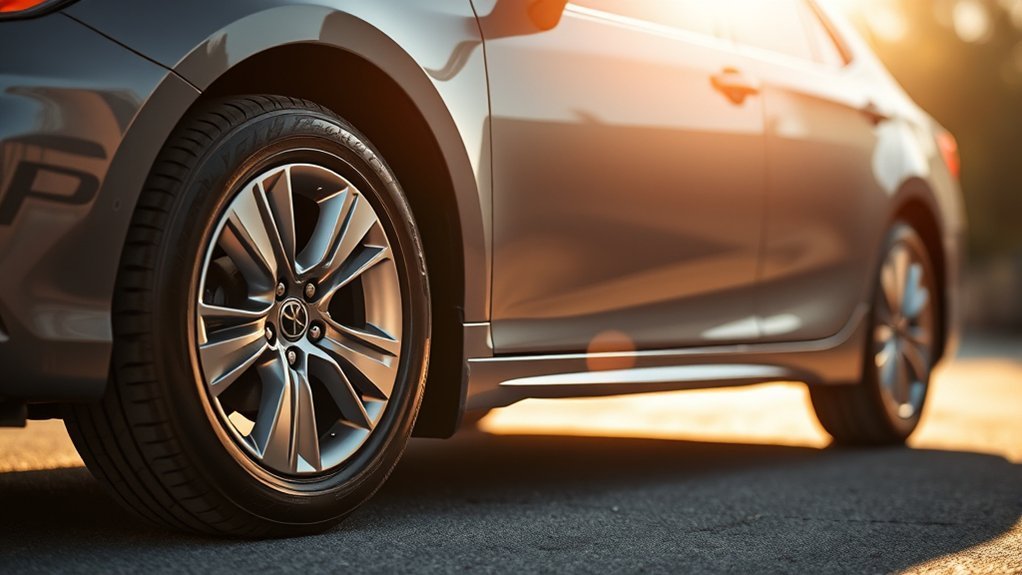
If your Toyota Camry has 17-inch wheels, the most common tire size you’ll see is 215/55R17. Still, tire fitment depends on the model year, trim, drivetrain, and wheel package, so you should always confirm the size on the driver-side door placard, the tire sidewall, or your Toyota owner’s manual before buying. The right tire also needs the correct load index, speed rating, and cold tire pressure for your exact Camry.
Quick Answer
For many Toyota Camry models with 17-inch wheels, the common tire size is 215/55R17. Do not assume it fits every Camry. Match your driver-door placard or owner’s manual, use tires with the correct load index and speed rating, and inflate them to the listed cold PSI.
Key Takeaways
- 215/55R17 is a common 17-inch Toyota Camry tire size, but it is not universal across every year and trim.
- Use the driver-side door placard or Toyota owner’s manual as the final fitment source.
- A tire’s service description includes both the load index number and the speed rating letter, such as 94V or 95H.
- Use the vehicle’s recommended cold tire pressure, not the maximum PSI printed on the tire sidewall.
- Rotate, inspect, and measure tread regularly to help your tires last longer and keep the Camry stable in wet or rough conditions.
At a Glance
| Time Required | 5 to 15 minutes to verify size, pressure, and service rating before shopping |
| Difficulty | Easy for size checks; professional help recommended for wheel upgrades or non-OEM fitment |
| Tools Needed | Tire-pressure gauge, tread-depth gauge or penny, owner’s manual, and the driver-door placard |
| Cost | Usually $100 to $250+ per tire before mounting, balancing, valve stems, TPMS service, and disposal fees |
Why 17-Inch Tires Matter on a Toyota Camry
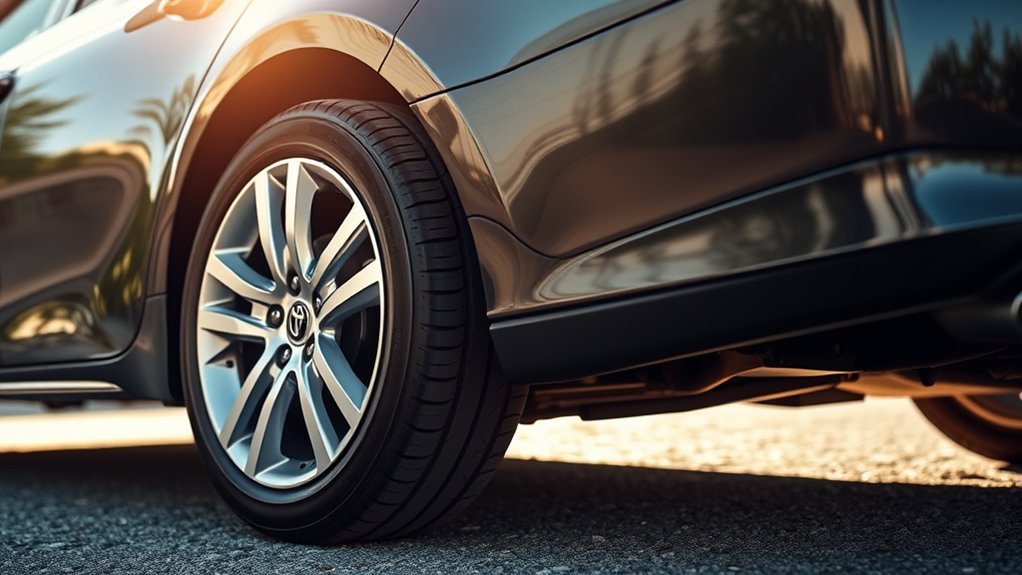
Seventeen-inch tires often give a Toyota Camry a useful balance of ride comfort, steering response, and tire availability. The sidewall is tall enough to absorb everyday bumps better than many low-profile tires, while the wheel size still supports confident handling for commuting, highway driving, and light spirited driving.
The common 215/55R17 size is popular because it keeps the tire’s overall shape close to factory design on many Camry models that came with 17-inch wheels. That helps the speedometer, ABS, traction control, ride height, and fender clearance work as intended.
Fitment is still model-specific. Toyota changed the Camry lineup for 2025, and its official 2025 release lists the LE with 16-inch wheels, the XLE and SE with 18-inch wheels, and the XSE with 19-inch wheels. That means owners of newer Camrys should not assume a 17-inch tire is original equipment unless the vehicle’s placard or build information says so.
Toyota Camry 17-Inch Tire Size: OEM Fitment Basics
For many Camry owners shopping for 17-inch tires, 215/55R17 is the size to check first. The number tells you the tire width, sidewall height, construction type, and wheel diameter. It does not tell you everything, though. You also need the service description, such as 94V or 95H, because that confirms the load and speed capability.
Note: A tire that says 215/55R17 can still be wrong for your Camry if the load index, speed rating, tire type, or pressure recommendation does not match your vehicle.
| What to Check | Why It Matters |
| Tire size, such as 215/55R17 | Confirms width, sidewall ratio, radial construction, and 17-inch wheel fitment |
| Load index | Shows how much weight the tire can safely carry |
| Speed rating | Shows the tire’s tested speed capability under proper load and inflation |
| Cold tire pressure | Keeps handling, tire wear, braking, and fuel economy closer to factory design |
| Wheel size and offset | Prevents rubbing, vibration, clearance problems, and poor steering feel |
How to Identify the Right 17-Inch Tire Size for Your Camry
Start with the easiest and safest source: the Tire and Loading Information Label on the driver-side door edge or door pillar. It lists the tire size and recommended cold PSI for the original wheel setup. Then compare that information with your current tire sidewall and your owner’s manual.
- Read the driver-door placard. Look for the original tire size, load information, and cold tire pressure.
- Check your current tire sidewall. Confirm the size reads 215/55R17 if you are replacing 17-inch Camry tires.
- Confirm the service description. Match or exceed the load index and speed rating shown for your vehicle.
- Verify your model year and trim. Newer Camrys may use 16-, 18-, or 19-inch wheels from the factory instead of 17-inch wheels.
- Ask before changing wheel size. If you are moving from 16, 18, or 19 inches to 17 inches, have a tire professional confirm brake clearance, offset, overall diameter, and TPMS compatibility.
Decoding 215/55R17
The size 215/55R17 breaks down like this:
- 215 means the tire is about 215 millimeters wide.
- 55 means the sidewall height is 55% of the tire’s width.
- R means radial construction.
- 17 means the tire fits a 17-inch wheel.
Understanding Load Index, Speed Rating, and Pressure
After the tire size, you’ll usually see a service description such as 94V or 95H. The number is the load index, and the letter is the speed rating. Do not treat “92V” or “95H” as only a load index; the letter is a separate rating.
For tire pressure, use the cold PSI on the Camry’s door placard. Many Camrys list pressures in the low-to-mid 30 psi range, but the exact number can vary by year, trim, tire size, and load condition.
Warning: Do not use the maximum PSI printed on the tire sidewall as your normal daily tire pressure. That number is the tire’s maximum limit, not Toyota’s recommended pressure for your Camry.
Best 17-Inch Tire Types for a Toyota Camry
The best 17-inch tire for your Toyota Camry depends on your climate, driving style, road conditions, and budget. Instead of choosing only by brand name, match the tire category to how you actually drive.
[Products Worth Considering]

Measure tire tread depth quickly and accurately with this LUMITECO dial gauge that reads in 1/32" increments up to 14/32". The color-coded green/yellow/red zones make it easy to judge tire wear and know when replacement is needed. A rugged, compact design with a protective pouch helps keep the gauge ready for use on cars, trucks, motorcycles, and more.

Monitor tire tread wear with a smart, color-coded depth gauge that shows clear condition ranges at a glance. The bar is range marked for fast, easy readings, helping you maintain safer traction and performance. Each gauge is portable with a pocket clip, and the set includes 20 units for daily use and sharing.

Keep your tires properly inflated with this analog VONDIOR tire pressure gauge, designed for fast, easy readings without batteries. The swiveling, two-axis hose and large glow dial help you measure at any tire angle with instant visibility. Built with a protective rubber shield, it supports durable, low-maintenance use for cars and trucks.
Touring All-Season Tires
Touring all-season tires are the safest default choice for many Camry owners. They usually focus on quiet ride quality, predictable handling, long tread life, and good wet-road traction. Choose this type if you mostly drive to work, school, errands, and highway trips.
Grand Touring and Performance All-Season Tires
Grand touring or performance all-season tires can give your Camry sharper steering and stronger dry-road grip while still keeping reasonable comfort. They may cost more, and some wear faster than basic touring tires. Always confirm the tire is available in the correct 215/55R17 size and has a service description that matches your Camry.
Winter Tires for 17-Inch Camry Wheels
If you drive in regular snow, ice, or freezing temperatures, dedicated winter tires are a better choice than all-season tires. Look for a tire size and service description that matches your Camry, and choose winter tires marked for severe snow service if your local conditions require it.
Pro Tip: If you keep a separate winter set, 17-inch wheels can be a practical size because tires are often easier to find and may cost less than larger 18- or 19-inch winter tires.
Common 17-Inch Fitment Problems and Solutions
Most 17-inch tire problems happen when the tire size looks close but the full fitment is not correct. Check these issues before installation:
- Rubbing on turns or bumps: The tire may be too wide, the offset may be wrong, or the overall diameter may be too far from the factory setup.
- Speedometer error: A major diameter change can make the speedometer and odometer read incorrectly.
- ABS or traction-control concerns: Large tire-size changes can affect wheel-speed readings.
- Vibration after installation: The tires may need balancing, the wheel may be bent, or the tire may not be seated correctly.
- Uneven tread wear: The Camry may need alignment, rotation, suspension inspection, or pressure correction.
- TPMS warning light: The tire-pressure monitoring sensors may need service, replacement, or relearning after wheel or tire changes.
If you are replacing tires on the original 17-inch wheels, stay with the placard size unless Toyota or a qualified tire professional confirms another size. If you are changing wheel size, confirm brake clearance, offset, center bore, lug pattern, tire diameter, load rating, and TPMS support before buying.
Essential Maintenance Tips for Longer 17-Inch Tire Life
Good tire maintenance helps your Camry ride smoother, brake more predictably, and use the full life of the tread. The most important habits are simple:
- Check tire pressure monthly. Measure when the tires are cold, ideally before driving or after the car has been parked for several hours.
- Use the door-placard PSI. Do not guess based on tire appearance or sidewall maximum pressure.
- Inspect tread depth. Tires should be replaced when they reach 2/32 inch of tread depth, and earlier replacement may be wise if you often drive in heavy rain or snow.
- Rotate on schedule. A 5,000- to 8,000-mile interval is common when recommended by the vehicle manufacturer, but follow your Toyota maintenance schedule first.
- Balance and align when needed. Vibration, pulling, crooked steering, or uneven wear are signs the tires or suspension need attention.
- Inspect sidewalls. Replace tires with bulges, deep cuts, exposed cords, or impact damage.
Note: A TPMS light warns you about major pressure problems, but it does not replace monthly manual pressure checks with a gauge.
NHTSA advises checking tire pressure regularly, replacing tires at unsafe tread depth, and using the vehicle manufacturer’s pressure label rather than the tire sidewall maximum.
Upgrading From Standard to 17-Inch Tires: Pros and Cons
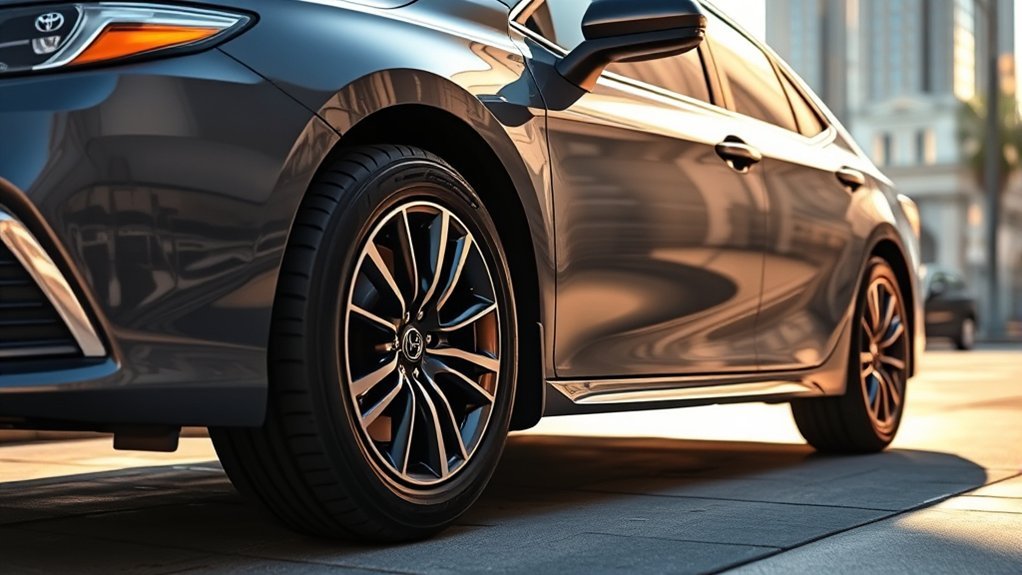
Upgrading to 17-inch wheels and tires can make sense if your Camry originally came with smaller wheels and you want a slightly sharper look and more tire choices. The size can still preserve good ride comfort compared with many low-profile setups.
The main benefit is balance. A 17-inch setup can offer stable handling, a clean factory-style appearance, and a broad selection of touring, all-season, performance, and winter tires. It can also be a practical choice if you want a second wheel-and-tire set for seasonal driving.
The trade-offs are fitment risk and cost. If the wheel offset, tire diameter, load rating, or TPMS setup is wrong, you may create rubbing, warning lights, speedometer error, vibration, or uneven wear. The safest upgrade is one that stays close to Toyota’s approved specifications for your exact Camry.
[Products Worth Considering]
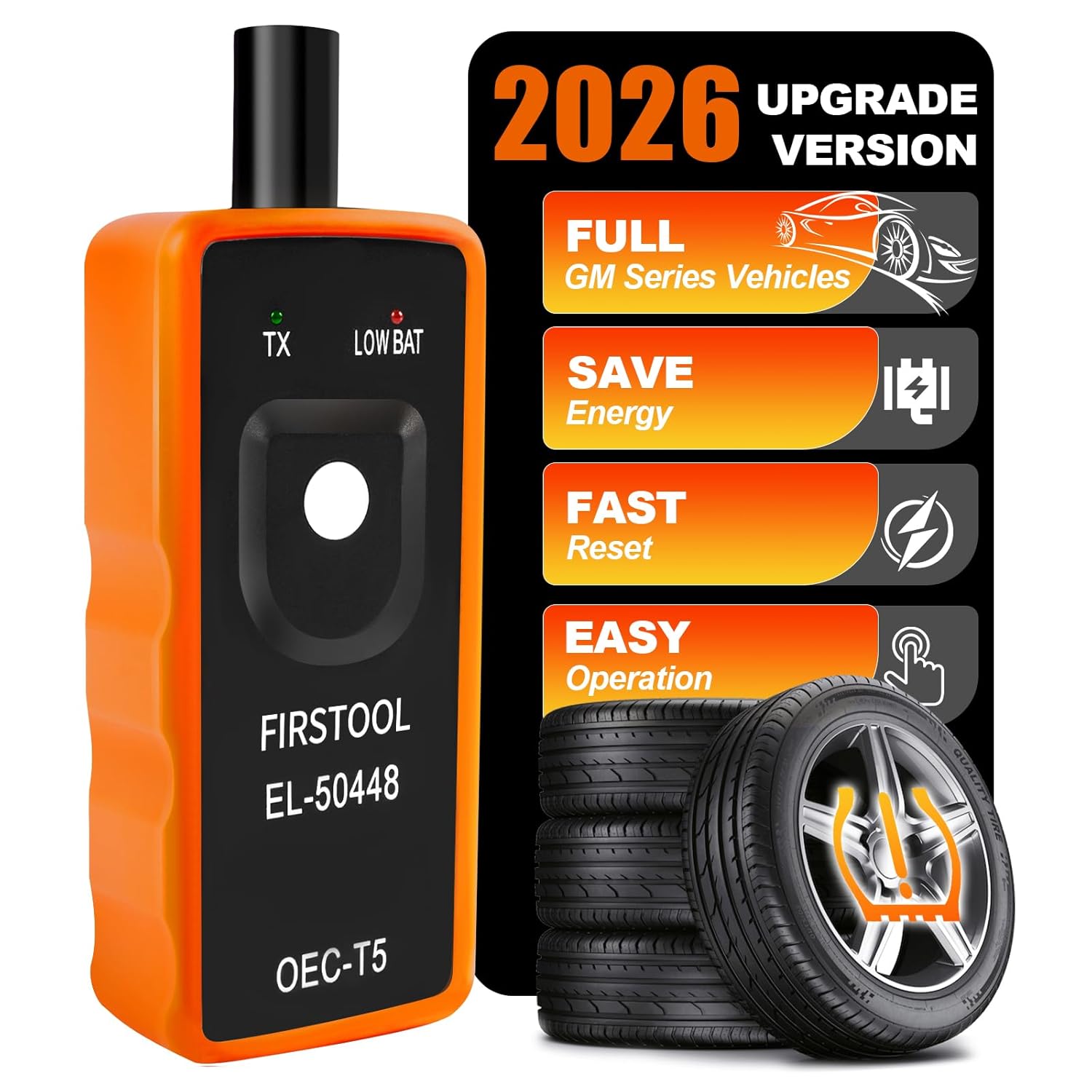
This TPMS relearn tool helps you quickly activate, match, and reset GM tire pressure sensors to keep the vehicle monitoring system working properly. It clears tire pressure alarms and dashboard warning lights after sensor replacement or tire rotation, and supports learning for common 315/433 MHz TPMS sensors. Designed for simple one-button operation, it can help you avoid unnecessary trips to repair shops.

The SAFELIFE dial tire tread depth gauge measures tread depth in 1/32 inch increments with clear, easy-to-read 2-inch dial face. Color zones using a traffic light system help you quickly judge whether tread is low, marginal, or ample for safer driving. Built with a durable zinc cast body and a metal detect probe for precise, comfortable use across cars, motorcycles, trucks, and buses.

Measure tyre tread depth precisely with a digital gauge that reads in both MM and inches, helping you monitor safe driving conditions. The large LCD screen is easy to operate, and the compact tool fits for cars, trucks, and motorcycles. It provides high accuracy with a 0-25.4mm range and includes a 1-year warranty for added peace of mind.
How Do 17-Inch Tires Affect Performance?
Seventeen-inch tires can affect your Camry’s steering feel, braking, ride comfort, road noise, and fuel economy. Compared with smaller wheels, a 17-inch setup may feel a little more responsive because the tire sidewall is usually shorter. Compared with larger 18- or 19-inch setups, it may ride more comfortably because there is more sidewall to absorb bumps.
Tire type matters as much as size. A premium touring tire can feel quieter and smoother than a budget tire in the same size. A performance all-season tire can feel sharper but may ride firmer. A winter tire can feel softer in warm weather but much more secure in snow and freezing conditions.
Pressure also changes performance. Underinflated tires can feel sluggish, wear unevenly, run hotter, and reduce fuel economy. Overinflated tires can ride harshly and reduce the tread’s contact patch. That is why the cold pressure on the placard is so important.
Where to Buy Quality 17-Inch Tires for Your Toyota Camry
You can buy 17-inch Camry tires from a Toyota dealer, local tire shop, warehouse club, or major online tire retailer. A Toyota Tire Center can help match tires to your Toyota model and handle installation, balancing, and tire-pressure monitoring needs.
Before ordering online, confirm five details: tire size, load index, speed rating, season type, and warranty. Also check whether the price includes mounting, balancing, valve stems, TPMS service, disposal fees, and road-hazard coverage.
Popular tire brands such as Michelin, Bridgestone, Continental, Goodyear, Pirelli, Yokohama, and Toyo often sell tires in Camry-friendly sizes. Brand reputation matters, but correct fitment matters more. A well-reviewed tire is still the wrong tire if it does not match your Camry’s specifications.
[Products Worth Considering]

Upgrade your Toyota’s wheels with durable aluminum alloy valve stem caps that help protect valve cores from corrosion and direct exposure to road grime, clay, water, and snow. Rubber rings improve sealing to help prevent air leakage and maintain stable tire pressure for safer driving. These caps are easy to install or remove without tools and add a unique, stylish look to your car.

These universal tire valve stem caps help protect valve cores from dust, debris, and moisture while helping maintain stable tire pressure. The corrosion-resistant metal construction and sealed design provide reliable protection in road grime, mud, and winter conditions. Twist-on installation makes them quick to fit on cars, SUVs, trucks, and motorcycles.

The Topeak SmartGauge D2 delivers precise digital tire pressure readings for bikes, motorcycles, and sports equipment up to 250 psi (17 bar). Its rotating SmartHead works with both Presta and Schrader valves, so you can check pressure quickly without adapters. The LCD display makes it easy to read results in psi, bar, or kg/cm² with an included CR2032 battery for immediate use.
Frequently Asked Questions
What is the most common 17-inch tire size for a Toyota Camry?
The most common 17-inch Camry tire size is 215/55R17. It fits many Camry models that came with 17-inch wheels, but you should still confirm your exact size on the driver-door placard or in the owner’s manual.
Can I use all-season tires on my Camry’s 17-inch wheels?
Yes, you can use all-season tires if they match the correct size, load index, and speed rating for your Camry. They are a good everyday choice for mild climates, but dedicated winter tires are better for regular snow, ice, or freezing temperatures.
What is the recommended tire pressure for 17-inch Camry tires?
Use the cold tire pressure listed on your driver-side door placard or in your Toyota owner’s manual. Many Camrys are in the low-to-mid 30 psi range, but the exact number can vary by model year, trim, tire size, and load condition.
How often should I rotate my 17-inch tires?
A common rotation interval is every 5,000 to 8,000 miles when recommended by the vehicle manufacturer, but your Toyota maintenance schedule should be the final guide. Regular rotation helps reduce uneven wear and can extend tire life.
Are 17-inch tires suitable for winter driving?
Yes, 17-inch tires can be suitable for winter driving if they are true winter tires in the correct Camry size and service rating. All-season tires may work in light winter conditions, but winter tires are safer for frequent snow, ice, and freezing temperatures.
What is the minimum tread depth for 17-inch tires?
The legal minimum in many places is 2/32 inch, and NHTSA says tires at that depth should be replaced. For better wet or winter traction, many drivers replace tires before they reach the minimum.
Can I put 17-inch wheels on a Camry that came with 16-, 18-, or 19-inch wheels?
Sometimes, but you should not guess. A tire professional should confirm brake clearance, offset, lug pattern, center bore, overall tire diameter, TPMS compatibility, and load rating before you change wheel size.
Conclusion
The right 17-inch tire for a Toyota Camry is not just about choosing a familiar size like 215/55R17. You also need the correct load index, speed rating, pressure, wheel fitment, and tire type for your driving conditions. Start with the driver-door placard and owner’s manual, then choose a tire that matches your Camry’s year, trim, and wheel setup. When in doubt, have a qualified tire shop or Toyota dealer verify the fitment before installation.
Sources
- NHTSA Tire Safety — tire pressure, tread depth, tire rotation, TPMS, and tire maintenance guidance
- Toyota Owner’s Manuals and Warranty Lookup — official owner-manual verification by vehicle
- Toyota 2025 Camry Press Release — current-generation Camry trim and wheel-size information
- Toyota Tire Center — Toyota dealer tire matching, tire brands, and installation support