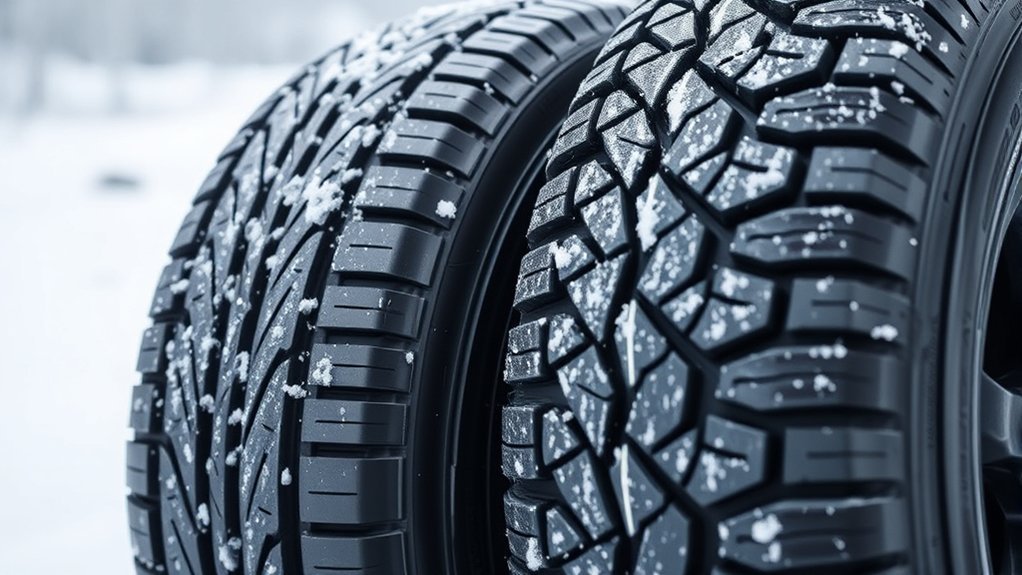
If you drive a Toyota Hilux in cold, snowy, or icy regions, your tire choice affects braking distance, steering control, traction, and confidence every time the road turns slick. All-season tires can work well in mild weather, but winter tires are built for cold pavement, packed snow, slush, and ice. The difference becomes more noticeable once temperatures stay below about 7°C / 45°F, even before the road fully freezes.
Last updated July 6, 2026 · Reviewed for winter-driving accuracy
Quick Answer
Winter tires are the safer choice for a Toyota Hilux in regular cold, snow, slush, or ice. All-season tires suit mild climates, but they lose flexibility and grip as temperatures drop. If winter temperatures often stay below about 7°C / 45°F, choose four matching winter tires.
Key Takeaways
- Winter tires stay more flexible in cold weather, which helps your Hilux maintain grip on snow, ice, slush, and cold pavement.
- All-season tires are best for mild climates with rare snow, but they are not ideal for repeated freezing, deep snow, or icy roads.
- Look for the Three-Peak Mountain Snowflake symbol if you need a tire tested for severe snow service.
- Install four matching winter tires, not just two, to keep braking and cornering balanced.
- Before buying, confirm your Hilux tire size, load rating, speed rating, and cold tire pressure from the door placard or owner’s manual.
Why All-Season Tires Might Not Be Enough for Your Hilux
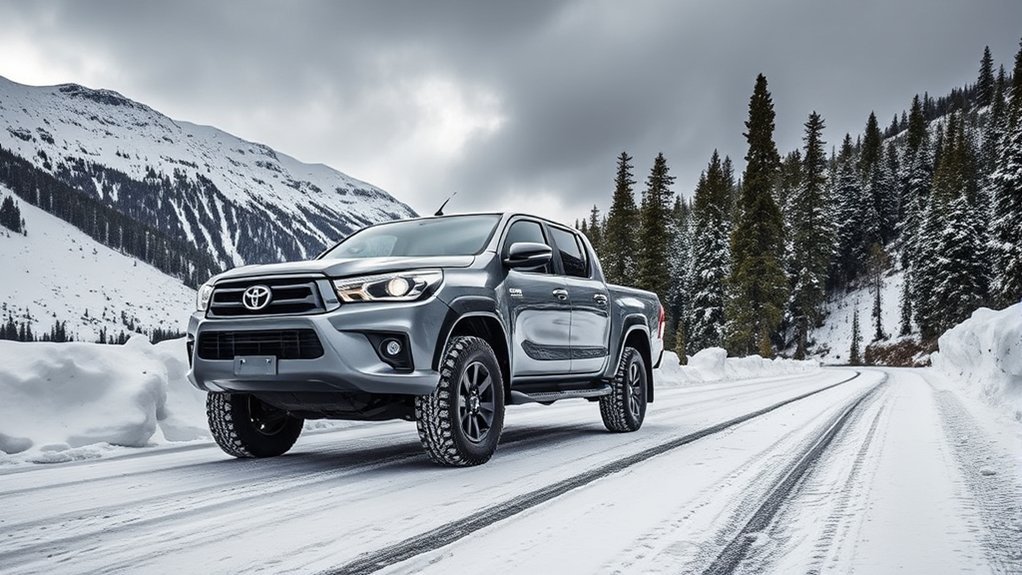
All-season tires are designed to balance dry-road comfort, wet-road control, tread life, and light winter use. That balance makes them convenient, but it also creates limits. When temperatures fall below about 7°C / 45°F, all-season rubber can stiffen, which reduces the tire’s ability to conform to the road surface.
For a Toyota Hilux, that matters because the truck may carry cargo, tow, or drive on rough rural roads where traction changes quickly. A tire that feels stable on dry pavement can feel less predictable on compacted snow, black ice, or slush-covered corners.
All-season tires may still handle occasional light snow, especially when they are new and have plenty of tread. However, they are not the best choice for frequent freeze-thaw cycles, untreated roads, mountain routes, or areas where snow and ice stay on the road for days.
Why Winter Tires Are a Game-Changer in Cold Weather
Winter tires use cold-weather rubber compounds, deeper tread blocks, and more siping to help the tread stay flexible and bite into snow. This helps your Hilux accelerate, steer, and stop with more control when the road is cold and slick.
Pro Tip: Look for the Three-Peak Mountain Snowflake symbol on winter tires. This marking means the tire meets specific snow traction performance requirements for severe snow conditions.
Key advantages of winter tires include:
- Improved traction: Deeper grooves and dense sipes help the tire grip snow, slush, and icy patches.
- Better braking control: Winter tires can reduce stopping distance on winter roads compared with all-season tires, though results vary by speed, tread depth, load, and road surface.
- More predictable steering: Flexible tread helps the tire maintain contact with cold pavement, so the Hilux responds more consistently during turns.
- Better slush clearing: Winter tread channels help move snow, slush, and water away from the contact patch.
Cold-weather grip starts before the road freezes. Once temperatures stay near 7°C / 45°F or lower, winter tires usually offer a clear safety advantage over standard all-season tires.
All-Season vs Winter Tires: Quick Comparison
| Factor | All-Season Tires | Winter Tires |
| Best climate | Mild weather, rain, dry roads, and occasional light snow | Cold regions with regular snow, slush, freezing rain, or ice |
| Cold-weather grip | Declines as rubber stiffens in colder temperatures | Stays more flexible for better winter traction |
| Snow and ice control | Acceptable only in light winter conditions | Stronger grip, braking, and steering control |
| Warm-weather use | Designed for year-round use in mild climates | Should be removed when warm weather returns to avoid faster wear |
| Best Hilux use case | Urban driving in mild winter areas | Rural roads, work sites, mountains, snowbelt regions, and icy commutes |
[Products Worth Considering]

Measure tire tread depth quickly and accurately with this LUMITECO dial gauge that reads in 1/32" increments up to 14/32". The color-coded green/yellow/red zones make it easy to judge tire wear and know when replacement is needed. A rugged, compact design with a protective pouch helps keep the gauge ready for use on cars, trucks, motorcycles, and more.

Monitor tire tread wear with a smart, color-coded depth gauge that shows clear condition ranges at a glance. The bar is range marked for fast, easy readings, helping you maintain safer traction and performance. Each gauge is portable with a pocket clip, and the set includes 20 units for daily use and sharing.

These universal tire valve stem caps help protect valve cores from dust, debris, and moisture while helping maintain stable tire pressure. The corrosion-resistant metal construction and sealed design provide reliable protection in road grime, mud, and winter conditions. Twist-on installation makes them quick to fit on cars, SUVs, trucks, and motorcycles.
Key Factors in Choosing the Right Tire for Your Climate
Your local climate should be the main factor when deciding between all-season and winter tires for your Hilux.
If you live in a region with mild winters, regular rain, and only occasional snow, all-season tires may be enough. They offer balanced road comfort, longer seasonal usability, and no seasonal tire change.
If you drive through frequent snow, ice, freezing rain, or long stretches below 7°C / 45°F, winter tires are the safer choice. Their cold-weather design gives your truck more predictable braking and handling when road grip drops.
Note: In Québec, winter tires are mandatory from December 1 to March 15 for vehicles registered in Québec, with listed exceptions. Drivers who do not comply may face a fine. Check the official Québec winter tire requirements before driving there.
What About All-Weather Tires?
All-weather tires are different from regular all-season tires. Many all-weather tires carry the Three-Peak Mountain Snowflake symbol, which means they meet a snow traction performance requirement. They can be a useful compromise if your area gets cold weather and some snow, but not severe winter conditions for months at a time.
For a Hilux owner, all-weather tires may make sense if you want one set of tires for the full year and you mostly drive in a city or mild winter region. However, dedicated winter tires remain the better choice for frequent ice, heavy snowfall, steep roads, remote work sites, or loaded truck use in winter.
Top Features to Look for in All-Season and Winter Tires
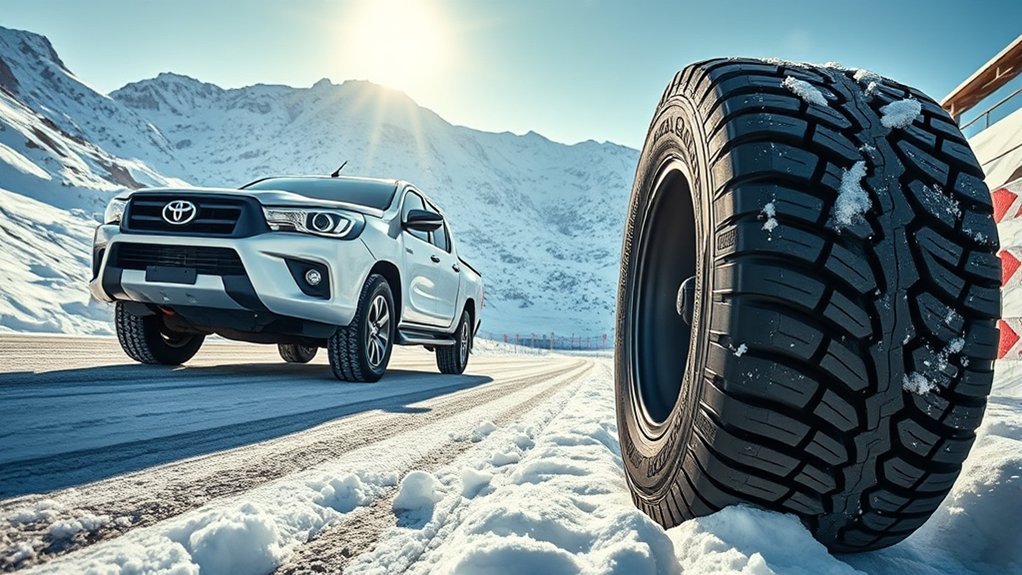
When selecting tires for your Hilux, focus on the details that affect real winter safety, not just the tire category name.
- Tread design: Winter tires use deeper grooves and more sipes for snow and ice traction, while all-season tires focus on a balance of wet grip, dry handling, and tread life.
- Rubber compound: Winter tires stay more flexible in cold weather, while standard all-season tires can harden as temperatures drop.
- 3PMSF marking: For real winter use, look for the mountain snowflake symbol instead of relying only on “M+S” markings.
- Correct tire size: Match the size listed on your Hilux tire placard, owner’s manual, or trusted tire selector.
- Load rating: Choose a tire with a load rating suitable for your Hilux, especially if you tow, haul tools, or drive loaded.
- Speed rating: Match or exceed the correct rating recommended for your vehicle and driving needs.
[Products Worth Considering]

The Kurgo Seasonal Tire Tote helps protect your car interior, clothes, and garage from tire grime, brake dust, and residue during seasonal tire changes. Its universal design fits most passenger tires between 22" and 31" in diameter, making storage and transport simpler with less mess. Built for rugged, repeated use, it’s machine washable for easy care and comes with a lifetime warranty.

Accurately measure tire tread depth with a calibrated gauge marked from 0 to 1 inch in 1/32 inch increments. The color-coded bar helps you quickly identify tread condition ranges, supporting safe driving for trucks, motorcycles, automobiles, and passenger vehicles.

Steelman white tire marking crayons provide high-contrast, semi-permanent marks for repairing and inspecting tires and equipment. They write on wet or dry, smooth or coarse surfaces including rubber, metal, glass, and wood, making them ideal for puncture location and damage outlining. The lead- and zinc-free crayons resist weather and fading yet wipe away when you no longer need the marks.
Hilux-Specific Checks Before You Buy
Before ordering any tire, check the tire placard on your Hilux and compare it with your owner’s manual. Toyota also provides tire resources that help owners find replacement and winter tires designed to fit their specific Toyota vehicle.
Pay special attention to these checks:
- Wheel size: Hilux tire sizes vary by market, trim, and wheel package, so do not assume one size fits every model year.
- Load needs: A pickup that carries cargo or tows needs a tire with the right load capacity.
- Driving surface: Choose a more aggressive winter or all-terrain winter tire if you drive on gravel, rural roads, job sites, or unplowed routes.
- Four-wheel drive: 4WD helps you move forward, but it does not shorten stopping distance. Tires still provide the grip for braking and cornering.
- TPMS and wheels: If you use a separate winter wheel set, confirm the wheels, sensors, and lug hardware are compatible.
[Products Worth Considering]

The SAFELIFE dial tire tread depth gauge measures tread depth in 1/32 inch increments with clear, easy-to-read 2-inch dial face. Color zones using a traffic light system help you quickly judge whether tread is low, marginal, or ample for safer driving. Built with a durable zinc cast body and a metal detect probe for precise, comfortable use across cars, motorcycles, trucks, and buses.

Upgrade your Toyota’s wheels with durable aluminum alloy valve stem caps that help protect valve cores from corrosion and direct exposure to road grime, clay, water, and snow. Rubber rings improve sealing to help prevent air leakage and maintain stable tire pressure for safer driving. These caps are easy to install or remove without tools and add a unique, stylish look to your car.

Milton S-921 pencil tire pressure gauge helps you maintain optimal tire pressure for passenger cars with accurate readings in PSI and kPa. It features a built-in deflator valve for convenient pressure adjustments, plus a single chuck head and nylon indicator bar for easy use on the go. Built from durable plated brass and designed for reliable performance, it’s a practical road trip and cold-weather maintenance tool.
Safety Benefits of Switching to Winter Tires This Season
Switching to winter tires is one of the most effective safety upgrades you can make for cold-weather driving. The benefit is not just better acceleration in snow. Winter tires also help with braking, cornering, and steering control when your Hilux needs grip most.
For best results, install four matching winter tires. Mixing winter tires with all-season tires can create uneven grip between the front and rear axles, which may make the truck harder to control during emergency braking or quick steering corrections.
Also check winter tire condition before the season starts. Québec recommends at least 4.8 mm of tread depth for winter driving, even though the basic minimum tread depth is lower. Cold weather also lowers tire pressure, so check pressure when the tires are cold and follow the vehicle placard or owner’s manual.
Warning: Winter tires improve grip, but they do not cancel the risk of ice. Slow down, leave extra following distance, avoid sudden inputs, clear snow from the full vehicle, and delay travel when road conditions are unsafe.
When to Switch Between All-Season and Winter Tires
A practical rule is to install winter tires when daily temperatures consistently stay near 7°C / 45°F or lower. Do not wait for the first major snowfall if your area gets early ice, morning frost, or freezing rain.
Switch back to all-season or summer tires when winter conditions have ended and temperatures stay warmer. Winter tires can wear faster on warm, dry pavement because their softer compound is designed for cold weather.
If your region has a legal winter tire period, follow the law first. If there is no legal requirement, use local weather patterns, road conditions, and your driving routes to decide the safest timing.
Frequently Asked Questions
Is it better to buy all-season tires or winter tires for a Toyota Hilux?
Choose all-season tires if you drive in a mild climate with rare snow and mostly wet or dry roads. Choose winter tires if your Hilux regularly sees temperatures below about 7°C / 45°F, snow, slush, freezing rain, or ice.
Are winter tires worth it on a 4×4 Hilux?
Yes. Four-wheel drive helps your Hilux accelerate, but it does not replace tire grip for stopping or cornering. Winter tires give the truck better traction when braking, steering, and controlling slides on snow or ice.
Can I install only two winter tires?
No. Install four matching winter tires. Using only two can create uneven grip between the front and rear axles, which may reduce stability during braking, turning, or emergency maneuvers.
What does the Three-Peak Mountain Snowflake symbol mean?
The Three-Peak Mountain Snowflake symbol means the tire meets a specific snow traction performance requirement. It is the symbol to look for when you need a tire designed for severe snow conditions.
Are all-weather tires enough for winter driving?
All-weather tires can work for moderate winter driving if they carry the Three-Peak Mountain Snowflake symbol. Dedicated winter tires are still the better choice for heavy snow, regular ice, mountain roads, remote work routes, or long cold seasons.
Can I use winter tires all year?
It is not recommended. Winter tires use softer compounds that can wear faster in warm weather. They may also feel less sharp on warm, dry roads compared with all-season or summer tires.
When should I switch my Hilux to winter tires?
Switch when temperatures regularly stay near 7°C / 45°F or lower, or earlier if snow and ice arrive in your area. In places with legal winter tire dates, follow the local requirement.
Conclusion
For Toyota Hilux drivers, the choice between all-season and winter tires comes down to climate, road conditions, and safety. All-season tires offer convenience in mild weather, but winter tires provide better grip, braking control, and stability when temperatures drop and roads turn snowy or icy.
If you regularly face snow, slush, freezing rain, or ice, fit four matching winter tires with the Three-Peak Mountain Snowflake symbol. Confirm the correct tire size, load rating, speed rating, and cold tire pressure for your Hilux before buying. That small preparation step can make a major difference in winter control.
Sources
- Transport Canada — Using winter tires — backs up the 7°C guidance, winter tire flexibility, pressure checks, and 3PMSF symbol.
- Gouvernement du Québec — Requirements for winter tires — backs up Québec winter tire dates, compliance details, fines, tread guidance, and exemptions.
- SAAQ — Winter driving — backs up Québec winter driving rules and safe winter-driving reminders.
- Toyota Canada Tire Centre — backs up using Toyota-specific tire selection resources for replacement and winter tires.
- NHTSA — Winter driving tips — backs up tire inspection and general winter vehicle safety guidance.