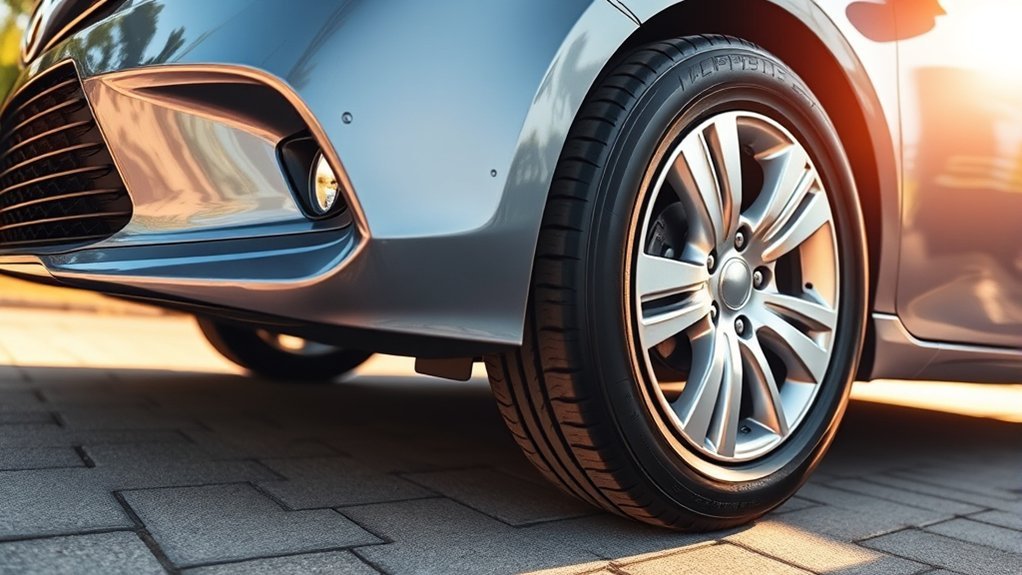
Upsizing tires on your Toyota Camry can improve grip, steering response, ride feel, and appearance, but the upgrade must stay close to the factory tire size. The safest approach is to start with the tire placard on the driver-side door jamb, then compare the new tire’s overall diameter, load index, speed rating, wheel width, offset, and clearance before installation.
Quick Answer
You can usually upsize Toyota Camry tires safely when the new overall diameter stays within about 3% of the original size, the load index and speed rating meet or exceed OEM requirements, and the tire clears the fenders, struts, and suspension at full steering lock.
Key Takeaways
- Keep the new tire’s overall diameter within about 3% of the original Camry tire size.
- Match or exceed the factory load index and speed rating, not just the tire width.
- Confirm wheel width, offset, strut clearance, fender clearance, and full-turn steering clearance before driving normally.
- Use the driver-door tire placard or owner’s manual for cold tire pressure, not the maximum pressure printed on the tire sidewall.
- After installation, check for rubbing, vibration, steering pull, TPMS warnings, and uneven wear.
At a Glance
| Time Required | 15 to 30 minutes for size research, plus installation time at a tire shop |
| Difficulty | Moderate, because tire size, wheel fitment, and safety ratings must all match |
| Tools Needed | Tire size calculator, tire placard, owner’s manual, tire pressure gauge, and help from a qualified installer |
| Cost | Varies by tire brand, wheel size, alignment needs, and whether new wheels are required |
Getting to Know Your Camry’s Tire Size and Specs
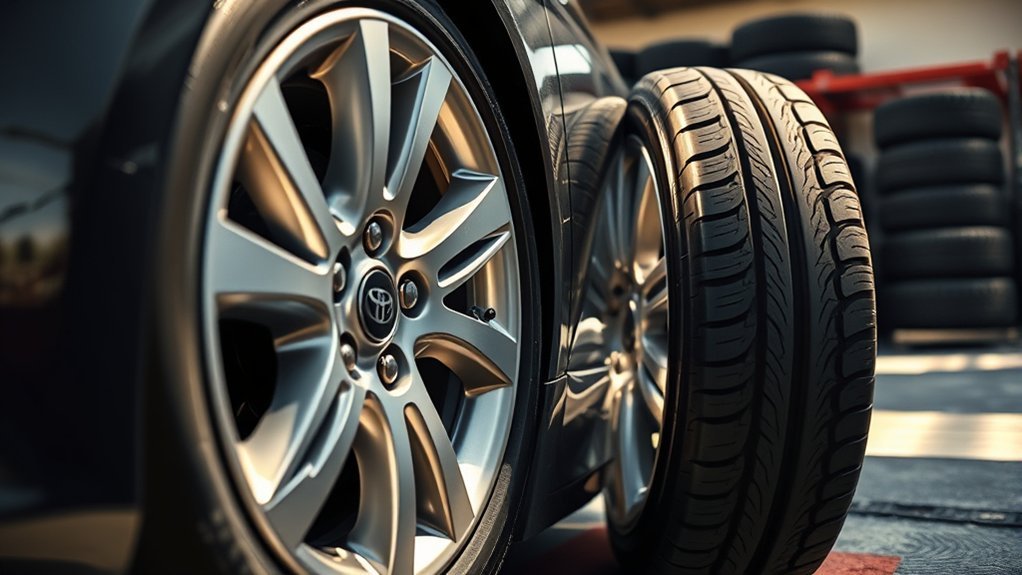
Before you compare new tire sizes, find your Camry’s original tire size, load index, speed rating, and recommended cold tire pressure. The most reliable place to check is the Tire and Loading Information Label on the driver-side door jamb or the owner’s manual. NHTSA recommends using that label for the correct tire size and pressure, and Toyota also points owners to the door jamb sticker, owner’s manual, and online manuals for pressure specifications.
A tire code such as 215/55R17 tells you three key measurements. The first number is tire width in millimeters, the second number is sidewall height as a percentage of width, and the final number is the wheel diameter in inches. Michelin explains that the service description, such as 94V or 98V, identifies the tire’s load and speed rating.
Note: Two tires can share the same size but have different load indexes, speed ratings, sidewall construction, and XL ratings. Always verify the full service description before buying.
The 3% Rule: How Much Can You Safely Upsize Tires?
The 3% rule is a common tire-fitment guideline for cars and vans. Tire Rack says staying within a 3% tire diameter change is desirable for cars and vans because maintaining overall diameter helps preserve accurate speed data going into the vehicle computer.
Keep the new tire close to the original overall diameter first. Width, wheel size, and appearance matter, but diameter is what most directly affects speedometer accuracy and wheel-speed-based safety systems.
You can calculate overall tire diameter with this formula:
Overall diameter = wheel diameter + 2 × sidewall height
For metric tire sizes, sidewall height equals tire width multiplied by the aspect ratio. For example, a 215/55R17 tire has a sidewall height of 118.25 mm. Add two sidewalls to the 17-inch wheel diameter, and the overall diameter is about 26.3 inches.
Pro Tip: Use a tire size calculator before ordering. A tire that looks only slightly taller on paper can exceed the safe range once you calculate full diameter and circumference.
Safe Camry Upsize Examples
Camry tire sizes vary by generation, trim, drivetrain, and wheel package, so treat these as examples, not universal fitments. Always compare your actual factory size from the tire placard.
| Original Size | Possible New Size | Approx. Diameter Change | Fitment Note |
|---|---|---|---|
| 215/55R17 | 225/55R17 | About +1.6% | Mild width increase, often easier to fit if wheel width allows it |
| 215/55R17 | 235/45R18 | About +0.1% | Typical plus-one style change when paired with the right 18-inch wheel |
| 215/55R17 | 235/50R18 | About +3.6% | Usually beyond the 3% guideline, so it needs extra caution and professional fitment confirmation |
A larger tire is not automatically better. A wider tire can improve dry grip, but it may also add weight, reduce fuel economy, increase road noise, change steering feel, and create rubbing if the wheel offset or suspension clearance is wrong.
[Products Worth Considering]

Upgrade your wheels with MIKKUPPA closed-end lug nuts designed for reliable fit and corrosion resistance. The one-piece, cold-forged and heat-treated steel construction helps resist rust and stripping, while the integrated finish delivers a durable black appearance. Built to OEM standards with a conical 60-degree seat, these nuts provide a secure solution for compatible Ford, Honda, Jeep, and Chevrolet models.

These M14x1.5 closed-end chrome lug nuts are a one-piece replacement designed for secure fitment on compatible GM, Ford, and select Chrysler/Dodge models. Featuring a 60-degree conical seat and anti-rust chrome plating, they help resist corrosion and maintain a bright look for everyday driving. Built for long-term durability, they include OEM-style part references and are backed by 12 months of support.

This car D-wheel lock nut key provides an anti-theft solution for D-shaped wheel lock bolts, helping keep your wheels secure. It features a flower-shaped internal pattern that resists micro-adjustment theft while allowing removal and mounting of compatible locking nuts. Made for reliable performance under high torque, it’s easy to use with standard socket wrench turning for quick tire maintenance and emergency repairs.
Choosing the Right Upsize for Your Camry
A safe tire upgrade is not just about diameter. You also need to confirm the wheel width, wheel offset, load index, speed rating, and inflation pressure. When you plus-size wheels, the usual goal is to use a wider, lower-profile tire while keeping overall diameter close to the original. Tire Rack notes that large changes in overall tire diameter can affect speedometer accuracy and the effectiveness of ABS, traction control, and stability control systems.
- Diameter: Stay within about 3% of the factory tire diameter.
- Load index: Use a tire that meets or exceeds the factory load requirement.
- Speed rating: Use a rating that meets or exceeds the manufacturer’s required rating for your vehicle.
- Wheel width: Make sure the tire is approved for the wheel width you plan to use.
- Offset: Avoid pushing the tire too far inward toward the strut or too far outward toward the fender.
- Pressure: Follow the vehicle placard or owner’s manual, not the tire’s maximum sidewall pressure.
Warning: Do not lower the load index to make a size fit. A tire that cannot carry the required load can overheat, wear faster, and reduce safety during braking, cornering, and highway driving.
[Products Worth Considering]

Upgrade your wheels with MIKKUPPA M12x1.5 mag seat lug nuts built for secure, corrosion-resistant performance. These closed-end chrome lug nuts are a direct replacement for select Toyota models, including Camry, Corolla, RAV4, Sienna, Avalon, Highlander, Matrix, Venza, and Prius. Triple-chromium plating and cold-forged, heat-treated steel help deliver strength for daily driving and replacement needs.

Keep your tires properly inflated with this analog VONDIOR tire pressure gauge, designed for fast, easy readings without batteries. The swiveling, two-axis hose and large glow dial help you measure at any tire angle with instant visibility. Built with a protective rubber shield, it supports durable, low-maintenance use for cars and trucks.

Monitor tire tread wear with a smart, color-coded depth gauge that shows clear condition ranges at a glance. The bar is range marked for fast, easy readings, helping you maintain safer traction and performance. Each gauge is portable with a pocket clip, and the set includes 20 units for daily use and sharing.
What to Check for Tire Clearance and Compatibility
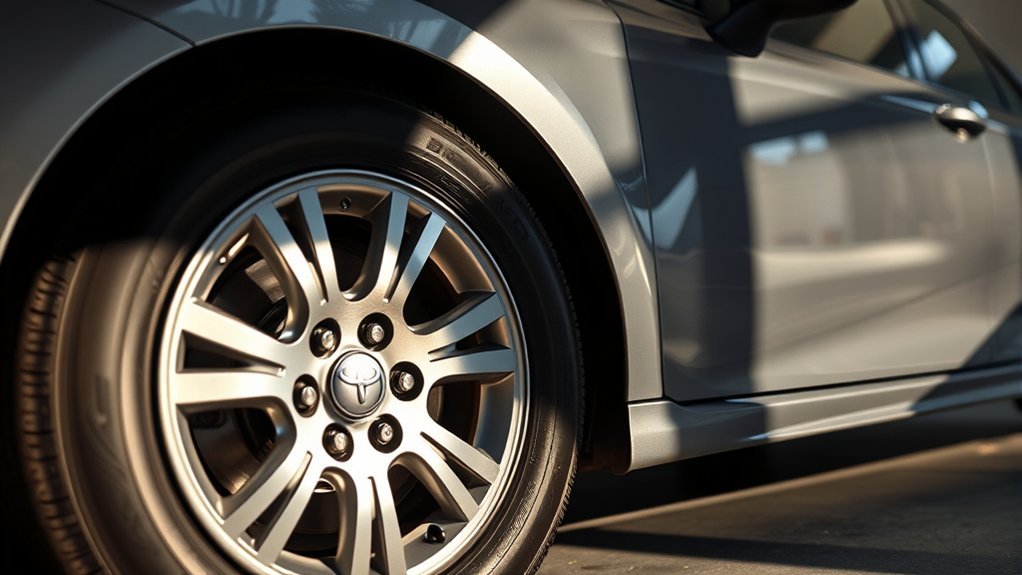
Before upsizing tires, check physical clearance with the car parked, then again during careful low-speed movement. A tire can clear while parked but rub during a turn, over a bump, or when the suspension compresses with passengers or cargo.
- Outer fender clearance: Turn the steering wheel fully left and right and check the tire shoulder near the fender liner.
- Inner suspension clearance: Check the space near the strut, spring perch, control arms, brake lines, and inner liner.
- Wheel offset: Confirm the wheel does not sit too far inward or outward compared with the factory setup.
- Brake clearance: If you change wheels, make sure the wheel clears the brake caliper.
- Full-load clearance: Test clearance with normal passenger or cargo weight if you often drive loaded.
- Winter clearance: If you use snow chains or cable chains, check the owner’s manual because a wider tire may reduce chain clearance.
[Products Worth Considering]

Malco tire mounting and demounting lubricant is a ready-to-use tire lube formulated to reduce friction during tire installation for passenger cars, light trucks, farm tires, and heavy-duty equipment. It provides rust-inhibiting protection to help reduce corrosion on rims and wheels, and helps support proper tire bead seating during inflation to reduce air leakage. The silicone-free, soap-free formula is whitewall safe to help prevent discoloration on whitewall tires and sensitive sidewall markings.
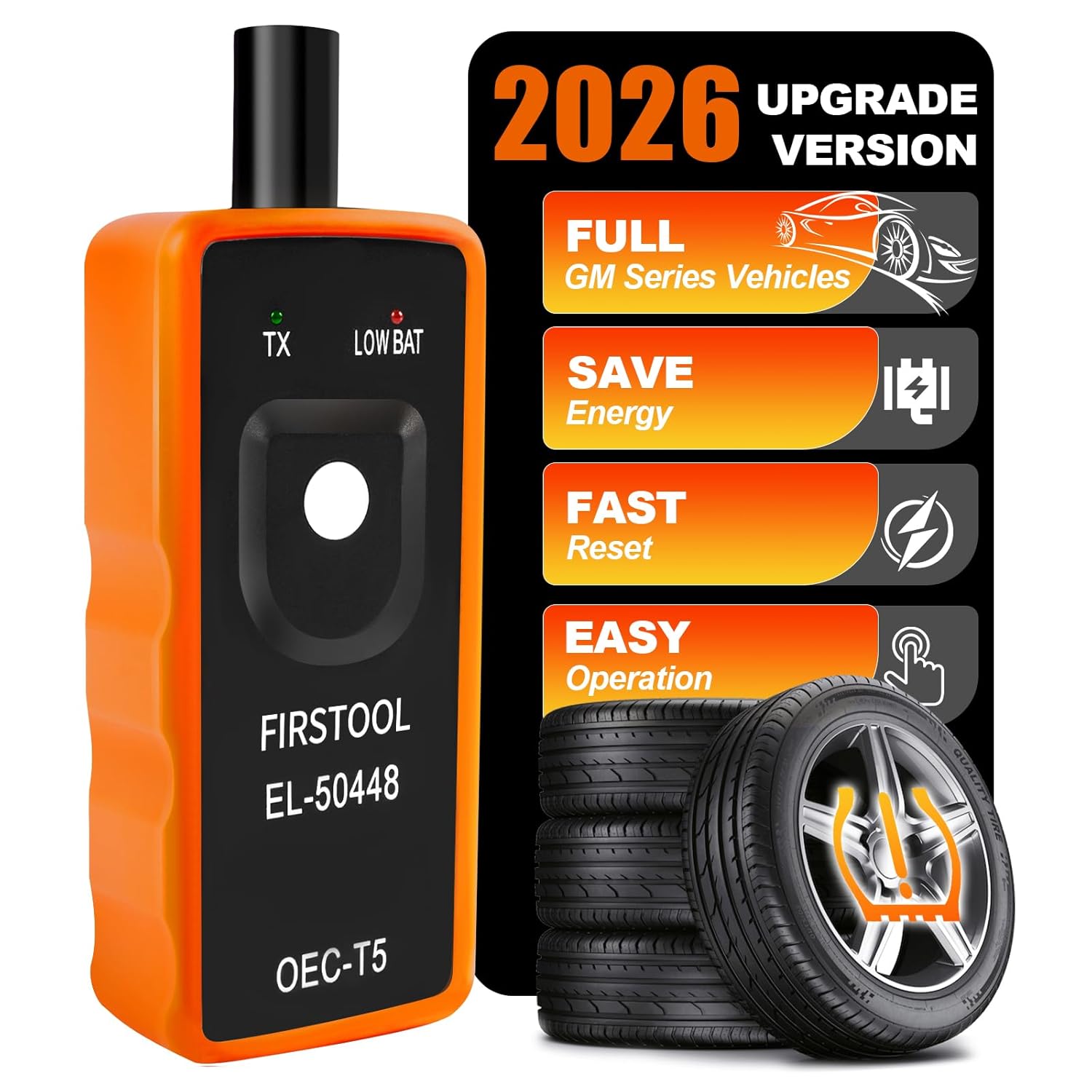
This TPMS relearn tool helps you quickly activate, match, and reset GM tire pressure sensors to keep the vehicle monitoring system working properly. It clears tire pressure alarms and dashboard warning lights after sensor replacement or tire rotation, and supports learning for common 315/433 MHz TPMS sensors. Designed for simple one-button operation, it can help you avoid unnecessary trips to repair shops.

The Trivd Frol 1/2" air impact wrench delivers high performance torque up to 1500 ft-lbs with a twin hammer impact mechanism for strong, balanced blows. It features an ergonomic grip, compact lightweight design, and quick-stop control with 3 forward speeds up to 8000 RPM plus a reverse speed. Built for demanding automotive repair and tire shop work, the rear exhaust helps keep debris away from the surface.
Installation and Safety Checks After Upsizing
Once the new tires are installed, do not assume the job is finished. A short safety check can catch rubbing, vibration, pressure problems, and installation issues before they become expensive.
- Set cold tire pressure: Use the Camry’s door placard or owner’s manual. NHTSA says the correct pressure is the manufacturer’s recommended cold pressure, not the number printed as the tire’s maximum pressure.
- Balance the new tires: New tires should be balanced when installed to reduce vibration.
- Check alignment: Get an alignment if the car pulls, the steering wheel is off center, or the old tires showed uneven wear.
- Test at low speed first: Listen for rubbing during full-lock turns, driveway entries, and small bumps.
- Watch the dashboard: ABS, traction control, or TPMS warnings after a tire-size change need inspection.
- Recheck wheel torque: Tire Rack recommends re-torquing new wheels after the first 50 to 100 driving miles, or about 80 to 160 km.
Note: TPMS does not replace manual pressure checks. Toyota notes that routine tire pressure inspection still helps protect tire wear and performance.
Risks of Exceeding Recommended Tire Sizes
Going beyond a safe tire-size range can affect more than appearance. A tire that is too tall, too wide, too heavy, or poorly matched to the wheel can change how your Camry brakes, steers, and responds in emergency maneuvers.
- Speedometer and odometer readings may become inaccurate.
- ABS, traction control, and stability control may receive altered wheel-speed data.
- The tires may rub against fenders, liners, struts, or suspension parts.
- Steering may feel heavier or slower.
- Fuel economy may drop because of added rolling resistance and weight.
- Ride comfort may worsen if the new setup uses shorter, stiffer sidewalls.
- Uneven wear may appear sooner if offset, alignment, or pressure is wrong.
Warning: If you see fresh rub marks, smell hot rubber, feel vibration, or notice a warning light after upsizing, stop driving normally and have the fitment inspected.
Frequently Asked Questions
What is the 3% rule for tires?
The 3% rule means the new tire’s overall diameter should stay within about 3% of the original tire diameter. This helps keep speedometer readings, wheel-speed data, ABS, traction control, and stability control closer to factory calibration.
Can I put wider tires on stock Camry wheels?
Sometimes, but only within the wheel’s approved tire-width range. A mild width increase may fit, but a tire that is too wide for the wheel can affect bead seating, sidewall shape, steering response, and tread wear.
Is 37 psi too high for a Toyota Camry?
37 psi is only correct if it matches your Camry’s tire placard, owner’s manual, or a specific load condition listed by Toyota. Check pressure when the tires are cold, and do not use the maximum pressure printed on the tire sidewall as your normal setting.
Will bigger tires affect my Camry’s speedometer?
Yes, if the overall diameter changes enough. A taller tire travels farther per revolution, so the speedometer may read lower than your actual speed. A smaller tire can make the speedometer read higher than your actual speed.
Do I need an alignment after upsizing tires?
You may not need an alignment if the wheels, offset, and suspension stay unchanged and the car drives straight. Still, an alignment is smart if the steering wheel is off center, the car pulls, or the old tires had uneven wear.
Is it better to have too much or too little air in your tires?
Neither is ideal. Underinflation increases heat buildup, tread wear, fuel use, and blowout risk. Overinflation can reduce traction, worsen ride comfort, and increase center tread wear. Use the manufacturer’s cold tire pressure specification.
Conclusion
Upsizing your Toyota Camry tires can be safe when you treat fitment as a measurement process, not a guess. Start with the factory tire placard, keep overall diameter within about 3%, match or exceed load and speed ratings, and confirm wheel clearance before normal driving. A careful upsize can improve the look and feel of your Camry without creating rubbing, warning lights, or avoidable safety risks.
Sources
- Tire Rack: How Do I Select The Right Tires? — 3% diameter guidance for cars and vans
- Tire Rack: What Are Plus Size Wheels & Tires? — plus sizing, speedometer, ABS, traction control, and stability-control considerations
- NHTSA TireWise — tire placard, pressure, size, tread, balance, and alignment safety guidance
- Toyota: How To Check Tire Pressure — Toyota tire pressure, TPMS, load, heat, handling, and safety guidance
- Michelin: Tire Markings Explained — tire size, load index, speed rating, and pressure-marking explanations
- Tire Rack: How Do I Properly Torque My Wheel Lug Nuts or Bolts? — wheel torque and re-torque guidance after installation