
How All-Season Tires Perform in Rain on the Honda Accord
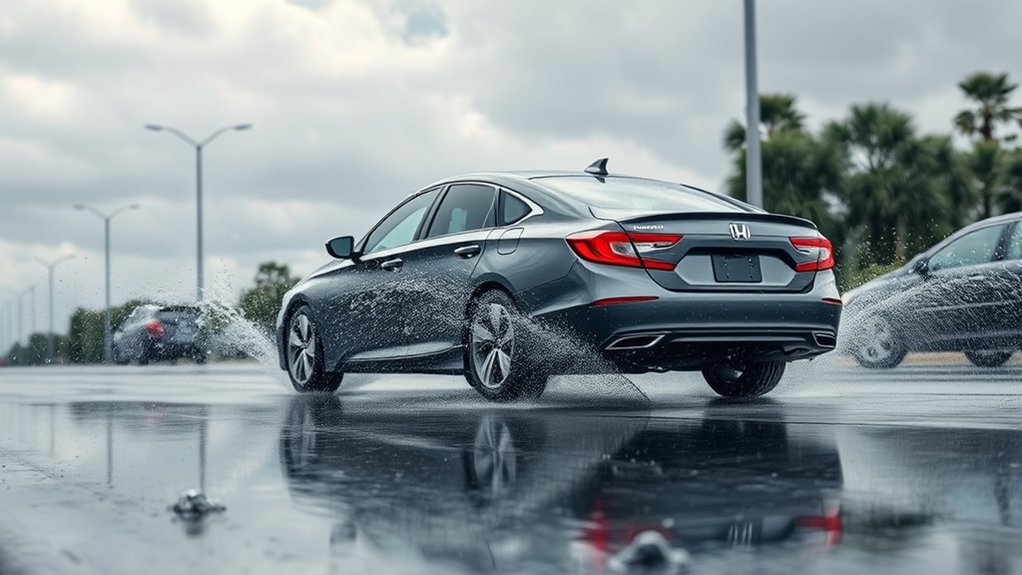
All-season tires provide balanced wet traction on your Honda Accord, thanks to advanced tread designs that channel water effectively and maintain grip in varying conditions. They feature flexible rubber compounds that enhance handling, especially in cooler temperatures. While they perform well in light to moderate rain, it’s crucial to monitor tread depth and maintain your tires for peak safety. If you’re curious about specific tire models and tips for better performance, there’s more to explore.
How All-Season Tires Enhance Rain Performance on the Honda Accord
When it rains, you want to feel confident behind the wheel of your Honda Accord, and all-season tires can make a significant difference in that experience. The unique tire design of models like the Michelin Defender T+H and Continental ExtremeContact DWS06 enhances wet traction through improved tread patterns that promote effective water evacuation, minimizing the risk of hydroplaning.
These tires maintain a tread depth of at least 6/32”, essential for gripping slick surfaces. The rubber compounds used in quality all-season tires remain flexible, even in colder temperatures, ensuring improved handling and grip during rainy conditions. Additionally, selecting tires with hydroplaning resistance can enhance your overall safety in wet driving environments.
Regularly monitoring your tire pressure can further enhance performance by maintaining ideal contact with the road. With the right all-season tires, you empower yourself to navigate wet roads with confidence and safety, transforming each drive into a liberating experience.
Understanding Wet Traction and Its Importance for Safety
Effective wet traction is a significant factor in guaranteeing your safety while driving, especially in unpredictable weather. All-season tires, while versatile, have specific tire compositions and tread patterns that influence their performance in rain. Understanding these elements can enhance your driving experience.
- Adequate tread depth (at least 6/32″) reduces hydroplaning risk.
- A higher UTQG rating for wet traction indicates better performance in rain.
- Tread design with deeper grooves helps disperse water effectively.
- Regular monitoring of tread wear guarantees optimal safety.
While tires like the Michelin CrossClimate2 offer decent wet traction, they may not match dedicated rain tires in heavy downpours. The wider channels in tread patterns play an essential role in maintaining road contact. Ultimately, staying informed about your tires’ capabilities can empower you to drive confidently, guaranteeing safety in wet conditions. Additionally, maintaining a minimum tread depth of 5/32 inches is crucial for effective handling in adverse conditions.
Essential Features of All-Season Tires for Optimal Rain Performance
While all-season tires offer versatility, understanding their specific features for peak rain performance is essential to ensuring safety on wet roads. The tread design of all-season tires typically includes deeper grooves and wider channels, which enhance water evacuation and reduce the risk of hydroplaning. Tires like the Michelin CrossClimate2 and Goodyear Assurance WeatherReady boast higher UTQG ratings, indicating superior wet traction compared to standard options. Additionally, the rubber composition is carefully formulated to remain flexible in cooler temperatures, providing better grip during rainy conditions. Maintaining a minimum tread depth of 6/32” is vital for ideal performance. Regular tire maintenance, including monitoring tread wear and pressure, can greatly boost the wet traction capabilities of your Honda Accord. By understanding these features, you empower yourself to make informed choices that enhance your driving experience in rain-soaked environments. Furthermore, tread features that prioritize water evacuation are crucial for optimizing grip on wet surfaces.
Comparing All-Season Tires With Rain-Optimized Alternatives for Enhanced Safety
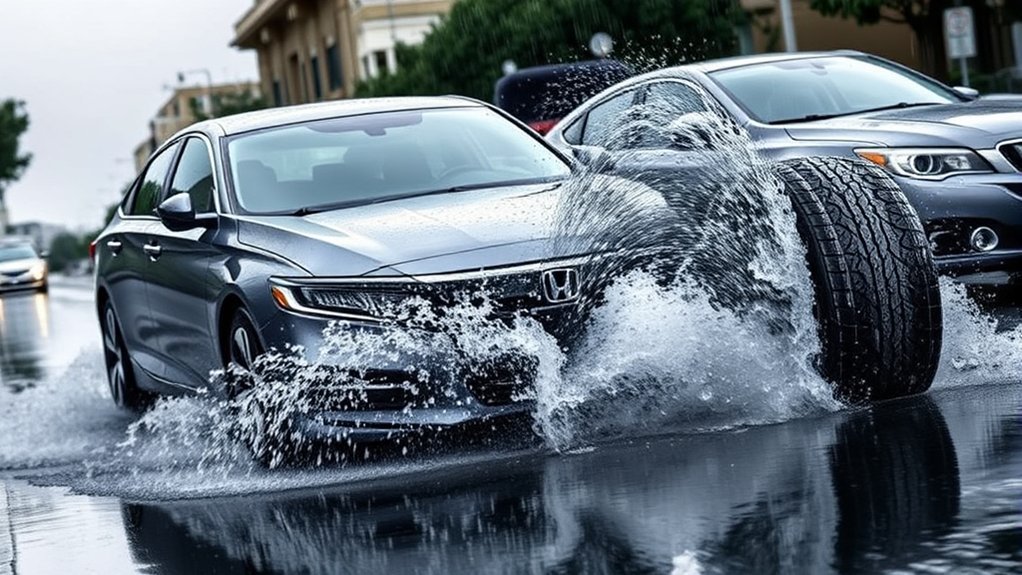
All-season tires provide a reliable balance for most driving conditions, but they may not always meet the demands of heavy rain. While options like the Michelin CrossClimate2 and Goodyear Assurance WeatherReady offer decent wet traction, they often compromise on hydroplaning resistance compared to rain-efficient alternatives.
Consider these key differences:
Consider the crucial distinctions between all-season and rain-efficient tires for optimal performance in heavy rain conditions.
- Tread Design: All-season tires feature a versatile tread that may not perform well in extreme weather.
- Grip: Rain-efficient tires, like the Bridgestone Blizzak WS90, use softer rubber for superior grip.
- Hydroplaning Resistance: Enhanced deep grooves in specialized tires effectively disperse water.
- Tire Longevity: All-season tires require regular maintenance for peak performance in varying weather conditions.
If you frequently navigate heavy rain, investing in rain-efficient tires can enhance safety, ensuring better control and stability during intense downpours. Additionally, understanding the performance trade-offs between all-season and rain-efficient options is crucial for making an informed decision.
Real User Experiences With All-Season Tires in Rainy Conditions
When driving your Honda Accord in rainy conditions, you might notice that all-season tires can lead to mixed results. Some drivers report solid handling and stability, while others experience troubling hydroplaning at higher speeds. It’s clear that performance can vary widely based on tire brand, tread depth, and driving techniques, making it essential to choose wisely. Additionally, options like the Fullway HP108 provide enhanced grip on wet surfaces, contributing to overall safety.
Common Handling Issues
Many drivers have shared their experiences with all-season tires on the Honda Accord, particularly in rainy conditions, highlighting significant handling issues. Users often report:
- Hydroplaning at speeds of 50-60 mph during heavy rain.
- Frequent activation of the traction control system, indicating grip struggles.
- Skidding every 100 yards on wet roads, especially with reduced tread depth.
- The need to modulate throttle to counter traction loss, particularly with turbo engines.
These factors underscore that while maintaining proper tire pressure can help, all-season tires might not be up to the challenge in severe road conditions. Cautious driving techniques become essential, as many drivers find that all-season options fall short in heavy downpours, necessitating a more measured approach.
Performance Variability Observed
While maneuvering through rainy conditions, drivers of the Honda Accord often encounter a surprising variance in performance with their all-season tires. Many report that tires like the Goodyear Eagle Touring struggle with wet traction, especially as tread wear dips below 1/3”. This can heighten the risk of hydroplaning, particularly at speeds of 50-60 mph. Some drivers find that performance all-season tires, such as the Continental ExtremeContact DWS06, greatly improve grip and stability. Proper throttle modulation can enhance traction, yet many still feel all-season tires fall short in heavy rain. Ultimately, while these tires offer versatility and longevity, your driving habits and conditions may dictate whether they truly meet your rainy-day needs.
Key Factors Affecting Tire Performance in Wet Conditions
Understanding the key factors that affect tire performance in wet conditions is essential for ensuring your Honda Accord handles safely and effectively. Several elements contribute to how well your tires grip the road during rain.
Understanding key factors affecting tire performance in wet conditions is crucial for safe and effective handling of your Honda Accord.
- Tread Patterns: Deeper grooves and wide channels help evacuate water, reducing hydroplaning risks.
- Rubber Compounds: Softer compounds offer better traction but may wear out quicker, affecting performance metrics.
- Tire Inflation: Properly inflated tires maintain contact with the road, enhancing wet handling and stability.
- Tread Depth: A minimum of 6/32” is vital; below this, you considerably compromise traction and safety ratings.
Additionally, consider temperature effects on tire performance. Tires with M+S or All Weather designations generally provide better wet performance, ensuring you stay safe on slippery roads. By paying attention to these factors, you can enjoy a confident driving experience in rainy conditions. Furthermore, understanding seasonal tire changes can greatly enhance your vehicle’s performance in varying weather conditions.
Top All-Season Tires for Your Honda Accord
Choosing the right all-season tires for your Honda Accord can greatly enhance your driving experience, especially in varying weather conditions. Here are some top options to evaluate, factoring in tire maintenance and seasonal considerations:
| Tire Model | Key Features |
|---|---|
| Michelin Defender T+H | Excellent wet traction, 70,000-80,000 miles |
| Goodyear Eagle Sport All-Season | Responsive handling, superior wet performance |
| Bridgestone Turanza QuietTrack | Outstanding grip, comfortable ride |
| Continental ExtremeContact DWS06 | High wet grip, 50,000-60,000 miles |
| Hankook Ventus V2 Concept2 | Enhanced wet traction, budget-friendly |
Each of these tires offers unique benefits tailored to rainy conditions. By choosing wisely and performing regular tire maintenance, you’ll promote peak performance and safety for your Honda Accord throughout the seasons. Additionally, investing in dedicated winter tires can further enhance safety during harsher weather conditions.
Safe Driving Tips for Rain With All-Season Tires
When it rains, your Honda Accord’s all-season tires need special attention to guarantee safe driving. Keeping an eye on tire tread depth is essential, as proper tread enhances traction and reduces hydroplaning risks. Additionally, gentle throttle control and adjusting your speed can greatly improve your vehicle’s stability on wet roads. Ensuring your tires are maintaining proper tread depth will help maximize their performance in rainy conditions.
Tire Tread Depth Importance
As you navigate rainy roads in your Honda Accord, the importance of tire tread depth can’t be overstated. Adequate tread depth guarantees peak wet traction, reducing the risk of hydroplaning. Aim for at least 6/32” of tread and regularly check your tread indicators to maintain safety.
- Inspect tire tread depth regularly to prevent unsafe conditions.
- Replace tires before they reach half tread for better wet performance.
- Maintain proper tire pressure to enhance tread wear and traction.
- Monitor tread wear patterns to guarantee even performance in rain.
Gentle Throttle Control
Gentle throttle control is essential for maneuvering rainy roads safely in your Honda Accord. By practicing throttle modulation, you can prevent sudden torque delivery from the turbo engine, greatly reducing the risk of skidding or hydroplaning on wet surfaces. Maintaining a steady speed helps maximize the traction management capabilities of your all-season tires, enhancing grip where it matters most. Avoid rapid acceleration or abrupt braking, as these actions can destabilize your vehicle during rain. Additionally, consider using eco driving modes to optimize your traction control systems, aiding stability. Regular tire rotation and proper inflation are important too, ensuring even wear and better handling. Embracing these practices empowers you to navigate rainy conditions with confidence.
Adjusting Driving Speed
Adjusting your driving speed is essential for safety when traversing rainy roads with all-season tires. Speed reduction is vital, particularly as hydroplaning risks increase above 50-60 mph. Remember, your tires may handle light rain well, but heavy downpours can diminish grip considerably.
- Maintain a following distance of three to four seconds to allow for ample reaction time.
- Reduce speed in heavy rain conditions to enhance control and stability.
- Modulate your throttle application, avoiding sudden acceleration or braking.
- Regularly check your tire tread depth, aiming for at least 6/32” for peak performance.
Knowing When to Upgrade Your All-Season Tires
When should you consider upgrading your all-season tires? If you notice significant tread wear—especially when your tires dip below 4/32″—it’s time to act. Regular inspections are essential; replacing your tires around half tread depth helps maintain peak grip, particularly in wet conditions. Remember, the first rain after a dry spell can create slick roads, increasing the risk of hydroplaning. If you often drive in heavy rain, consider tires with higher wet traction ratings, like AA or A. Wider tires on your Honda Accord can exacerbate hydroplaning risks, so exploring narrower options or specialized wet-condition tires could enhance your safety. User experiences highlight that worn tires lead to traction loss and handling issues, underscoring the significance of timely upgrades. All-season tire performance guarantees your drive remains stable and secure, liberating you from the anxiety of unexpected weather challenges.
Practical Steps for Driving Safely in Heavy Rain With All-Season Tires
Driving safely in heavy rain requires a proactive approach, especially with all-season tires. To enhance your rain preparedness, follow these practical steps:
- Monitor tread maintenance: Keep a minimum tread depth of 6/32” to optimize wet performance and minimize hydroplaning risks.
- Adjust your speed: Drive at reduced speeds, particularly on highways, to improve control and extend stopping distances.
- Modulate throttle application: Avoid excessive acceleration to maintain traction and prevent skidding.
- Check tire pressure and alignment: Regular maintenance can vastly improve handling in wet conditions. Additionally, ensure your tires are inflated to recommended tire pressure for optimal performance and safety in rain.
Frequently Asked Questions
What Billionaire Drives a Honda Accord?
Warren Buffett, a billionaire known for his unexpected choices, drives a Honda Accord. His preference for this practical vehicle showcases that even the wealthiest prioritize value and reliability over extravagant spending, challenging conventional billionaire stereotypes.
Conclusion
To sum up, all-season tires can greatly enhance your Honda Accord’s performance in rainy conditions, offering a blend of safety and comfort. While they may not rival specialized rain tires, their ability to grip wet roads can feel like having a superhero under your wheels. By understanding their features and knowing when to upgrade, you can navigate even the heaviest downpours with confidence. Remember, safe driving practices are your best ally in inclement weather.

Related Articles

Honda Accord Winter Tire Performance on Ice Explained
Join us as we explore how winter tires transform your Honda Accord's icy performance, keeping you safe and in control throughout the season.
Read More
How Honda Accord Tires Handle Snow and Icy Roads
How do Honda Accord tires excel on snow and icy roads? Discover the secrets behind their performance and ensure your safety this winter!
Read More
Hydroplaning Resistance in Honda Accord Tires Explained
Learn how Honda Accord tires combat hydroplaning with innovative designs, and discover the key factors that keep you safe on wet roads.
Read More