
Last updated: July 8, 2026
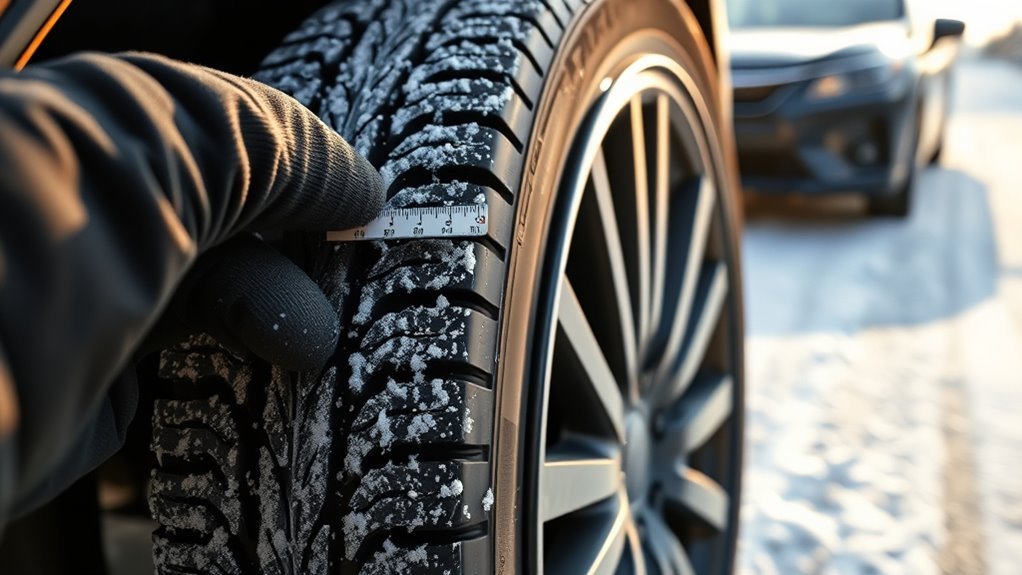
Keep winter tires at 5/32 inch tread depth or deeper for dependable snow and slush traction. Treat 6/32 inch as the safer comfort zone if you drive in deep snow, mountain passes, or frequent freezing rain. The 2/32 inch wear-bar level is a replacement point, not a winter-driving goal. Measure multiple grooves on all four tires with a tread gauge, then check for cracking, cuts, bulges, uneven wear, and hardening before the season starts.
Quick Answer: How Much Tread Do Winter Tires Need?
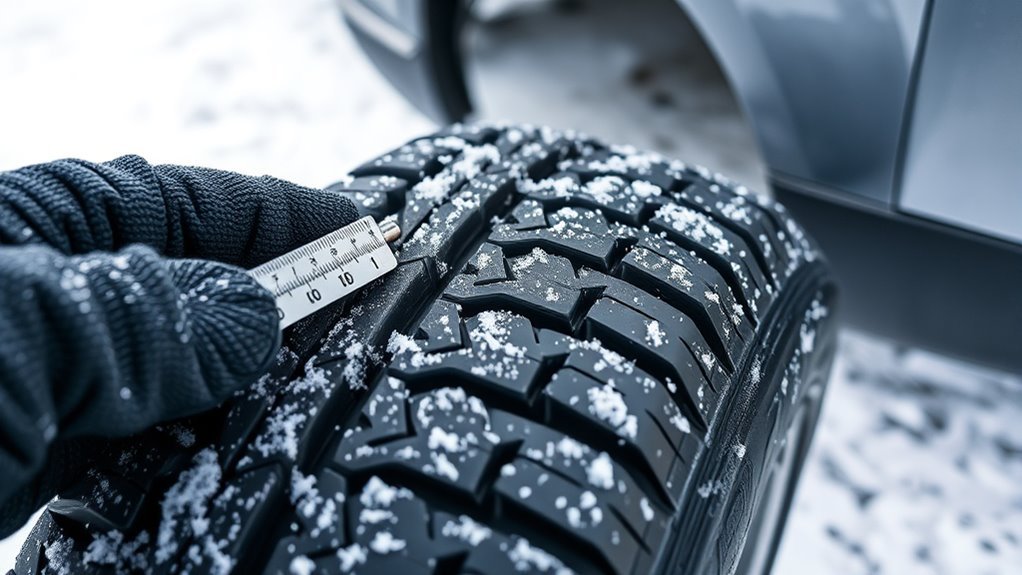
For reliable snow, ice, and slush performance, keep winter tire tread at 5/32 inch or deeper. If you regularly drive through heavy snow or signed winter routes, start planning replacement closer to 6/32 inch so you still have enough groove depth to clear slush and packed snow.
The NHTSA tire safety guidance says tires should be replaced when tread is worn to 2/32 inch, and it recommends checking tread at least once a month. For winter use, do not wait that long. Snow, slush, and standing water need more groove depth than dry pavement.
Replace tires before winter grip becomes uncertain. Tread depth matters, but so do tire age, rubber condition, sidewall damage, and uneven wear.
| Tread Depth | Winter Meaning | Best Action |
|---|---|---|
| 10/32″ or deeper | Strong tread reserve on many newer winter tires | Measure monthly and rotate as scheduled |
| 6/32″ | Practical comfort zone for snow and slush | Keep using if wear is even and rubber is healthy |
| 5/32″ | Minimum target for dependable winter use | Plan replacement before the next severe-weather season |
| 4/32″ | Too shallow for confident winter use | Replace before driving in snow, slush, or mountain conditions |
| 2/32″ | Wear bars are reached | Replace now |
What Tread Depth Means for Winter: Why 6/32″ Is the Comfort Zone
Think of 6/32 inch as the practical threshold where winter tires still have enough groove depth to move loose snow, slush, and water away from the contact patch. Below that, the tire may still be legal in some places, but it has less physical space to pack snow into the tread and clear slush between rotations.
Monitor tread wear with a gauge or visual indicators. Do not wait for the 2/32 inch wear bars. When depth falls to about 5/32 inch or less, plan replacement before heavy winter driving, especially if you commute at highway speeds, climb grades, or drive on untreated roads.
Minimum vs. Ideal Tread Depth for Snow, Ice, and Slush
The minimum tread depth depends on where you drive. In general tire-safety guidance, 2/32 inch means replacement. Some winter-road rules require more. For example, British Columbia says a legal winter tire on a standard passenger vehicle must have at least 3.5 mm of tread depth, and it recommends three-peak mountain snowflake tires for cold-weather driving.
[Products Worth Considering]

The SAFELIFE dial tire tread depth gauge measures tread depth in 1/32 inch increments with clear, easy-to-read 2-inch dial face. Color zones using a traffic light system help you quickly judge whether tread is low, marginal, or ample for safer driving. Built with a durable zinc cast body and a metal detect probe for precise, comfortable use across cars, motorcycles, trucks, and buses.

Measure tire tread depth quickly and accurately with this LUMITECO dial gauge that reads in 1/32" increments up to 14/32". The color-coded green/yellow/red zones make it easy to judge tire wear and know when replacement is needed. A rugged, compact design with a protective pouch helps keep the gauge ready for use on cars, trucks, motorcycles, and more.

Monitor tire tread wear with a smart, color-coded depth gauge that shows clear condition ranges at a glance. The bar is range marked for fast, easy readings, helping you maintain safer traction and performance. Each gauge is portable with a pocket clip, and the set includes 20 units for daily use and sharing.
Minimum Legal Depth
Do not treat 2/32 inch as a safe winter target. Tread wear bars appear at about that depth, and they show the tire has reached its replacement point. In snow and slush, you need deeper channels than the wear-bar minimum provides.
Tread wear bars are a regulatory and replacement marker, not a performance endorsement. By the time those bars are flush, traction has already dropped and water evacuation is limited. Use precise measurements and replace tires before the legal minimum becomes your only reason to act.
Recommended Winter Depth
Target at least 5/32 inch for winter driving. Use 6/32 inch as the more conservative threshold if you often drive in deep snow, lake-effect storms, mountain routes, or poorly plowed rural roads.
At 4/32 inch, treat winter performance as limited. A tire may still look usable, but shallow grooves cannot move snow, slush, and water as effectively. Tread wear bars signal 2/32 inch, which is far too late for confident winter braking and lateral control.
Performance When Half-Worn
As winter tires wear toward half their original depth, the performance decline becomes easier to feel. The tire has fewer deep channels and biting edges available for snow, slush, and standing water. Even when the rubber compound is still healthy, worn tread increases the risk of longer stops, weaker cornering grip, and earlier hydroplaning in wet slush.
| Condition | What Worn Tread Changes | Driver Impact |
|---|---|---|
| Snow traction | Less groove depth and fewer active biting edges | Reduced launch and climbing grip |
| Wet stopping | Less water evacuation | Longer stopping margin |
| Hydroplaning | Less space for slush and water to escape | Higher loss-of-control risk |
| Overall safety | Less reserve for sudden weather changes | Replace before severe winter driving |
Measure Tread at Home: Penny, Quarter, and a Gauge
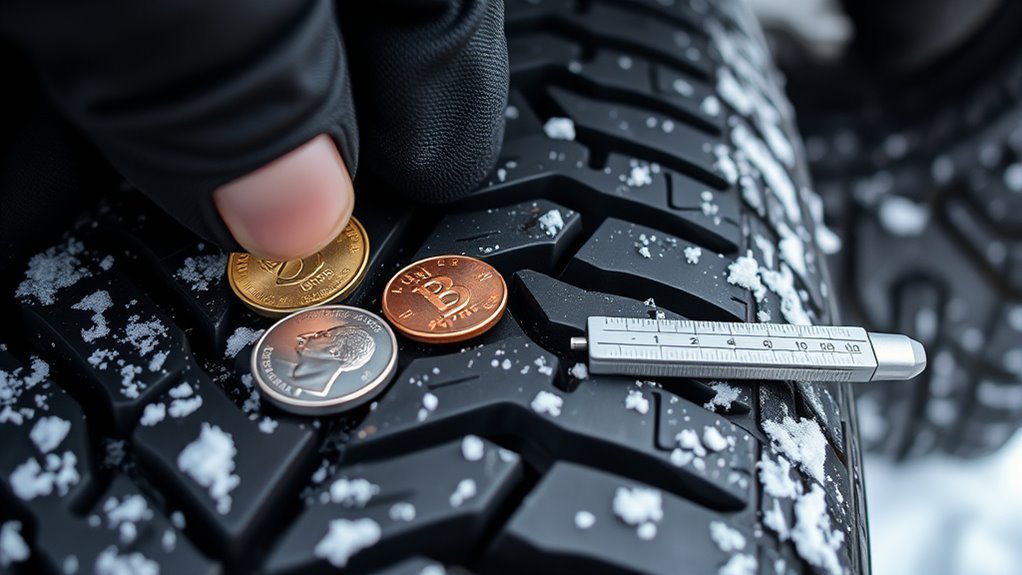
You can quickly screen tread with a penny. Insert Lincoln’s head upside down into a main groove. If you can see the top of Lincoln’s head, the tire is at or near 2/32 inch and should be replaced. A quarter gives a rough 4/32 inch reference: if you can see the top of Washington’s head, the tire is too shallow for dependable winter use. For winter decisions, use a calibrated tread depth gauge.
Penny Test Method
Insert a penny with Lincoln’s head upside down into the tread groove. If the top of his head is visible, tread is at or near 2/32 inch and the tire should be replaced.
Check multiple grooves across the tire and repeat at several points around the circumference. Partial coverage means tread is above the wear-bar level. Visible head exposure means replacement. The penny test is a fast, tool-free screen. Follow up with a quarter or gauge when you need a more precise depth reading.
Using A Tread Gauge
A tread depth gauge gives a precise, repeatable measurement in 32nds of an inch, so you can quantify wear rather than estimate it with coins. Use one to verify penny and quarter checks and to confirm when tread bars are flush at 2/32 inch. You want at least 5/32 inch for winter; a gauge tells you exactly where you stand.
- Insert the gauge into the main grooves, seat the base flat, and read the value in 32nds.
- Compare readings across the inner, center, and outer grooves to detect uneven wear.
- Repeat the check at three positions around each tire because wear is not always even.
- Plan winter replacement around 5/32 inch, and replace immediately if the tire is at 2/32 inch.
- Keep the gauge clean, store it dry, and calibrate it if adjustable.
How Worn Tread Reduces Braking, Cornering, and Hydroplaning Resistance
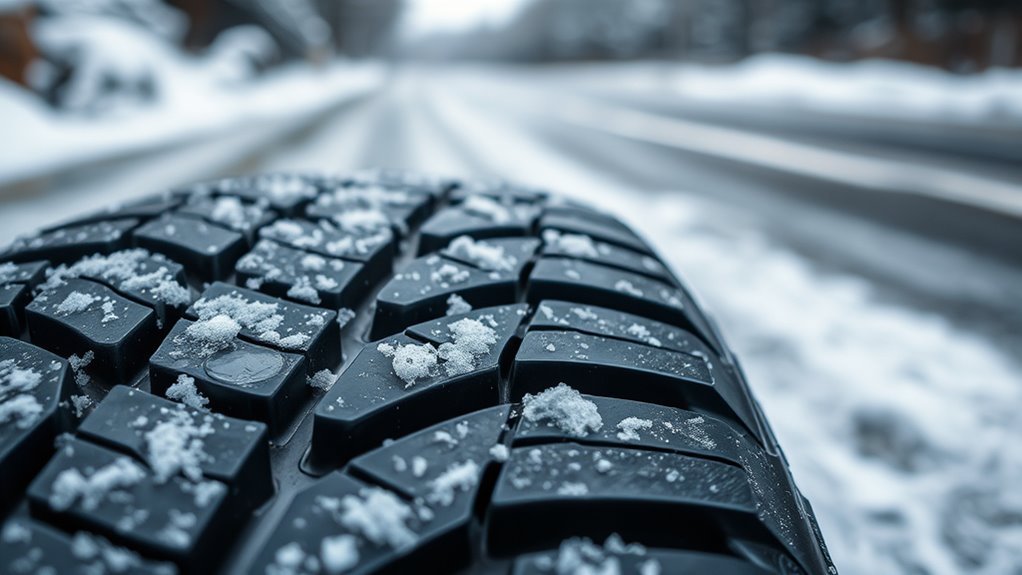
As tread channels and siping wear down, your tire’s ability to bite into snow and expel water drops. That translates to longer stopping distances, less lateral grip through corners, and a higher hydroplaning risk. Winter tires work because their compound, grooves, shoulders, and sipes create grip in cold weather. When those features wear down, the tire has less reserve for sudden stops and evasive steering.
Hydroplaning resistance also declines as tread gets shallow. Below 5/32 inch, the tire has less space to evacuate slush and standing water from the contact patch. Tread wear bars at 2/32 inch mark a critical replacement point. Past that point, winter performance is not dependable.
When to Replace: Tread Depth, Age, Damage, and Grip Loss
Replace winter tires based on measurable decline in grip, not out of habit. Tire longevity varies with use and conditions. Use tread depth, age, visible damage, and performance changes as your triggers. The NHTSA tire safety page recommends replacing tires for minimum tread, physical damage, irregular wear, or performance problems such as vibration, noise, or pressure loss.
Set clear, measurable winter-tire replacement criteria: tread depth, age, and visible damage, not habit, for reliable cold-weather grip.
- Replace at or before 5/32 inch for winter conditions. Use 6/32 inch as the safer planning point for severe snow.
- Never treat 2/32 inch as acceptable for snow or ice. It is a replacement point, not a safety benchmark.
- Evaluate tires that are six to 10 years old regardless of tread depth, because rubber can age even when tread remains.
- Replace tires showing cuts, bulges, cord exposure, cracking, vibration, or uneven wear that compromises the contact patch.
- Replace sooner if the tire feels slippery in familiar snow conditions, even if the gauge reading looks borderline.
[Products Worth Considering]

Accurately measure tire tread depth with a calibrated gauge marked from 0 to 1 inch in 1/32 inch increments. The color-coded bar helps you quickly identify tread condition ranges, supporting safe driving for trucks, motorcycles, automobiles, and passenger vehicles.

Measure tyre tread depth precisely with a digital gauge that reads in both MM and inches, helping you monitor safe driving conditions. The large LCD screen is easy to operate, and the compact tool fits for cars, trucks, and motorcycles. It provides high accuracy with a 0-25.4mm range and includes a 1-year warranty for added peace of mind.

Milton S-921 pencil tire pressure gauge helps you maintain optimal tire pressure for passenger cars with accurate readings in PSI and kPa. It features a built-in deflator valve for convenient pressure adjustments, plus a single chuck head and nylon indicator bar for easy use on the go. Built from durable plated brass and designed for reliable performance, it’s a practical road trip and cold-weather maintenance tool.
Shopping Tips: Choosing Winter or All-Weather Tires by Tread and Rating
When shopping for winter or all-weather tires, look for the three-peak mountain snowflake (3PMSF) mark. It identifies tires intended for severe snow service. The Province of British Columbia says 3PMSF tires offer better traction on snow and ice than basic M+S tires, and it recommends them for cold-weather driving.
Evaluate tires on technical specs: starting tread depth, compound temperature range, tread patterns, warranty terms, and documented ratings. Compare braking tests and independent road-test data rather than relying on marketing claims. Look for deep, interconnected sipes and directional channels that evacuate slush and maintain grip on ice. If you need a year-round compromise, choose all-weather models with 3PMSF certification and a cold-weather rubber formulation.
Shop early to secure inventory before seasonal shortages hit. Read both user reviews and professional tests focused on icy braking distances, slush control, road noise, and long-term wear. Choose the tire that gives you the most control in the conditions you actually drive in.
[Products Worth Considering]

The Kurgo Seasonal Tire Tote helps protect your car interior, clothes, and garage from tire grime, brake dust, and residue during seasonal tire changes. Its universal design fits most passenger tires between 22" and 31" in diameter, making storage and transport simpler with less mess. Built for rugged, repeated use, it’s machine washable for easy care and comes with a lifetime warranty.

The Continental Grand Prix 5000 is an allround road bike tire engineered for faster rolling, improved ride comfort, and enhanced puncture protection. It features a Vectran Breaker cut-protection layer, Lazer Grip micro-profile tread for confident cornering control, and Active Comfort Technology to damp vibration for smoother rides. BlackChili compound optimizes grip and speed for everyday performance and long-lasting confidence.

These universal tire valve stem caps help protect valve cores from dust, debris, and moisture while helping maintain stable tire pressure. The corrosion-resistant metal construction and sealed design provide reliable protection in road grime, mud, and winter conditions. Twist-on installation makes them quick to fit on cars, SUVs, trucks, and motorcycles.
Frequently Asked Questions
Is 5/32 Tire Tread Ok for Winter?
Yes, 5/32 inch is acceptable for winter, but it is a planning point, not a long-term target. Measure often and replace before heavy snow season if wear is uneven, the rubber is old, or you drive in severe conditions.
What Tread Depth Is Good for Winter Tires?
For dependable winter driving, 6/32 inch is a strong comfort zone and 5/32 inch is the minimum target. Below 5/32 inch, snow and slush performance becomes less dependable.
Is 10/32 Tread Depth Good for Winter Tires?
Yes. A 10/32 inch reading is strong tread depth for a winter tire, assuming the tire is not aged, cracked, damaged, or worn unevenly. Keep checking all four tires monthly.
Is 4/32 Tread Depth Safe for Winter?
Do not rely on 4/32 inch for winter driving. It may be above the wear bars, but it leaves little reserve for snow, slush, standing water, and emergency braking. Replace before severe winter conditions.
How Often Should You Check Winter Tire Tread?
Check tread depth at least once a month when you check tire pressure. Also measure before long trips, before the first snowstorm, and after any alignment, suspension, or inflation problem that could cause uneven wear.
Do Winter Tires Expire Even With Good Tread?
Yes. Tires can age even if tread remains. Check the DOT Tire Identification Number, inspect for cracking or hardening, and have older tires inspected by a tire professional before winter use.
Conclusion
Keep winter tires at or above 5/32 inch for confident braking and effective slush channeling, and use 6/32 inch as your safer planning point for severe winter driving. Measure regularly with a gauge, check for age and damage, and replace before grip fades. Treat tread depth as a measurable safety margin. Maintain it, and you will handle winter conditions with more control.

1 thought on “Winter Tire Tread Depth: Safe Minimum Guide”