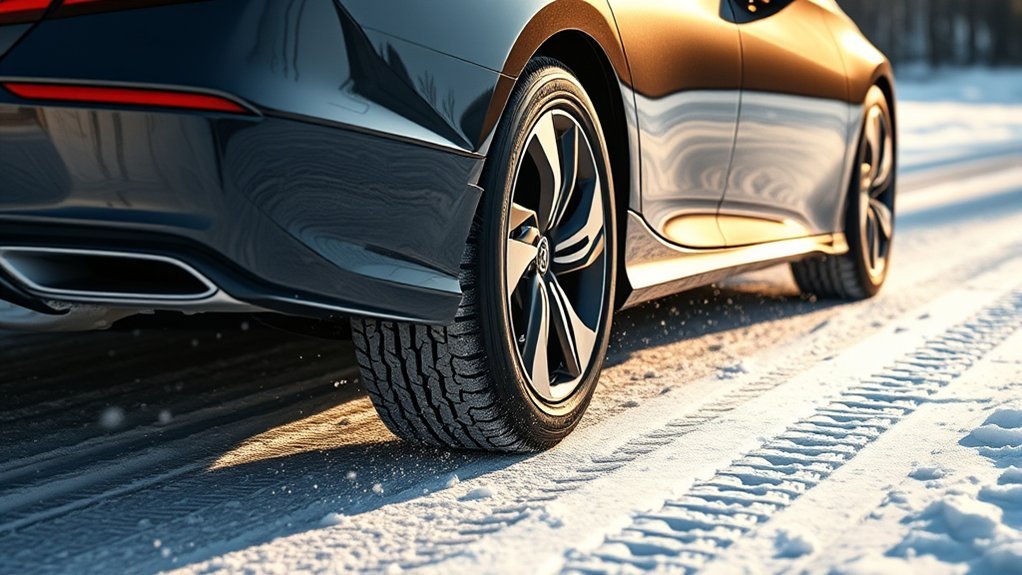
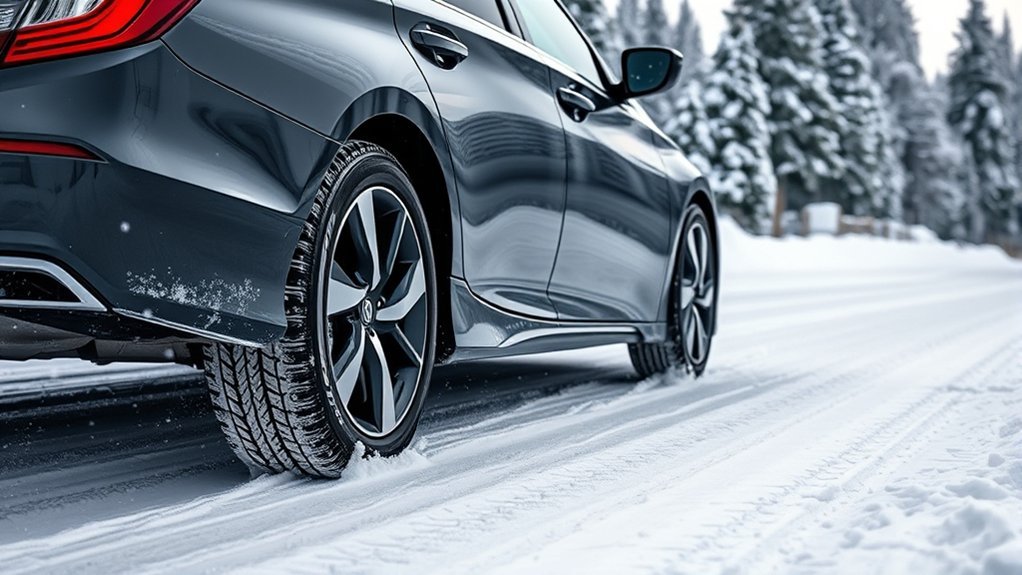
Honda Accord tires can handle snow and icy roads well when they are the right tires for the season, correctly sized for your trim, and maintained before temperatures drop. The Accord is a front-wheel-drive sedan, so its winter confidence comes mostly from tire grip, smooth driving, and safety systems such as Vehicle Stability Assist with traction control—not from all-wheel drive or a dedicated Snow Mode.
Quick Answer
Yes, a Honda Accord can drive well in light to moderate snow with four properly fitted winter tires. For icy roads, dedicated winter tires with the 3PMSF symbol give much better grip than typical all-season tires, but you still need slower speeds, longer following distance, and gentle steering and braking.
Key Takeaways
- The current Honda Accord is front-wheel drive, so tire choice matters more than drivetrain marketing in snow and ice.
- Use four winter tires, not just two, and match the tire size and load rating shown on your door placard or owner’s manual.
- Look for the Three-Peak Mountain Snowflake (3PMSF) symbol for verified severe-snow traction; M+S alone is not the same thing.
- Check cold tire pressure often in winter, because pressure drops as temperatures fall.
- For chains or cables, follow Honda’s instructions carefully; on Accord models, chains are used on the front tires only.
At a Glance
| Time Required | 15–30 minutes to confirm tire size and inspect tread; 60–90 minutes for a shop to mount and balance a tire set. |
| Difficulty | Easy for checking size, pressure, and tread; professional installation recommended for mounting and balancing. |
| Tools Needed | Tire pressure gauge, tread-depth gauge, owner’s manual, door-jamb tire placard, and a flashlight. |
| Cost | Varies by tire brand, size, installation, and whether you buy a separate winter wheel set. |
How Honda Accord Tires Handle Snow and Ice
A Honda Accord can be a dependable winter commuter, but its limits are important. The current Accord Sedan is listed by Honda as front-wheel drive, with Vehicle Stability Assist (VSA) and traction control. That setup can help reduce wheelspin, but it cannot create grip where the tires do not have it.
In snow, your tires determine how well the car starts, turns, and stops. Front-wheel drive helps because the engine’s weight sits over the drive wheels, but braking and steering still depend on the contact patches of all four tires. On ice, even excellent winter tires need slower speeds and extra space.
Note: Do not assume the Accord has all-wheel drive or a dedicated Snow Mode. Use the traction-control system as a helper, not a substitute for winter tires and careful driving.
Why Winter Tires Make the Biggest Difference
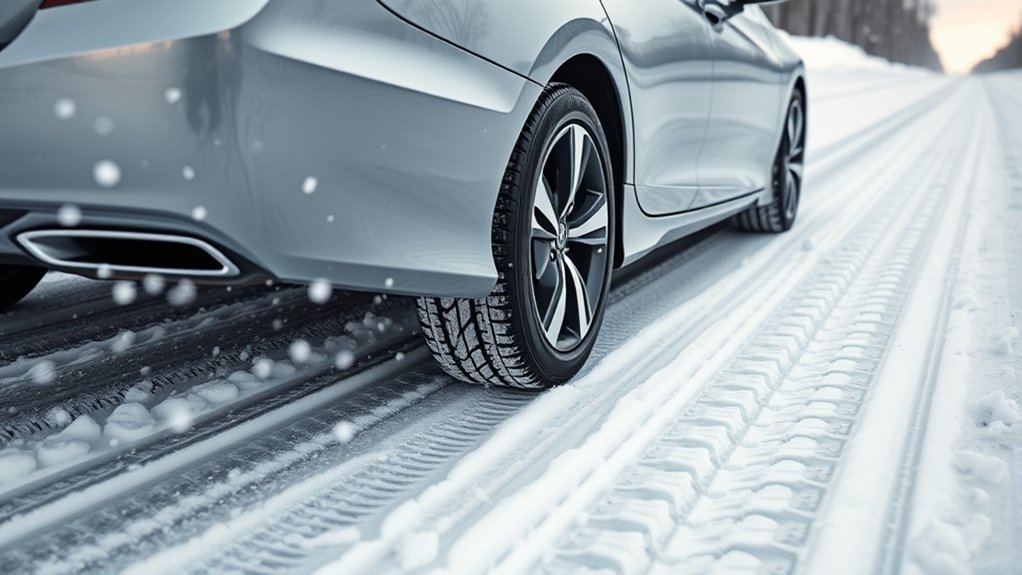
Winter tires use cold-weather rubber compounds, deeper tread blocks, and many small biting edges called sipes. These features help the tire stay flexible and grip snow, slush, and cold pavement. Michelin recommends installing winter tires when daily temperatures consistently fall below 45°F, because summer and many all-season tires harden as temperatures drop.
[Products Worth Considering]

Milton S-921 pencil tire pressure gauge helps you maintain optimal tire pressure for passenger cars with accurate readings in PSI and kPa. It features a built-in deflator valve for convenient pressure adjustments, plus a single chuck head and nylon indicator bar for easy use on the go. Built from durable plated brass and designed for reliable performance, it’s a practical road trip and cold-weather maintenance tool.
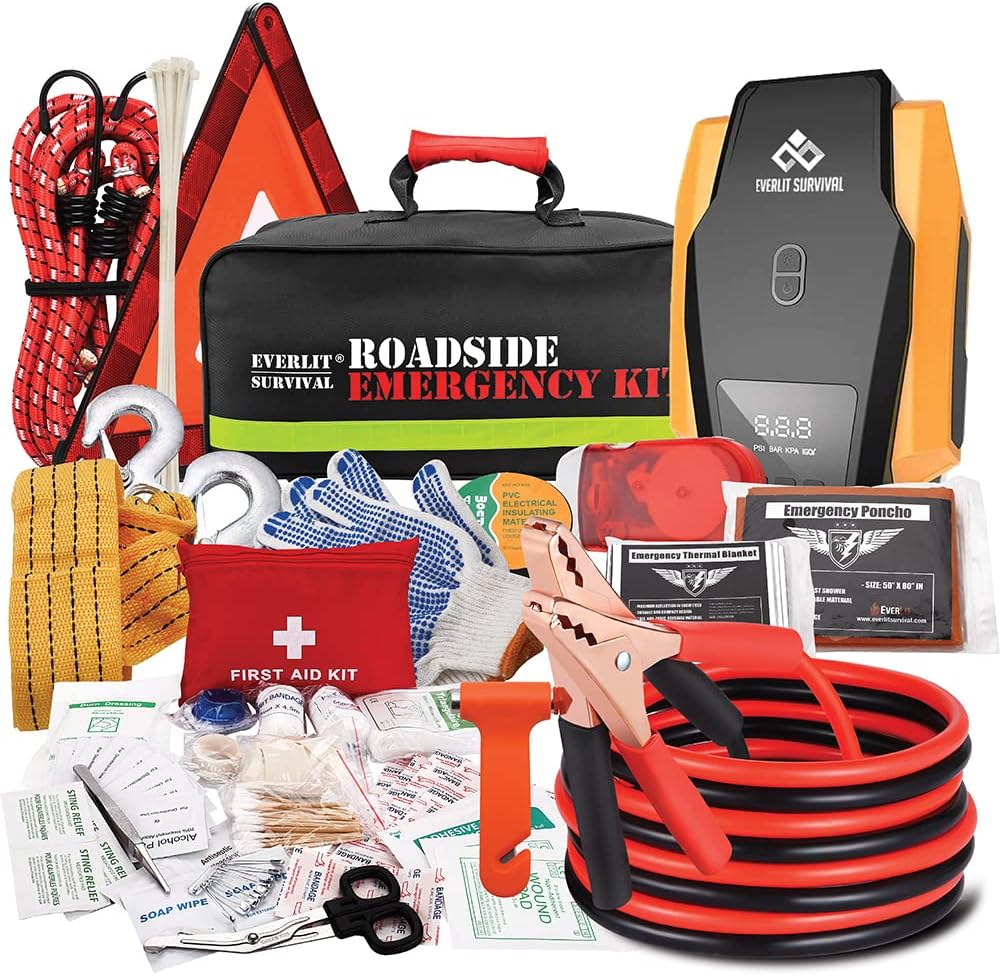
The Everlit Road Guardian emergency kit is designed for roadside breakdowns, combining essential safety gear and roadside tools in one compact bag. It includes a digital 12V auto tire inflator with preset and auto shutoff, plus 12-foot 8-gauge jumper cables to get you moving again. You also get a full 108-piece first aid kit, reflective warning tools, safety gloves, and emergency convenience items for safer travel.

Measure tire tread depth quickly and accurately with this LUMITECO dial gauge that reads in 1/32" increments up to 14/32". The color-coded green/yellow/red zones make it easy to judge tire wear and know when replacement is needed. A rugged, compact design with a protective pouch helps keep the gauge ready for use on cars, trucks, motorcycles, and more.
3PMSF vs. M+S: What to Look For
For winter traction, look for the Three-Peak Mountain Snowflake (3PMSF) symbol on the tire sidewall. The 3PMSF mark means the tire meets an industry snow-traction threshold. M+S markings can appear on many all-season tires, but M+S alone does not prove the same severe-snow performance. Tire Rack explains that M+S is based mainly on tread geometry, while 3PMSF indicates a snow-traction test threshold.
All-Season, All-Weather, or Winter Tires?
- All-season tires: Fine for mild climates and occasional light snow, but limited on ice and packed snow.
- All-weather tires: A year-round compromise. Many carry the 3PMSF symbol and handle light snow better than standard all-season tires.
- Dedicated winter tires: Best choice for regular freezing temperatures, icy mornings, packed snow, hills, and heavy winter commuting.
AAA says winter storms, bad weather, and sloppy road conditions are a factor in nearly half a million crashes and more than 2,000 road deaths every winter.
Correct Honda Accord Winter Tire Sizes
The safest winter tire size is the one Honda lists for your exact Accord year, trim, and wheel size. Check the tire placard on the driver’s door jamb first, then confirm in the owner’s manual or with a tire professional.
For the current U.S. 2026 Accord Sedan, Honda lists these all-season tire sizes by trim on its official specs page:
| Wheel Size | Factory Tire Size | Typical Use |
|---|---|---|
| 17-inch | 225/50R17 94V | LX and EX-L Hybrid-style fitments listed by Honda |
| 19-inch | 235/40R19 96V | Sport, Sport Hybrid, Sport-L Hybrid, and Touring-style fitments listed by Honda |
Older Accord generations may use different tire sizes, so do not buy 225/50R17, 235/40R19, 215/55R17, or any other size just because it appears in a general guide. Match the tire size, load index, and speed rating to your vehicle’s approved fitment.
Pro Tip: If your Accord has 19-inch wheels, ask your tire shop whether a Honda-approved 17-inch winter wheel package is available. A taller sidewall can improve winter comfort and protect expensive wheels from potholes, but the package must clear the brakes and match Honda’s fitment requirements.
[Products Worth Considering]

Malco tire mounting and demounting lubricant is a ready-to-use tire lube formulated to reduce friction during tire installation for passenger cars, light trucks, farm tires, and heavy-duty equipment. It provides rust-inhibiting protection to help reduce corrosion on rims and wheels, and helps support proper tire bead seating during inflation to reduce air leakage. The silicone-free, soap-free formula is whitewall safe to help prevent discoloration on whitewall tires and sensitive sidewall markings.

The SAFELIFE dial tire tread depth gauge measures tread depth in 1/32 inch increments with clear, easy-to-read 2-inch dial face. Color zones using a traffic light system help you quickly judge whether tread is low, marginal, or ample for safer driving. Built with a durable zinc cast body and a metal detect probe for precise, comfortable use across cars, motorcycles, trucks, and buses.

Monitor tire tread wear with a smart, color-coded depth gauge that shows clear condition ranges at a glance. The bar is range marked for fast, easy readings, helping you maintain safer traction and performance. Each gauge is portable with a pocket clip, and the set includes 20 units for daily use and sharing.
How Accord Traction Control Helps in Winter
The Accord’s VSA with traction control helps reduce wheelspin when one or both front tires lose grip. ABS helps you steer while braking hard by preventing wheel lockup. These systems are useful, but they cannot shorten stopping distances enough to drive at normal dry-road speeds on ice.
In most winter driving, leave traction control on. If you are stuck in deep snow and the system keeps cutting power, you may need to briefly reduce traction-control intervention to rock the car free. Turn it back on once the car is moving.
Essential Driving Tips for Snow and Icy Roads
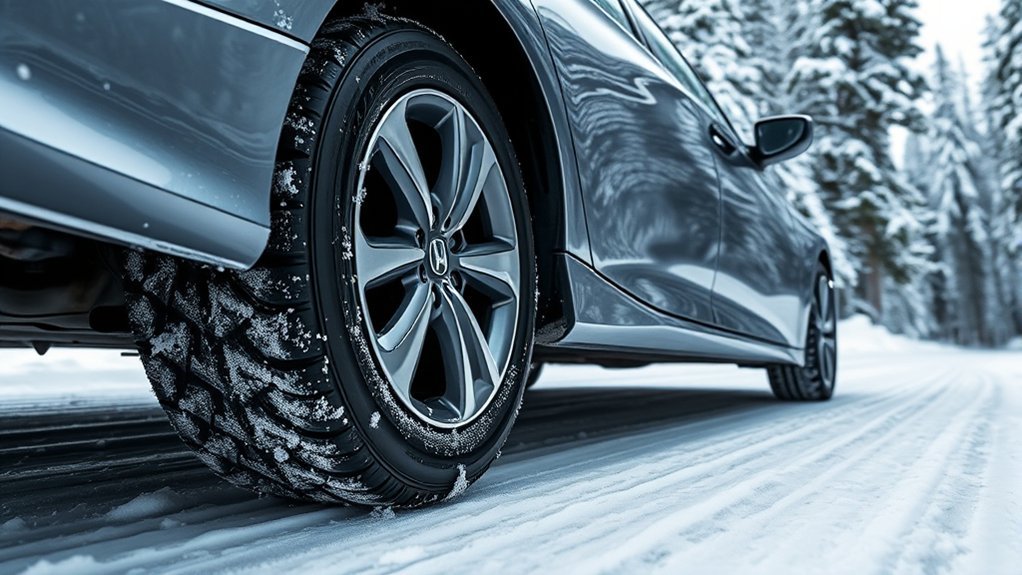
Even with excellent winter tires, your Accord needs a slower, smoother driving style in winter. AAA recommends adjusting speed down for lower traction, accelerating and decelerating slowly, and avoiding cruise control on slippery surfaces.
Increase Following Distance
Use at least 6–8 seconds of following distance on snow or ice. If traffic is fast, visibility is poor, or the road looks shiny, leave even more space. Winter tires improve grip, but they do not make ice behave like dry pavement.
Use Smooth Inputs
- Accelerate gently to avoid spinning the front tires.
- Brake early and progressively instead of waiting until the last moment.
- Steer with small, smooth movements.
- Avoid sudden lane changes on packed snow or black ice.
Handle Hills Carefully
Build gentle momentum before a snowy hill, then keep steady throttle. Do not stop halfway up unless you must. When going downhill, reduce speed before the slope and use light braking so ABS and tire grip are not overwhelmed.
Warning: Do not use cruise control on snow, ice, or slush. A sudden loss of traction can cause the system to apply throttle at the wrong time.
Deep Snow, Tire Chains, and Accord Limits
The Accord is a sedan with limited ground clearance. Current Honda specs list 5.3 inches of unladen ground clearance, so deep ruts or plowed berms can pack snow under the car. If snow is deep enough to drag under the bumper or floor, wait for plowing or choose a more suitable vehicle.
If local laws or mountain passes require chains or cable traction devices, follow the Accord owner’s manual exactly. Honda’s Accord winter tire guidance says to install tire chains on the front tires only, use the recommended type, mount them tightly, check that they do not touch brake lines or suspension parts, and drive slowly.
Warning: Wrong-size chains or poorly installed chains can damage brake lines, suspension, body panels, or wheels. Stop driving immediately if a chain or cable is hitting any part of the vehicle.
Keeping Honda Accord Winter Tires in Top Shape
Check Cold Tire Pressure Often
Check pressure when the tires are cold, meaning the car has not been driven for at least three hours. NHTSA says the correct tire pressure is the vehicle manufacturer’s recommended cold pressure, not the maximum pressure printed on the tire sidewall. Michelin also notes that tire pressure commonly drops about 1 PSI for every 10°F drop in temperature.
Watch Tread Depth Before Snow Season
The legal tread minimum is not the same as a safe winter target. NHTSA says tread should be at least 2/32 inch, but snow traction drops earlier. Tire Rack recommends replacing tires at about 5/32 inch for driving in snow. If your winter tires are near that level before the season starts, plan replacement instead of trying to stretch one more winter.
Rotate and Store Tires Correctly
- Rotate winter tires at the interval recommended by the tire maker or your service shop.
- Inspect for uneven wear, cracks, bulges, punctures, and sidewall damage.
- Store off-season tires in a cool, dry place away from direct sunlight and electric motors.
- Label each tire position before storage so your installer can rotate them correctly next season.
When to Switch Back to All-Season Tires
Switch back when daily temperatures consistently stay above about 45°F and snow or ice is no longer expected. Winter tires are designed for cold weather, so using them deep into warm months can wear them faster and make steering feel softer on dry roads.
Do not remove winter tires too early if late freezes, mountain travel, or early-morning black ice are still likely. The right timing depends on your local weather, not the calendar alone.
Best Tire Types and Brands to Consider
The best winter tire for a Honda Accord depends on your climate and driving. Instead of shopping by brand alone, start with the correct size, load rating, 3PMSF marking, and the type of winter conditions you actually face.
- Studless ice-and-snow tires: Best for frequent ice, packed snow, and freezing commutes. Examples to compare include Michelin X-Ice Snow, Bridgestone Blizzak, Nokian Hakkapeliitta, Continental VikingContact, and Goodyear WinterCommand lines, depending on your size and local availability.
- Performance winter tires: Better for drivers who see cold temperatures and light snow but also want sharper dry-road handling.
- All-weather 3PMSF tires: A practical compromise for mild winters where you want one set of tires year-round, but they are not a full replacement for dedicated winter tires in severe ice and snow.
Whatever you choose, install winter tires on all four wheels. Mixing winter tires on one axle with all-season tires on the other can make the car unpredictable during braking or cornering.
[Products Worth Considering]

The 22800 wheel stud installer makes replacing wheel studs quick and secure, saving time and effort during tire service. It uses a ratchet or impact wrench to pull new studs firmly into place, helping when existing studs are too long. Compatible with most automotive wheels and light-duty truck wheel studs, it’s designed for easy, tool-assisted installation.

Keep your tires properly inflated with this analog VONDIOR tire pressure gauge, designed for fast, easy readings without batteries. The swiveling, two-axis hose and large glow dial help you measure at any tire angle with instant visibility. Built with a protective rubber shield, it supports durable, low-maintenance use for cars and trucks.

The TYAMATE TM8 solar-powered wireless TPMS delivers real-time tire pressure and temperature monitoring with six alarm modes for safer driving. A vibrant color LCD display shows readings clearly while windshield mounting keeps it hands-free and easy to read. With a wide 0–87 PSI range, strong 433.92 MHz signal transmission, and quick sensor pairing, it’s ideal for RV, sedan, SUV, MPV, and truck use.
Frequently Asked Questions
Do Honda Accords handle well in snow?
Yes, a Honda Accord can handle light to moderate snow well when fitted with four quality winter tires. Its front-wheel-drive layout helps with starts, but snow and ice performance still depends mostly on tire grip, speed control, and smooth driving.
Do Hondas drive well in snow?
Many Hondas drive well in snow when they have the right tires. A Honda with winter tires often feels safer than a similar car on worn all-season tires. SUVs with AWD may launch better, but tires still control braking and turning.
Does the Honda Accord have all-wheel drive?
The current Honda Accord Sedan is front-wheel drive. It has safety systems such as Vehicle Stability Assist with traction control, but it does not rely on AWD for winter driving. Use winter tires if you regularly drive in freezing, snowy, or icy conditions.
Should I put winter tires on all four wheels?
Yes. Honda’s Accord winter-tire guidance says to mount winter tires on all four wheels. Installing only two can create a grip imbalance, especially during braking, lane changes, and cornering.
Can I use tire chains on a Honda Accord?
Yes, when chains are legal and necessary, but use only the correct type for your Accord and install them on the front tires only. Follow Honda’s manual and the chain manufacturer’s instructions. Wrong chains or poor installation can damage the vehicle.
When should I switch from winter tires back to all-season tires?
Switch back when temperatures consistently stay above about 45°F and snow or ice is unlikely. Keeping winter tires on warm roads for too long can increase wear and reduce crisp dry-road handling.
Conclusion
Honda Accord tires can handle snow and icy roads, but the right setup matters. The Accord is a front-wheel-drive sedan, so winter safety starts with four properly sized winter tires, good tread depth, correct cold tire pressure, and careful driving. Choose 3PMSF-rated tires for serious winter use, follow Honda’s guidance for chains and fitment, and give yourself more space than you think you need when roads turn slick.
Sources
- Honda 2026 Accord Sedan Features & Specs — drivetrain, tire sizes, VSA, ground clearance, and drive-mode details.
- Honda Accord Owner’s Manual: Winter Tires — winter tire mounting and tire-chain guidance.
- NHTSA TireWise — tire pressure, tire size, tread, and general tire safety guidance.
- Michelin Winter Tire Timing & PSI Tips — 45°F winter-tire timing and cold-weather pressure loss.
- Tire Rack: Three-Peak Mountain Snowflake Symbol — 3PMSF vs. M+S explanation and winter-tire limitations.
- AAA Winter Driving Tips — winter crash context and safe snow-driving techniques.