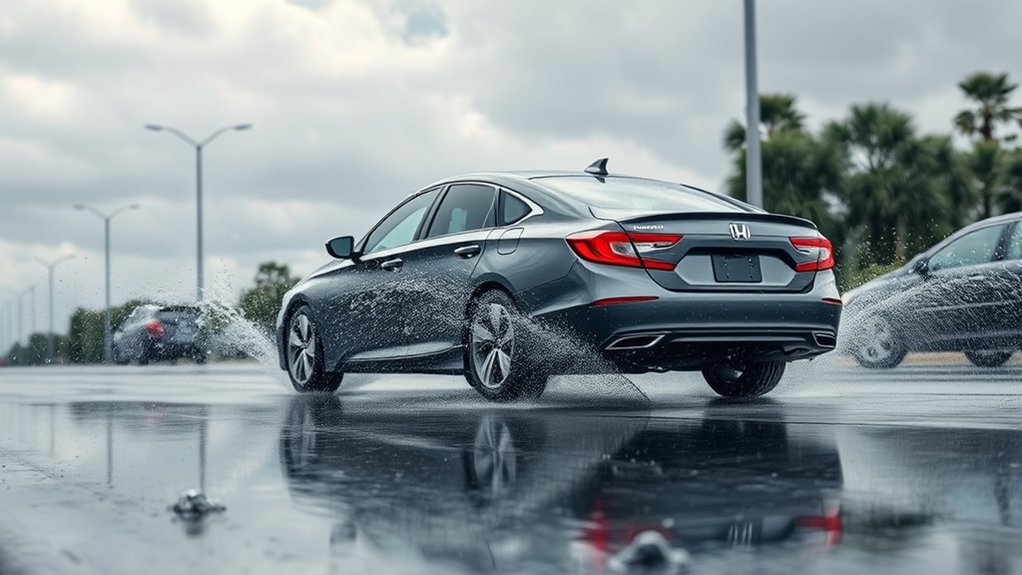
Rain is one of the fastest ways to find out whether your Honda Accord’s tires are still doing their job. A good all-season tire can feel calm and predictable in light to moderate rain, but tire condition, tread depth, inflation pressure, speed, and the exact tire model matter just as much as the “all-season” label.
Quick Answer
All-season tires can work well on a Honda Accord in rain when they have healthy tread, correct pressure, and a wet-focused tread design. For frequent heavy rain, choose a current touring all-season, all-weather, or performance all-season tire in the correct Accord size, and plan replacement before tread gets too low.
Key Takeaways
- All-season tires are usually fine for normal rain, but worn tread greatly reduces wet braking and hydroplaning resistance.
- For rainy driving, 6/32 inch gives a stronger safety margin; around 4/32 inch is the point to start planning replacement if you drive in heavy rain often.
- Current Accord trims commonly use 225/50R17 or 235/40R19 tires, but always match the tire size, load index, and speed rating on your door-jamb placard.
- All-weather tires with the Three-Peak Mountain Snowflake symbol can be a smart one-tire choice for rain plus light winter conditions, but they are not the same as dedicated winter tires.
How All-Season Tires Help a Honda Accord in Rain
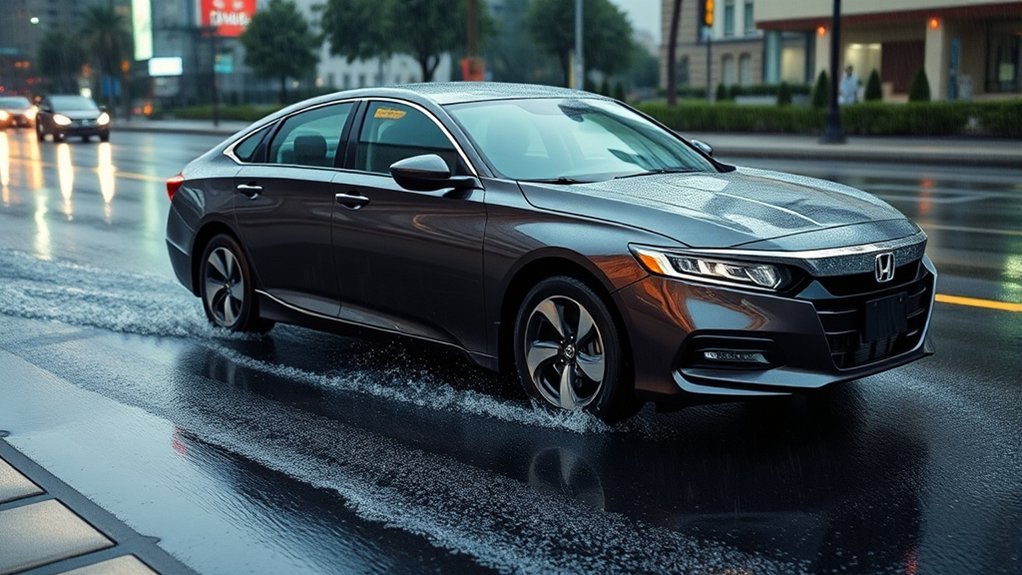
All-season tires help in rain by using grooves, sipes, and tread blocks that move water away from the contact patch. The goal is simple: keep as much rubber touching the road as possible instead of letting a layer of water lift the tire and cause hydroplaning.
On a Honda Accord, this matters because the car is quiet, stable, and easy to drive at highway speeds. That comfort can make wet roads feel safer than they really are. Even a good tire needs enough tread depth, correct inflation, and sensible speed to maintain grip.
For current U.S. Accord models, Honda lists 225/50R17 all-season tires on some trims and 235/40R19 all-season tires on others. Check your driver-side door-jamb placard before buying because the correct size, load index, and speed rating matter more than the tire name alone. You can confirm current Accord wheel and tire information through the Honda Info Center.
Note: A tire that fits one Accord trim may not fit another. If your Accord has 19-inch wheels, do not assume a tire recommended for a 17-inch Accord is available in your size.
Wet Traction vs Hydroplaning: Know the Difference
Wet traction and hydroplaning resistance are related, but they are not the same thing.
- Wet traction is the tire’s ability to brake, turn, and accelerate on wet pavement.
- Hydroplaning resistance is the tire’s ability to move standing water away before the tire rides on top of it.
- Stopping distance depends on tire tread, tire compound, road surface, water depth, speed, and brake input.
- Stability control and traction control can help manage slip, but they cannot create grip if the tires are worn or the car is moving too fast for conditions.
That is why a tire can feel good in a light drizzle but still struggle in a deep highway puddle. Wider 19-inch Accord tires may also be more sensitive to standing water than narrower tires when tread is worn, because the tire has to clear more water from a wider contact patch.
AAA testing found that all-season tires worn to 4/32 inch took significantly longer to stop on wet pavement than new tires, including an average 87-foot increase for a passenger car.
You can read the full tire-safety background from AAA’s wet-road tire research.
Check These Things Before Blaming the Tire Model
If your Accord slips, spins the front tires, or activates traction control in rain, do not jump straight to buying a different tire. Check the basics first.
At a Glance
| Time Required | 10–15 minutes |
| Difficulty | Easy |
| Tools Needed | Tread-depth gauge, tire-pressure gauge, flashlight, and your Accord door-jamb placard |
| Cost | Usually $0–$15 if you already have a pressure gauge |
Tread Depth
Tread depth is one of the biggest wet-road safety factors. For rainy climates, use these practical thresholds:
- 6/32 inch or more: Good wet-weather margin for most normal driving.
- 5/32 to 4/32 inch: Start planning replacement if you drive often in heavy rain or at highway speeds.
- 3/32 inch: Wet grip is limited; replacement is urgent.
- 2/32 inch: Replace immediately. This is commonly treated as the U.S. legal minimum, but it is not a comfortable rain-safety target.
Tire Pressure
Underinflated tires can run hot, wear unevenly, and feel sluggish. Overinflated tires can reduce the tire’s contact patch and make the car feel nervous on slick pavement. Check pressure when the tires are cold and follow the pressure listed on the Accord’s door-jamb placard, not the maximum pressure printed on the tire sidewall.
Uneven Wear and Alignment
If the inside shoulders are worn, the steering wheel is off-center, or the Accord pulls to one side, the tire may not be contacting the road evenly. In rain, that can show up as wandering, early hydroplaning, or weak braking.
Pro Tip: Measure tread depth in at least three spots across each tire: inner edge, center, and outer edge. One good reading in the center does not mean the whole tire is safe.
All-Season vs All-Weather vs Summer vs Winter Tires in Rain
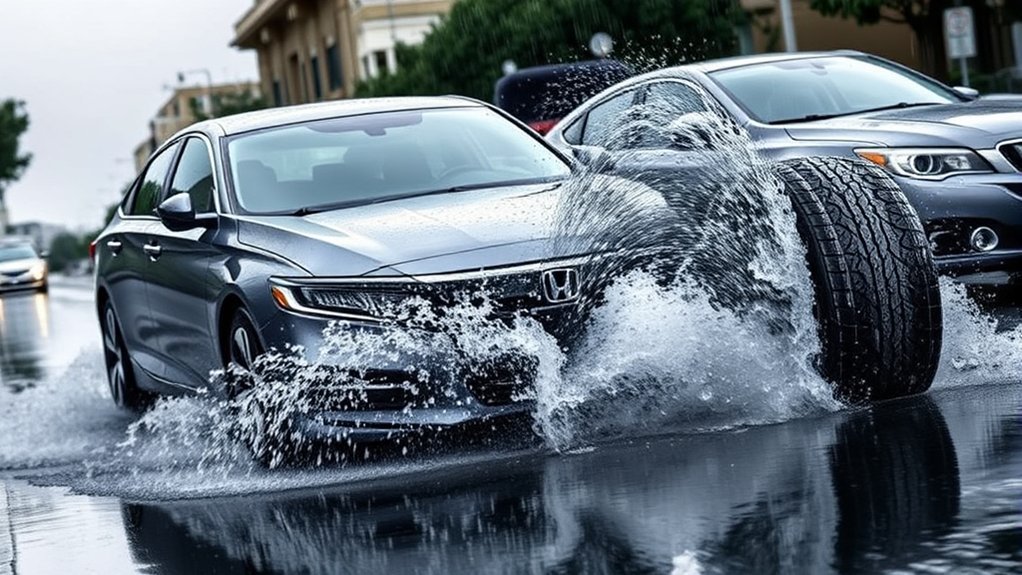
There is no single “best rain tire” for every Honda Accord driver. The right choice depends on your climate, wheel size, driving style, and whether you also need winter traction.
| Tire Type | Best For | Rain Strength | Main Caution |
|---|---|---|---|
| Touring all-season | Commuting, comfort, long tread life | Balanced wet braking and quiet ride | Not the sportiest choice for fast cornering |
| All-weather / 3PMSF all-season | Rain plus occasional winter weather | Often strong wet and cold-weather confidence | May ride firmer or cost more than basic touring tires |
| Performance all-season | Accord Sport drivers who want sharper handling | Strong wet cornering when tread is healthy | Usually shorter tread life than touring tires |
| Summer tire | Warm climates and sporty driving | Can be excellent in warm rain | Poor choice for freezing temperatures or snow |
| Winter tire | Snow, ice, and freezing weather | Good in cold slush, not a dedicated rain upgrade | Can wear quickly and feel soft in warm weather |
A tire like the Bridgestone Blizzak WS90 is a winter tire, not a rain-optimized replacement for normal Accord commuting. If your main problem is heavy rain, look first at wet-focused touring all-season, all-weather, or performance all-season tires that fit your exact Accord size.
[Products Worth Considering]

Vigorder rubber cement glue delivers superior adhesion and cures quickly within about 30 seconds for seamless rubber bonding. Once cured, it helps provide a strong, durable, waterproof seal that holds up to vehicle weight, pressure, and heat. Suitable for cars, motorcycles, trucks, bicycles, and off-road tires, it’s designed for emergency patch and maintenance repairs.

Milton S-921 pencil tire pressure gauge helps you maintain optimal tire pressure for passenger cars with accurate readings in PSI and kPa. It features a built-in deflator valve for convenient pressure adjustments, plus a single chuck head and nylon indicator bar for easy use on the go. Built from durable plated brass and designed for reliable performance, it’s a practical road trip and cold-weather maintenance tool.

Monitor tire tread wear with a smart, color-coded depth gauge that shows clear condition ranges at a glance. The bar is range marked for fast, easy readings, helping you maintain safer traction and performance. Each gauge is portable with a pocket clip, and the set includes 20 units for daily use and sharing.
Top All-Season and All-Weather Tire Styles for a Honda Accord
The best tire for your Honda Accord depends on whether you prioritize wet braking, quiet comfort, sporty steering, tread life, or winter capability. Use this table as a starting point, then confirm exact fitment in 225/50R17, 235/40R19, or the size listed on your own Accord.
| Tire Model | Category | Why It Makes Sense for Rain | Best Match |
|---|---|---|---|
| Michelin CrossClimate2 | All-weather / grand touring all-season | Strong wet and dry stopping claims, plus 3PMSF winter certification | Drivers who want one tire for rain, mild snow, and daily comfort |
| Goodyear Assurance WeatherReady 2 | All-weather / commuter all-season | Designed with water-displacing grooves and a 60,000-mile warranty | Rainy climates with occasional winter weather |
| Continental ExtremeContact DWS 06 Plus | Ultra-high-performance all-season | Built for responsive handling, wet grip, and sporty year-round traction | Accord Sport or 19-inch-wheel drivers who want sharper wet handling |
| Michelin Defender2 | Standard touring all-season | Long-wearing daily-driver tire with capable wet-road performance | Commuters who value tread life, comfort, and low drama |
| Bridgestone Turanza line | Touring all-season | Comfort-focused touring options with wet-traction positioning depending on model | Drivers who want a quiet, comfortable Accord ride |
Warning: Do not buy by brand name alone. A tire must match your Accord’s size, load index, speed rating, and vehicle requirements. When in doubt, use the door-jamb placard and ask the installer to confirm fitment before mounting.
[Products Worth Considering]

Accurately measure tire tread depth with a calibrated gauge marked from 0 to 1 inch in 1/32 inch increments. The color-coded bar helps you quickly identify tread condition ranges, supporting safe driving for trucks, motorcycles, automobiles, and passenger vehicles.

The Continental Grand Prix 5000 is an allround road bike tire engineered for faster rolling, improved ride comfort, and enhanced puncture protection. It features a Vectran Breaker cut-protection layer, Lazer Grip micro-profile tread for confident cornering control, and Active Comfort Technology to damp vibration for smoother rides. BlackChili compound optimizes grip and speed for everyday performance and long-lasting confidence.

The SAFELIFE dial tire tread depth gauge measures tread depth in 1/32 inch increments with clear, easy-to-read 2-inch dial face. Color zones using a traffic light system help you quickly judge whether tread is low, marginal, or ample for safer driving. Built with a durable zinc cast body and a metal detect probe for precise, comfortable use across cars, motorcycles, trucks, and buses.
Safe Driving Tips for Rain With All-Season Tires
Even excellent all-season tires cannot overcome poor driving choices in heavy rain. Use these habits when roads are wet:
- Slow down before standing water. Hydroplaning risk rises with speed, water depth, and worn tread.
- Increase following distance. Wet braking takes longer, especially as tread wears down.
- Avoid sudden throttle or brake inputs. Smooth inputs help the tire maintain grip.
- Turn off cruise control in heavy rain. You want direct control over throttle and speed.
- Use headlights in rain. Seeing and being seen matters as much as tire grip.
- Stay out of deep puddles when possible. Deep water can hide potholes and reduce steering response.
If the Accord Starts to Hydroplane
Stay calm. Ease off the accelerator, keep the steering wheel pointed where you want to go, and avoid slamming the brakes. Once the tires regain contact with the road, slow down and leave more space.
If Traction Control Keeps Flashing
Frequent traction-control activation in rain can mean you are accelerating too hard, the pavement is oily, the tires are worn, or the tire model has weak wet grip. If it happens often during normal driving, inspect tread depth and pressure first.
When to Upgrade Your All-Season Tires
Upgrade your all-season tires before they become a rainy-day problem. Replace or inspect immediately if you notice:
- Tread depth at or below 4/32 inch and you regularly drive in heavy rain.
- Any tire at or near 2/32 inch.
- Cracks, bulges, exposed cords, or repeated air loss.
- Uneven shoulder wear or cupping.
- Hydroplaning that starts happening at lower speeds than before.
- A tire age concern based on the DOT date code, especially if cracking is visible.
The NHTSA TireWise resource is a useful place to review tire maintenance, tire aging, tire labeling, and recall information. For tire ratings, the Uniform Tire Quality Grading standard explains treadwear, traction, and temperature grades. Use UTQG as one comparison tool, not the whole decision.
[Products Worth Considering]

Measure tire tread depth quickly and accurately with this LUMITECO dial gauge that reads in 1/32" increments up to 14/32". The color-coded green/yellow/red zones make it easy to judge tire wear and know when replacement is needed. A rugged, compact design with a protective pouch helps keep the gauge ready for use on cars, trucks, motorcycles, and more.

The Milton S-693 straight foot dual head air chuck is designed for accurate tire pressure checks and quick, secure valve-core engagement with lock-on threads on both ends. With a 1/4" FNPT connection and a maximum 150 PSI rating, it’s built for use on inner duals and common vehicle tires, including trucks and RVs.

This professional wheel and rim brush kit makes it easy to lift brake dust, grime, and dirt from wheels and tires without scratching finishes. The brushes feature soft, metal-free wool heads and a flexible 360-degree rim brush design for reaching hard-to-clean areas. Includes multiple brush types plus accessories for thorough car, motorcycle, and general vehicle detailing.
Practical Steps for Better Rain Performance
- Check the placard. Confirm the Accord’s correct tire size and cold tire pressure.
- Measure tread depth. Use a gauge across the tire, not just in one groove.
- Inspect all four tires. Look for cracks, bulges, nails, cuts, and uneven wear.
- Rotate on schedule. Regular rotation helps front-drive Accords avoid uneven front-tire wear.
- Choose the right category. Touring all-season for comfort, all-weather for rain plus mild winter, performance all-season for sharper handling.
- Replace in sets when needed. Matching tires help the Accord brake and corner predictably in wet conditions.
If you are replacing only two tires, many tire professionals recommend putting the newer tires on the rear axle to reduce the chance of oversteer on wet roads. Ask your installer what is appropriate for your tire condition, vehicle setup, and local safety guidance.
Frequently Asked Questions
Are all-season tires good in rain on a Honda Accord?
Yes, a quality all-season tire can be good in rain on a Honda Accord when it has healthy tread, correct pressure, and a wet-focused design. The tire’s condition matters as much as the tire category.
What tread depth is best for driving in rain?
For frequent rain, 6/32 inch or more gives a stronger margin. Around 4/32 inch, wet stopping and handling can drop noticeably, so plan replacement. At 2/32 inch, replace the tire immediately.
Are all-weather tires better than all-season tires for rain?
Some all-weather tires can be excellent in rain, especially if they are designed for strong wet braking and cold-weather flexibility. They are a good option if you want one tire for rain and occasional winter weather, but they may cost more or ride differently than a basic touring all-season tire.
Should I buy winter tires like Blizzak WS90 just for rain?
No. A winter tire is designed mainly for snow, ice, and cold temperatures. If your main concern is rain, start with a wet-focused touring all-season, all-weather, or performance all-season tire that fits your Accord.
Why does my Honda Accord hydroplane with all-season tires?
Common causes include worn tread, too much speed for the water depth, incorrect pressure, wide low-profile tires, poor alignment, or a tire model with weak hydroplaning resistance. Check tread depth and pressure first.
What billionaire drives a Honda Accord?
This trivia question usually refers to Warren Buffett, who has been widely associated with practical vehicles such as a Honda Accord. It is interesting, but it does not affect tire choice. For rain safety, focus on tread depth, pressure, fitment, and wet-weather performance.
Conclusion
All-season tires can be a safe, practical choice for a Honda Accord in rain, but only when they are the right size and in good condition. The biggest upgrades are simple: keep the tires properly inflated, replace them before wet traction drops too far, slow down in standing water, and choose a tire category that matches your climate.
If your Accord sees frequent heavy rain, prioritize wet braking, hydroplaning resistance, and tread depth over brand hype. A current touring all-season, all-weather, or performance all-season tire can make rainy driving feel calmer, but no tire replaces careful speed control and regular inspection.
Sources
- NHTSA TireWise — tire maintenance, tire labeling, tire aging, and consumer tire-safety guidance
- AAA wet-road tire research — worn-tire stopping distance and wet handling data
- Honda Info Center: 2026 Accord Wheels and Tires — current Accord wheel and tire size examples
- 49 CFR § 575.104 Uniform Tire Quality Grading — treadwear, traction, and temperature grade context
- Michelin CrossClimate2 — manufacturer product details and 3PMSF positioning
- Continental ExtremeContact DWS 06 Plus — manufacturer product details for wet handling and performance all-season use