If your Toyota Tundra tires are wearing on the outside edge, treat the wear pattern as a warning sign, not normal truck tire wear. Outside shoulder wear usually means the tire is not rolling flat on the road. The most common causes are toe or camber alignment problems, low tire pressure for the actual load, worn steering or suspension parts, hard cornering, heavy payloads, or tires that no longer match how you use the truck.
Quick Answer
Tundra tires usually wear on the outside edge because of alignment trouble, especially toe or positive camber, underinflation, worn suspension parts, hard cornering, or too much load. Check cold tire pressure against the door placard, inspect tread depth, stop if the tire is unsafe, and get an alignment and suspension inspection.
Key Takeaways
- Outside-edge wear often comes from toe, camber, tire pressure, load, suspension wear, or hard cornering.
- Do not use a generic PSI number. Use the cold tire pressure on your Tundra’s Tire and Loading Information Label or owner’s manual.
- If tread is down to 2/32 inch, cords show, or the tire has bulges, cracks, or separation, replace the tire instead of trying to save it.
- A proper alignment should include a printout showing toe, camber, and caster before and after adjustment.
- If your Tundra is lifted, leveled, tows often, or runs aftermarket wheels, you may need a more careful alignment, tire-load review, and rotation schedule.
At a Glance
| Time Required | 10 minutes for a driveway check; about 45 minutes to two hours for a shop alignment and suspension inspection, depending on setup and worn parts |
| Difficulty | Easy for pressure and tread checks; professional help recommended for alignment and suspension diagnosis |
| Tools Needed | Accurate tire pressure gauge, tread depth gauge or penny, flashlight, notepad, and your Tundra owner’s manual or door placard |
| Cost | Low for home checks; alignment, worn parts, tire balancing, or tire replacement costs depend on your truck, tires, and local shop rates |
Why Are Your Tundra Tires Wearing Unevenly?
Uneven tire wear on a Tundra usually means the tire is being loaded, steered, or inflated in a way that makes one part of the tread work harder than the rest. When the outside edge wears faster, the problem often starts with alignment, pressure, suspension movement, tire fitment, or driving load.
The front tires are common trouble spots because they steer, brake, and carry a heavy part of the truck’s weight. Tight turns, parking-lot maneuvers, rough roads, towing, and heavy payloads can all add stress to the outer shoulders.
Start with simple checks before replacing tires. Inspect the tread, check cold pressure, compare all four tires, and schedule an alignment and suspension inspection if the pattern keeps coming back.
What to Check First When the Outside Edge Is Wearing
Use this order so you do not waste money on tires before fixing the cause.
- Check tread depth and tire condition. If the outside shoulder is near 2/32 inch, if cords show, or if you see a bulge, crack, sidewall damage, or tread separation, the tire is unsafe.
- Check cold tire pressure. Measure pressure before driving or after the truck has been parked for at least three hours. Compare it with the Tire and Loading Information Label on the driver-side door area or your owner’s manual. NHTSA explains that the correct pressure is the vehicle manufacturer’s cold tire pressure, not a random PSI number or the maximum pressure molded on the tire.
- Compare all four tires. Wear on both front outer edges often points to pressure, toe, camber, load, or driving style. Wear on one tire can point to a single worn part, impact damage, wheel damage, or one wheel out of alignment.
- Look for steering symptoms. Pulling, an off-center steering wheel, vibration, wandering, road noise, or feathered tread all point toward alignment, balance, tire, or suspension trouble.
- Check recent changes. Note any new tires, wheel spacers, lift kit, leveling kit, aftermarket upper control arms, pothole hit, curb impact, heavy towing, or payload change.
- Get an alignment printout. Ask the shop to show before-and-after toe, camber, and caster readings. Do this after suspension repairs, lift or leveling kit installation, or hard curb and pothole impacts.
Warning: Do not keep driving on a Tundra tire with exposed cords, sidewall bulges, deep cracks, rapid air loss, tread separation, or tread worn to 2/32 inch. Replace the tire and inspect the cause before towing, hauling, or driving at highway speed.
Can You Rotate the Tire, or Should You Replace It?
Rotation can help even out mild wear, but it cannot make a damaged tire safe. Use the condition of the tire first, then decide whether rotation, alignment, or replacement comes next.
| What You See | Best Next Step |
|---|---|
| Light outside-edge wear with safe tread depth and no damage | Check pressure, rotate if your manual allows it, and schedule alignment if the pattern continues |
| Fast wear on both front outside shoulders | Check cold PSI, load, toe, camber, and driving style; do not buy tires before checking alignment |
| One tire wearing much faster than the others | Inspect for impact damage, bent wheel, bad bearing, loose steering part, or one corner out of alignment |
| Cords, bulges, cracks, separation, or tread at 2/32 inch | Replace the tire and inspect alignment, suspension, and load before putting the truck back into hard use |
An alignment can stop new uneven wear, but it cannot restore tread that is already gone. If the worn shoulder is noisy, thin, or close to the wear bars, replacement may still be needed after the cause is fixed.
[Products Worth Considering]

The SAFELIFE dial tire tread depth gauge measures tread depth in 1/32 inch increments with clear, easy-to-read 2-inch dial face. Color zones using a traffic light system help you quickly judge whether tread is low, marginal, or ample for safer driving. Built with a durable zinc cast body and a metal detect probe for precise, comfortable use across cars, motorcycles, trucks, and buses.

Monitor tire tread wear with a smart, color-coded depth gauge that shows clear condition ranges at a glance. The bar is range marked for fast, easy readings, helping you maintain safer traction and performance. Each gauge is portable with a pocket clip, and the set includes 20 units for daily use and sharing.

Measure tire tread depth quickly and accurately with this LUMITECO dial gauge that reads in 1/32" increments up to 14/32". The color-coded green/yellow/red zones make it easy to judge tire wear and know when replacement is needed. A rugged, compact design with a protective pouch helps keep the gauge ready for use on cars, trucks, motorcycles, and more.
Understanding Tire Wear Patterns
The location of the wear gives you clues. Do not diagnose from one symptom alone, but use the pattern to decide what to check next. Michelin’s irregular tire wear guide links one-sided wear with alignment parameters such as camber and toe, while other patterns can point to pressure, balance, or worn parts.
| Wear Pattern | Likely Causes | What to Do |
|---|---|---|
| Outside edge only | Toe error, positive camber, hard cornering, suspension wear, wheel damage, or load stress | Check alignment and suspension; review driving load and tire pressure |
| Both shoulders | Underinflation or heavy load for the pressure used | Check cold PSI against the placard and verify tire load rating |
| Center wear | Overinflation for the load, tire mismatch, or incorrect pressure habits | Return to the correct cold PSI and inspect tire size/load fitment |
| Feathering or sawtooth edges | Toe alignment problem or tire scrubbing while driving straight | Get an alignment and ask for toe readings |
| Cupping or patchy dips | Worn shocks, struts, ball joints, wheel bearings, balance issues, or misalignment | Inspect suspension, steering, balance, and wheel bearings |
Check tread at least monthly when you check pressure. NHTSA says tires are not safe once tread wears to 2/32 inch, and treadwear indicators can help show when replacement is due.
How Alignment Issues Contribute to Tire Wear
Alignment is one of the biggest causes of outside shoulder wear on a Tundra. Toe, camber, and caster affect how the tire contacts the road. When one angle is outside specification, the tire can scrub instead of rolling cleanly.
Toe is often the fastest tire killer. If the front tires point slightly inward or outward while driving straight, the tread drags across the pavement. That can create feathering and rapid shoulder wear.
Camber also matters. Positive camber can load the outside shoulder more heavily. Negative camber can load the inside shoulder. If your Tundra has been lifted, leveled, hit a curb, or had suspension work, alignment should be checked again.
Caster does not usually wear tires as directly as toe or camber, but it affects steering return, tracking, and side-to-side balance. A caster difference can make the truck pull, which can make the tires work harder.
How to Read the Alignment Printout
A good alignment report should show before-and-after readings for each wheel. Do not accept “it is aligned” as the whole explanation if your Tundra keeps eating tire shoulders.
- Before readings show how far the truck was out before adjustment.
- After readings show whether the shop corrected toe, camber, and caster into the correct range.
- Toe readings matter most for rapid feathering and shoulder scrub.
- Camber readings help explain one-sided inner or outer shoulder wear.
- Caster readings help explain pulling, steering return, and tracking issues.
- Left-right differences can matter even when individual numbers look close to the green range.
Note: Ask for the alignment printout. You want to see whether toe, camber, and caster are within specification after the adjustment, not only before it. If the truck is lifted or leveled, ask whether the shop has experience aligning modified Tundras.
How to Adjust Tire Pressure for Better Wear
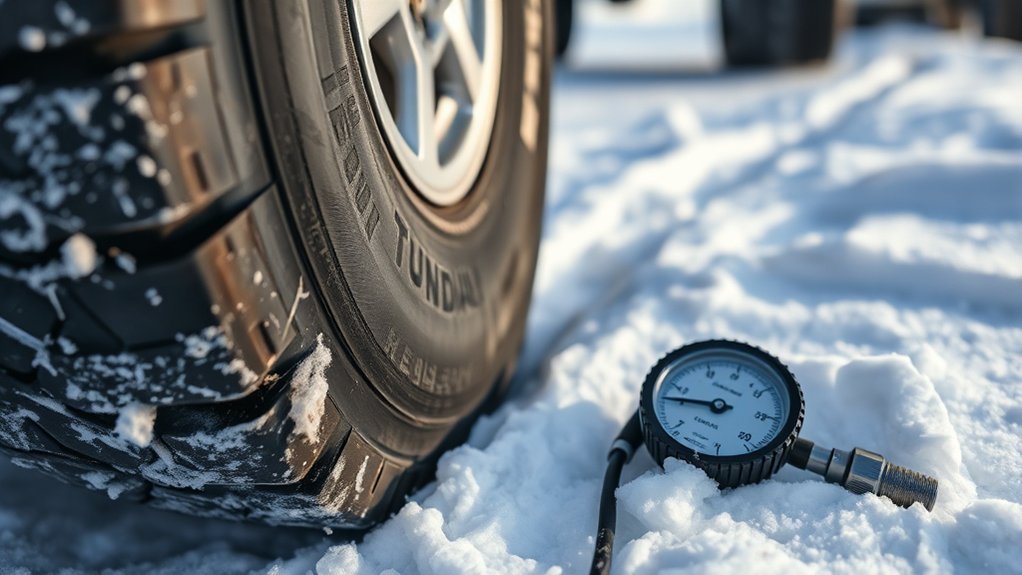
Tire pressure affects how the tread sits on the road. Low pressure can overload the shoulders. Too much pressure can wear the center faster and reduce ride quality. The right number depends on your exact Tundra year, tire size, load rating, and how much weight you carry.
Use this safe process:
- Find the correct cold PSI. Look at the Tire and Loading Information Label on the driver-side door area or check your owner’s manual. You can also use Toyota’s official owner manual resource for your specific model year.
- Check pressure cold. Measure pressure before driving or after the truck has been parked long enough for the tires to cool.
- Match front and rear guidance. Some vehicles use different front and rear pressures. Follow the label for your tire size and load setup.
- Adjust slowly. Add or release air in small amounts, then recheck with the same gauge.
- Recheck after changes. Recheck after towing, heavy hauling, seasonal temperature changes, new tires, or wheel changes.
Do not use the maximum PSI molded on the tire sidewall as your normal target. That number is not the same as your Tundra’s recommended cold tire pressure.
If you changed from the original tire size or load range, do not guess. For original equipment tire sizes, use the placard or owner’s manual. For optional sizes or plus sizes, load and inflation table guidance may be needed, and a qualified tire shop should confirm the correct pressure for your tire, wheel, axle load, and use.
Lifted, Leveled, and Aftermarket-Wheel Tundras
Outside-edge wear can show up faster when a Tundra has a leveling kit, suspension lift, wider wheels, wheel spacers, or larger all-terrain tires. These changes can alter tire contact, caster, steering geometry, scrub radius, and how much leverage the tire places on steering and suspension parts.
- After a lift or leveling kit, get an alignment. Do this after the suspension settles, and keep the printout.
- Check upper control arms and bushings. Modified trucks may need parts that allow proper caster and camber adjustment.
- Watch wheel offset and width. Aggressive offset can increase shoulder scrub during turns.
- Confirm load rating. Larger tires are not automatically better for payload or towing.
- Rotate more carefully. Heavy all-terrain tires can develop noise and uneven wear if rotations are skipped.
If outside-edge wear appears soon after modifications, do not blame the tire first. Recheck alignment, torque, wheel balance, tire pressure, and steering or suspension clearances.
[Products Worth Considering]

Accurately measure tire tread depth with a calibrated gauge marked from 0 to 1 inch in 1/32 inch increments. The color-coded bar helps you quickly identify tread condition ranges, supporting safe driving for trucks, motorcycles, automobiles, and passenger vehicles.

Steelman white tire marking crayons provide high-contrast, semi-permanent marks for repairing and inspecting tires and equipment. They write on wet or dry, smooth or coarse surfaces including rubber, metal, glass, and wood, making them ideal for puncture location and damage outlining. The lead- and zinc-free crayons resist weather and fading yet wipe away when you no longer need the marks.

Measure tyre tread depth precisely with a digital gauge that reads in both MM and inches, helping you monitor safe driving conditions. The large LCD screen is easy to operate, and the compact tool fits for cars, trucks, and motorcycles. It provides high accuracy with a 0-25.4mm range and includes a 1-year warranty for added peace of mind.
How Your Driving Style Affects Tire Longevity
Your driving style can make outside-edge wear worse, even when the truck is mechanically sound. A Tundra is heavy, and the front outside tire takes extra load during sharp turns, fast ramps, tight parking maneuvers, and quick lane changes.
| Driving Habit | Impact on Tire Wear |
|---|---|
| Aggressive Cornering | Adds load to the outside shoulder, especially on the front tires |
| Frequent Hard Braking | Increases front tire load and can reveal weak shocks or alignment issues |
| Driving on Rough Terrain | Can knock alignment out and accelerate shoulder wear |
| Skipping Tire Rotation | Lets one axle or one position keep wearing faster |
Smoother steering, earlier braking, and wider turns can reduce shoulder stress. This matters more if you tow, haul, run all-terrain tires, or drive on rough roads.
Choosing Tires That Last for Your Tundra
The best tire for your Tundra is not just the tire with the longest treadwear claim. It must match your truck’s size, load rating, speed rating, wheel size, and driving use.
- Match the factory size or an approved alternative. Check your door label, owner’s manual, or a qualified tire shop before changing size.
- Use the right load rating. Towing, hauling, tools, campers, and trailers can demand more load capacity than a lightly used street truck.
- Choose tread for your real driving. Highway tires often ride quieter and wear more evenly on pavement. All-terrain tires can handle dirt and gravel better but may need closer rotation checks.
- Avoid mismatched tires. Different tread depths, brands, sizes, construction types, or load ratings can create handling and wear problems.
- Recheck alignment after installation. New tires can hide old problems for a short time, but they will start wearing the same way if the cause remains.
NHTSA recommends checking the owner’s manual or Tire and Loading Information Label for the correct tire size. If you are unsure, consult a qualified tire dealer before installing a different size or load range.
[Products Worth Considering]

The Topeak SmartGauge D2 delivers precise digital tire pressure readings for bikes, motorcycles, and sports equipment up to 250 psi (17 bar). Its rotating SmartHead works with both Presta and Schrader valves, so you can check pressure quickly without adapters. The LCD display makes it easy to read results in psi, bar, or kg/cm² with an included CR2032 battery for immediate use.
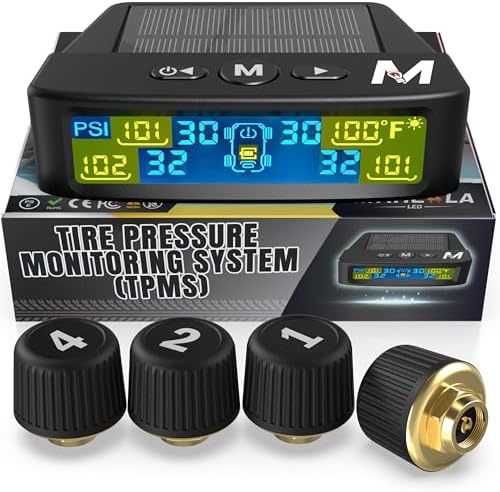
Marcala’s TPMS set of four sensors helps you monitor tire pressure and temperature in real time while driving, with updates every second. The bright color LCD uses auto-dimming for easy viewing, powered by dual solar and USB charging, and offers six alarm modes. Built for trailers, RVs, campers, trucks, and towing setups, the sensors support monitoring 1-4 wheels up to 98 PSI with IP67 waterproof protection.
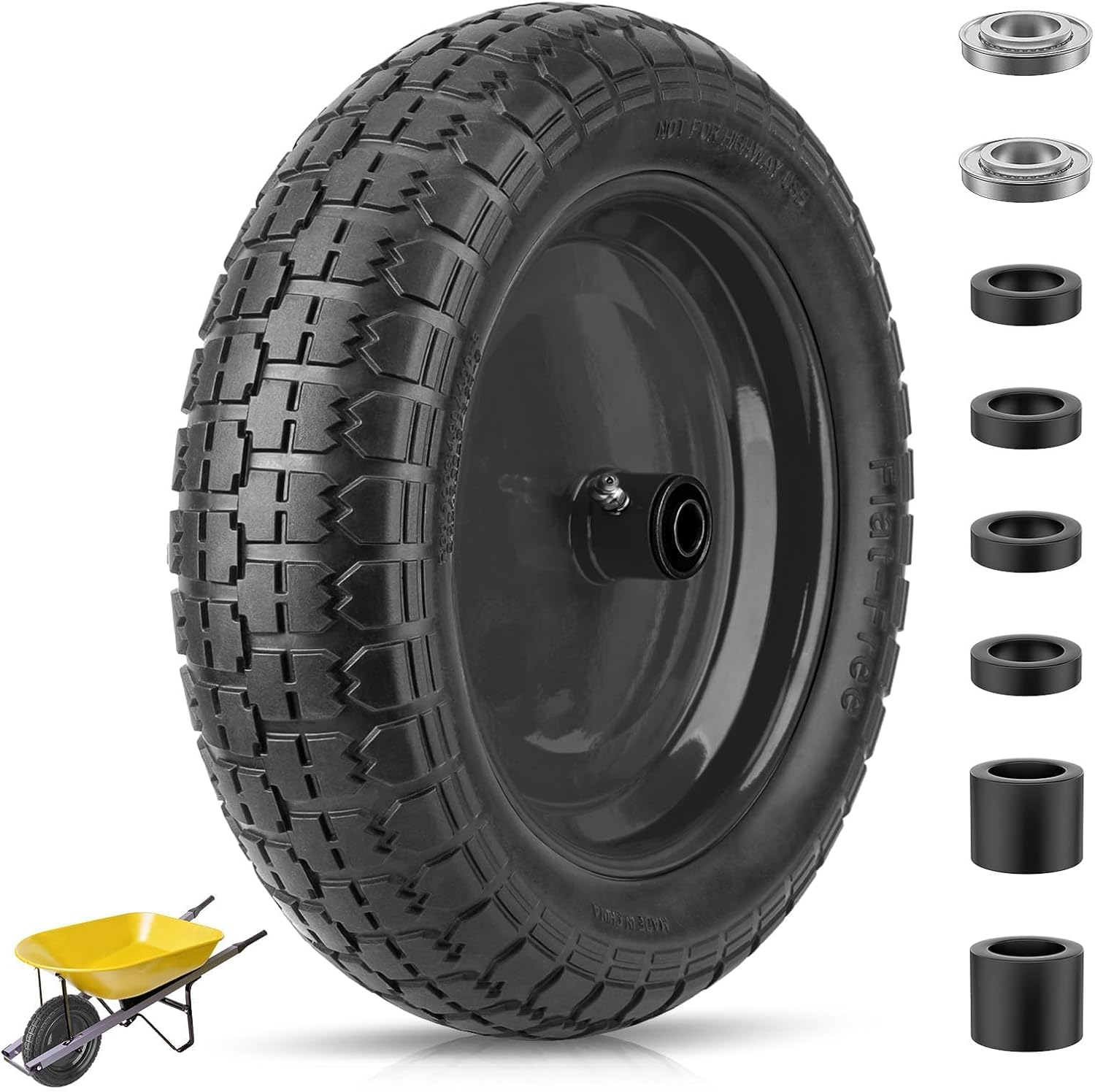
This flat-free TICONN wheelbarrow tire features durable polyurethane foam construction that never needs inflation, helping prevent punctures and reducing maintenance on rough outdoor terrain. With a 300 lb max load capacity and stable steel rim design, it supports safer transport for yard work and hauling tasks. An adapter kit with ball bearings and nylon spacers is included for easier fit and customization across common wheelbarrow and cart axle setups.
Signs Your Suspension Might Be Affecting Tire Wear
Suspension and steering parts keep the tire planted and pointed in the right direction. When those parts wear, the alignment can shift while the truck moves, even if the static alignment looked acceptable on the rack.
Bridgestone explains that tire cupping can be related to misalignment, worn suspension or shocks, and unbalanced tires. On a Tundra, these issues can appear as outside shoulder wear, patchy dips, vibration, or tire noise.
Watch for these signs:
- Clunking over bumps or when turning
- Steering wheel vibration or shimmy
- Truck pulling left or right
- Off-center steering wheel after alignment
- Cupped or patchy tread wear
- Uneven wear returning soon after a fresh alignment
- Loose, torn, leaking, or greasy ball joints, tie rods, bushings, or shocks
Common parts to inspect include tie rod ends, upper and lower ball joints, control arm bushings, wheel bearings, shocks, struts, and steering components. If the truck has a lift or leveling kit, also inspect the upper control arms, caster correction, and any aftermarket alignment parts.
Essential Maintenance Tips for Long-Lasting Tires
A simple routine can prevent small wear problems from becoming a full set of ruined tires. Use the same routine each month and after any hard impact, off-road trip, long tow, or heavy haul.
NHTSA reported 511 traffic fatalities in tire-related crashes in 2024, which is why pressure, tread, rotation, and alignment checks are more than routine maintenance.
- Check cold tire pressure monthly. Include the spare if your Tundra carries one.
- Inspect tread monthly. Look for uneven shoulder wear, cuts, cracks, punctures, bulges, exposed cords, and tread depth near 2/32 inch.
- Check tire age. Look for the DOT tire identification number on the sidewall. Old tires can become unsafe even when tread looks acceptable.
- Rotate on schedule. Follow your owner’s manual. NHTSA says rotation can reduce irregular wear and notes that 5,000 to 8,000 miles may apply when recommended by the vehicle manufacturer.
- Balance when needed. Balance new tires and rebalance if vibration appears.
- Align after impact or changes. Get an alignment after lift kits, leveling kits, steering repairs, suspension repairs, curb hits, pothole damage, or repeated uneven wear.
- Keep records. Write down pressure, rotation mileage, alignment results, tire age, and tread depth so you can spot a pattern early.
Pro Tip: Take a clear photo of each tire’s tread every time you rotate. If outside-edge wear returns, those photos help the shop see whether the problem is pressure, alignment, load, or a single worn component.
Can Overloading Your Tundra Ruin Your Tires?
Yes. Overloading your Tundra can ruin tires because it adds heat, flex, and shoulder stress. The problem gets worse when the tire pressure is too low for the load, the tires are not load-rated for the job, or the suspension is sagging.
Always check your payload rating, tire load rating, axle limits, and trailer tongue weight before hauling. The door label and owner’s manual matter more than guesses or forum numbers.
Impact of Excess Weight
Extra weight changes how the tread contacts the road. It can push more load into the shoulders, increase heat, and make the truck lean harder in turns. If you often carry tools, a bed rack, a camper shell, recovery gear, or trailer tongue weight, your tires and suspension work harder than an empty truck’s tires.
- Heavy payloads can increase shoulder wear.
- Poor load distribution can make one axle or one side wear faster.
- Soft or worn suspension can let alignment angles change under load.
- Tires with the wrong load rating can overheat or wear quickly.
Tire Pressure Considerations
Do not solve load-related wear by guessing a higher PSI. First, confirm the correct cold pressure for your exact tire and load setup. If your truck uses replacement tires with a different load range or size, ask a qualified tire shop to confirm the correct inflation for that tire and load.
If the TPMS light comes on, check pressure right away. TPMS is helpful, but it is not a replacement for monthly pressure checks with an accurate gauge.
Suspension System Strain
Overloading also strains shocks, springs, bushings, ball joints, tie rods, and wheel bearings. When those parts wear, the tire may not stay flat during braking, turning, or rough-road driving.
- Avoid exceeding the recommended payload or axle rating.
- Inspect suspension parts before long towing or hauling trips.
- Use tires with the correct size and load rating for your Tundra.
- Get an alignment after suspension upgrades or ride-height changes.
Frequently Asked Questions
Why are my Tundra tires wearing out on the outside edge?
Outside-edge wear usually comes from toe or camber alignment problems, underinflation, hard cornering, worn steering or suspension parts, wheel damage, or too much load. Start by checking cold pressure against the door placard, then inspect tread depth, compare both front tires, and get an alignment printout.
Can low tire pressure cause outside-edge wear?
Yes. Low pressure can make the shoulders carry more load and can add heat. It often wears both shoulders, but it can make outside-edge wear worse when combined with cornering, hauling, towing, or alignment problems.
Should I set my Tundra tires to 44 PSI?
Not unless that matches your truck, tire, and load guidance. Use the cold tire pressure on your Tire and Loading Information Label or owner’s manual. A generic 44 PSI target can be wrong for some Tundra setups and can create new wear or handling problems.
Can an alignment fix tires that already wore on the outside edge?
An alignment can stop new uneven wear if alignment was the cause, but it cannot replace missing tread. If the outside shoulder is thin, noisy, cracked, corded, or near 2/32 inch, the tire may still need replacement after the alignment problem is corrected.
Do lifted or leveled Tundras wear tires faster?
They can if alignment, caster, wheel offset, tire size, and suspension parts are not matched correctly. A lift or leveling kit can change steering geometry and tire contact. Get an alignment after the change, keep the printout, and rotate tires on schedule.
How often should I rotate Toyota Tundra tires?
Follow your owner’s manual and tire warranty requirements. As general safety guidance, NHTSA says tires may be rotated every 5,000 to 8,000 miles if the vehicle manufacturer recommends it, or sooner if uneven wear appears.
What’s the worst year for a Toyota Tundra?
No single model year automatically explains outside-edge tire wear. Tire wear usually comes from maintenance, alignment, tire fitment, suspension condition, load, and driving conditions. For year-specific safety issues, check NHTSA recalls, investigations, complaints, and manufacturer communications by year, make, model, or VIN.
Conclusion
Outside-edge tire wear on a Tundra is a warning sign, not just a cosmetic tread issue. Start with cold tire pressure, tread depth, tire age, and tire condition. Then look at alignment, suspension wear, load, tire rating, wheel setup, and driving style. If the wear is severe, the tire is near 2/32 inch, or the truck pulls or vibrates, get it inspected before towing or driving long distances.
The best fix is to correct the cause before buying another set of tires. A fresh alignment, proper pressure, healthy suspension parts, correct load-rated tires, and consistent rotation will do more for tire life than replacing the same worn tire again and again.
Sources
- NHTSA TireWise — tire pressure, tread depth, tire rotation, alignment, TPMS, tire aging, tire size, and 2024 tire-related crash fatality guidance
- NHTSA Recalls — recall, investigation, complaint, and manufacturer communication lookup
- Toyota Warranty & Owners Manuals — model-year owner manual reference for Tundra tire pressure, tire size, load, and maintenance information
- Michelin Irregular Tire Wear 101 — one-sided wear, alignment, camber, toe, and worn-part guidance
- Bridgestone Tire Cupping Guide — cupping causes, suspension wear, misalignment, and tire balance guidance
- Toyo Tires Load & Inflation Tables