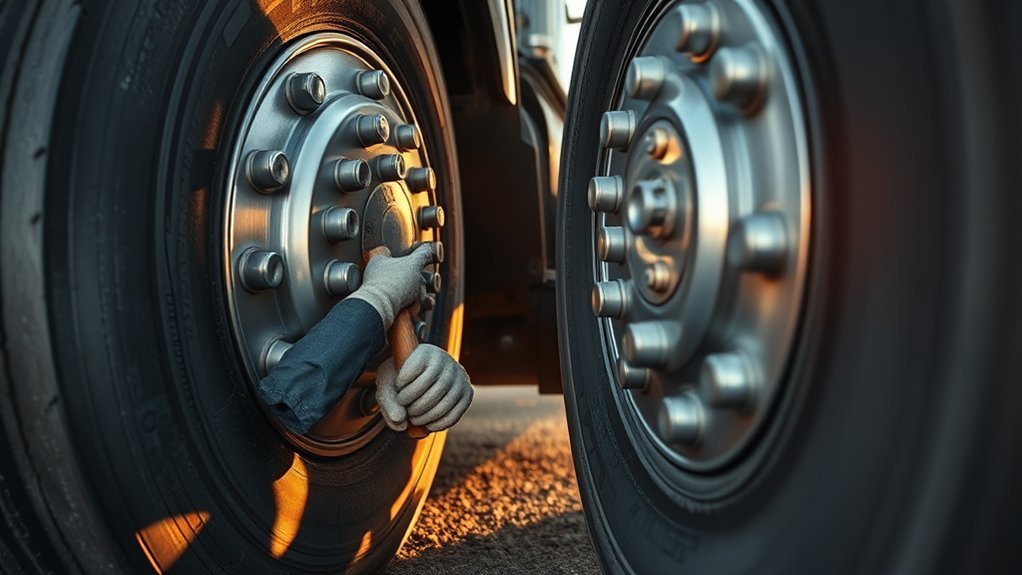
A tire thumper is a quick-check tool many truckers use during walkarounds to spot a tire that sounds obviously low, flat, or different from the others. It is useful because it is fast, simple, and easy to carry, but it does not measure exact tire pressure. For the real PSI, you still need a tire pressure gauge.
Quick Answer
A tire thumper is a short wooden, rubber, or metal tool used to strike a tire and listen for a firm or dull sound. It can help flag a tire that may be low, but it cannot confirm exact PSI. Use it as a quick screening tool, then verify suspect tires with a pressure gauge.
Key Takeaways
- A tire thumper helps you compare tire sounds quickly during a walkaround inspection.
- A firm, consistent thump may suggest the tire is not obviously flat, while a dull or dead sound means you should stop and check it closer.
- A thumper does not measure PSI. Use a tire pressure gauge for accurate pressure readings.
- Underinflated tires can run hotter, wear faster, and fail more easily, so any suspicious tire needs a real pressure check.
- Carry and use a tire thumper as a maintenance tool only, and check local laws before keeping one in a vehicle.
At a Glance
| Time Required | 30 seconds to a few minutes for a quick walkaround; longer if you confirm pressure with a gauge. |
| Difficulty | Easy, but it takes practice to compare sounds consistently. |
| Tools Needed | Tire thumper for screening; accurate tire pressure gauge for PSI confirmation. |
| Cost | Usually low to moderate, depending on material, length, grip, and brand. |
What Is a Tire Thumper?

A tire thumper is a hand tool used to strike the sidewall of a tire and listen to the sound it makes. Truckers often use one as a fast first-pass check because a tire that is much lower than the others may sound dull, hollow, or dead compared with properly inflated tires on the same vehicle.
The important word is compare. A tire thumper works best when you strike each tire the same way and listen for a tire that sounds different from the rest. It is not a substitute for checking the manufacturer’s recommended cold inflation pressure with a gauge. The National Highway Traffic Safety Administration recommends using the correct tire pressure listed on the vehicle placard or certification label, and pressure readings are most accurate when tires are cold.
What a Tire Thumper Can and Cannot Tell You
A thumper can give you a fast clue. It may help you notice a tire that is flat, very low, or different from the other tires in the set. That makes it useful during quick roadside checks, fuel stops, and pre-trip walkarounds.
What it cannot do is tell you whether a tire is at 95 PSI, 100 PSI, or 105 PSI. Sound changes with tire size, casing stiffness, temperature, load, tread depth, and how hard you strike. For exact inflation pressure, use a gauge. The U.S. Tire Manufacturers Association advises drivers to use a tire gauge to check PSI and to check tires when they are cold.
Note: A tire thumper is a screening tool. If the sound changes, the tire looks low, the sidewall is damaged, or you hear an air leak, stop and verify the tire with a pressure gauge or tire-service professional.
How to Check Tire Pressure by Thumping
To use a tire thumper correctly, focus on consistency. You want the same grip, the same target area, and the same strike strength on every tire so the sounds are easier to compare.
- Stand safely beside the tire. Keep your feet balanced and stay clear of traffic or moving equipment.
- Hold the handle firmly. Use the grip and wrist strap if your thumper has one.
- Strike the tire sidewall with one controlled hit. Do not swing wildly or hit wheels, rims, valve stems, or other hardware.
- Listen for the sound. A firm, consistent thump is what you want to hear across matching tires.
- Compare every tire. On dual assemblies, compare the inner and outer tires as carefully as you can.
- Check any odd tire with a gauge. A dull, hollow, weak, or noticeably different sound means the tire needs a closer look.
Pro Tip: Thump the tires in the same order every time. A repeatable routine makes it easier to notice when one tire sounds different from yesterday or different from the tire beside it.
[Products Worth Considering]

Monitor tire tread wear with a smart, color-coded depth gauge that shows clear condition ranges at a glance. The bar is range marked for fast, easy readings, helping you maintain safer traction and performance. Each gauge is portable with a pocket clip, and the set includes 20 units for daily use and sharing.

The Big Rig Defense Tire Thumper is a truck tire pressure checker that lets you quickly check multiple tires by giving them a firm whack. Listen for a reassuring thump and feel the stick bounce when a tire is fully inflated, helping you get back on the road safely. It features a comfortable, glove-friendly handle and a secure wrist strap for confident use on busy routes.

This tire inflator with pressure gauge delivers long-lasting performance with a durable rubber-protected gauge and sturdy build. The longer hose and 360 swivel air chuck help you seal the valve securely and keep your hands free while measuring, inflating, or deflating. It’s battery-free for reliable use and provides ±2 PSI accuracy in the mid-range for most typical tires, with universal compatibility for 1/4 NPT compressor outputs.
What a Good Tire Thump Sounds Like
A good tire thump is usually firm, clear, and consistent with the other tires on the vehicle. The goal is not to identify an exact pressure by ear. The goal is to spot a tire that sounds wrong before it becomes a roadside problem.
Firm, Clear Thump
A tire that is not obviously low will usually give a firm, solid thump. The sound should be similar across tires of the same size, axle position, and load. If one tire sounds much softer than the others, treat that as a warning sign.
Dull, Hollow, or Dead Sound
A dull or hollow sound may point to low air pressure, a slow leak, or a tire that needs closer inspection. It can also come from differences in casing, temperature, tread, or load. That is why the next step is not guessing. The next step is checking the PSI with a gauge.
Bounce-Back Feel
Some drivers also pay attention to how the tire feels when struck. A firmer tire may give a quicker rebound through the tool, while a very soft tire may feel dead. Use that feel only as a clue, not proof of proper inflation.
Tire Thumper vs. Pressure Gauge

A tire thumper and a tire pressure gauge do different jobs. A thumper is fast. A gauge is accurate. The safest routine is to use the thumper for quick screening and the gauge whenever you need the actual PSI.
| Tool | Best For | Limitation |
|---|---|---|
| Tire thumper | Fast sound comparison during walkarounds | Cannot measure exact PSI |
| Pressure gauge | Accurate inflation-pressure readings | Slower when checking many tires |
| TPMS | Automatic warning for major pressure loss | Not a replacement for regular gauge checks |
A thumper can help you find a suspicious tire faster, but a gauge is the tool that tells you the number.
[Products Worth Considering]

ETENWOLF’s tire pressure gauge helps you quickly and accurately check tire PSI across cars, trucks, motorcycles, bikes, and more. It’s manually calibrated to ANSI B40.1 Grade A for reliable readings, includes a large glow dial for easy nighttime viewing, and features a 360-degree swivel chuck for use at any valve angle. The gauge also works consistently in extreme hot or cold weather.

The SAFELIFE dial tire tread depth gauge measures tread depth in 1/32 inch increments with clear, easy-to-read 2-inch dial face. Color zones using a traffic light system help you quickly judge whether tread is low, marginal, or ample for safer driving. Built with a durable zinc cast body and a metal detect probe for precise, comfortable use across cars, motorcycles, trucks, and buses.

ETENWOLF T300 is a calibrated digital tire pressure gauge for accurate readings from 3 to 200 PSI across light and heavy-duty vehicles. It includes thermal compensation for reliable performance in extreme cold or heat, with an auto shut-off to extend battery life and an LED for easier reading. The sturdy design supports rugged everyday use, making it ideal for pickups, RVs, and industrial applications.
When to Use a Pressure Gauge Instead
Use a pressure gauge any time the number matters. That includes before long trips, after a tire sounds different, when a tire looks low, after major temperature swings, when hauling a heavy load, after tire service, or when your fleet policy requires a documented PSI check.
For commercial vehicles, tire condition is part of the driver’s safety responsibility. 49 CFR § 392.7 requires a driver to be satisfied that tires and other listed parts are in good working order before operating a commercial motor vehicle. 49 CFR § 393.75 also identifies tire conditions that make operation unsafe, including flat tires, audible leaks, exposed ply or belt material, and certain tread or sidewall damage.
Warning: Do not keep driving on a tire that looks low, sounds dead, has an audible leak, shows exposed cords, or has major sidewall damage. Check it with a gauge and get professional tire service when needed.
What to Look for in a Tire Thumper
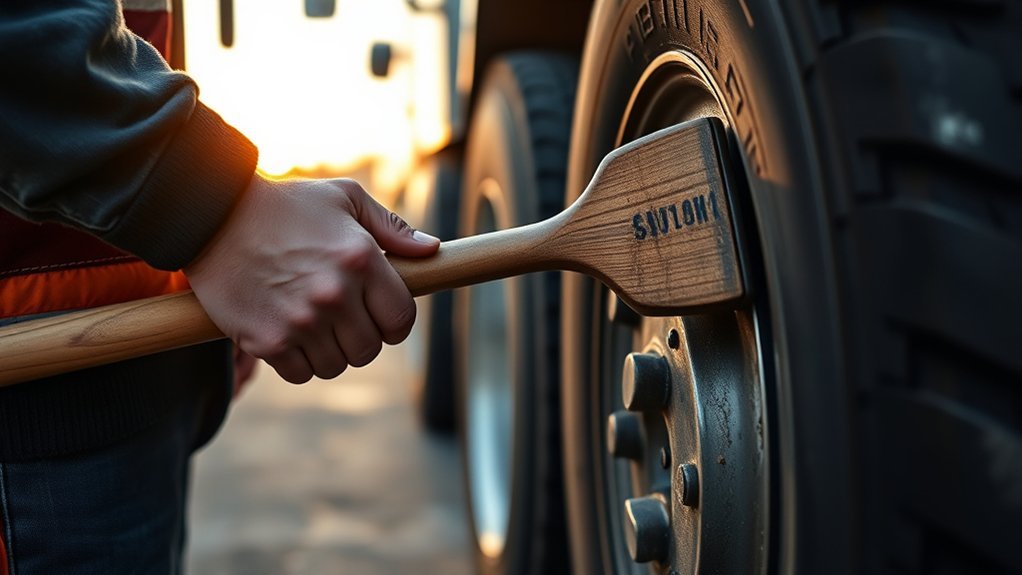
A good tire thumper should be easy to control, durable enough for daily use, and comfortable in your hand. Many drivers prefer wood, rubber, or solid composite designs because they give a clear strike without being awkward to carry.
- Length: Choose a size that reaches the sidewall comfortably without forcing you to bend too far.
- Weight: It should be heavy enough to make a clean sound but light enough to control safely.
- Grip: A ribbed or textured handle helps when your hands are wet, cold, or gloved.
- Wrist strap: A strap can reduce drops and help you keep control.
- Build quality: Avoid cracked handles, loose metal parts, splinters, or sharp edges.
[Products Worth Considering]

AstroAI’s digital tire pressure gauge inflates and measures with high accuracy, reading within 1% and supporting four pressure units from 3 to 250 PSI. The heavy-duty brass air chuck locks securely on valve stems, while the 19.7-inch stainless braided hose and 360° rotatable dial improve comfort and control for faster single-hand operation. Battery-saver behavior and an integrated flashlight add convenience and safety for everyday roadside and garage use.

Accurately measure tire tread depth with a calibrated gauge marked from 0 to 1 inch in 1/32 inch increments. The color-coded bar helps you quickly identify tread condition ranges, supporting safe driving for trucks, motorcycles, automobiles, and passenger vehicles.

AstroAI’s heavy-duty digital tire pressure gauge delivers quick, accurate readings with 0.1 increments and a secure valve-stem seal. It features a green backlit LCD and built-in flashlight for easy use in low light, plus an ergonomic non-slip stainless-steel design. The wide 0–230 PSI range works across common vehicle tires, with unit selection and an auto shut-off to save battery.
Tire Thumper Safety Tips and Legal Concerns
A tire thumper is meant for tire inspection. Do not brandish it, threaten anyone with it, or carry it as a self-defense weapon. Laws vary by state and local jurisdiction, and the same object may be viewed differently depending on its design, how it is carried, and how it is used.
California is one example where caution matters. California Penal Code § 22210 covers certain club-like weapons such as billies, blackjacks, saps, and similar instruments. A normal maintenance tool is not the same thing as legal advice, so check current local rules or ask a qualified attorney if you are unsure.
- Keep the tool with your inspection gear, not hidden as a weapon.
- Use it only during tire checks or other lawful work tasks.
- Do not modify it with spikes, lead, hidden blades, or other weapon-like features.
- Follow fleet policy, jobsite rules, and local laws.
Other Practical Tire Thumper Uses
Some drivers keep a tire thumper because it is a sturdy hand tool, but its main job should remain tire inspection. Anglers sometimes use similar tools as fish bonkers where legal, and some people keep them in roadside kits for general knocking or checking hollow surfaces. Keep those uses practical, lawful, and safety-focused.
Do not rely on a tire thumper for tasks that require a hammer, pry bar, torque tool, or pressure gauge. The wrong tool can damage equipment or give you a false sense of safety.
Common Mistakes to Avoid
- Using it as a PSI gauge: A thumper cannot tell you exact pressure.
- Thumping only one tire: The value comes from comparing all tires in a set.
- Ignoring visual damage: Cuts, bulges, exposed cords, and leaks matter even if the tire sounds firm.
- Striking too hard: A controlled hit is enough. Wild swings increase injury and damage risk.
- Trusting viral hacks: Water bottles, kicking, and guessing are not replacements for a pressure gauge.
Frequently Asked Questions
Is it illegal to carry a tire thumper?
Not automatically, but laws vary. A tire thumper carried and used as a maintenance tool is different from a club carried for self-defense. Some jurisdictions restrict club-like weapons, so check local law and fleet policy before carrying one, especially across state lines.
What is the point of a tire thumper?
The point is speed. A tire thumper helps you quickly compare tire sounds during a walkaround and notice a tire that may be low, flat, or different from the others. It is a screening tool, not a precision measuring tool.
Can a tire thumper measure PSI?
No. A tire thumper cannot measure PSI. It can only give a sound and feel comparison. Use a tire pressure gauge when you need to know the actual inflation pressure.
Why are people putting water bottles on their tires?
A water bottle on or near a tire is usually a viral myth, prank, or unrelated roadside warning story. It is not a reliable way to check tire pressure. Use a tire pressure gauge for PSI and soapy water to help find a suspected leak.
How do you properly use a tire thumper?
Hold the handle firmly, strike the sidewall with a controlled hit, and compare the sound across all matching tires. If one tire sounds dull, hollow, or different, inspect it and confirm the pressure with a gauge.
Is a tire thumper better than a pressure gauge?
No. It is faster, but it is not more accurate. A thumper is useful for quick screening, while a pressure gauge is the correct tool for measuring tire pressure.
Conclusion
A tire thumper is useful when you understand its limits. It can help you move quickly around a truck and catch a tire that sounds suspicious, but it cannot prove the tire is at the correct PSI. Use it for fast screening, use a gauge for accurate pressure, and treat any dull sound, visible damage, or air leak as a reason to stop and inspect the tire properly.
Sources
- NHTSA TireWise — tire-pressure safety, cold-pressure guidance, and tire maintenance basics.
- U.S. Tire Manufacturers Association Tire Care Essentials — gauge-based PSI checks, cold tire checks, TPMS limits, and inflation safety.
- 49 CFR § 392.7 — commercial driver equipment inspection and use requirements.
- 49 CFR § 393.75 — commercial motor vehicle tire condition requirements.
- Michelin Commercial Tires Pressure Management — effects of underinflation and overinflation on tire performance.
- California Penal Code § 22210 — legal context for certain club-like weapons and similar instruments.