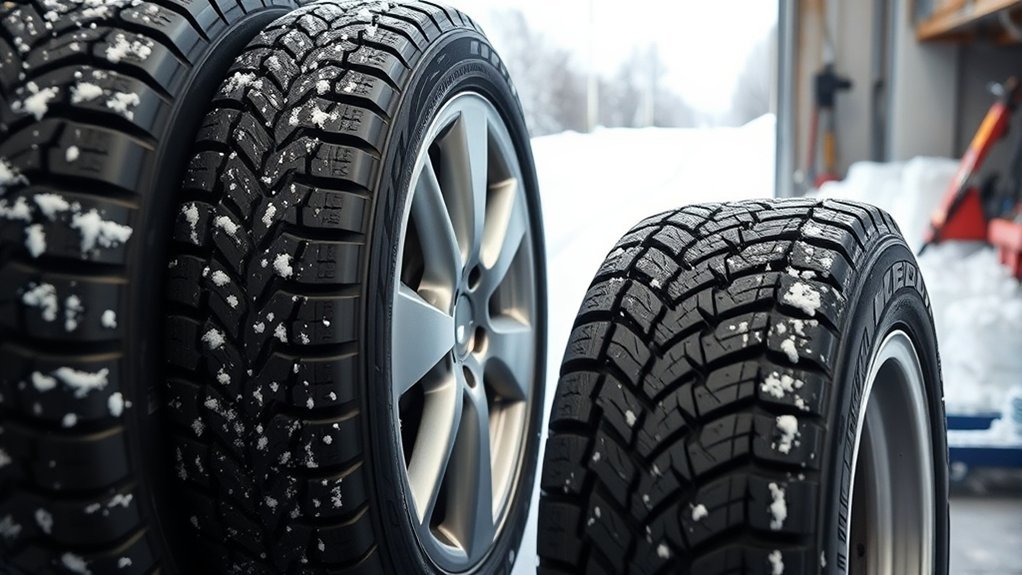
A snow tire, also called a winter tire, is built for cold weather, snow, slush, and ice. It uses a softer cold-weather rubber compound, deeper tread channels, and many small biting edges called sipes to help your vehicle grip when ordinary tires start to lose traction. For the safest handling, use four matching winter tires, not just two.
Quick Answer
A snow tire is a winter tire designed to stay flexible and grip better when temperatures are near or below 45°F (7°C). Its tread has deeper grooves and extra sipes to improve traction, braking, and steering on snow, slush, and ice.
Key Takeaways
- Snow tires and winter tires are the same basic category: tires made for cold-weather traction.
- They work best when temperatures consistently stay near or below 45°F (7°C).
- Look for the Three-Peak Mountain Snowflake (3PMSF) symbol for severe-snow traction performance.
- Install four matching winter tires so acceleration, steering, cornering, and braking stay balanced.
- Check local laws before using studded tires or driving mountain routes that may require winter tires or chains.
At a Glance
| Best Temperature Range | Consistently near or below 45°F (7°C) |
| Recommended Setup | Four matching winter tires of the correct size, load index, and speed rating |
| Marking to Check | Three-Peak Mountain Snowflake (3PMSF) symbol for severe-snow traction |
| Typical Cost | About $400 to $1,200+ for four tires, plus mounting, balancing, and possible wheel costs |
What Is a Winter Tire?
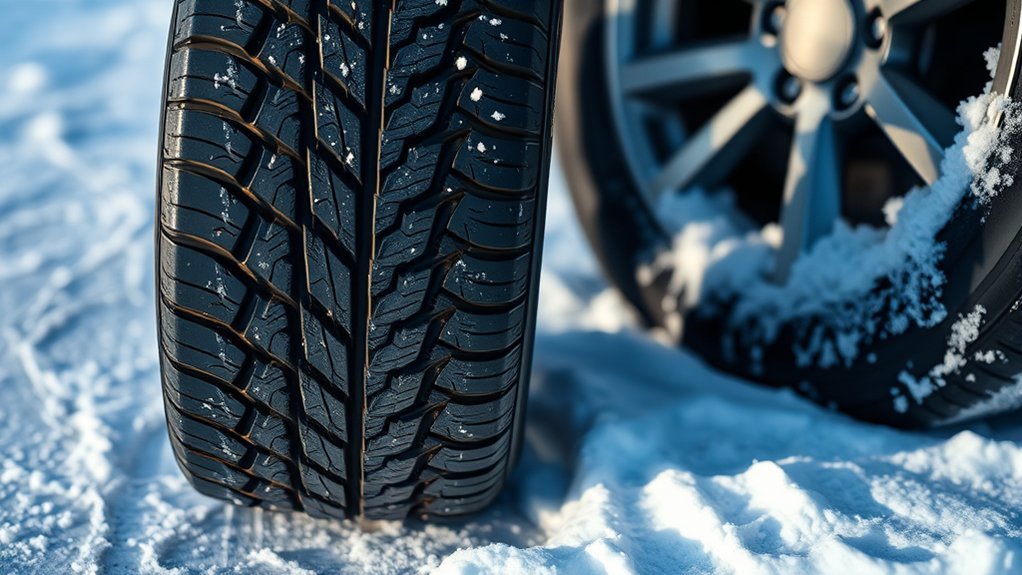
A winter tire is a tire made specifically for cold weather and winter road surfaces. The terms snow tire and winter tire are often used together, but “winter tire” is usually the better term because these tires are not only for fresh snow. They also help on cold pavement, slush, packed snow, and icy patches.
According to Transport Canada, all-season and summer tires begin to lose elasticity below 7°C, while winter tires are designed to keep their elasticity and grip in colder weather. That flexibility helps the tread stay in contact with the road instead of hardening and sliding.
The most useful winter tire marking to look for is the Three-Peak Mountain Snowflake, often shortened to 3PMSF. This symbol means the tire meets specific snow traction performance requirements for severe snow conditions.
How Winter Tires Work on Ice and Snow
Winter tires work by combining three main features: cold-flexible rubber, deeper tread channels, and many sipes. These features help the tire bite into snow, move slush away from the contact patch, and keep more rubber touching the road in low temperatures.
In one Tire Rack snow-packed-road test from 30 mph, the vehicle on winter tires stopped in about 59 feet, while the vehicle on all-season tires needed about 30 additional feet.
That does not mean every winter tire will stop the same way in every storm. Ice, temperature, vehicle weight, speed, tire age, and driver inputs all matter. Still, the design advantage is real: winter tires are built to keep traction when regular tires struggle.
- Deep grooves help channel slush, snow, and water away from the tread.
- Sipes create extra biting edges for packed snow and icy patches.
- Cold-weather compounds stay more flexible in low temperatures.
- Open tread blocks help the tire pack and release snow instead of clogging.
- 3PMSF markings show the tire has met severe-snow traction requirements.
Warning: Winter tires improve grip, but they do not make ice safe at normal driving speeds. Slow down, increase following distance, and avoid sudden steering or braking on slick roads.
Winter Tire Rubber and Tread Design
The biggest difference between a snow tire and a regular tire is how the rubber and tread behave in cold weather. A regular all-season tire may be fine in mild conditions, but it can become stiffer as temperatures drop. A winter tire is designed to stay pliable so the tread can conform to the road surface.
Rubber Flexibility
Winter tires use rubber compounds designed for cold conditions. When the tire stays flexible, it can maintain a better contact patch on cold pavement, packed snow, and ice. That contact patch is what lets the tire steer, brake, and accelerate with more control.
- Better cold-weather grip than standard all-season tires
- More predictable steering response in freezing temperatures
- Improved braking on snow-covered roads
- Less hardening in cold weather
- Better traction when roads move from wet to slushy to icy
Deep Tread Patterns
Snow-ready tread matters because winter driving often means loose snow, packed snow, slush, water, and ice in the same trip. Deeper grooves and higher void areas give snow and slush somewhere to move, helping the tread stay cleaner as it rolls.
| Feature | What It Does | Driver Benefit |
|---|---|---|
| High void ratio | Gives snow and slush room to move | Cleaner tread contact |
| Deep grooves | Channel water and slush away | Better slush control |
| Block edges | Bite into snow | Stronger acceleration and braking |
| Cold-weather rubber | Stays flexible in low temperatures | More consistent grip |
| Healthy tread depth | Maintains snow and slush evacuation | Safer winter performance |
Sipes and Biting Edges
Sipes are the small cuts molded into the tread blocks. They open slightly as the tire rolls, creating extra edges that can grip packed snow and thin ice. A winter tire usually has far more siping than a regular tire, which is one reason it feels more secure in freezing weather.
- More biting edges for packed snow
- Better steering feel on cold, slick pavement
- Improved braking compared with non-winter tires in snow
- More tread movement to conform to uneven winter surfaces
- Better grip when snow compacts under the tire
Why You Need Four Winter Tires
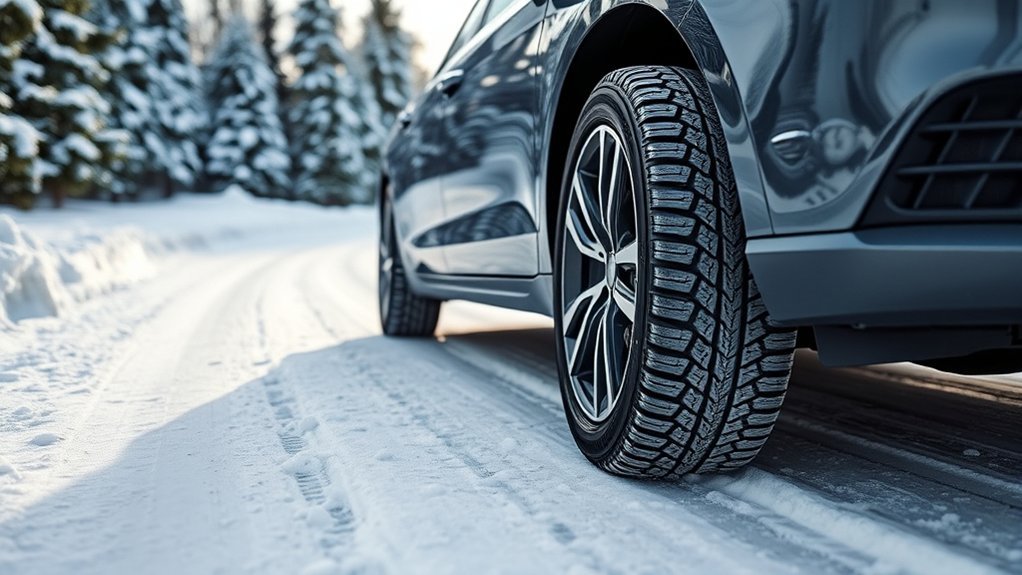
For balanced winter handling, install four matching winter tires. Putting winter tires only on the drive axle can create a dangerous grip imbalance. One end of the vehicle may turn, stop, or slide differently than the other, especially during emergency braking or lane changes.
Transport Canada recommends installing winter tires in sets of four to help maintain control and stability. The tires should match in type, size, speed rating, and load index unless your vehicle manufacturer specifies a staggered setup.
This matters for every drivetrain:
- Front-wheel drive: two front winter tires can leave the rear more likely to slide.
- Rear-wheel drive: two rear winter tires can leave the front with weaker steering and braking grip.
- AWD or 4WD: all-wheel drive can help you get moving, but it does not shorten stopping distance by itself.
Note: AWD and 4WD help with acceleration, not magic braking. Your tires still determine how much grip you have when you steer or stop.
When to Switch to Winter Tires
The best time to install snow tires is before winter roads become a problem. Use temperature as your cue, not the first snowfall. When daily temperatures consistently stay near or below 45°F (7°C), winter tires are in their useful range.
NHTSA also advises drivers who plan to use snow tires to have them installed in the fall so they are ready before it snows. That helps you avoid the tire-shop rush after the first storm.
Switch to winter tires before the first storm, once temperatures consistently stay near or below 45°F (7°C).
- Install them before snow and ice become regular road conditions.
- Do not wait until your morning commute is already slick.
- Remove them when warm weather returns consistently.
- A second wheel set can make seasonal swaps faster and may protect factory wheels from salt.
- Check pressure after installation and during cold snaps.
Pro Tip: If you keep your vehicle for several winters, buying winter tires on a separate wheel set can make seasonal changeovers easier and may reduce repeated mounting costs over time.
Winter Tire Types: Studless, Studdable, and Studded
Winter tires come in several styles. The right choice depends on your climate, roads, vehicle, and local laws.
- Studless winter tires: Best for most drivers. They use advanced rubber and tread design for snow, slush, cold pavement, and moderate ice.
- Performance winter tires: Designed for sporty cars and higher-speed stability in cold weather, while still offering winter traction.
- Light truck and SUV winter tires: Built for heavier vehicles and winter load demands.
- Studdable winter tires: Made with holes that can accept metal studs where studs are legal and useful.
- Studded winter tires: Use metal studs for extra bite on hard ice, but they can be noisy, may reduce comfort on dry pavement, and are restricted or banned in some areas.
Warning: Studded tire rules vary by state, province, date range, and road type. Check local transportation rules before buying or installing studs.
[Products Worth Considering]

Milton S-921 pencil tire pressure gauge helps you maintain optimal tire pressure for passenger cars with accurate readings in PSI and kPa. It features a built-in deflator valve for convenient pressure adjustments, plus a single chuck head and nylon indicator bar for easy use on the go. Built from durable plated brass and designed for reliable performance, it’s a practical road trip and cold-weather maintenance tool.

Monitor tire tread wear with a smart, color-coded depth gauge that shows clear condition ranges at a glance. The bar is range marked for fast, easy readings, helping you maintain safer traction and performance. Each gauge is portable with a pocket clip, and the set includes 20 units for daily use and sharing.

Steelman white tire marking crayons provide high-contrast, semi-permanent marks for repairing and inspecting tires and equipment. They write on wet or dry, smooth or coarse surfaces including rubber, metal, glass, and wood, making them ideal for puncture location and damage outlining. The lead- and zinc-free crayons resist weather and fading yet wipe away when you no longer need the marks.
Winter Tire Ratings, Symbols, and Legal Rules
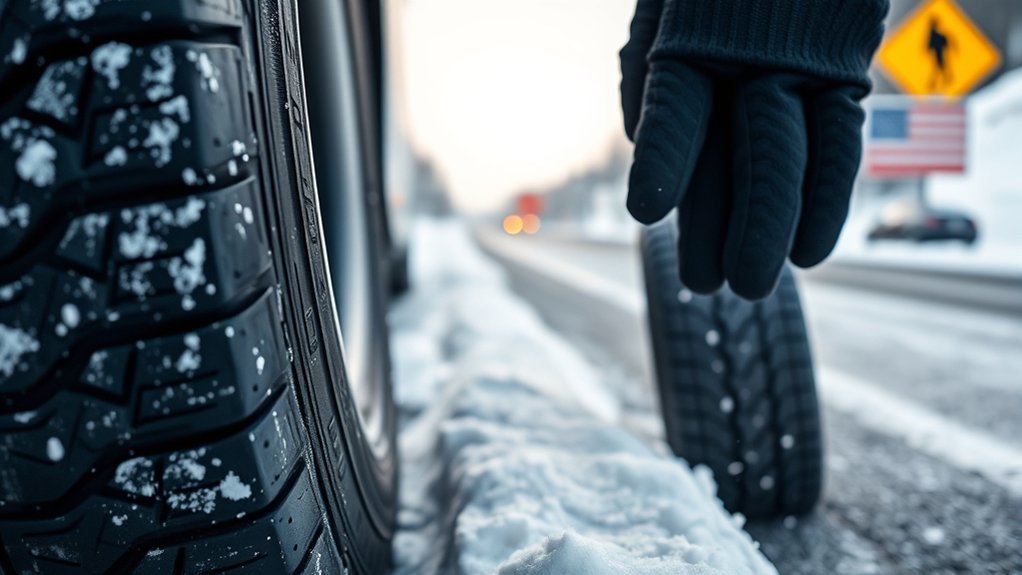
Winter tire markings help you know what the tire is designed to do. The most important one for snow traction is the 3PMSF symbol. It looks like a snowflake inside a three-peaked mountain.
3PMSF and M+S Symbols
The 3PMSF mark means the tire meets severe-snow traction performance requirements. The U.S. Tire Manufacturers Association defines severe-snow-use tires by snow grip performance using ASTM F1805-18 or equivalent snow traction methods.
The M+S marking stands for mud and snow. It can appear on many all-season and all-terrain tires, but it is not the same as a 3PMSF severe-snow rating. For true winter use, choose 3PMSF when possible.
- 3PMSF: Tested for severe-snow traction performance.
- M+S: A mud-and-snow tread designation, not the same as a severe-snow winter rating.
- Studded: Useful in some icy regions, but regulated in many places.
- DOT date code: Helps identify tire age.
- Load index and speed rating: Must be appropriate for your vehicle.
Regional Winter Tire Laws
Winter tire laws vary widely. Some areas require winter tires, chains, or traction devices on certain roads during winter months. Others regulate studded tires by date range.
For example, the Gouvernement du Québec requires covered vehicles to be winter-ready from December 1 to March 15. In the United States, rules are often state-specific and may apply only to certain mountain passes or posted routes.
- Check local rules before winter travel.
- Carry chains where mountain routes require them.
- Do not assume M+S is enough where 3PMSF is required.
- Confirm studded tire date restrictions before installation.
- Follow your vehicle owner’s manual for approved tire sizes.
Snow Tires vs. All-Season vs. All-Weather Tires
Snow tires, all-season tires, and all-weather tires are not the same. The right choice depends on how cold your winters are and how often you drive in snow or ice.
| Tire Type | Best For | Main Limitation |
|---|---|---|
| Winter / snow tires | Cold climates, frequent snow, slush, and ice | Wear faster in warm weather |
| All-season tires | Mild climates and light occasional snow | Less winter grip in freezing conditions |
| All-weather tires | Drivers who want one tire for year-round use, often with 3PMSF marking | Usually not as strong as dedicated winter tires in severe winter conditions |
[Products Worth Considering]

The 22800 wheel stud installer makes replacing wheel studs quick and secure, saving time and effort during tire service. It uses a ratchet or impact wrench to pull new studs firmly into place, helping when existing studs are too long. Compatible with most automotive wheels and light-duty truck wheel studs, it’s designed for easy, tool-assisted installation.

Accurately measure tire tread depth with a calibrated gauge marked from 0 to 1 inch in 1/32 inch increments. The color-coded bar helps you quickly identify tread condition ranges, supporting safe driving for trucks, motorcycles, automobiles, and passenger vehicles.

MORNYRAY universal tire covers help protect RV, truck, SUV, trailer, and camper tires from sun, rain, and snow with waterproof, anti-UV fabric and a soft inner lining. Elasticized bands and windproof buckle design help keep covers securely in place for easy on and off use. The set includes a storage bag for convenient handling when not in use.
How to Choose the Right Snow Tires
Start with your owner’s manual, tire placard, and driving conditions. A tire that fits someone else’s SUV may not be correct for your sedan, truck, EV, or AWD vehicle.
- Match the correct size: Use the approved tire size from your vehicle placard or owner’s manual.
- Check load index: The tire must support your vehicle’s weight, especially for trucks, SUVs, and EVs.
- Check speed rating: Use a rating approved for your vehicle and driving needs.
- Look for 3PMSF: Choose severe-snow-rated tires for real winter conditions.
- Choose the right category: Studless for most drivers, performance winter for sporty vehicles, and studded only where legal and useful.
- Buy four: Mixing winter and non-winter tires can reduce stability.
- Consider wheels: A dedicated winter wheel set can simplify seasonal swaps.
[Products Worth Considering]

The SAFELIFE dial tire tread depth gauge measures tread depth in 1/32 inch increments with clear, easy-to-read 2-inch dial face. Color zones using a traffic light system help you quickly judge whether tread is low, marginal, or ample for safer driving. Built with a durable zinc cast body and a metal detect probe for precise, comfortable use across cars, motorcycles, trucks, and buses.

AZUNO’s digital tire inflator delivers stable, accurate pressure readings with a bright LCD and a 0.1 resolution display for confident inflation. It supports one-handed operation for inflating and quick deflating, and it’s built with rugged steel and brass components for reliable shop or garage use. With multi-unit pressure display and compatibility across cars, SUVs, motorcycles, and trucks, it’s a convenient accessory for everyday tire maintenance.

Measure tire tread depth quickly and accurately with this LUMITECO dial gauge that reads in 1/32" increments up to 14/32". The color-coded green/yellow/red zones make it easy to judge tire wear and know when replacement is needed. A rugged, compact design with a protective pouch helps keep the gauge ready for use on cars, trucks, motorcycles, and more.
Winter Tire Maintenance: Tread, Pressure, and Storage
Winter tires only work well if they are in good condition. Check them before installation, during the season, and before storage.
NHTSA says tire pressure should be checked when tires are cold and filled to the vehicle manufacturer’s recommended cold inflation pressure listed on the tire placard or certification label. Cold weather can lower pressure, so check more often during sharp temperature drops.
- Pressure: Check cold tire pressure monthly and before long trips.
- Tread depth: NHTSA lists 2/32 inch as the minimum tread depth, but winter traction can decline before that point.
- Damage: Look for cracks, bulges, punctures, uneven wear, and exposed cords.
- Rotation: Rotate as recommended by the tire maker or vehicle manual.
- Storage: Store off-season tires in a cool, dry, dark place away from oils, ozone, and direct sunlight.
- Age: Check the DOT date code and ask a tire professional if the tire is old, cracked, or hardened.
Frequently Asked Questions
What is the difference between a regular tire and a snow tire?
A regular tire is designed for general driving and may stiffen in cold weather. A snow tire uses a cold-weather rubber compound, deeper tread, and more sipes to improve grip on cold pavement, snow, slush, and ice.
Do snow tires actually make a difference?
Yes. Snow tires can improve traction, steering, and braking in cold winter conditions. In a Tire Rack snow-packed-road test from 30 mph, the winter-tire vehicle stopped in about 59 feet, while the all-season-tire vehicle needed about 30 more feet.
How do I tell if I have snow tires?
Check the sidewall for the Three-Peak Mountain Snowflake symbol. Also look for deep winter tread, many sipes, and a winter tire model name. M+S alone does not always mean the tire is a dedicated winter tire.
How much do four snow tires cost?
Four snow tires commonly cost about $400 to $1,200 or more, depending on size, brand, vehicle type, and performance category. Add mounting, balancing, valve stems or TPMS service, and possibly a second set of wheels.
Can I use only two winter tires?
It is not recommended. Four matching winter tires give the vehicle more balanced grip for steering, braking, acceleration, and cornering. Two winter tires can create a grip imbalance and make the vehicle harder to control.
Are all-weather tires the same as snow tires?
No. All-weather tires are designed for year-round use and may carry the 3PMSF symbol, but dedicated winter tires usually provide stronger performance in severe winter conditions. All-weather tires can be a compromise for milder climates.
When should I remove winter tires?
Remove winter tires when temperatures consistently stay above about 45°F (7°C). Using winter tires in warm weather can wear the softer rubber faster and reduce dry-road handling.
Conclusion
Snow tires are one of the most important winter safety upgrades you can make if you drive in freezing temperatures, snow, slush, or ice. Choose four matching 3PMSF-rated winter tires, install them before the first serious winter weather, and maintain pressure and tread depth throughout the season. Match the tire to your vehicle, climate, and local laws, and you’ll have better control when winter roads get difficult.
Sources
- Transport Canada — Using winter tires — backs 7°C guidance, 3PMSF meaning, and four-tire installation.
- NHTSA — Winter Weather Driving Tips — backs winter tire preparation, tire inspection, and snowflake-symbol guidance.
- NHTSA TireWise — Tire safety ratings and awareness — backs cold tire pressure and placard-pressure guidance.
- U.S. Tire Manufacturers Association — Severe snow use definition — backs 3PMSF severe-snow traction criteria.
- Gouvernement du Québec — Requirements for winter tires — backs Quebec’s December 1 to March 15 winter tire requirement.
- Tire Rack — All-season vs. winter tire snow test — backs the snow-packed-road braking comparison.