
A 110H tire has two ratings in one code: 110 is the tire’s load index, and H is the tire’s speed rating. A 110 load index means the tire can carry up to 2,337 pounds (1,060 kg) per tire when used correctly. An H speed rating means the tire is rated up to 130 mph (210 km/h) under controlled test conditions.
Quick Answer
110H on a tire means the tire has a 110 load index and an H speed rating. The 110 load index equals 2,337 pounds per tire, while H means the tire is rated up to 130 mph under proper pressure, load, and road conditions.
Key Takeaways
- The “110” in 110H is the load index, which equals 2,337 pounds (1,060 kg) per tire.
- The “H” is the speed rating, which means up to 130 mph (210 km/h) under controlled test conditions.
- You can usually find 110H on the tire sidewall after the tire size, such as 235/60R18 110H.
- Always match or exceed the load index and speed rating listed by your vehicle manufacturer unless a qualified tire professional approves a change.
- Do not confuse an H speed rating with Load Range H. They are different tire-rating systems.
What Does 110H Mean on a Tire?
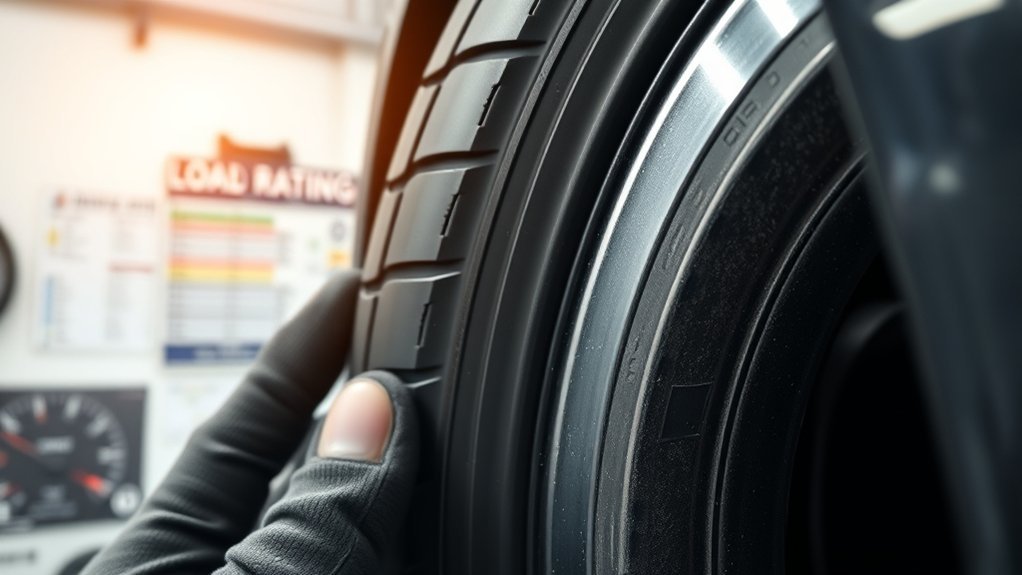
The “110H” marking tells you how much weight the tire can carry and how fast it is designed to operate. In this code, 110 is the load index, and H is the speed symbol.
| Marking | What it means |
| 110 | Load index: up to 2,337 lb (1,060 kg) per tire when properly inflated and used within its limits. |
| H | Speed rating: up to 130 mph (210 km/h) under controlled test conditions. |
| 110H | Combined service description showing both load capacity and speed capability. |
Warning: A 110 load index is not 2,403 pounds. That value belongs to load index 111. If your vehicle requires 110, use 2,337 pounds per tire as the correct maximum load value.
You should treat 110H as a safety and fitment code, not just a random sidewall marking. The rating helps you confirm whether the tire matches your vehicle’s weight, handling needs, and manufacturer recommendations.
Where to Find Tire Ratings
You can usually find a tire’s load index and speed rating in three places: the tire sidewall, the driver’s door-jamb placard, and the owner’s manual. The NHTSA TireWise guide recommends checking the owner’s manual or the Tire and Loading Information Label for the correct tire size and inflation pressure.
Sidewall Markings
The tire sidewall usually shows the full size code, followed by the load index and speed rating. For example, a tire marked 235/60R18 110H has a 235 mm section width, 60 aspect ratio, radial construction, 18-inch wheel fitment, 110 load index, and H speed rating.
| Example code | Meaning |
| 235 | Approximate tire width in millimeters |
| 60 | Sidewall height as a percentage of width |
| R18 | Radial tire for an 18-inch wheel |
| 110H | Load index 110 and H speed rating |
Door Jamb Placard
The driver’s door-jamb placard is one of the best places to check the tire size and recommended cold tire pressure for your vehicle. On many vehicles, this Tire and Loading Information Label sits on the driver’s side B-pillar or door edge.
Federal tire-selection rules also connect the vehicle placard to tire size, cold inflation pressure, and load information. That matters because the correct tire pressure is the pressure your vehicle manufacturer lists, not the maximum pressure molded on the tire sidewall.
Owner’s Manual
Your owner’s manual gives the tire specifications your vehicle manufacturer approved for that model. Check it before changing tire size, load index, or speed rating. If the manual and sidewall disagree, use the manual and placard as your starting point, then confirm the choice with a qualified tire shop.
Note: The sidewall shows the tire’s maximum load and maximum inflation information, but your daily driving pressure should come from the vehicle placard or owner’s manual.
What the 110 Load Index Means
A 110 load index means one tire can carry up to 2,337 pounds (1,060 kg) when it is the correct tire for the vehicle, properly inflated, and used within its rated limits. The load index is not a guess or a brand-specific claim. It comes from a standardized load-index chart.
| Load index | Maximum load per tire |
| 109 | 2,271 lb (1,030 kg) |
| 110 | 2,337 lb (1,060 kg) |
| 111 | 2,403 lb (1,090 kg) |
| 112 | 2,469 lb (1,120 kg) |
You should compare the tire’s load index with your vehicle’s factory requirement, especially if you drive an SUV, crossover, minivan, or light truck. A lower load index may reduce the tire’s ability to handle passenger weight, cargo, towing load, and heat buildup.
Do not calculate your vehicle’s safe load by multiplying the tire’s load index by four and assuming everything is fine. Vehicle load also depends on axle ratings, tire pressure, tire size, wheel rating, and how weight is distributed.
What the H Speed Rating Means
The H speed rating means the tire is rated up to 130 mph (210 km/h) under controlled test conditions. It also reflects tire construction traits that can affect heat resistance, steering response, and stability.
That does not mean you should drive 130 mph. It only means the tire has been designed and tested for that speed rating when it is correctly inflated, properly loaded, not damaged, and used in suitable road and weather conditions. You still need to follow posted speed limits and drive for the conditions.
| Speed rating | Maximum rated speed |
| S | 112 mph (180 km/h) |
| T | 118 mph (190 km/h) |
| H | 130 mph (210 km/h) |
| V | 149 mph (240 km/h) |
H Rating Speed Limit
An H-rated tire sits above S and T ratings and below V, W, and Y ratings. It is common on many sedans, crossovers, and touring tires because it offers a balance of highway stability, comfort, and responsive handling.
If your vehicle came with H-rated tires, avoid replacing them with a lower speed rating unless your vehicle manufacturer or a tire professional confirms that the change is safe for your vehicle and driving conditions.
H Rating Performance Traits
Compared with many lower-speed-rated touring tires, an H-rated tire may use construction designed for better heat control and more stable handling at highway speeds. That does not automatically make every H-rated tire better than every T-rated tire, because tread design, compound, size, load rating, and tire category also matter.
Pro Tip: When comparing tires, match the size, load index, and speed rating first. After that, compare treadwear, wet braking, noise, warranty, and seasonal performance.
Why 110H Matters for Safety
Because 110H combines load capacity and speed capability, it helps keep the tire within safe operating limits. If the load index is too low, the tire may carry more weight than it was built to handle. If the speed rating is too low, the tire may not match the handling and heat-control performance your vehicle was designed around.
The safest replacement tire is usually one that matches or exceeds your vehicle’s original load index and speed rating while staying in the approved tire size.
Underinflation makes this more important. A tire can only carry its rated load when it is the correct tire and is inflated according to the proper specifications. Low pressure can increase heat, damage the tire structure, reduce fuel economy, and raise the risk of tire failure.
Load Index vs Load Range: Don’t Mix Them Up
Load index and load range sound similar, but they are not the same thing. A load index is the number in a service description, such as the 110 in 110H. A load range is a separate marking often used on light-truck tires, such as Load Range E, F, G, or H.
This distinction matters because the “H” in 110H is a speed rating. It is not Load Range H. If you see “Load Range H” on a light-truck tire, that refers to the tire’s load-range category, not its 130 mph speed rating.
| Term | Meaning |
| Load index 110 | Maximum load value of 2,337 lb per tire. |
| H speed rating | Speed rating of up to 130 mph. |
| Load Range H | A separate light-truck tire load-range category. |
[Products Worth Considering]
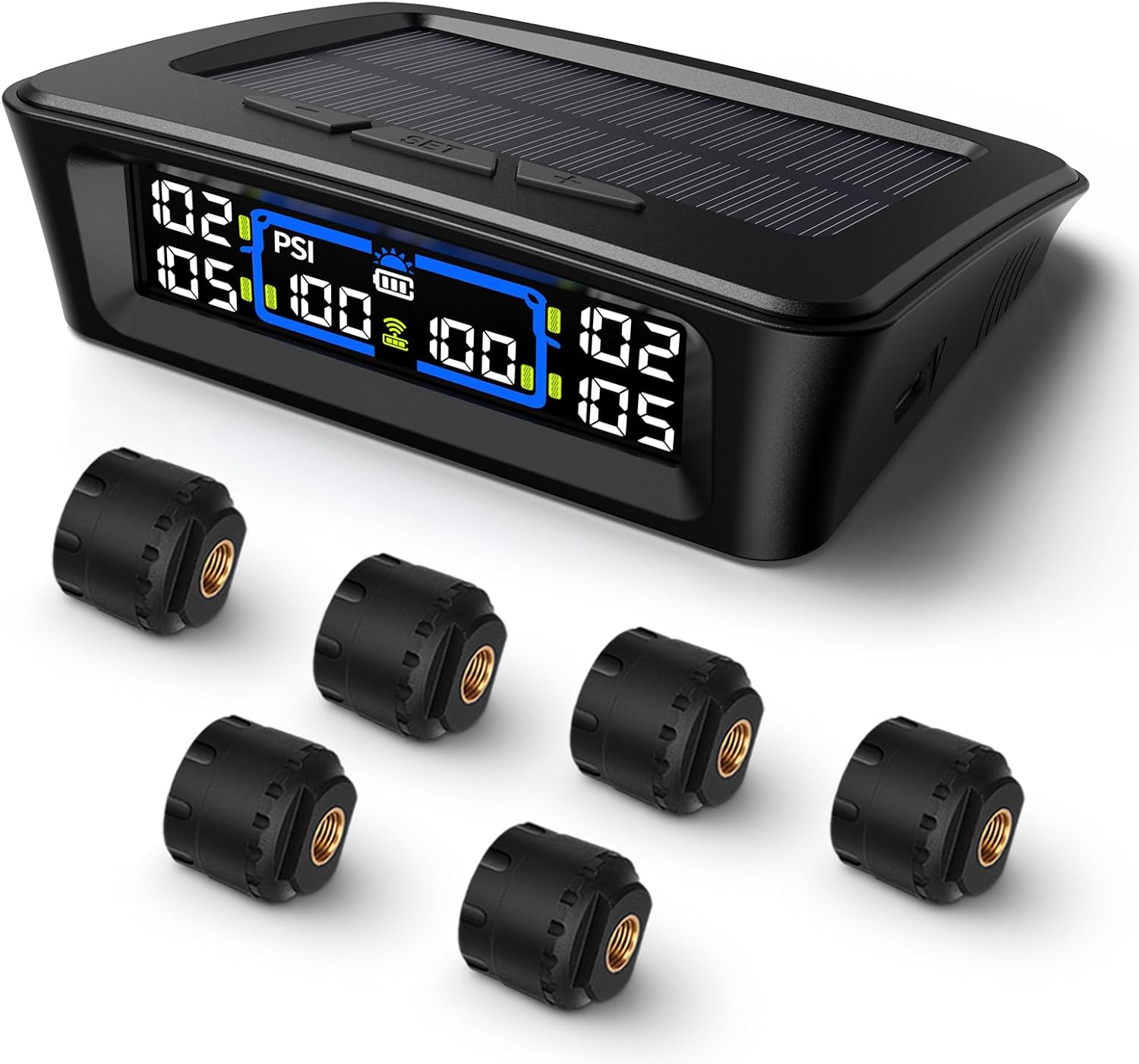
The Tymate TM12 RV TPMS delivers real-time tire pressure and temperature monitoring with a stable 433Hz display for safer long-distance driving. It supports simultaneous monitoring across vehicle and trailer zones, includes six alarm modes for pressure, temperature, leakage, battery, and signal loss, and features easy DIY installation with auto calibration. Power is supplied via USB-C charging or solar recharging, with a wide 0–144 PSI range and up to 50 ft signal coverage for RVs and towable trailers.

Keep your tires properly inflated with this analog VONDIOR tire pressure gauge, designed for fast, easy readings without batteries. The swiveling, two-axis hose and large glow dial help you measure at any tire angle with instant visibility. Built with a protective rubber shield, it supports durable, low-maintenance use for cars and trucks.

The 22800 wheel stud installer makes replacing wheel studs quick and secure, saving time and effort during tire service. It uses a ratchet or impact wrench to pull new studs firmly into place, helping when existing studs are too long. Compatible with most automotive wheels and light-duty truck wheel studs, it’s designed for easy, tool-assisted installation.
Can You Use a Different Tire Rating?
You should not assume a different tire rating is interchangeable. A different load index or speed rating can affect ride quality, steering response, braking feel, heat control, and safe load capacity.
In most cases, you can use a tire with a higher load index or speed rating if it also matches the approved size, wheel, pressure, and vehicle requirements. You should avoid using a lower load index or speed rating unless your vehicle manufacturer or a qualified tire professional approves it.
Warning: If you mix speed ratings, the lowest-rated tire limits the safe speed capability of the whole vehicle. Mixing tire models, sizes, load indexes, or speed ratings can also reduce predictable handling.
- Do not drop below the vehicle’s required load index unless approved.
- Do not drop below the required speed rating unless approved.
- Keep all four tires the same size and type unless your vehicle uses a factory staggered setup.
- Use the correct winter-tire rating only if your vehicle maker or tire professional says it is acceptable.
- Follow temporary spare limits if your spare tire has a lower rating.
[Products Worth Considering]
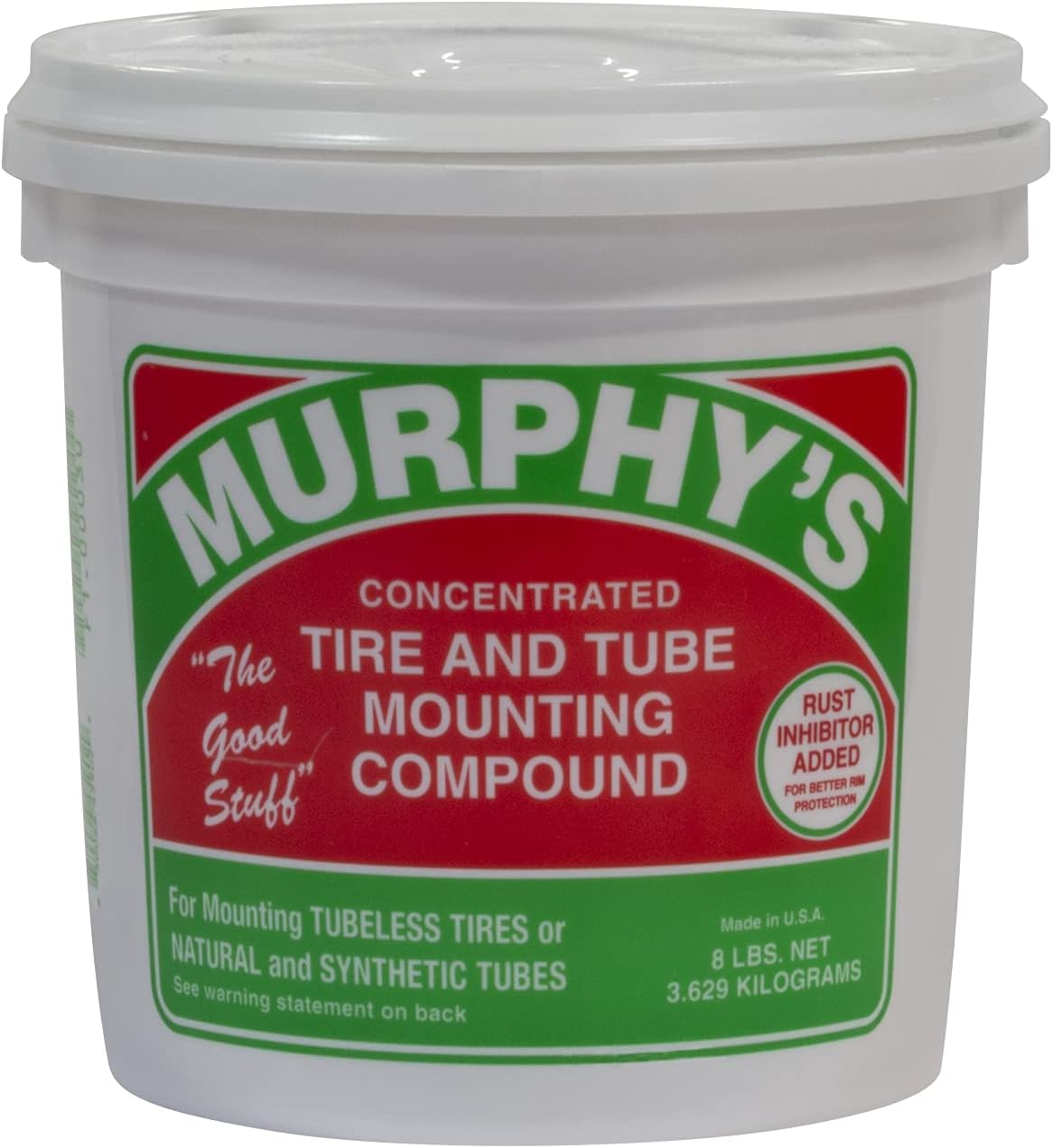
A concentrated tire and tube mounting compound designed to help simplify mounting rubber tires and tubes on passenger, semi truck, construction, and OTR applications. Its ultra-thick formula packs beads effectively and includes rust inhibitors to help protect against corrosion during use.

The Dr.Roc spare tire tool kit helps you release, lower, or raise your spare tire with reliable extension tools and a lug nut wrench. It is made from rustproof automotive-grade steel and includes an organized carry case for convenient storage. Designed for compatibility with select GM models from the late 1990s through 2019, it uses upgraded extension components to install and remove spare tires with less hassle.

Milton S-921 pencil tire pressure gauge helps you maintain optimal tire pressure for passenger cars with accurate readings in PSI and kPa. It features a built-in deflator valve for convenient pressure adjustments, plus a single chuck head and nylon indicator bar for easy use on the go. Built from durable plated brass and designed for reliable performance, it’s a practical road trip and cold-weather maintenance tool.
How to Choose the Right Tire Rating
To choose the right tire rating, start with your vehicle’s factory tire size and service description. You can find this information on the Tire and Loading Information Label, in the owner’s manual, or through a professional tire fitment database.
- Find the original tire size. Look at the driver’s door-jamb placard or owner’s manual.
- Check the required load index. Match or exceed the original load index unless a professional confirms another option.
- Check the required speed rating. Match or exceed the original speed rating for predictable handling.
- Confirm the tire category. Touring, performance, highway, all-terrain, winter, and all-weather tires can feel very different even with the same 110H rating.
- Use the correct cold tire pressure. Follow the vehicle placard, not the maximum sidewall pressure.
- Ask for help if you tow or haul. Towing, payload, and axle ratings can change what tire setup is appropriate.
A 110H tire may be a good fit when your vehicle calls for that load index and speed rating. It may not be right if your vehicle requires a higher load index, a different tire size, an LT tire, or a higher speed rating.
[Products Worth Considering]

The Tymate TM2 RV tire pressure monitoring system keeps you informed with a color LCD display, automatic backlight, and solar charging for dependable operation. It supports up to 10 tire positions with four pre-paired sensors, while offering multiple alarm modes for fast leak detection, pressure extremes, temperature alerts, and low-signal warnings. Built-in monitoring uses accurate readings and reliable 433.92MHz communication to help protect your RV, trailer, truck, or SUV.

The Big Rig Defense Tire Thumper is a truck tire pressure checker that lets you quickly check multiple tires by giving them a firm whack. Listen for a reassuring thump and feel the stick bounce when a tire is fully inflated, helping you get back on the road safely. It features a comfortable, glove-friendly handle and a secure wrist strap for confident use on busy routes.

The TYAMATE TM8 solar-powered wireless TPMS delivers real-time tire pressure and temperature monitoring with six alarm modes for safer driving. A vibrant color LCD display shows readings clearly while windshield mounting keeps it hands-free and easy to read. With a wide 0–87 PSI range, strong 433.92 MHz signal transmission, and quick sensor pairing, it’s ideal for RV, sedan, SUV, MPV, and truck use.
Common Mistakes to Avoid With 110H Tires
- Using 2,403 lb for load index 110: Use 2,337 lb instead.
- Confusing H speed rating with Load Range H: They are different markings.
- Buying by size only: Tire size, load index, and speed rating all matter.
- Using sidewall max pressure as daily pressure: Use the vehicle placard or owner’s manual.
- Mixing ratings casually: A lower-rated tire can reduce the safe capability of the full set.
- Ignoring towing or cargo needs: Heavy loads may require a higher load index or an LT tire.
Frequently Asked Questions
Which speed rating is better, H or T?
H is the higher speed rating. H is rated up to 130 mph, while T is rated up to 118 mph. That does not mean H is always the better tire for every driver. The better choice is the rating your vehicle manufacturer recommends, paired with the right tire type for your climate and driving style.
What is the difference between 110H and 110V tires?
110H and 110V tires have the same load index, so both can carry up to 2,337 pounds per tire when used correctly. The difference is the speed rating. H is rated up to 130 mph, while V is rated up to 149 mph. A V-rated tire may feel more performance-focused, but it can also ride firmer depending on the model.
Which speed rating is better, S or T?
T is the higher speed rating. S is rated up to 112 mph, while T is rated up to 118 mph. Choose the rating that matches or exceeds your vehicle’s original tire requirement. Do not downgrade from the manufacturer’s required rating without approval from a qualified tire professional.
Is Load Range H better than G?
Load Range H can support heavier-duty use than Load Range G in some light-truck tire applications, but it is not automatically better for every vehicle. It may require specific wheels, pressures, and fitment. Also, Load Range H is not the same as the H speed rating in 110H.
Can I use 111H instead of 110H?
You may be able to use 111H instead of 110H if the tire is the correct size and type for your vehicle. A 111 load index is higher than 110, so load capacity increases. Still, you should confirm fitment, pressure, wheel rating, and vehicle clearance before switching.
Does 110H mean the tire is safe at 130 mph?
It means the tire is speed-rated up to 130 mph under controlled test conditions. It does not guarantee safety at that speed on public roads. Tire age, pressure, load, heat, road surface, damage, alignment, and weather can all reduce safety. Always follow traffic laws and drive for conditions.
Conclusion
Now you know what 110H means on a tire. The 110 is the load index, which equals 2,337 pounds (1,060 kg) per tire. The H is the speed rating, which means up to 130 mph (210 km/h) under controlled test conditions.
Before you buy a replacement tire, compare the sidewall code with your vehicle’s door-jamb placard and owner’s manual. Match or exceed the required load index and speed rating unless a qualified tire professional confirms another option is safe for your vehicle.
Sources
- NHTSA TireWise — tire safety, tire placard guidance, inflation pressure, tread, and maintenance.
- 49 CFR 571.110 — federal tire-selection and vehicle placard requirements.
- 49 CFR 571.139 — federal tire load-rating and tire-marking requirements for light vehicles.
- Discount Tire Load Range vs. Load Index Guide — load index, load range, and tire capacity basics.
- Discount Tire Speed Rating Guide — speed-rating definitions and common speed-rating values.