
What Does H Mean on a Tire? Load, Speed & Rating Guide
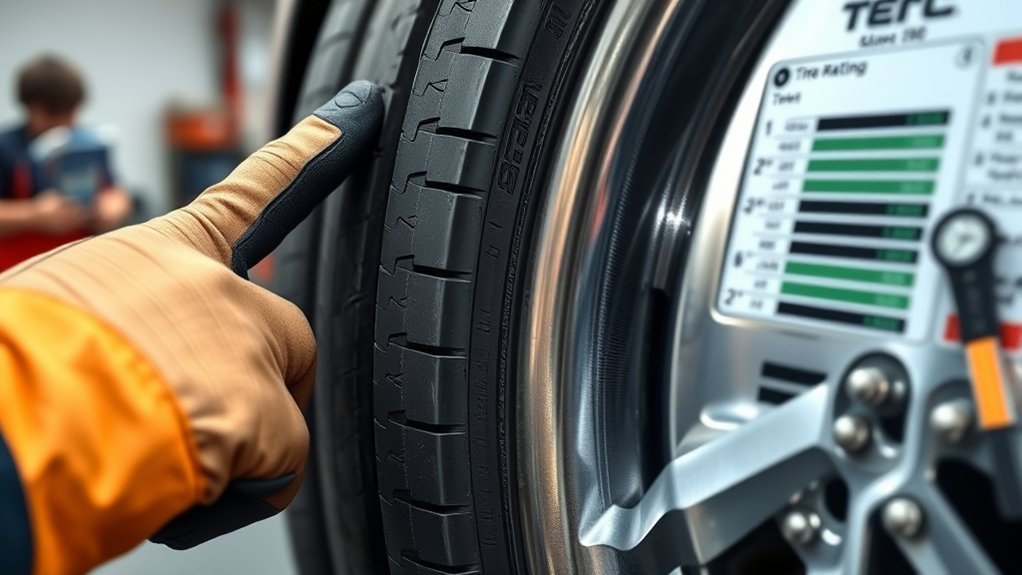
H on a tire means the tire has an H speed rating, which is rated up to 130 mph (210 km/h) when the tire is properly inflated, correctly loaded, undamaged, and used under suitable conditions. You will usually see the H at the end of the tire’s service description, such as P215/65R16 95H. The number before it is the load index, and the H tells you the tire’s speed capability.
Quick Answer
The H on a tire is the speed symbol. It means the tire is rated for up to 130 mph, or 210 km/h, under proper load, pressure, and tire condition. It does not mean you should drive that fast or ignore your vehicle’s tire requirements.
Key Takeaways
- H is a tire speed rating, and it means the tire is rated up to 130 mph (210 km/h) under proper conditions.
- You usually find H after the load index, such as the “H” in 95H.
- The number before H matters too: 95 supports about 1,521 lb per tire, while 110 supports about 2,337 lb per tire.
- Always match or exceed the tire size, load index, and speed rating listed in your owner’s manual or tire placard.
- Do not mix speed ratings as a normal setup. If you must use a temporary mismatch, drive within the lowest rating and get professional advice.
At a Glance
| Time Required | 1–3 minutes to check the sidewall and door placard |
| Difficulty | Easy |
| Tools Needed | No tools for the rating check; tire pressure gauge for inflation checks |
| Cost | Free to inspect; tire gauge usually costs a few dollars |
What Does H Mean on a Tire?
The “H” on a tire is the tire’s speed symbol. On a passenger tire, H means the tire is rated up to 130 mph (210 km/h). That rating is based on controlled tire testing and assumes the tire is in good condition, correctly inflated, and carrying no more than its rated load.
You will usually find H at the end of the tire size and service description. For example, in P215/65R16 95H, the final H is the speed rating. The 95 before it is the load index. Together, 95H tells you the tire’s load and speed service description.
Warning: A speed rating is not permission to drive that speed. Posted speed limits, weather, tread depth, inflation pressure, tire age, vehicle load, and road conditions matter more than the sidewall letter.
When replacing tires, check your vehicle’s Tire and Loading Information Label or owner’s manual. Those sources tell you the correct tire size and recommended inflation pressure for your specific vehicle. If the original tire was H-rated, choose a replacement that meets or exceeds the manufacturer’s required load index and speed rating. Additionally, tires like the Fullway HP108 are often marketed for traction and stability, but you should still verify the exact load index, speed symbol, size, and fitment before buying.
[Products Worth Considering]

EVOULTES heavy duty tire inflator with an integrated gauge delivers accurate pressure readings from 10–120 PSI, helping you inflate, deflate, and check tires in one tool. The 16.5-inch extended dual-head air chuck with swivel base reaches hard-to-access dual wheel valves on trucks and RVs. A brass trigger core and side-mounted air release valve make operation smooth, with standard 1/4" NPT threading and quick-connect compatibility for easy setup.

The JACO FlowPro Tire Inflator measures, inflates, and airs down tires up to 100 PSI with battery-free operation and ±2% accuracy after calibration. It features a glowing pressure dial for night visibility, a heavy-duty steel build with a hybrid hose, and a precision push-to-inflate thumb trigger. The patented Lightning Air Chuck locks on for a secure seal, and the kit includes quick-connect hardware for easy inline use with your air compressor.

This portable cordless tire inflator delivers up to 160 PSI with fast 17 L/min airflow to help you quickly top up tires and get back on the road. It features dual power mode, running on a 21V rechargeable battery or a 12V DC adapter for convenient roadside use. An automatic shut-off with digital pressure gauge helps prevent overinflation, and a built-in LED light improves visibility in low-light conditions.
How Fast Is an H-Rated Tire?
An H-rated tire is rated for a maximum speed of 130 mph, or 210 km/h, under proper conditions. That number is a tire capability rating, not a normal driving target. Tire heat, underinflation, overloading, road damage, and worn tread can all reduce safe performance before you ever reach the rated limit.
H-rated tires are common on many sedans, coupes, crossovers, and touring tires because they offer a balance of everyday comfort, highway stability, and responsive handling. They sit above T-rated tires in speed capability and below V-rated tires.
| Speed Symbol | Maximum Rated Speed | Common Use |
| T | 118 mph / 190 km/h | Many passenger cars and economy touring tires |
| H | 130 mph / 210 km/h | Touring, performance touring, sedans, coupes, crossovers |
| V | 149 mph / 240 km/h | Sport sedans and higher-performance tires |
| W | 168 mph / 270 km/h | High-performance vehicles |
| Y | 186 mph / 300 km/h | Ultra-high-performance vehicles |
If your car originally came with H-rated tires, replacing them with T-rated tires can reduce the vehicle’s speed capability and may affect steering feel, heat resistance, and warranty or inspection compliance. Replacing H with V is often acceptable from a speed-rating standpoint, but the replacement still has to match the correct size, load index, tire type, and vehicle requirements. Additionally, selecting tires with a proper load index and speed rating helps keep your tire choice aligned with the vehicle’s needs.
H Rating Speed Limit
The H rating’s speed limit is 130 mph, but that rating assumes the tire is not overloaded, underinflated, overheated, punctured, aged out, or badly worn. A tire with an H on the sidewall can still be unsafe if it has low pressure, impact damage, exposed cords, sidewall bulges, or tread worn to the replacement point.
The H rating is a controlled-condition tire capability rating, not a real-world guarantee for every road, load, temperature, or tire condition.
H-Rated Tire Use
H-rated tires make sense when your vehicle calls for them and you want a mix of comfort, handling, and highway stability. They are often used on touring tires, performance all-season tires, and everyday sedans or crossovers that need more capability than a basic T-rated tire.
- Good fit: daily drivers, sedans, coupes, and crossovers that list H in the factory tire specification.
- Possible benefit: firmer response and more heat tolerance than many lower speed-rated touring tires.
- Important limit: the tire must still match your required size, load index, and inflation pressure.
Where to Find the Tire Speed Rating
You will usually find the tire speed rating on the tire’s sidewall as the final letter after the load index. In P215/65R16 95H, the H is the speed rating. In 225/55R17 97H, the H works the same way. The rating may appear on both sidewalls or only one side, depending on the tire markings.
To choose the correct replacement, do not rely only on the tire that happens to be on the car now. Check the Tire Buyers’ FAQ from NHTSA, your owner’s manual, and the Tire and Loading Information Label on the driver’s side door edge or door post. That label lists the original tire size and cold inflation pressure for the vehicle.
Pro Tip: Take a photo of your sidewall code and your driver-door tire placard before shopping. Compare both before buying, because the tire currently installed may not be the factory-correct specification.
If you need another reference, some vehicles list tire information in the glove box, fuel door, or owner’s manual. When in doubt, ask a tire professional to verify the fitment. Additionally, choosing a tire with a suitable treadwear warranty can help with long-term ownership, but warranty coverage should never replace correct load and speed fitment.
What the Numbers Before H Mean
The numbers and letters before H explain the tire’s size, construction, wheel fitment, and load capacity. In P215/65R16 95H, each part has a job:
- P: passenger-vehicle tire type.
- 215: tire section width in millimeters.
- 65: aspect ratio, meaning the sidewall height is 65% of the tire width.
- R: radial construction.
- 16: wheel diameter in inches.
- 95: load index, or the tire’s rated carrying capacity.
- H: speed rating, rated up to 130 mph under proper conditions.
The final number-letter pair is often called the service description. In this example, 95H means the tire has a load index of 95 and an H speed rating. You need both parts, not just the H, to choose a safe replacement.
Note: Older performance tires may show markings such as HR or ZR within the size code. Still check the full service description at the end of the sidewall code when choosing replacements.
Why Load Index Matters

The load index tells you how much weight one tire can carry when it is properly inflated. It is just as important as the speed rating. A tire can have the right H speed rating and still be wrong for your vehicle if the load index is too low.
For example, a 95 load index supports about 1,521 lb per tire. A 110 load index supports about 2,337 lb per tire. The load index must meet or exceed the vehicle manufacturer’s requirement, especially on SUVs, vans, trucks, EVs, and vehicles that regularly carry passengers or cargo.
Load capacity also depends on correct inflation. NHTSA says the vehicle manufacturer’s recommended cold tire pressure is found on the Tire and Loading Information Label or in the owner’s manual, not simply on the tire sidewall. The number molded on the tire sidewall is usually a maximum pressure or maximum load reference, not the normal daily inflation target.
If you ignore load index, you can increase heat, sidewall stress, uneven wear, and blowout risk. Speed rating matters too, but it does not replace load capacity. Additionally, understanding UTQG ratings can help you compare treadwear, traction, and temperature grades, but UTQG is separate from the H speed rating.
H Speed Rating vs. Load Range H
Do not confuse an H speed rating with Load Range H. On passenger tires, H at the end of a service description usually means a 130 mph speed rating. On some light-truck or commercial tires, Load Range H can describe the tire’s strength category and inflation/load capability. These are different markings.
Use the full sidewall code to avoid mistakes. If H appears after a number such as 95H, it is the speed symbol. If you see wording such as Load Range H, especially on a truck tire, it refers to load range, not a 130 mph speed rating.
[Products Worth Considering]

This portable cordless tire inflator delivers fast, efficient inflation for cars, motorcycles, bikes, and sports balls with a digital pressure gauge. Use the one-click PSI preset with auto shut-off for accurate, hands-free topping to your target pressure up to 150 PSI. It’s compact and rechargeable with a built-in emergency LED light plus valve adapters and accessories for quick, ready-to-go use.
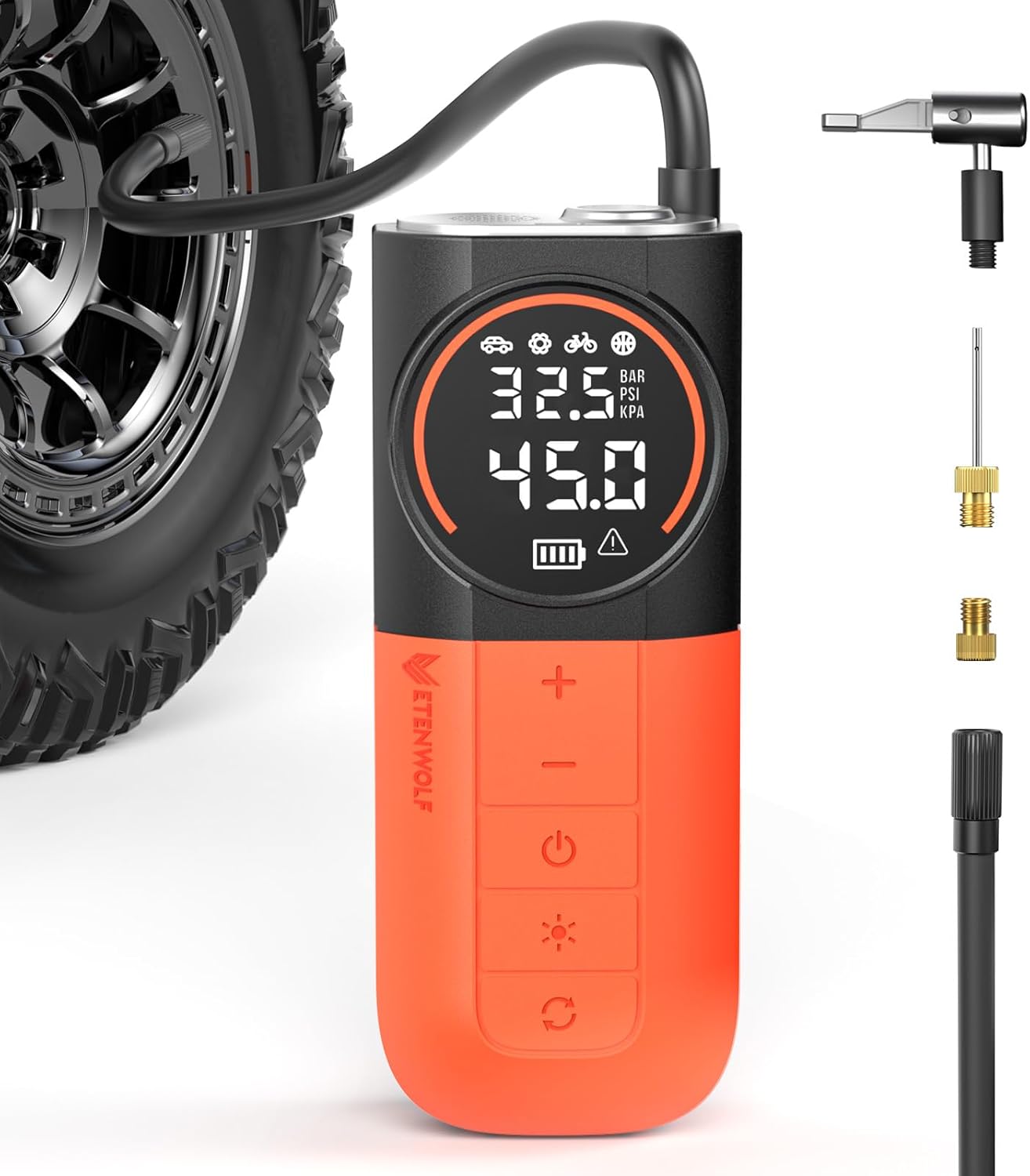
The ETENWOLF S1 cordless tire inflator delivers ultra-fast inflation with up to 160 PSI and a 20 L/min airflow for quicker tire top-offs. Its 5200mAh battery and cooling system support inflating many tires and sports balls on a single charge, while the digital pressure gauge and multi-unit display help you reach the right pressure accurately. With preset modes, pressure memory, an auto-stop feature, and an LED flashlight, it’s built for easy roadside and everyday use.
Can You Mix H Tires With Other Ratings?
You should avoid mixing H-rated tires with lower or different speed ratings as a normal setup. For the best handling, braking, stability, and predictable traction, use four tires that match in size, construction, load index, speed rating, and tire type unless your vehicle manufacturer specifies a staggered setup.
If one tire has a lower speed rating than the others, your vehicle should be treated as limited by the lowest-rated tire. A mixed set can also feel different during cornering, braking, wet driving, or emergency maneuvers. The safest answer is simple: match the vehicle’s required rating and ask a tire professional before installing a mismatch.
- Best choice: match all four tires to the manufacturer’s required size, load index, and speed rating.
- Temporary mismatch: stay within the lowest rating and avoid aggressive driving until the tire is replaced.
- Different axle sizes: follow the vehicle manual, because some performance vehicles use staggered factory fitments.
Additionally, consider the treadwear ratings of the tires you select, because tire compound and tread design can affect long-term performance. Still, treadwear should come after fitment basics: size, load index, speed rating, tire type, and inflation pressure.
When H-Rated Tires Make Sense
H-rated tires make sense when your vehicle calls for an H rating or when you are choosing a tire that meets or exceeds the original speed rating without sacrificing the required load index. They are common for drivers who want everyday comfort with a useful performance margin.
They also suit many highway commuters because they balance ride comfort, steering response, and heat resistance. Additionally, these tires often feature balanced wet and dry traction, but traction depends on the exact tire model, tread depth, compound, and weather conditions.
Everyday Driving Needs
For normal commuting, an H-rated tire can be a practical middle ground. It gives more speed capability than a T-rated tire while usually keeping better comfort and tread life than some more aggressive V, W, or Y-rated performance tires.
- Choose H when your vehicle placard or manual lists H as the minimum speed rating.
- Choose H when you want stable highway manners without buying an unnecessary ultra-high-performance tire.
- Do not choose H if the load index, tire size, or tire type does not match your vehicle’s requirement.
Sportier Handling Benefits
Compared with many lower-speed touring tires, H-rated tires may use construction and compounds that support firmer steering response and better high-speed heat control. That can make the car feel more precise during highway driving and cornering.
That does not mean every H-rated tire handles the same. A budget H-rated all-season tire, a premium touring tire, and a performance all-season tire can feel very different even when they share the same speed rating. Use the H symbol as one fitment requirement, then compare tire model, traction grade, reviews, tread warranty, noise, and wet-weather performance.
How to Check Your Tire’s Speed Rating
To check your tire’s speed rating, read the sidewall and find the final letter in the service description. In P205/60R16 82H, the H is the speed rating. Then compare that rating with your owner’s manual and driver-door Tire and Loading Information Label.
- Find the full sidewall code. Look for a code such as P215/65R16 95H or 225/55R17 97H.
- Identify the final letter. H means the tire is rated up to 130 mph under proper conditions.
- Check the load index. The number before H must meet your vehicle’s required carrying capacity.
- Compare with the vehicle placard. Use the Tire and Loading Information Label and owner’s manual as your main references.
- Check inflation cold. Measure pressure before driving or after the car has been parked long enough for the tires to cool.
- Inspect condition. Do not rely on the rating if the tire is worn, cracked, bulging, punctured, or underinflated.
If you are replacing tires, do not guess. Match the specified rating to protect handling, stability, and safety. Additionally, consider the importance of low-noise tires for long drives, but only after the tire meets the correct size, load, and speed specifications.
Frequently Asked Questions
Which tire is better, H or T?
H is better if your vehicle requires an H rating or you want sharper highway response. T is often fine for vehicles that specify T-rated tires and prioritize comfort or cost. H is rated up to 130 mph, while T is rated up to 118 mph. The better choice is the one that matches your vehicle’s required size, load index, and speed rating.
Can an H-rated tire drive on a flat?
No. H is a speed rating, not a run-flat marking. You should not drive on a flat tire unless the tire is specifically marked as a run-flat and your vehicle’s manual gives a limited speed and distance procedure. Stop safely, avoid sudden steering or braking, and replace or repair the tire as directed by a qualified tire professional.
Do H or V-rated tires last longer?
H-rated tires often last longer than V-rated tires when comparing similar tire lines, because many V-rated tires are built with more performance-focused compounds. That is not a rule for every model. Tire life depends on compound, treadwear grade, alignment, rotation, pressure, driving style, road surface, and climate.
What does 110H on a tire mean?
110H means the tire has a load index of 110 and an H speed rating. Load index 110 supports about 2,337 lb per tire when properly inflated, and H means the tire is rated up to 130 mph under proper conditions. Always confirm that 110H matches or exceeds your vehicle’s required service description.
Can I replace an H-rated tire with a V-rated tire?
Usually yes from a speed-rating standpoint, because V is rated higher than H. But the tire must still match the correct size, load index, wheel diameter, tire type, and vehicle requirements. A higher speed rating can also change ride comfort, noise, cost, or tread life, so compare the whole tire, not just the letter.
Is H the same as Load Range H?
No. H after a load index, such as 95H, is a speed rating. Load Range H is a different marking used on some truck or commercial tires to describe load and inflation capability. Read the full sidewall code and ask a tire professional if the marking is unclear.
Conclusion
H on your tire means the tire has an H speed rating, rated up to 130 mph under proper load, inflation, and tire condition. It is only one part of the tire code. You also need the correct size, load index, construction, tire type, and pressure for your vehicle.
So, can you choose a tire by the H alone? No. Use the H rating as a clue, then check your owner’s manual and Tire and Loading Information Label. If the tire does not meet the vehicle’s required service description, choose a different tire or ask a qualified tire professional before installation.
Sources
- NHTSA TireWise: Tires — backs tire placard, pressure, maintenance, tread, rotation, and tire-safety guidance.
- NHTSA Tire Buyers’ FAQ — backs checking the owner’s manual and Tire and Loading Information Label when buying tires.
- NHTSA Congratulations on Your New Tire Purchase — backs monthly pressure checks, tire manufacture date checks, tread checks, and recall awareness.
- NHTSA Consumer Guide to Uniform Tire Quality Grading — backs UTQG context for treadwear, traction, and temperature grades.
- UNECE UN Regulations Addenda to the 1958 Agreement — backs the regulatory context for UN tire regulations, including passenger-car tire regulation categories.

Related Articles

Tires With Exposed Cords: How Long Can You Drive?
Warning: tires with exposed cords can fail at any moment, and what you do next could save you from a dangerous blowout.
Read More
Driving With Mismatched Tires: Is It Safe?
Bald mismatched tires can affect grip and drivability—discover when it’s risky, what to match, and whether your vehicle can handle it safely.
Read More
How Long Does a Tire Plug Take to Dry? Safe Wait Times
Longer than you think, a tire plug’s dry time can make or break your safety—discover the safest wait before driving.
Read More