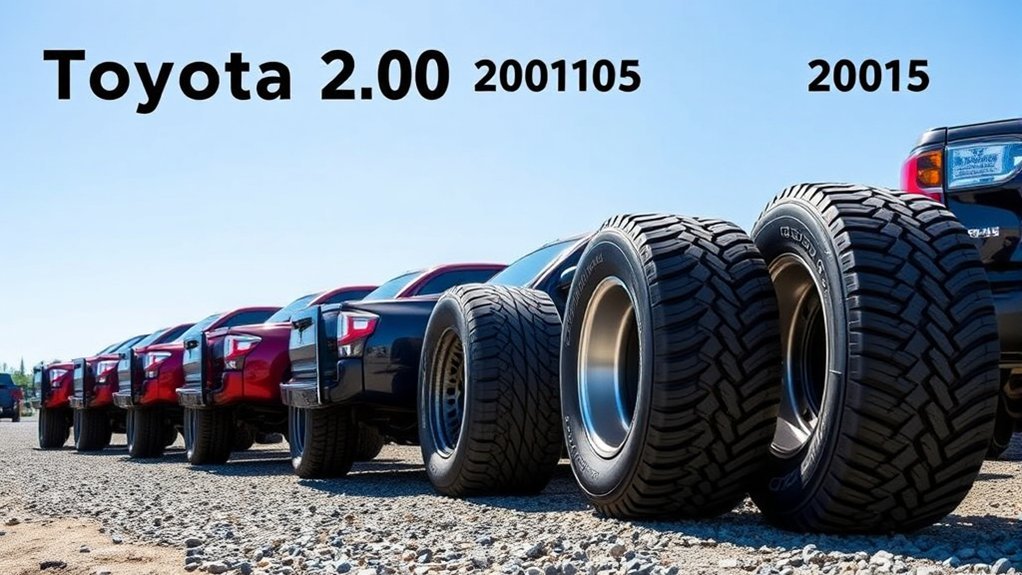
Choosing tires for a 2005 to 2015 Toyota Tacoma starts with one rule: match the tire size, load rating, speed rating, and cold inflation pressure shown on your driver-door tire placard whenever you are staying stock. From there, you can choose a mild upgrade, all-terrain tread, or larger lifted setup based on your suspension, wheels, clearance, and how you use the truck.
Quick Answer
Most 2nd-gen Tacoma owners should start with the factory size on the door placard. Common stock sizes include 215/70R15, 245/75R16, 265/70R16, 265/65R17, and 265/60R18 depending on year, cab, trim, and package. Mild lifted builds often use 265/70R17 or 285/70R17, but larger tires may need trimming, alignment changes, or different wheel offset.
Key Takeaways
- Use the tire placard first; it is the most reliable source for your exact Tacoma’s original size and pressure.
- Stock 2nd-gen Tacoma tire sizes vary by trim and package, so 265/70R16 and 265/65R17 are not the only factory options.
- A 285/70R17 tire is a popular upgrade, but it is not a guaranteed no-rub fit on every truck.
- Do not choose a replacement tire with a lower load index or load-carrying capacity than the original tire.
- After changing tire size, check full-lock steering clearance, brake-line clearance, spare fitment, TPMS function if equipped, and speedometer error.
At a Glance
| Time Required | 10 minutes to read the placard and compare sizes; 30–60 minutes for a careful test fit after installation. |
| Difficulty | Easy for stock replacement; moderate for lifted or wider tire fitment. |
| Tools Needed | Tire pressure gauge, flashlight, tape measure, torque wrench, and a tire size calculator if changing diameter. |
| Cost | Usually the cost of tires plus mounting, balancing, alignment if needed, TPMS service if equipped, and any trimming or lift parts for oversized setups. |
Why Tire Size Matters for Your Tacoma
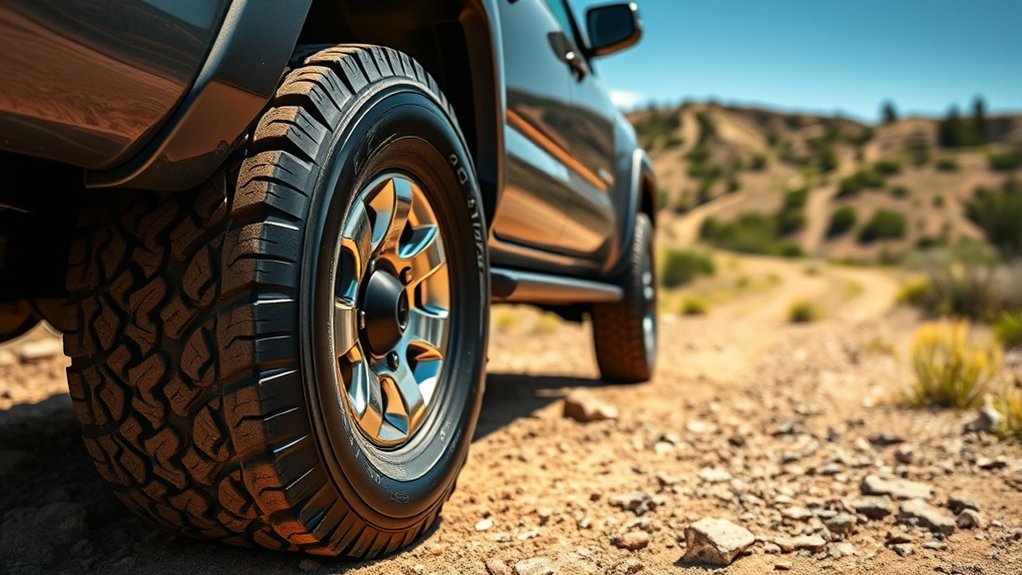
Tire size affects how your Tacoma accelerates, brakes, steers, rides, and clears obstacles. A taller tire can add ground clearance under the differentials, but it can also make the truck feel slower, change shift behavior on automatic models, increase braking distance, and make the speedometer read low. A wider tire can add grip and stance, but it can also rub the fender liner, mud flaps, body mount, or upper control arm.
The safest starting point is the original size listed on your Tire and Loading Information Label. The National Highway Traffic Safety Administration advises drivers to check the owner’s manual or the tire label on the driver’s side door edge or post for the correct tire size and pressure.
Warning: Do not buy a tire with a lower load index, lower speed rating, or lower load-carrying capacity than the original tire specified for your Tacoma. If you are changing wheel diameter, tire width, or offset, have the package checked by a qualified tire shop.
How to Read Tire Size Specifications
A tire size such as 265/70R16 111T gives you several pieces of information:
- 265 is the section width in millimeters.
- 70 is the aspect ratio, meaning the sidewall height is 70% of the tire width.
- R means radial construction.
- 16 is the wheel diameter in inches.
- 111 is the load index.
- T is the speed symbol.
When comparing upgrades, look at the tire’s overall diameter, width, load index, speed rating, and intended use. A 265/70R16 is about 30.6 inches tall, while a 285/70R17 is about 32.7 inches tall. That larger diameter can make the speedometer read about 6–7% slow unless corrected.
Note: Tire dimensions vary slightly by brand and tread design. A squared-off all-terrain shoulder may rub where a rounder highway tire in the same printed size does not.
Factory Tire Sizes for a Stock 2005–2015 Tacoma
There is no single stock tire size for every 2nd-gen Tacoma. Toyota’s 2015 Tacoma brochure lists several wheel and tire packages, including 15-inch, 16-inch, 17-inch, and 18-inch options. Earlier 2005 brochure data also shows common 16-inch and 17-inch package sizes. Always confirm your exact truck by checking the driver-door placard before ordering tires.
| Common factory size | Where you may see it | Best use |
|---|---|---|
| P215/70R15 | Some 4×2/base-style configurations | Stock ride, lighter-duty street use |
| P245/75R16 | Many 4×4, PreRunner, SR, and SR5-style packages | Stock replacement with good sidewall height |
| P265/70R16 | TRD Off-Road-style 16-inch packages | Best stock-size all-terrain option for many off-road trims |
| P265/65R17 | TRD Sport-style 17-inch packages | Stock replacement for 17-inch wheels |
| P265/60R18 | Limited-style 18-inch packages | Stock replacement for 18-inch wheels |
For stock suspension and stock wheels, the best replacement is normally the same size printed on the tire label. That keeps the speedometer, ABS, traction control, gearing feel, and clearance closest to Toyota’s original setup.
Tire Upgrade Options for Lifted Tacomas
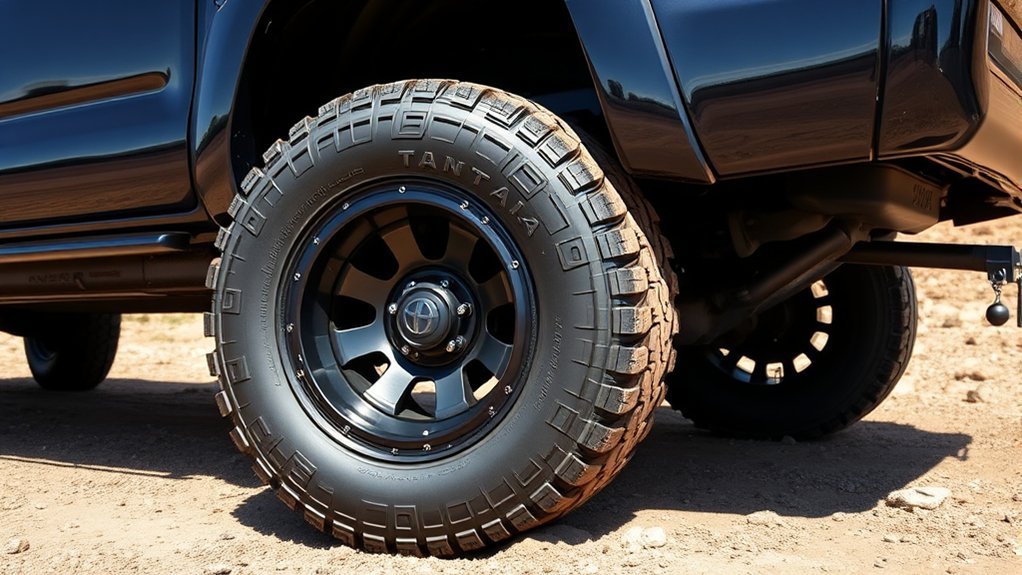
Lifted Tacomas can run larger tires, but lift height alone does not decide fitment. Wheel width, offset, caster, tire brand, tread shoulder shape, bumper clearance, mud flaps, fender liner position, and body-mount clearance all matter.
Warning: Oversized tire fitment is never guaranteed from size alone. Test at full steering lock, in reverse, and with suspension compression before assuming the tire is safe for daily driving or trail use.
[Products Worth Considering]
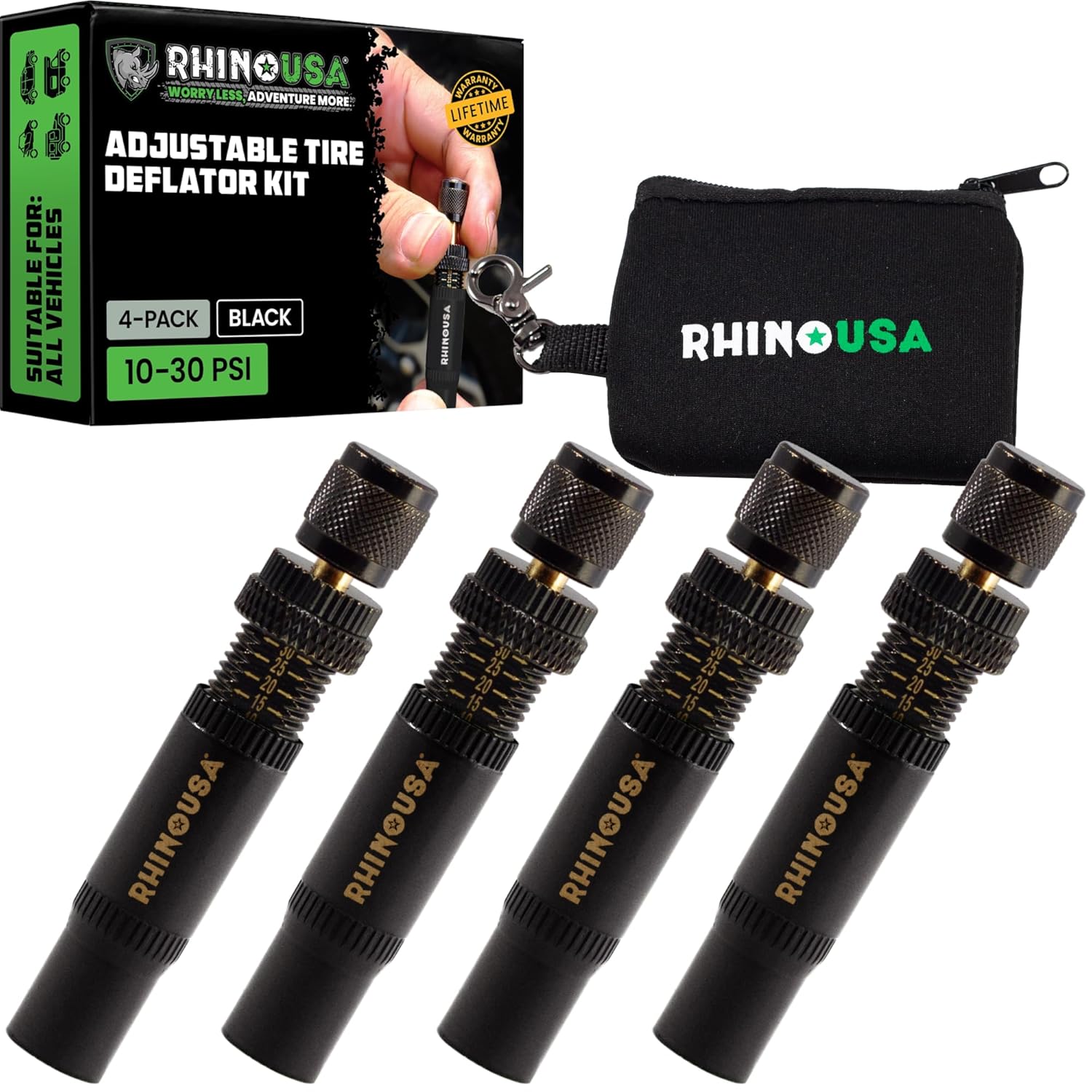
Use the Rhino USA adjustable tire deflators to air down all four tires at once by screwing one deflator onto each valve stem, letting you step away while the tires reach your preset pressure. Each deflator independently adjusts across a 10–30 PSI range with laser-etched indicators for quick setup and verification, making it ideal for beach, sand, and rocky off-road trails.

These aluminum alloy tire valve stem caps with an O-ring seal help protect valve stems from corrosion while adding a clean, stylish look to your vehicle. The universal fit works across cars, trucks, motorcycles, bicycles, and more, making them an easy upgrade for everyday driving and off-road use. Installation is quick, and the included four-pack keeps all your tires dressed and protected.

These M14x1.5 closed-end chrome lug nuts are a one-piece replacement designed for secure fitment on compatible GM, Ford, and select Chrysler/Dodge models. Featuring a 60-degree conical seat and anti-rust chrome plating, they help resist corrosion and maintain a bright look for everyday driving. Built for long-term durability, they include OEM-style part references and are backed by 12 months of support.
Popular Tire Sizes
| Setup | Common size to consider | Fitment notes |
|---|---|---|
| Stock height | Placard size, 265/70R16, or 265/65R17 where originally equipped | Best for no-drama replacement. Stay close to the original diameter. |
| Leveling kit or mild lift | 265/70R17, 275/70R17, or 285/70R17 | 285/70R17 may rub without the right alignment, offset, or trimming. |
| 2–3 inch lift | 285/70R17 or 285/75R16 | Popular near-33-inch choices. Expect possible mud flap, liner, or cab-mount work. |
| 4–6 inch lift | 33×12.50R17 or similar | Wider tires usually need careful wheel offset, trimming, and suspension clearance checks. |
Off-Road Performance Benefits
Larger all-terrain or mud-terrain tires can improve trail performance when they are fitted correctly. The main benefits are:
- More ground clearance: A taller tire raises the axle housings slightly.
- Better traction: Aggressive tread blocks can bite better in dirt, gravel, mud, and snow.
- Stronger sidewalls: Many LT tires have tougher construction for trail use.
- Improved stance: Wider tires and lower-offset wheels can give the truck a more planted look.
The tradeoffs are real. Bigger tires can add weight, reduce fuel economy, increase road noise, change gearing feel, and stress suspension and steering components. If your Tacoma is mostly a commuter, a mild all-terrain in the stock size may be the best balance.
Key Features to Consider When Choosing Tacoma Tires
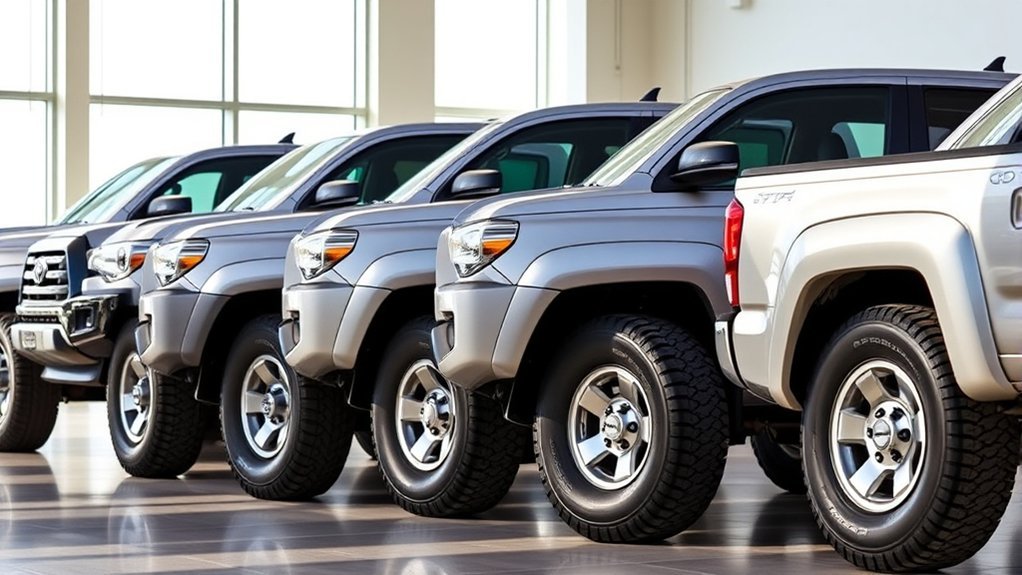
Tread Design Considerations
Choose the tread pattern based on how you actually drive:
- Highway terrain: Quietest ride and best fuel economy for daily driving.
- All-terrain: Best all-around choice for mixed pavement, gravel, snow, and light trails.
- Hybrid terrain: More aggressive than all-terrain, but usually less noisy than mud-terrain.
- Mud-terrain: Best for deep mud and rocks, but louder and heavier on the street.
Pro Tip: If your Tacoma sees snow and wet roads, look for siping and wet-traction performance, not just aggressive tread blocks. A tire that looks tough is not always the safest tire in rain or winter conditions.
Load Index and Load Range Importance
Load capacity is one of the most important safety specs on a Tacoma tire. The number after the tire size, such as 109, 110, or 111, is the load index. The letter after it, such as S or T, is the speed symbol. Load range letters such as C, D, and E are different; they describe tire construction and maximum inflation capability, usually on LT tires.
| Spec | What it means | Tacoma buying tip |
|---|---|---|
| Load index 109 | About 2,270 lb per tire when used under the tire maker’s specified conditions | Common on some P-metric Tacoma sizes; match or exceed the placard. |
| Load index 110 | About 2,335 lb per tire | Often seen on 265/65R17-style tires. |
| Load index 111 | About 2,405 lb per tire | Often seen on 265/70R16-style tires. |
| LT Load Range C/D/E | Light-truck construction categories, not the same thing as load index | Useful for towing, hauling, and off-road durability, but may ride firmer and weigh more. |
The U.S. Tire Manufacturers Association says replacement tires should be the same size, load index, and speed rating designation recommended by the vehicle or tire manufacturer, and should not be smaller or have less load-carrying capacity than originally specified.
Tire Construction Types
Most Tacoma tires you shop today are radial tires, but there are still important construction choices:
- P-metric tires: Lighter, usually smoother, and often better for daily driving.
- LT tires: Heavier and tougher, often better for towing, loaded travel, and trail abuse.
- All-season or highway construction: Best for pavement comfort and low noise.
- All-terrain or mud-terrain construction: Better puncture resistance and traction, but more weight and road noise.
If you tow, haul, or air down off-road, LT tires may be worth the firmer ride. If your Tacoma is mostly a daily driver, a quality P-metric all-terrain in the correct load index is often more comfortable.
Best Tire Types for Daily Driving, Trails, and Towing
Instead of choosing by brand name first, choose by use case:
- Daily driver with occasional dirt roads: Highway-terrain or mild all-terrain tire in the stock size.
- Mixed pavement and weekend trails: All-terrain tire with good wet-road manners and a load rating that matches or exceeds stock.
- Rocky trails and overlanding: LT all-terrain or hybrid-terrain tire with stronger sidewalls.
- Mud and deep ruts: Mud-terrain tire, accepting more road noise and faster wear.
- Towing or frequent payload: Consider an LT tire and confirm the wheel, axle, and tire ratings all support the load.
Common Tacoma tire models people compare in these categories include all-terrain, hybrid-terrain, and mud-terrain lines from major brands such as BFGoodrich, Toyo, Nitto, Falken, Goodyear, Michelin, and Mickey Thompson. Pick the tire that matches your climate, road noise tolerance, payload needs, and actual trail conditions.
[Products Worth Considering]

Replace worn or missing TPMS sensors with a pre-programmed 4-pack designed for compatible GM vehicles. These 315MHz sensors provide real-time tire pressure monitoring and alert you if pressure is too high, too low, or if a rapid air leak occurs. Most installations are ready with minimal relearn effort after mounting, helping improve safety and driving confidence.

Keep your tires properly inflated with this analog VONDIOR tire pressure gauge, designed for fast, easy readings without batteries. The swiveling, two-axis hose and large glow dial help you measure at any tire angle with instant visibility. Built with a protective rubber shield, it supports durable, low-maintenance use for cars and trucks.

Upgrade your wheels with MIKKUPPA M12x1.5 mag seat lug nuts built for secure, corrosion-resistant performance. These closed-end chrome lug nuts are a direct replacement for select Toyota models, including Camry, Corolla, RAV4, Sienna, Avalon, Highlander, Matrix, Venza, and Prius. Triple-chromium plating and cold-forged, heat-treated steel help deliver strength for daily driving and replacement needs.
Must-Have Accessories for Tire Upgrades
A tire upgrade works best when the supporting parts are handled at the same time. Before installation, plan for these items:
- TPMS sensors, if equipped: Transfer or replace sensors so the warning system keeps working.
- Correct lug nuts: Aftermarket wheels may require a different seat style than factory wheels.
- Wheel locks: Useful if you are installing expensive wheels and tires.
- Alignment: Important after a lift, leveling kit, or larger tire install.
- Spare tire solution: A larger spare may not fit in the stock spare location, and 4WD trucks should avoid mismatched rolling diameter.
- Torque wrench: Recheck lug nut torque after the first short drive, following the wheel maker’s instructions.
- Fender liner and mud flap hardware: Larger tires often rub these parts first.
Note: If your Tacoma has TPMS, federal rules define TPMS as a system that warns the driver when one or more tires are significantly under-inflated. Do not ignore a warning light after changing wheels or tires.
[Products Worth Considering]

The Trivd Frol 1/2" air impact wrench delivers high performance torque up to 1500 ft-lbs with a twin hammer impact mechanism for strong, balanced blows. It features an ergonomic grip, compact lightweight design, and quick-stop control with 3 forward speeds up to 8000 RPM plus a reverse speed. Built for demanding automotive repair and tire shop work, the rear exhaust helps keep debris away from the surface.

Upgrade your wheels with MIKKUPPA closed-end lug nuts designed for reliable fit and corrosion resistance. The one-piece, cold-forged and heat-treated steel construction helps resist rust and stripping, while the integrated finish delivers a durable black appearance. Built to OEM standards with a conical 60-degree seat, these nuts provide a secure solution for compatible Ford, Honda, Jeep, and Chevrolet models.

Masoll Gen 2 external TPMS sensors are a DIY replacement set of 4 for select GM vehicles made after 2006, helping you shut off the TPMS warning light quickly. Simply screw the sensors onto the tire valves and sync to your car ECU using the included EL-50448 relearn tool. Dual-frequency 315/433 MHz design provides OEM-level performance with accurate readings and replaceable batteries for about two years.
How to Fix Common Tire Fitment Problems
If your Tacoma rubs after a tire upgrade, do not keep driving until you know where the contact is happening. Use this checklist:
- Check full steering lock: Turn left and right while parked and look for contact at the mud flaps, fender liner, bumper edge, and upper control arm.
- Test reverse: Some Tacomas rub more in reverse than forward because of suspension movement and tire angle.
- Inspect after driving: Look for shiny spots, plastic dust, rubber marks, or bent liner clips.
- Adjust the liner first: Small liner repositioning often solves minor rubbing.
- Remove or trim mud flaps if needed: This is common on wider all-terrain tires.
- Check alignment and caster: More positive caster can help move the tire away from the rear of the wheel opening, but it must stay within a safe alignment range.
- Review wheel offset: More negative offset pushes the tire outward and can increase fender contact; too much positive offset can move the tire toward suspension parts.
- Consider body-mount clearance: Wider 33-inch-style tires may contact the cab mount on some setups.
- Recalibrate if needed: Larger tires can affect speedometer and odometer accuracy.
The Tire Industry Association recommends consulting a tire professional when selecting custom tire and wheel packages that differ from the placard information.
Frequently Asked Questions
What size tires go on a 2015 Toyota Tacoma?
A 2015 Toyota Tacoma may use P215/70R15, P245/75R16, P265/70R16, P265/65R17, or P265/60R18 depending on cab, drivetrain, trim, and package. Check the driver-door tire placard before buying replacements.
What size tires fit a 2005 Toyota Tacoma?
Many 2005 Tacoma models used 245/75R16, 265/70R16, or 265/65R17 package tires, while some 2WD/base-style configurations used smaller sizes. Because 2005 trucks also vary by cab, drivetrain, and package, the door placard is the final reference.
Will 285/70R17 tires fit a 2nd-gen Tacoma?
285/70R17 is a popular upgrade size, but it is not a guaranteed bolt-on fit. Many trucks need a lift or leveling kit, the right alignment, careful wheel offset, and possible trimming around the fender liner, mud flaps, or cab mount.
Do I need a lift for 33-inch tires on a 2005–2015 Tacoma?
Usually, yes. Near-33-inch sizes such as 285/70R17 or 285/75R16 commonly need a 2–3 inch lift or leveling setup plus clearance checks. Wider 33×12.50 tires may need more trimming and more careful wheel offset.
Will bigger tires affect speedometer accuracy and fuel economy?
Yes. A taller tire travels farther per rotation, so the speedometer can read lower than your actual speed. Larger and heavier tires can also reduce fuel economy, make acceleration feel slower, and change automatic-transmission shift behavior.
Should I choose P-metric or LT tires for my Tacoma?
Choose P-metric tires for a smoother daily-driver ride when they meet the required load index. Choose LT tires if you tow, haul, air down off-road, or need stronger sidewalls, but expect extra weight and a firmer ride.
Conclusion
The best tire size for a 2nd-gen Toyota Tacoma depends on your exact truck, not just the model year. For a stock Tacoma, match the driver-door placard size and pressure. For upgrades, compare diameter, width, load index, speed rating, wheel offset, alignment, and rubbing points before buying. A careful fitment check now prevents tire damage, poor handling, and expensive corrections later.
Sources
- 2015 Toyota Tacoma eBrochure — factory wheel and tire package sizes for 2015 Tacoma.
- 2005 Toyota Tacoma 4×4 eBrochure — early 2nd-gen Tacoma package tire examples.
- NHTSA Tire Safety Ratings and Awareness — tire label, correct size, pressure, and tire maintenance guidance.
- U.S. Tire Manufacturers Association: Replacing Tires — replacement tire size, load index, speed rating, and load-capacity guidance.
- Tire Industry Association: Tire Replacement — professional guidance for replacement and custom wheel/tire packages.
- Toyo Tires Speed Symbol and Load Index Chart — load index and speed symbol reference values.