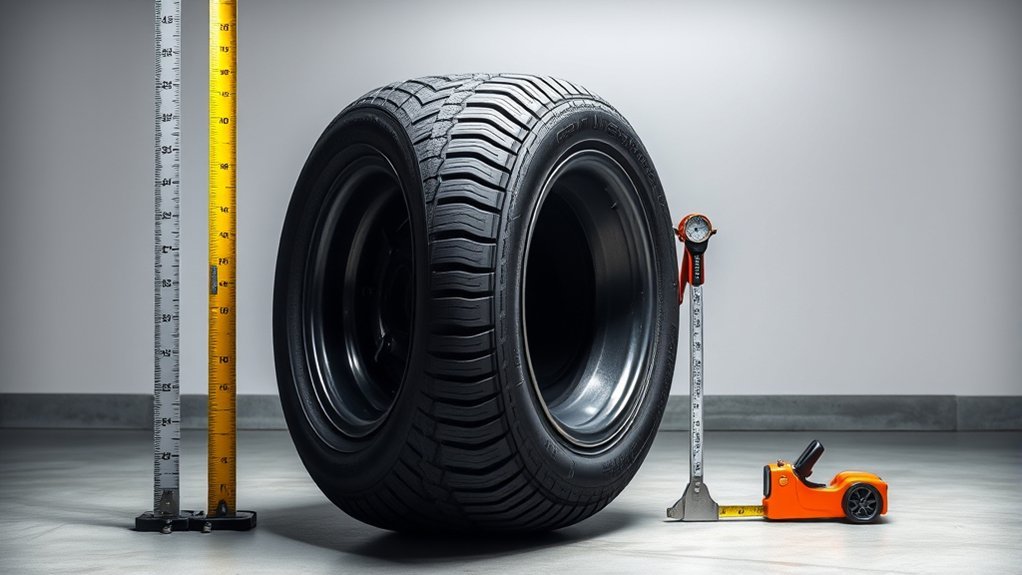
A 245/75R16 tire is about 30.5 inches tall, 9.6 inches wide, and built for a 16-inch wheel. The size code tells you the tire’s nominal section width, sidewall ratio, construction type, and rim diameter. These numbers are useful for comparing tire height, checking wheel-well clearance, estimating speedometer change, and choosing the right load rating for your truck or SUV.
Quick Answer
A 245/75R16 tire is about 30.47 inches tall, 9.65 inches wide, and has a 7.23-inch sidewall. Its circumference is about 95.72 inches, or about 662 revolutions per mile. Actual mounted dimensions can vary slightly by tire brand, tread design, load rating, and approved rim width.
Key Takeaways
- A 245/75R16 tire is about 30.5 inches tall, or 773.9 mm in calculated overall diameter.
- The 245 means the tire has a nominal section width of 245 mm, or about 9.65 inches.
- The 75 aspect ratio gives it a sidewall height of about 183.75 mm, or 7.23 inches.
- The R means radial construction, and the 16 means it fits a 16-inch wheel.
- Compared with a 265/75R16, it is about 1.18 inches shorter and about 0.79 inches narrower.
What Does 245/75R16 Mean?
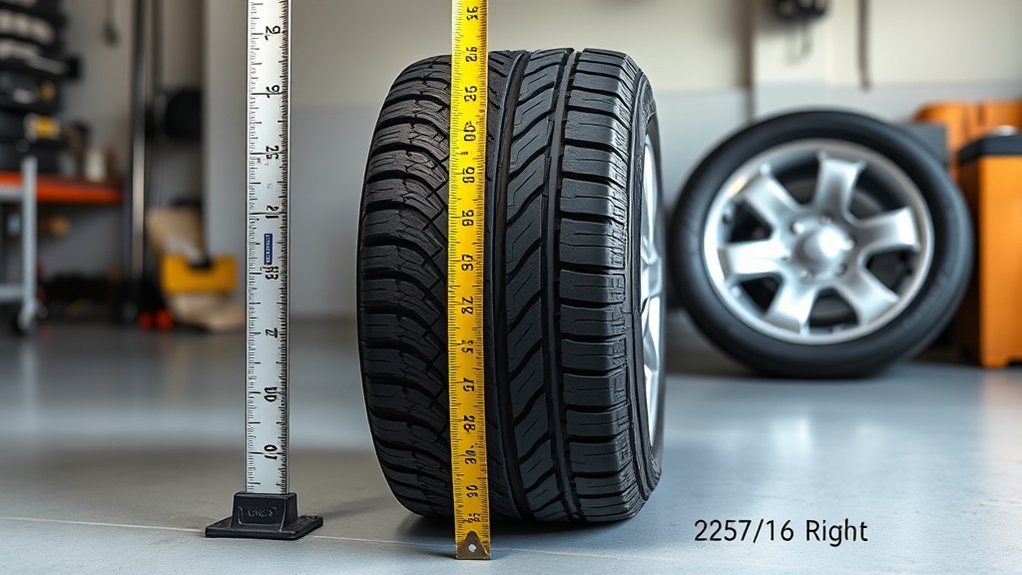
A 245/75R16 tire designation tells you four main things about the tire. According to Michelin’s tire-marking guide, the first number is the nominal section width in millimeters, the second number is the aspect ratio, the letter shows construction type, and the final number is the wheel diameter in inches.
- 245 means the tire is 245 mm wide at its nominal section width, which equals about 9.65 inches.
- 75 means the sidewall height is 75% of the section width.
- R means radial construction, the normal construction type for modern passenger and light-truck tires.
- 16 means the tire is made for a 16-inch wheel.
The tire may also have a prefix or service description, such as P245/75R16, LT245/75R16, 111T, or 120/116S. Those extra markings matter because they tell you the intended vehicle type, load capacity, speed rating, and whether the tire is a passenger, XL, or light-truck tire. Once the size is confirmed, tread type still matters for all-season performance, winter grip, highway comfort, and off-road traction.
Note: A tire’s sidewall maximum pressure is not the same as your vehicle’s recommended tire pressure. Use the pressure listed on the driver-side Tire and Loading Information Label or in your owner’s manual.
245/75R16 Dimensions in Inches and Millimeters
The calculated 245/75R16 dimensions are easy to verify with a tire-size formula. The sidewall height is the section width multiplied by the aspect ratio. The overall tire diameter is the wheel diameter plus two sidewalls.
| Measurement | Exact / Calculated Value | Rounded Value |
| Section width | 245 mm / 9.65 in | 9.6 in |
| Sidewall height | 183.75 mm / 7.23 in | 7.2 in |
| Wheel diameter | 406.4 mm / 16 in | 16 in |
| Overall diameter | 773.9 mm / 30.47 in | 30.5 in |
| Circumference | 2,431.3 mm / 95.72 in | 95.7 in |
| Revolutions per mile | About 662 | 662 revs/mile |
245/75R16 Size Formula
Here is the basic math:
- Sidewall height: 245 mm × 0.75 = 183.75 mm
- Wheel diameter: 16 in × 25.4 = 406.4 mm
- Overall diameter: 183.75 mm + 406.4 mm + 183.75 mm = 773.9 mm
- Overall diameter in inches: 773.9 ÷ 25.4 = 30.47 in
- Circumference: 30.47 × 3.1416 = 95.72 in
This gives you the calculated tire size. Real-world mounted diameter can shift slightly because each tire maker uses its own casing shape, tread depth, and measuring rim.
How Tall Is a 245/75R16 Tire?
A 245/75R16 tire is about 30.5 inches tall overall. More exactly, the calculated diameter is 30.47 inches, or 773.9 mm. This height is common on trucks, older SUVs, vans, and off-road builds that use 16-inch wheels.
The taller 7.2-inch sidewall gives the tire more vertical flex than a lower-profile tire. That can help ride comfort on broken pavement, gravel, and trail surfaces. If you are shopping for an all-terrain tire, the sidewall height can also help with impact absorption, but the tread pattern and load rating still matter just as much as the size code.
Does Brand Change the Real Height?
Yes, slightly. Two 245/75R16 tires can share the same nominal size but have slightly different measured diameters, tread widths, weights, and tread depths. A highway tire, winter tire, mud-terrain tire, and all-terrain tire can all measure a little differently after mounting and inflation.
Use the 30.5-inch value for comparison, planning, and speedometer estimates. Use the tire maker’s product spec sheet for final clearance and load decisions.
How Wide Is a 245/75R16 Tire?
A 245/75R16 tire has a nominal section width of 245 mm, or about 9.65 inches. Section width is the tire’s widest sidewall-to-sidewall measurement on an approved rim. It is not the same as tread width.
Tread width is usually narrower than section width and varies by tire model. This matters because tread width affects the actual contact patch, while section width affects wheel-well clearance, steering clearance, and sidewall bulge. When checking tire selection criteria, compare both the official size and the manufacturer’s measured specs.
What Are the 245/75R16 Dimensions?
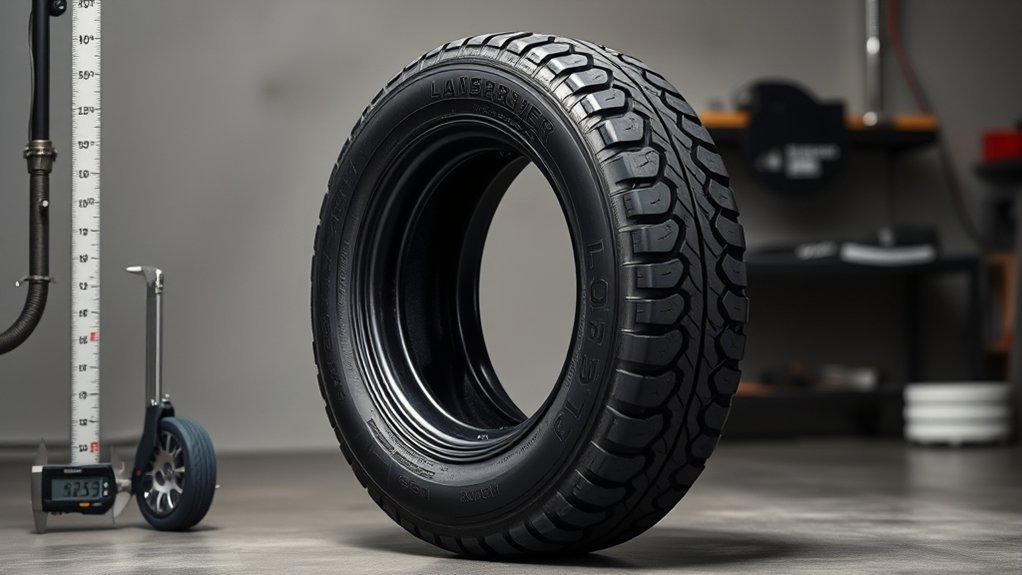
The main 245/75R16 dimensions are 30.47 inches tall, 9.65 inches wide, and 7.23 inches of sidewall height. The wheel diameter is 16 inches. The circumference is about 95.72 inches, which affects speedometer readings, odometer readings, gearing, and engine rpm at a given road speed.
TireSize.com lists the common 245/75R16 size at 30.5 inches in diameter, 9.6 inches in section width, 7.2 inches in sidewall height, 95.7 inches in circumference, and 662 revolutions per mile. It also notes that 245/75R16 tires are generally approved for 6.5 to 8 inch wide wheels, but specs can vary by manufacturer.
Pro Tip: If you are comparing two tire sizes, compare overall diameter first, then width, load rating, wheel width range, and actual manufacturer specs. Diameter affects speedometer readings; width affects clearance and steering feel.
How Does 245/75R16 Compare to Similar Tires?
A 245/75R16 is close in height to a 265/70R16, shorter than a 265/75R16, taller than a 225/75R16, and slightly shorter than a 235/80R16. The table below uses calculated dimensions, so actual tire models can vary slightly.
| Tire Size | Diameter | Width | Difference vs 245/75R16 |
| 225/75R16 | 29.29 in | 8.86 in | 1.18 in shorter and 0.79 in narrower |
| 245/75R16 | 30.47 in | 9.65 in | Baseline size |
| 255/70R16 | 30.06 in | 10.04 in | 0.41 in shorter and 0.39 in wider |
| 265/70R16 | 30.61 in | 10.43 in | 0.14 in taller and 0.79 in wider |
| 235/80R16 | 30.80 in | 9.25 in | 0.33 in taller and 0.39 in narrower |
| 265/75R16 | 31.65 in | 10.43 in | 1.18 in taller and 0.79 in wider |
Compared with a 265/75R16, the 245/75R16 has less height and less width. That can help clearance and fuel economy, but it also gives up some ground clearance and contact patch. Compared with a 265/70R16, the 245/75R16 is nearly the same height but narrower, which may make it easier to fit on some vehicles.
If your goal is trail grip, compare tread design and sidewall construction, not just dimensions. Many all-terrain tires use stronger shoulders, deeper tread blocks, and reinforced casing designs, but those traits depend on the exact model.
[Products Worth Considering]

Slip the Powerbuilt tire step over your vehicle’s tire to reach roof racks, engine bays, truck boxes, and more without overreaching. Its adjustable, universal design fits tires with a cross tread width up to 13 inches, including car, truck, RV, and semi tires. The non-slip cheesegrater surface and anti-slip tape provide secure grip while the open design lets mud and debris pass through. Fold-flat storage with rubber bumpers helps keep your tire and the step protected between uses.

Keep your tires properly inflated with this analog VONDIOR tire pressure gauge, designed for fast, easy readings without batteries. The swiveling, two-axis hose and large glow dial help you measure at any tire angle with instant visibility. Built with a protective rubber shield, it supports durable, low-maintenance use for cars and trucks.

Upgrade your 2024-2026 Tesla Model 3 Highland with REEVAA all-weather mud flaps designed for seamless fit along the original body lines. The set of four delivers strong splash protection against mud, gravel, and road debris while using OEM-grade durable materials. Installation is non-destructive with original hole positions and snap-in clips, and the aerodynamic design helps minimize impact on efficiency.
Will a 245/75R16 Fit Your Vehicle?
A 245/75R16 will fit only if your vehicle, wheels, load needs, and clearance allow it. Start with the factory tire size listed in your owner’s manual or on the driver-side Tire and Loading Information Label. NHTSA recommends using that label or the owner’s manual to confirm the correct tire size for your vehicle.
Check these points before mounting 245/75R16 tires:
- Wheel diameter: The wheel must be 16 inches.
- Wheel width: Many 245/75R16 tires are commonly listed for 6.5 to 8 inch wide wheels, but verify the tire maker’s approved rim-width range.
- Load rating: Match or exceed the vehicle’s required load capacity.
- Speed rating: Match or exceed the vehicle manufacturer’s requirement.
- Clearance: Check wheel wells, fenders, mud flaps, suspension parts, brake components, and full-lock steering clearance.
- Offset and backspacing: Wheel offset can change how close the tire sits to the suspension and fender.
- Spare-tire space: A larger tire may not fit in the original spare location.
- Speedometer impact: A larger or smaller tire changes the distance traveled per wheel rotation.
Warning: Do not choose a tire size by diameter alone. A tire that clears while parked can still rub during suspension compression, hard turning, towing, or off-road articulation. Always confirm load rating, rim compatibility, inflation requirements, and full steering clearance before driving.
For wet-road, snow, and mixed-surface use, the tread category is also important. A correct fit with the wrong tread can still perform poorly in your climate, so compare tire construction and wet and snow traction before buying.
[Products Worth Considering]

This wheel brush kit delivers pro-level cleaning at home, lifting dirt, grime, and brake dust to help restore wheel appearance. It includes multiple brush styles and applicator pads for tackling different wheel surfaces, with gentle, metal-free bristles designed to reduce scratching risk. The flat and double-ended brushes are built for comfort and reach, making wheel care easier for cars, trucks, and RVs.

This 3-piece wheel and tire brush set makes it easy to clean light, medium, and heavy dirt from wheels, rims, tires, and exterior surfaces. It includes both soft and stiff bristle options for gentle scrubbing and tough grime removal, helping lift brake dust and road buildup. The long-handle design supports comfortable cleaning across cars, trucks, SUVs, RVs, motorcycles, and more, with simple care instructions to restore brush shape.
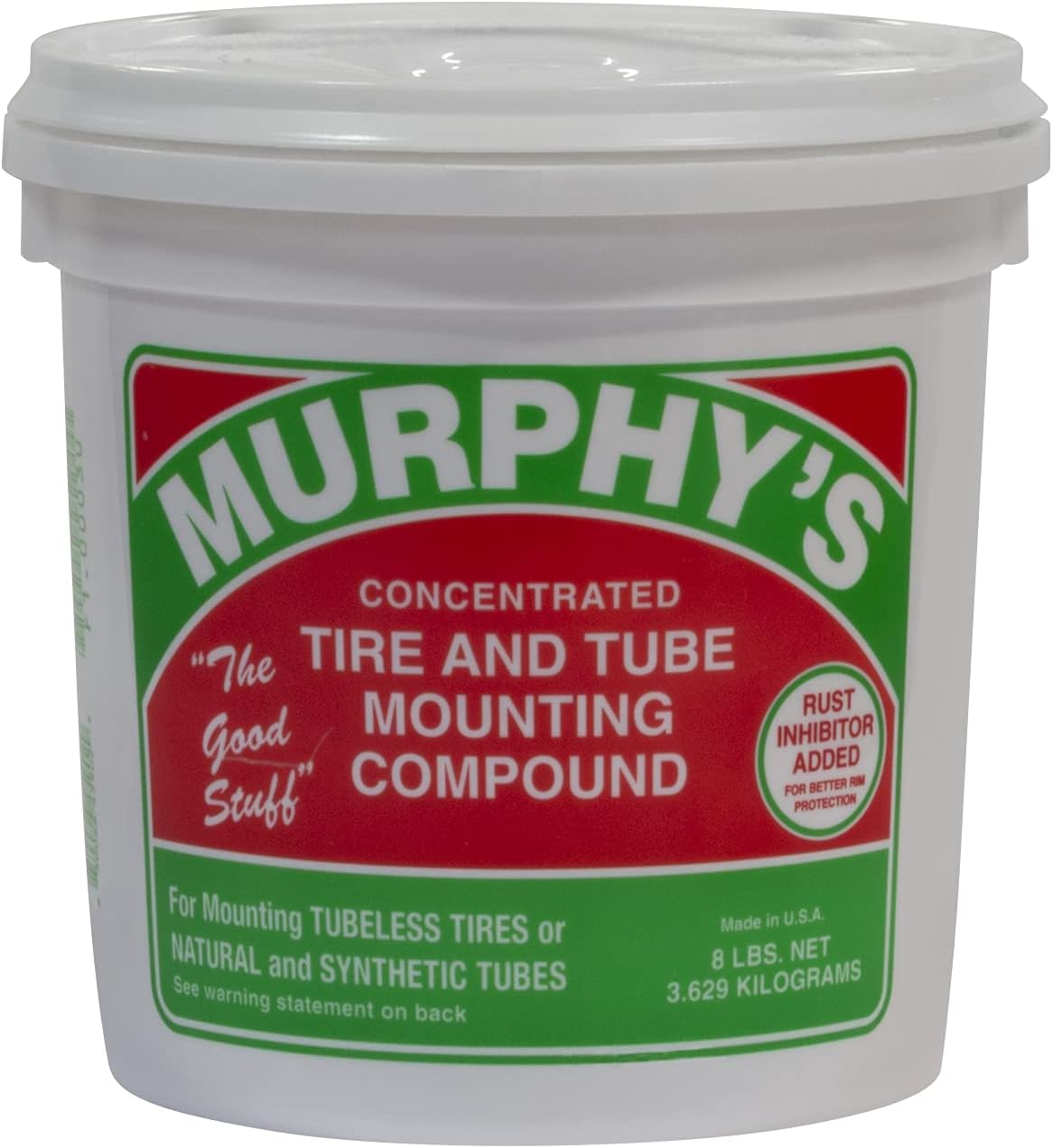
A concentrated tire and tube mounting compound designed to help simplify mounting rubber tires and tubes on passenger, semi truck, construction, and OTR applications. Its ultra-thick formula packs beads effectively and includes rust inhibitors to help protect against corrosion during use.
Load Rating, P-Metric vs LT, and Air Pressure
Not every 245/75R16 tire carries the same load. You may see P245/75R16, 245/75R16 SL, 245/75R16 XL, or LT245/75R16 Load Range E. The size may look similar, but the casing strength, inflation range, load capacity, ride feel, and towing suitability can be different.
Michelin explains that the load rating on the sidewall shows the maximum weight a single tire can carry when properly inflated. This rating must meet or exceed the vehicle manufacturer’s requirement. If your truck came with LT tires, replacing them with P-metric tires of the same size can reduce load capacity, which can be unsafe for towing or hauling.
Use the vehicle placard for the recommended cold inflation pressure. Use the tire sidewall to confirm maximum load, maximum pressure, load range, speed rating, and service description. Do not inflate to the sidewall maximum unless the vehicle or tire manufacturer’s load-inflation guidance calls for it.
Speedometer and Gear Ratio Impact
Tire diameter affects how far your vehicle travels with each wheel rotation. A taller tire travels farther per rotation, so your actual speed can be higher than the speedometer shows if the speedometer is calibrated for a smaller tire. A shorter tire does the opposite.
For example, moving from a 245/75R16 to a 265/75R16 changes calculated diameter from about 30.47 inches to 31.65 inches. That is about a 3.9% diameter increase. If the speedometer still assumes the smaller tire, an indicated 60 mph can be close to 62.3 mph in actual road speed.
This can also affect odometer readings, transmission shift behavior, crawl ratio, braking feel, and engine rpm. For small size changes, the effect may be minor. For larger upsizes, confirm whether recalibration is needed.
Best Use Cases for 245/75R16 Tires
A 245/75R16 tire works well when you want a tall sidewall, moderate width, and a 30.5-inch overall diameter. It is common on trucks, SUVs, utility vehicles, and older 16-inch wheel setups. Depending on the exact tire model, it can be used for highway driving, light off-road use, snow conditions, towing, or mixed work use.
Choose the tread type based on your driving:
- Highway terrain: Best for quiet road manners, tread life, and daily driving.
- All-terrain: Better for gravel, dirt, campsites, and mixed weather, with more road noise than many highway tires.
- Mud-terrain: Best for off-road traction, but usually louder and less refined on pavement.
- Winter tire: Best for snow and ice when marked for winter performance.
If you are comparing vehicle-specific options, use tire selection criteria to balance size, tread, load rating, climate, road noise, and ride comfort rather than choosing by size code alone.
[Products Worth Considering]

Secure your vehicle during transport with this 4-pack of heavy-duty tire tie down straps designed for trailers and hauling. The ratchet system with flat hooks and D-rings helps you tension the straps quickly, while the wheel-friendly design protects tires. With high break strength and corrosion-resistant hardware, these straps provide reliable, confidence-inspiring tie-down security for cars, trucks, and UTVs.

This professional wheel and rim brush kit makes it easy to lift brake dust, grime, and dirt from wheels and tires without scratching finishes. The brushes feature soft, metal-free wool heads and a flexible 360-degree rim brush design for reaching hard-to-clean areas. Includes multiple brush types plus accessories for thorough car, motorcycle, and general vehicle detailing.

This 12-inch LUMITECO dual head tire pressure gauge features an integrated straight-on chuck and a 30° reverse chuck to reach hard-to-access dual wheel valves. Its 10–150 PSI / 1–10 BAR range with a clear, two-sided scale helps you quickly check tire pressure for safer, smoother driving. Heavy-duty construction and a simple no-battery design make it a reliable tool for trucks, cars, RVs, and motorcycles.
Frequently Asked Questions
How much taller is a 265/75R16 than a 245/75R16?
A 265/75R16 is about 1.18 inches taller than a 245/75R16. The 245/75R16 is about 30.47 inches tall, while the 265/75R16 is about 31.65 inches tall. The 265 is also about 0.79 inches wider.
How tall is a 265/75R16 tire in inches?
A 265/75R16 tire is about 31.65 inches tall. Its sidewall height is about 7.82 inches, and its section width is about 10.43 inches. It is taller and wider than a 245/75R16, so fitment and speedometer impact should be checked before switching.
What is a 245/75R16 equivalent to?
Near-size alternatives include 235/80R16 and 255/70R16, but neither is identical. A 235/80R16 is slightly taller and narrower, while a 255/70R16 is slightly shorter and wider. Always compare load rating, rim width range, clearance, and speedometer change before swapping sizes.
How tall is a 245/45R16 tire?
A 245/45R16 tire is about 24.7 inches tall. It has the same 245 mm nominal section width as a 245/75R16, but the 45 aspect ratio gives it a much shorter sidewall of about 4.34 inches.
Is a 245/75R16 a 31-inch tire?
It is close, but not quite. A 245/75R16 is usually rounded to 30.5 inches tall. Some people may describe it loosely as a 31-inch tire, but the calculated diameter is about 30.47 inches.
Can I replace 245/75R16 with 265/75R16?
Sometimes, but not automatically. A 265/75R16 is about 1.18 inches taller and 0.79 inches wider than a 245/75R16. That can cause rubbing, change speedometer readings, reduce clearance, and affect gearing. Check rim width, offset, suspension clearance, and load rating before switching.
Conclusion
A 245/75R16 tire is about 30.5 inches tall, 9.6 inches wide, and has a 7.2-inch sidewall. The exact calculated size is 30.47 inches in diameter, 9.65 inches in section width, and 95.72 inches in circumference. That makes it a practical size for many trucks and SUVs with 16-inch wheels.
Before installing one, confirm your factory tire size, wheel width, load rating, speed rating, inflation guidance, and full steering clearance. The right 245/75R16 tire should fit your vehicle safely, support its load needs, and match the way you actually drive.
Sources
- Michelin: How to Read Tire Markings and Sidewall Codes – backs up tire-code meaning, section width, aspect ratio, radial construction, wheel diameter, load rating, and pressure-marking guidance.
- NHTSA TireWise – backs up tire-size placard, owner’s manual, cold inflation pressure, and tire-safety guidance.
- TireSize.com: 245/75R16 Tires – backs up 245/75R16 diameter, width, sidewall, circumference, revolutions per mile, and common wheel-width range.
- Tacoma World Tire Size Calculator: 245/75R16 vs 265/75R16 – backs up the calculated comparison between 245/75R16 and 265/75R16.