
For your 2014 Toyota Camry, the safest tire size is the one printed on the driver-side Tire and Loading Information Label or listed in Toyota’s owner’s manual. Most 2014 Camry wheel packages use P205/65R16, P215/55R17, or P225/45R18. Before you buy replacement tires, match the size, load index, speed rating, and recommended cold tire pressure for your exact wheel package.
Quick Answer
The verified 2014 Toyota Camry tire sizes are P205/65R16 94S, P215/55R17 93V, and P225/45R18 91V. Toyota lists 35 psi for the 16-inch and 17-inch sizes under normal driving, and 33 psi for the 18-inch size. Always confirm the label on your own car before buying tires.
Key Takeaways
- Check the driver-side door placard first because wheel packages can vary by trim, market, and previous owner changes.
- Toyota’s 2014 Camry manual lists P205/65R16, P215/55R17, and P225/45R18 as the main tire sizes.
- Use 35 psi for P205/65R16 and P215/55R17 under normal driving, and 33 psi for P225/45R18, unless your placard says otherwise.
- Do not mix tire sizes, tire types, or unknown used tires on your Camry.
- Reset or initialize the tire pressure warning system after tire rotation, tire-size changes, or pressure changes when your Camry requires it.
Why Getting the Right Tire Size Matters

The right tire size affects how your Camry steers, brakes, rides, and tracks speed. A tire with the wrong overall diameter can throw off speedometer readings, reduce ride quality, and create clearance issues near the fenders or suspension.
Correct sizing also protects the tire pressure monitoring system, wheel fitment, load capacity, and handling balance. For a family sedan like the Camry, you want predictable grip, stable braking, and even tread wear rather than a tire that only “looks” close.
Warning: Do not guess based only on trim names from online listings. Use the driver-side Tire and Loading Information Label, then confirm with a tire professional before changing to a different wheel or tire size.
2014 Toyota Camry Tire Size Specifications
Toyota’s 2014 Camry owner’s manual groups the tire specifications by tire and wheel type. Your exact Camry may have a 16-inch, 17-inch, or 18-inch wheel package, so use the table below as a verified guide and then match it to your door placard.
| Wheel Package | Verified Tire Size | Normal Cold Pressure | Wheel Size |
| 16-inch package | P205/65R16 94S | Front 35 psi / Rear 35 psi | 16 x 7J |
| 17-inch package | P215/55R17 93V | Front 35 psi / Rear 35 psi | 17 x 7J |
| 18-inch package | P225/45R18 91V | Front 33 psi / Rear 33 psi | 18 x 7.5J |
These specifications come from the 2014 Toyota Camry owner’s manual. The spare tire listed with these packages is T155/70D17 110M, and Toyota lists the compact spare pressure at 60 psi.
How to Confirm Your Exact Camry Tire Size
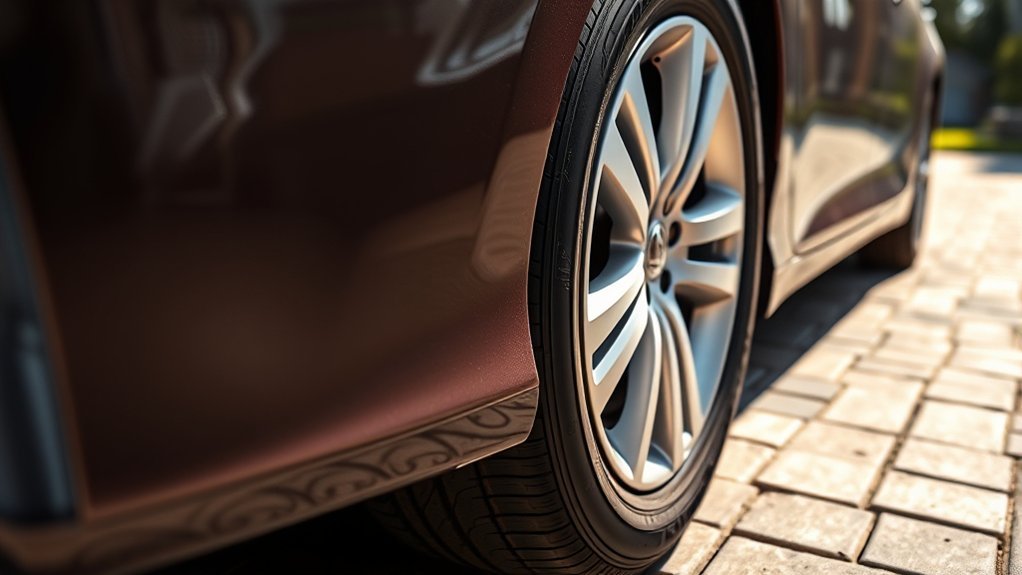
The fastest way to confirm your tire size is to open the driver’s door and read the Tire and Loading Information Label on the door edge or B-pillar. The National Highway Traffic Safety Administration also recommends using the owner’s manual or the driver-side label to find the correct tire size.
- Check the door label. Look for a size such as P205/65R16, P215/55R17, or P225/45R18.
- Match the full code. Do not stop at the rim size. Match the width, aspect ratio, rim diameter, load index, and speed rating.
- Look at all four tires. If a previous owner changed wheels, make sure the current tires match the placard or a safe approved equivalent.
- Ask before upsizing. A tire shop can confirm clearance, load capacity, wheel width, and speedometer impact.
Pro Tip: Take a photo of your door placard before shopping online. It helps you avoid buying a tire that fits another Camry wheel package but not your exact car.
[Products Worth Considering]

Replace your worn or missing TPMS sensors with pre-programmed, direct-fit sensors for compatible Ford, Lincoln, and select Mazda models. Each sensor comes ready to activate with a scan tool, helping restore accurate tire pressure monitoring and trouble-free installation. Built with a long-life CR2032 battery and tested before factory release, this set provides dependable performance with a one-year warranty.

Keep your tires properly inflated with this analog VONDIOR tire pressure gauge, designed for fast, easy readings without batteries. The swiveling, two-axis hose and large glow dial help you measure at any tire angle with instant visibility. Built with a protective rubber shield, it supports durable, low-maintenance use for cars and trucks.

The TYAMATE TM8 solar-powered wireless TPMS delivers real-time tire pressure and temperature monitoring with six alarm modes for safer driving. A vibrant color LCD display shows readings clearly while windshield mounting keeps it hands-free and easy to read. With a wide 0–87 PSI range, strong 433.92 MHz signal transmission, and quick sensor pairing, it’s ideal for RV, sedan, SUV, MPV, and truck use.
Reading Tire Specs for Your Camry
A tire code may look confusing at first, but each part tells you something important. Using P215/55R17 93V as an example:
- P means passenger vehicle tire.
- 215 is the section width in millimeters.
- 55 is the sidewall aspect ratio, or sidewall height as a percentage of width.
- R means radial construction.
- 17 means the tire fits a 17-inch wheel.
- 93 is the load index.
- V is the speed rating.
When replacing tires, match or exceed the original load index and use a speed rating that meets the vehicle’s requirement. A lower load index can reduce safety margin, especially when you carry passengers or luggage.
Recommended Tire Pressure for the 2014 Camry
For normal driving, Toyota lists 35 psi front and rear for the P205/65R16 and P215/55R17 sizes. For the P225/45R18 size, Toyota lists 33 psi front and rear. Check pressure when the tires are cold, before driving or after the car has been parked long enough for the tires to cool.
NHTSA recommends checking all tires, including the spare, at least once a month when the tires are cold. A tire can look normal while still being underinflated, and the TPMS light is not a substitute for regular pressure checks.
Note: The pressure printed on the tire sidewall is not your normal recommended pressure. Use the vehicle placard or Toyota manual, not the tire’s maximum pressure marking.
Top Tire Types and Brands Compatible With the 2014 Toyota Camry
Several major tire brands make compatible sizes for the 2014 Camry, including Michelin, Bridgestone, Continental, Goodyear, Yokohama, Pirelli, and General. The best choice depends on your wheel size, climate, budget, and driving style.
[Products Worth Considering]

Monitor tire tread wear with a smart, color-coded depth gauge that shows clear condition ranges at a glance. The bar is range marked for fast, easy readings, helping you maintain safer traction and performance. Each gauge is portable with a pocket clip, and the set includes 20 units for daily use and sharing.
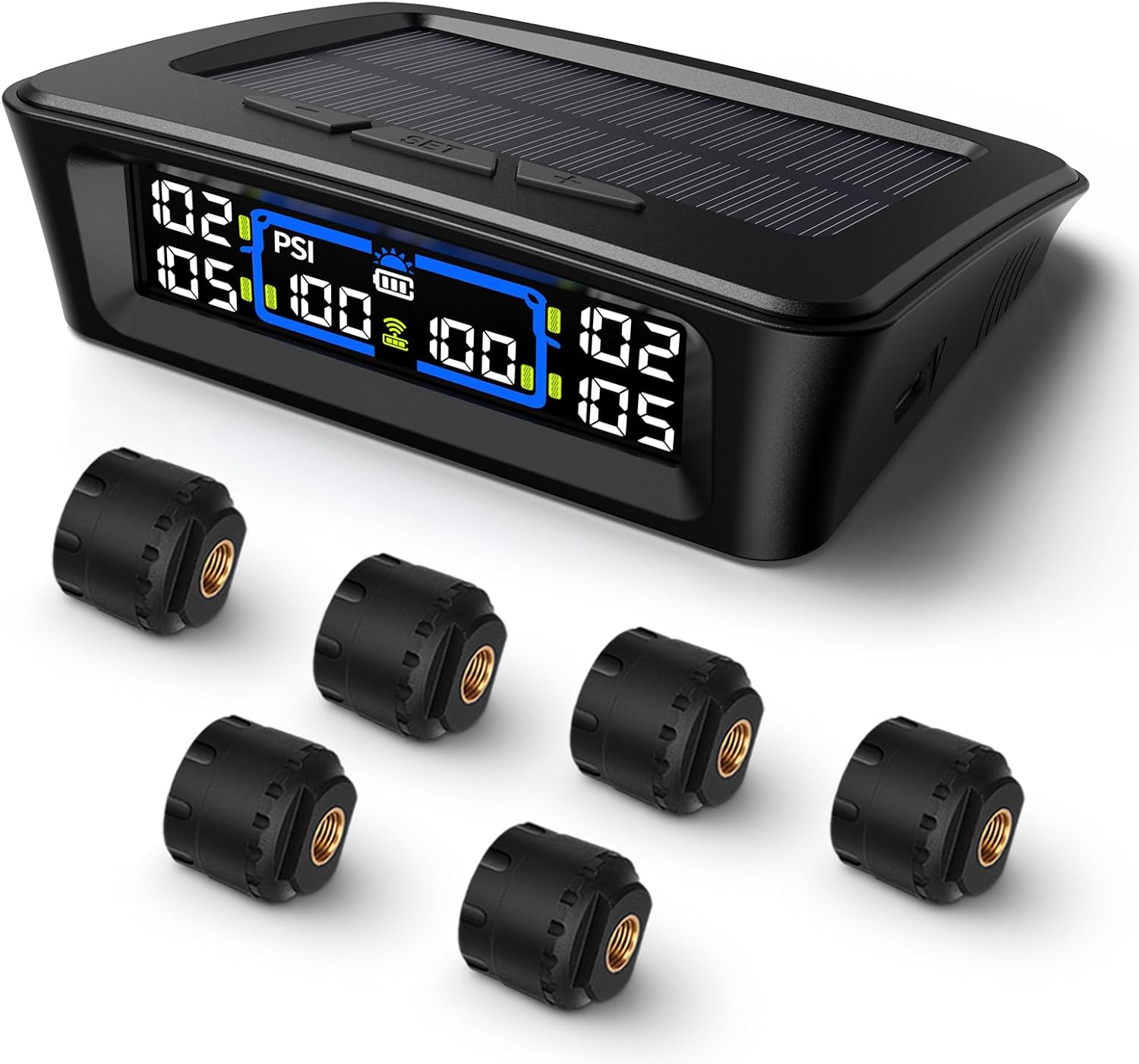
The Tymate TM12 RV TPMS delivers real-time tire pressure and temperature monitoring with a stable 433Hz display for safer long-distance driving. It supports simultaneous monitoring across vehicle and trailer zones, includes six alarm modes for pressure, temperature, leakage, battery, and signal loss, and features easy DIY installation with auto calibration. Power is supplied via USB-C charging or solar recharging, with a wide 0–144 PSI range and up to 50 ft signal coverage for RVs and towable trailers.

Upgrade your wheels with MIKKUPPA M12x1.5 mag seat lug nuts built for secure, corrosion-resistant performance. These closed-end chrome lug nuts are a direct replacement for select Toyota models, including Camry, Corolla, RAV4, Sienna, Avalon, Highlander, Matrix, Venza, and Prius. Triple-chromium plating and cold-forged, heat-treated steel help deliver strength for daily driving and replacement needs.
Popular Tire Options
For most Camry owners, a touring all-season tire is the safest starting point. It usually gives you a good mix of quiet ride, long tread life, wet-road grip, and fuel economy. This type fits daily commuting, highway driving, school runs, and general family use.
If you drive in a region with real winter weather, all-season tires may not be enough. NHTSA notes that winter tires work better than all-season tires in deep snow, so consider a dedicated winter set if you regularly drive on snow, ice, or freezing roads.
Performance Tire Choices
If your Camry has the 17-inch or 18-inch wheel package, you may prefer a performance all-season tire. These tires often improve steering response and wet grip, but they may ride firmer or wear faster than touring tires.
For the 18-inch P225/45R18 size, pay extra attention to potholes and rough roads. Toyota warns that low-profile 18-inch tires can be more vulnerable to tire and wheel damage from impacts, so proper pressure matters even more.
Choosing Replacement Tires for the 2014 Camry
When selecting replacement tires for your 2014 Toyota Camry, start with the exact tire size and pressure on your door placard. Then compare tire type, load index, speed rating, treadwear rating, warranty terms, wet traction, road noise, and winter capability.
- Match the original size. Use P205/65R16, P215/55R17, or P225/45R18 only when it matches your car’s placard or approved wheel setup.
- Match the load and speed rating. Do not downgrade below the tire rating listed for your size.
- Replace in pairs or sets. At minimum, keep matching tires across the same axle. A full set is best for balanced handling.
- Avoid mixing tire categories. Do not mix summer, all-season, and winter tires on the same car.
- Check tread depth monthly. Replace tires when tread reaches 2/32 inch or when wear bars are flush with the tread.
- Inspect age and damage. Replace tires sooner if you see cracks, bulges, cuts, vibration, or uneven wear.
After replacing or rotating tires, follow the owner’s manual instructions for the tire pressure warning system. The federal TPMS standard exists to warn drivers about significant under-inflation, but it does not replace manual tire inspections.
[Products Worth Considering]

The VEHLIVE SU-50448 II TPMS relearn tool provides a fast activation reset to restore accurate tire pressure monitoring after sensor replacement or tire rotation. It supports 315 MHz and 433 MHz GM series sensors and helps clear dashboard pressure warnings. With simple two-button operation and horn-confirmed relearning order, you can reprogram sensors conveniently at home.

Replace worn or malfunctioning GM TPMS sensors with this 433MHz pre-programmed sensor set designed for compatibility with many Chevrolet, Buick, GMC, and Cadillac models. It includes guidance for proper OBDII relearning/pairing after installation and supports reliable long-term operation with a high-performance CR2032 battery. Quality tested for durability and performance to help restore accurate tire pressure monitoring.

The ETENWOLF T600 digital tire pressure gauge delivers precise, manually calibrated readings to ANSI B40.7 Grade 2A standards with ±0.5% PSI accuracy. Its 360° rotating nozzle and display hold make it easy to check pressures from any angle, while a bleed button helps dial tires to the perfect level. With a 0–250 PSI range and support for PSI, BAR, and KPA, it’s a convenient tool for maintaining tire performance across many vehicles and seasons.
Maintenance Tips to Extend Tire Life
Good tire maintenance helps your Camry ride smoother and keeps replacement costs down. It also reduces the chance of blowouts, irregular wear, and poor wet-road traction.
- Check pressure monthly. Check when cold and include the spare.
- Rotate tires on schedule. Follow Toyota’s maintenance schedule and rotate sooner if you notice uneven wear.
- Balance new tires. NHTSA recommends balancing new tires when installed to help prevent vibration.
- Get alignment checked. Do this if the car pulls, the steering wheel is off-center, or tread wears unevenly.
- Watch the wear bars. Built-in treadwear indicators show when the tread has reached the replacement point.
Frequently Asked Questions
Can I use different tire sizes on my 2014 Camry?
Only use a different tire size if it is approved for your wheel setup and confirmed by a qualified tire professional. The safer choice is to match the size on your driver-side tire placard. The wrong size can affect clearance, speedometer accuracy, braking, ride quality, and handling.
What is the recommended tire pressure for 2014 Camry tires?
Toyota lists 35 psi front and rear for the P205/65R16 and P215/55R17 sizes under normal driving. For the P225/45R18 size, Toyota lists 33 psi front and rear. Always follow your own door placard if it differs.
How often should I replace my 2014 Camry tires?
Replace tires when tread reaches 2/32 inch, when the wear bars are flush, or sooner if you see cracks, bulges, cuts, vibration, or uneven wear. Age also matters, so have older tires inspected even if they still show tread.
Are all-season tires suitable for the 2014 Toyota Camry?
Yes, all-season tires suit many Camry drivers because they balance comfort, wet grip, tread life, and light winter capability. If you often drive on deep snow, ice, or freezing roads, dedicated winter tires can provide better cold-weather traction.
What happens if I use the wrong tire size?
The wrong tire size can cause rubbing, poor handling, incorrect speedometer readings, reduced ride comfort, uneven tread wear, and extra stress on suspension parts. A size that looks close may still have the wrong load rating or overall diameter.
Do I need to reset the TPMS after replacing tires?
In many cases, yes. Toyota’s manual says the tire pressure warning system should be initialized after changes such as pressure adjustments, tire-size changes, or tire rotation. Follow your owner’s manual or ask your tire shop to complete the reset.
Conclusion
The correct 2014 Toyota Camry tire size depends on your wheel package, not a guess from trim names alone. Use your driver-side label first, then match it to Toyota’s verified sizes: P205/65R16, P215/55R17, or P225/45R18. Keep the right cold tire pressure, replace worn tires on time, and choose a tire type that fits your climate and driving style.
Sources
- 2014 Toyota Camry Owner’s Manual — verifies tire sizes, wheel sizes, recommended cold tire pressures, TPMS initialization guidance, and tire maintenance warnings.
- NHTSA TireWise — supports tire size label guidance, monthly pressure checks, tread depth replacement advice, tire rotation, balancing, and alignment guidance.
- 49 CFR 571.138 Tire Pressure Monitoring Systems — explains the federal TPMS safety standard and under-inflation warning purpose.