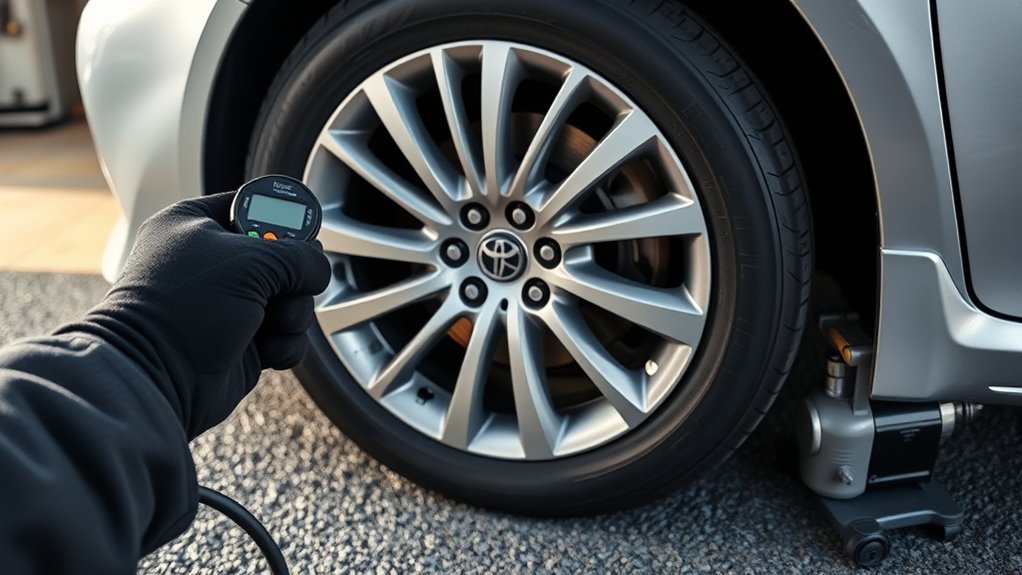
You should set your Toyota Camry Hybrid tires to the cold tire pressure listed on the driver-side door placard, not a generic number or the maximum PSI printed on the tire sidewall. Many Camry Hybrid trims fall in the low-to-mid 30s PSI range, but your exact model year, tire size, trim, and load rating matter. Check the pressure with a reliable gauge when the tires are cold, then adjust each tire to the placard value before long trips and at least once a month.
Quick Answer
Most Toyota Camry Hybrid owners should use the cold PSI shown on the driver-side door placard. That spec is often around 32 to 35 PSI, depending on year, trim, and tire size. Check tires when cold, use a gauge, and never use the sidewall maximum as your daily target.
Key Takeaways
- Use the door-jamb Tire and Loading Information Label as your first source for Camry Hybrid tire pressure.
- Check pressure when tires are cold, ideally before driving or after the car has been parked for at least three hours.
- Do a monthly pressure check at minimum, and check again before long trips or major temperature swings.
- Low PSI can raise heat, wear, and fuel use; high PSI can reduce comfort and cause uneven tread wear.
- The TPMS light helps, but it does not replace a manual gauge check.
At a Glance
| Time Required | 5 to 10 minutes |
| Difficulty | Easy |
| Tools Needed | Tire pressure gauge, air pump, and your driver-side door placard or owner’s manual |
| Cost | Usually free at home or a service center; some public air pumps may charge a small fee |
What Is the Right Camry Hybrid Tire Pressure?
The right Toyota Camry Hybrid tire pressure is the cold PSI printed on your vehicle’s Tire and Loading Information Label. You’ll usually find that label on the driver-side door edge, door jamb, or B-pillar. If the label is missing or unreadable, use your Toyota owner’s manual for your exact model year.
Many Camry Hybrid models use a pressure in the low-to-mid 30s PSI range, but don’t treat 34 or 35 PSI as a universal rule. The correct number can change by trim, wheel size, tire size, and market. Toyota sets the placard pressure so the tires can carry the vehicle safely while supporting braking, handling, ride comfort, tread wear, and fuel efficiency.
Warning: Do not use the maximum PSI printed on the tire sidewall as your daily driving target. That number is a tire limit, not the Toyota-recommended pressure for your Camry Hybrid.
Where Can You Find the Door Sticker?
You’ll usually find the Camry Hybrid door sticker on the driver’s side door jamb or B-pillar. Open the driver’s door and look along the frame near the latch area. The label lists the recommended cold tire pressure, original tire size, seating capacity, and load information.
This sticker is your most reliable starting point because it matches the way Toyota configured your specific vehicle. If you changed wheel sizes, installed non-original tires, or bought the car used, compare the tire size on the sidewall with the size shown on the label. If they do not match, ask a qualified tire shop or Toyota service center to confirm the correct inflation pressure for your setup.
Note: The placard pressure is a cold pressure. Cold tires means the car has been parked for at least three hours or driven only a very short distance at low speed.
Why Camry Hybrid Tire Pressure Matters
Correct tire pressure affects how your Toyota Camry Hybrid steers, brakes, rides, and uses fuel. It also helps the tire tread sit evenly on the road. When pressure drifts too low or too high, the tire no longer works the way Toyota intended.
Safety and Control
Proper tire pressure helps your Camry Hybrid stay predictable when you brake, turn, or drive in wet weather. When the tire has the right air pressure, the contact patch stays more consistent. That helps the car respond cleanly to steering input and gives the tread a better chance to grip the road.
Underinflation can make the sidewall flex too much. Overinflation can make the tire feel stiff and reduce ride comfort. Either problem can make the car feel less stable, especially during quick lane changes, emergency braking, or rough-road driving.
Tire Wear and Heat
Low tire pressure makes the tire flex more as it rolls. That flex creates heat, and heat can weaken the tire over time. It also wears the tread faster, especially near the shoulders of the tire.
High pressure can create a harsher ride and may increase wear near the center of the tread. If you keep pressure close to the placard value, you help the tread wear more evenly and reduce avoidable tire stress.
Fuel Economy Benefits
Correct inflation helps your hybrid avoid wasting energy through extra rolling resistance. According to FuelEconomy.gov, keeping tires inflated to the proper pressure can improve gas mileage by 0.6% on average and up to 3% in some cases. It also notes that underinflated tires can lower gas mileage by about 0.2% for every 1 PSI drop in the average pressure of all tires.
A small pressure loss may not look obvious from outside the tire, but it can still affect fuel economy, tire life, and handling.
What Happens When PSI Is Too Low or Too High?
If your Toyota Camry Hybrid runs below the placard pressure, the tires can flex too much, build heat, wear faster, and use more fuel. If the PSI climbs too high, the ride can feel harsh and the tread may wear unevenly. Staying near the placard pressure helps protect braking, steering response, tread life, and efficiency.
Low PSI Risks
Low pressure is one of the most common tire-maintenance problems because tires can lose air slowly over time. A nail, leaking valve stem, damaged rim, or temperature drop can also lower pressure. Your TPMS light may turn on when pressure falls significantly, but you should not wait for that warning before checking with a gauge.
| Low PSI effect | What it can cause |
|---|---|
| More sidewall flex | Heat buildup and faster tire wear |
| Higher rolling resistance | Lower fuel economy |
| Reduced stability | Weaker steering response and longer emergency-control recovery |
| Severe underinflation | Higher risk of tire damage or failure |
High PSI Risks
High PSI can happen when you add too much air, set pressure when the tires are hot, or rely on the tire sidewall number instead of the door placard. Overinflated tires can feel firm over bumps and may wear unevenly across the tread.
If your gauge reading is above the placard value when the tires are cold, release air slowly by pressing the valve stem. Recheck often so you do not overshoot the target. If the pressure only looks high after driving, let the tires cool before making a final adjustment.
Safety and Wear Effects
Both low and high pressure can shorten tire life. Low PSI usually stresses the shoulders and sidewalls, while high PSI can increase center-tread wear and ride harshness. Either condition may also make the car feel less settled on rough pavement.
Make pressure checks part of your regular tire routine. While you are checking PSI, look for cracks, bulges, cuts, embedded nails, missing valve caps, or uneven tread wear. If one tire keeps losing pressure faster than the others, have it inspected for a leak.
When Should You Check Tire Pressure?
Check your Toyota Camry Hybrid tire pressure at least once a month, before long trips, and whenever outdoor temperature changes sharply. The National Highway Traffic Safety Administration recommends checking all tires, including the spare if your vehicle has one, when they are cold.
Morning is usually the best time to check because the car has been parked overnight. If you check right after a drive, the tires may read higher because driving warms the air inside them. A hot reading can trick you into releasing air that the tire still needs once it cools.
Pro Tip: Keep a small tire gauge in the glove box or center console. You’ll get a more consistent reading than guessing from the tire’s appearance.
How Do You Adjust Camry Hybrid Tire Pressure?
Adjusting Camry Hybrid tire pressure is simple, but accuracy matters. Work one tire at a time and keep the valve caps in a safe spot so you do not lose them.
- Find the placard PSI. Open the driver’s door and read the cold tire pressure listed on the Tire and Loading Information Label.
- Check tires cold. Press a reliable gauge firmly onto the valve stem until the hissing stops and the gauge gives a stable reading.
- Add air if pressure is low. Use an air pump in short bursts, then recheck with the gauge.
- Release air if pressure is high. Press the valve stem gently with the gauge tip or a small tool, then recheck.
- Match the placard value. Set each tire to Toyota’s recommended cold PSI unless the placard lists different front and rear pressures.
- Reinstall valve caps. Valve caps help keep dirt and moisture out of the valve stem.
- Check the TPMS light. If the warning stays on after proper inflation and driving, inspect for a leak or TPMS issue.
Some Toyota connected features may show vehicle status information on compatible models, but app availability and tire-pressure display can vary by year, trim, equipment, subscription, and region. Use the app only as a convenience. A manual gauge check is still the better way to confirm exact cold pressure.
What Tire Sizes and PSI Fit the Camry Hybrid?
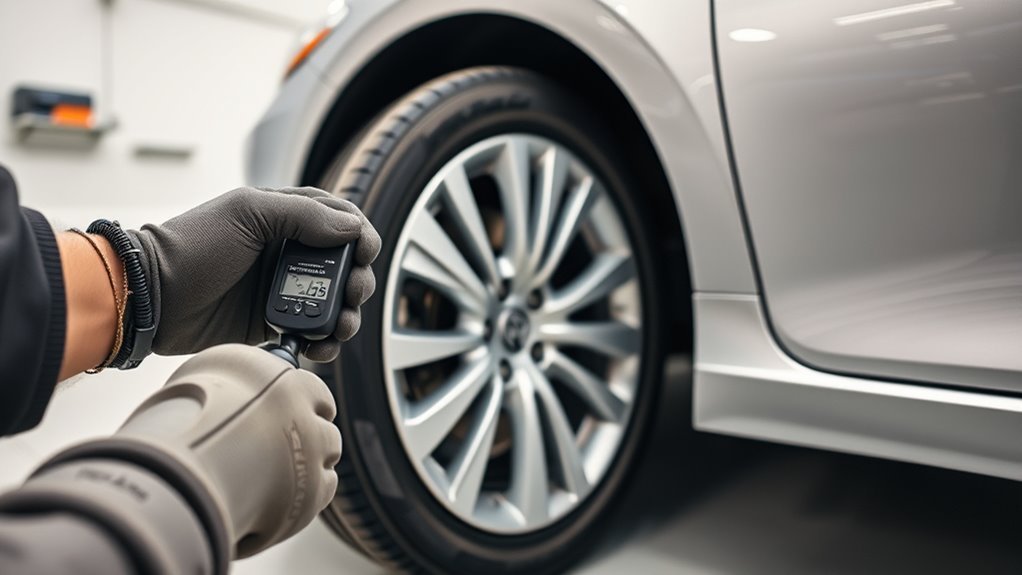
The correct tire size and PSI for a Camry Hybrid depend on the model year and trim. Some trims use smaller wheels and taller-sidewall tires, while others use larger wheels and lower-profile tires. That is why the door placard matters more than a general online answer.
| Where to look | What it tells you | How to use it |
|---|---|---|
| Driver-side door placard | Original tire size and cold PSI | Use this as your main pressure target. |
| Owner’s manual | Factory guidance for your model year | Use it if the label is missing or faded. |
| Tire sidewall | Tire size, load rating, and maximum pressure | Use for identification, not as your daily PSI target. |
| Tire shop or Toyota service center | Fitment and pressure guidance for changed wheel or tire setups | Use when your current tires do not match the placard size. |
If you replace tires, choose the same size and load rating Toyota lists on the placard unless a tire professional confirms a safe alternative. A tire that physically fits the wheel is not always the right match for your Camry Hybrid’s load rating, handling balance, and pressure requirement.
What Should You Do When the TPMS Light Turns On?
If the TPMS warning light turns on, slow down when safe and check all tire pressures with a gauge as soon as possible. Inflate each tire to the placard pressure when cold. If you must add air while the tires are warm, recheck and fine-tune the pressure once the car has been parked long enough for a cold reading.
If the TPMS light flashes for about a minute and then stays on, the system may have a fault. If the light remains on after you set the tires correctly, one tire may still have a leak, or the system may need service. Do not ignore repeated warnings.
[Products Worth Considering]

Monitor tire tread wear with a smart, color-coded depth gauge that shows clear condition ranges at a glance. The bar is range marked for fast, easy readings, helping you maintain safer traction and performance. Each gauge is portable with a pocket clip, and the set includes 20 units for daily use and sharing.

This tire inflator with pressure gauge delivers long-lasting performance with a durable rubber-protected gauge and sturdy build. The longer hose and 360 swivel air chuck help you seal the valve securely and keep your hands free while measuring, inflating, or deflating. It’s battery-free for reliable use and provides ±2 PSI accuracy in the mid-range for most typical tires, with universal compatibility for 1/4 NPT compressor outputs.

Keep your tires properly inflated with this analog VONDIOR tire pressure gauge, designed for fast, easy readings without batteries. The swiveling, two-axis hose and large glow dial help you measure at any tire angle with instant visibility. Built with a protective rubber shield, it supports durable, low-maintenance use for cars and trucks.
When Should You Get Professional Tire Help?
You can handle normal pressure checks yourself, but some tire issues need a technician. Get help if one tire loses pressure repeatedly, the valve stem leaks, the sidewall has a bulge or cut, the tread wears unevenly, the car pulls to one side, or the TPMS warning keeps returning.
Also ask for help before using a tire size that differs from the door placard. A shop can confirm load rating, speed rating, clearance, and safe inflation guidance. That matters more on a hybrid because efficient rolling resistance and stable handling both depend on the right tire setup.
[Products Worth Considering]

Milton S-921 pencil tire pressure gauge helps you maintain optimal tire pressure for passenger cars with accurate readings in PSI and kPa. It features a built-in deflator valve for convenient pressure adjustments, plus a single chuck head and nylon indicator bar for easy use on the go. Built from durable plated brass and designed for reliable performance, it’s a practical road trip and cold-weather maintenance tool.

This tire inflator extension hose helps your air chuck quickly connect and disconnect from the tire nozzle with minimal leakage, supporting more accurate tire pressure. It uses a high-pressure resistant inflatable tube and durable brass chuck adapter for long-lasting performance. The quick-connect 90-degree thumb press chuck converts to a locking style and is easy to operate for car, motorcycle, and bicycle inflations.

Upgrade your Toyota’s wheels with durable aluminum alloy valve stem caps that help protect valve cores from corrosion and direct exposure to road grime, clay, water, and snow. Rubber rings improve sealing to help prevent air leakage and maintain stable tire pressure for safer driving. These caps are easy to install or remove without tools and add a unique, stylish look to your car.
Where Can You Get Camry Hybrid Tire Help in Orlando?
If you need Camry Hybrid tire help in Orlando, Toyota of Orlando lists its location at 3575 Vineland Road, Orlando, FL 32811. Its current site lists Sales at 407-298-4500 and Service at 407-298-0001. You can contact the service department for tire-pressure checks, tire inspections, rotations, and TPMS questions.
If Clermont is closer, Toyota of Clermont lists its address as 16851 State Road 50, Clermont, FL 34711, with Service at 352-404-7001. Before visiting any service center, confirm current hours and appointment availability because schedules can change.
[Products Worth Considering]

The Milton S-693 straight foot dual head air chuck is designed for accurate tire pressure checks and quick, secure valve-core engagement with lock-on threads on both ends. With a 1/4" FNPT connection and a maximum 150 PSI rating, it’s built for use on inner duals and common vehicle tires, including trucks and RVs.
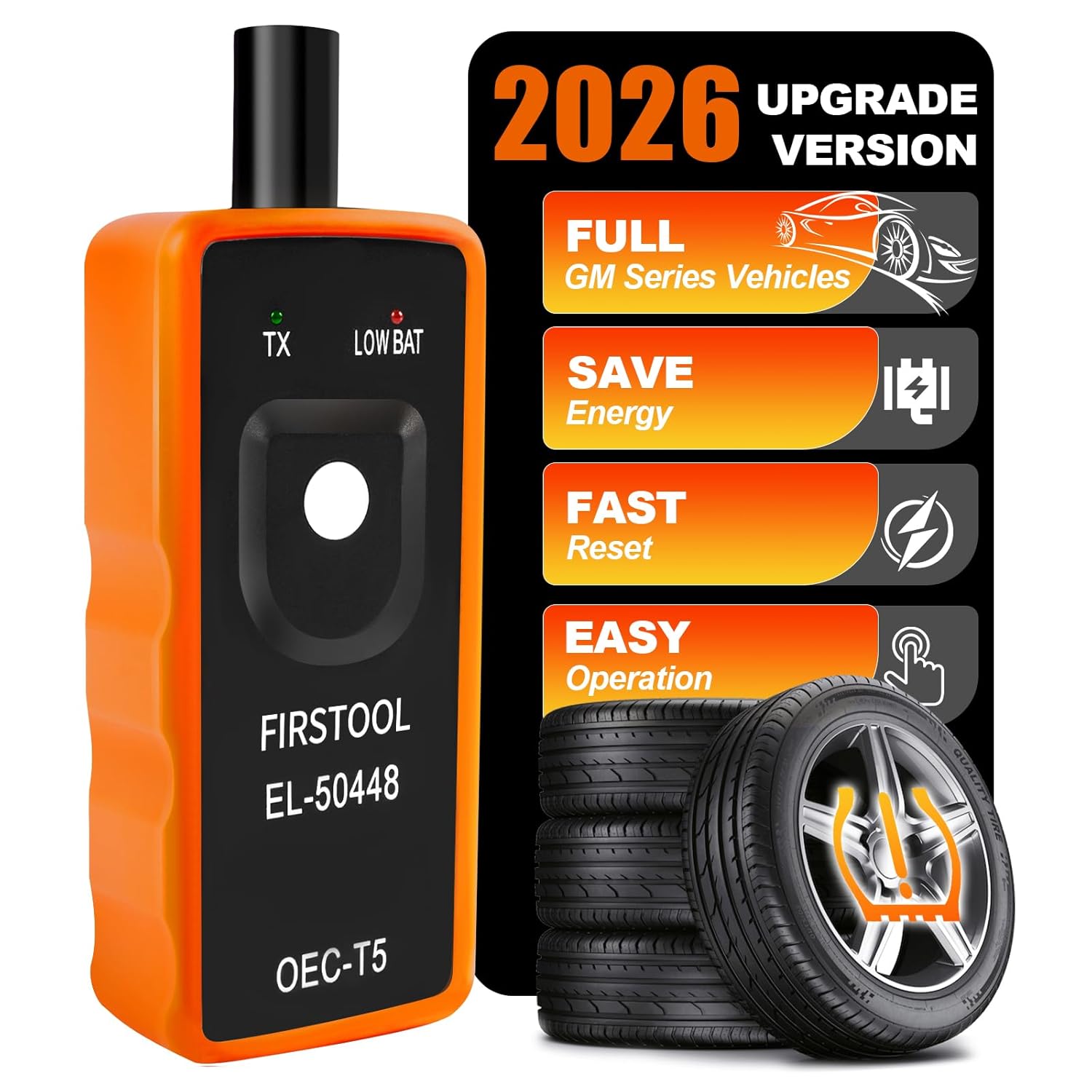
This TPMS relearn tool helps you quickly activate, match, and reset GM tire pressure sensors to keep the vehicle monitoring system working properly. It clears tire pressure alarms and dashboard warning lights after sensor replacement or tire rotation, and supports learning for common 315/433 MHz TPMS sensors. Designed for simple one-button operation, it can help you avoid unnecessary trips to repair shops.

AstroAI’s heavy-duty digital tire pressure gauge delivers quick, accurate readings with 0.1 increments and a secure valve-stem seal. It features a green backlit LCD and built-in flashlight for easy use in low light, plus an ergonomic non-slip stainless-steel design. The wide 0–230 PSI range works across common vehicle tires, with unit selection and an auto shut-off to save battery.
Frequently Asked Questions
Is 37 PSI too high for a Toyota Camry?
It may be too high if your door placard lists a lower cold pressure, such as 32 to 35 PSI. Check the pressure when the tires are cold. If 37 PSI is above the placard value, release air slowly and recheck with a gauge.
Is 40 PSI too much for a Camry?
For normal driving, 40 PSI is usually higher than the recommended cold pressure for many Camry models. Use the driver-side door placard instead of guessing. If your cold reading is 40 PSI and the placard lists a lower number, reduce the pressure.
Is 45 PSI too high for a Toyota Camry?
Yes, 45 PSI is too high for normal daily driving if your placard calls for a low-to-mid 30s cold pressure. Do not drive on a severely overinflated tire unless you have no safe alternative. Lower it to the placard value when the tire is cold.
Should all four Camry Hybrid tires have the same PSI?
Often, yes, but always follow the door placard. Some vehicles list the same front and rear pressure, while others may list different values. If the placard separates front and rear PSI, use those exact values.
Why did my tire pressure change after the weather changed?
Air pressure changes with temperature. Cold weather can lower PSI, while hot weather and driving can raise the reading. That is why you should check pressure when the tires are cold and recheck during seasonal temperature swings.
Conclusion
You can keep your Toyota Camry Hybrid safer, smoother, and more efficient by following the cold tire pressure on the driver-side door placard. For many Camry Hybrid trims, that number falls around the low-to-mid 30s PSI range, but the exact value on your vehicle matters most.
Check the pressure at least monthly, before long trips, and during sharp weather changes. Use a reliable gauge, adjust when tires are cold, and inspect for leaks or damage if one tire keeps losing air. The TPMS warning helps, but your best routine is still a simple manual pressure check.
Sources
- Toyota Manuals and Warranties — backs up using the correct Toyota owner’s manual for your model year.
- NHTSA TireWise — backs up cold tire checks, placard pressure, monthly inspections, TPMS limits, tread safety, and tire maintenance.
- FuelEconomy.gov: Keeping Your Vehicle in Shape — backs up the fuel-economy effect of proper tire inflation.
- Toyota of Orlando — backs up current Orlando dealership contact and location details.
- Toyota of Clermont — backs up current Clermont dealership contact and location details.