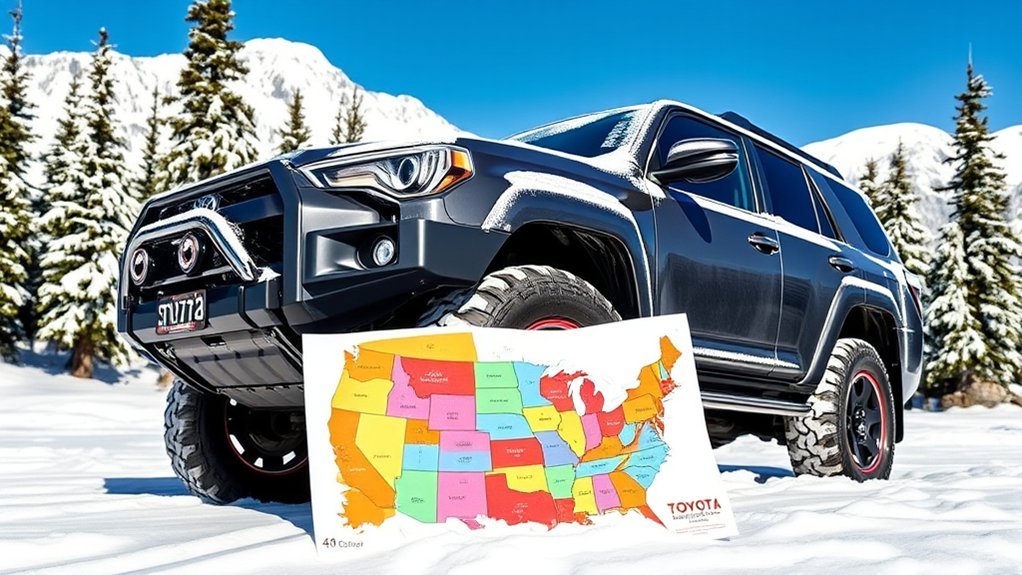
Winter chain rules for a Toyota 4Runner depend on your route, the restriction posted at the time, your drivetrain, your model year, and your exact tire size. Four-wheel drive may qualify you for an exemption under a lower restriction level, but it does not guarantee that you can travel without carrying or installing an approved traction device.
Quick Answer
Check your 4Runner owner’s manual and tire size before buying chains. Toyota commonly specifies rear-tire installation, but some tire packages cannot accept chains. Follow current highway signs: even a 4WD 4Runner may need chains under the strictest control level. Drive no faster than 30 mph or the chain maker’s lower limit.
Key Takeaways
- Verify your model year, trim, drivetrain, and tire size before selecting a traction device.
- Do not assume 4WD creates a universal exemption. The strictest chain-control levels apply to every vehicle.
- Current Toyota guidance for the 2025 4Runner places permitted chains on the rear tires, but chains cannot be mounted on 265/70R18 tires.
- Install chains only in a safe chain-up area, retighten them after a short distance, and remove them when the restriction ends or pavement becomes bare.
- State rules and fine amounts change. Current signs, temporary orders, and law-enforcement directions control.
Note: This guide provides general safety and legal information, not legal advice. Check your route’s official travel page immediately before departure because temporary restrictions can change during a storm.
State-Specific Tire Chain Laws for a Toyota 4Runner
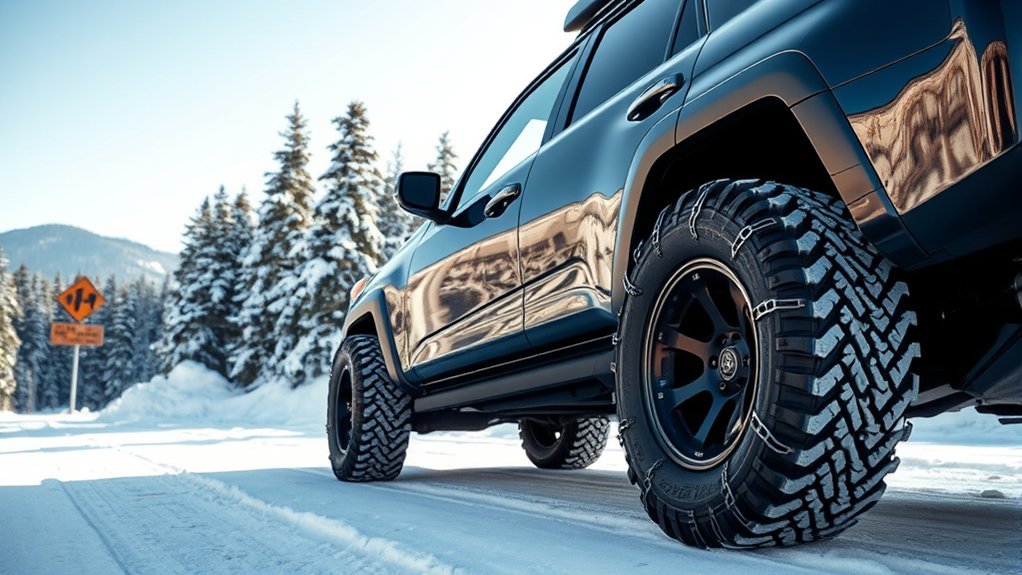
Most states do not use one permanent rule for every road. Transportation agencies activate chain or traction requirements according to snow, ice, visibility, elevation, vehicle weight, and whether you are towing. Read the signs at the control point even if an app, website, or earlier road report gave different information.
| State | What a 4Runner Driver Should Know |
|---|---|
| California | Caltrans uses R1, R2, and R3 chain controls. At R2, a 4WD or AWD vehicle with qualifying snow-tread tires on all four wheels may proceed without installed chains, but it must carry traction devices. R3 requires chains or traction devices on every vehicle with no exemption. |
| Colorado | Colorado’s passenger-vehicle requirements apply on the I-70 Mountain Corridor from September 1 through May 31 and may be activated on other highways. A 4WD or AWD 4Runner may comply with qualifying winter-rated tires with at least 3/16-inch tread under the Passenger Vehicle Traction Law. When the stricter Passenger Vehicle Chain Law is active, every vehicle must use chains or an approved alternative traction device on at least two drive tires. |
| Oregon | Oregon signs tell drivers when to carry or use chains or traction tires. A light-duty 4Runner at or below 10,000 pounds that is not towing may often use qualifying traction tires when the posted level permits. During a severe conditional closure, chains may be required even on four-wheel-drive vehicles. |
| Washington | Washington requires the traction device shown on posted signs. Certain all-wheel-drive vehicles can qualify for an exemption at a lower control level when properly equipped, but chains for at least one set of drive tires must still be carried. Follow the sign and current Washington State Patrol requirements for your drivetrain. |
| Alaska | Alaska restricts the use of attached chains on paved roads during specified warm-season periods. The dates differ north and south of 60 degrees north latitude, and emergency orders or individual permits may create exceptions. Check current Alaska road and legal information before traveling. |
These examples show why a national “allowed” or “banned” list is not enough. A state may allow chains during snow and ice, prohibit unnecessary use on clear pavement, require you to carry them on a mountain route, or order every vehicle to install them during a severe storm.
Warning: Do not drive past a posted chain-control point because your 4Runner has 4WD. Four-wheel drive helps the vehicle move, but it does not remove the legal requirement or give your tires extra braking grip on ice.
Choosing the Right Tire Chains for Your 4Runner
Start with your exact Toyota owner’s manual. Do not buy a chain set based only on the words “Toyota 4Runner” in a product listing. Clearance and installation rules can change by model year, wheel size, tire size, suspension package, and aftermarket modifications.
For example, the 2025 Toyota 4Runner Hybrid owner’s manual directs owners to use permitted chains on the rear tires. It also states that chains cannot be mounted on 265/70R18 tires because the space between the tire and body is too narrow. Owners of older or different 4Runner configurations must check the manual written for their vehicle.
[Products Worth Considering]

Vigorder rubber cement glue delivers superior adhesion and cures quickly within about 30 seconds for seamless rubber bonding. Once cured, it helps provide a strong, durable, waterproof seal that holds up to vehicle weight, pressure, and heat. Suitable for cars, motorcycles, trucks, bicycles, and off-road tires, it’s designed for emergency patch and maintenance repairs.

These aluminum alloy tire valve stem caps with an O-ring seal help protect valve stems from corrosion while adding a clean, stylish look to your vehicle. The universal fit works across cars, trucks, motorcycles, bicycles, and more, making them an easy upgrade for everyday driving and off-road use. Installation is quick, and the included four-pack keeps all your tires dressed and protected.

These universal tire valve stem caps help protect valve cores from dust, debris, and moisture while helping maintain stable tire pressure. The corrosion-resistant metal construction and sealed design provide reliable protection in road grime, mud, and winter conditions. Twist-on installation makes them quick to fit on cars, SUVs, trucks, and motorcycles.
Check These Details Before Buying
- Model year and trim: Confirm the manual applies to your exact vehicle.
- Tire size: Read the size molded into the tire sidewall, such as 265/70R17 or 265/70R18.
- Drivetrain: Identify whether your 4Runner is two-wheel drive, part-time four-wheel drive, or full-time four-wheel drive.
- Clearance: Check for suspension, brake-line, steering, and body clearance limits.
- Chain dimensions: Match the chain manufacturer’s size chart to the full tire size.
- Legal approval: Confirm that the device is accepted by every state or highway authority on your route.
- Aftermarket changes: Lift kits, oversized tires, wheel spacers, and nonfactory wheels can change clearance and fit.
Chain and Traction-Device Options
| Device | Potential Benefit | Important Limit |
|---|---|---|
| Link chains | Strong traction in deep snow and packed ice when the vehicle has enough clearance. | May not fit low-clearance wheel wells and can cause serious damage if loose. |
| Cable devices | Often use less space than heavy link chains. | They still need manual approval, correct sizing, and legal acceptance. |
| Low-profile chains | Designed for vehicles with restricted clearance. | “Low profile” does not make a device safe for a tire size Toyota prohibits. |
| Fabric or alternative traction devices | Can be lighter and easier to install for short snow-covered sections. | Use one only when Toyota permits it and the road authority lists or accepts it as an approved alternative. |
Pro Tip: Practice fitting the exact device at home in dry weather. Wear the same gloves you will carry in the vehicle, then store the chains, instructions, tensioners, and waterproof kneeling mat together.
How to Install 4Runner Tire Chains Safely
Chain designs vary, so follow the instructions supplied with your traction device. The following process covers the safety steps that apply to most installations without replacing the manufacturer’s fitting directions.
- Stop before traction is lost. Enter a designated chain-up area or pull completely away from moving traffic onto a level, stable surface.
- Secure the vehicle. Shift into Park, apply the parking brake when conditions allow, turn on the hazard lights, and keep passengers away from traffic.
- Confirm the correct axle. Use the axle and tire position specified in your Toyota manual. Current 4Runner guidance commonly specifies the rear tires, but your exact manual controls.
- Inspect the device. Untangle the chains and check for broken links, damaged cables, twisted sections, or missing fasteners.
- Fit and tension the device. Center it over the tire, connect it according to the manufacturer’s sequence, and secure all loose ends.
- Move the vehicle only as instructed. Some designs require moving a short distance to complete fitting. Follow the product directions.
- Retighten after a short distance. Toyota advises checking permitted chains after approximately 0.25 to 0.5 mile. Stop in another safe area before making adjustments.
- Listen and inspect. Stop immediately if you hear striking, slapping, or scraping, or if the vehicle begins to vibrate unusually.
Never deflate a tire to force an undersized chain onto it. Do not install a device on a tire size that Toyota identifies as unsuitable. A loose or incorrect chain can damage the tire, wheel, brake hose, suspension, bodywork, and tire-pressure monitoring components.
[Products Worth Considering]

Upgrade your Toyota’s wheels with durable aluminum alloy valve stem caps that help protect valve cores from corrosion and direct exposure to road grime, clay, water, and snow. Rubber rings improve sealing to help prevent air leakage and maintain stable tire pressure for safer driving. These caps are easy to install or remove without tools and add a unique, stylish look to your car.

This professional wheel and rim brush kit makes it easy to lift brake dust, grime, and dirt from wheels and tires without scratching finishes. The brushes feature soft, metal-free wool heads and a flexible 360-degree rim brush design for reaching hard-to-clean areas. Includes multiple brush types plus accessories for thorough car, motorcycle, and general vehicle detailing.

This 3-piece wheel brush set makes it easy to clean wheels and tires with soft, scratch-free brushes designed for lifting brake dust and grime. The flexible rim brush bends up to 360 degrees to reach hard-to-access areas for a thorough clean, while the comfortable grip helps control during detailing. A dedicated detailing brush supports gentle cleaning for sensitive surfaces, including interior use.
Understanding Fines for Non-Compliance
Chain-law penalties change and may include surcharges. The offense can also become more serious when an unprepared vehicle spins out, blocks a travel lane, delays emergency vehicles, or causes a closure. Treat the following amounts as current official examples, not a permanent nationwide fine chart.
| State | Officially Reported Example | What Increases the Risk |
|---|---|---|
| Colorado | Colorado State Patrol lists a fine of up to $500 plus a $79 surcharge for non-compliance and $1,000 plus a $157 surcharge when a vehicle is stuck and blocks a traveled portion of the roadway. | Entering an active restriction without compliant tires, chains, or an approved device, especially when the vehicle obstructs traffic. |
| Washington | Washington transportation guidance warns that drivers who fail to install chains when signs require them can face a $500 ticket. | Ignoring a posted requirement or entering a controlled pass without the required equipment. |
| Other states | The amount depends on the current statute, vehicle category, route, and consequences of the violation. | Towing, commercial weight, road damage, blocking traffic, or disobeying an officer can change the violation. |
Pay attention to whether a rule says you must carry chains, install chains, use qualifying traction tires, or fit an approved alternative traction device. Those requirements are not interchangeable.
Best Practices for Safe Driving With Tire Chains
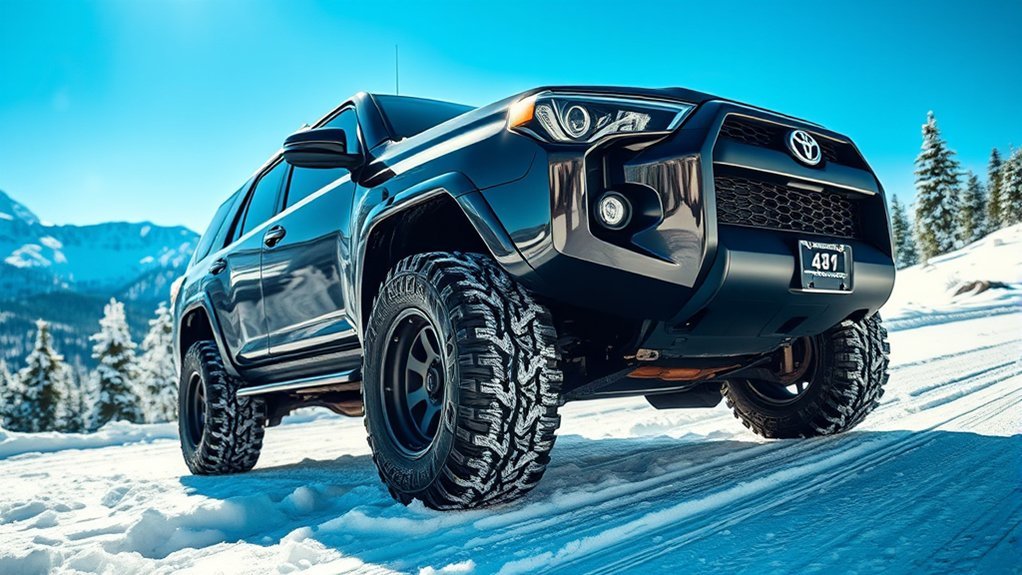
Chains improve traction, but they do not make normal dry-road speeds or sudden steering safe. Toyota and Oregon guidance set 30 mph as an upper limit. Use the lower limit when the chain manufacturer or posted road sign specifies a slower speed.
- Accelerate gently: Avoid spinning the tires or applying sudden throttle.
- Brake early: Increase following distance and use smooth pressure.
- Steer gradually: Abrupt turns can upset the vehicle or dislodge a chain.
- Slow before curves: Do not wait until the middle of a turn to reduce speed.
- Avoid potholes and exposed obstacles: Hard impacts can damage or loosen the device.
- Do not use cruise control: Maintain direct control of speed on snow and ice.
- Check the chains regularly: Pull over safely if you hear contact with the body or suspension.
- Remove them promptly: Take the chains off after the chain-control zone ends or when you reach sustained bare pavement.
Four-wheel drive can help your 4Runner start moving in snow, but your tires and road speed still determine how well it turns and stops.
[Products Worth Considering]

This professional wheel and rim cleaning brush set lifts brake dust, grime, and dirt with soft, scratch-free microfiber and synthetic wool fibers. The rim brush bends up to 360 degrees for easy access to hard-to-reach areas around spokes, lips, and faces. Ideal for thorough cleaning of car, truck, motorcycle, bicycle, RV, and more wheel and tire surfaces.
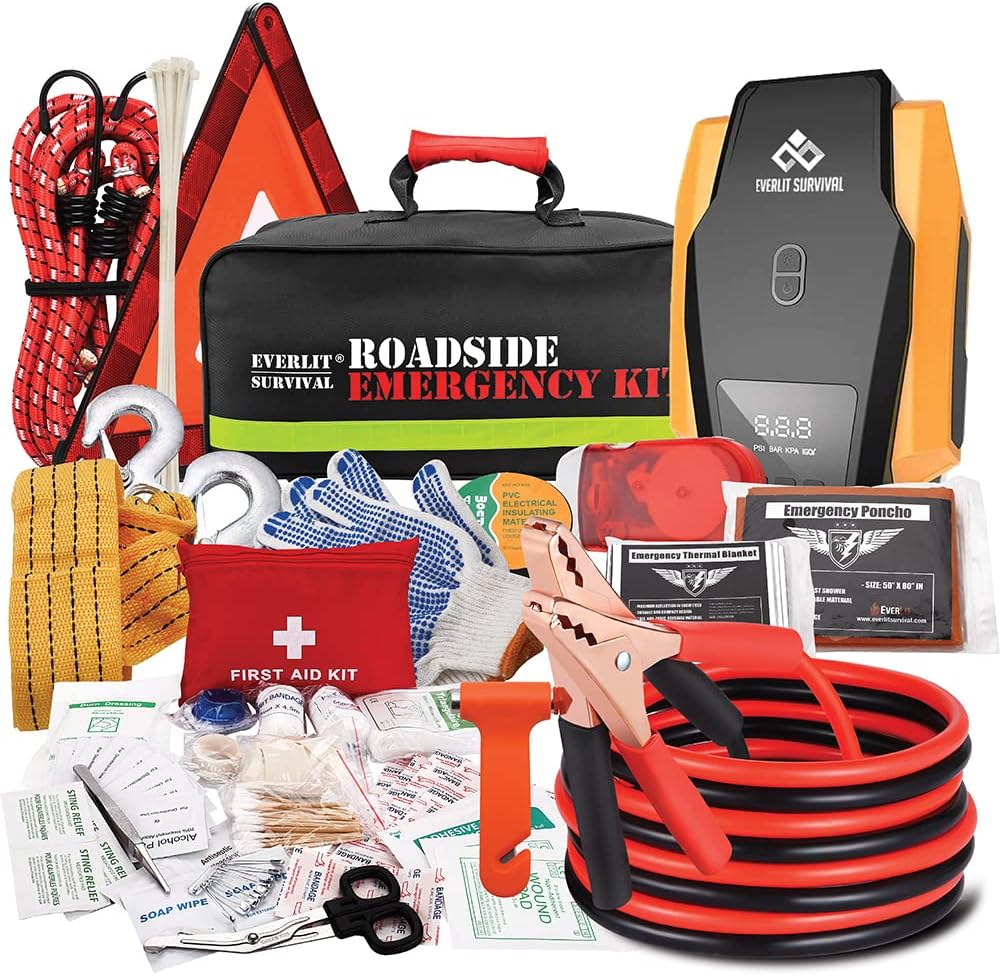
The Everlit Road Guardian emergency kit is designed for roadside breakdowns, combining essential safety gear and roadside tools in one compact bag. It includes a digital 12V auto tire inflator with preset and auto shutoff, plus 12-foot 8-gauge jumper cables to get you moving again. You also get a full 108-piece first aid kit, reflective warning tools, safety gloves, and emergency convenience items for safer travel.

Adam’s Pro Tire Hex Grip applicators are molded foam sponges designed for precise, even tire dressing application. The ergonomic grip helps you spread product without overapplying, reducing sling that can splash onto paint and helping keep your hands clean during wheel and trim detailing. They’re durable, washable, and reusable for repeated detailing sessions.
What to Do if a Chain Breaks or Comes Loose
- Reduce speed smoothly without making a sharp steering movement.
- Pull completely out of the travel lane at the first safe location.
- Turn on your hazard lights and keep passengers inside when traffic conditions make roadside movement unsafe.
- Remove or repair the damaged device before continuing.
- Inspect the tire, brake hose, wheel well, suspension, and bodywork for visible damage.
- Do not continue using a damaged chain or cable.
Carrying Winter Equipment
Store the chains where you can reach them without unloading all your luggage. A practical winter kit also includes waterproof gloves, a reflective vest, flashlight, kneeling mat, ice scraper, shovel, warm clothing, drinking water, and a charged phone or power bank.
Towing With a 4Runner During Chain Controls
Towing can remove an exemption that would otherwise apply to a four-wheel-drive vehicle. California, Oregon, and other states may require chains on the tow vehicle and on an axle of a trailer equipped with brakes. The exact placement depends on the sign, trailer configuration, state rule, and vehicle weight.
Check the trailer requirements separately before departure. Carrying one pair for the 4Runner may not provide enough devices to comply when towing. Severe conditions can also make a technically legal trip unsafe, especially on steep grades or exposed mountain passes.
What to Do if You’re Stopped for Non-Compliance
If an officer or highway worker stops you at a chain-control point, pull over where directed and remain calm. Do not continue into the restricted area while arguing that your 4Runner has four-wheel drive.
- Follow the officer’s or road worker’s instructions.
- Provide your driver’s license, registration, and insurance information when lawfully requested.
- Explain what traction equipment and tires you have without making unsupported claims about an exemption.
- Ask where you can safely turn around or install the required devices.
- Do not attempt installation in a traffic lane or other prohibited location.
- Read any citation carefully and use the listed court or agency process if you want to contest it.
If you are denied access, return to a safe location and check the official road authority’s current restriction. Do not rely on an old screenshot, a general blog post, or a weather app that does not show the active chain-control level.
Frequently Asked Questions
Do chains go on the front or rear of a Toyota 4Runner?
Check the manual for your exact model year and tire package. Current Toyota guidance for the 2025 4Runner specifies rear-tire installation when chains are permitted. Do not install chains on the front unless your exact Toyota manual expressly directs you to do so.
Can every Toyota 4Runner tire size use chains?
No. Clearance depends on the year, trim, wheel, and tire size. Toyota’s 2025 4Runner guidance states that chains cannot be mounted on 265/70R18 tires because the space between the tire and body is too narrow. Check your own manual before purchasing a device.
Are tire chains illegal in some states?
Rules vary, but a simple banned-state list is misleading. Many states permit chains when snow or ice makes them necessary while restricting unnecessary use on clear pavement. Other states require chains on designated routes when signs are active. Always check the official rule for your route.
Are tire chains illegal in Ohio?
No. Ohio’s studded-tire law expressly allows tire chains when snow or ice exists on the street or highway or in the immediate area. Drivers should remove them when conditions no longer justify their use so they do not damage the road.
Do I need chains on all four tires of a 4WD 4Runner?
Not normally when Toyota specifies one rear-axle set. However, the posted legal requirement and your manual both matter. A state may require approved devices on a specified number of drive tires, while Toyota may prohibit chains on certain positions or tire sizes. Never add front chains solely because the road feels slippery.
How fast can I drive a 4Runner with tire chains?
Do not exceed 30 mph, the posted chain-zone speed, or the traction-device manufacturer’s limit, whichever is lowest. Reduce speed further when visibility, traffic, curves, ice, or chain vibration makes 30 mph unsafe.
Can I drive on dry pavement with chains?
Avoid sustained driving on bare pavement. It causes rapid wear, reduces ride quality, and can damage the chains, tires, road surface, and vehicle. Continue beyond the end-of-control sign only far enough to reach a safe removal area.
Conclusion
Your Toyota 4Runner’s four-wheel-drive system does not replace the need to understand chain controls. Before entering winter mountain routes, verify the current restriction, inspect your tire size, read the manual for your exact model year, and carry a device that is both legally approved and safe for the vehicle.
Install chains only in a safe location, use the axle Toyota specifies, retighten them after a short distance, and stay below the lowest applicable speed limit. When the manual prohibits chains on your tire package, use only a Toyota-permitted and legally approved alternative or change your travel plan.
Sources
- Toyota 2025 4Runner Hybrid Owner’s Manual: Winter Driving Tips — rear-tire placement, tire-size restriction, retightening distance, and maximum chain speed.
- California Department of Transportation: Chain Controls — California R1, R2, and R3 requirements.
- Colorado State Patrol: Chain Law Information — current passenger-vehicle traction rules, chain requirements, tread standards, and penalties.
- Oregon Department of Transportation: Chains and Traction Tires — light-duty requirements, traction-tire alternatives, towing rules, and conditional closures.
- Washington Administrative Code 204-24-050 — posted chain requirements and vehicle exemptions.
- Ohio Revised Code §5589.081 — lawful chain use when snow or ice exists.