
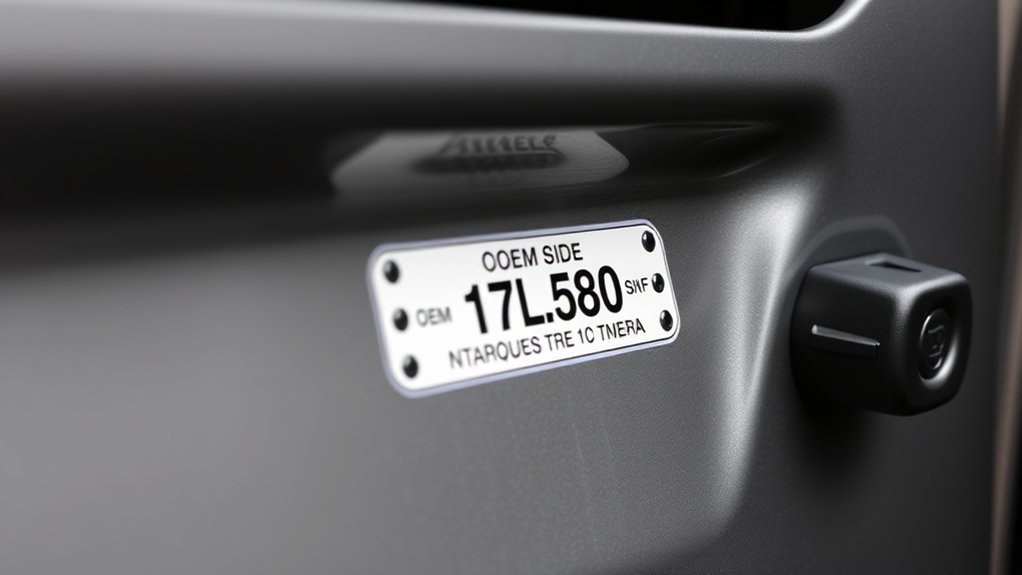
Your Toyota Tacoma’s recommended tire pressure is printed on the Tire and Loading Information Label in the driver-side door area. Use that vehicle-specific cold PSI instead of a generic online number or the maximum pressure molded into the tire sidewall. The exact specification may vary by model year, trim, wheel size, tire size, and spare-tire type.
Quick Answer
Open the driver’s door and look on the door jamb or B-pillar for your Tacoma’s Tire and Loading Information Label. It lists the recommended cold PSI, factory tire size, and load information. If the label is missing or unreadable, use the owner’s manual for your exact model year or contact a Toyota dealer with your VIN.
Key Takeaways
- The Tacoma tire-pressure label is normally on the driver-side door jamb, door edge, or B-pillar.
- Use the cold PSI printed on your own truck’s label, because Tacoma specifications vary by configuration.
- The pressure molded into the tire sidewall is a maximum limit, not the normal vehicle recommendation.
- Check every tire, including the spare, at least monthly and before long trips, towing, or carrying a heavy load.
- TPMS is a warning system, not a substitute for checking pressure with an accurate gauge.
At a Glance
| Time Required | About 5–10 minutes |
| Difficulty | Easy |
| Tools Needed | Accurate tire-pressure gauge and an air source |
| Cost | No additional cost if you already have a gauge and air source |
Finding the Tire Pressure Sticker on Your Tacoma
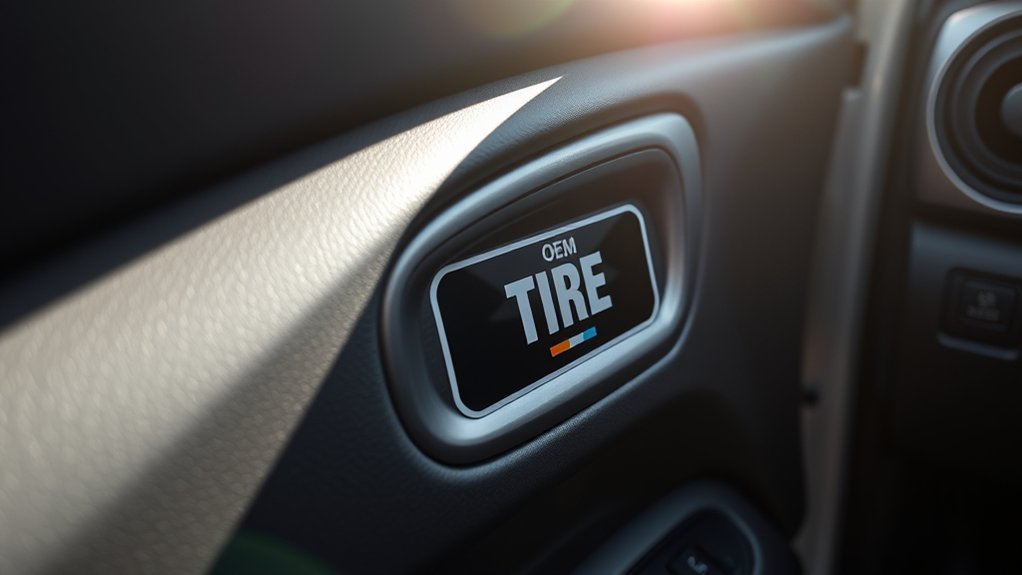
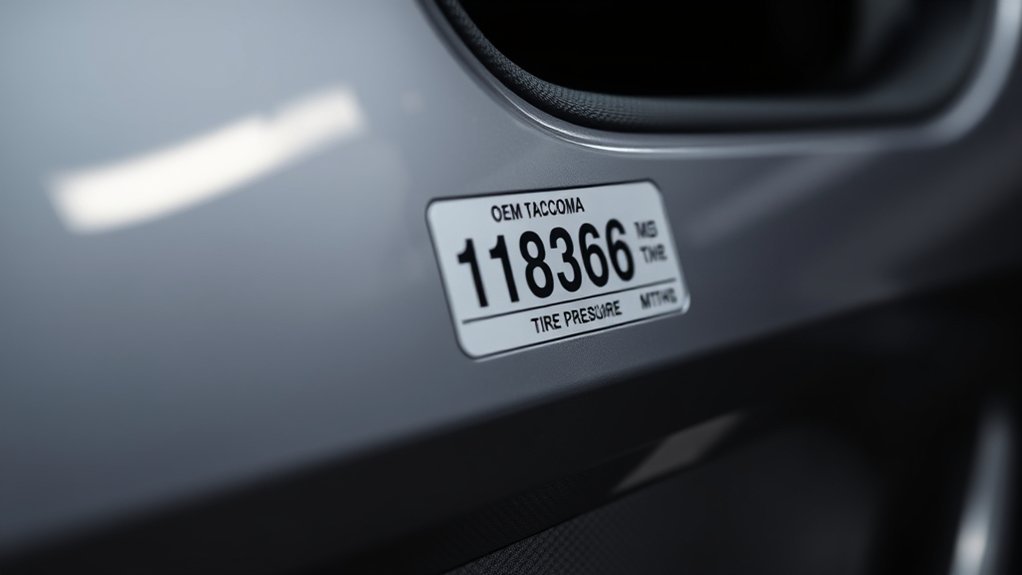
Open the driver’s door and inspect the vertical body pillar beside the driver’s seat. On most Tacomas, the Tire and Loading Information Label is attached to this driver-side door jamb or B-pillar. It is usually a rectangular white-and-yellow label.
If you do not see it on the pillar, inspect the rear edge of the driver’s door and the inward-facing surfaces around the driver’s seating position. These are recognized alternative label locations. The National Highway Traffic Safety Administration also recommends checking the owner’s manual when the label cannot be located.
Note: Authoritative Toyota and NHTSA guidance identifies the driver-side door area and owner’s manual as the proper references. Do not assume your Tacoma has a secondary tire-pressure label inside the fuel door.
If the original label is damaged, painted over, or missing, do not copy a pressure from another Tacoma. Use Toyota’s model-year-specific manual or ask a Toyota dealer to identify the correct specification from your VIN.
Pro Tip: Take a clear photo of the label and save it on your phone. You will have the correct tire size, pressure, and load information available when using an air pump or replacing a tire.
How to Read the Tacoma Tire-Pressure Sticker
The label contains more than one PSI number. Read each field carefully instead of assuming every tire uses the same pressure.
- Recommended cold tire pressure: The normal front and rear pressure specified by Toyota when the tires are cold.
- Front and rear positions: Some configurations use the same pressure at both ends, while others may specify different values.
- Original tire size: The factory tire-size designation associated with the listed pressure.
- Spare-tire pressure: A compact or differently sized spare may require a separate pressure.
- Seating and load limit: The label may state the number of occupants and the combined weight limit for passengers and cargo.
- PSI and kPa: Pressure may be shown in pounds per square inch and kilopascals.
Use the pressure for the correct tire position. Do not automatically make every tire equal when the label lists different front and rear values.
Why There Is No Universal Tacoma Tire Pressure
Toyota Tacoma pressure specifications vary by model year, trim, drivetrain, wheel size, tire size, and spare-tire configuration. For example, Toyota’s 2024 Tacoma maintenance data lists several factory configurations with recommended cold pressures including 30, 32, and 35 PSI. Some spare tires have a separate specification.
Those numbers are examples, not a universal recommendation for every Tacoma. The label on your own truck remains the primary reference because it matches the vehicle’s original factory setup.
Warning: Do not inflate your Tacoma to the maximum PSI molded into the tire sidewall unless that value is specifically required for an approved application. The sidewall number is the tire’s maximum cold-pressure limit, not Toyota’s normal pressure recommendation for your truck.
How to Check and Adjust Tacoma Tire Pressure
- Park long enough for the tires to cool. Check them after the Tacoma has been parked for at least three hours. A short drive of roughly one mile or less at low speed may also qualify as cold under standard tire definitions.
- Find the correct PSI. Read the driver-side Tire and Loading Information Label and note any different front, rear, or spare values.
- Remove the valve cap. Keep it somewhere clean so dirt and moisture do not enter the valve.
- Measure the pressure. Press an accurate gauge firmly onto the valve stem until the hissing stops, then read the result.
- Add air when pressure is low. Inflate in short bursts and recheck frequently.
- Release air when pressure is high. Press the valve core briefly, then measure again.
- Check every tire. Include the spare if your Tacoma carries one.
- Replace each valve cap. Inspect for valve leaks, cuts, bulges, punctures, or visibly low tires while you work.
The NHTSA tire-pressure procedure recommends checking all tires monthly when cold and comparing the gauge reading with the vehicle manufacturer’s placard.
Warning: Pressure naturally rises while driving. Do not bleed a warm tire down to the cold placard number, because the tire may become underinflated after it cools. Recheck and make the final adjustment when the tire is cold.
[Products Worth Considering]
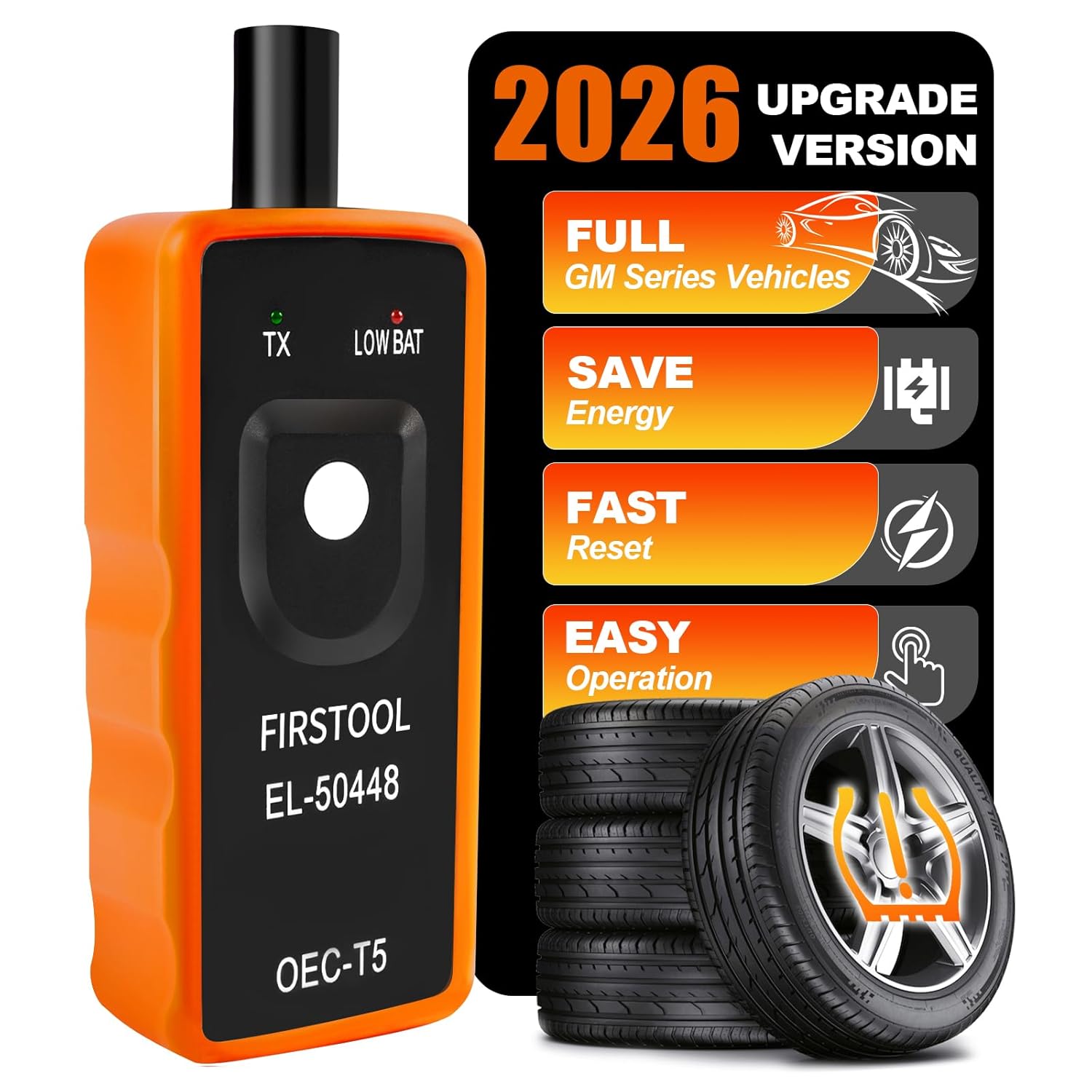
This TPMS relearn tool helps you quickly activate, match, and reset GM tire pressure sensors to keep the vehicle monitoring system working properly. It clears tire pressure alarms and dashboard warning lights after sensor replacement or tire rotation, and supports learning for common 315/433 MHz TPMS sensors. Designed for simple one-button operation, it can help you avoid unnecessary trips to repair shops.

Replace worn or malfunctioning GM TPMS sensors with this 433MHz pre-programmed sensor set designed for compatibility with many Chevrolet, Buick, GMC, and Cadillac models. It includes guidance for proper OBDII relearning/pairing after installation and supports reliable long-term operation with a high-performance CR2032 battery. Quality tested for durability and performance to help restore accurate tire pressure monitoring.

Replace your worn or missing TPMS sensors with pre-programmed, direct-fit sensors for compatible Ford, Lincoln, and select Mazda models. Each sensor comes ready to activate with a scan tool, helping restore accurate tire pressure monitoring and trouble-free installation. Built with a long-life CR2032 battery and tested before factory release, this set provides dependable performance with a one-year warranty.
Why Correct Tire Pressure Matters
Correct inflation supports tire load capacity, predictable handling, braking, fuel efficiency, and even tread wear. An underinflated tire flexes more than intended, which creates heat and increases rolling resistance. Severe underinflation can contribute to tire damage or failure.
The U.S. Department of Energy reports that underinflated tires can reduce gas mileage by approximately 0.2% for every 1 PSI drop in average tire pressure. Keeping tires properly inflated may improve mileage by an average of about 0.6%, with larger improvements possible when the tires were substantially low.
Correct pressure is not just a fuel-saving detail. It helps each tire carry its intended load and respond predictably during steering, braking, and emergency maneuvers.
What the Tacoma TPMS Warning Means
Your Tire Pressure Monitoring System monitors pressure loss and warns you when one or more tires become significantly underinflated. It does not replace monthly checks with a gauge. A tire can be below its ideal pressure before the warning light turns on.
Stop in a safe place and check all tires when the low-pressure warning appears. Inflate them to the correct cold specification and inspect for punctures or visible damage. If one tire loses air again, have the tire and valve inspected rather than repeatedly adding air.
Depending on the Tacoma’s model year and equipment, the system may need initialization after:
- Changing the tire inflation pressure setting
- Rotating the tires
- Changing tire size or wheel sets
- Registering new TPMS transmitter identification codes
- Replacing a tire-pressure sensor
Follow the TPMS instructions in the owner’s manual for your exact model year. Correct inflation alone cannot repair a damaged sensor, register an incompatible transmitter, or fix a system malfunction.
[Products Worth Considering]

These aluminum alloy tire valve stem caps with an O-ring seal help protect valve stems from corrosion while adding a clean, stylish look to your vehicle. The universal fit works across cars, trucks, motorcycles, bicycles, and more, making them an easy upgrade for everyday driving and off-road use. Installation is quick, and the included four-pack keeps all your tires dressed and protected.

Keep your tires properly inflated with this analog VONDIOR tire pressure gauge, designed for fast, easy readings without batteries. The swiveling, two-axis hose and large glow dial help you measure at any tire angle with instant visibility. Built with a protective rubber shield, it supports durable, low-maintenance use for cars and trucks.
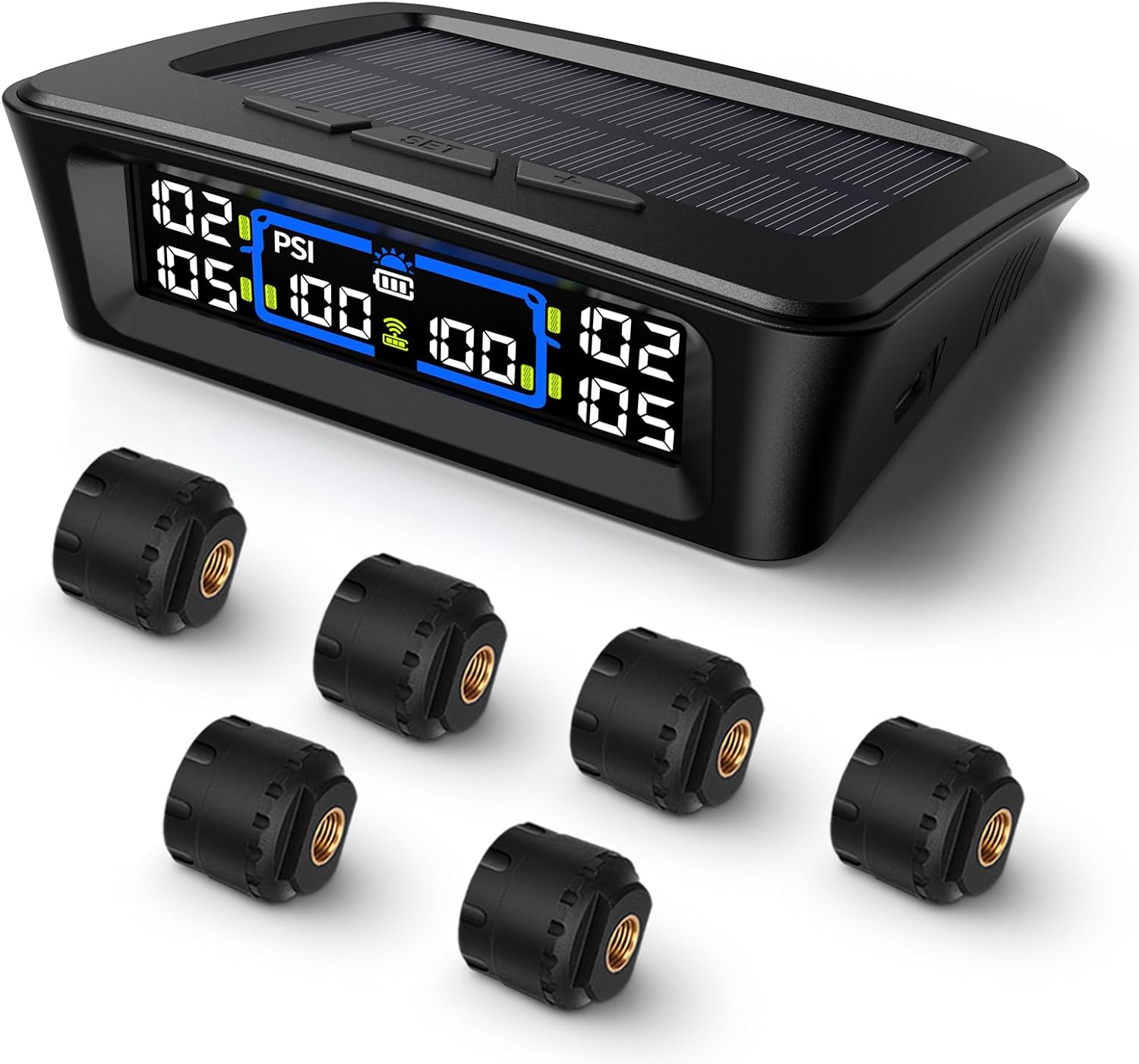
The Tymate TM12 RV TPMS delivers real-time tire pressure and temperature monitoring with a stable 433Hz display for safer long-distance driving. It supports simultaneous monitoring across vehicle and trailer zones, includes six alarm modes for pressure, temperature, leakage, battery, and signal loss, and features easy DIY installation with auto calibration. Power is supplied via USB-C charging or solar recharging, with a wide 0–144 PSI range and up to 50 ft signal coverage for RVs and towable trailers.
What If Your Tacoma Has Aftermarket Tires?
The door label was created for the factory tire size and load specification. If your Tacoma has a different tire size, load range, wheel width, or major suspension modification, the sidewall maximum still does not become the automatic daily-driving pressure.
Ask a qualified tire professional to calculate an appropriate cold pressure that provides enough load capacity for the truck’s actual axle loads. The replacement tires must also meet or exceed the required load and speed ratings. Recheck clearance, wheel compatibility, and TPMS operation after changing sizes.
Note: A chalk test may show part of the tread-contact pattern, but it does not replace load-capacity calculations, tire-manufacturer guidance, or professional advice for non-stock tires.
[Products Worth Considering]

Marsflex brand TPMS replacement sensors help restore tire pressure monitoring for compatible Toyota, Lexus, Scion, and Pontiac models. Each sensor is pre-programmed for the vehicle application and includes a long-life battery for up to 8 years of normal use. Designed to replace common OE numbers and requires relearning using a TPMS scan tool after installation.
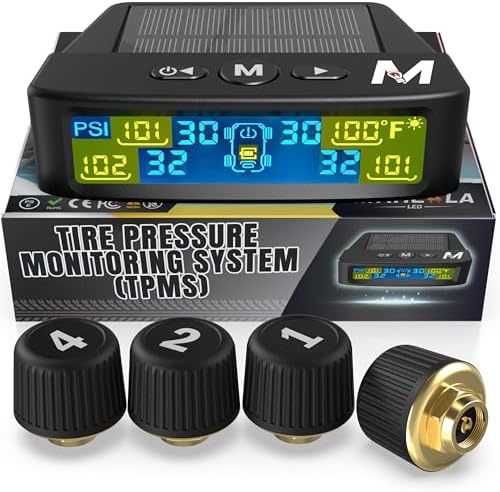
Marcala’s TPMS set of four sensors helps you monitor tire pressure and temperature in real time while driving, with updates every second. The bright color LCD uses auto-dimming for easy viewing, powered by dual solar and USB charging, and offers six alarm modes. Built for trailers, RVs, campers, trucks, and towing setups, the sensors support monitoring 1-4 wheels up to 98 PSI with IP67 waterproof protection.

The VEHLIVE SU-50448 II TPMS relearn tool provides a fast activation reset to restore accurate tire pressure monitoring after sensor replacement or tire rotation. It supports 315 MHz and 433 MHz GM series sensors and helps clear dashboard pressure warnings. With simple two-button operation and horn-confirmed relearning order, you can reprogram sensors conveniently at home.
Debunking Common Tire-Pressure Myths
The sidewall PSI is the recommended pressure
False. The sidewall shows the tire’s maximum cold inflation limit. Use the Tacoma’s vehicle placard for routine factory-specification pressure.
You can check pressure accurately at any time
False. Driving heats the tire and raises its pressure. Check it cold for the most useful comparison with the placard.
All four tires must always use the same PSI
False. Use the individual front and rear specifications printed on the label. They may be the same, but you should not assume that.
TPMS means monthly checks are unnecessary
False. TPMS normally warns after a meaningful pressure loss. The U.S. Tire Manufacturers Association recommends checking pressure at least monthly even when no warning light is showing.
Cold weather permanently damages the tire pressure setting
Usually false. Air pressure commonly rises or falls by roughly 1–2 PSI for every 10°F temperature change. Recheck the tires cold when seasons or temperatures change instead of assuming the tire or sensor has failed.
Top Tips for Maintaining Tire Pressure
- Check the pressure at least once a month and before long trips.
- Recheck before towing or carrying a heavy payload.
- Measure the tires when they are cold.
- Follow the front, rear, and spare values on the Tacoma’s own label.
- Keep a reliable gauge in the glove box or tool kit.
- Inspect the tread and sidewalls while checking pressure.
- Investigate repeated pressure loss instead of continually topping up the tire.
- Check pressure after a major temperature drop.
- Follow the model-year manual when initializing or registering TPMS components.
- Never depend on appearance alone, because a tire can be low without looking flat.
Frequently Asked Questions
Where is the Toyota Tacoma tire-pressure sticker?
It is normally on the driver-side door jamb, door edge, or B-pillar. Open the driver’s door and inspect the body pillar beside the seat. Use the owner’s manual if the label is missing or unreadable.
What PSI should I use for my Toyota Tacoma?
Use the recommended cold PSI printed on your own Tacoma’s Tire and Loading Information Label. The correct value varies by year, trim, tire size, wheel configuration, and spare-tire type, so one universal Tacoma PSI is not reliable.
Should I use the PSI printed on the tire sidewall?
No. The sidewall number is the tire’s maximum cold inflation pressure, not the normal vehicle recommendation. Use Toyota’s cold PSI from the door label unless qualified guidance for an approved non-stock setup says otherwise.
Should Tacoma tire pressure be checked hot or cold?
Check it cold, ideally after the truck has been parked for at least three hours. Driving heats the tires and temporarily raises pressure, which makes a warm reading difficult to compare with the cold specification.
Does a Tacoma TPMS need resetting after tire rotation?
Some Tacoma model years and configurations require initialization or position learning after pressure changes, rotations, tire changes, or sensor registration. Follow the procedure in the owner’s manual for your exact year and equipment.
Who makes the OEM Toyota Tacoma TPMS sensors?
Do not assume every Tacoma uses a sensor from one universal supplier. Toyota sells TPMS components as vehicle-specific Toyota Genuine parts, and the correct sensor can vary by model year, wheel setup, market, and part number. Use your VIN or the original sensor part number to confirm compatibility.
Conclusion
Your Tacoma’s driver-side Tire and Loading Information Label is the safest place to find its factory cold-pressure specification. Read the front, rear, tire-size, load, and spare information carefully, then check every tire with a gauge when cold. Do not substitute the sidewall maximum or a generic Tacoma PSI.
Monthly checks, seasonal adjustments, prompt leak repairs, and correct TPMS initialization help protect tire life, fuel efficiency, and predictable handling. When the truck has non-stock tires or a missing label, use VIN-specific Toyota information and qualified tire guidance instead of guessing.
Sources
- Toyota: How to Check Tire Pressure — manufacturer guidance on finding and using the recommended pressure.
- Toyota Tacoma Maintenance Data — demonstrates tire- and wheel-specific pressure variation.
- NHTSA TireWise — supports placard location, cold-pressure checks, spare-tire checks, tire safety, and adjustment steps.
- U.S. Department of Energy — supports the relationship between underinflation and fuel economy.
- U.S. Tire Manufacturers Association Tire Care Essentials — supports monthly checks, temperature effects, and TPMS limitations.
- Toyota Genuine TPMS Sensor Information — supports vehicle- and part-specific sensor compatibility.

