
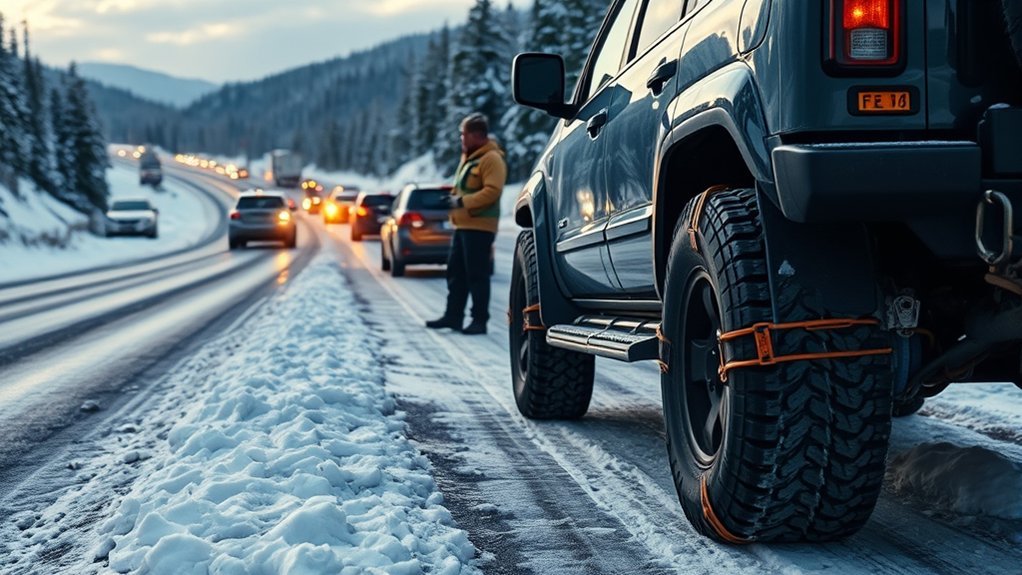
Tire chains are legal in many parts of the United States, but the rule that matters depends on the state, road, vehicle, weather, and current chain-control order. Some states require chains or approved traction devices when signs are posted, while others mainly permit chains when snow or ice makes them necessary. Commercial vehicles often face stricter carry and installation rules.
Quick Answer
Tire chains are generally legal when winter conditions justify their use, but requirements vary by state and road. California, Colorado, Oregon, and other mountain states can activate chain controls, while commercial vehicles may have separate carry rules. Always follow current DOT alerts, roadside signs, law-enforcement instructions, and your vehicle manufacturer’s chain restrictions.
Note: This guide was verified against current official sources on September 19, 2026. It provides general information, not legal advice. Active winter restrictions can change quickly, so posted signs and current state DOT instructions take priority over a static article.
Key Takeaways
- Tire-chain laws vary by state, road, weather condition, vehicle weight, and whether you are towing.
- California uses posted R-1, R-2, and R-3 chain-control levels rather than a fixed chain season.
- Colorado has separate passenger traction/chain rules and a commercial-vehicle must-carry requirement on designated mountain corridors from September 1 through May 31.
- Oregon’s chain law applies statewide, and severe conditions can require chains even on vehicles that normally qualify to use traction tires instead.
- Dates commonly quoted for states such as Ohio and Pennsylvania often refer to studded tires, not tire chains.
- Check current DOT or 511 information immediately before entering a winter mountain route.
Are Tire Chains Legal in Your State?
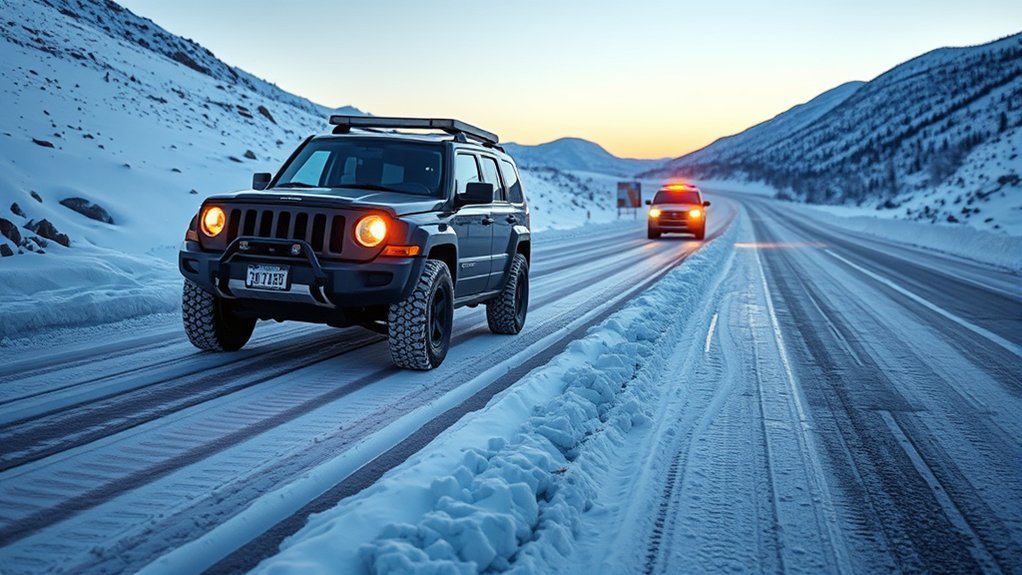
Tire chains are permitted in many states when snow, ice, or another slippery condition makes extra traction necessary. That does not mean you can use them anywhere at any time. States can restrict devices that damage pavement, impose special rules on commercial vehicles, or activate mandatory chain controls on particular highways.
California is a good example of a condition-based system. Caltrans uses R-1, R-2, and R-3 chain-control levels. When signs require chains or approved traction devices, drivers must comply with the level shown and any instructions from Caltrans or the California Highway Patrol.
Colorado combines active winter traction controls with separate commercial-vehicle requirements. Passenger restrictions may be activated when weather warrants, while covered commercial vehicles have additional must-carry obligations on designated mountain highways.
The safest rule when crossing state lines is therefore not to rely on a single national summary. Check the state transportation agency for each route you plan to use and confirm that your vehicle can safely accept the chain or traction device you carry.
A legal chain in your trunk does not automatically make you compliant. The device must fit your vehicle, be installed on the required wheels, and satisfy the active road restriction.
When Are Tire Chains Required?
Tire chains usually become mandatory when a transportation agency activates a chain control, roadside signs require them, or a state law applies to a particular commercial vehicle, route, or winter condition.
That distinction matters. A law that says chains are permitted on an icy road is different from a rule requiring you to carry chains, and both are different from an active order requiring you to install them before proceeding.
[Products Worth Considering]

The Tymate TM12 RV TPMS delivers real-time tire pressure and temperature monitoring with a stable 433Hz display for safer long-distance driving. It supports simultaneous monitoring across vehicle and trailer zones, includes six alarm modes for pressure, temperature, leakage, battery, and signal loss, and features easy DIY installation with auto calibration. Power is supplied via USB-C charging or solar recharging, with a wide 0–144 PSI range and up to 50 ft signal coverage for RVs and towable trailers.
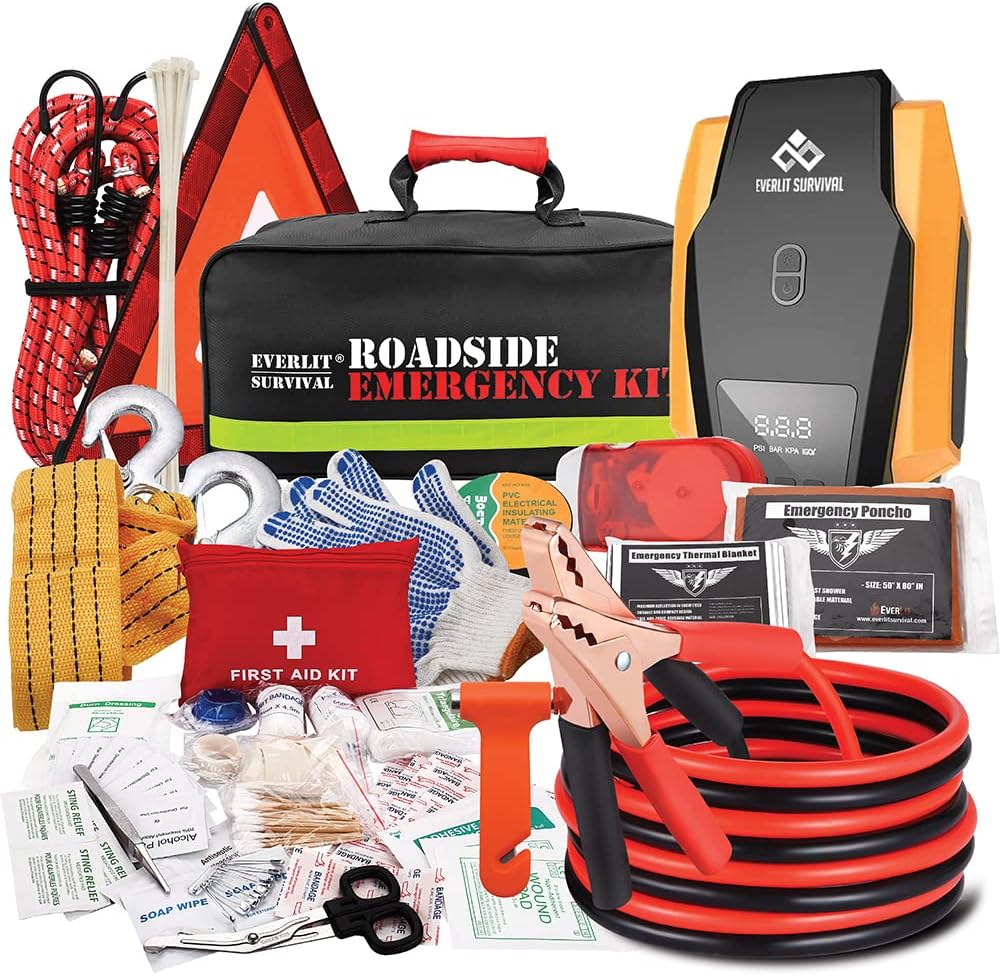
The Everlit Road Guardian emergency kit is designed for roadside breakdowns, combining essential safety gear and roadside tools in one compact bag. It includes a digital 12V auto tire inflator with preset and auto shutoff, plus 12-foot 8-gauge jumper cables to get you moving again. You also get a full 108-piece first aid kit, reflective warning tools, safety gloves, and emergency convenience items for safer travel.

Steelman white tire marking crayons provide high-contrast, semi-permanent marks for repairing and inspecting tires and equipment. They write on wet or dry, smooth or coarse surfaces including rubber, metal, glass, and wood, making them ideal for puncture location and damage outlining. The lead- and zinc-free crayons resist weather and fading yet wipe away when you no longer need the marks.
Winter Condition Triggers
Snow, packed ice, steep grades, poor traction, and rapidly deteriorating mountain weather are common triggers for chain controls. Transportation agencies may escalate requirements as conditions worsen.
California, for example, can move between R-1, R-2, and R-3 controls. Under R-2, chains or approved traction devices are generally required except on qualifying four-wheel-drive or all-wheel-drive vehicles with snow-tread tires on all four wheels; those vehicles still must carry traction devices in a chain-control area. R-3 requires chains or traction devices on all vehicles without an exception.
Colorado can activate a passenger Chain Law during severe storms. According to the Colorado Department of Transportation, every vehicle covered by an activated passenger Chain Law must use chains or an approved alternative traction device.
State Signage And Emergencies
Roadside signs are especially important because chain restrictions can apply to one mountain pass while nearby roads remain unrestricted. They can also change during the same trip.
Do not assume that a general statewide rule overrides a posted restriction. If a DOT sign, checkpoint, or law-enforcement officer tells you to chain up, stop at a safe designated location and comply before entering the controlled section.
For New York and other states that issue storm-specific road restrictions, check the state’s current traveler-information system and any emergency orders affecting your route. A general statement that every statewide snow emergency automatically requires chains would be too broad.
Warning: Never install chains simply because another vehicle is using them. Confirm the active requirement and your owner’s-manual restrictions first. Chains with inadequate wheel-well, brake-line, suspension, or body clearance can damage a vehicle.
Tire Chain Rules by State
Tire-chain laws fall into several categories: chains permitted when needed for safety, posted chain-control systems, seasonal commercial carry requirements, and rules that allow qualifying traction tires or alternative traction devices under certain conditions.
The following examples show why a single “legal or illegal” answer is not enough.
| State | General approach | Important point |
|---|---|---|
| California | Posted R-1, R-2 and R-3 chain controls | No fixed statewide chain-law season; follow the active control level. |
| Colorado | Passenger traction/chain controls plus commercial must-carry rules | Covered CMVs face seasonal carry requirements on designated mountain corridors. |
| Oregon | Statewide chain law with posted carry/use requirements | Traction tires can substitute in some normal winter situations, but not during every restriction. |
| Ohio | Chains permitted for snow/ice conditions | The November 1-April 15 calendar is for studded tires, not a chain-use season. |
| Pennsylvania | Temporary chain use during snow and ice emergencies | Its November 1-April 15 dates concern studs/ice grips rather than chains. |
| Texas | Chains permitted when required for safety | State law permits reasonable-proportion tire chains when skid-causing conditions make them necessary. |
General Chain Rules
Across the United States, several practical principles appear repeatedly even though the exact statutes differ.
- Use chains only in conditions and locations where they are legally permitted or required.
- Obey posted chain-control signs and enforcement officers.
- Use the correct chain size and type for your tires and vehicle.
- Install devices on the wheels required by your drivetrain, vehicle manufacturer, and the active chain regulation.
- Remove chains when the restriction ends and continued chain use would damage the road or vehicle.
You should also distinguish conventional link chains from cable chains, textile devices, automatic chains, and other alternative traction devices. A state may accept one device under a particular rule and reject it under another.
State-Specific Restrictions
California uses escalating chain controls. Colorado uses both passenger-vehicle restrictions and commercial rules. Oregon adjusts requirements according to signs, vehicle weight, towing status, traction tires, and road severity.
Ohio illustrates another common issue. Ohio Revised Code §5589.081 gives studded tires a November 1-April 15 season, but specifically says the studded-tire restriction does not apply to tire chains being used where snow or ice exists on the road or in the immediate vicinity.
Texas likewise does not make ordinary snow chains categorically illegal. Its vehicle-equipment law permits tire chains of reasonable proportion when required for safety because conditions could cause the vehicle to skid.
Seasonal Usage Windows
Do not assume every winter date you see online is a tire-chain date. Many state summaries mix three separate concepts:
- Studded-tire seasons — fixed dates controlling tires with metal studs.
- Chain carry seasons — periods when specified vehicles must have chains onboard on designated routes.
- Active chain controls — weather-driven rules requiring installation at that moment.
Colorado’s commercial must-carry rule is a genuine seasonal chain requirement. Ohio’s November-to-April dates, by contrast, govern studded tires. California’s chain controls are based on conditions rather than a fixed calendar.
California, Colorado, and Oregon Chain Rules
California: Caltrans posts R-1, R-2, or R-3 chain controls according to road conditions. California does not set a single annual date when every vehicle must carry chains. Drivers entering chain-control areas must follow the posted level, including any AWD/4WD exceptions and carry requirements.
Colorado: Passenger vehicles can be subject to a Traction Law or the more restrictive Passenger Vehicle Chain Law. Separately, Colorado’s expanded commercial Must Carry Law requires covered commercial vehicles to carry approved traction equipment from September 1 through May 31 on designated mountain corridors. CDOT reported in 2025 that the program covers more than 1,400 centerline miles.
Oregon: Oregon’s chain law applies to highways statewide. Signs tell drivers when chains or traction tires must be carried or used. In typical winter conditions, a vehicle rated at 10,000 pounds GVW or less that is not towing or being towed may use qualifying traction tires instead of chains when permitted. During a conditional road closure, however, chains may be required on all vehicles.
Pro Tip: Practice installing your chains in dry weather before a winter trip. Confirm the correct axle, tensioning procedure, clearance, and retightening instructions before you are stopped beside a snowy mountain road.
Seasonal Limits on Tire Chains
Some winter traction rules use fixed dates, but fixed dates are much more common for studded tires and commercial carry mandates than for ordinary passenger-car chain use.
California activates chain controls according to conditions. Colorado has a September 1-May 31 commercial must-carry season on designated routes. Other states may simply permit chains when snow or ice makes them necessary.
Common Seasonal Windows
Instead of assuming that “November through April” is a nationwide tire-chain season, identify what each date actually regulates.
- Commercial carry period: Colorado uses September 1 through May 31 for covered CMVs on designated mountain routes.
- Studded tires: Ohio permits most studded-tire use from November 1 through April 15.
- Posted chain controls: California activates them according to current road and weather conditions rather than a statewide annual calendar.
- Condition-based chain use: States such as Texas permit chains when slippery conditions make them necessary for safety.
State Date Restrictions
| State | Relevant period | What the date actually covers |
|---|---|---|
| Colorado | Sep. 1-May 31 | Commercial must-carry requirement on designated routes |
| California | No fixed statewide chain-control season | Chain controls activate according to conditions and signage |
| Ohio | Nov. 1-Apr. 15 | Studded tires; chains are treated separately when snow or ice exists |
These examples show why a calendar copied from a “winter tire” chart should not automatically be presented as a tire-chain law.
Studded Tire Timelines
Studded tires and tire chains are different forms of traction equipment and often follow different statutes. A state can restrict metal studs to certain months while still allowing removable tire chains when snow or ice creates a safety need.
Ohio is a clear example: the state’s November 1-April 15 period applies to studded tires, while the statute separately recognizes tire-chain use on snowy or icy roads. Pennsylvania similarly gives studs/ice grips a November 1-April 15 period while separately permitting temporary chain use during snow and ice emergencies.
For that reason, always verify whether a quoted date applies to studs, tire chains, traction tires, or a commercial chain-carry mandate.
Studded Tires vs. Tire Chains
Studded tires have traction-enhancing studs built into the tire and are normally regulated by seasonal dates. Tire chains are removable devices installed when extra traction is needed or when a chain-control rule requires them.
Chains are especially useful for short periods of severe snow, packed snow, or ice, but they are not meant for unrestricted use on clear pavement. Studded tires are designed for longer-term winter installation where state law permits them.
Neither automatically substitutes for the other. A state chain-control order may specifically require chains or an approved alternative traction device even if the vehicle has winter tires.
[Products Worth Considering]

The Kurgo Seasonal Tire Tote helps protect your car interior, clothes, and garage from tire grime, brake dust, and residue during seasonal tire changes. Its universal design fits most passenger tires between 22" and 31" in diameter, making storage and transport simpler with less mess. Built for rugged, repeated use, it’s machine washable for easy care and comes with a lifetime warranty.

These universal tire valve stem caps help protect valve cores from dust, debris, and moisture while helping maintain stable tire pressure. The corrosion-resistant metal construction and sealed design provide reliable protection in road grime, mud, and winter conditions. Twist-on installation makes them quick to fit on cars, SUVs, trucks, and motorcycles.

The TANX hitch bike rack securely fits any 2-inch receiver and carries up to two bikes, including heavy-duty e-bikes and fat tires up to 5 inches wide. Its foldable, smart tilting design lets you access your trunk or tailgate without removing the bikes. An anti-wobble hitch tightener and locking hitch pin help keep the ride stable, while padded, adjustable cradles and straps protect bike finishes during transport.
Commercial Vehicle Chain Requirements
Commercial rules are often stricter because a disabled truck can block an entire mountain corridor. Requirements may specify how many chains must be carried, which drive wheels must be chained, which trailer axles need devices, and which roads are covered.
Colorado’s expanded commercial must-carry law applies during its September 1-May 31 chain season on designated mountain corridors. When a commercial chain law is activated, the vehicle must also install the required chains or approved alternative devices before continuing.
Oregon uses detailed chain-placement rules based on vehicle configuration, weight, and whether the vehicle is towing. California also publishes separate diagrams for trucks, buses, recreational vehicles, trailers, and tractor-trailer combinations.
Washington, Nevada, Idaho, Montana, and other western states also use commercial traction requirements on certain winter routes. A commercial driver crossing state lines should therefore verify every state on the route instead of relying on the rule from the departure state.
- Check each state’s DOT or highway-patrol winter rules before departure.
- Carry the correct number and type of approved devices for the vehicle configuration.
- Confirm which drive and trailer axles must be chained.
- Watch roadside signs and electronic alerts for an active chain-up order.
- Do not proceed into a controlled area until the vehicle complies.
[Products Worth Considering]

These M14x1.5 closed-end chrome lug nuts are a one-piece replacement designed for secure fitment on compatible GM, Ford, and select Chrysler/Dodge models. Featuring a 60-degree conical seat and anti-rust chrome plating, they help resist corrosion and maintain a bright look for everyday driving. Built for long-term durability, they include OEM-style part references and are backed by 12 months of support.

This car emergency kit keeps essential roadside tools organized in a durable, portable bag so you can respond quickly during common driving emergencies. It includes battery jumper cables, a bright LED headlight, first aid supplies, a tire pressure gauge, and safety essentials like gloves and an emergency poncho. Designed for trunk or storage use, it helps you be prepared for dead batteries, minor malfunctions, and unexpected roadside issues.

The TYAMATE TM8 solar-powered wireless TPMS delivers real-time tire pressure and temperature monitoring with six alarm modes for safer driving. A vibrant color LCD display shows readings clearly while windshield mounting keeps it hands-free and easy to read. With a wide 0–87 PSI range, strong 433.92 MHz signal transmission, and quick sensor pairing, it’s ideal for RV, sedan, SUV, MPV, and truck use.
Do Some States Have No Tire Chain Law?
Be cautious with lists claiming that certain states have “no tire chain laws.” A state may lack the kind of broad passenger-car chain-control program used in the western mountains but still have statutes covering traction equipment, commercial vehicles, pavement-damaging devices, local emergency restrictions, or particular highways.
Vermont, for example, has authority to require chains on specified state-highway sections for certain vehicles over 26,000 pounds during winter weather. That makes a blanket statement that Vermont has “no tire chain law” inaccurate.
Florida’s mild climate also does not justify assuming there are no relevant equipment laws at all. State law regulates rough or potentially road-damaging wheel surfaces. The practical lesson is simple: lack of frequent snow does not prove the absence of vehicle-equipment regulation.
If you are driving somewhere where chain use is unusual, check the state’s current motor-vehicle statutes or transportation agency before installing metal traction equipment on a public road.
What Are the Fines for Illegal Chain Use?
There is no single nationwide chain-law fine. Penalties depend on the state, vehicle type, violation, and whether the noncompliant vehicle causes a blockage or closure.
Colorado provides a useful example of why the details matter. Current passenger guidance lists a $100 fine plus a $33 surcharge for failure to comply with the passenger restriction, with a $500 fine plus a $157 surcharge when the violation causes a travel-lane closure.
Commercial penalties are different. CDOT’s October 2025 must-carry guidance states that covered commercial drivers can face a $500 penalty for failing to carry chains and up to $1,000 plus a surcharge for blocking the roadway.
Other states can impose their own fines, stop a vehicle from continuing, require a turnaround, or order the driver to chain up before proceeding. The cost of towing or a road closure can also exceed the citation itself.
Where Can You Check Current Chain Rules?
Use official state transportation resources immediately before your trip and again before entering a mountain corridor. Chain restrictions can change during a storm.
| Source | What it tells you | Best time to use it |
|---|---|---|
| State DOT website or 511 system | Current road restrictions, closures, and chain controls | Before departure and during safe travel stops |
| Roadside signs | The restriction currently controlling that road segment | While approaching a chain-control area |
| Highway patrol or transportation officers | Enforcement instructions and vehicle-specific compliance | At checkpoints or controlled areas |
| Owner’s manual | Whether your vehicle permits chains and which wheels/device types are allowed | Before purchasing or installing chains |
| Chain manufacturer instructions | Fitment, installation, tensioning, speed, and inspection instructions | Before first use and whenever installing |
For California, use Caltrans road information and chain-control notices. For Colorado, check CDOT/COtrip. For Oregon, use ODOT/TripCheck. Similar 511 or DOT systems are available in many other states.
Frequently Asked Questions
What states require chains on tires?
There is no single list where every vehicle is always required to use chains. California, Colorado, Oregon, and several other western states activate chain or traction controls on certain roads when winter conditions require them. Commercial vehicles may also face seasonal carry rules. Check the current DOT rules for every state and route you will travel.
Are chains required on I-70 right now in Colorado?
Chain and traction restrictions on I-70 can change during the day, so a static article cannot reliably answer “right now.” Check Colorado’s current COtrip road conditions and electronic highway signs immediately before entering the mountain corridor. Commercial vehicles should also comply with Colorado’s seasonal must-carry requirements on covered routes.
Do you need snow chains for all four tires or just two?
It depends on the vehicle, drivetrain, chain manufacturer, owner’s manual, and active state requirement. Many passenger vehicles use devices on the primary drive wheels, but AWD/4WD vehicles and some chain-control levels have different requirements. Commercial vehicles and trailers can require additional chained wheels. Follow the vehicle manufacturer and the applicable chain-control instructions rather than assuming two or four.
Are tire chains illegal in Texas?
No. Texas law permits tire chains of reasonable proportion when they are required for safety because road conditions could cause a vehicle to skid. That does not mean chains should be used unnecessarily on clear pavement, and the device still needs to be suitable for the vehicle.
Conclusion
Tire-chain laws are best understood as a combination of state law, vehicle type, road conditions, and active transportation-agency controls. California relies heavily on posted chain levels, Colorado combines passenger controls with a seasonal commercial must-carry program, and Oregon uses a statewide system that changes according to vehicle weight, towing status, traction equipment, and road severity.
Do not treat studded-tire calendars as tire-chain seasons, and do not rely on an old state-by-state chart when a storm is underway. Before winter travel, check your owner’s manual, carry properly fitted equipment where appropriate, review the official DOT or 511 system, and obey the signs controlling the road you are actually driving.
Sources
- California Department of Transportation — Chain Controls — R-1, R-2, R-3 requirements, AWD/4WD treatment, installation and active-control guidance.
- Colorado Department of Transportation — Passenger Vehicle Traction and Chain Laws — current passenger traction requirements, Chain Law, approved devices, and penalties.
- Colorado Department of Transportation — Commercial Must Carry Law — September 1-May 31 commercial carry requirements, expanded corridors, and enforcement information.
- Oregon Department of Transportation — Chains and Traction Tires — statewide chain law, vehicle-weight rules, traction-tire alternatives, towing rules, and conditional closures.
- Ohio Revised Code §5589.081 — separates the November 1-April 15 studded-tire period from permitted chain use during snow or ice.
- Texas Transportation Code §547.612 — permits reasonable-proportion tire chains when required for safety because of skid-causing conditions.
