
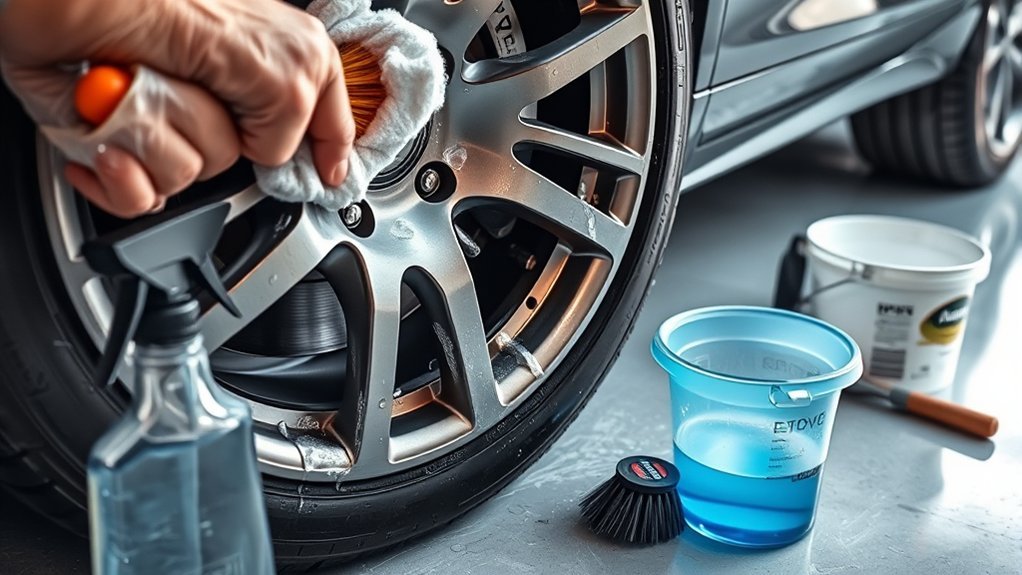
Keeping your wheels clean is more than a cosmetic job. Brake dust, road salt, grit, and moisture can stain or attack a wheel finish when they sit for too long. The safest routine is to work on cool wheels, use a cleaner that is compatible with the specific finish, agitate gently with dedicated brushes, rinse completely, dry with microfiber, and inspect the wheel while it is clean.
Quick Answer
To maintain car wheels properly, clean them when cool with a finish-safe wheel cleaner, soft brushes, and plenty of water. Clean the faces, lug recesses, barrels, tires, and wheel wells; rinse before the cleaner dries; dry with microfiber; add optional wheel protection; and inspect regularly for corrosion, cracks, bends, or finish damage.
Key Takeaways
- Clean only cool wheels and never allow wheel cleaner to dry on the surface.
- Choose chemistry that is specifically compatible with painted, clear-coated, chrome, matte, polished, or bare-metal finishes.
- Use soft, dedicated tools for wheel faces, barrels, tires, and wheel wells to reduce scratching and cross-contamination.
- Rinse thoroughly and dry with clean microfiber to reduce residue and water spotting.
- A compatible wheel sealant or coating can make later cleaning easier, but it does not repair corrosion or structural damage.
- Inspect wheels for cracks, bends, heavy corrosion, air-loss problems, or unusual vibration and have significant damage professionally evaluated.
At a Glance
| Time Required | About 15–30 minutes for four moderately dirty wheels; heavily contaminated wheels may take longer. |
| Difficulty | Easy |
| Tools Needed | Water supply, finish-safe wheel cleaner, soft wheel-face brush or mitt, barrel brush, tire brush, wheel-well brush, and clean microfiber towels. |
| Cost | Varies. Basic washing may use supplies you already own; specialty cleaners, brushes, and protective coatings add cost. |
How to Clean Your Wheels the Right Way
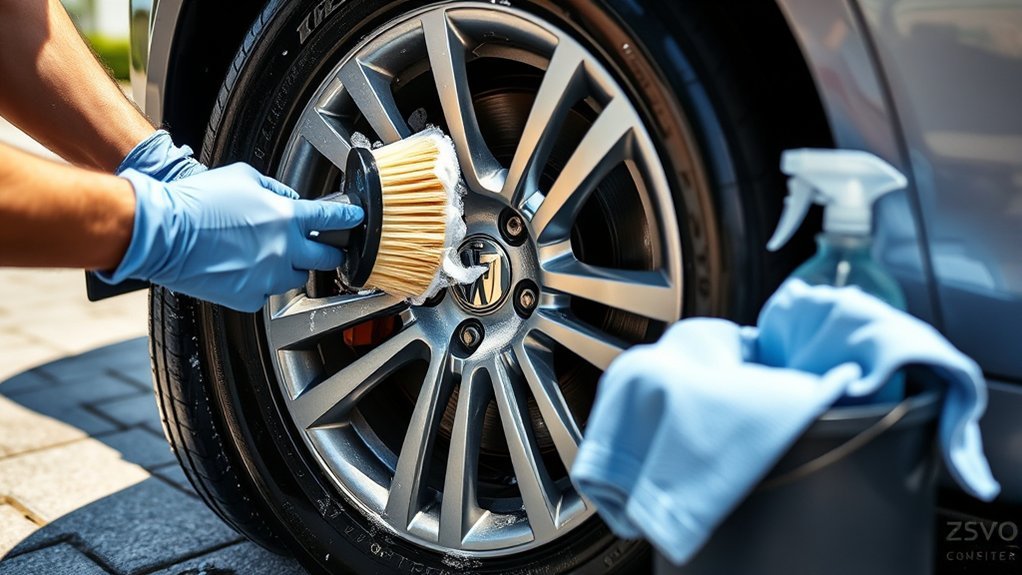
Start with wheels that are cool to the touch. Tire Rack’s wheel-care guidance recommends frequent washing with mild, finish-safe products and warns against cleaning hot wheels. Working on one wheel at a time also keeps cleaner and rinse water from drying before you are finished.
Warning: Do not spray wheel cleaner onto a hot wheel, and never let the product dry on the wheel. Follow the cleaner manufacturer’s dwell time and compatibility instructions, especially on polished, bare aluminum, matte, damaged, or refinished wheels.
- Rinse away loose grit. Flush the wheel face, spokes, lug recesses, barrel, tire, and accessible wheel-well areas. Removing loose sand first reduces the chance of dragging abrasive particles across the finish.
- Apply a compatible wheel cleaner. Choose a product approved for your exact wheel finish. Mild soap and water may be enough for routine cleaning, while heavier brake dust may need a dedicated wheel cleaner.
- Allow a short dwell time. Give the product enough time to loosen road film and brake dust, but stay within its label directions and keep the surface wet.
- Agitate gently. Use a soft wheel-face brush or microfiber mitt on the visible finish, a suitable barrel brush behind the spokes, and smaller detailing tools around lug recesses and tight areas.
- Rinse thoroughly. Remove cleaner and loosened contamination from the face, barrel, tire, wheel well, and surrounding areas until no residue remains.
- Dry and inspect. Dry the wheel with a clean microfiber towel, then look for embedded contamination, staining, coating failure, bends, cracks, corrosion, or other damage.
The safest wheel-cleaning routine is controlled rather than aggressive: cool surface, compatible chemistry, gentle agitation, complete rinsing, and careful inspection.
Pro Tip: Keep wheel and tire brushes, mitts, and microfiber towels separate from the tools you use on body paint. Brake dust and gritty contamination collected around the wheels can scratch more delicate painted panels if transferred to them.
[Products Worth Considering]

This 7-piece car wheel brush kit delivers gentle, scratch-free cleaning with extra-soft, metal-free brush heads designed to lift brake dust, dirt, and grime. The brushes bend up to 360 degrees for hard-to-reach wheel areas, while the included tire shine applicator pad helps apply tire dressing evenly with less build-up. An organizer bag is included for convenient storage, making it ideal for regular wheel and tire detailing.

This oesee 8-piece wheel care kit helps you clean, scrub, and dry wheels safely with purpose-built brushes and towels. The scratch-free microfiber wheel brush lifts brake dust and grime, while the stiff pro-grip tire brush removes tire browning and embedded dirt. A twist loop microfiber drying towel and an applicator help achieve a streak-free finish and cleaner, more even product application.

This 3-piece wheel and tire brush set makes it easy to clean light, medium, and heavy dirt from wheels, rims, tires, and exterior surfaces. It includes both soft and stiff bristle options for gentle scrubbing and tough grime removal, helping lift brake dust and road buildup. The long-handle design supports comfortable cleaning across cars, trucks, SUVs, RVs, motorcycles, and more, with simple care instructions to restore brush shape.
Choose Safe Wheel Cleaning Products and Tools
Choose cleaning chemistry based on the wheel finish rather than assuming one formula is safe for every wheel. For routine care, mild soap or a pH-neutral, material-compatible wheel cleaner is a conservative choice. Products such as TUGA Alu-Teufel Spezial are marketed by the manufacturer for regular wheel cleaning and for aluminum, steel, and chrome surfaces.
| Tool | Benefit | Best Use |
|---|---|---|
| Finish-compatible cleaner | Loosens brake dust and road film while reducing unnecessary chemical risk | Routine wheel washing |
| Incredibrush Flat or similar barrel brush | Reaches behind spokes and into narrow barrels | Tight inner-wheel spaces |
| Non-abrasive mitt | Provides gentle contact on visible surfaces | Painted and clear-coated wheel faces |
| Small soft detailing brush | Reaches lug recesses and intricate spoke junctions | Detailed cleaning |
Avoid gritty pads, steel wool, harsh household cleaners, and aggressive polishing products unless the wheel manufacturer specifically approves them for that finish. Many modern alloy wheels are painted or clear-coated and should be treated much like painted bodywork.
Finish differences matter. Chrome needs non-abrasive care. Matte and satin finishes should not be polished into a shine. Bare or polished aluminum may react differently from coated aluminum, so check the cleaner label before use. Even a product designed for wheels can have restrictions: for example, CARPRO states that its WheelX cleaner should not be used on bare aluminum because discoloration may occur.
Choose brushes that are clean, soft enough for the surface, and free of exposed sharp metal that could contact the finish. A flexible barrel brush, a separate tire brush, and a soft wheel-face tool make it easier to clean thoroughly without forcing one tool into every job.
Note: If ordinary washing does not remove embedded brake-dust particles, a wheel-safe iron-removing product may help. Confirm that it is approved for your wheel finish, follow its dwell-time directions, and rinse it completely.
[Products Worth Considering]

This professional wheel and rim cleaning brush set lifts brake dust, grime, and dirt with soft, scratch-free microfiber and synthetic wool fibers. The rim brush bends up to 360 degrees for easy access to hard-to-reach areas around spokes, lips, and faces. Ideal for thorough cleaning of car, truck, motorcycle, bicycle, RV, and more wheel and tire surfaces.

This wheel brush kit delivers pro-level cleaning at home, lifting dirt, grime, and brake dust to help restore wheel appearance. It includes multiple brush styles and applicator pads for tackling different wheel surfaces, with gentle, metal-free bristles designed to reduce scratching risk. The flat and double-ended brushes are built for comfort and reach, making wheel care easier for cars, trucks, and RVs.

This metal-free wheel and tire cleaning brush uses dense, fluffy synthetic wool to safely clean rims, spokes, fenders, and engine areas without worrying about damaging surfaces. Its flexible, comfortable design helps you reach detailed areas while maintaining durability, and the extra absorbent fibers work well with wheel spray cleaners for faster cleanup. Reusable and washable performance helps prevent grime and build-up for cleaner vehicles and easier maintenance at home.
Clean Wheel Barrels, Tires, and Wheel Wells
Once the wheel face is under control, move to the hidden grime around the wheel assembly. Start with the wheel barrel, using a long or low-profile brush that fits safely between the spokes and brake components. Work around the inner barrel in sections so brake dust and road film are loosened evenly rather than simply pushed farther into the wheel.
Next, scrub the tire sidewall with a dedicated tire brush. A low-profile brush with densely packed bristles can be useful on short sidewalls where clearance is limited. Keep tire-cleaning tools separate from delicate wheel-face tools because tires often release old dressing, browning residue, and heavier road grime.
For wheel wells and fender liners, a long-handled brush such as the Wheel Woolies Wheel & Fender Boar’s Hair Brush can reach areas that a small wheel brush cannot. The specific brand is optional; the important point is to use a tool that reaches the area without forcing a hard handle or exposed metal against the wheel finish.
Rinse the wheel barrels, tires, and wheel wells thoroughly, then dry accessible wheel surfaces with microfiber. Complete drying helps reduce mineral spotting and also makes it easier to see remaining contamination or finish damage.
[Products Worth Considering]

Suds Lab WB Premium Detailing Wheel Brush delivers a scratch-free clean using ultra-soft microfiber bristles that lift brake dust, dirt, and grime without swirling. The ergonomic non-slip handle helps you deep-clean rims, wheels, and tires with reduced hand fatigue while reaching tight contours. It’s reusable and machine washable for long-term detailing, and works across cars, trucks, SUVs, and motorcycles plus multi-purpose cleaning tasks.

This professional wheel and rim brush kit makes it easy to lift brake dust, grime, and dirt from wheels and tires without scratching finishes. The brushes feature soft, metal-free wool heads and a flexible 360-degree rim brush design for reaching hard-to-clean areas. Includes multiple brush types plus accessories for thorough car, motorcycle, and general vehicle detailing.

Clean wheels and rims with soft feathered bristles that safely remove dirt and road grime while helping restore original luster. The short non-slip handle makes it easy to scrub in tight wheel wells, and the brush is suitable for vehicles and hard-to-reach areas. It can also be soaked and rubbed to help restore bristles to their shape after use.
Protect Wheels From Brake Dust and Rust
Brake dust, road salt, dirt, and moisture should not be allowed to remain on a wheel indefinitely. Tire Rack notes that wheels are routinely exposed to brake dust, salt, stones, tar, and other contamination, which is why frequent cleaning is important for preserving the finish.
After cleaning and drying, you can apply a wheel-compatible sealant or coating. CARPRO CQUARTZ DLUX, for example, is currently marketed for painted, polished, and chromed wheels and is designed to provide a hydrophobic surface that makes road grime and brake dust easier to remove later.
Apply a compatible protective coating to make future cleaning easier and reduce how strongly water, road grime, and brake dust cling to the finished surface.
A protective layer is useful, but it is not a repair. It cannot reverse peeling clear coat, deep corrosion, cracks, bends, or damage around the tire bead seat. Steel wheels are especially vulnerable once protective paint or coating is damaged and bare steel is exposed to water and road salt.
During winter or after driving on salted roads, rinse contamination away rather than allowing concentrated salt residue to remain. Dry the wheel after washing and inspect for chips, bubbling paint, exposed metal, or new corrosion.
Stay on Top of Wheel Maintenance
Inspect your wheels regularly when they are clean. Look closely at the spokes, outer and inner rim edges, bead area, lug holes, and visible barrel. Michelin’s inspection guidance says a wheel should be evaluated for cracks, bends, corrosion, and damage, especially around the bead-seat and flange areas.
If you find a visible crack, significant bend, severe corrosion, repeated air loss, or new vibration after an impact, do not treat it as a detailing problem. Have the tire and wheel assembly inspected by a qualified tire or wheel professional. Damage around the bead seat can interfere with proper tire sealing, while structural wheel damage may require replacement rather than cosmetic repair.
Wash the wheels when you wash the vehicle or whenever brake dust, mud, or road salt is building up heavily. There is no single cleaning interval that fits every driver because brake-pad compounds, climate, mileage, road conditions, and wheel finish all affect how quickly contamination accumulates.
Rotate Tires on the Correct Schedule
Tire rotation is related to wheel maintenance, but its main job is managing tire wear rather than making every wheel “carry load evenly.” Michelin recommends following the vehicle manufacturer’s rotation schedule; its general guidance commonly falls around 5,000–8,000 miles depending on the specific recommendation.
Do not assume every four-wheel set can use the same rotation pattern. Directional tires generally need to remain oriented in their intended direction, while staggered vehicles with different front and rear tire sizes may have limited or no conventional front-to-rear rotation options. Follow the vehicle owner’s manual and tire manufacturer’s instructions.
Check Wheel Hardware After Installation or Service
If a wheel has been removed and installed, its lug nuts or bolts must be tightened to the vehicle manufacturer’s specified torque with the correct procedure. Aftermarket wheel suppliers may also specify a follow-up torque check after initial driving. Do not guess at a torque value or compensate by overtightening the hardware.
Use Approved Wheel and Tire Fitment
Wheel care also includes making sure the tire and wheel are correctly matched. The U.S. Tire Manufacturers Association’s passenger and light-truck guidance says tires should be mounted only on approved rim widths and that the tire and rim diameter designations must match.
When changing from the original tire or wheel size, use specifications approved for the vehicle and tire. Check wheel width, diameter, load capacity, offset, brake and suspension clearance, and the effect of tire outside circumference on systems such as the speedometer, ABS, traction control, and all-wheel-drive system where applicable.
There is no universal passenger-car rule saying tire diameter should simply remain within “105% of the rim specification.” Automotive fitment should be based on the vehicle manufacturer, tire manufacturer, and recognized tire/rim fitment data rather than that percentage shortcut.
Frequently Asked Questions
How to Maintain and Care for Wheels?
Clean cool wheels regularly with a cleaner that is compatible with the finish, use soft dedicated brushes, rinse completely, and dry with microfiber. Add a compatible protective coating if desired, inspect for corrosion or structural damage, and follow the vehicle manufacturer’s tire-rotation and wheel-hardware requirements.
What Is the 105% Rule for Rims?
The often-mentioned 105% rule is not a universal automotive wheel-fitment rule. For passenger vehicles, use a tire manufacturer’s approved rim-width range, match tire and rim diameter designations, and follow the vehicle manufacturer’s size, load, clearance, and circumference requirements. A simple 105% calculation should not replace approved fitment data.
What Are the Common Mistakes Using Wheel Cleaner?
Common mistakes include applying cleaner to hot wheels, using a formula that is not compatible with the finish, letting cleaner dry, using abrasive pads, scrubbing before loose grit is rinsed away, ignoring the barrels and lug recesses, and failing to rinse thoroughly. Using the same dirty tools on body paint is another avoidable mistake.
What to Put on Wheels to Keep Them Clean?
After the wheel is thoroughly cleaned and prepared, apply a sealant or coating that is approved for its finish. Products such as CARPRO CQUARTZ DLUX are designed for wheel protection and can make water, road grime, and brake dust easier to remove during later washes. Apply tire dressing only to appropriate tire sidewall surfaces according to the product directions.
Can You Clean Wheels While They Are Hot?
It is better to wait until the wheels are cool. Heat can cause water or cleaning chemicals to evaporate too quickly and leave residue or spotting. Cleaning one cool wheel at a time also gives you better control over the cleaner’s dwell time.
How Often Should You Clean Car Wheels?
Clean them whenever visible brake dust, road film, mud, or salt begins building up. Washing them with the rest of the vehicle works for many drivers, but vehicles exposed to road salt, heavy brake dust, or frequent wet-weather driving may need wheel cleaning more often.
Conclusion
Good wheel care comes down to consistent, finish-safe cleaning and regular inspection. Work on cool wheels, rinse away loose grit, use compatible cleaner and soft tools, clean the barrels and surrounding areas, rinse completely, and dry with microfiber. A suitable wheel sealant or coating can make future washes easier, while routine inspections help you catch corrosion or structural damage early. Follow your vehicle and tire manufacturer’s instructions for rotation, fitment, and wheel hardware rather than relying on universal shortcuts.
Sources
- Tire Rack — How Do I Clean My Wheels? — supports cool-wheel cleaning, mild products, finish care, and regular washing.
- U.S. Tire Manufacturers Association — Care and Service of Passenger and Light Truck Tires — supports approved rim widths, matching tire/rim diameter, replacement sizing, and fitment checks.
- Michelin USA — Tire Rotation Guide — supports tire-rotation intervals, manufacturer-first guidance, and rotation limitations.
- Michelin USA — Visual Tire and Wheel Inspection — supports inspection of wheels for cracks, bends, corrosion, bead-seat damage, and compatibility.
- CARPRO — CQUARTZ DLUX — supports the current wheel-coating example and claims about hydrophobic protection and easier cleaning.
- TUGA Chemie — Alu-Teufel Spezial — supports the current product example and stated compatibility with common wheel materials.
