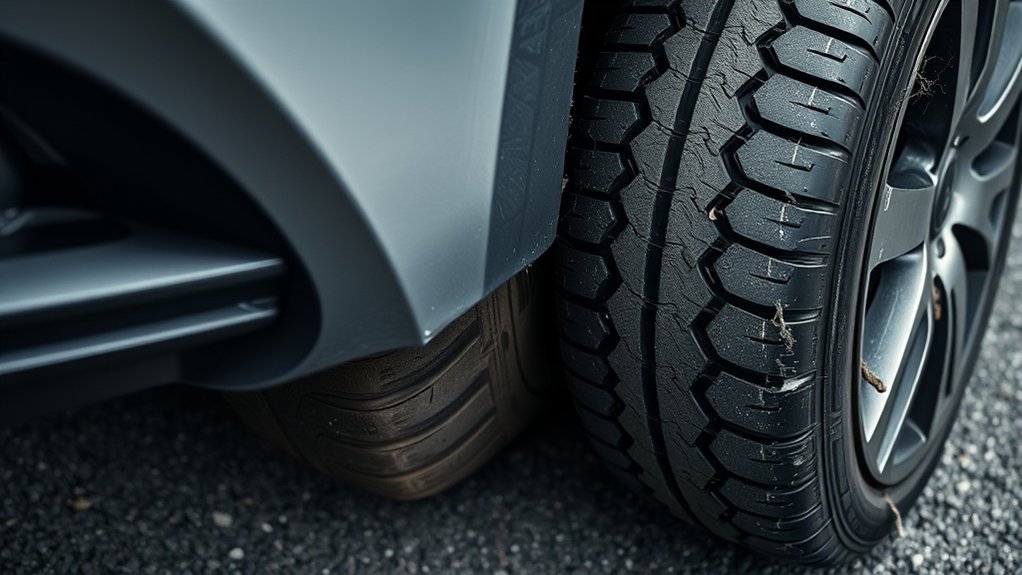
You can often narrow down whether you have a slashed tire or a blowout by looking at the damage pattern, when the tire lost pressure, and what happened immediately beforehand. A deliberate slash may leave a narrow, fairly clean cut, while a blowout often creates an irregular rupture, torn rubber, or exposed cords. However, appearance alone cannot prove vandalism because road debris, curbs, potholes, and sharp objects can also cut a tire.
Quick Answer
A slashed tire may show a narrow, clean-looking cut, often on the sidewall, while a blowout more often leaves a ragged rupture, torn rubber, or exposed cords after rapid pressure loss. These are clues, not proof. Road hazards can also make cuts, so timing, surrounding damage, video evidence, and professional inspection matter.
Key Takeaways
- Clean or linear cuts can suggest deliberate damage, but they do not prove that someone slashed the tire.
- A blowout is a rapid loss of air pressure and may leave ragged tears, exposed cords, tread damage, or shredded rubber.
- A tire found flat while parked may also have a nail puncture, valve leak, bead leak, rim damage, or earlier road-hazard injury.
- Sidewall and shoulder injuries are generally outside the industry’s repairable puncture area.
- If a blowout happens while driving, stabilize the vehicle before gradually releasing the accelerator and slowing down.
- Photograph suspected vandalism before replacing the tire, and follow your insurer’s instructions if you plan to make a claim.
At a Glance
| Time Required | About 5–10 minutes for a safe visual inspection and photos |
| Difficulty | Easy for basic inspection; professional diagnosis may be needed |
| Tools Needed | Phone camera, flashlight, tire-pressure gauge if safe to use |
| Cost | Inspection may be free or low-cost; replacement varies by tire and vehicle |
Warning: Do not drive on a flat tire with visible sidewall damage, exposed cords, a large rupture, or severe pressure loss. If the vehicle is stopped beside fast-moving traffic, prioritize getting yourself to a safe location rather than standing next to the tire to inspect it.
What Does a Slashed Tire Look Like?
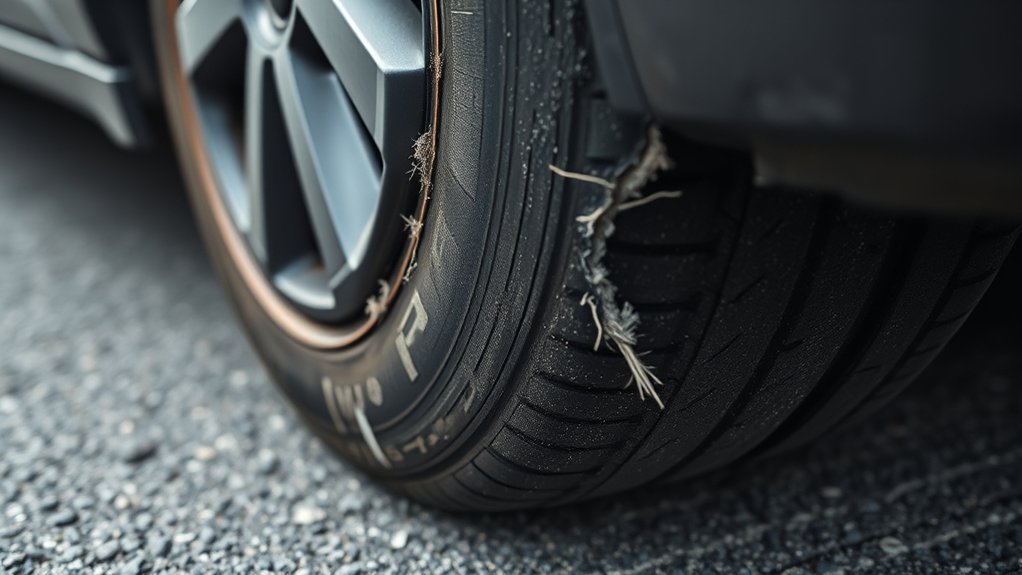
A slashed tire may show a narrow, linear cut in the sidewall or another accessible part of the tire. A relatively smooth cut can make intentional damage more plausible, especially when several similar cuts appear on the same vehicle.
However, the shape of a cut is not enough to establish vandalism. Tire manufacturer guidance notes that cuts can also result from bad road conditions, protruding objects, stones, glass, and other sharp road debris. For that reason, treat the cut pattern as one clue rather than a final diagnosis.
Inspect the sidewall and tread from a safe position. Look for narrow openings, scuff marks, punctures, wheel damage, missing rubber, bulges, embedded objects, and matching damage on other tires. A deliberately damaged tire may have an otherwise normal-looking tread, but that is not guaranteed.
A clean-looking cut can suggest a sharp object was involved, but the cut alone cannot tell you whether that object was held by a person or encountered on the road.
The rate of deflation is also not definitive. A shallow injury may leak slowly, while a deep sidewall cut can release air very quickly. Likewise, a tire discovered flat after being parked overnight may have a nail puncture, leaking valve, bead leak, damaged wheel, or earlier road-hazard injury rather than vandalism.
Check the area around the vehicle without touching exposed cords or sharp objects. Photograph the affected tire, the whole vehicle, the parking area, nearby debris, and any other damaged tires before the evidence changes.
If vandalism appears possible, check whether nearby homes, businesses, parking garages, or dash cameras recorded the area. If you intend to report the incident or make an insurance claim, preserving that evidence can be more useful than relying on the tire’s appearance alone.
Pro Tip: If the cause matters for an insurance claim, warranty dispute, or police report, ask the tire shop to inspect the removed tire before it is discarded. Road-hazard damage and damage caused by running flat can complicate the original failure pattern.
What Does a Blowout Look Like?
A blowout is a rapid loss of tire air pressure. Afterward, the tire may have an irregular rupture, torn sidewall, damaged tread, exposed cords, or shredded rubber. The damage often looks more extensive than a small puncture because the tire was rotating and carrying the vehicle’s load when pressure was lost.
You may hear a loud bang or pop and feel vibration or a strong change in steering. A front-tire failure is often felt more through the steering wheel, while a rear-tire failure may be felt more through the body or seat of the vehicle.
Be careful when interpreting shredded rubber. A tire can lose air from a puncture, valve leak, cut, or impact and then become badly shredded because it continued rolling with little or no pressure. The final appearance may therefore hide the original cause.
Common contributors to sudden tire failure include underinflation, overloading, pothole or curb impacts, road debris, previous structural damage, excessive wear, heat, and tire aging. Tire defects or recalls can also be relevant in individual cases, so unexplained failures should be checked against current recall information.
If a blowout happens while you are driving, follow NHTSA tire-safety guidance: hold the steering wheel with both hands, avoid sudden braking or steering, maintain vehicle speed briefly if necessary to stabilize the vehicle, and then gradually release the accelerator. Once the vehicle is stable, slow down and pull off the roadway when it is safe.
How Do You Tell the Difference?
To tell a slashed tire from a blowout, compare the shape of the damage, where it is located, what happened before the tire went flat, and whether there is supporting evidence. No single visual clue proves vandalism.
| Sign | Possible Slashing | Blowout / Sudden Failure |
|---|---|---|
| Damage edge | May be narrow and relatively clean | Often ragged, torn, or heavily distorted |
| When noticed | Often discovered while parked | Often noticed suddenly while driving |
| Number of tires | Similar cuts on several tires increase suspicion | Usually associated with one failed tire |
| Other evidence | Video, witnesses, matching cuts, other vandalism | Impact marks, worn tread, underinflation, damaged rim, road debris |
| Shredding | Usually not caused by a stationary cut alone | May result from sudden failure or continued driving after pressure loss |
If you suspect slashing, photograph the tire and surrounding scene before changing it when doing so is safe. Check available camera footage and consider reporting the incident. If the failure occurred while driving, concentrate on safely controlling and stopping the vehicle before trying to determine what caused it.
A confirmed sidewall slash or blowout rupture is generally not repairable. A completely different type of injury—a small puncture inside the repairable tread area—may sometimes be repaired after the tire is removed and inspected.
What Causes a Slashed Tire or Blowout?
Once you have identified the failure pattern, consider all plausible causes rather than assuming the first visible cut explains what happened.
Intentional vandalism can cause a slashed tire, particularly when there are multiple similar cuts, more than one damaged tire, video evidence, witnesses, or other signs of tampering. A clean-looking cut by itself does not establish intent.
Accidental tire cuts can result from glass, metal, stones, potholes, curbs, damaged road surfaces, and other sharp objects. Continental’s tire-damage guidance specifically identifies outside influences and sharp foreign objects as common causes of cuts.
A blowout or sudden structural failure can follow severe underinflation. Low pressure increases sidewall flex and heat generation, which can weaken the tire over time. Overloading can create similar stresses.
Hard impacts from potholes or curbs can break internal cords even when the outside initially looks acceptable. A tire may continue operating before the damage becomes obvious.
Age also matters, but there is no universal rule that every tire becomes unsafe at one exact age. The U.S. Tire Manufacturers Association says tire service life depends on use, storage, maintenance, heat, load, inflation, impacts, and manufacturer guidance rather than calendar age alone.
If a tire fails without an obvious external cause, check the tire’s DOT identification date and determine whether the tire or vehicle is affected by a safety recall.
Can You Repair a Damaged Tire?
Some punctures can be repaired, but not every damaged tire is repairable. Location, size, internal damage, previous repairs, and the tire manufacturer’s rules all matter.
According to USTMA puncture-repair procedures, a passenger or light-truck tire should be considered for repair only when the injury is in the approved tread repair area and is no larger than 1/4 inch (6 mm) in diameter.
The tire must be removed from the wheel so the inside can be inspected. A proper repair fills the puncture injury with a suitable rubber stem or equivalent material and seals the inner liner with a patch. A plug by itself or a patch by itself is not the USTMA-recommended permanent procedure.
A sidewall slash, shoulder injury, blowout rupture, exposed cords, or significant structural damage requires replacement rather than a standard puncture repair.
Note: Calendar age alone does not create a universal six-year repair ban. Follow the tire manufacturer’s and vehicle manufacturer’s service-life guidance, and have older tires inspected regularly.
[Products Worth Considering]

Monitor tire tread wear with a smart, color-coded depth gauge that shows clear condition ranges at a glance. The bar is range marked for fast, easy readings, helping you maintain safer traction and performance. Each gauge is portable with a pocket clip, and the set includes 20 units for daily use and sharing.

Measure tire tread depth quickly and accurately with this LUMITECO dial gauge that reads in 1/32" increments up to 14/32". The color-coded green/yellow/red zones make it easy to judge tire wear and know when replacement is needed. A rugged, compact design with a protective pouch helps keep the gauge ready for use on cars, trucks, motorcycles, and more.

Accurately measure tire tread depth with a calibrated gauge marked from 0 to 1 inch in 1/32 inch increments. The color-coded bar helps you quickly identify tread condition ranges, supporting safe driving for trucks, motorcycles, automobiles, and passenger vehicles.
Repair Limits
Not every damaged tire can be safely repaired, and the location and extent of the injury are major factors.
Sidewall cuts are outside the normal passenger-tire puncture repair area. The same applies when an injury reaches the shoulder or belt edge or when internal cords, belts, or the inner liner have suffered structural damage.
A small puncture in the permitted tread area may be repairable if it is no larger than 6 mm, does not overlap another repair, and inspection shows that the tire was not damaged internally by running underinflated or flat.
Tire age should be considered with condition, service history, manufacturer recommendations, heat exposure, tread depth, and other factors. USTMA does not define one calendar age at which every passenger tire automatically becomes unrepairable.
Continuing to drive on a damaged or flat tire can turn a repairable puncture into an unrepairable tire and can also damage the wheel.
Replace vs. Patch
If a tire is slashed through the sidewall, replace it rather than attempting a patch or plug. The sidewall carries load while continuously flexing, and it falls outside the normal industry puncture-repair area.
If you find a small tread puncture, a tire professional can determine whether it is inside the repairable zone and no larger than 1/4 inch (6 mm). The tire should be removed from the wheel so the inner liner, cords, and surrounding structure can be inspected.
Replace the tire if the injury is too large, lies in the shoulder or sidewall, exposes structural material, overlaps another repair, or has been made worse by driving while flat.
Also consider tread depth, age, overall condition, and the tire manufacturer’s repair policy before returning a repaired tire to service.
What Should You Do After a Slashed Tire?
If you suspect a slashed tire, first make sure the vehicle is in a safe location. Photograph the damage before changing the tire when practical, but do not put yourself in danger beside moving traffic just to preserve evidence.
Do not drive on a flat tire with sidewall damage. Install the correct spare if you can do so safely and according to the owner’s manual, or call roadside assistance.
If intentional damage appears possible, document the scene, look for witnesses or camera coverage, and consider filing a police report. If you plan to make an insurance claim, contact your insurer for its required documentation.
[Products Worth Considering]

This 15-inch tire spoons kit makes tire removal and installation easier with added leverage, reducing time and effort for everyday repairs. It includes tire spoons, rim protectors, a valve tool, and valve cores/caps, helping protect rims and streamline deflation and re-sealing. Built with durable hardened steel and a non-slip ergonomic grip for confident use on motorcycles, dirt bikes, ATVs, and lawn equipment.

Malco tire mounting and demounting lubricant is a ready-to-use tire lube formulated to reduce friction during tire installation for passenger cars, light trucks, farm tires, and heavy-duty equipment. It provides rust-inhibiting protection to help reduce corrosion on rims and wheels, and helps support proper tire bead seating during inflation to reduce air leakage. The silicone-free, soap-free formula is whitewall safe to help prevent discoloration on whitewall tires and sensitive sidewall markings.

Steelman white tire marking crayons provide high-contrast, semi-permanent marks for repairing and inspecting tires and equipment. They write on wet or dry, smooth or coarse surfaces including rubber, metal, glass, and wood, making them ideal for puncture location and damage outlining. The lead- and zinc-free crayons resist weather and fading yet wipe away when you no longer need the marks.
Inspect And Photograph Damage
Photograph the tire from close range and from farther away so the images show both the injury and its position on the vehicle. Record straight or curved cuts, torn rubber, scuffing, exposed cords, wheel damage, embedded debris, and any damage to the other tires.
Do not run your fingers through the cut. Broken steel cords and sharp debris can cause injury.
Photograph the parking area and any objects nearby that could be relevant. If another part of the vehicle was scratched, dented, broken, or tampered with, photograph that too.
Check for security cameras and note where they are located. Video or witness evidence is much stronger evidence of vandalism than the cut shape alone.
| Evidence | Why It Helps |
|---|---|
| Close and wide tire photos | Records the injury before the tire is moved |
| Other tire/body damage | May reveal a larger pattern of tampering or impact |
| Nearby debris | May support an accidental road-hazard explanation |
| Camera footage or witnesses | Can establish when and how the damage occurred |
If you must move the vehicle, use an approved spare or roadside assistance rather than driving on the damaged tire.
Report And Replace Tire
If the evidence suggests intentional damage, save your photos and consider contacting local law enforcement through the appropriate emergency or non-emergency channel for your situation.
Then contact your insurer if you have coverage that may apply. Comprehensive auto insurance may cover vandalism such as slashed tires, subject to the deductible, policy terms, insurer, and state.
Do not assume a claim is automatically worthwhile. Compare the replacement cost with your deductible and ask the insurer how the loss would be handled under your policy.
Replace a tire with a confirmed sidewall slash before returning to normal driving.
- Document the tire, vehicle, and scene.
- Preserve camera or witness evidence if available.
- Report suspected vandalism when appropriate.
- Contact your insurer if you may make a claim.
- Use a spare or roadside assistance instead of driving on the damaged tire.
What Should You Do After a Blowout?
When a blowout occurs, hold the steering wheel firmly with both hands and avoid abrupt steering, hard braking, or suddenly lifting completely off the accelerator.
NHTSA advises maintaining vehicle speed briefly if necessary and safe while you stabilize the vehicle. Then gradually release the accelerator, correct the steering as needed, and allow the vehicle to slow.
Once control is stable, signal and move toward a safe shoulder, parking area, or other location away from moving traffic. Apply the brakes gently as needed after the vehicle has slowed.
Turn on the hazard lights as appropriate. If you are stopped close to fast-moving traffic or in another dangerous location, remain in the safest available place and call emergency or roadside services rather than attempting a tire change beside traffic.
Afterward, photograph the tire, wheel, wheel well, and any relevant roadway damage or debris when it is safe to do so. A tire professional should inspect the failed tire and wheel because the visible rupture may not reveal the original cause.
How Should You Replace the Tire?
Replacement tires should meet the vehicle manufacturer’s requirements for size, load-carrying capacity, speed rating, construction, and application. Check the tire-information placard and owner’s manual rather than guessing from the damaged tire alone.
USTMA recommends replacing all four tires at the same time for optimal performance, but replacing fewer than four is possible in some situations.
If you replace two tires, USTMA generally recommends placing the newer pair on the rear axle to provide better rear traction, especially on wet roads.
If replacing only one tire is unavoidable, USTMA recommends pairing it with the existing tire that has the deepest tread and installing that pair on the rear axle, subject to the vehicle manufacturer’s instructions.
Warning: AWD and 4WD vehicles may require very small differences in tire circumference or tread depth. Some manufacturers require all four tires to be closely matched or replaced together. Always follow your vehicle owner’s manual before replacing only one or two tires.
Have the replacement tire professionally mounted and balanced. An alignment is not automatically required simply because a tire was replaced, but it should be checked if you have uneven wear, steering pull, a hard curb or pothole impact, or other signs of misalignment.
Record the replacement date and mileage so you can track wear and rotation history.
- Match the vehicle manufacturer’s tire specifications.
- Check AWD/4WD tread-depth requirements before replacing fewer than four tires.
- Balance the replacement tire and inspect the wheel for damage.
- Check alignment when wear or impact history suggests a problem.
- Record the service date and mileage.
[Products Worth Considering]

The Gurduenon scissor car jack tire changing kit is designed for quick flat-tire replacement with a lifting capacity of 2.5 tons and a scissor-lift range sized for many vehicles. The complete emergency set includes a ratchet wrench, lug wrench, gloves, a pencil tire pressure gauge, and a storage bag for convenient trunk or garage use. Universal compatibility makes it suitable for cars, SUVs, and other vehicles roadside assistance needs.

TireJect Off-Road Tire Sealant Kit provides 5-in-1 sealing to help fix tread punctures up to 3/8", sidewall punctures up to 3/8", bead leaks, slow leaks, and minor dry rot on low-speed tires. It permanently seals with liquid rubber, recycled tire particles, and Aramid fibers, making it ideal for flats caused by thorns, nails, and screws. The included dispensing cap attaches to the valve stem for a no-mess installation, along with a metal valve core remover tool and valve stem cap. This kit is for off-road use only.
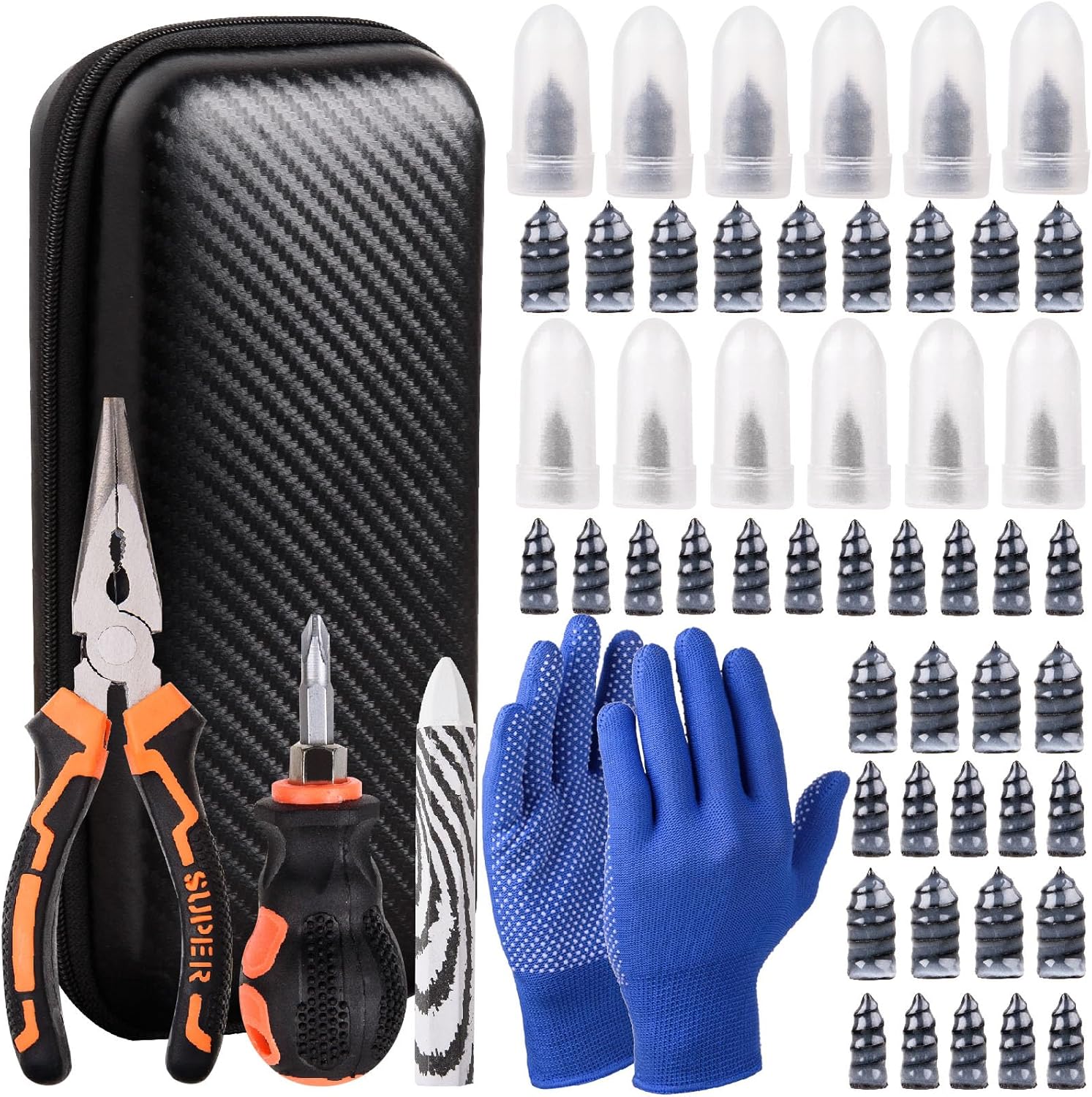
This tire sidewall puncture repair kit fixes flats fast without removing the tire, helping you get back on the road in minutes. It includes self-tapping repair nails, essential tools, gloves, and a portable storage bag for convenient roadside use. Designed for tubeless tires, it helps create a tight, leak-resistant seal for cars, motorcycles, trucks, SUVs, and ATVs.
How Can You Prevent Tire Damage?
You cannot prevent every road hazard or act of vandalism, but good tire care reduces the risk of preventable failures.
Check tire pressure at least monthly when the tires are cold. Use the vehicle manufacturer’s recommended pressure on the tire-information placard or in the owner’s manual—not the maximum pressure molded into the tire sidewall.
Inspect the tread and sidewalls for cuts, punctures, embedded objects, bulges, cracks, scrapes, abnormal wear, and repeated pressure loss. A TPMS warning is useful, but it does not replace manual pressure checks.
Slow down for potholes, curbs, broken pavement, and debris. After a hard impact, inspect the tire and wheel. Internal damage may exist even when the outside looks normal.
Stay within the vehicle’s load limits. Overloading and underinflation increase heat and structural stress.
For vandalism risk, parking in a well-lit or monitored location may help. Cameras can also provide evidence if damage occurs.
| Control | Purpose | Watch For |
|---|---|---|
| Secure, visible parking | Reduce tampering risk and improve evidence | Lighting and camera coverage |
| Monthly tire inspection | Catch damage before failure | Cuts, bulges, cracking, uneven wear |
| Cold-pressure check | Reduce underinflation-related stress | Repeated pressure loss |
| Care around potholes and curbs | Reduce impact damage | Wheel dents, sidewall bulges, vibration |
Documenting tire pressure, rotations, impacts, and previous repairs can also help a tire professional understand a later failure.
Frequently Asked Questions
Can You Tell if a Tire Was Slashed?
You can look for clues such as a narrow or clean-looking cut, several similar cuts, damage to multiple tires, camera footage, witnesses, or other signs of tampering. However, a cut by itself does not prove vandalism because glass, metal, stones, curbs, and other road hazards can also cut a tire.
How Can You Tell if a Tire Is About to Blow Out?
Warning signs can include a bulge, exposed cords, significant cracking, repeated pressure loss, abnormal vibration, severe uneven wear, or damage after a pothole or curb impact. Stop using a visibly damaged tire and have unexplained vibration or pressure loss inspected promptly.
Does a Tire Blowout Sound Like a Gunshot?
It can. A sudden tire failure may produce a sharp bang or pop followed by vibration, flapping sounds, or a strong change in steering. Sound alone does not identify the cause, so the tire should still be inspected after the vehicle is safely stopped.
What Is the Difference Between a Blown Tire and a Slashed Tire?
A blowout describes a rapid loss of tire pressure, usually while the tire is in use. It may leave a torn or heavily damaged tire. A slashed tire refers to a cut believed to have been deliberately made with a sharp object. Visual differences can suggest one cause or the other, but evidence and professional inspection may be needed to determine what actually happened.
Will a Slashed Tire Go Flat Immediately?
Not necessarily. Deflation speed depends on the depth, width, and location of the injury. A deep cut can cause rapid air loss, while a smaller opening may leak more slowly. Deflation speed alone cannot confirm whether a tire was deliberately slashed.
Can a Slashed Sidewall Be Repaired?
A sidewall slash is outside the USTMA passenger-tire puncture repair area and normally requires tire replacement. Repairable punctures are limited to qualifying injuries in the tread repair area, generally no larger than 1/4 inch or 6 mm.
Can a Tire Look Slashed After a Blowout?
Yes. A rapid failure, impact, or continued driving after pressure loss can tear and cut the sidewall. The wheel rim can also damage a deflated tire as it rotates. That secondary damage may make it difficult to determine the original cause by appearance alone.
Does Insurance Cover Slashed Tires?
Comprehensive auto coverage may cover slashed tires when the damage is considered vandalism. Coverage depends on your policy, deductible, insurer, and state. Document the damage and contact your insurer before assuming a claim will be covered or financially worthwhile.
Conclusion
A slashed tire and a blowout can look different, but the tire alone does not always tell the whole story. A narrow, clean-looking cut may raise suspicion of deliberate damage, while ragged tears, exposed cords, impact marks, and sudden failure while driving can point toward a blowout or other structural failure.
Do not accuse someone of vandalism based only on a cut pattern. Photograph the damage, consider the timing and surrounding evidence, and have the tire professionally inspected when the cause matters.
Most importantly, do not drive on a flat tire with significant sidewall or structural damage. Use a proper spare or roadside assistance, replace an unrepairable tire with the correct specification, and follow your vehicle manufacturer’s requirements—especially on AWD and 4WD vehicles.
Sources
- National Highway Traffic Safety Administration — TireWise — blowout response, tire pressure, inspection, tread depth, and tire-aging guidance.
- U.S. Tire Manufacturers Association — Puncture Repair Procedures — repairable tread area, 6 mm injury limit, off-wheel inspection, and proper repair method.
- U.S. Tire Manufacturers Association — Replacing Tires — tire specifications and replacement of fewer than four tires.
- U.S. Tire Manufacturers Association — Tire Facts — tire service life and age guidance.
- Continental Tires — Tire Damages — cuts caused by road conditions and sharp foreign objects.
- Progressive — Vandalism Coverage — general information on comprehensive coverage, documentation, and slashed-tire claims.