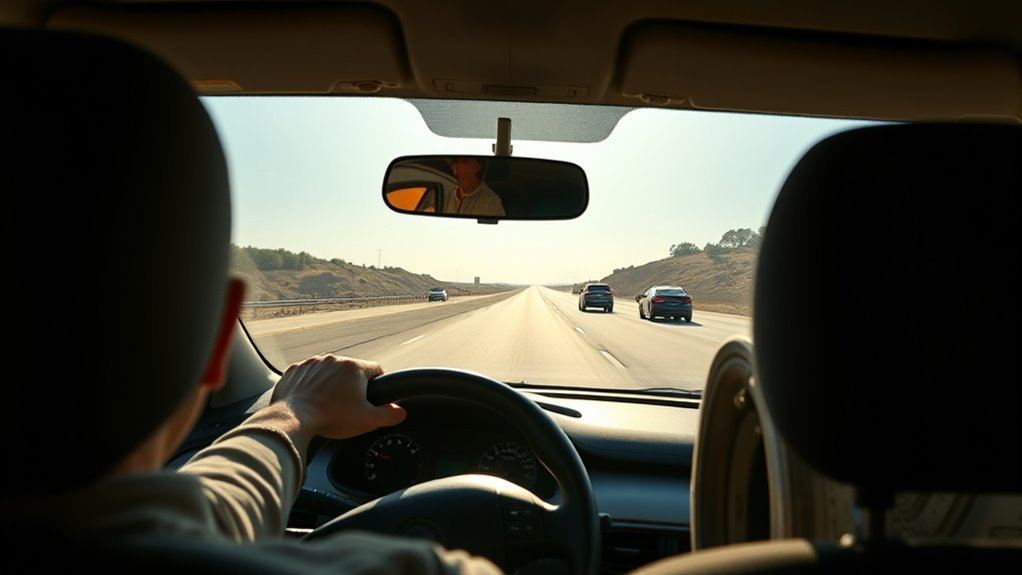
A tire blowout can feel violent and sudden, but the safest response is simple: keep the vehicle stable first, slow down gradually, and move out of traffic only when you have enough control. The biggest mistake is reacting too aggressively. Hard braking, sharp steering, or panic lane changes can make a controllable blowout turn into a crash.
Quick Answer
If a tire blows out while driving, hold the steering wheel firmly with both hands, keep the vehicle pointed straight, do not slam the brakes, and slowly ease off the accelerator. Once the vehicle slows and feels stable, signal or turn on hazards, steer to a safe shoulder, stop, and call for help if needed.
Key Takeaways
- Grip the wheel, stay calm, and keep the vehicle traveling straight before doing anything else.
- Do not slam the brakes. Let the car slow gradually, then brake gently only after control returns.
- Move to the shoulder or another safe area only when the vehicle is stable and traffic allows it.
- After stopping, turn on hazard lights, stay away from traffic, document damage, and call roadside assistance if changing the tire is unsafe.
- Prevent blowouts by checking cold tire pressure monthly, inspecting tread and sidewalls, avoiding overload, and replacing damaged or aged tires.
At a Glance
| Time Required | 10–60 seconds to regain control; longer for roadside safety and assistance |
| Difficulty | Moderate under stress, easier if you know the steps beforehand |
| Tools Needed | Hazard lights, phone, reflective triangles or flares if available, spare tire or repair kit only if safe to use |
| Cost | Usually the cost of a tow, roadside service, tire repair, or replacement tire |
Tire Blowout Recognition: Sounds, Vibrations, and Steering Cues
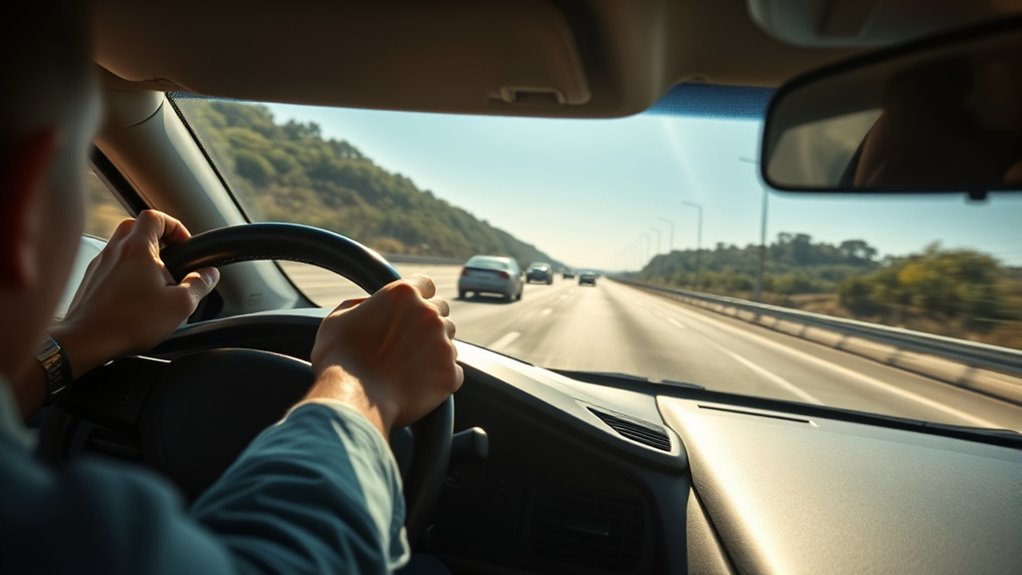
A tire blowout is a rapid loss of air pressure, and it usually gives you several warning cues at once. You may hear a loud boom or bang, followed by a whooshing sound as air escapes, then a repeated flapping or thumping as the damaged tire hits the road. That sound pattern is different from ordinary road noise because it starts suddenly and keeps repeating.
You may also feel a sharp vibration, a heavy steering wheel, or a strong pull to one side. A front-tire blowout is often felt more through the steering wheel. A rear-tire blowout may feel more like the back of the vehicle is swaying or fishtailing. Either way, the response is the same: steady the vehicle first, then slow down gradually.
Warning: Do not jerk the wheel or slam on the brakes when the tire fails. Sudden steering or braking can shift weight abruptly and make the vehicle harder to control.
Immediate Actions: What to Do in the First 10 Seconds After a Blowout
The first 10 seconds are about control, not stopping. Keep both hands on the wheel, hold your lane as much as possible, and look where you want the vehicle to go. The National Highway Traffic Safety Administration advises drivers to maintain tire safety because tires are the only part of the vehicle touching the road, and a blowout can quickly make the vehicle difficult to control.
- Stay calm and grip the wheel firmly. Use both hands and keep your shoulders steady.
- Keep the vehicle pointed straight. Avoid sharp turns or sudden lane changes.
- Do not slam the brakes. Let the vehicle slow naturally at first.
- Ease off the accelerator slowly. A gradual speed drop helps keep the car stable.
- Look where you want to go. Your hands tend to follow your eyes, so focus down the lane or toward a safe shoulder.
Pro Tip: If traffic is heavy, resist the urge to cross multiple lanes immediately. Staying predictable gives other drivers more time to react.
Regain Control: How to Steer and Decelerate Safely
Once you have the wheel steady, allow the vehicle to slow in a controlled line. AAA recommends holding the steering wheel with both hands, maintaining control, slowly releasing the accelerator, then steering in the direction you want the vehicle to go. This keeps your response smooth instead of panicked.
Hold the Wheel Firmly
Keep your hands at about 9 and 3 on the steering wheel. This gives you control without overcorrecting. If the car pulls left or right, counter it with small, deliberate steering inputs. Do not fight the vehicle with big movements. A blowout already changes how the car handles, so your goal is to keep it balanced and predictable.
- Grip the wheel with both hands.
- Keep your eyes up and look where you want to go.
- Make small steering corrections.
- Avoid oversteering if the car sways or pulls.
Ease Off the Accelerator
Your instinct may be to brake hard, but the safer first move is to ease off the accelerator and let the vehicle slow gradually. As speed drops and the vehicle becomes more stable, you can apply the brakes gently. If the vehicle still feels unstable, wait until it slows more before braking.
After you have slowed to a safe speed, activate your hazard lights if you can do so without taking your attention off the road. Then steer carefully toward the shoulder, an exit ramp, a parking lot, or another safe area away from moving traffic.
Where and How to Stop: Securing the Scene and Warning Other Drivers
Once the car is under control, move out of traffic gradually. Choose the widest available shoulder or a clear area away from curves, hills, bridges, and narrow medians. Stop as far from moving traffic as you safely can.
If a tire blows, control the vehicle first, slow down second, and pull over only when the car is stable enough to move safely.
- Turn on hazard lights as soon as it is safe.
- Set the parking brake after stopping.
- Keep seatbelts fastened until you know it is safe to exit.
- Exit on the side away from traffic whenever possible.
- Place reflective triangles or flares behind the vehicle only if you can do so safely.
- Keep passengers away from the roadway and behind a barrier if one is available.
Note: If you stop on a freeway shoulder, in poor visibility, on a bridge, or near fast-moving traffic, calling roadside assistance is usually safer than trying to change the tire yourself.
[Products Worth Considering]

This car emergency kit keeps essential roadside tools organized in a durable, portable bag so you can respond quickly during common driving emergencies. It includes battery jumper cables, a bright LED headlight, first aid supplies, a tire pressure gauge, and safety essentials like gloves and an emergency poncho. Designed for trunk or storage use, it helps you be prepared for dead batteries, minor malfunctions, and unexpected roadside issues.

This ecocstm ratchet wrench is designed to make emergency and routine tire changes faster with a 360° rotating head and quick forward/reverse switching. The extended handle provides extra leverage to reduce effort and hand fatigue, while the adapter helps fit many scissor jacks on cars, SUVs, trucks, and vans. Built for reliable performance with durable construction, it’s a practical travel essential for on-the-road preparedness.

Monitor tire tread wear with a smart, color-coded depth gauge that shows clear condition ranges at a glance. The bar is range marked for fast, easy readings, helping you maintain safer traction and performance. Each gauge is portable with a pocket clip, and the set includes 20 units for daily use and sharing.
After You Stop: Inspect Damage, Document the Incident, and Get Help
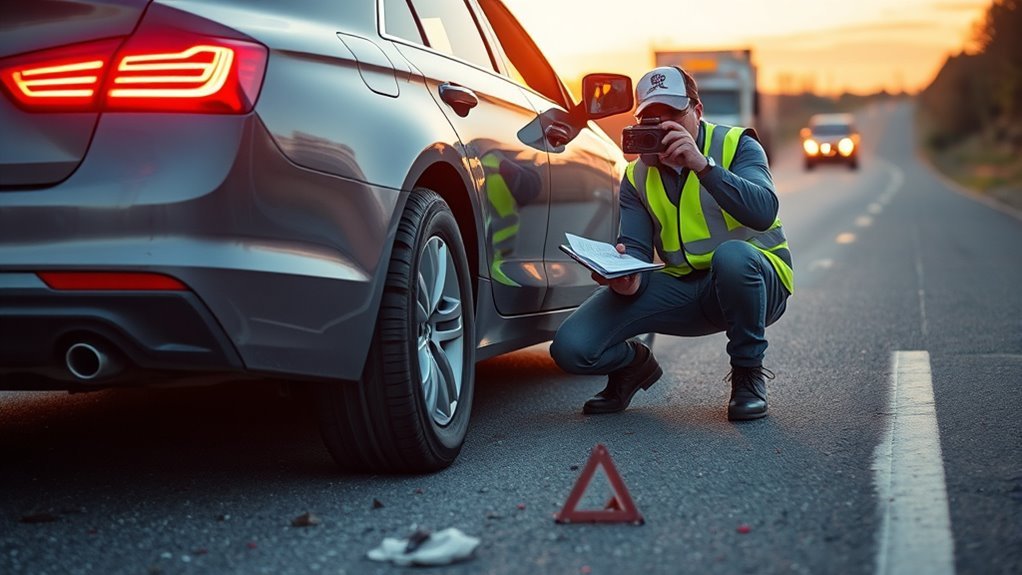
After you are parked safely off the road, inspect the blown tire only if it is safe to exit. Look for visible damage such as a sidewall tear, exposed cords, tread separation, punctures, cracked rubber, wheel damage, or debris in the road. Check the other tires too, because a road hazard may have damaged more than one.
Take photos of the tire, wheel, vehicle position, road conditions, skid marks, debris, and any related property damage. Record the time, location, weather, and what happened before the blowout. This information can help with insurance claims, roadside service records, or a police report if one is needed.
- Call 911 if anyone is injured, the vehicle is blocking traffic, debris is creating a hazard, or you feel unsafe.
- Call roadside assistance if the vehicle is in a risky spot, you do not have the right tools, or you are unsure how to change the tire.
- Do not keep driving on the blown tire. Even a short distance can damage the wheel, suspension, brake lines, or bodywork.
- Use a temporary spare only as directed. Follow the speed and distance limits printed on the spare tire or listed in your owner’s manual.
Can You Change the Tire Yourself?
You can change the tire yourself only when the vehicle is completely out of traffic, on firm level ground, and you have the right spare, jack, lug wrench, and wheel-lock key if needed. If any of those conditions are missing, call for help instead.
Before lifting the vehicle, put it in park or in gear, set the parking brake, and keep passengers away from the road. Never place any part of your body under a vehicle supported only by a jack. If the shoulder is narrow, the ground is soft, or traffic is close, do not attempt the repair there.
Warning: A roadside tire change is not worth risking your life. If traffic is close enough to make you nervous, stay clear of the roadway and wait for professional help.
[Products Worth Considering]

Measure tire tread depth quickly and accurately with this LUMITECO dial gauge that reads in 1/32" increments up to 14/32". The color-coded green/yellow/red zones make it easy to judge tire wear and know when replacement is needed. A rugged, compact design with a protective pouch helps keep the gauge ready for use on cars, trucks, motorcycles, and more.

The SAFELIFE dial tire tread depth gauge measures tread depth in 1/32 inch increments with clear, easy-to-read 2-inch dial face. Color zones using a traffic light system help you quickly judge whether tread is low, marginal, or ample for safer driving. Built with a durable zinc cast body and a metal detect probe for precise, comfortable use across cars, motorcycles, trucks, and buses.

Milton S-921 pencil tire pressure gauge helps you maintain optimal tire pressure for passenger cars with accurate readings in PSI and kPa. It features a built-in deflator valve for convenient pressure adjustments, plus a single chuck head and nylon indicator bar for easy use on the go. Built from durable plated brass and designed for reliable performance, it’s a practical road trip and cold-weather maintenance tool.
Preventing Blowouts: Maintenance, Seasonal Checks, and When to See a Pro
Many blowouts are preventable with basic tire care. The NHTSA tire safety booklet says proper tire pressure, correct vehicle loading, avoiding road hazards, and inspecting tires for cuts and irregularities are among the most important steps for preventing tire failures such as tread separation, blowouts, and flats.
[Products Worth Considering]

This spare tire tool kit is designed for the 2004 to 2018 Ford F-150 to help you loosen and tighten wheel lug nuts and manage the spare tire and provided jack functions from underneath the vehicle. It includes the lug nut wrench and extension pieces plus a convenient storage carrying case for organized transport. The jack itself is not included.

Accurately measure tire tread depth with a calibrated gauge marked from 0 to 1 inch in 1/32 inch increments. The color-coded bar helps you quickly identify tread condition ranges, supporting safe driving for trucks, motorcycles, automobiles, and passenger vehicles.

Malco tire mounting and demounting lubricant is a ready-to-use tire lube formulated to reduce friction during tire installation for passenger cars, light trucks, farm tires, and heavy-duty equipment. It provides rust-inhibiting protection to help reduce corrosion on rims and wheels, and helps support proper tire bead seating during inflation to reduce air leakage. The silicone-free, soap-free formula is whitewall safe to help prevent discoloration on whitewall tires and sensitive sidewall markings.
Tire Pressure Checks
Check tire pressure at least once a month and before long trips. Measure pressure when the tires are cold, meaning the vehicle has been parked for several hours or has not been driven far. Use the vehicle manufacturer’s recommended PSI on the driver-side door placard or in the owner’s manual, not the maximum pressure printed on the tire sidewall.
- Check all four tires and the spare.
- Use a reliable tire pressure gauge.
- Adjust pressure when the tires are cold.
- Do not overload the vehicle beyond the tire and vehicle load limits.
Tread Depth and Visible Damage
Inspect the tread and sidewalls monthly. Replace tires that show exposed cords, sidewall bulges, cracks, deep cuts, tread separation, or repeated pressure loss. The U.S. Tire Manufacturers Association notes that tires should be replaced when tread wears down to 2/32 of an inch, and many drivers choose to replace sooner for better wet-weather traction.
Built-in treadwear bars can help you spot worn tread. When the tread is level with those bars, the tire is at the replacement point. A tread depth gauge is more accurate than guessing by sight.
Professional Tire Inspection
Have a tire professional inspect your tires if you notice vibration, pulling, uneven wear, sidewall cracking, repeated low pressure, or impact damage from a pothole or curb. Ask the shop to check tire condition, tread depth, inflation pressure, wheel alignment, balancing, and whether the tire size and load rating match the vehicle.
Do not rely on tread depth alone. Tires age even when they are not driven much. Bridgestone recommends monthly pressure checks, professional inspections after five years, and replacing tires manufactured 10 years ago or longer, including spares. Always follow the shorter replacement guidance from your vehicle manufacturer, tire manufacturer, or tire professional.
Seasonal and Road Trip Checks
Heat, heavy loads, long highway drives, and underinflation can increase stress on tires. Before summer travel or any long trip, check tire pressure, inspect tread and sidewalls, confirm the spare is usable, and make sure your jack, lug wrench, tire sealant kit, or inflator is actually in the vehicle.
- Check tires before long highway trips.
- Slow down and avoid potholes, road debris, and curbs when possible.
- Rotate tires on the schedule in your owner’s manual.
- Get alignment checked if the vehicle pulls or tires wear unevenly.
- Register new tires or keep tire purchase records so recall notices can reach you.
Frequently Asked Questions
Can a blowout cause sudden loss of power or stalling?
A blowout itself usually affects handling first, not engine power. However, a severe tire failure can damage nearby components, trigger warning systems, or cause the driver to lose control and come to a stop. Treat any sudden loss of control as an emergency: stabilize the vehicle, slow gradually, and pull over safely.
Will insurance cover damage from a blowout on old tires?
Coverage depends on your policy, the cause of the blowout, and whether the insurer views the damage as sudden accidental damage or poor maintenance. Photograph the tire, wheel, road conditions, and vehicle damage, then contact your insurer promptly. If the tire was badly worn, cracked, or overdue for replacement, coverage may be limited.
Can I continue driving slowly after a minor blowout?
No. Do not keep driving on a blown tire. Even slow driving can destroy the tire, bend the wheel, damage suspension parts, and reduce control. Pull over as soon as it is safe, turn on hazard lights, and use a spare, repair kit, tow, or roadside assistance.
Do roadside assistance costs get reimbursed after a blowout?
They may be reimbursed if you have roadside assistance, auto club coverage, a tire road-hazard plan, a credit card benefit, or insurance coverage that includes towing. Keep the receipt, service report, and photos, then submit the claim according to your provider’s rules.
Should I report a blowout to the police if no one was injured?
You may not need a police report for a simple tire failure with no injury, no crash, and no road hazard. Report it if someone is injured, another vehicle or property is damaged, the car blocks traffic, debris is in the roadway, or your state, insurer, rental company, or fleet policy requires a report.
Is a front tire blowout worse than a rear tire blowout?
A front blowout often feels more dramatic because it affects steering directly. A rear blowout may cause swaying or fishtailing. Both can be dangerous, and the safe response is the same: hold the wheel firmly, avoid hard braking, slow gradually, and move to safety when stable.
What is the most common mistake drivers make during a tire blowout?
The most common dangerous mistake is overreacting: slamming the brakes, jerking the wheel, or swerving across lanes. A controlled response works better. Keep the car straight, ease off the accelerator, let speed drop, and then steer gently to a safe stopping area.
Conclusion
A tire blowout is scary, but it is manageable when you know the order of action: control first, slow down second, pull over third. Keep both hands on the wheel, avoid hard braking, ease off the gas, and steer smoothly toward safety once the vehicle stabilizes. After stopping, protect yourself from traffic, document the damage, and call for help if the location or repair feels unsafe. For prevention, check tire pressure monthly, inspect tread and sidewalls, avoid overloading, and replace tires that are worn, damaged, or aged out.
Sources
- National Highway Traffic Safety Administration: TireWise — tire safety, maintenance, recalls, and consumer guidance.
- NHTSA Tire Safety Brochure — tire pressure, load limits, inspection, and failure prevention.
- AAA: Tire Blowout Tips — emergency driving steps during a tire blowout.
- National Transportation Safety Board: Selected Issues in Passenger Vehicle Tire Safety — tire-related crash context and prevention emphasis.
- U.S. Tire Manufacturers Association: Tire Care Essentials — tread depth, inspections, and tire maintenance basics.
- Bridgestone: Tire Replacement Guidance — tire age, inspection, and replacement recommendations.