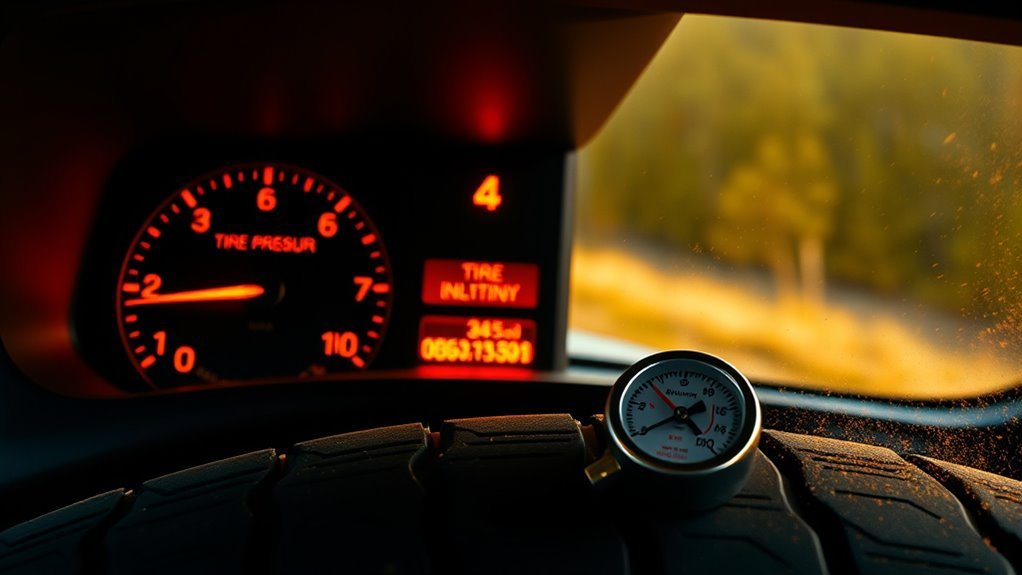
A Toyota 4Runner TPMS light can come on even when the tires do not look flat. Tire pressure is difficult to judge by sight, and a small pressure loss may be enough to trigger the system. The right fix depends on the warning pattern, actual cold-tire readings, your model year, and whether your 4Runner monitors its spare tire.
Quick Answer
Check every road tire with an accurate gauge while cold and inflate it to the driver-door placard—not the tire sidewall. Then use the model-year-specific TPMS initialization procedure. Some 4Runners monitor the spare, but many do not. A light that flashes before staying on points to a system fault.
Key Takeaways
- Measure tire pressure when the tires are cold; visual inspection is not reliable.
- Use the pressure on the driver-door Tire and Loading Information label, not a universal PSI number or the tire sidewall maximum.
- A solid TPMS light usually indicates low pressure. A light that flashes for about a minute and then remains on indicates a system malfunction.
- Spare-tire monitoring varies by model year and tire package, so confirm whether your spare has a TPMS sensor.
- Pressure initialization and sensor-ID registration are different procedures.
At a Glance
| Time Required | 10–30 minutes for pressure checks and initialization |
| Difficulty | Easy for pressure correction; professional equipment may be needed for sensor faults |
| Tools Needed | Accurate tire-pressure gauge, air source, valve caps, and the correct owner’s manual |
| Cost | Usually little or no cost for pressure correction; diagnosis and sensor replacement vary by parts and labor |
Warning: Do not keep driving on a tire that is visibly damaged, extremely low, separating, or causing pulling, vibration, or unstable handling. Move to a safe location and install the spare or request roadside assistance. Never crawl beneath a 4Runner supported only by a jack.
TPMS Light On but Tires Look Fine? Start Here
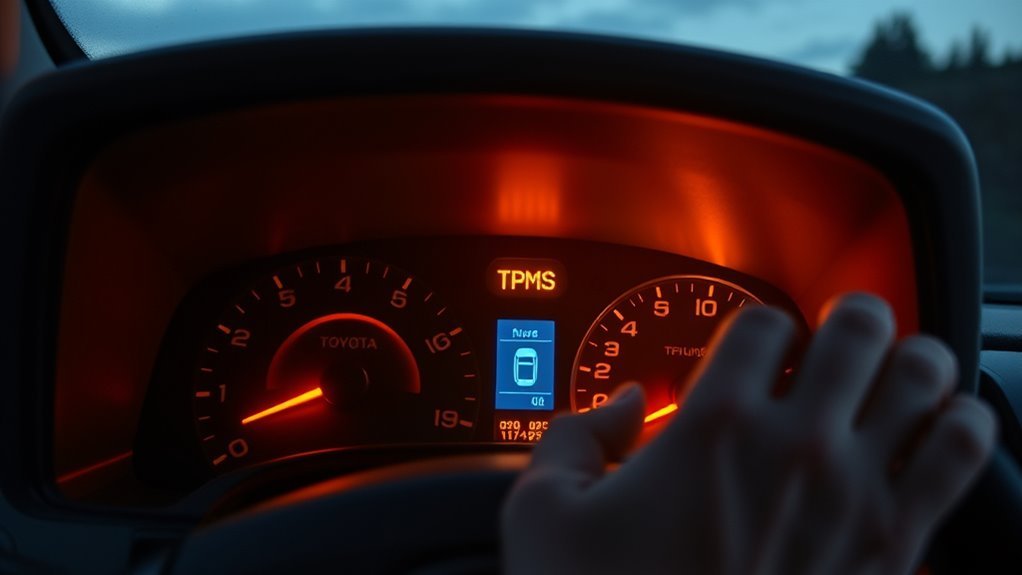
A tire can be significantly underinflated without looking flat. According to the National Highway Traffic Safety Administration, visual inspection is not a substitute for checking pressure with an accurate gauge.
What the Warning-Light Pattern Means
| Warning Pattern | Likely Meaning | What to Do |
|---|---|---|
| Solid light | One or more monitored tires may be significantly underinflated. | Stop safely, inspect the tires, and measure all applicable pressures while cold. |
| Comes on during a cold morning, then turns off | Pressure may be marginally low and dropping below the warning threshold overnight. | Check and correct pressure rather than waiting for warmer tires to hide the warning. |
| Flashes for about 60–90 seconds, then stays on | The TPMS has detected a system malfunction. | Check pressure manually and arrange TPMS diagnosis if the pattern repeats. |
Check the Tires Correctly
- Park the 4Runner for at least three hours, or check the tires before driving more than a short distance.
- Find the Tire and Loading Information label on the driver-side door jamb.
- Remove each valve cap and measure every road tire with the same reliable gauge.
- Inflate each tire to the placard pressure. Do not use the maximum pressure molded into the tire sidewall as the vehicle setting.
- Recheck each reading after adding or releasing air, then reinstall the valve caps.
- Inspect for nails, screws, cuts, sidewall bubbles, cracked valve stems, bent wheels, or an audible leak.
Pro Tip: Photograph the driver-door pressure label and keep the image on your phone. This prevents confusion when several household vehicles require different pressures.
TPMS is a backup warning system, not a replacement for monthly pressure checks with an accurate gauge.
How to Reset Your 4Runner’s TPMS Light
Correct the pressure before attempting any reset or initialization. Initializing the system while a tire is low can store an incorrect reference pressure and make future warnings less useful.
First, See Whether the Light Clears Normally
After all monitored tires are set to the placard pressure, start the vehicle and allow the system time to update. The light may go out after several minutes or during a short normal drive. There is no universal requirement to drive above 50 mph for ten minutes.
Typical 2020–2024 Instrument-Cluster Procedure
Many later fifth-generation 4Runners use the multi-information display rather than a physical button. The Toyota 2023 4Runner Quick Reference Guide gives the following general sequence:
- Set every monitored tire to the correct cold pressure.
- Stop the vehicle and switch the ignition on.
- Use the steering-wheel controls to open the settings menu in the multi-information display.
- Select Vehicle Settings, then open TPWS.
- Select and hold Set Pressure.
- Release the control after the TPMS warning light blinks three times, then allow the system to complete initialization.
Menu wording can differ by model year, trim, and instrument cluster. Confirm the sequence in the manual supplied with your vehicle.
Earlier Models and 2025-or-Newer 4Runners
Some earlier vehicles use a physical initialization switch, while newer-generation models may use different menu wording or controls. Do not assume an under-dash button is present. Use Toyota’s official owner’s-manual portal, select the exact model year, and follow the tire-pressure warning-system procedure listed there.
Note: Initialization teaches the system a pressure reference. Sensor-ID registration tells the vehicle which transmitters are installed. Replacing a sensor or changing to another wheel set may require registration even after pressure initialization is complete.
Still On? Check Whether Your Spare Tire Is Monitored
Spare-tire monitoring is not the same on every 4Runner. Some configurations include a TPMS transmitter in the spare, while others do not. An unmonitored spare cannot trigger the TPMS warning, although it should still be checked regularly so it is usable during an emergency.
[Products Worth Considering]
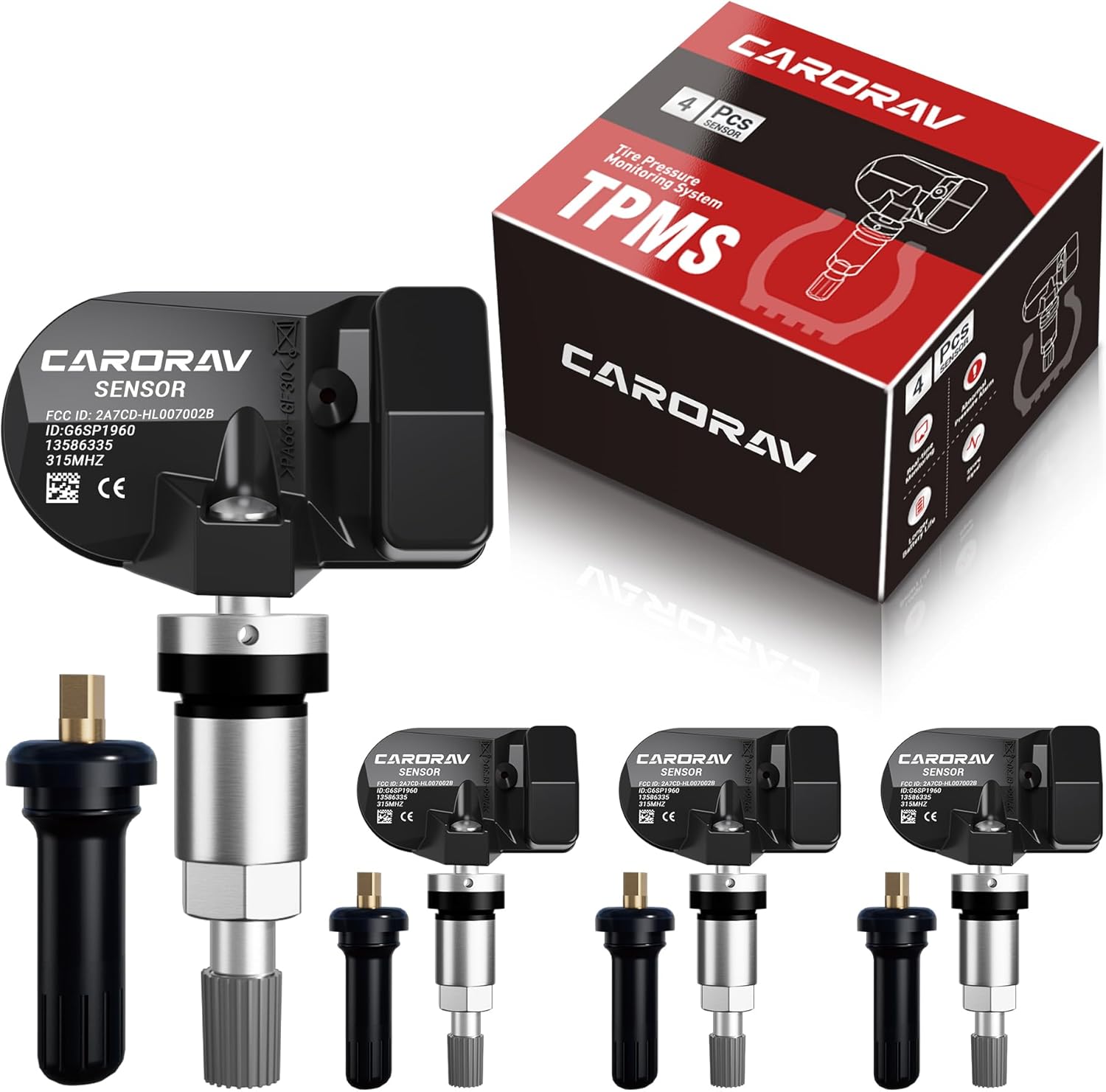
Replace worn or missing TPMS sensors with CARORAV pre-programmed GM-compatible sensors for a smoother installation experience. These 315MHz replacement sensors help monitor tire pressure in real time with long battery life, and they are designed to withstand harsh temperatures. Manual or OBDII relearn may be required to reset the system for proper recognition.

Replace your worn or missing TPMS sensors with pre-programmed, direct-fit sensors for compatible Ford, Lincoln, and select Mazda models. Each sensor comes ready to activate with a scan tool, helping restore accurate tire pressure monitoring and trouble-free installation. Built with a long-life CR2032 battery and tested before factory release, this set provides dependable performance with a one-year warranty.
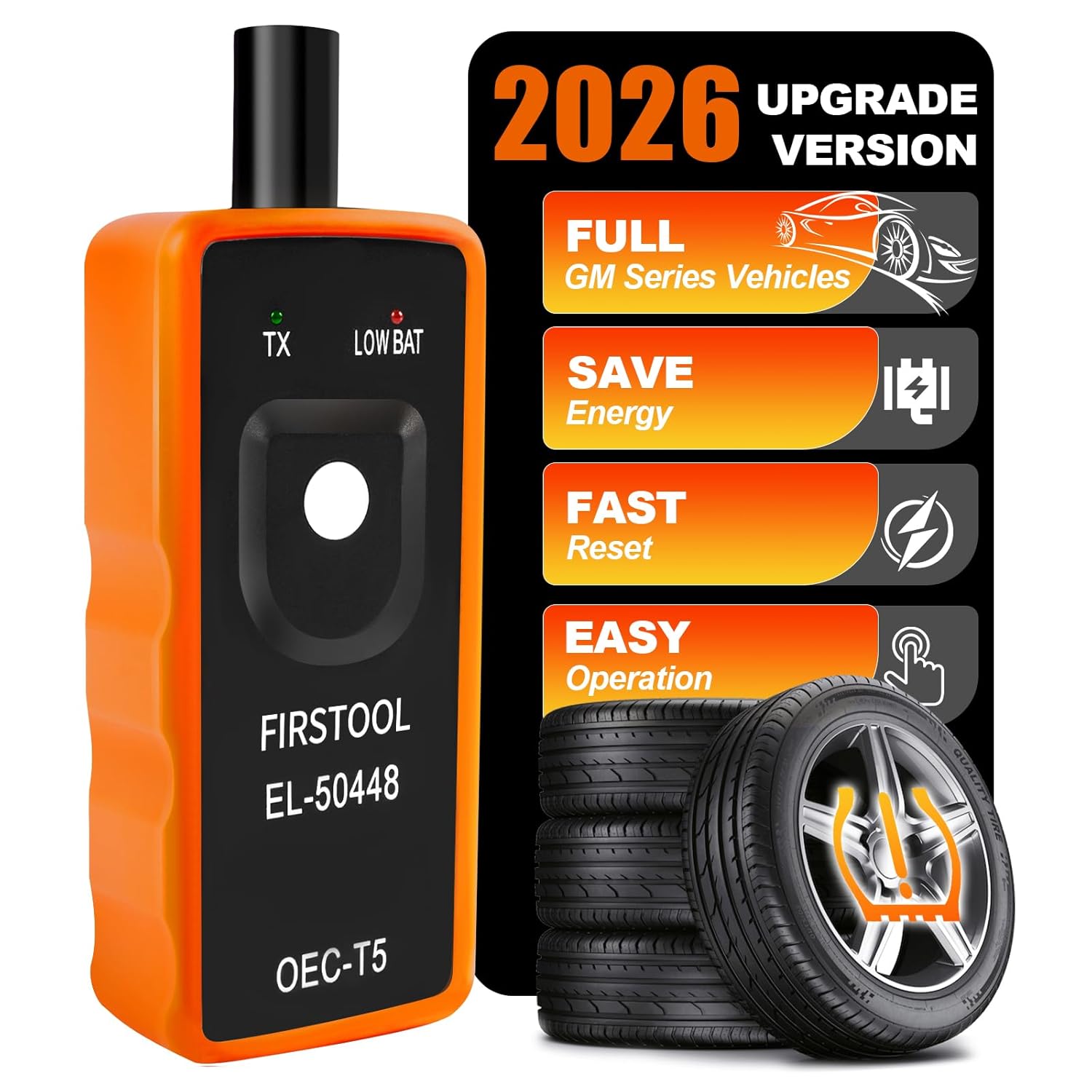
This TPMS relearn tool helps you quickly activate, match, and reset GM tire pressure sensors to keep the vehicle monitoring system working properly. It clears tire pressure alarms and dashboard warning lights after sensor replacement or tire rotation, and supports learning for common 315/433 MHz TPMS sensors. Designed for simple one-button operation, it can help you avoid unnecessary trips to repair shops.
How to Tell Whether the Spare Has a Sensor
- Check the tire-pressure display, if equipped, to see whether five pressures are shown.
- Read the TPMS section of the exact model-year owner’s manual.
- Ask a tire shop to scan the spare valve stem for a transmitter signal.
- Review service records if the spare wheel or valve stem has been replaced.
If the spare is monitored, inflate it to the pressure specified by Toyota for that tire and configuration. Do not assume it uses the same pressure as the road tires or a generic 36–38 PSI range.
If the spare is not monitored, inspect it anyway for low pressure, cracking, valve leakage, and damage. A flat or deteriorated spare can leave you without a usable backup even though it has no effect on the TPMS light.
Why Cold Weather Affects Your 4Runner’s TPMS
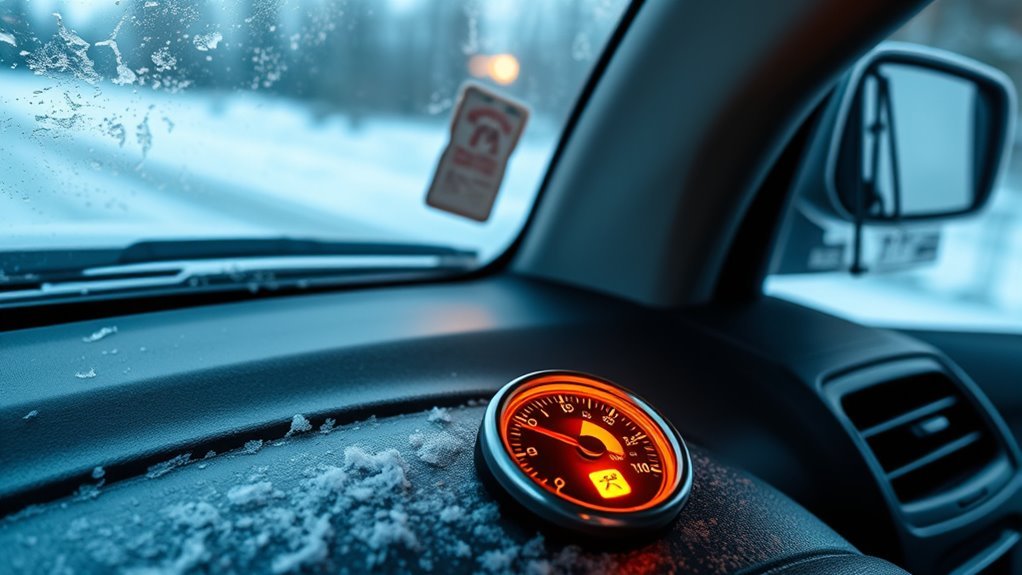
Air pressure decreases as temperature falls. As a general rule, passenger-vehicle tires may lose about 1 PSI for every 10°F drop in temperature, although the exact change varies. Michelin’s cold-weather guidance recommends checking pressure regularly as seasonal temperatures change.
A tire that was near the minimum acceptable pressure during warm weather may cross the warning threshold overnight. The light may turn off later as the tire warms, but that does not make the morning warning false. Measure the tires cold and restore them to the door-placard pressure.
- Check pressure before driving, not immediately after a highway trip.
- Recheck after major seasonal temperature changes.
- Do not intentionally overinflate the tires to prevent future warnings.
- Investigate one tire that repeatedly loses more pressure than the others.
Check for a Leak Before Blaming the Sensor
A tire can read correctly after inflation and still lose enough air to turn the light on again. Record all cold readings and compare them over several days. One tire dropping faster than the others commonly points to a leak rather than a TPMS fault.
Common leak locations include:
- A nail, screw, or other tread puncture
- A leaking valve core or cracked valve stem
- Corrosion or debris where the tire bead seals against the wheel
- A bent or cracked wheel
- Damage around the TPMS valve-stem seal
A tire shop can use leak-detection solution, a water tank, and a TPMS scan tool to separate an air leak from an electronic fault. Do not attempt to plug a puncture in the shoulder or sidewall; those areas generally require tire replacement after professional inspection.
When a Bad Sensor—not Low Air—Is Causing the Light
If all applicable tires remain at the correct cold pressure but the light flashes before staying on, the TPMS has detected a malfunction. A failed wheel sensor is common, but it is not the only possibility.
Possible causes include:
- A depleted sealed sensor battery
- A sensor damaged during tire mounting or wheel repair
- A replacement sensor that has not been registered to the vehicle
- An incompatible aftermarket sensor or incorrect radio frequency
- A second wheel set whose sensor IDs are not selected or registered
- A receiver, antenna, wiring, or control-module communication fault
TPMS sensor batteries are sealed inside the sensor and are not normally replaced separately. Schrader TPMS describes typical battery life as roughly five to ten years, although temperature, mileage, transmission frequency, and sensor design affect service life.
A qualified tire shop or Toyota technician can scan each wheel, identify its sensor ID, read signal strength and battery status when supported, and confirm whether the vehicle recognizes it. Replace only the failed or incompatible components unless inspection shows that several same-age sensors are near the end of their service life.
[Products Worth Considering]

Upgrade your Toyota tire setup with these corrosion-resistant, leak-proof valve stem caps designed to help protect the valve core from water, snow, and road grime. The caps feature a snug rubber seal and durable copper alloy construction to resist rust and oxidation while maintaining stable tire pressure. Ideal for replacing worn original caps and keeping your wheels looking clean and stylish.

The VEHLIVE SU-50448 II TPMS relearn tool provides a fast activation reset to restore accurate tire pressure monitoring after sensor replacement or tire rotation. It supports 315 MHz and 433 MHz GM series sensors and helps clear dashboard pressure warnings. With simple two-button operation and horn-confirmed relearning order, you can reprogram sensors conveniently at home.

A concentrated tire and tube mounting compound designed to help simplify mounting rubber tires and tubes on passenger, semi truck, construction, and OTR applications. Its ultra-thick formula packs beads effectively and includes rust inhibitors to help protect against corrosion during use.
TPMS Light After a Tire Rotation or Wheel Service
A normal rotation should not create low pressure, but the timing of the warning can reveal a service-related problem. Recheck all pressures first, including any monitored spare, because the tires may have been adjusted incorrectly or one valve may be leaking.
If the light flashes after new tires, replacement sensors, or a wheel-set change, ask the shop to verify:
- Every sensor is compatible with the exact model year.
- All required sensor IDs were registered successfully.
- The correct wheel set is selected, if the vehicle supports stored sets.
- No sensor or valve stem was damaged during mounting.
- Pressure initialization was completed only after the tires were adjusted to specification.
Disconnecting the 12-volt battery is not a dependable TPMS repair. It does not correct low pressure, replace a dead sensor battery, repair a leak, or guarantee that missing sensor IDs will be registered.
[Products Worth Considering]

Malco tire mounting and demounting lubricant is a ready-to-use tire lube formulated to reduce friction during tire installation for passenger cars, light trucks, farm tires, and heavy-duty equipment. It provides rust-inhibiting protection to help reduce corrosion on rims and wheels, and helps support proper tire bead seating during inflation to reduce air leakage. The silicone-free, soap-free formula is whitewall safe to help prevent discoloration on whitewall tires and sensitive sidewall markings.
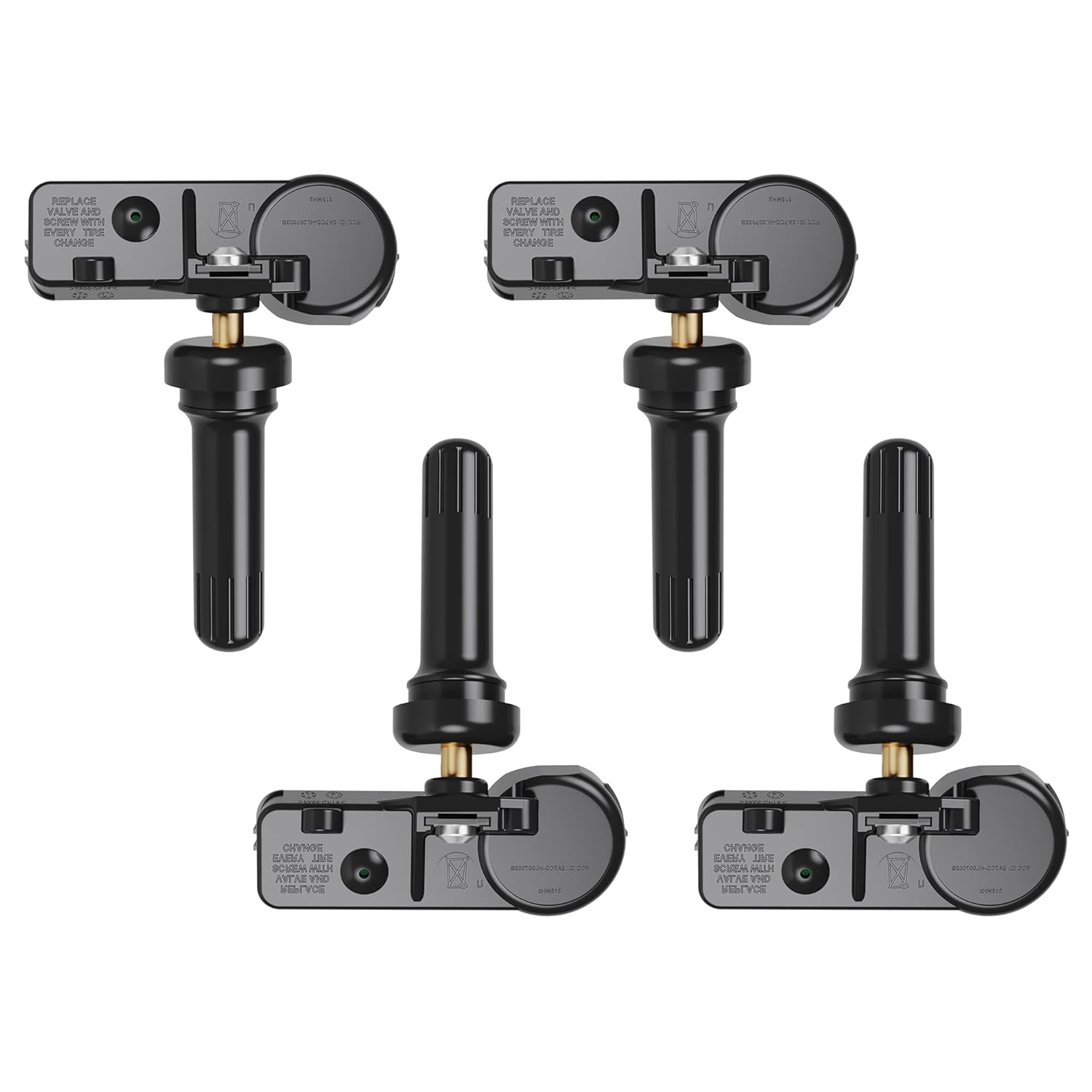
Replace worn or faulty TPMS sensors with this brand new 315MHz GM-compatible replacement set for select Chevy, GMC, Buick, Cadillac, and similar vehicles. These sensors are pre-programmed for your make/model/year and typically only require activation with a scan tool. Built for long service life with a high-temperature battery, they help maintain reliable tire pressure monitoring for safer driving.

Replace worn or malfunctioning GM TPMS sensors with this 433MHz pre-programmed sensor set designed for compatibility with many Chevrolet, Buick, GMC, and Cadillac models. It includes guidance for proper OBDII relearning/pairing after installation and supports reliable long-term operation with a high-performance CR2032 battery. Quality tested for durability and performance to help restore accurate tire pressure monitoring.
When to Stop Driving and Get Help
You can usually drive cautiously to an air pump or nearby tire shop when the tires appear undamaged, the vehicle handles normally, and pressure is only moderately low. Reduce speed, avoid heavy loads, and check the tires as soon as practical.
Stop driving and arrange roadside assistance when:
- A tire is visibly flat or rapidly losing air.
- You find a sidewall bubble, cut, exposed cords, or tread separation.
- The vehicle pulls, shakes, thumps, or becomes difficult to control.
- A tire will not hold enough pressure to reach a service location safely.
- You are unsure whether the warning is accompanied by physical tire damage.
Frequently Asked Questions
How much does it cost to replace a 4Runner TPMS sensor?
There is no single installed price. The total depends on whether you choose a Toyota or compatible aftermarket sensor, local labor, tire removal and remounting, valve hardware, balancing, and sensor-ID registration. Ask for an itemized, VIN-specific quote before authorizing replacement.
Can I drive my 4Runner with the TPMS light on?
Check the tires before continuing. A short, cautious drive may be reasonable when pressure is only moderately low, the tire is undamaged, and handling is normal. Do not drive on a flat, rapidly leaking, visibly damaged, or unstable tire.
Does the spare tire trigger the TPMS light on every 4Runner?
No. Spare-tire monitoring varies by model year, trim, tire package, and equipment. Check the pressure display, scan the spare for a transmitter, or consult the exact Toyota owner’s manual to determine whether your spare is monitored.
Why did the TPMS light come on after a tire rotation?
The timing may be coincidental, or a tire may have been set to the wrong pressure or developed a valve leak. A basic rotation normally keeps the same sensors on the vehicle, but replacement sensors or a different wheel set may require ID registration.
How long should the TPMS light take to turn off after inflation?
It may turn off after the system receives updated readings during several minutes of operation or a short normal drive. If it remains on, recheck every monitored tire cold and follow the model-year-specific initialization procedure. A flashing-then-solid light needs system diagnosis.
Will disconnecting the battery reset the TPMS light?
It is not a reliable fix. Battery disconnection does not repair low pressure, an air leak, a failed sensor, or missing sensor registration. Correct the underlying cause and use Toyota’s specified initialization or registration process.
Conclusion
A Toyota 4Runner TPMS warning deserves a measured response rather than guesswork. Start with accurate cold-tire readings and the pressure on the driver-door placard. Check whether your configuration monitors the spare, inspect for leaks, and use the initialization procedure written for the exact model year.
If the light flashes before remaining on, or stays illuminated after the tires hold the correct pressure, have the system scanned. A technician can distinguish a failed sensor from an unregistered ID, incompatible wheel hardware, or a communication fault. The warning system supports tire maintenance, but regular pressure checks remain essential.
Sources
- Toyota 2023 4Runner Quick Reference Guide — TPMS indicator behavior and instrument-cluster initialization procedure
- Toyota Owner’s Manuals and Warranty Information — model-year-specific pressure, initialization, registration, and equipment information
- NHTSA TireWise — solid and flashing TPMS warnings, visual-inspection limits, and routine pressure checks
- NHTSA Winter Driving Tips — cold-tire measurements and use of the vehicle placard instead of the sidewall maximum
- Michelin Cold-Weather Tire Guidance — approximate pressure changes as temperatures fall
- Schrader TPMS Sensor Guidance — sensor construction and typical sealed-battery service life