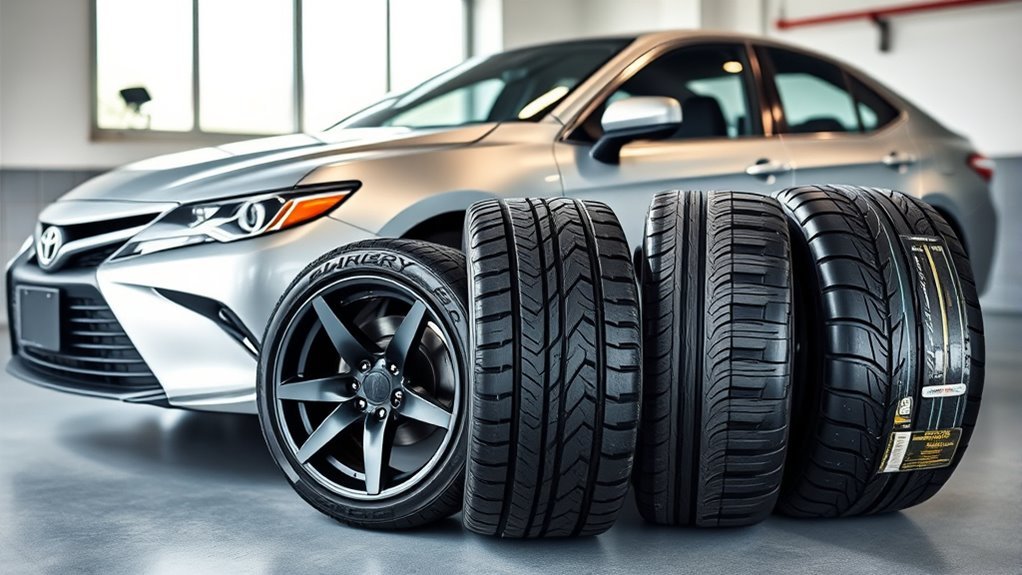
For most Toyota Camry drivers, a touring or grand-touring all-season tire is the best everyday choice because it usually favors a quiet ride, predictable handling, useful tread life, and year-round convenience. A performance tire may be a better fit when steering response and dry-road cornering matter more than maximum comfort, efficiency, or warranty mileage. The right answer still depends on your Camry’s model year, trim, tire size, climate, and the exact tire model.
Quick Answer
Choose touring all-season tires for a Toyota Camry if you mainly commute, take highway trips, and value comfort, low noise, tread life, and easy year-round use. Choose performance all-season or summer tires when you are willing to trade some ride comfort and longevity for quicker steering and stronger cornering grip.
Key Takeaways
- Touring versus performance describes a tire’s priorities; it does not tell you whether the tire is summer, all-season, or winter-rated.
- A grand-touring all-season tire is the strongest default for most Camry commuters.
- An ultra-high-performance all-season tire offers a useful middle ground for sharper handling without requiring a separate summer-only setup.
- Wet, snow, noise, wear, and fuel-efficiency results depend on the exact tire model—not the category name alone.
- Always match the tire size, load capacity, and other specifications listed for your Camry’s year and trim.
Touring vs. Performance Tires for a Toyota Camry
The main tradeoff is comfort and long-distance practicality versus steering response and cornering grip. Touring tires are normally designed around quiet operation, ride quality, stable highway manners, and longer wear. Performance tires place more emphasis on steering precision, braking response, lateral grip, and high-speed stability within their rated operating conditions.
These are broad tendencies rather than guarantees. A well-designed performance all-season tire may outperform a touring tire in wet braking, while a premium touring tire may deliver more responsive handling than a budget performance tire. Compare the exact models available in your Camry’s required size instead of relying only on category labels.
| Factor | Touring or Grand Touring | Performance |
|---|---|---|
| Best for | Commuting, highway driving, family use, and long trips | Drivers who prioritize steering response and cornering feel |
| Ride comfort | Usually softer and more forgiving | Often firmer, especially with low-profile sizes |
| Road noise | Normally a major design priority | May be louder, although premium models can remain refined |
| Steering response | Stable and predictable | Usually quicker and more direct |
| Dry cornering | Adequate for normal public-road driving | Usually the stronger priority |
| Wet grip | Varies significantly by model | Varies significantly by model; some performance all-seasons excel in rain |
| Cold and snow use | Depends on whether the tire is all-season, all-weather, or winter-rated | Performance all-season tires may handle light snow; summer performance tires should not be treated as winter tires |
| Tread life | Often longer, with higher mileage warranties available | Often shorter, particularly in aggressive summer categories |
| Efficiency | Some models emphasize low rolling resistance | Grip-focused models may use more energy, but results are model-specific |
[Products Worth Considering]

This tire inflator with pressure gauge delivers long-lasting performance with a durable rubber-protected gauge and sturdy build. The longer hose and 360 swivel air chuck help you seal the valve securely and keep your hands free while measuring, inflating, or deflating. It’s battery-free for reliable use and provides ±2 PSI accuracy in the mid-range for most typical tires, with universal compatibility for 1/4 NPT compressor outputs.

The Continental Grand Prix 5000 is an allround road bike tire engineered for faster rolling, improved ride comfort, and enhanced puncture protection. It features a Vectran Breaker cut-protection layer, Lazer Grip micro-profile tread for confident cornering control, and Active Comfort Technology to damp vibration for smoother rides. BlackChili compound optimizes grip and speed for everyday performance and long-lasting confidence.

These universal tire valve stem caps help protect valve cores from dust, debris, and moisture while helping maintain stable tire pressure. The corrosion-resistant metal construction and sealed design provide reliable protection in road grime, mud, and winter conditions. Twist-on installation makes them quick to fit on cars, SUVs, trucks, and motorcycles.
Check Your Camry’s Tire Specifications First
Do not choose a tire from the wheel diameter or vehicle name alone. Toyota Camry specifications vary by model year, trim, drivetrain, and wheel package. The current 2026 Toyota Camry lineup, for example, includes trims with 16-, 18-, and 19-inch wheels. Earlier generations use other combinations.
Check the tire and loading information label on the driver-side door jamb. It identifies the original tire size and Toyota’s recommended cold inflation pressure. You can also confirm the specifications in the owner’s manual. Toyota explains where to find this information in its tire-pressure guidance.
When comparing replacement tires, verify all of the following:
- The complete size, such as width, aspect ratio, and wheel diameter
- Load index or load capacity
- Speed rating required for the vehicle
- Standard-load, XL, reinforced, or other required construction
- Clearance and compatibility with the original wheel
- Whether the tire is approved for your Camry’s model year and trim
Warning: Do not inflate a Camry tire to the maximum pressure molded on its sidewall unless that pressure also matches Toyota’s specification. Use the cold pressure on the vehicle placard or in the owner’s manual. The sidewall number is a tire limit, not a universal vehicle-pressure recommendation.
When Touring Tires Make Sense for a Camry
A touring or grand-touring all-season tire is normally the strongest match when your Camry spends most of its time commuting, running errands, and covering highway miles. This category commonly puts ride quality, predictable control, and low noise ahead of maximum cornering grip.
Touring tires make the most sense when you value:
- A smoother ride over patched pavement and expansion joints
- Lower cabin noise during highway travel
- Stable, low-effort steering
- A longer mileage warranty
- Year-round convenience in mild climates
- Lower replacement frequency
The Bridgestone Turanza EverDrive is one current example of an all-season touring tire for sedans. Bridgestone lists an 80,000-mile limited mileage warranty. That number is warranty coverage rather than a promise that every driver will receive 80,000 usable miles.
Actual tread life depends on pressure, alignment, rotation, driving conditions, road surface, load, climate, and driving style. Mileage warranties are also subject to maintenance requirements, exclusions, and prorated adjustment rules.
[Products Worth Considering]

Upgrade your Toyota’s wheels with durable aluminum alloy valve stem caps that help protect valve cores from corrosion and direct exposure to road grime, clay, water, and snow. Rubber rings improve sealing to help prevent air leakage and maintain stable tire pressure for safer driving. These caps are easy to install or remove without tools and add a unique, stylish look to your car.
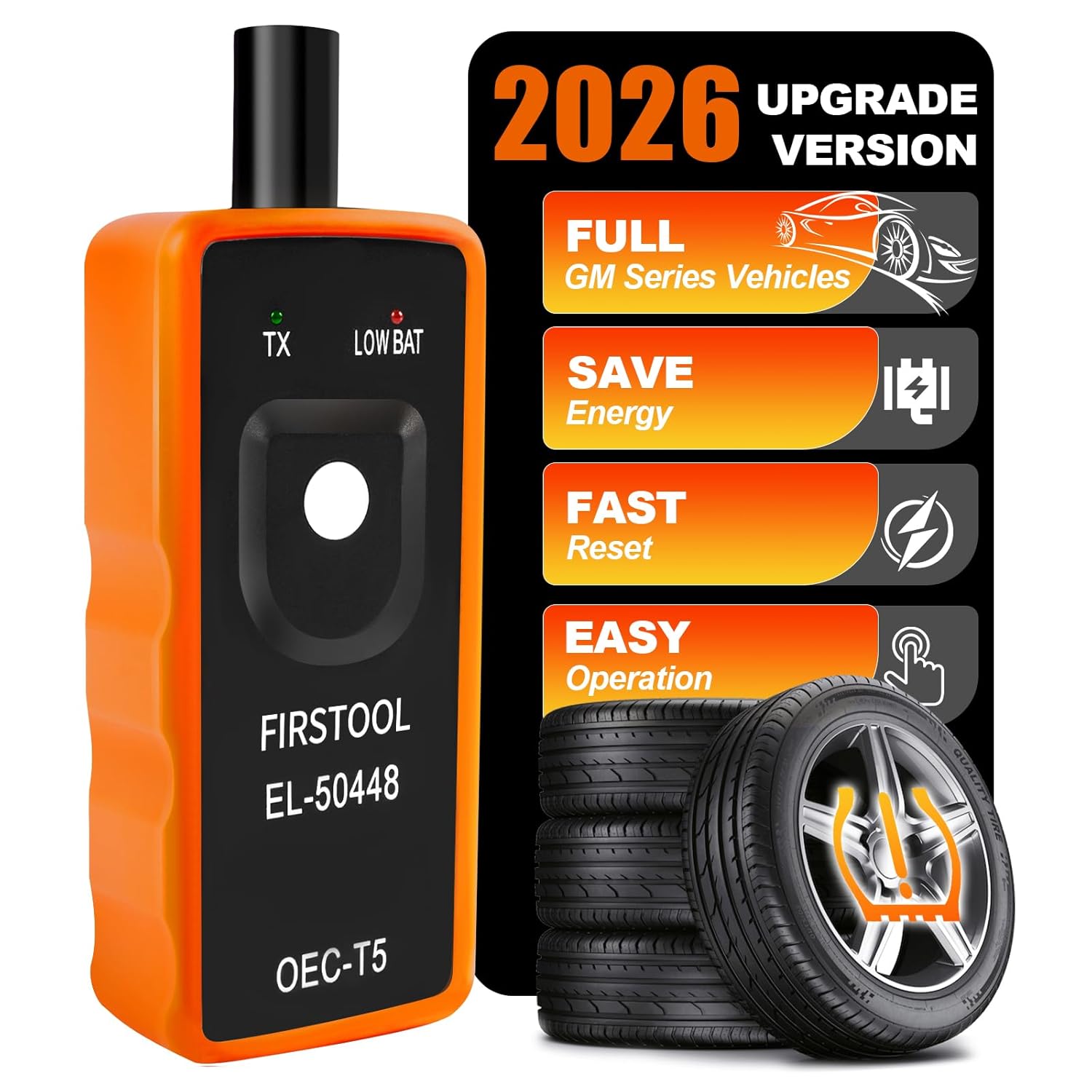
This TPMS relearn tool helps you quickly activate, match, and reset GM tire pressure sensors to keep the vehicle monitoring system working properly. It clears tire pressure alarms and dashboard warning lights after sensor replacement or tire rotation, and supports learning for common 315/433 MHz TPMS sensors. Designed for simple one-button operation, it can help you avoid unnecessary trips to repair shops.

Keep your tires properly inflated with this analog VONDIOR tire pressure gauge, designed for fast, easy readings without batteries. The swiveling, two-axis hose and large glow dial help you measure at any tire angle with instant visibility. Built with a protective rubber shield, it supports durable, low-maintenance use for cars and trucks.
When Performance Tires Make Sense for a Camry
Performance tires make sense when you want more immediate steering, firmer feedback, and stronger cornering capability than a comfort-focused touring tire normally provides. They can suit Camry SE, XSE, and other configurations where the driver wants to emphasize the car’s sportier behavior.
A performance tire may be worth the tradeoff when you regularly drive on winding paved roads, prefer crisp response during lane changes, or are dissatisfied with the soft feel of a basic touring tire. The benefit is more direct control. The likely compromises are a firmer ride, increased impact harshness, less treadwear coverage, and potentially greater road noise.
Use the complete category name when shopping. “Performance tire” alone is too broad:
- Ultra-high-performance all-season: A practical middle ground with responsive handling and broader seasonal use.
- Summer performance: Designed mainly for warm-weather wet and dry grip; not appropriate for freezing conditions or snow.
- Extreme- or max-performance summer: More specialized and usually less suitable for a comfort-focused daily commute.
Note: A tire with more cornering grip does not make speeding, aggressive street driving, or track use safe. Stay within posted limits and the vehicle, tire, road, weather, and driver capabilities.
[Products Worth Considering]

Monitor tire tread wear with a smart, color-coded depth gauge that shows clear condition ranges at a glance. The bar is range marked for fast, easy readings, helping you maintain safer traction and performance. Each gauge is portable with a pocket clip, and the set includes 20 units for daily use and sharing.

Steelman white tire marking crayons provide high-contrast, semi-permanent marks for repairing and inspecting tires and equipment. They write on wet or dry, smooth or coarse surfaces including rubber, metal, glass, and wood, making them ideal for puncture location and damage outlining. The lead- and zinc-free crayons resist weather and fading yet wipe away when you no longer need the marks.

Replace worn or missing TPMS sensors with a pre-programmed 4-pack designed for compatible GM vehicles. These 315MHz sensors provide real-time tire pressure monitoring and alert you if pressure is too high, too low, or if a rapid air leak occurs. Most installations are ready with minimal relearn effort after mounting, helping improve safety and driving confidence.
Match the Tire Type to Your Driving Style

Base your decision on how you drive most of the time, not on the most demanding drive you might take once or twice a year.
- Daily commuter: Choose a grand-touring all-season tire with strong comfort, wet-braking, noise, and treadwear results.
- High-mileage highway driver: Favor stable tracking, low noise, warranty coverage, and documented efficiency.
- Responsive daily driver: Consider an ultra-high-performance all-season tire that fits your climate.
- Warm-climate enthusiast: A summer performance tire may offer stronger warm-weather response if temperatures remain suitable and you accept the seasonal limitations.
- Snow-belt driver: Choose a capable all-season or all-weather tire for milder conditions and use four winter tires when sustained cold, snow, or ice demands them.
Pro Tip: Compare independent test results for the exact tire size when possible. A model’s performance can change between sizes because load rating, construction, tread depth, and vehicle application may differ.
How Climate Affects Camry Tire Choice
Seasonal classification matters more than the words “touring” or “performance” when temperatures fall. A touring tire can be a summer tire, and a performance tire can be an all-season tire. Read the complete product description and sidewall markings.
According to Michelin’s seasonal tire guidance, winter tires are designed to remain flexible in temperatures below about 45°F. Summer tires lose useful cold-weather flexibility as temperatures fall and should not be used as a substitute for winter tires.
- Mild climate: A touring all-season or performance all-season tire can work throughout the year.
- Frequent heavy rain: Compare exact wet-braking and hydroplaning results. Do not assume one category always wins.
- Cold but limited snow: A strong all-season or all-weather tire may be practical, depending on local conditions.
- Regular snow and ice: Use four proper winter tires rather than relying on a touring label or an M+S marking alone.
- Hot climate: Check the tire’s temperature grade, pressure, load capacity, and manufacturer guidance.
The National Highway Traffic Safety Administration’s TireWise guidance explains that UTQG traction grades describe straight-line wet stopping under controlled conditions, while temperature grades describe resistance to heat generation and the ability to dissipate heat. These grades do not measure every part of real-world handling.
Cost, Tread Life, and Fuel Economy
Touring tires often provide stronger long-term value because many models carry longer treadwear warranties and are designed for even wear. Performance models may cost more in popular low-profile Camry sizes and may need replacement sooner, but neither outcome is guaranteed.
Compare the total installed cost, not only the tire price. Include mounting, balancing, valve or TPMS service, alignment if needed, disposal fees, and the estimated replacement interval.
For a Camry Hybrid, rolling resistance can affect fuel use, but the word “touring” does not prove that a tire is efficient. Look for an efficiency or low-rolling-resistance claim from the manufacturer, then compare it against wet grip, tread life, noise, load capacity, and price. A tire that improves steering response may still be a reasonable choice if you accept a possible efficiency tradeoff.
Remember that a mileage warranty is not a guaranteed lifespan. Coverage can depend on proof of purchase, regular rotations, correct inflation, alignment, even wear, and other terms. A tire that wears out early may qualify only for a prorated credit rather than a free replacement.
The Best Middle Ground
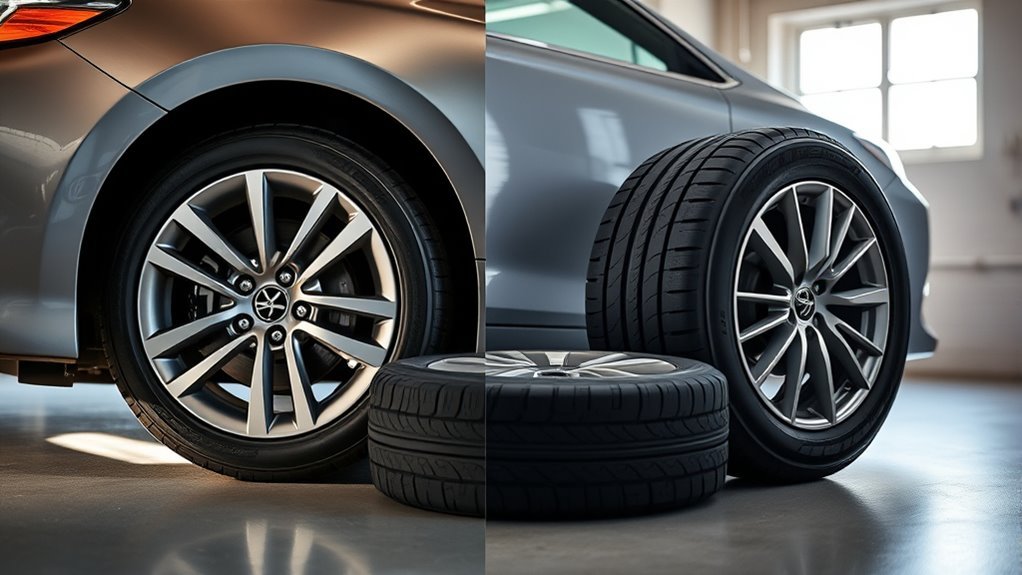
The phrase “hybrid tire” is sometimes used informally, but it is not the clearest category for a Camry. The usual middle-ground choices are a performance-oriented grand-touring all-season tire or an ultra-high-performance all-season tire.
Choose a performance-oriented grand-touring tire when you still want a quiet ride and useful tread life but prefer more precise steering than a basic touring tire provides. Choose an ultra-high-performance all-season tire when grip and response rank higher, but you still need broader seasonal capability than a summer tire offers.
A balanced option should deliver:
- Predictable wet braking
- Stable highway tracking
- Acceptable road noise
- Steering response that matches your preference
- Seasonal capability appropriate for your climate
- A suitable warranty and price
- The correct Camry size, load index, and speed rating
Installation and Maintenance Matter
Even the right tire will perform poorly if it is installed or maintained incorrectly. For the most consistent braking and handling, use four matching tires of the same model, size, load rating, speed rating, and construction whenever practical.
If you replace only two tires, follow the tire manufacturer’s and vehicle manufacturer’s guidance. Tire manufacturers generally recommend placing the tires with deeper tread on the rear axle to reduce the risk of rear traction loss on wet roads. Do not mix summer and all-season tires or install winter tires on only one axle.
After installation:
- Check pressure with an accurate gauge when the tires are cold.
- Do not rely only on the TPMS warning light; it normally warns after pressure is already significantly low.
- Rotate the tires at the interval specified by Toyota and the tire warranty.
- Inspect the tread and sidewalls monthly and before long trips.
- Have the alignment checked if you see uneven wear or the car pulls to one side.
- Replace tires with cuts, bulges, exposed cords, or other serious damage.
NHTSA states that passenger tires should be replaced when tread reaches 2/32 inch. Wet and winter traction can become limited before that minimum, so drivers in frequent rain or snow may choose an earlier replacement point based on conditions and professional inspection.
Frequently Asked Questions
Are touring or performance tires better for a Toyota Camry?
Touring all-season tires are better for most Camry drivers because they usually favor comfort, quietness, stable everyday handling, and longer treadwear coverage. Performance tires are better when sharper steering and stronger cornering response are worth a possible reduction in ride comfort, tread life, or efficiency.
What is the best tire category for a daily-driven Camry?
A grand-touring all-season tire is the best starting point for a daily-driven Camry. It normally provides a strong balance of comfort, wet-weather control, noise reduction, tread life, and year-round convenience. Verify the exact tire against your Camry’s year, trim, size, and climate.
Are performance tires suitable for everyday driving?
Yes. An ultra-high-performance all-season tire can work well on a daily-driven Camry when you want quicker steering and stronger grip. Expect the ride, noise, treadwear warranty, and efficiency to vary by model. Summer performance tires require more caution because they are not intended for cold or snowy conditions.
Do performance tires reduce Camry fuel economy?
They can, but the result depends on the exact tire, size, pressure, construction, tread, and driving conditions. Some grip-focused tires have higher rolling resistance, while other performance all-season models are designed to balance grip and efficiency. Compare model-specific claims rather than assuming every performance tire lowers MPG.
Can I install a different tire size on my Camry?
Do not change sizes based only on appearance. The replacement must preserve adequate load capacity, safe clearance, wheel compatibility, overall diameter, and proper operation of the speedometer and vehicle systems. Use a size approved by Toyota or have a qualified tire professional verify the complete conversion.
What type of tire should a Camry use in snow?
For regular snow, ice, and sustained cold, use four winter tires in the correct Camry size. A capable all-season or all-weather tire may handle occasional light snow, but touring and performance labels alone do not prove winter capability.
Conclusion
Touring tires are the better default for most Toyota Camry owners because they normally suit the car’s everyday priorities: comfort, low noise, predictable handling, and useful tread life. Performance tires are worthwhile when you deliberately prioritize steering response and cornering feel.
Start with your Camry’s door placard and owner’s manual. Then choose the correct seasonal category, compare exact tire models, and confirm the required size, load index, speed rating, warranty, wet performance, noise, and efficiency. That process is more reliable than choosing a tire simply because it is labeled touring or performance.
Sources
- Toyota Camry — current trim and wheel information
- Toyota: How to Check Tire Pressure — vehicle placard and owner’s-manual pressure guidance
- NHTSA TireWise — tire pressure, tread, UTQG, inspection, and replacement safety
- Michelin: Summer, Winter, and All-Season Tires — seasonal tire differences and cold-weather guidance
- Michelin: Tire Load and Speed Ratings — replacement size, load capacity, and speed-rating guidance
- Bridgestone Turanza EverDrive — current touring-tire category and limited mileage warranty example