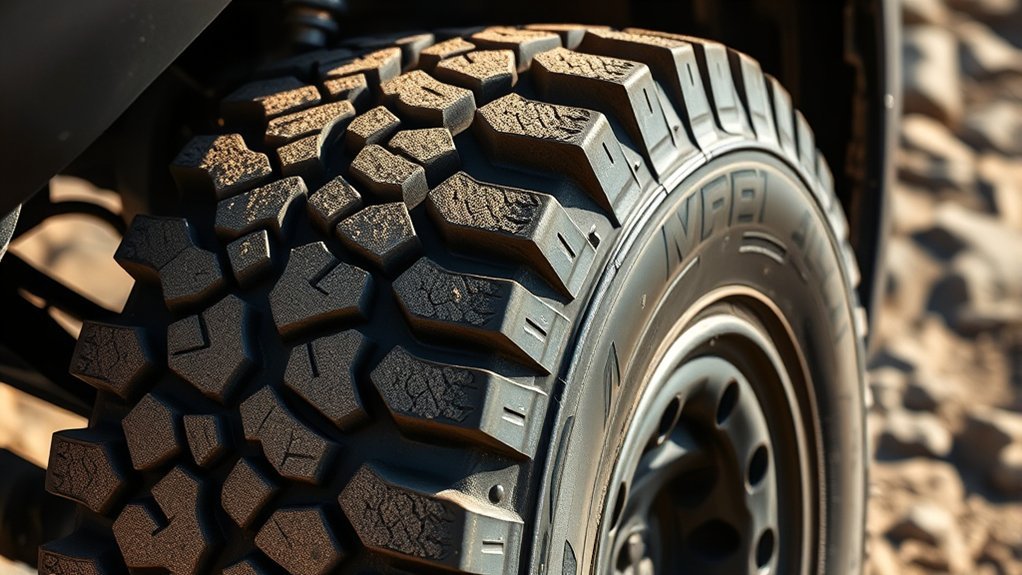
Rocky trails ask more from a Toyota Hilux tire than ordinary gravel roads. You need grip at low speed, sidewall strength against sharp edges, enough load capacity for a work-ready pickup, and a size that clears the body and suspension without upsetting the speedometer or safety systems.
Quick Answer
For rocky Toyota Hilux trails, choose a light-truck all-terrain, rugged-terrain, or mud-terrain tire with strong sidewalls, an equal-or-higher load rating than the factory tire, deep tread blocks, and good aired-down grip. Start with your door placard size, then upsize only after checking clearance, wheel width, offset, and road legality.
Key Takeaways
- The best rocky-trail tire for a Hilux is not just the biggest tire; it is the tire that fits correctly, carries the load safely, and grips rock at low speed.
- Mud-terrain tires usually give the strongest rock and mud bite, while all-terrain tires are better for daily driving, wet roads, and long highway use.
- Never choose a tire with a lower load index or speed rating than the original specification on the tire placard or owner’s manual.
- Airing down can improve traction on rocks, but low trail pressures are not highway pressures. Reinflate before driving at road speed.
At a Glance
| Time Required | 20–30 minutes to check tire specs and fitment; 1–2 hours for professional mounting, balancing, and clearance checks. |
| Difficulty | Moderate. Basic tire choice is simple, but oversized tire fitment should be checked by a tire or 4×4 specialist. |
| Tools Needed | Owner’s manual, door tire placard, tire-pressure gauge, deflators, portable compressor, tread-depth gauge, torque wrench, and a tire-size comparison calculator. |
| Cost | Varies by size, brand, and load range. Budget for four or five LT tires, mounting, balancing, alignment, and possible suspension or trimming work if upsizing. |
Why Tire Selection Matters on Rocky Hilux Trails
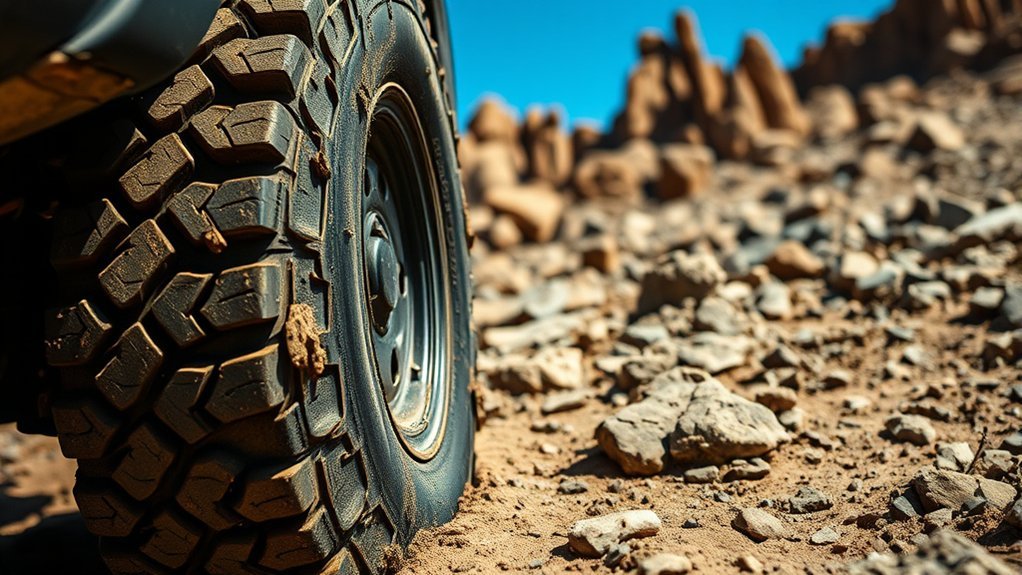
A Toyota Hilux can be a strong trail platform, but the tires decide how much of that capability reaches the ground. On rocks, the tire must do three jobs at once: grip uneven surfaces, protect the sidewall from cuts, and support the vehicle’s weight when the tread is twisted against ledges and sharp stones.
Before buying anything larger or more aggressive, check the tire placard on your Hilux and the owner’s manual. Many recent UK-market Hilux specifications list sizes such as 265/65R17 or 265/60R18 depending on grade, but the correct size for your vehicle depends on market, model year, trim, wheels, and load rating.
Warning: Do not install a tire with a lower load index, load range, or speed rating than the original tire listed on your Hilux tire placard or owner’s manual. For custom wheel and tire packages, the Tire Industry Association recommends consulting a tire professional.
Best Tire Types for Rocky Trails
For a Hilux that sees rocky trails, the main choices are all-terrain, rugged-terrain, and mud-terrain tires. Each can work, but they suit different driving styles.
| Tire Type | Best For | Main Trade-Off |
|---|---|---|
| All-terrain (A/T) | Daily driving, gravel, light rocks, touring, and mixed weather. | Less bite in deep mud and extreme rock gardens than a true mud-terrain. |
| Rugged-terrain (R/T) | Drivers who want more sidewall and shoulder bite than A/T without going full M/T. | Can be louder and heavier than a mild all-terrain. |
| Mud-terrain (M/T) | Rock crawling, mud, ruts, ledges, and frequent low-speed trail use. | More road noise, more weight, lower fuel economy, and often weaker wet-road comfort. |
The Toyo Open Country M/T is one example of a mud-terrain tire built around aggressive tread blocks and tough construction. The BFGoodrich Mud-Terrain T/A KM3 is another example designed for rock grip, flex when aired down, and strong off-road traction. These are examples, not the only correct choices for a Hilux.
[Products Worth Considering]

Upgrade your 2024-2026 Tesla Model 3 Highland with REEVAA all-weather mud flaps designed for seamless fit along the original body lines. The set of four delivers strong splash protection against mud, gravel, and road debris while using OEM-grade durable materials. Installation is non-destructive with original hole positions and snap-in clips, and the aerodynamic design helps minimize impact on efficiency.

These aluminum alloy tire valve stem caps with an O-ring seal help protect valve stems from corrosion while adding a clean, stylish look to your vehicle. The universal fit works across cars, trucks, motorcycles, bicycles, and more, making them an easy upgrade for everyday driving and off-road use. Installation is quick, and the included four-pack keeps all your tires dressed and protected.

Keep your tires properly inflated with this analog VONDIOR tire pressure gauge, designed for fast, easy readings without batteries. The swiveling, two-axis hose and large glow dial help you measure at any tire angle with instant visibility. Built with a protective rubber shield, it supports durable, low-maintenance use for cars and trucks.
Essential Features of High-Traction Tires for Rock Crawling
When you are crossing rocky terrain, tire design matters more than brand hype. Look for tread, sidewall, and load features that match how your Hilux is actually used.
[Products Worth Considering]

The SAFELIFE dial tire tread depth gauge measures tread depth in 1/32 inch increments with clear, easy-to-read 2-inch dial face. Color zones using a traffic light system help you quickly judge whether tread is low, marginal, or ample for safer driving. Built with a durable zinc cast body and a metal detect probe for precise, comfortable use across cars, motorcycles, trucks, and buses.

Monitor tire tread wear with a smart, color-coded depth gauge that shows clear condition ranges at a glance. The bar is range marked for fast, easy readings, helping you maintain safer traction and performance. Each gauge is portable with a pocket clip, and the set includes 20 units for daily use and sharing.

Measure tire tread depth quickly and accurately with this LUMITECO dial gauge that reads in 1/32" increments up to 14/32". The color-coded green/yellow/red zones make it easy to judge tire wear and know when replacement is needed. A rugged, compact design with a protective pouch helps keep the gauge ready for use on cars, trucks, motorcycles, and more.
Tire Tread Design
For rock crawling, choose a tread with large blocks, strong shoulders, and enough void space to clear loose stones, mud, and gravel. Deep lugs can bite into uneven surfaces, while siping helps the rubber find edges on wet rock and hard-packed trail.
Sidewall lugs are also useful. They add extra biting edges when the tire is aired down and the sidewall contacts the rock. This does not make the tire indestructible, but it can help the Hilux climb slowly instead of spinning and cutting the tread.
Sidewall Strength and Durability
Sidewall strength is one of the biggest differences between a mild road tire and a trail-ready light-truck tire. For rocky use, look for LT construction, strong carcass materials, reinforced sidewalls, and a load rating suitable for your Hilux, passengers, tools, canopy, drawer system, winch, recovery gear, and towing needs.
- Reinforced sidewalls: Better resistance to cuts and bruising from sharp rock edges.
- LT construction: Often better suited to heavy pickups and off-road loads than passenger-car construction.
- Correct load rating: Must meet or exceed the original equipment requirement.
- Sidewall compliance: A tire that flexes predictably when aired down can wrap around rocks instead of bouncing off them.
Why Reinforced Sidewalls Matter for Off-Road Durability
Rocky tracks punish the sidewall more than smooth gravel roads. A tread puncture is bad enough, but a torn sidewall can leave you stranded because many sidewall injuries cannot be repaired safely.
Enhanced Puncture Resistance
A stronger sidewall helps reduce the risk of cuts from shale, embedded stones, broken branches, and ledge edges. It also helps when the tire is slightly bulged from airing down. That extra flex improves grip, but it also exposes more sidewall to the trail.
Improved Load Capacity
A Hilux often carries more than just passengers. Steel bull bars, winches, underbody plates, roof racks, drawers, camping gear, and trailers all add load. Choose tires with enough load capacity for the real vehicle, not just the empty factory curb weight.
| Feature | Benefit |
|---|---|
| Reinforced Sidewalls | Better cut and impact resistance on rocky trails |
| Correct Load Index | Safer support for accessories, payload, and towing |
| LT Construction | Stronger casing for pickup and off-road use |
| Sidewall Lugs | Extra grip when aired down against rocks |
Better Flexibility During Crawling
Good rock-crawling tires are not just hard and stiff. They need enough structure to survive impacts, but enough flexibility to conform to uneven surfaces at low speed. That balance helps the Hilux maintain traction without relying on wheelspin.
Pro Tip: On rock, slow tire speed is your friend. Let the tread climb and conform. Spinning the tires can cut lugs, slice sidewalls, and polish the rock instead of finding grip.
How Tire Diameter Enhances Ground Clearance
A larger tire can raise the axle and differential because the tire radius increases. That can help a Hilux clear ruts, ledges, and loose rocks. The problem is that diameter is only one part of the fitment equation.
A jump from a stock-size tire to a 33-inch or 35-inch class tire can affect steering clearance, inner fenders, mud flaps, body mounts, suspension travel, braking feel, speedometer accuracy, gearing, ABS, traction control, and stability control. A 315/75R16 tire, for example, is a major build-size tire for many pickups, not a casual bolt-on upgrade for every Hilux.
The right tire size is the largest size that clears safely, carries the load correctly, and keeps the Hilux predictable on both trail and road.
Before upsizing, check these points:
- Full-lock steering clearance in both directions.
- Clearance under compression, not just while parked.
- Wheel offset and backspacing.
- Rim width approved for the tire size.
- Brake clearance.
- Spare tire fitment.
- Speedometer and odometer error.
- Local road, inspection, and insurance rules.
Understanding Tread Patterns That Excel on Rocky Terrain
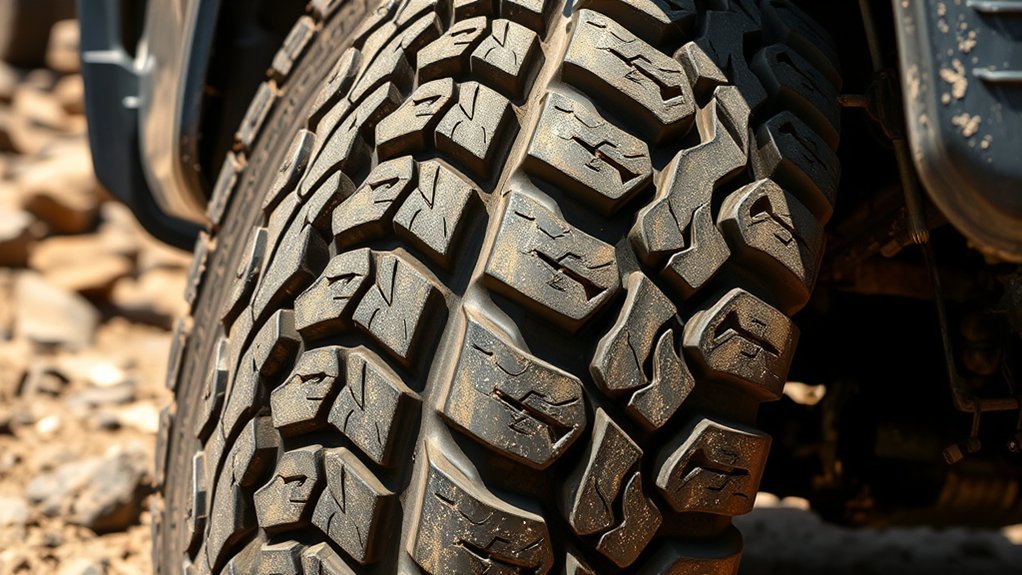
The best rocky-terrain tread pattern gives you stable contact, strong shoulder bite, and enough void area to prevent the tire from packing with debris. For a Hilux, the ideal tread depends on how much pavement you drive between trails.
- Deep voids and aggressive lugs: Help the tire bite into loose rock and broken trail surfaces.
- Large contact patch: Helps spread weight and improves grip when aired down.
- Interlocking tread blocks: Reduce tread squirm and help the tire feel stable on hard surfaces.
- Shoulder and sidewall traction: Helps when the tire is leaning against a rock face or rut wall.
- Wet-road siping: Important if the Hilux is also a daily driver.
Note: A mud-terrain tire may look like the strongest choice, but it is not always the best daily tire. If your Hilux spends most of its time on pavement, a strong all-terrain or rugged-terrain tire may be the better long-term match.
Tire Pressure Tips for Better Performance
Tire pressure changes how the tread meets the ground. Lower pressure can lengthen the contact patch and help the tire wrap around rocks, but going too low can damage the tire, unseat the bead, overheat the casing, or make the Hilux unstable.
For rocky trails, many drivers use a cautious trail range around 18–25 PSI on standard wheels, then adjust in small steps based on tire size, load, wheel type, and terrain. Heavier vehicles and sharp rocks often need more pressure than lightweight rock crawlers. Beadlock wheels can safely run lower pressures than standard wheels, but they also require correct installation and maintenance.
Warning: Aired-down trail pressure is not road pressure. Before returning to pavement, reinflate to the cold pressure shown on the tire placard or to the pressure specified by your tire professional for an approved replacement size. The NHTSA tire safety guide warns that proper pressure, load limits, and regular inspection help prevent tire failure.
Safe Airing-Down Process
- Park on level ground before the trail.
- Check all four tires with a reliable gauge.
- Drop pressure gradually, not all at once.
- Drive a short distance slowly and feel for grip, steering response, and sidewall squirm.
- Avoid sharp turns and high speed while aired down.
- Inspect sidewalls after rocky sections.
- Reinflate before highway driving.
How to Select the Best Tires for Your Hilux Rock Crawling Setup
Use this process before you buy tires for a Hilux rock-crawling setup:
- Confirm the factory tire information. Read the tire placard and owner’s manual for size, load index, speed rating, and recommended cold pressure.
- Weigh your real use. Daily driving, towing, payload, mud, snow, and rock crawling all push you toward different tire designs.
- Choose the tire category. Pick A/T for balanced use, R/T for mixed trail and road, or M/T for frequent rock and mud.
- Match or exceed the load rating. Never reduce the original load-carrying capacity.
- Check wheel compatibility. Confirm rim diameter, rim width, offset, and brake clearance.
- Check body clearance. Test full lock, compression, and reverse steering angles before assuming a larger tire fits.
- Plan for the spare. A full-size matching spare is strongly recommended for rocky trips.
- Budget for supporting work. Larger tires may require alignment, trimming, suspension changes, speedometer correction, or gearing changes.
[Products Worth Considering]

Upgrade your Toyota’s wheels with durable aluminum alloy valve stem caps that help protect valve cores from corrosion and direct exposure to road grime, clay, water, and snow. Rubber rings improve sealing to help prevent air leakage and maintain stable tire pressure for safer driving. These caps are easy to install or remove without tools and add a unique, stylish look to your car.

These universal tire valve stem caps help protect valve cores from dust, debris, and moisture while helping maintain stable tire pressure. The corrosion-resistant metal construction and sealed design provide reliable protection in road grime, mud, and winter conditions. Twist-on installation makes them quick to fit on cars, SUVs, trucks, and motorcycles.
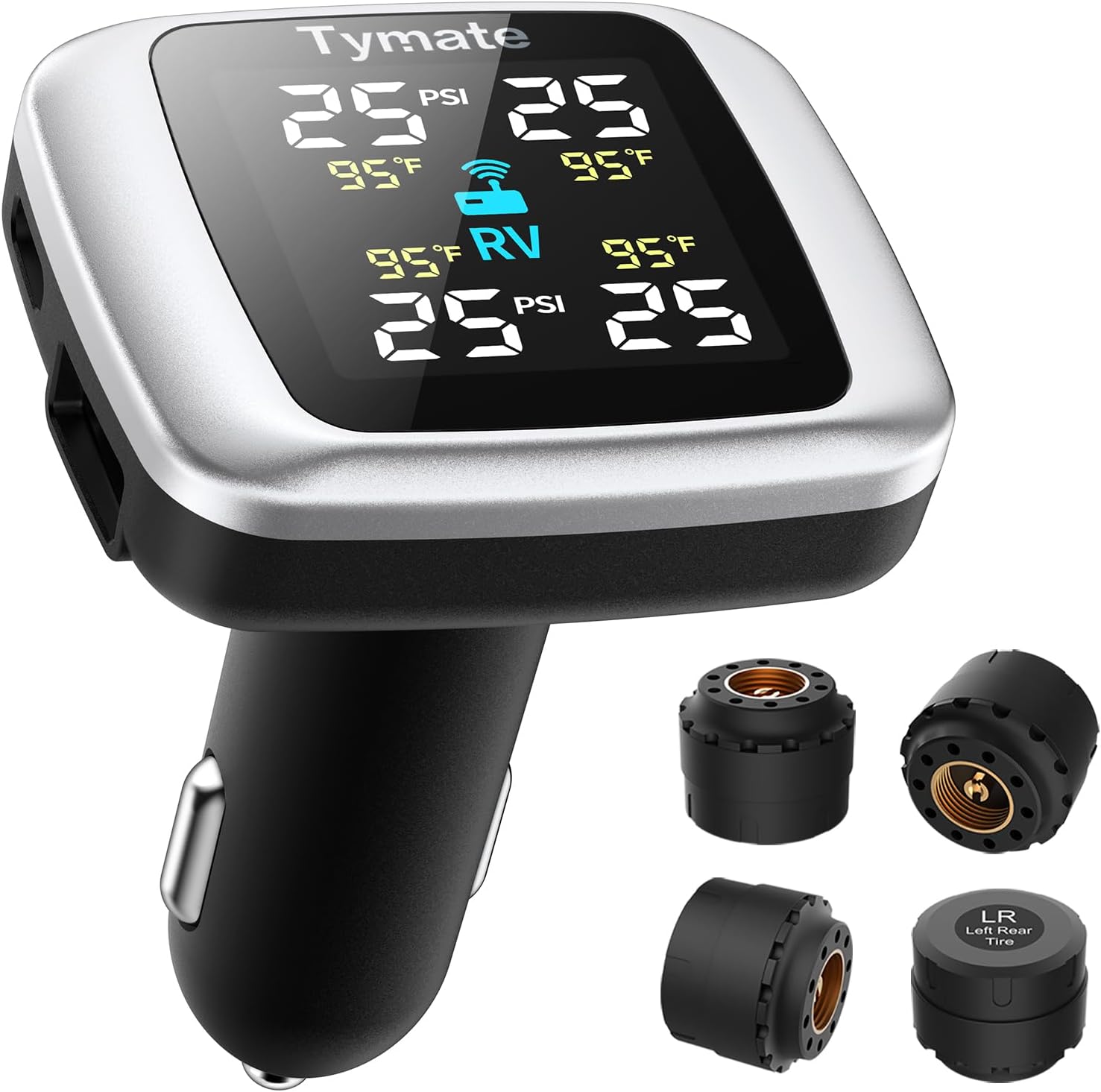
Tymate TM7 is a wireless tire pressure monitoring system that delivers real-time pressure and temperature readings for safer driving. It includes four external sensors, a bright color LCD display with adjustable backlight, and six alarm modes for high/low pressure, fast leakage, high temperature, and sensor signal or battery issues. The system covers a wide 0–144 PSI range and plugs into your vehicle’s cigarette lighter socket for quick DIY setup.
Road-Driving Trade-Offs to Consider
A rocky-trail tire can transform a Hilux off-road, but it can also change how the vehicle behaves on pavement. Heavier tires can reduce acceleration and fuel economy. Aggressive tread can increase road noise. Large tread blocks may feel less precise in wet braking than a highway tire. Very large tires can also place extra load on suspension, steering, brakes, and driveline parts.
If the Hilux is your daily driver, do not choose the most aggressive tire just because it looks capable. Choose the tire that matches your real driving split. A 70% road / 30% trail Hilux usually needs a different tire from a weekend-only rock crawler.
Maintenance After Rock Crawling
After a rocky trail, inspect the tires before driving home at speed. Look for cuts, bulges, missing tread chunks, exposed cords, stones trapped in the bead area, and slow leaks. Check wheel weights, valve stems, and lug-nut torque. Rotate tires on schedule because aggressive off-road tread can wear unevenly if alignment, pressure, or rotation is neglected.
Pro Tip: Keep a tire log. Write down trail pressure, terrain, vehicle load, and how the Hilux felt. After a few trips, you will know your best starting PSI better than any generic chart can tell you.
Frequently Asked Questions
What is the weakness of the Toyota Hilux for rock crawling?
For rock crawling, the usual limits are tire size, underbody clearance, suspension articulation, approach and departure angles, and underbody protection. Engine output is not always the main weakness, especially on current 2.8-litre versions that Toyota lists at 204 DIN hp / 150 kW and 500 Nm in some markets.
Does the Toyota Hilux have hill assist?
Many Hilux versions include Hill-start Assist Control, and Toyota describes the system as helping reduce rollback when setting off on hills. Availability can vary by market, model year, and grade, so check your specific Hilux specification.
What are the features of the Hilux Invincible?
Hilux Invincible features vary by market and year, but recent versions can include higher-grade interior trim, driver-assistance technology, automatic transmission options, and off-road support systems on selected grades. For tire choice, the key point is to check the exact wheel and tire size fitted to your Invincible, because higher grades may use different wheel packages from work-focused trims.
What are the features of the Hilux Surf?
The Hilux Surf is a 4WD SUV related historically to the Toyota 4Runner, not the same vehicle as the current Hilux pickup. Tire advice for a Hilux Surf should be based on its own placard, suspension, axle load, wheel size, and model year, not copied directly from a Hilux pickup setup.
Are 35-inch tires good for a Toyota Hilux?
They can be useful on a dedicated build, but they are not a simple upgrade for every Hilux. A 35-inch class tire may require suspension changes, trimming, wheel offset changes, speedometer correction, gearing considerations, and careful load-rating checks.
Should I choose all-terrain or mud-terrain tires for rocky trails?
Choose all-terrain tires if your Hilux spends most of its time on the road with occasional rocky trails. Choose mud-terrain tires if you regularly drive sharp rocks, deep ruts, mud, or technical low-speed tracks and you accept more noise, weight, and road compromise.
What tire pressure should I use for rocky Hilux trails?
There is no single correct PSI. A cautious starting range for standard wheels on rocky trails is often around 18–25 PSI, adjusted for vehicle weight, tire size, sidewall stiffness, and terrain. Do not drive highway speeds at aired-down pressure, and reinflate before returning to pavement.
Conclusion
The best tire setup for a Toyota Hilux on rocky trails is a balanced setup, not just the largest or most aggressive tire you can fit. Start with the placard, match or exceed the factory load rating, choose a tread pattern that fits your road-to-trail use, and treat tire pressure as a controlled trail adjustment rather than a fixed number.
With the right tire size, strong sidewalls, sensible tread choice, and safe airing-down habits, your Hilux will feel more planted, more predictable, and better protected when the trail turns rocky.
Sources
- Toyota Europe — The all-new Toyota Hilux — current Hilux powertrain, off-road capability, ground clearance, wading depth, and MTS information.
- Toyota UK Media — Hilux Technical Specifications — example Hilux wheel and tire sizes by grade.
- NHTSA Tire Safety Guide — tire pressure, load limits, inspection, and tire-failure prevention guidance.
- Tire Industry Association — Tire Replacement — replacement tire placard, load index, speed rating, and professional fitment guidance.
- Toyo Tires — Open Country M/T — example of aggressive mud-terrain construction and tread features.
- BFGoodrich — Mud-Terrain T/A KM3 — example of rock-focused mud-terrain tire features.