
How to Remove Lug Nuts From a Toyota RAV4: Tips and Tricks
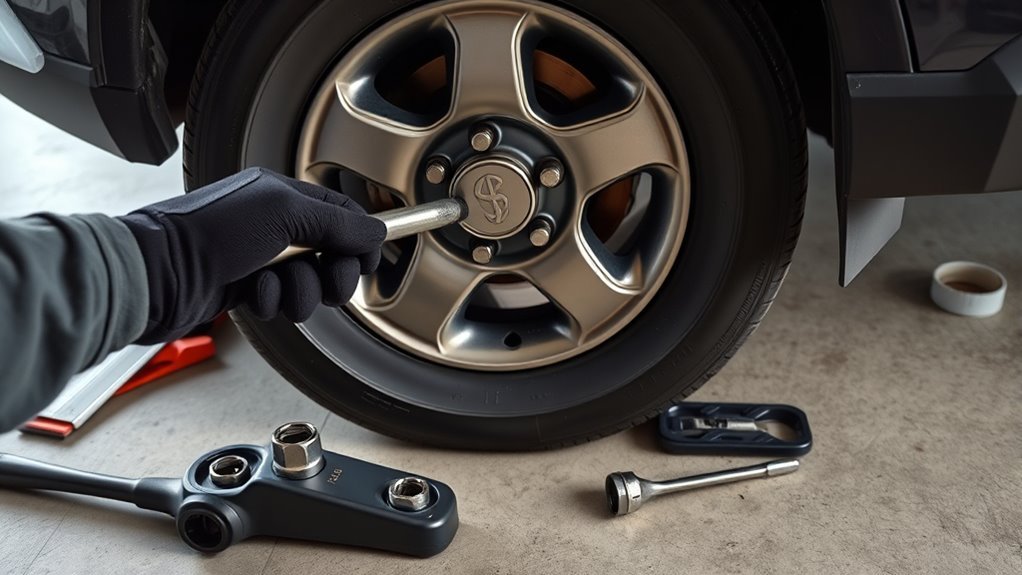
Removing lug nuts from a Toyota RAV4 is a simple job when the vehicle is stable, the right socket fits the nuts, and you loosen them before lifting the wheel off the ground. The key is to work slowly: secure the RAV4 first, break the lug nuts loose in a star pattern, lift only at the correct jack point, and finish with a torque wrench when reinstalling.
Quick Answer
To remove Toyota RAV4 lug nuts, park on level ground, set the parking brake, chock the opposite wheel, and use a 21mm lug wrench or socket. Turn each lug nut counter-clockwise about a half-turn while the tire is still on the ground, then lift the vehicle and remove the nuts by hand.
Key Takeaways
- Most Toyota RAV4 lug nuts use a 21mm socket, but confirm the fit before applying force.
- Loosen lug nuts slightly while the tire is still touching the ground; do not fully remove them until the vehicle is lifted safely.
- Use a star pattern for loosening and tightening so the wheel seats evenly against the hub.
- For many late-model RAV4 factory wheels, Toyota lists wheel nut torque at about 76 ft-lb / 103 N·m; always verify your exact model year in the owner’s manual.
At a Glance
| Time Required | 10–25 minutes for one wheel |
| Difficulty | Beginner, if the lug nuts are not seized |
| Tools Needed | 21mm lug wrench or socket, breaker bar, jack, wheel chocks, torque wrench, gloves, penetrating oil for stuck nuts |
| Cost | $0 if using the factory tire-changing kit; $30–$150+ if buying a breaker bar or torque wrench |
How to Safely Remove Lug Nuts From Your Toyota RAV4
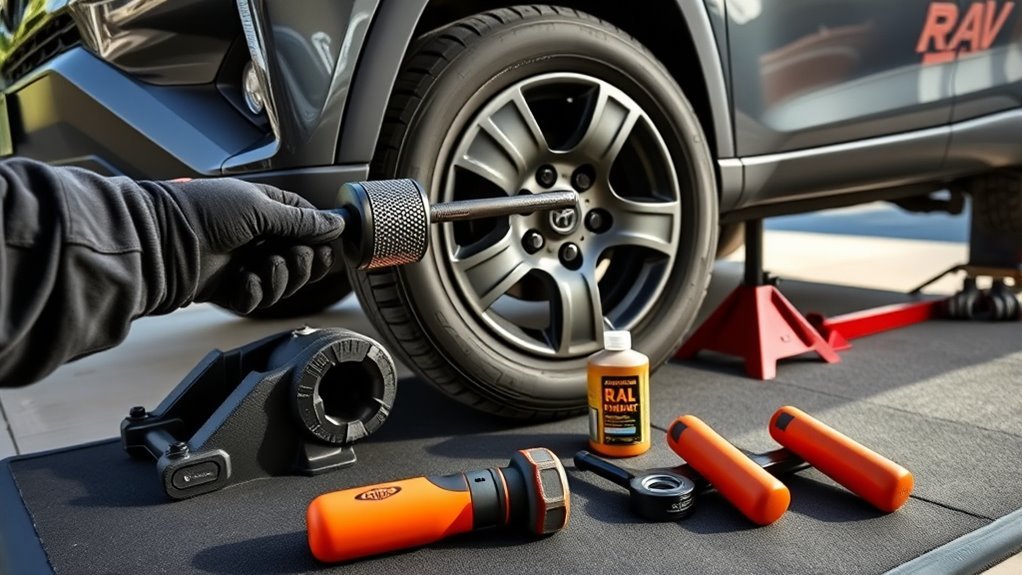
Start by choosing a safe work area. Park the RAV4 on a flat, solid surface, shift into Park, turn on the hazard lights if you are roadside, and set the parking brake. Place wheel chocks behind the tire diagonally opposite the wheel you are working on. If you are on a shoulder, soft ground, a steep slope, or close to traffic, do not attempt the job there; call roadside assistance instead.
Warning: Never put any part of your body under a RAV4 supported only by the factory jack. The jack is for lifting during a tire change, not for supporting the vehicle during repair work. Use jack stands if you need to work near or under the vehicle.
Use a lug wrench or a 21mm six-point socket that sits fully over the lug nut. A loose-fitting socket can round the corners and make the nut harder to remove. While the tire is still touching the ground, turn the lug nuts counter-clockwise to break them loose. Loosen each nut only about a half-turn at first; wait to fully remove them until the wheel is lifted and supported correctly.
Follow a star pattern as you loosen the nuts. On a five-lug RAV4 wheel, loosen one nut, then move across the wheel to the next non-adjacent nut until all five have been cracked loose. This keeps pressure more even across the wheel and hub.
[Products Worth Considering]

Universal magnetic jack pad with aluminum grooved design to protect vehicle pinch welds during lifting. Durable nylon pad inserts are upgraded and secured with screws to resist damage and keep in place. Designed to fit most single vehicle pinpoint welds for safer, stable jacking when changing tires, repairs, or performing oil changes.
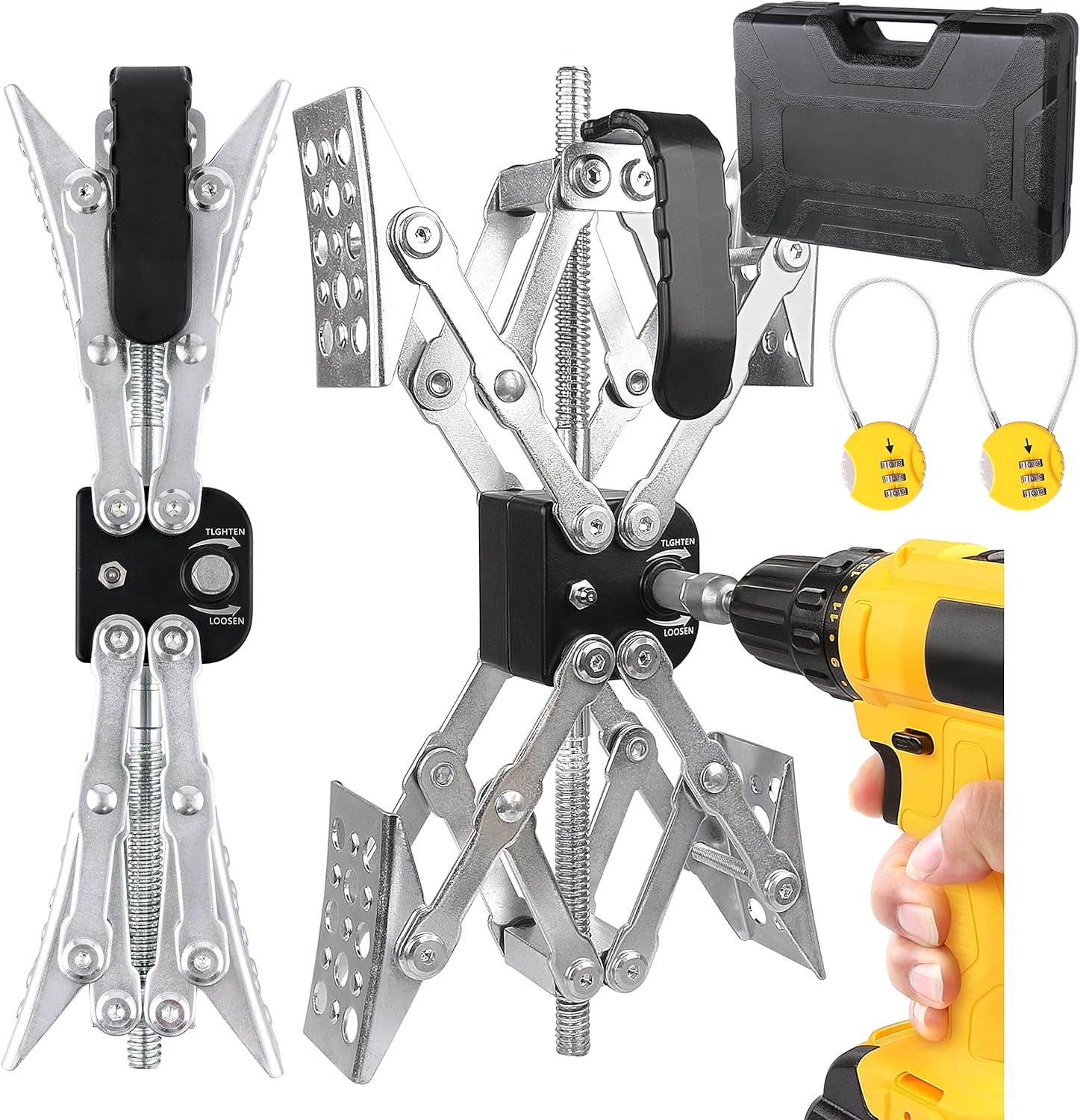
Lock the Maxchock X-style wheel stabilizers between tandem tires to reduce sway and keep your RV travel trailer secure while camping. The adjustable design fits a wide range of wheel gaps, and included hardware lets you install quickly with a power drill. Built from heavy-gauge steel with zinc plating, the chocks include locks and an organizer case for safer, more convenient use.

Camco’s RV wheel chocks with an attached rope help keep your travel trailer securely in place for safer unhitching or parking. This 2-pack is compatible with wheels up to 26-inch diameter and features durable UV-resistant construction for reliable outdoor performance. The rope enables quick, safe removal so you can prepare for your next trip with less hassle.
Step-by-Step Guide to Loosening Lug Nuts
Follow these steps when removing Toyota RAV4 lug nuts for a tire change, tire rotation, brake inspection, or wheel replacement:
- Secure the vehicle. Park on level ground, set the parking brake, and chock the opposite wheel.
- Check the socket fit. Most RAV4 lug nuts take a 21mm socket, but make sure the tool fits snugly before pushing hard.
- Place the wrench correctly. Seat the socket squarely on the lug nut so it does not slip or round the nut.
- Break the nuts loose on the ground. Turn counter-clockwise while the tire still has weight on it. Loosen each nut about a half-turn only.
- Use a star pattern. Move across the wheel instead of going around in a circle.
- Lift at the correct jack point. Use the RAV4 owner’s manual or the markings under the vehicle to locate the safe lift point.
- Remove the lug nuts by hand. Once the tire is off the ground, finish spinning the loosened nuts off by hand and keep them in a clean place.
Pro Tip: Keep the wrench handle angled slightly upward or nearly horizontal and push down with steady body weight. Avoid jumping on the wrench; sudden impact can damage studs, slip the tool, or knock the vehicle off balance.
How to Tackle Stubborn Lug Nuts?
Stubborn lug nuts are common when a wheel has been over-tightened, exposed to road salt, or left in place for a long time. Do not force the nut so hard that the vehicle rocks on the jack. Work with the tire on the ground whenever possible.
- Use a breaker bar: A breaker bar gives better leverage than the short factory lug wrench. Use a 21mm six-point socket and keep it seated squarely on the nut.
- Apply penetrating oil: Spray a small amount of penetrating oil around the base of the lug nut and wait 10–15 minutes. Wipe away excess oil before reinstalling the wheel so the seating area stays clean.
- Tap the wrench carefully: If needed, tap the end of the wrench or breaker bar with a rubber mallet using short, controlled strikes. Avoid hitting the wheel, brake parts, or valve stem.
- Try tightening slightly first: A very small clockwise movement can sometimes break corrosion free before loosening counter-clockwise.
- Stop before damage occurs: If the nut rounds off, the stud spins, or the wheel still will not move after the nuts are removed, contact a tire shop or mechanic.
Note: Avoid using open flame or high heat near a wheel, tire, valve stem, TPMS sensor, or brake parts. Heat can damage components and create a safety risk. If penetrating oil and proper leverage do not work, professional help is safer.
Reinstalling Lug Nuts: Best Practices
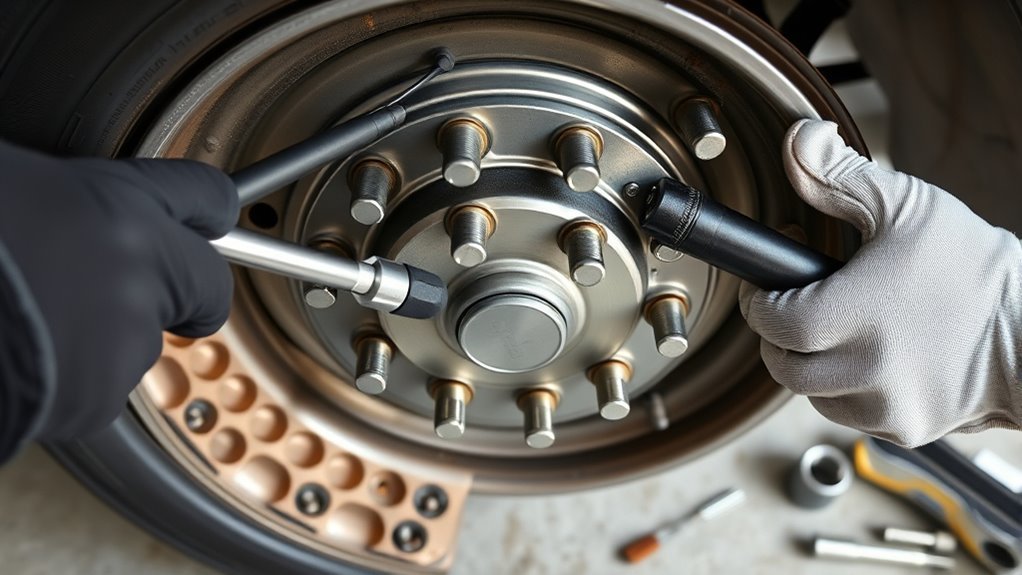
Before reinstalling the wheel, inspect the lug nuts and wheel studs. Replace any nut or stud that has cracked threads, heavy rust, rounded corners, or signs of stretching. Also check that the wheel mounting surface and hub face are clean. Dirt, corrosion, or debris trapped between the wheel and hub can stop the wheel from seating evenly.
Start every lug nut by hand. Turn each nut clockwise several full turns before using a wrench. If a nut does not thread smoothly by hand, stop and inspect the threads; forcing it can cross-thread the wheel stud.
Once all lug nuts are hand-threaded, snug them in a star pattern. Lower the RAV4 until the tire just touches the ground and cannot spin, then use a torque wrench for final tightening. For many late-model Toyota RAV4 factory wheels, the wheel nut torque specification is 76 ft-lb / 103 N·m, but you should confirm the exact value for your model year in the Toyota owner’s manual.
Correct torque matters because lug nuts that are too loose can let the wheel shift, while lug nuts that are too tight can damage studs, distort parts, or make the next removal difficult.
After the final torque pass, fully lower the vehicle and check the torque again in the same star pattern. Toyota also advises checking that wheel nuts remain tight after rotating, repairing, or changing tires on aluminum wheels. A practical habit is to recheck the lug nuts after a short drive and again within the interval listed in your owner’s manual.
Top Tools for Changing Tires
When changing tires on your Toyota RAV4, the right tools make the job safer and help prevent damage to the lug nuts, studs, and wheels.
- 21mm lug wrench or six-point socket: Most RAV4 models use 21mm lug nuts. A six-point socket grips better than a twelve-point socket when the nuts are tight.
- Breaker bar: This gives extra leverage for loosening stubborn nuts without relying on an impact wrench.
- Torque wrench: Use this for final tightening. Do not guess by feel, especially after using a breaker bar or impact tool.
- Vehicle jack: Use the factory jack only at the correct jack point and only for tire-changing tasks.
- Jack stands: Use stands if the vehicle must stay lifted longer than a basic tire swap.
- Wheel chocks: Chocks help stop the vehicle from rolling while one corner is lifted.
- Penetrating oil: Helpful for rusted or stubborn lug nuts, but keep it away from friction surfaces and clean excess before reinstalling parts.
- Gloves and a flashlight: These make roadside or low-light work safer and cleaner.
[Products Worth Considering]

Secure your trailer or RV tires with a scissor-style wheel chock stabilizer that applies opposing force to help prevent wheel shift. It fits tight wheel gaps from 3.5 inches up to 12 inches and works for travel trailers, campers, fifth wheels, toy haulers, and heavy-duty trucks. The surface uses new electrophoretic technology to help prevent rust for reliable travel use.

Camco Trailer Aid Plus tandem tire ramp lifts your trailer for quick, safe tire changes with ample clearance from its 5 1/2-inch lift. It helps you change a flat tire without unloading cargo, making roadside and routine maintenance more efficient. The heavy-duty, waterproof and rustproof polymer design supports up to 15,000 lb and is built for easy portability and storage.
Common Mistakes to Avoid
- Removing lug nuts before lifting: Only loosen them on the ground. Fully remove them after the vehicle is safely lifted.
- Using the wrong socket size: A loose socket can round the lug nut and make the repair more expensive.
- Final-tightening with an impact wrench: An impact wrench can over-tighten lug nuts quickly. Use a torque wrench for the final pass.
- Skipping the star pattern: Tightening in a circle can seat the wheel unevenly.
- Lubricating the threads before torquing: Unless the vehicle manufacturer specifically tells you to, torque clean, dry threads. Lubricated threads can change clamping force and lead to over-tightening.
- Ignoring damaged hardware: Replace rounded, cracked, swollen, or badly rusted lug nuts before driving.
When to Call a Professional
Stop and call a mechanic, tire shop, or roadside assistance if the RAV4 is on unsafe ground, the lug nut is rounded, a wheel stud spins, the wheel lock key is missing, the wheel is stuck to the hub, or the vehicle shifts while you are working. It is also safer to get professional help if you are dealing with aftermarket wheels, wheel spacers, non-factory lug nuts, or any setup with an unknown torque specification.
Frequently Asked Questions
How often should I check my lug nut tightness?
Check lug nut tightness after any tire change, tire rotation, brake work, or wheel removal. Toyota advises checking that wheel nuts remain tight after rotating, repairing, or changing tires on aluminum wheels. You should also check them if you feel vibration, hear clicking from a wheel, or suspect a wheel was not tightened correctly.
Can I use an impact wrench on Toyota RAV4 lug nuts?
You can use an impact wrench carefully to remove lug nuts, but avoid using it for final tightening. Impact tools can over-tighten quickly. Reinstall the nuts by hand first, snug them lightly, then finish with a torque wrench set to the correct Toyota specification for your model year.
What size lug wrench fits a Toyota RAV4?
Most Toyota RAV4 lug nuts use a 21mm lug wrench or socket. A 21mm six-point socket is usually the best choice because it grips the nut securely. Always confirm the fit on your vehicle before applying heavy force.
What torque should Toyota RAV4 lug nuts be tightened to?
Many late-model Toyota RAV4 factory wheels use a wheel nut torque specification of about 76 ft-lb / 103 N·m. Because torque can vary by year, market, wheel type, or aftermarket hardware, confirm the value in your owner’s manual before final tightening.
Are there different types of lug nuts?
Yes. Common lug nut seat styles include acorn/conical, flat/mag, and ball seat designs. The seat shape must match the wheel. Using the wrong lug nut style can keep the wheel from seating correctly, especially with aftermarket wheels.
How do I know if lug nuts are damaged?
Replace lug nuts that have rounded corners, cracked metal, swollen caps, stripped threads, heavy rust, or a seat surface that no longer looks smooth. Also inspect the wheel studs. If a lug nut will not thread on by hand, do not force it.
Which way do Toyota RAV4 lug nuts loosen?
Toyota RAV4 lug nuts use standard right-hand threads. Turn them counter-clockwise to loosen and clockwise to tighten.
Conclusion
Removing lug nuts from your Toyota RAV4 is straightforward when you focus on safety first. Secure the vehicle on level ground, use the correct 21mm tool, loosen the nuts in a star pattern before lifting, and never rely on guesswork when reinstalling. For the final step, use a torque wrench and confirm the correct wheel nut torque in your Toyota owner’s manual. That careful approach protects the wheel, studs, and everyone riding in the vehicle.
Sources
- Toyota Owners: RAV4 Manuals and Warranties — owner’s manual access, model-specific maintenance information, jack-point guidance, and wheel service precautions.
- Toyota Owners: 2025 RAV4 Wheels — Toyota guidance to use Toyota wheel nuts/wrenches and check wheel nut tightness after tire service.
- NHTSA TireWise — tire safety, maintenance, tire labeling, rims, and tire-related consumer safety information.
- AAA: How to Change a Tire — safe roadside tire-changing practices, including choosing solid level ground, setting the parking brake, and using hazard lights.

Related Articles

Why These 10 Wheel Locks Are Perfect for Your RAV4
Protecting your RAV4 starts before you lock the doors. Wheel theft is an avoidable cost and a hassle that interrupts your routine, and choosing…
Read More
10 Best 80000 Mile Tires for Rav4
You want tires that last, keep you safe, and save you money over the long run. Choosing 80,000 mile tires for your RAV4 matters…
Read More
10 Long Warranty Tires That Will Transform Your RAV4 Experience
You spend a lot of time behind the wheel of your RAV4, and the right tires change everything from ride comfort to fuel economy…
Read More