Tire Dry Performance Explained: Getting the Best Grip From Your RAV4

You’ll get better dry grip from your RAV4 by choosing a tire that fits the exact size, load index, and speed rating on your door-jamb placard, then keeping pressure, alignment, suspension, and tread condition in spec. For most daily drivers, the best dry-road upgrade is a premium touring or all-weather tire such as the Michelin CrossClimate 2, Pirelli Scorpion AS Plus 3, Continental CrossContact LX25, or Michelin Defender2, matched to how much you value braking, steering response, comfort, tread life, and wet-weather safety.
Quick Answer
For the strongest everyday dry grip on a Toyota RAV4, choose a premium touring or all-weather tire in the exact OEM size with the correct load and speed rating. The Michelin CrossClimate 2 is the best all-around grip pick, while the Pirelli Scorpion AS Plus 3 and Continental CrossContact LX25 balance dry handling, comfort, and tread life.
Key Takeaways
- Dry grip depends on tire compound, tread stiffness, shoulder design, contact patch shape, pressure, alignment, and suspension condition.
- Do not use one generic PSI number for every RAV4. Check the driver-door placard or owner’s manual; many recent RAV4 trims fall around the low-to-mid 30 PSI range, but tire size and drivetrain matter.
- UTQG traction grades are useful, but they are not a complete dry-cornering score. Compare real braking tests, tire category, tread design, and owner priorities.
- Replacing worn OEM or budget tires with premium tires can improve braking feel, turn-in response, and stability, but ABS and stability control still cannot create grip the tires do not have.
At a Glance
| Time Required | 15 minutes to check pressure and tread; 1–2 hours for a tire shop inspection or new tire install |
| Difficulty | Easy for checks; professional help recommended for mounting, balancing, and alignment |
| Tools Needed | Tire pressure gauge, tread depth gauge or penny/quarter check, flashlight, owner’s manual or door placard |
| Cost | Low for maintenance; moderate to high for a full set of premium RAV4 tires |
Best Tires for Dry Grip on a RAV4

When you want the best dry grip for a RAV4, start with the tire category. A premium crossover touring all-season or all-weather tire usually gives the best balance for a daily-driven RAV4 because it improves dry braking and steering response without turning the ride harsh or noisy.
The Michelin CrossClimate 2 is the strongest all-around pick if you want confident dry braking plus serious wet and light-snow ability. The Pirelli Scorpion AS Plus 3 is a good choice if you want responsive dry handling, a quiet ride, and long tread life in common RAV4 sizes such as 225/65R17. The Continental CrossContact LX25 is a comfort-focused touring tire with responsive handling and low road noise, while the Michelin Defender2 is best for drivers who value long wear, comfort, and predictable everyday grip over a sporty feel.
| Tire | Best For | Dry-Grip Personality |
|---|---|---|
| Michelin CrossClimate 2 | Best all-around grip and all-weather confidence | Strong braking, stable turn-in, excellent wet/light-snow backup |
| Pirelli Scorpion AS Plus 3 | Dry handling with comfort and long mileage | Responsive, quiet, balanced, and available in common RAV4 sizes |
| Continental CrossContact LX25 | Comfortable touring grip | Smooth, predictable, quiet, and easy to live with |
| Michelin Defender2 | Long tread life and everyday stability | Controlled and comfortable rather than sporty |
Note: Always confirm fitment by year, trim, wheel size, load index, and speed rating before buying. RAV4 trims may use 17-, 18-, or 19-inch wheels, and the correct cold pressure can vary by tire size and drivetrain.
[Products Worth Considering]

Adam’s Pro Tire Hex Grip applicators are molded foam sponges designed for precise, even tire dressing application. The ergonomic grip helps you spread product without overapplying, reducing sling that can splash onto paint and helping keep your hands clean during wheel and trim detailing. They’re durable, washable, and reusable for repeated detailing sessions.

This oesee 8-piece wheel care kit helps you clean, scrub, and dry wheels safely with purpose-built brushes and towels. The scratch-free microfiber wheel brush lifts brake dust and grime, while the stiff pro-grip tire brush removes tire browning and embedded dirt. A twist loop microfiber drying towel and an applicator help achieve a streak-free finish and cleaner, more even product application.

The JACO FlowPro Tire Inflator measures, inflates, and airs down tires up to 100 PSI with battery-free operation and ±2% accuracy after calibration. It features a glowing pressure dial for night visibility, a heavy-duty steel build with a hybrid hose, and a precision push-to-inflate thumb trigger. The patented Lightning Air Chuck locks on for a secure seal, and the kit includes quick-connect hardware for easy inline use with your air compressor.
How Dry Performance Changes RAV4 Braking and Cornering
Dry-focused tire performance changes two things you feel immediately: how quickly the RAV4 stops and how confidently it turns. A better tire can hold the road more consistently under braking, keep the contact patch stable during cornering, and give the ABS and stability-control systems a stronger foundation to work from.
In Michelin’s internal dry-braking test on a 2020 Toyota RAV4 using 235/55R18 tires, the CrossClimate 2 stopped from 60 mph in 113.0 feet versus 121.1 feet for the Continental CrossContact LX25 and 129.8 feet for the Goodyear Assurance WeatherReady. Actual road results vary with vehicle condition, pavement, temperature, tire wear, and driver input.
Braking Distance Under Load
Braking distance depends on tire grip, vehicle weight, road surface, brake condition, and driver reaction. Extra cargo does not give you “free grip.” It increases the vertical load on the tires, but it also gives the vehicle more momentum to stop and can increase heat in the tire. If the RAV4 is overloaded, stopping distance and handling both suffer.
Before a long trip, towing, or heavy cargo load, check cold tire pressure against the driver-door placard. The Toyota owner’s manual explains how to inspect and adjust tire inflation pressure, and NHTSA TireWise recommends regular checks for pressure, tread, and tire condition.
Cornering Grip and Balance
Cornering grip comes from a stable contact patch, healthy sidewalls, correct pressure, and even tire loading. If your RAV4 feels vague, floats in a turn, or needs constant steering correction, the problem may not be the tire model alone. Low pressure, uneven wear, tired shocks, worn bushings, or poor alignment can all reduce dry grip.
For sharper cornering, look for tires with stable shoulder blocks, a firm center rib, and a compound built for predictable road contact. A premium touring tire will not make a RAV4 feel like a sports car, but it can make lane changes, on-ramps, and emergency maneuvers feel more controlled.
Tire Pressure and Footprint
Tire pressure shapes the footprint: the area of rubber touching the road. Underinflation can make the sidewall flex too much, increase heat, wear the shoulders, and slow steering response. Overinflation can make the ride harsh, reduce the center of the contact patch, and make the tire more vulnerable to impact damage.
- Check pressure when the tires are cold, ideally before driving or after the vehicle has been parked for several hours.
- Use the driver-door placard as the final authority, not the maximum PSI printed on the tire sidewall.
- Recheck pressure before long trips, heavy loads, or big temperature swings.
Which Tire Features Increase Dry Traction
The best dry-grip tire is not simply the widest tire or the one with the most aggressive-looking tread. Dry traction comes from the way the compound, casing, tread blocks, and contact patch work together.
Tread Compound Grip
Compound is the biggest reason one tire grips better than another. Softer, more flexible rubber can conform to pavement texture and improve adhesion, but it may wear faster. Premium tire makers use silica, polymers, resins, and filler systems to balance grip, rolling resistance, wear, and temperature stability.
For a daily RAV4, you usually want a premium all-season or all-weather compound rather than an ultra-soft summer compound. Summer tires can give excellent dry grip, but they are not ideal for cold weather, standing water, or light snow.
Contact Patch Size
The contact patch is not just about size; shape and pressure distribution matter. A tire that is properly inflated and correctly aligned uses its tread more evenly. A tire that is too soft, too hard, badly worn, or misaligned may have a larger-looking footprint but worse usable grip.
Do not chase grip by lowering pressure below the placard. That can make the RAV4 feel dull, increase heat, damage the tire, and hurt fuel economy.
Tread Pattern Design
For dry roads, you want tread blocks that stay stable under load. Continuous center ribs help straight-line stability, while larger outer shoulder blocks help cornering support. Too many voids and wide open grooves can reduce rubber-on-road contact, though grooves are still important for wet traction.
- Continuous or semi-continuous center ribs: better straight-line stability and steering feel.
- Stable shoulder blocks: more confidence during cornering and lane changes.
- Asymmetric or directional patterns: can balance dry stability with wet and light-snow evacuation, depending on the tire design.
Pick the Best Dry-Grip Tires for Your RAV4: Size, Ratings, and Trade-Offs

Start with your RAV4’s exact tire size. Many RAV4 models use sizes such as 225/65R17, 225/60R18, or 235/55R19, depending on model year and trim. Staying with the factory size keeps speedometer accuracy, suspension geometry, ABS calibration, and load capacity closer to Toyota’s design.
Next, match or exceed the original load index and speed rating. A tire with the wrong load rating can be unsafe even if the size looks correct. A lower speed rating may also change steering feel, heat resistance, and high-speed stability.
Warning: Never mix different tire sizes, constructions, or significantly different tread depths on the same axle. On AWD RAV4 models, mismatched tires can also stress the drivetrain. Replace tires as a matched set when wear or tire model differences are large.
UTQG ratings can help, but do not overread them. A higher treadwear number usually suggests longer wear, while the traction grade is based on controlled wet straight-line braking, not dry cornering. A tire with a long treadwear rating can still handle well, but it may not feel as sharp as a performance-oriented tire.
Compare: CrossClimate 2 vs Premier LTX vs Sport-Touring Tires
The Michelin Premier LTX was known for wet traction and comfort, but if you are shopping for a fresh RAV4 tire set today, the more practical comparison is between current premium all-weather, touring all-season, and sport-touring choices.
Wet and Dry Braking
The CrossClimate 2 is the strongest choice if you want one tire that performs well in dry, wet, and occasional winter conditions. It carries the 3PMSF severe-snow marking and is designed for all-weather use, but it still gives confident dry-road braking and stability.
The Premier LTX can still be acceptable if it is already on the vehicle and has healthy tread, but it is not the first tire most RAV4 owners should chase for a new dry-grip upgrade. Modern premium touring options now give a better mix of tread life, comfort, and all-weather performance.
Tread Design Differences
The CrossClimate 2 uses a directional V-shaped pattern designed to balance wet, dry, and light-snow performance. The Pirelli Scorpion AS Plus 3 uses an asymmetric touring design that focuses on comfort, mileage, and improved wet/dry handling. The Continental CrossContact LX25 uses a premium SUV touring layout built for low road noise, responsive handling, and extended tread life.
Sport-touring tires may feel sharper because they often use stiffer shoulders and more responsive casing construction. The trade-off is that they can ride firmer, wear faster, or give up some comfort compared with grand-touring SUV tires.
Ride Comfort Versus Grip
A RAV4 is a compact SUV, so the best tire is usually the one that gives grip without ruining ride quality. A very stiff tire can feel quick on smooth pavement but noisy and harsh on broken roads. A very soft comfort tire can feel quiet but slower to respond in fast lane changes.
- CrossClimate 2: best all-weather grip balance, strong braking, confident wet and light-snow backup.
- Pirelli Scorpion AS Plus 3: good dry response, quiet comfort, and long-mileage touring manners.
- Continental CrossContact LX25: smooth, quiet, and predictable with responsive handling.
- Sport-touring options: sharper steering feel, but usually more road feel and less cushion.
How Pressure and Load Change Braking and Cornering
Correct pressure helps the RAV4 maintain its intended contact patch. Too little pressure increases heat and flex. Too much pressure can reduce compliance and make the tire more impact-prone. Added load changes how the tire deflects and can increase stopping distance, especially if pressure and cargo limits are ignored.
| Condition | Effect |
|---|---|
| Correct cold PSI | Designed contact patch, predictable braking and steering |
| Underinflated | More heat, shoulder wear, slower response, possible tire damage |
| Overinflated | Harsher ride, less compliance, reduced impact absorption |
| Excess load | Longer stopping distance, more heat, compromised handling |
Check pressures with cold tires, keep cargo within the vehicle’s rated load, and do not exceed the tire’s load rating. That disciplined approach gives you more repeatable grip and safer braking.
Alignment and Suspension Checks to Boost Dry Grip
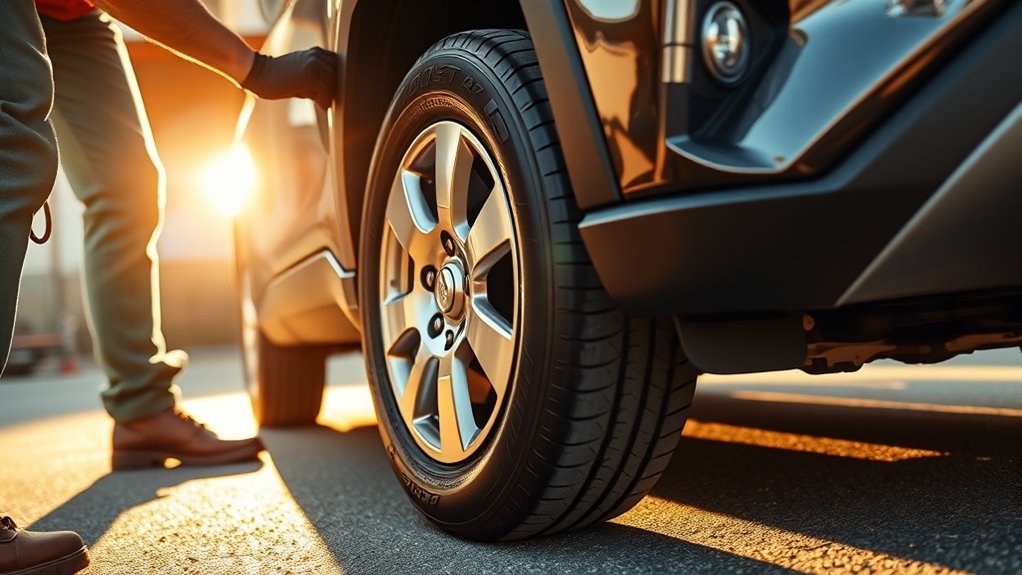
Precise wheel alignment and healthy suspension parts keep the tire’s contact patch working as designed. If toe, camber, or caster are out of range, the tire may scrub across the pavement instead of rolling cleanly. That reduces grip, increases tire noise, and causes uneven wear.
- Check alignment after curb strikes, pothole hits, suspension work, or unusual tread wear.
- Inspect shocks, struts, bushings, ball joints, and mounts for looseness or leakage.
- Rotate tires on schedule so the front and rear tires wear more evenly.
- Rebalance tires if you feel vibration at highway speed.
Pro Tip: If your RAV4 suddenly feels slippery on dry pavement after new tires, ask the shop to verify pressure, balance, lug torque, and alignment. New tires can also need a short break-in period before mold-release residue wears away.
[Products Worth Considering]

Blackline Blackout is a water-based trim and tire dressing that restores rubber, vinyl, and plastic with a rich satin, blackout look. Its no-sling formula dries quickly and helps prevent messy transfer onto paint. The coating repels water and offers UV protection to help prevent fading, cracking, and discoloration for a clean, long-lasting finish.

These universal aluminum tire valve stem caps help protect valve cores from corrosion caused by dirt, water, and snow while helping prevent air leaks to maintain steady tire pressure. They’re easy to install with a simple screw-on fit and are suitable for cars, SUVs, trucks, bicycles, motorcycles, and other vehicles. The stylish black caps add a clean, standout look to your wheels while supporting reliable long-term performance.
Driving Techniques That Maximize Dry Grip Safely
Your inputs behind the wheel decide how effectively the tires use available grip. Smooth steering, progressive braking, and gentle throttle application keep weight transfer controlled. Abrupt inputs overload the front or rear tires and make the RAV4 feel less stable.
Sit upright, keep both hands in a balanced position, look through the corner, and turn the wheel progressively instead of snapping it. Brake in a straight line when possible, then ease off as you turn. Accelerate smoothly as the vehicle unwinds from the corner.
ABS, traction control, and stability control are safety nets, not grip upgrades. They can help manage a skid or lockup, but they cannot replace good tires, correct pressure, and safe speed.
Maintenance Plan to Preserve Dry Grip: Rotation, Inspection, and Tread Targets
A simple maintenance plan keeps your RAV4’s dry grip consistent instead of letting it fade slowly. Check tire pressure at least monthly, inspect tread and sidewalls regularly, and rotate the tires at the interval recommended in your maintenance guide or by your tire manufacturer.
- Monthly: Check cold pressure, inspect for nails, bulges, cuts, cracks, or uneven wear.
- Every rotation: Measure tread depth on the inner, center, and outer grooves of each tire.
- At 4/32 inch: Start planning replacement if you drive in rain, cold weather, or light snow.
- At 2/32 inch: The tire is worn out in most safety contexts and should be replaced.
- After impacts: Check alignment and inspect wheels and sidewalls for damage.
For dry pavement, a shallow tread may still feel responsive in perfect conditions, but real roads are not perfect. Dust, sand, oil, rain, and uneven surfaces make worn tires risky. Do not wait for the wear bars if the tire is old, cracked, noisy, or losing wet traction.
Quick Troubleshooting: Diagnose and Fix Common Dry-Grip Problems
If your RAV4 feels loose, noisy, or inconsistent on dry pavement, use this checklist before blaming the vehicle.
| Symptom | Likely Cause | Fix |
|---|---|---|
| Sluggish steering | Low pressure, soft sidewalls, or worn front tires | Set cold PSI to placard, rotate or replace tires |
| Pulling to one side | Uneven pressure, alignment issue, brake drag, or tire defect | Check pressure, inspect brakes, perform alignment |
| Humming or chopping noise | Cupping, poor rotation history, worn shocks, or bad balance | Rotate, balance, inspect suspension |
| ABS activates early | Low grip, worn tires, uneven surface, or incorrect pressure | Inspect tread, pressure, and tire quality |
| Rear feels unsettled | Rear tire wear, mismatched tires, weak shocks, or cargo imbalance | Inspect tread depth, match tires, check suspension and load |
When in doubt, have a tire shop measure tread depth, check date codes, inspect for internal damage, and verify alignment. Many “bad grip” complaints come from a mix of tire wear, pressure error, and alignment drift rather than one single cause.
Sources
- Toyota Owners Manual: Tire Inflation Pressure — checking and adjusting RAV4 tire pressure
- NHTSA TireWise — tire pressure, tread, rotation, tire recalls, and tire safety guidance
- Michelin CrossClimate 2 — all-weather performance, 3PMSF marking, and manufacturer braking-test notes
- Michelin Defender2 — long-wear touring tire positioning and warranty information
- Pirelli Scorpion AS Plus 3 225/65R17 — RAV4-relevant size, load index, speed rating, and UTQG listing
- Continental CrossContact LX25 — touring SUV tire features, comfort, road noise, handling, and tread-life claims
Frequently Asked Questions
What PSI is best for dry grip on a RAV4?
Use the cold tire pressure printed on your RAV4’s driver-door placard. Many recent RAV4 trims fall in the low-to-mid 30 PSI range, but the correct number depends on tire size, trim, drivetrain, and market. Do not lower PSI below the placard just to chase grip.
Are wider tires better for dry grip on a RAV4?
Not always. A wider tire can increase potential grip, but only if the size, wheel width, load rating, offset, clearance, and ABS/ESC calibration remain appropriate. For most RAV4 owners, a better tire in the factory size is safer and more effective than upsizing.
Is the Michelin CrossClimate 2 good for dry roads?
Yes. The Michelin CrossClimate 2 is an all-weather tire, but it is also strong on dry roads. It is a good RAV4 choice if you want confident dry braking plus wet and occasional winter capability from one tire.
Do performance tires make sense on a Toyota RAV4?
A true performance tire can improve dry grip, but it may ride harder, wear faster, cost more, and perform worse in cold or snowy conditions. For most RAV4 drivers, premium touring or all-weather tires give the best real-world balance.
How much tread depth should I keep for safe grip?
Start shopping around 4/32 inch if you drive in rain, cold weather, or light snow. Replace by 2/32 inch at the latest. Worn tires may still feel acceptable on perfect dry pavement, but they lose safety margin quickly when the road is dusty, oily, cold, or wet.
Conclusion
For better dry grip on a Toyota RAV4, buy the best tire that matches your exact size, load index, speed rating, climate, and driving style. The Michelin CrossClimate 2 is the strongest all-around pick for grip across dry, wet, and occasional winter roads. The Pirelli Scorpion AS Plus 3, Continental CrossContact LX25, and Michelin Defender2 are also smart choices when comfort, tread life, and quiet touring performance matter.
Once the tires are installed, protect that grip with cold-pressure checks, regular rotations, alignment inspections, healthy suspension parts, and smooth driving inputs. The tire upgrade matters, but maintenance is what keeps the RAV4 braking and cornering predictably mile after mile.

Related Articles
Why These 10 Wheel Locks Are Perfect for Your RAV4
Protecting your RAV4 starts before you lock the doors. Wheel theft is an avoidable cost and a hassle that interrupts your routine, and choosing…
Read More
10 Best 80000 Mile Tires for Rav4
You want tires that last, keep you safe, and save you money over the long run. Choosing 80,000 mile tires for your RAV4 matters…
Read More
10 Long Warranty Tires That Will Transform Your RAV4 Experience
You spend a lot of time behind the wheel of your RAV4, and the right tires change everything from ride comfort to fuel economy…
Read More