If you want the stronger all-around performer, the Michelin CrossClimate 2 AW is the better choice for most drivers. Current independent testing gives it the advantage in dry braking, hydroplaning resistance, snow performance, ice braking, and rolling resistance. The Pirelli Scorpion WeatherActive, however, is slightly better in wet braking and wet handling, stronger in ice traction, and clearly quieter and more comfortable.
Quick Answer
Choose the Michelin CrossClimate 2 AW for the best overall balance of dry braking, deep-water resistance, snow grip, ice braking, and efficiency. Choose the Pirelli Scorpion WeatherActive if you value quieter cruising, a softer ride, slightly better wet braking and handling, and stronger acceleration grip on smooth ice.
Key Takeaways
- Michelin wins overall: it finished first in the 2025 Tyre Reviews all-weather comparison.
- Pirelli has the comfort advantage: it was quieter and scored higher for subjective comfort.
- Wet performance is split: Pirelli stopped and lapped slightly faster, while Michelin resisted straight and curved hydroplaning much better.
- Michelin is stronger on snow: it led the pair in snow braking, acceleration, and handling.
- Ice is also split: Michelin stopped shorter, but Pirelli accelerated faster and earned the stronger overall ice result.
- Both carry 3PMSF ratings and 60,000-mile limited treadwear warranties.
Which Is Better: CrossClimate 2 AW Or Scorpion WeatherActive?
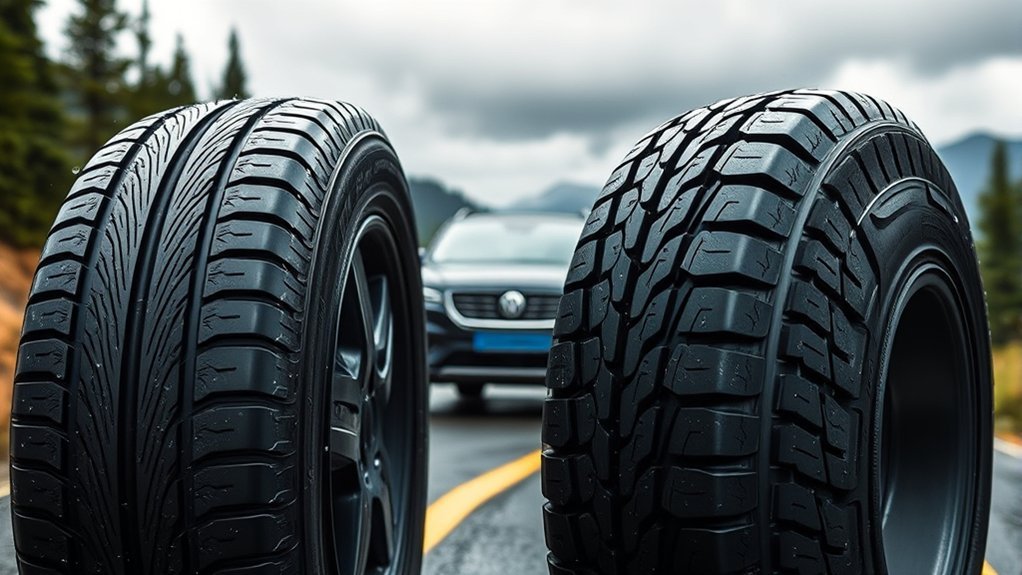
For most drivers choosing between these two premium all-weather tires, the Michelin CrossClimate 2 AW has the stronger overall performance mix. In the 2025 Tyre Reviews all-weather tire test, the CrossClimate 2 AW finished first overall thanks to excellent dry braking, snow performance, hydroplaning resistance, ice braking, and low rolling resistance.
The Pirelli Scorpion WeatherActive was still one of the strongest tires in the comparison. It stopped slightly shorter in the wet, completed the wet-handling course slightly faster, produced the best ice-traction result among the all-weather tires, and was quieter and more comfortable than the Michelin.
The key is that neither tire wins every test. Michelin is the better choice if you want the broadest performance envelope, while Pirelli is particularly appealing when refinement, wet-road response, and ice traction matter more.
Note: The independent results below were recorded on 225/65 R17 102H tires under controlled test conditions. Your vehicle, tire size, temperature, road surface, pressure, load, and tread wear can change real-world results.
[Products Worth Considering]

This manual duck head tire changer kit makes tire installation and removal simpler by letting you embed the duck head into the tire with applied pressure. The integrated design and durable steel construction help reduce friction and improve efficiency and safety during use. Suitable for 16–21 inch wheels, it’s convenient for cars, trucks, SUVs, and ATV tires, with 24-hour after-sales support.
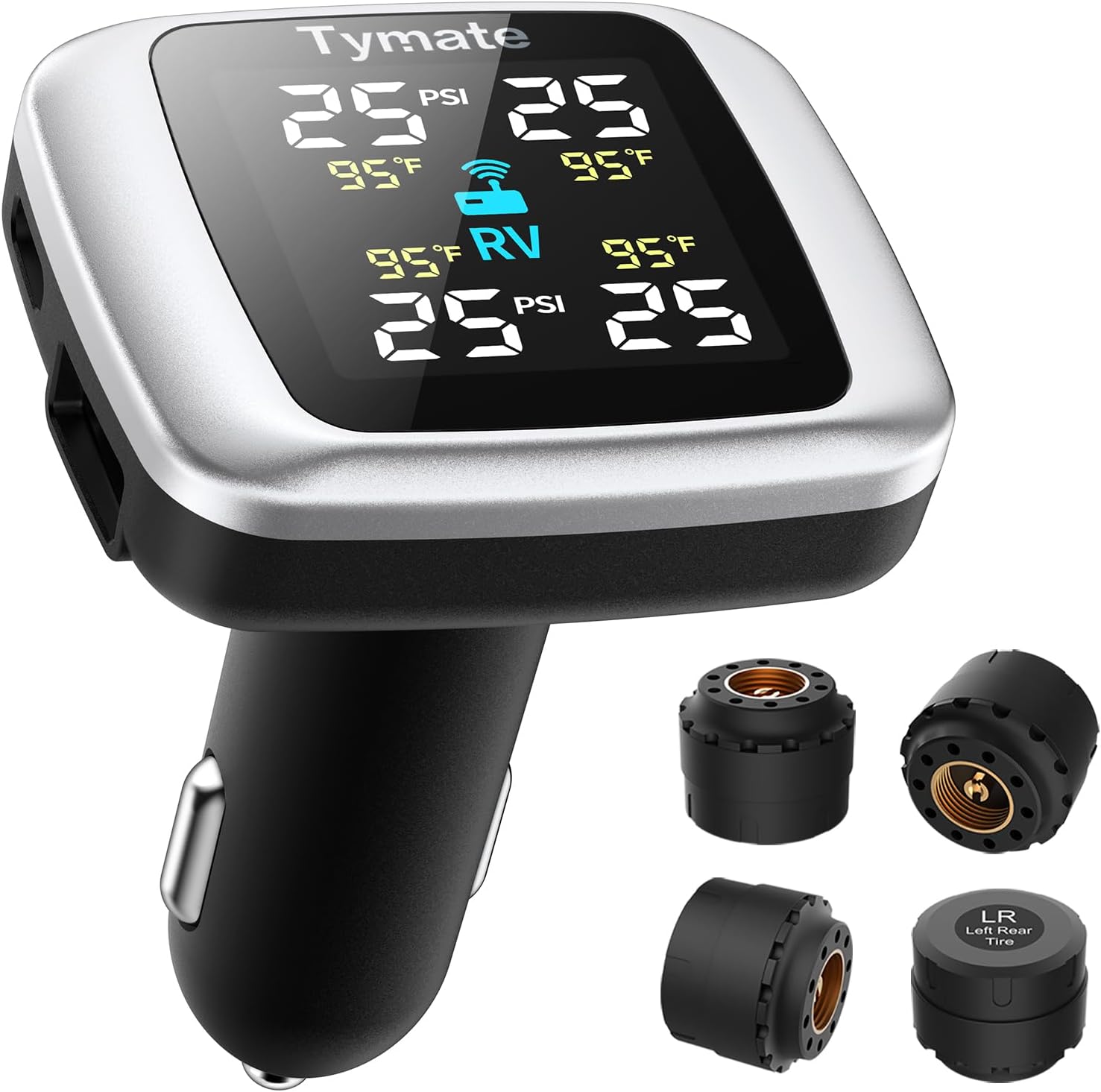
Tymate TM7 is a wireless tire pressure monitoring system that delivers real-time pressure and temperature readings for safer driving. It includes four external sensors, a bright color LCD display with adjustable backlight, and six alarm modes for high/low pressure, fast leakage, high temperature, and sensor signal or battery issues. The system covers a wide 0–144 PSI range and plugs into your vehicle’s cigarette lighter socket for quick DIY setup.

Monitor tire tread wear with a smart, color-coded depth gauge that shows clear condition ranges at a glance. The bar is range marked for fast, easy readings, helping you maintain safer traction and performance. Each gauge is portable with a pocket clip, and the set includes 20 units for daily use and sharing.
CrossClimate 2 AW Vs Scorpion WeatherActive Test Results
| Test | Michelin CrossClimate 2 AW | Pirelli Scorpion WeatherActive | Better |
|---|---|---|---|
| Dry braking | 37.33 m | 40.86 m | Michelin |
| Dry handling | 73.85 s | 73.29 s | Pirelli |
| Wet braking | 34.41 m | 33.83 m | Pirelli |
| Wet handling | 74.65 s | 74.48 s | Pirelli |
| Straight aquaplaning | 83.7 km/h | 80.1 km/h | Michelin |
| Curved aquaplaning | 8.8 m/s² | 7.3 m/s² | Michelin |
| Snow braking | 16.38 m | 16.77 m | Michelin |
| Snow acceleration | 3.21 s | 3.25 s | Michelin |
| Snow handling | 84.26 s | 85.81 s | Michelin |
| Ice braking | 10.2 m | 10.5 m | Michelin |
| Ice acceleration | 9.79 s | 9.39 s | Pirelli |
| External noise | 72.0 dB | 70.3 dB | Pirelli |
| Rolling resistance | 7.05 kg/t | 7.78 kg/t | Michelin |
These results show why a simple “Michelin wins wet” or “Pirelli wins winter” verdict is misleading. Each tire has different strengths within the same weather category.
[Products Worth Considering]

Measure tire tread depth quickly and accurately with this LUMITECO dial gauge that reads in 1/32" increments up to 14/32". The color-coded green/yellow/red zones make it easy to judge tire wear and know when replacement is needed. A rugged, compact design with a protective pouch helps keep the gauge ready for use on cars, trucks, motorcycles, and more.

Steelman white tire marking crayons provide high-contrast, semi-permanent marks for repairing and inspecting tires and equipment. They write on wet or dry, smooth or coarse surfaces including rubber, metal, glass, and wood, making them ideal for puncture location and damage outlining. The lead- and zinc-free crayons resist weather and fading yet wipe away when you no longer need the marks.

Keep your tires properly inflated with this analog VONDIOR tire pressure gauge, designed for fast, easy readings without batteries. The swiveling, two-axis hose and large glow dial help you measure at any tire angle with instant visibility. Built with a protective rubber shield, it supports durable, low-maintenance use for cars and trucks.
Dry Braking And Handling
On dry pavement, the Michelin CrossClimate 2 AW has the clearer braking advantage. In the current comparison it stopped in 37.33 meters, while the Pirelli Scorpion WeatherActive needed 40.86 meters.
The Michelin stopped 3.53 meters shorter than the Pirelli in the controlled dry-braking test.
Dry handling tells a different story. The Pirelli completed the handling course in 73.29 seconds, compared with 73.85 seconds for the Michelin. Both also received strong subjective handling scores.
That makes the Michelin the better pick if emergency stopping performance is your priority. The Pirelli feels a little more agile in a dry handling test, but the difference in lap time is small.
Wet Braking And Hydroplaning
Wet performance is the most important area to separate carefully because the two tires trade wins. The Pirelli is slightly stronger on a normal wet test surface, while the Michelin is much better once deeper standing water raises the risk of hydroplaning.
Wet Braking Distance
The Pirelli Scorpion WeatherActive stopped in 33.83 meters, while the Michelin CrossClimate 2 AW stopped in 34.41 meters. The Pirelli therefore held a 0.58-meter advantage in this test.
The result is meaningful, but the two are still closely matched. Test temperature, water depth, road texture, tire pressure, tire wear, and vehicle setup can all change braking distances, so you should treat the figures as a controlled comparison rather than a promise of an exact stopping distance on your vehicle.
Straight-Line Hydroplaning
The Michelin takes a clearer lead in deeper water. It reached 83.7 km/h before straight-line aquaplaning, compared with 80.1 km/h for the Pirelli.
That 3.6 km/h difference indicates that the Michelin maintained contact with the road to a higher test speed when traveling straight through standing water.
Curved Aquaplaning Control
Curved aquaplaning uses a different measurement. Instead of reporting a float speed, the test measures how much lateral acceleration the tire can maintain while cornering through water.
The Michelin recorded 8.8 m/s², while the Pirelli recorded 7.3 m/s². That gives the CrossClimate 2 AW a substantial advantage in this particular deep-water cornering test.
- Wet braking: Pirelli wins narrowly.
- Wet handling: Pirelli wins narrowly.
- Straight aquaplaning: Michelin wins clearly.
- Curved aquaplaning: Michelin wins clearly.
If your wet-weather concern is ordinary braking and handling, the Pirelli is excellent. If you frequently deal with heavy rain, puddling, and standing water, the Michelin’s stronger hydroplaning results are a major reason to favor it.
Snow Traction And Handling
Snow is where the Michelin CrossClimate 2 AW establishes a more consistent advantage. It beat the Pirelli in snow acceleration, braking, and handling in the same independent test.
Snow Traction Grip
During acceleration from 5 to 40 km/h, the Michelin completed the run in 3.21 seconds, compared with 3.25 seconds for the Pirelli.
The difference is small, and both are capable 3PMSF all-weather tires, but the Michelin produced the better measured traction result.
Cornering Confidence
The Michelin also completed the snow handling course in 84.26 seconds, versus 85.81 seconds for the Pirelli.
The independent tester described the Michelin as having strong overall snow grip with a safe, mildly understeer-oriented balance. The Pirelli remained capable but was more playful at the rear and took longer to recover when sliding.
Snow Braking Control
In braking from 40 to 5 km/h, the Michelin stopped in 16.38 meters, while the Pirelli needed 16.77 meters.
The gap is only 0.39 meter, so it should not be exaggerated. Still, combined with the acceleration and handling results, it confirms that the CrossClimate 2 AW had the stronger overall snow performance of the pair.
Warning: Both tires carry the Three-Peak Mountain Snowflake (3PMSF) symbol, but 3PMSF does not mean an all-weather tire matches a dedicated winter tire in every snow or ice condition. Michelin itself advises considering winter tires if you frequently drive on snow-covered and icy roads in winter temperatures.
Ice Braking Performance
Ice performance is split rather than a clean Michelin victory.
The Michelin CrossClimate 2 AW delivered the better ice-braking result, stopping in 10.2 meters. The Pirelli Scorpion WeatherActive needed 10.5 meters.
However, the Pirelli was stronger in ice traction. It accelerated from 5 to 20 km/h in 9.39 seconds, versus 9.79 seconds for the Michelin. Based on the combined ice results, the independent test rated the Pirelli as the best overall all-weather tire on smooth ice.
So choose carefully: Michelin has the edge when stopping on the tested ice surface, while Pirelli gives you stronger acceleration traction.
Ride Comfort And Road Noise
The Pirelli Scorpion WeatherActive is the stronger comfort tire. It scored 9.5 out of 10 for subjective comfort, while the Michelin scored 8.5.
Pirelli was also the quietest tire in the test. Its measured external pass-by noise was 70.3 dB, compared with 72.0 dB for the Michelin. The tester also gave Pirelli the top subjective noise score.
If low noise and a compliant ride are your top priorities, the Scorpion WeatherActive has the clearer advantage.
The CrossClimate 2 AW is not necessarily uncomfortable, but its firmer behavior is one of the compromises that comes with its strong overall grip and efficiency.
- Pirelli transmits less noise in this test.
- Pirelli scores higher for ride comfort.
- Michelin feels firmer but delivers stronger results in several performance categories.
Tread Wear, Rolling Resistance, And Value
Both tires are backed by a 60,000-mile limited treadwear warranty. Michelin lists that warranty for the CrossClimate2, while Pirelli lists the same mileage warranty for the Scorpion WeatherActive.
A mileage warranty is not a prediction that every driver will get exactly 60,000 miles. Alignment, inflation, vehicle weight, suspension condition, driving style, rotation, climate, and road surface all affect tread life.
Michelin has a measurable efficiency advantage. Its rolling-resistance coefficient was 7.05 kg/t, compared with 7.78 kg/t for Pirelli in the independent test. Lower rolling resistance generally reduces the energy needed to keep the tire moving, although your real fuel economy or EV range depends on the entire vehicle and driving environment.
Do not assume Pirelli will always be cheaper. Tire prices change by size, seller, region, installation package, rebate, and date. Compare the installed price for your exact fitment when you buy.
Pro Tip: Both tires use directional tread patterns. Directional tires normally remain on the same side of the vehicle during a standard front-to-rear rotation unless they are remounted on the wheels. Follow your vehicle manual and tire manufacturer’s rotation guidance.
Vehicle Fitment And 3PMSF Rating
Make sure you are comparing the correct products for your vehicle. Michelin markets the CrossClimate2 for passenger cars, SUVs, CUVs, and vans. Pirelli positions the Scorpion WeatherActive primarily for CUVs, SUVs, and pickup trucks. For many passenger cars, Pirelli’s related model is the Cinturato WeatherActive.
Both CrossClimate2 and Scorpion WeatherActive carry the Three-Peak Mountain Snowflake marking. That means they meet a defined severe-snow traction requirement, making them more winter-capable than a conventional M+S all-season tire that has not met the 3PMSF performance threshold.
However, the symbol should not be read as a guarantee of equal braking, cornering, or ice performance. The test results in this comparison show that two 3PMSF tires can still behave differently on snow and ice.
What Real Drivers Say
Owner feedback can help you understand long-term noise, ride feel, tread wear, and vehicle-specific behavior, but it should not replace controlled testing. Ratings also change over time and are difficult to compare when they come from different websites or use different scoring systems.
The broad pattern of owner comments generally fits the controlled comparison:
- CrossClimate 2 owners often value its year-round traction and winter confidence.
- WeatherActive owners commonly highlight ride quality and low road noise.
- Experiences with mileage, efficiency, and cabin noise vary significantly by vehicle.
Use owner reviews to check how a tire behaves on a vehicle similar to yours, then use controlled test data to compare performance limits.
Who Should Buy Each Tire?
Choose the Michelin CrossClimate 2 AW if you want the strongest overall combination of dry braking, snow performance, hydroplaning resistance, ice braking, and low rolling resistance. It is especially compelling for drivers who experience frequent rain and snow but still want to use one tire year-round.
Choose the Pirelli Scorpion WeatherActive if you place more value on ride comfort, low noise, wet-road handling, and ice traction. It is a particularly attractive match for CUV and SUV drivers who want a refined all-weather touring tire without giving up useful winter capability.
If you regularly drive on untreated snow, steep winter roads, or persistent ice, neither tire should automatically replace a dedicated winter tire. Your climate, local winter-tire laws, road maintenance, and driving conditions should guide that decision.
North America product note: Michelin says the CrossClimate3 has been available in Europe since July 2025, but North America will continue with the CrossClimate2 for the next several years. That means the CrossClimate2 remains a current North American product rather than simply an obsolete model.
[Products Worth Considering]

Protect tire valves from water, dust, and sand to help prevent leaks and support safe driving. These universal stem caps install quickly by hand and feature durable aluminum alloy construction with an inner sealing ring for better air retention. Compatible with cars, SUVs, trucks, motorcycles, and bicycles for everyday convenience.

This portable cordless tire inflator delivers rapid inflation up to 150 PSI with a built-in pressure gauge for accurate readings. It offers multiple preset modes for car, bike, motorcycle, and ball inflation, plus an LED light system for visibility in dark conditions. The auto shut-off helps stop pumping when your preset pressure is reached, and it supports several pressure units for convenience.

Check tire pressure with the Milton S-925 pencil gauge built for trucks, RVs, and bicycles. It features a single-head chuck with a built-in deflator valve, and it displays readings in both PSI and kPa for convenient use. The gauge is designed for accurate, repeatable pressure checks within its working range.
Frequently Asked Questions
What’s Better Than Michelin CrossClimate 2?
No single tire is better in every category. In the 2025 comparison, Goodyear Assurance WeatherReady 2 beat Michelin in wet braking and wet handling, while the Pirelli Scorpion WeatherActive offered better comfort, noise performance, and overall smooth-ice performance. Michelin still finished first overall because of its broader mix of dry, wet, snow, ice, and efficiency strengths.
Are Pirelli Scorpion WeatherActive Tires Good?
Yes. The Scorpion WeatherActive is a strong premium all-weather tire for CUVs, SUVs, and pickups. It combines 3PMSF snow capability with excellent comfort, low noise, strong wet-road performance, and very good smooth-ice traction. Its main weakness in the 2025 test was curved hydroplaning performance.
Is Michelin CrossClimate 2 Worth the Money?
It can be worth the premium if you value strong dry braking, snow performance, hydroplaning resistance, ice braking, and low rolling resistance in one year-round tire. It also carries a 60,000-mile limited treadwear warranty. Compare current installed prices in your exact tire size before deciding.
What Is the Average Lifespan of Michelin CrossClimate 2 Tires?
Michelin backs the CrossClimate2 with a 60,000-mile limited treadwear warranty, but that is not a guaranteed service life. Actual mileage depends on inflation, alignment, rotation, vehicle weight, road conditions, climate, and driving style. NHTSA says tires should be replaced when tread reaches 2/32 inch, and replacement may be sensible earlier when winter traction is important.
Can CrossClimate 2 or Scorpion WeatherActive Replace Winter Tires?
They can be a practical one-set solution for many drivers because both are 3PMSF-rated all-weather tires. However, if you frequently drive on ice, deep snow, untreated roads, or through severe winter conditions, a dedicated winter tire can provide a higher performance margin.
Conclusion
The Michelin CrossClimate 2 AW remains the better overall choice in this comparison. Its advantages in dry braking, hydroplaning resistance, snow performance, ice braking, and rolling resistance make it the more complete year-round performer.
The Pirelli Scorpion WeatherActive should not be dismissed as a weaker tire. It actually beats the Michelin in wet braking and handling, accelerates better on smooth ice, rides more comfortably, and produces less noise. For drivers who prioritize refinement and everyday comfort, those advantages can matter more than Michelin’s overall test win.
For most mixed-weather driving, choose Michelin for the broadest performance range and Pirelli for the quieter, softer, more refined experience. For regular severe snow and ice, consider whether a dedicated winter tire is more appropriate for your conditions.
Sources
- Tyre Reviews — 2025 All-Weather Tire Test — dry, wet, hydroplaning, snow, ice, comfort, noise, and rolling-resistance results.
- Michelin — CrossClimate2 — 3PMSF status, vehicle applications, warranty, current North American product information, and manufacturer guidance.
- Pirelli — Scorpion WeatherActive — 3PMSF status, directional design, intended vehicle applications, tread technology, and warranty.
- NHTSA TireWise — tire inspection, tread-depth, inflation, and replacement safety guidance.
- Michelin Tire Rotation Guide — directional-tire rotation guidance.