

If you are comparing Pirelli vs Continental grip, the exact tire model matters more than the logo on the sidewall. Current high-performance tires from both brands can deliver excellent dry and wet traction. Pirelli offers road-focused models such as P Zero™ R and especially track-focused choices such as P Zero™ Trofeo RS, while Continental’s SportContact 7 is engineered as a balanced ultra-high-performance road tire. Your car, tire size, temperature, pressure, road surface, and intended use can all change which one performs better.
Quick Answer
Neither brand has more grip in every condition. In a 2026 same-size performance-summer test, Pirelli P Zero R led dry braking, dry handling, and wet handling, while Continental SportContact 7 led wet braking and straight aquaplaning. For track use, tire category, fitment, temperature, and setup matter more than the brand name.
Key Takeaways
- There is no reliable rule that every Pirelli grips better in the dry or every Continental grips better in the wet.
- In a March 2026 235/35 R19 test, P Zero R led dry braking, dry handling, and wet handling, while SportContact 7 led wet braking and straight-aquaplaning performance.
- P Zero™ Trofeo RS has a much stronger dry-track mission than the road-oriented SportContact 7; Continental also introduced the more specialized SportContact 7 Force for selected high-performance fitments in 2026.
- Warm-up speed and breakaway behavior depend on the exact compound, car, pressure, alignment, surface, and temperature rather than brand alone.
- For daily driving, correct fitment, wet braking, predictable handling, tread life, comfort, and seasonal suitability may matter more than ultimate lap-time grip.
Which Tire Grips Better for Track Use?
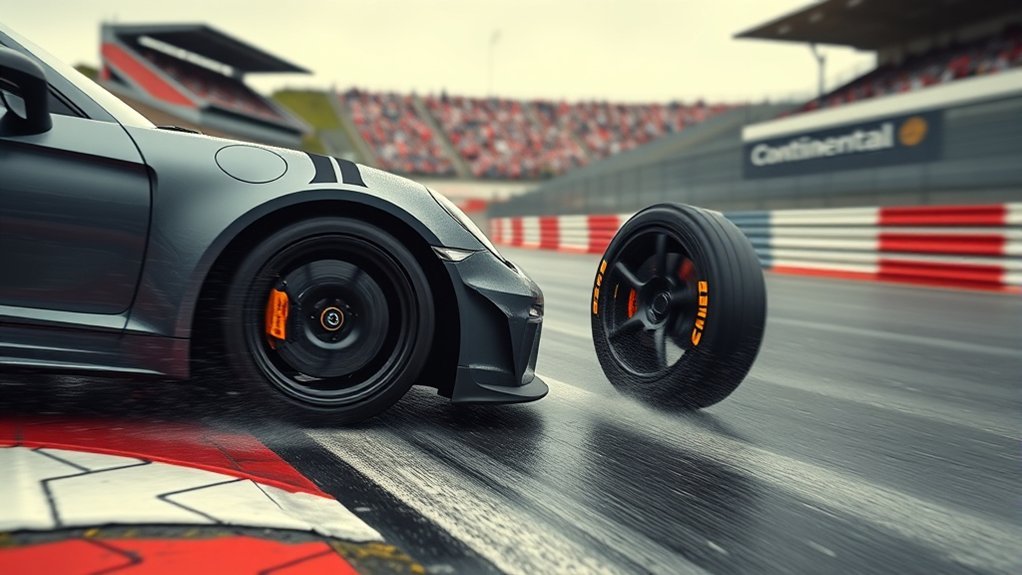
For track use, you first need to compare tires from the same performance category. A track-focused Pirelli and a road-biased Continental are not an apples-to-apples comparison.
For example, Pirelli describes the P Zero™ Trofeo RS as a road-homologated tire developed primarily to maximize dry performance on track. Its design includes a semi-slick shoulder, an optimized footprint, and materials intended to stabilize performance during demanding high-temperature handling.
Continental’s SportContact 7, by comparison, is positioned as a high-performance road tire designed for precise handling and grip on both wet and dry surfaces. It can support enthusiastic driving and occasional track use, but its development target also includes braking, comfort, efficiency, wet-road behavior, and everyday performance.
Continental expanded the family in May 2026 with the SportContact 7 Force, a more specialized UUHP summer tire developed for selected very high-performance vehicles with road-to-track use in mind. Its first announced application was a vehicle-specific BRABUS BODO fitment, so you should not assume it is a broadly available, direct replacement-market equivalent to Trofeo RS in every size.
That distinction is more useful than simply saying “Pirelli beats Continental.” If you compare a more track-biased Pirelli with a more road-biased Continental, the Pirelli may have the dry-circuit advantage partly because you selected a different type of tire.
Pirelli’s motorsport history is also genuine. The company has been Formula 1’s exclusive tire supplier since 2011, and Formula 1 and the FIA extended that partnership through the end of 2028. However, F1 tires are specialized racing products, so that partnership should be viewed as evidence of motorsport experience rather than proof that every Pirelli road tire has more grip than every Continental.
For a useful Pirelli-vs-Continental comparison, match tire category to tire category first. The exact model matters more than the badge.
[Products Worth Considering]

NOVEHA self-heating steam eye masks deliver gentle, soothing warmth without needing a microwave—just open and wear for convenient hot compress comfort. The air-activated, unscented design helps relax tired eyes from screen time, reading, travel, and nighttime routines. Crafted with skin-friendly, lint-free non-woven cotton fabric, these disposable warm masks provide a calming, spa-like experience wherever you go.

The Continental Grand Prix 5000 is an allround road bike tire engineered for faster rolling, improved ride comfort, and enhanced puncture protection. It features a Vectran Breaker cut-protection layer, Lazer Grip micro-profile tread for confident cornering control, and Active Comfort Technology to damp vibration for smoother rides. BlackChili compound optimizes grip and speed for everyday performance and long-lasting confidence.

The Airmoto portable tire inflator quickly and accurately fills car, truck, SUV, motorcycle, and bicycle tires up to 120 PSI with auto shut-off when your target pressure is reached. Its large LCD, multi-unit pressure display, and digital gauge make it easy to dial in settings and verify readings, while the built-in LED flashlight helps in low light. The included polyurethane hard carrying case and storage mesh pocket keep the inflator and accessories protected and organized.
Pirelli vs Continental: What Current Evidence Shows
Modern tests make the comparison more nuanced than the old “Pirelli dry, Continental wet” rule. Different tests can produce different winners because tire size, vehicle, track layout, temperature, surface, braking protocol, water depth, and scoring method all influence the result.
| Comparison point | Pirelli | Continental |
|---|---|---|
| Current performance example | P Zero™ R | SportContact 7 |
| Track-focused example | P Zero™ Trofeo RS | SportContact 7 is more road-balanced; SportContact 7 Force adds a more specialized road-to-track option for selected fitments |
| Dry performance | Very strong in current UHP and track-focused lines | Also very strong; cannot be dismissed as merely a comfort tire |
| Wet performance | Current road-performance models can be extremely competitive in both wet braking and wet handling | Wet braking and aquaplaning performance remain major strengths in current testing |
| 2026 same-size test example | P Zero R finished 1st overall in the 235/35 R19 Tyre Reviews test | SportContact 7 finished 3rd overall and led wet braking and rolling resistance |
| Best choice | Depends on exact model and whether maximum road or track performance is your goal | Depends on exact model and how much you value braking, road balance, wet behavior, efficiency, and longevity |
A March 2026 Pirelli release summarizing independent performance-summer testing reported very strong results for P Zero R, including leading dry-braking performance and highly competitive wet performance. Meanwhile, a March 2026 Continental summary of an AUTO BILD sportscars test reported SportContact 7 as the overall test winner with particularly strong braking and handling.
2026 P Zero R vs SportContact 7: Same-Size Test Results
The clearest recent apples-to-apples comparison comes from the March 2026 Tyre Reviews performance-summer test. Both Pirelli P Zero R and Continental SportContact 7 were tested in 235/35 R19 91Y. P Zero R finished first overall and SportContact 7 finished third, but the Continental still won several individual disciplines.
| 2026 test metric | P Zero R | SportContact 7 | Leader in this test |
|---|---|---|---|
| Dry braking, 100–10 km/h | 31.70 m | 33.39 m | Pirelli |
| Dry handling lap | 76.48 s | 78.42 s | Pirelli |
| Wet braking, 80–10 km/h | 24.89 m | 24.54 m | Continental |
| Wet handling lap | 99.38 s | 104.40 s | Pirelli |
| Straight aquaplaning float speed | 76.1 km/h | 78.0 km/h | Continental |
| Rolling resistance | 9.8 kg/t | 8.8 kg/t | Continental |
| Overall position | 1st | 3rd | Pirelli overall |
This one test is especially useful because the two tires shared the same nominal size and test program, but it still does not create a universal brand ranking. Another test can use a different vehicle, tire size, temperature, braking speed, water depth, track, or scoring formula. For example, AUTO BILD sportscars used different front and rear sizes on a BMW Z4 in its 2026 test and produced an overall win for SportContact 7.
The useful conclusion is not that the tests conflict. It is that results are conditional. Change the tire size, car, course, temperature, test method, or scoring priorities and the order can change.
How Does Pirelli Grip on Dry, Hot Asphalt?
Pirelli has several tires specifically engineered for high-performance dry driving, but you should still identify the exact model before predicting how it will behave on hot asphalt.
P Zero™ R is a road-oriented ultra-high-performance tire designed to deliver sporty handling, wet and dry responsiveness, and a relatively wide grip window for daily use. P Zero™ Trofeo RS moves further toward dry-track performance, with its asymmetric layout, larger working contact area, and high-temperature reinforcements designed for demanding driving.
- P Zero™ R targets high-performance road driving in wet and dry conditions.
- P Zero™ Trofeo RS is substantially more track-focused and prioritizes dry performance.
- Track temperature, tire pressure, vehicle weight, alignment, and driving pace influence how much grip you actually receive.
- A tire designed for extreme dry performance may make larger compromises in wet behavior, comfort, noise, or wear than an everyday UHP tire.
On hot pavement, the most important question is therefore not simply whether the sidewall says Pirelli. It is whether the specific Pirelli model is designed for the temperatures and type of driving you have in mind.
[Products Worth Considering]

The Big Rig Defense Tire Thumper is a truck tire pressure checker that lets you quickly check multiple tires by giving them a firm whack. Listen for a reassuring thump and feel the stick bounce when a tire is fully inflated, helping you get back on the road safely. It features a comfortable, glove-friendly handle and a secure wrist strap for confident use on busy routes.

The Topeak SmartGauge D2 delivers precise digital tire pressure readings for bikes, motorcycles, and sports equipment up to 250 psi (17 bar). Its rotating SmartHead works with both Presta and Schrader valves, so you can check pressure quickly without adapters. The LCD display makes it easy to read results in psi, bar, or kg/cm² with an included CR2032 battery for immediate use.
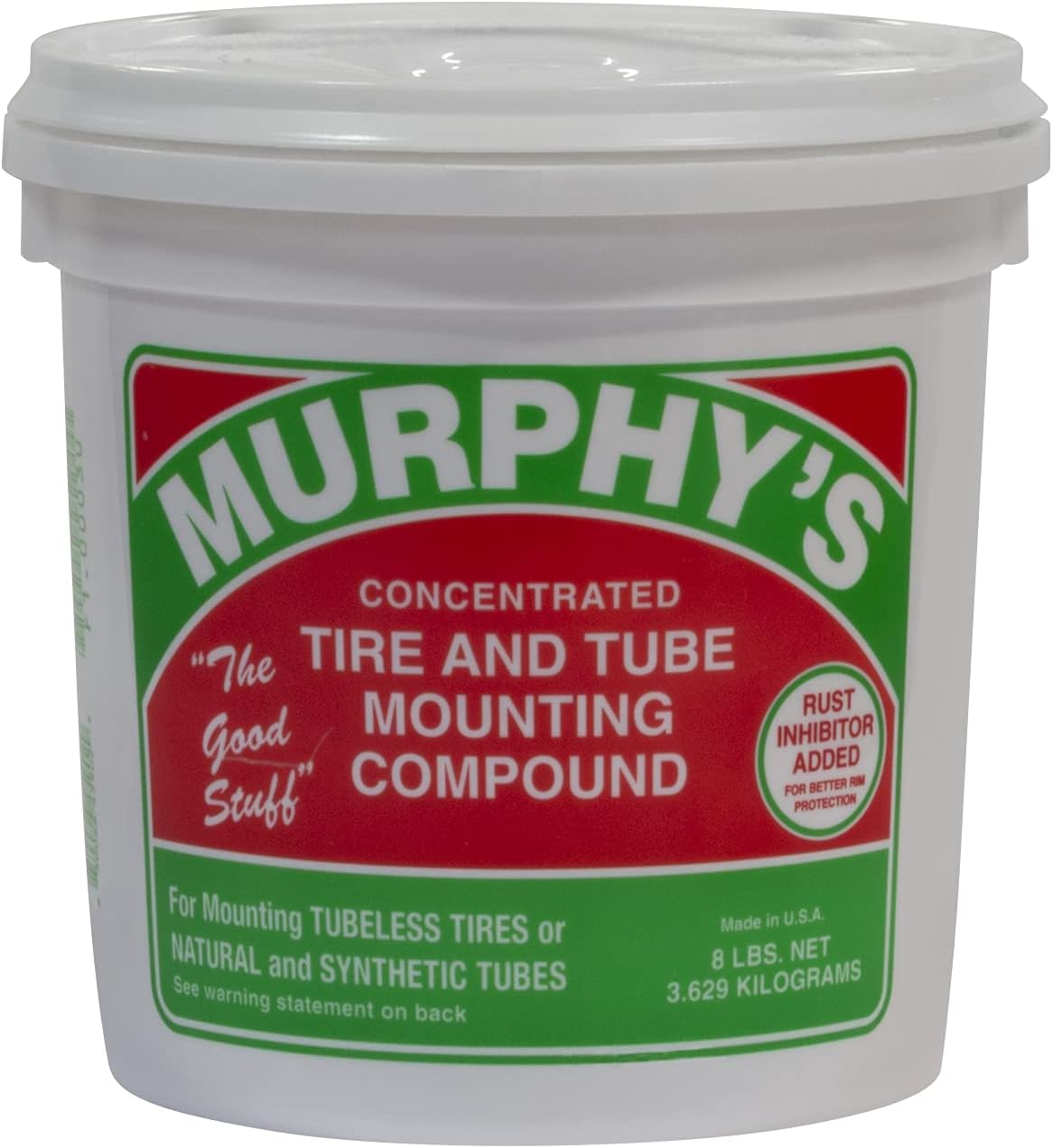
A concentrated tire and tube mounting compound designed to help simplify mounting rubber tires and tubes on passenger, semi truck, construction, and OTR applications. Its ultra-thick formula packs beads effectively and includes rust inhibitors to help protect against corrosion during use.
How Does Continental Perform in Wet Conditions?
Continental has a strong reputation for wet-road performance, and its current high-performance products give that reputation credible technical support. SportContact 7 uses an adaptive tread concept designed to maintain stable behavior on both wet and dry surfaces.
That does not mean Continental automatically beats Pirelli whenever it rains. Current Pirelli road-performance tires are also designed for wet conditions, and comparative tests can split wet braking, wet handling, and aquaplaning into separate disciplines with different winners.
The 2026 same-size test illustrates this perfectly. SportContact 7 stopped slightly shorter in wet braking, at 24.54 meters versus 24.89 meters for P Zero R, and also reached a higher straight-aquaplaning float speed. Yet P Zero R completed the wet handling lap substantially faster. One tire therefore led the stopping test while the other led the handling test.
For normal road use, focus on the measures that matter most to you:
- Wet braking: how quickly the tire can stop on a wet surface.
- Wet handling: how predictably it turns, balances, and recovers grip.
- Aquaplaning resistance: how well the tread maintains contact through standing water.
- Temperature range: whether the tire is being used in the season for which it was designed.
- Tread depth: worn tires have less tread volume available to manage water.
Continental is therefore a very credible wet-weather choice, but the fair conclusion is model-specific and discipline-specific rather than brand-wide.
What Do They Feel Like at the Limit?
At-the-limit behavior cannot be assigned permanently to Pirelli or Continental. Steering response and breakaway depend heavily on the exact tire, vehicle, wheel size, pressure, suspension setup, alignment, temperature, and road or track surface.
A current Pirelli UHP tire can feel highly direct and performance-focused, while a SportContact 7 can also provide precise steering and strong cornering support. The difference between two specific models may be noticeable, but it should not be turned into a rule for every tire the companies make.
Steering at the Edge
When you approach the tire’s grip limit, look for steering precision, response speed, load build-up, and predictability. A tire that produces a quick steering response is not automatically generating more ultimate grip, and a calmer tire is not necessarily slower.
With current high-performance models, both manufacturers deliberately tune these characteristics. Pirelli’s sport-oriented products often emphasize direct response, while Continental’s SportContact development also targets precise high-speed handling.
- Compare equivalent performance categories.
- Use the same tire size whenever possible.
- Consider the vehicle used in the test.
- Do not treat subjective steering feel as the same thing as measured braking or lap time.
The best steering feel is ultimately the one that suits your car and gives you clear, predictable information before grip is exhausted.
Breakaway Feel and Control
A progressive breakaway makes it easier for a driver to recognize that the tire is approaching its limit and respond smoothly. However, neither Pirelli nor Continental owns this characteristic across its entire range.
Breakaway behavior can change when you alter tire pressure, camber, axle load, temperature, stability-control settings, road surface, or even the front-to-rear tire combination. Two cars running the same tire can therefore feel different at the limit.
For road driving, predictable recovery and stability are generally more useful than chasing a dramatic “race-car” sensation. On track, experienced drivers may put more weight on feedback, steering precision, and the ability to adjust the car near the limit.
Which Tire Heats Up Faster on Track?
There is no defensible universal rule that a Pirelli needs one or two laps while a Continental needs two or three. Tire warm-up is determined by the specific compound and construction plus the conditions in which you use it.
A track-oriented tire may be designed around a different temperature window from a road-biased summer tire. That makes simple brand-level warm-up claims misleading.
Warm-Up Speed Differences
Warm-up speed changes with several variables:
- ambient and track temperature;
- starting tire pressure;
- vehicle mass and power;
- cornering and braking load;
- alignment and camber;
- tire size and construction;
- compound and tread depth;
- driver pace.
A tire can also feel responsive before it reaches the temperature that produces its best sustained grip. That is why a fixed “number of laps to warm up” is not meaningful unless the test conditions and exact tire are specified.
Track Temperature Response
As the track gets hotter, pressure and tread temperature rise. Whether that improves or reduces grip depends on whether the tire remains inside its intended operating range.
Pirelli’s track-focused Trofeo RS includes design features intended for hard use at elevated temperatures, while road-oriented performance tires from both brands must balance outright grip with wet behavior, durability, noise, efficiency, and everyday usability.
Instead of assuming one brand automatically works better on a hot day, monitor the tire’s behavior and follow guidance for the exact tire, vehicle, and track event.
Warning: Track driving can raise tire temperature and pressure substantially. Follow the tire manufacturer, vehicle manufacturer, and track organizer’s guidance for track setup. Before normal street driving, restore the appropriate street pressures and inspect the tires for damage or abnormal wear.
Heat Cycle Performance
Repeated heating and cooling can change how a performance tire feels, particularly when it is subjected to hard track use. The effect depends more on the compound, construction, temperature reached, and number of cycles than on whether the sidewall says Pirelli or Continental.
- Track-focused compounds may respond differently to repeated heat cycles than normal road tires.
- Excessive temperature can accelerate wear and degrade performance.
- Incorrect pressures can create uneven temperature distribution across the tread.
- Alignment can concentrate wear on the shoulders or inner tread.
Do not assume Continental automatically has better long-stint consistency or Pirelli automatically gives more early-lap grip unless a test of the exact tires demonstrates it.
How Quickly Do They Wear Down?
Wear is another area where the exact model matters more than the brand. A very track-focused Pirelli can wear faster than a road-oriented Continental, but that does not prove that all Pirellis wear faster than all Continentals.
Continental reports increased mileage for SportContact 7 compared with its predecessor, but that is an in-brand generational comparison, not evidence of a universal tread-life advantage over Pirelli.
Your actual tread life depends on:
- compound and tire category;
- street versus track mileage;
- vehicle weight and power;
- alignment;
- inflation pressure;
- rotation possibilities;
- driving style;
- road surface;
- temperature and heat cycles.
Inspect tread depth and watch for shoulder wear, inner-edge wear, cracking, cuts, bulges, or other damage. For U.S. street driving, NHTSA recommends checking pressure when the tires are cold and using the vehicle manufacturer’s recommended pressure from the placard or owner’s manual, not the maximum pressure molded into the tire sidewall.
Pro Tip: If longevity matters, compare the exact tire’s intended category, treadwear information where applicable, independent wear results, warranty terms, and real owner experience. A track-focused tire and a road-focused UHP tire are not expected to wear at the same rate.
Does Tread Design Affect Track Grip?
Yes. Tread design influences dry contact, tread-block stability, water evacuation, heat behavior, and steering response. But tread design is only one part of the grip equation.
- A larger, more stable shoulder can support dry cornering loads.
- Grooves help move water away from the contact patch.
- Compound chemistry strongly influences friction and temperature behavior.
- Internal construction affects stiffness and how the contact patch behaves under load.
- Pressure, camber, vehicle weight, and surface temperature change how effectively the tread works.
Pirelli’s P Zero™ Trofeo RS illustrates the track-focused approach with its semi-slick-style shoulder and dry-performance emphasis. Continental’s SportContact 7 takes a more adaptable approach intended to deliver high-level behavior on both dry and wet roads.
For track grip, therefore, tread pattern, compound, construction, pressure, and temperature work together. The pattern alone does not determine the winner.
How to Compare Pirelli and Continental Fairly
Before declaring either brand the winner, make the comparison as close to apples-to-apples as possible. A useful test or buying comparison should control the variables that can change grip.
- Match the category: compare road UHP with road UHP, track-focused with track-focused, summer with summer, and all-season with all-season.
- Match the size and specification: width, aspect ratio, wheel diameter, load index, speed rating, and XL or other construction details can affect behavior.
- Check the OE marking: vehicle-specific versions may use different compounds or construction even when the tire family name looks the same.
- Use the same test vehicle when possible: vehicle weight, suspension, power delivery, alignment, and electronic controls can change the result.
- Separate the metrics: dry braking, dry lap time, wet braking, wet handling, aquaplaning, comfort, noise, rolling resistance, and wear measure different things.
- Look at conditions: temperature, surface, water depth, pressures, and test procedure should be similar before you treat small differences as meaningful.
- Weight the result for your use: the fastest track tire is not automatically the best commuter tire, and the best wet-braking tire is not automatically the fastest dry-track tire.
This approach is especially important with modern premium tires because Pirelli and Continental can trade positions from one discipline or test to another.
Which Tire Fits Your Driving Style?
Which tire fits your driving style depends on where you drive and what you expect from the car.
If you spend significant time on a dry circuit and your vehicle supports a more track-focused setup, a product such as Pirelli P Zero™ Trofeo RS may make sense. If the car spends most of its life on public roads, a road-oriented UHP tire such as P Zero™ R or SportContact 7 may provide a more useful balance.
Ask yourself:
- How often do you actually attend track days?
- Do you drive in frequent rain?
- How important are tread life and road noise?
- Do you need one set of tires for daily commuting and occasional spirited driving?
- Does your vehicle require a particular OE-approved tire specification?
- Are the correct size, load index, and speed rating available?
A tire with slightly less ultimate circuit grip can still be the better choice if it gives you better wet behavior, longer usable life, lower noise, lower rolling resistance, or more predictable performance during everyday driving.
Should You Switch From Continental to Pirelli?
Switching from Continental to Pirelli makes sense only if a specific Pirelli model better matches your needs. Do not switch simply because one brand is described as “more aggressive.”
You may prefer a Pirelli if:
- a suitable P Zero model has the dry or track focus you want;
- the tire is available in the correct specification for your car;
- you prefer its steering response after comparing equivalent models;
- you accept any compromises that come with a more performance-focused tire.
You may prefer to stay with Continental if:
- your current tire already delivers the wet and dry behavior you need;
- balanced street performance matters more than maximum track specialization;
- the Continental fitment has favorable wear, warranty, efficiency, or availability for your vehicle;
- you value predictable everyday handling more than changing brands.
Before switching, compare the exact model, size, load index, speed rating, intended season, and vehicle approval. Brand reputation should come after those fundamentals, not before them.
Note: Test results obtained with one tire size or vehicle should not be assumed to apply identically to every available size. Construction, compounds, and OE-specific versions can differ.
[Products Worth Considering]

Monitor tire tread wear with a smart, color-coded depth gauge that shows clear condition ranges at a glance. The bar is range marked for fast, easy readings, helping you maintain safer traction and performance. Each gauge is portable with a pocket clip, and the set includes 20 units for daily use and sharing.

Measure tyre tread depth precisely with a digital gauge that reads in both MM and inches, helping you monitor safe driving conditions. The large LCD screen is easy to operate, and the compact tool fits for cars, trucks, and motorcycles. It provides high accuracy with a 0-25.4mm range and includes a 1-year warranty for added peace of mind.

Black Magic Tire Wet delivers a deep wet-look shine that makes tires appear dark, rich, and freshly detailed. Its long-lasting formula helps resist rain, dust, and road grime for weeks of glossy protection, not days. Apply by spraying onto clean, dry tires—no buffing or wiping required—with a low-sling design to reduce splatter on paint and wheels.
Frequently Asked Questions
Is Continental Better Than Pirelli?
Not overall. Both make excellent tires across several categories. Continental is extremely strong in braking, wet-road performance, efficiency, and balanced road use, while Pirelli offers everything from daily UHP tires to highly track-focused products. Compare equivalent models, sizes, and tests rather than declaring one entire brand better.
Is Pirelli as Good as Michelin?
Pirelli and Michelin both make top-tier performance tires, but there is no universal winner. Results depend on the exact models, sizes, vehicle, road conditions, and performance category. Compare specific products rather than relying on brand-level rankings.
What Are the Disadvantages of Continental Tyres?
Potential disadvantages depend on the model. A Continental tire optimized for balanced road performance may not provide the same dry-track specialization as a dedicated track-focused tire. Price, availability, steering feel, road noise, tread life, and performance also vary by size and market, so there is no single disadvantage that applies to every Continental tire.
Is Continental as Good as Michelin?
Continental competes directly with Michelin in premium tire categories, and individual Continental models can outperform individual Michelin models in particular tests. The better tire depends on which exact products you compare and whether your priority is wet braking, dry handling, comfort, tread life, winter capability, efficiency, or track performance.
Does Pirelli Have More Grip Than Continental?
Sometimes, but not as a universal rule. In the March 2026 235/35 R19 Tyre Reviews comparison, P Zero R led dry braking, dry handling, and wet handling, while SportContact 7 led wet braking and straight aquaplaning. Exact tire model, size, vehicle, and conditions are more important than brand alone.
Which Is Better for Rain, Pirelli or Continental?
Neither wins every wet discipline. Continental SportContact 7 led wet braking and straight aquaplaning against P Zero R in one 2026 same-size test, while P Zero R was faster in wet handling. Look separately at wet braking, wet handling, aquaplaning, tread depth, temperature, and tire size.
Which Is Better for Track Days, Pirelli or Continental?
For a dry track day, a purpose-built or track-focused tire matters more than the brand. Pirelli P Zero Trofeo RS is explicitly designed around strong dry-track performance, while Continental SportContact 7 has a broader road-performance mission. Continental’s newer SportContact 7 Force adds a more road-to-track-oriented option for selected high-performance fitments. Compare tires from the same category before choosing.
What Did the 2026 P Zero R vs SportContact 7 Test Show?
In the Tyre Reviews 2026 test using 235/35 R19 91Y tires, P Zero R finished first overall and SportContact 7 third. Pirelli led dry braking, dry handling, and wet handling. Continental led wet braking, straight aquaplaning against the Pirelli, and rolling resistance. The result shows why one overall brand rule is too simple.
Conclusion
If you are asking whether Pirelli or Continental has more grip, the most accurate answer is: compare the tire, not just the brand. The strongest same-size 2026 evidence shows how mixed the result can be: P Zero R led several dry and handling disciplines, while SportContact 7 led wet braking, straight aquaplaning against the Pirelli, and rolling resistance.
For maximum dry-track focus, a suitable track-oriented Pirelli such as P Zero Trofeo RS may be the stronger fit when it matches your vehicle and intended use. For a road car that needs high-level braking, wet and dry performance, efficiency, and everyday usability together, SportContact 7 remains extremely compelling. Continental’s newer SportContact 7 Force also adds a more specialized road-to-track option for selected fitments. Check the exact model, tire size, load and speed rating, vehicle approval, road conditions, tread-life priorities, and seasonal use before deciding.
Sources
- Tyre Reviews — 2026 Performance Summer Tyres Test — direct same-size P Zero R and SportContact 7 dry, wet, aquaplaning, comfort, and rolling-resistance results. See also Pirelli’s March 2026 P Zero R and P Zero Trofeo RS release for current product positioning.
- Pirelli — P Zero Trofeo RS — dry-track focus, road homologation, tread design, and construction details.
- Continental — SportContact 7 — current wet/dry performance design, adaptive pattern, and mileage positioning.
- Continental — AUTO BILD sportscars 2026 test summary — braking, handling, test vehicle, and tire-size context.
- Formula 1 — Pirelli partnership extended through 2028 — confirms Pirelli’s Formula 1 supplier history and current agreement.
- NHTSA TireWise — tire pressure, tread, inspection, and street-safety guidance.
