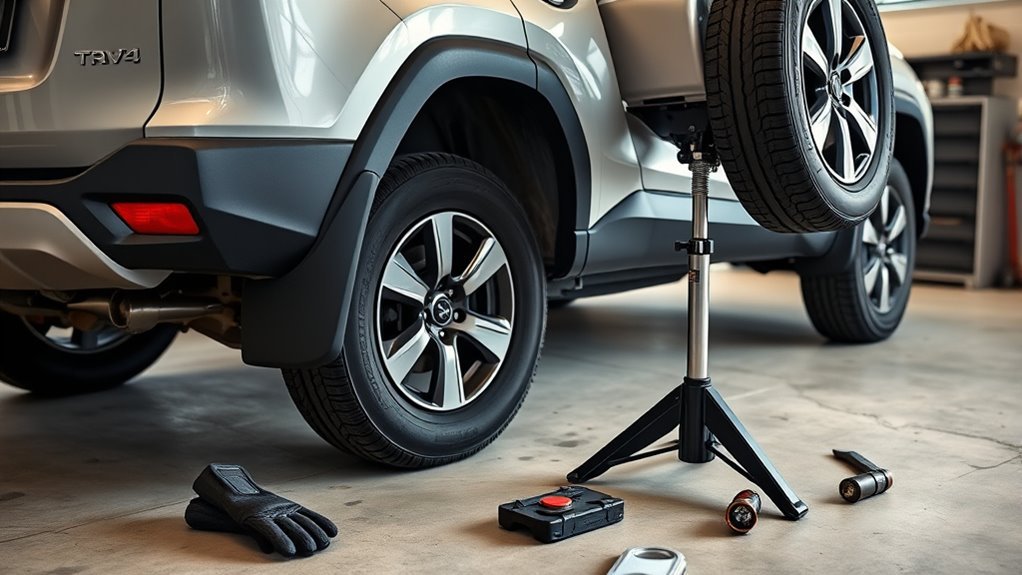
Using the wrong lift point can damage your Toyota RAV4 or make the vehicle unstable while you work. Safe lifting starts before the jack touches the vehicle: park on level ground, set the parking brake, and check your owner’s manual for the correct jacking points. This guide explains how to lift your RAV4, place jack stands, and avoid common mistakes that can put you at risk.
Quick Answer
To safely jack up a Toyota RAV4, use the lift points shown in your owner’s manual, work on flat ground, and set the parking brake. Support the vehicle with properly rated jack stands before you work near or under it. Never rely on a jack alone to hold the vehicle.
Key Takeaways
- Check your RAV4 owner’s manual before you choose a jacking point.
- Lift only on flat, stable ground with the parking brake engaged.
- Use jack stands rated for the vehicle’s weight before you work underneath it.
- Avoid lifting from weak or unapproved areas that can bend or slip.
- Inspect your jack, stands, and wheel chocks before each use.
Why Knowing Your RAV4’s Jacking Points Matters
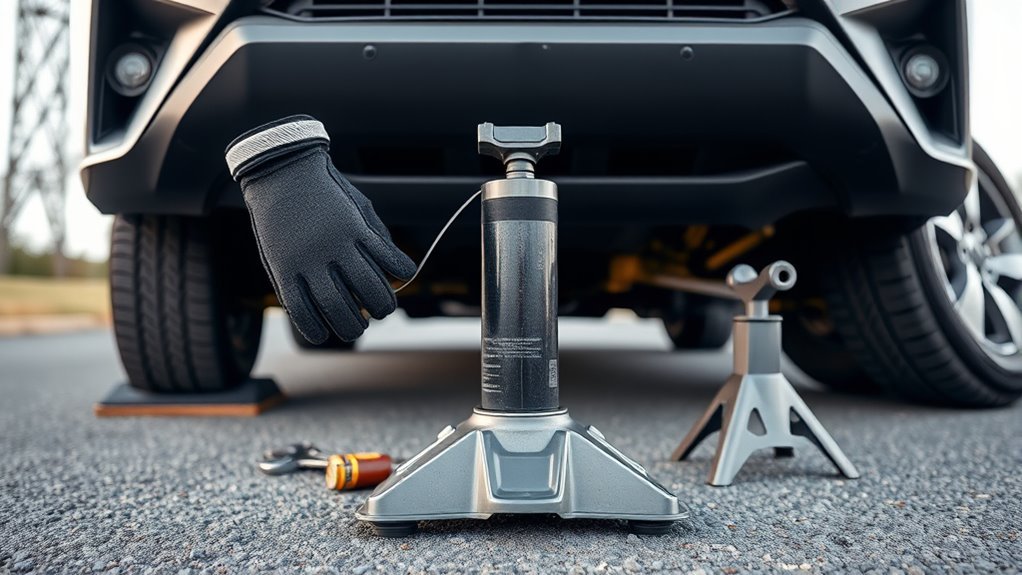
Knowing your RAV4’s jacking points helps you lift the vehicle without bending panels, damaging components, or creating an unstable setup. Your owner’s manual shows the approved locations for your model year, so check it before you lift.
Many RAV4 models include a front center lift point for use with a floor jack, but the exact location can vary by generation and trim. For rear lifting, follow the manual and avoid placing the jack under parts that Toyota does not identify as lift points.
Proper jack point usage reduces the risk of slipping, vehicle damage, and injury. It also helps you complete basic maintenance with more control and less guesswork.
What You’ll Need Before You Jack Up Your RAV4
Gather the right tools before you lift the vehicle. You need a jack rated for your RAV4, jack stands rated for the vehicle’s weight, wheel chocks, and your owner’s manual.
- Floor jack or factory jack: Use a jack that can safely lift the load.
- Jack stands: Choose stands with a weight rating that matches or exceeds your vehicle.
- Wheel chocks: Block the wheels that stay on the ground.
- Owner’s manual: Use it to confirm the lift and support points.
- Rubber jack pad: Use one when appropriate to reduce slipping and protect contact points.
Estimated total time: about 10 to 20 minutes for a basic tire change or inspection setup. Work slowly, and stop if the vehicle shifts, slips, or feels unstable.
[Products Worth Considering]

Universal magnetic jack pad with aluminum grooved design to protect vehicle pinch welds during lifting. Durable nylon pad inserts are upgraded and secured with screws to resist damage and keep in place. Designed to fit most single vehicle pinpoint welds for safer, stable jacking when changing tires, repairs, or performing oil changes.

This universal magnetic jack pad is designed to protect pinch welds when lifting vehicles, helping prevent seam damage or warping. Crafted from solid aluminum with a nylon pad insert, it provides reinforced structural support and a secure fit for most single-vehicle pinch welds. Slotted for strong magnet holding, it supports safe jacking for cars, SUVs, trucks, and more.

The Dr.Roc spare tire tool kit helps you release, lower, or raise your spare tire with reliable extension tools and a lug nut wrench. It is made from rustproof automotive-grade steel and includes an organized carry case for convenient storage. Designed for compatibility with select GM models from the late 1990s through 2019, it uses upgraded extension components to install and remove spare tires with less hassle.
Step-by-Step Guide to Safely Jacking Up Your RAV4
Follow these steps in order every time you lift your RAV4. The sequence matters because each step helps keep the vehicle stable.
- Park on flat ground. Choose a hard, level surface such as concrete, and avoid gravel, soil, slopes, or soft pavement.
- Set the parking brake. Put the vehicle in Park for an automatic transmission, or in gear for a manual transmission if your model has one.
- Chock the wheels. Place wheel chocks on the wheels that remain on the ground.
- Find the approved lift point. Check your owner’s manual and use the correct front, rear, or side jacking point for the job.
- Place the jack squarely. Center the jack pad under the lift point so the vehicle rises straight.
- Lift the vehicle slowly. Raise it only high enough to complete the work safely.
- Place the jack stands. Set the stands under approved support points or solid structural members listed in the manual.
- Lower the vehicle onto the stands. Ease the jack down until the stands carry the weight.
- Check stability. Give the vehicle a gentle push from the side before you work near or under it.
Warning: Never place any part of your body under a vehicle supported only by a jack.
Essential Tools for Safely Jacking Up Your Vehicle
When you’re getting ready to jack up your Toyota RAV4, the right tools make the job safer and easier. Start by gathering your jack kit essentials, which may include:
- Jack and jack handle: Many RAV4 models store these with or near the spare tire area.
- High-quality jack stands: These support the vehicle while you work underneath it.
- Pinch weld adapters: These help protect pinch welds when your manual allows side lifting at those points.
Before you begin, inspect all equipment for damage, rust, cracks, or leaks. Check the jack’s hydraulic mechanisms for wear, and never use a tool that looks damaged or unstable.
You can also use rubber or neoprene pads between the jack and contact points when the pad fits securely. A good pad can help spread the load and reduce slipping.
[Products Worth Considering]

This spare tire tool kit is designed for the 2004 to 2018 Ford F-150 to help you loosen and tighten wheel lug nuts and manage the spare tire and provided jack functions from underneath the vehicle. It includes the lug nut wrench and extension pieces plus a convenient storage carrying case for organized transport. The jack itself is not included.

Yieokei Tesla jack pads are molded rubber lifting pucks designed for 2016-2026 Model 3/Y/S/X, including Juniper, to fit securely in the jack hole. They cushion the underframe and help position the jack precisely at the factory jack points to reduce risk of battery, paint, or chassis damage. The set also includes a tire repair tool kit for emergency roadside fixes and comes with a portable storage case to keep everything organized.

Protect your Tesla during lifting with durable rubber jack pads designed to cushion pressure and help safeguard the battery and chassis. The non-slip, plug-and-play puck set fits Tesla Model 3/Y/X/S for safe, secure jacking. Each pack includes a portable storage case for cleaner trunk organization.
How to Use Jack Stands Safely
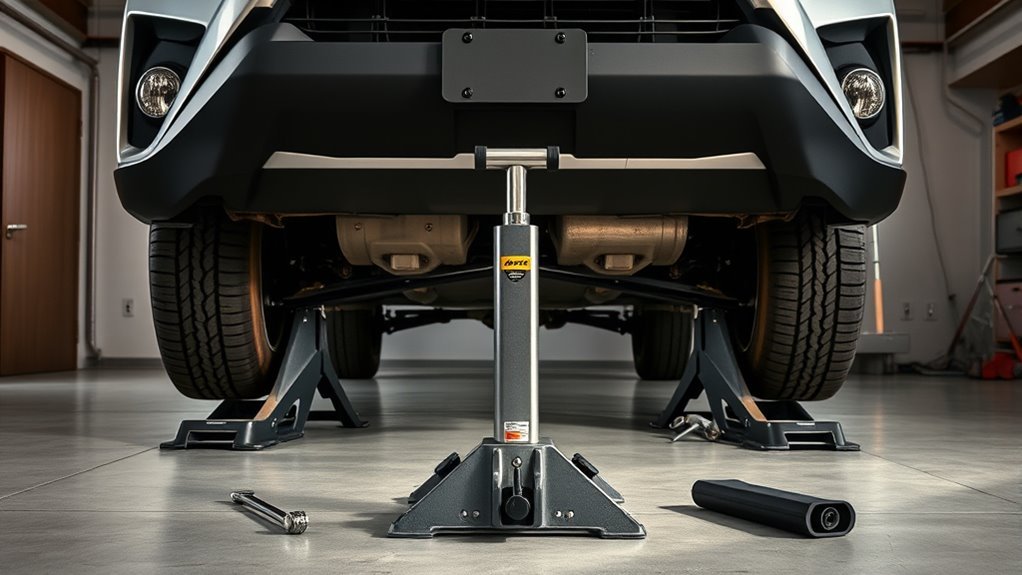
Once your Toyota RAV4 is elevated with the jack, place jack stands under approved support points or solid structural members. Do not guess where to put them, and avoid areas that can bend, crush, or slide.
Choose jack stands rated for your vehicle’s weight capacity. Inspect them before each use, and make sure the locking pins or ratchet teeth engage fully.
Keep the jack close to the lift point while the stands support the vehicle. This does not replace the stands, but it gives you another margin of safety if something shifts.
[Products Worth Considering]

MaxxHaul solid rubber wheel chocks provide dependable vehicle stabilization for cars, trucks, trailers, and RVs across driveways, slopes, garages, and campsites. The molded non-slip traction surface helps prevent tire movement on pavement, gravel, and smooth floors, while the solid rubber resists cracking, crushing, deformation, and weather wear. A built-in handle enables quick, tool-free placement and removal for convenient use in all seasons.

Steelman white tire marking crayons provide high-contrast, semi-permanent marks for repairing and inspecting tires and equipment. They write on wet or dry, smooth or coarse surfaces including rubber, metal, glass, and wood, making them ideal for puncture location and damage outlining. The lead- and zinc-free crayons resist weather and fading yet wipe away when you no longer need the marks.

Keep your tires properly inflated with this analog VONDIOR tire pressure gauge, designed for fast, easy readings without batteries. The swiveling, two-axis hose and large glow dial help you measure at any tire angle with instant visibility. Built with a protective rubber shield, it supports durable, low-maintenance use for cars and trucks.
Top 5 Mistakes to Avoid While Jacking Up Your RAV4
Jacking up your Toyota RAV4 can feel simple, but small mistakes can create serious risk. Avoid these common errors before you lift:
- Using the wrong jack point: Follow the owner’s manual to avoid vehicle damage.
- Skipping jack stands: Use stands before you work near or under the vehicle.
- Working on unstable ground: Lift only on a flat, hard surface.
- Forgetting wheel chocks: Block the wheels that stay on the ground.
- Using damaged equipment: Replace worn, bent, leaking, or unstable tools.
Also avoid overloading your jack or stands. Check each tool’s rating and use the lowest rated part as your safety limit.
Safety Precautions to Keep in Mind When Jacking Up Your Vehicle
To make the jacking process safer, place your vehicle on a flat, stable surface and engage the parking brake. This reduces the chance that the RAV4 will roll or shift.
Always inspect your jack and jack stands before use. Damaged equipment can fail without warning, especially when it carries part of the vehicle’s weight.
Never rely only on the jack once you lift the vehicle. Place jack stands under approved points, lower the vehicle onto them, and check stability before you begin work.
Keep your hands, feet, and body clear of pinch points while lifting and lowering. Also confirm tire pressure during routine maintenance, since tire condition can affect safety on the road.
How to Ensure Your Vehicle Is Secure Under Jack Stands?
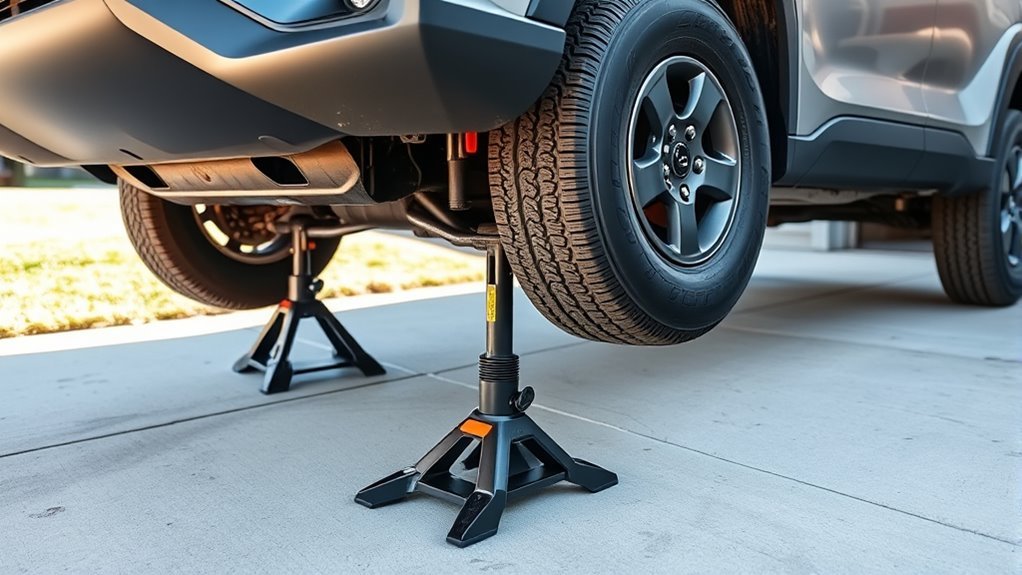
To make sure your vehicle sits securely on jack stands, place the stands under approved support points or solid structural members. Keep the vehicle on a flat, stable surface, and double-check each stand before you work underneath it.
Proper Jack Stand Placement
Good jack stand placement protects you and your vehicle. Follow these guidelines before you start work:
- Use approved support points: Follow your owner’s manual for the correct locations.
- Avoid weak contact areas: Do not use plastic covers, thin panels, or unapproved brackets.
- Use proper jack stand materials: Add rubber or neoprene pads only when they fit securely.
Regularly inspect the jack stand placement and adjust it if anything looks off. If the vehicle shifts while you lower it, lift it again and reset the stands.
Use Stable Ground
A flat and stable surface helps keep your Toyota RAV4 from shifting while it sits raised. Uneven ground can make the jack or stands lean, slip, or sink.
| Tip | Description |
|---|---|
| Engage Parking Brake | Fully engage the parking brake to reduce movement. |
| Use Wheel Chocks | Place chocks on wheels that remain on the ground. |
| Place Jack Stands Correctly | Position stands on approved support points or solid structural members. |
Always check that your jack and stands can handle your vehicle’s weight. If the ground feels soft or uneven, move the vehicle before you lift it.
Check for Vehicle Stability
Before you work under your Toyota RAV4, confirm the vehicle’s stability on the jack stands. A stable setup protects you from sudden movement.
- Park on a flat, stable surface before you lift.
- Engage the parking brake fully before you place the jack.
- Gently shake the vehicle after it rests on the stands.
Make sure the weight sits evenly distributed across the stands. If you see leaning, slipping, or uneven contact, lower the vehicle and start again.
What Should You Do If the Jack Point Is Hard to Reach?
Some RAV4 trims, accessories, or underbody panels can make a lift point harder to see. Use a flashlight and your owner’s manual diagram before you place the jack.
If you still cannot identify the correct point, do not lift the vehicle. Ask a qualified technician to show you the proper lift and support locations for your exact model year.
Note: Lift point locations can vary by RAV4 generation, trim, drivetrain, and equipment.
Frequently Asked Questions
What Are the Drawbacks of Lifting a RAV4?
Lifting a RAV4 can change suspension geometry, handling, alignment, and tire wear. It may also affect fuel economy and stress some driveline or suspension parts if the lift kit does not match the vehicle.
Can You Use the Factory Jack for Routine Maintenance?
The factory jack mainly helps with roadside tire changes. For routine maintenance, a properly rated floor jack and jack stands usually give you better control and stability.
Where Should You Place Wheel Chocks on a RAV4?
Place wheel chocks on the tires that stay on the ground. If you lift the front, chock the rear wheels. If you lift the rear, chock the front wheels.
Is It Safe to Jack Up a RAV4 on a Driveway?
You can use a driveway only if it is flat, hard, and stable. Do not jack up the vehicle on a slope, loose gravel, wet grass, or soft asphalt.
Should You Use Pinch Weld Adapters on a RAV4?
Use a pinch weld adapter only when your owner’s manual allows lifting at that side jack point. The adapter must fit securely so it protects the weld and does not slip.
Safety Disclaimer: This article is for informational purposes only and does not replace your Toyota owner’s manual or professional service advice. If you are unsure about any lift point, tool rating, or repair step, consult a qualified technician before you lift the vehicle.
Conclusion
Safe RAV4 lifting comes down to three habits: use the correct jacking points, work on stable ground, and support the vehicle with jack stands. Before your next tire change or inspection, review your owner’s manual and inspect every tool you plan to use.
Take your time, stop if anything shifts, and never work under a vehicle held only by a jack. With the right setup, you can handle basic RAV4 maintenance with more confidence and less risk.