
A slashed tire is usually more serious than a simple nail puncture. If the cut reaches the sidewall, shoulder, cords, or belt-edge area, the tire should be removed from service rather than patched. A small injury confined to the repairable tread area may qualify for professional repair, but the tire has to come off the wheel so its inside can be inspected first.
Quick Answer
A slashed tire is usually not repairable if the cut reaches the sidewall, shoulder, cords, or belt-edge area. A small injury confined to the repairable tread area may qualify only after the tire is removed and inspected. Proper repair fills the injury and seals the inner liner; plug-only or on-wheel fixes are not permanent repairs.
Key Takeaways
- Do not drive on a tire with a deep sidewall cut, exposed cords, a bulge, rapid air loss, or obvious structural damage.
- Repairable passenger-vehicle injuries are generally limited to small punctures or cuts no greater than 1/4 inch (6 mm) and fully contained in the repairable tread area.
- Shoulder, sidewall, belt-edge, and internally damaged areas are outside normal puncture-repair limits.
- A proper permanent repair requires removing the tire, inspecting the inside, filling the injury channel, and sealing the inner liner with a patch.
- Final repairability depends on the tire’s condition, manufacturer policy, previous repairs, and whether it was driven while flat.
At a Glance
| Time Required | About 5–10 minutes for a safe visual check; professional inspection and repair take additional time. |
| Difficulty | Easy to identify obvious warning signs; permanent tire repair should be handled by a trained tire technician. |
| Tools Needed | Flashlight, tire-pressure gauge, and a spare-tire kit if your vehicle has one and you can use it safely; otherwise call roadside assistance. |
| Cost | Varies by tire size, shop, repairability, and whether the tire must be replaced. |
Can a Slashed Tire Be Fixed?
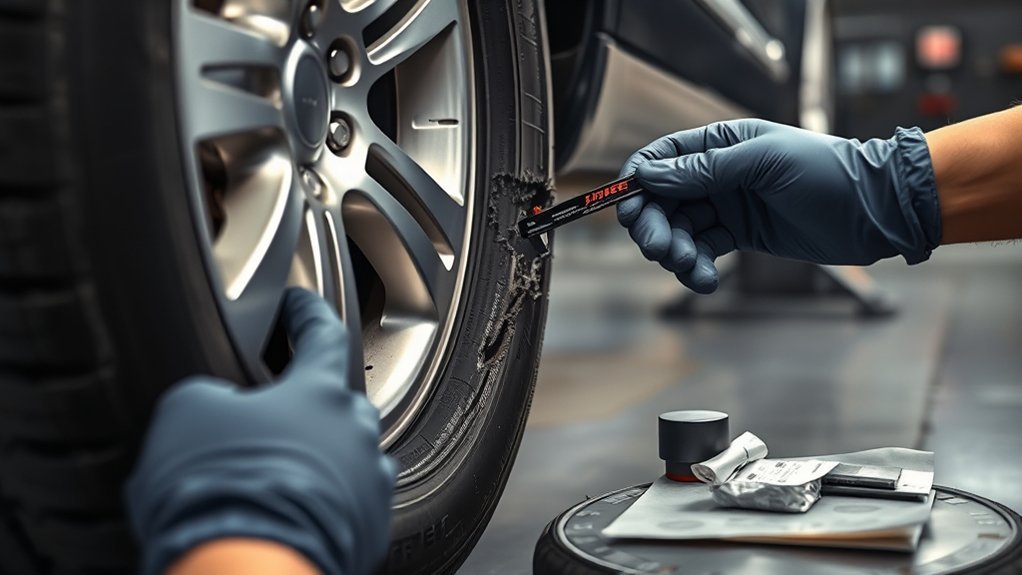
Sometimes, but the word slash covers several different kinds of damage. A shallow surface mark is different from a cut that penetrates the tire’s reinforcing structure, and a small tread injury is different from an elongated sidewall gash.
According to the U.S. Tire Manufacturers Association, passenger and light-truck puncture repairs should be limited to the repairable tread area, and the injury should be no greater than 1/4 inch (6 mm) in diameter. Damage extending into the shoulder or belt-edge area should not be repaired.
A sidewall slash normally means replacement because the sidewall flexes continuously while you drive. If the cut has damaged cords, created a bulge, or penetrated deeply enough to weaken the casing, a patch cannot make that structure sound again.
The same applies to cuts that expose steel or fabric reinforcement. Those tires should be removed from service rather than patched.
Warning: Do not continue driving if the tire is losing air quickly, is visibly flat, has a bulge or bubble, shows exposed cords, or has a deep sidewall or shoulder cut. Install the correct spare only if you can do so safely, or call roadside assistance.
What to Do After a Tire Slashes
Your first goal is not to decide whether you can patch the tire. It is to prevent more damage and determine whether the vehicle can be moved safely.
Stop and Inspect
If the damage happens while driving, slow down smoothly and pull into a safe location away from moving traffic. Avoid abrupt steering or hard braking if the tire is losing pressure.
Set the parking brake and inspect the tread and visible sidewall. Look for:
- A cut, puncture, or embedded object
- Rapid pressure loss or a completely flat tire
- Exposed steel or fabric cords
- A bulge, bubble, or distorted sidewall
- Damage extending into the shoulder
- Evidence that the tire was driven while severely underinflated or flat
A tire may have internal damage even when the outside looks less serious. That is why a visual roadside check cannot determine final repairability.
Pro Tip: Take clear photos of the injury before the tire is removed. They can help you explain what happened to the tire shop and may also be useful if the damage resulted from a road hazard or suspected vandalism.
Check Repair Limits
A technician should evaluate four things before approving a permanent repair:
- Location: The injury must be completely inside the repairable tread area and must not extend into the shoulder, sidewall, or belt-edge area.
- Size: For typical passenger and light-truck puncture repair under USTMA guidance, the injury should not exceed 1/4 inch (6 mm) in diameter.
- Internal condition: The tire must not have damaging run-flat wear, cord damage, separation, or other internal defects.
- Previous repairs: A new repair cannot overlap another repair, and an existing improper repair can disqualify the tire.
These are general industry limits, not a guarantee that every qualifying-looking injury can be repaired. Tire manufacturers can impose additional restrictions for particular tire designs, speed ratings, run-flat products, or applications.
Replace If Needed
Replace the tire if the slash reaches an unrepairable area, exposes reinforcing material, creates structural distortion, exceeds the permitted injury size, or has caused internal damage.
Replacement is also commonly required when a tire has been driven flat long enough to damage the sidewall internally. Michelin, for example, states that repairability depends on the tire not having been driven while flat and requires professional off-wheel assessment.
Can You Drive on a Slashed Tire?
You should not drive on a tire with a significant slash, visible sidewall damage, rapid pressure loss, exposed cords, or a bulge. Continued driving can turn damage that might have been limited into heat, abrasion, or internal casing damage.
If the tire still holds air and the mark appears superficial, that still does not prove it is safe for normal driving. Have a tire professional inspect any questionable cut, especially one near the shoulder or sidewall.
If the tire is flat, use an approved spare according to your vehicle owner’s manual or call roadside assistance. Temporary spare tires can have their own pressure, speed, and distance limits, so follow the markings and vehicle instructions.
Why a Tire Must Come Off the Rim
A proper repair starts by removing the tire from the wheel. This exposes the inner liner and lets the technician see damage that may be invisible from outside.
The Tire Industry Association explains that demounting is necessary because even an ordinary-looking tread puncture can be associated with internal or sidewall damage that cannot be seen while the tire remains installed.
Off-wheel inspection lets the technician:
- Inspect the inside and outside of the injury.
- Check the inner liner, cords, belts, sidewall, and bead area.
- Look for evidence of driving while underinflated or flat.
- Measure the injury and determine its angle and location.
- Identify previous repairs that could interfere with a new one.
- Confirm that the casing remains suitable for service.
A tire that looks repairable from the outside can still have hidden inner-liner, cord, or sidewall damage. Proper inspection requires removing it from the wheel.
How a Professional Plug-Patch Tire Repair Works
A proper permanent puncture repair is not the same as pushing a string plug into the tire from the outside. Under USTMA guidance, the tire is first demounted and inspected.
If the injury qualifies, the repair must accomplish two jobs: fill the injury channel through the tread and seal the inner liner against air loss and moisture intrusion. This can be done with compatible two-piece components or an approved combination repair unit.
[Products Worth Considering]

KEVWR self-service tire repair nails are made to firmly fix punctures with strong bite and reliable sealing, helping prevent water from entering the wound. The spiral rubber screws are easy to insert without removing the tire, providing a simple DIY repair for many vehicle and tire types. Suitable for cars, motorcycles, trucks, bikes, buses, and agricultural tires with two size options for different puncture nails.

Wykodra tire plugs provide quick vulcanizing repairs for tubeless tires, helping you seal punctures and get back on the road. The industrial-strength rubber creates a long-lasting, leak-resistant bond and is designed for emergency fixes without removing the tire. Choose between two standard plug sizes with color-matched options for small to larger damage across many vehicles and off-road uses.

TP-M13W combination repair unit kit includes wrapped stems with matching patches for fast, reliable tire repairs. It’s suitable for both radial and bias ply tires and is designed for chemical or heat vulcanization. Gray vulcanizing gum with blue backing helps create a strong bond, with the stem portion wrapped for added effectiveness.
Professional Repair Steps
The exact procedure depends on the repair-material manufacturer, so tire repair should be performed by trained personnel with proper equipment. At a high level, the process includes:
- Demounting the tire and inspecting it completely.
- Confirming that the injury is within the permitted tread repair area and size limit.
- Preparing the injury channel and inner-liner surface according to the repair-system instructions.
- Filling the injury with suitable vulcanizing material or a rubber stem.
- Applying the appropriate patch or combination repair unit to seal the inner liner.
- Inspecting the finished repair, remounting the tire, inflating it to the vehicle’s specified pressure, and checking for leaks.
USTMA specifically advises against on-the-wheel outside-in repairs as a substitute for this process.
Why the Inner-Liner Seal Matters
The inner liner is the airtight layer that helps the tire retain inflation pressure. Simply blocking the hole from the outside does not properly seal this layer.
A correct repair fills the injury path so water and contamination cannot freely enter the tire’s internal structure and seals the inner liner against air loss. This is why both parts of the repair matter.
The repair does not make a structurally damaged tire sound again. The casing must already pass inspection before the repair is installed.
Repair Limits and Safety
For normal passenger and light-truck puncture repair, use these limits as a screening guide:
- The injury must be in the approved tread repair area.
- The injury generally must be no greater than 1/4 inch (6 mm) in diameter.
- It must not extend into the shoulder, belt edge, or sidewall.
- Repairs must not overlap.
- The tire must not contain an existing improper repair.
- The casing and inner liner must pass professional inspection.
- The tire manufacturer’s restrictions must also be followed.
The USTMA repair guidance also makes clear that a plug alone is not an acceptable permanent repair.
When Sidewall Damage Means Replacement
A conventional puncture repair is not appropriate when a cut or puncture reaches the sidewall. The sidewall flexes continuously under load, and damage there can affect the tire’s load-carrying structure.
Replace the tire or have it removed from service for professional assessment if you notice:
- Visible cords or reinforcement
- A deep sidewall cut or gouge
- A bulge or bubble
- A split or spreading crack
- Rapid loss of inflation pressure
- Damage extending from the tread into the shoulder
- Internal abrasion or wrinkling caused by running flat
A light cosmetic scrape is not automatically the same as a structural cut, but depth can be difficult to judge from the outside. When in doubt, have it inspected before continuing normal use.
[Products Worth Considering]
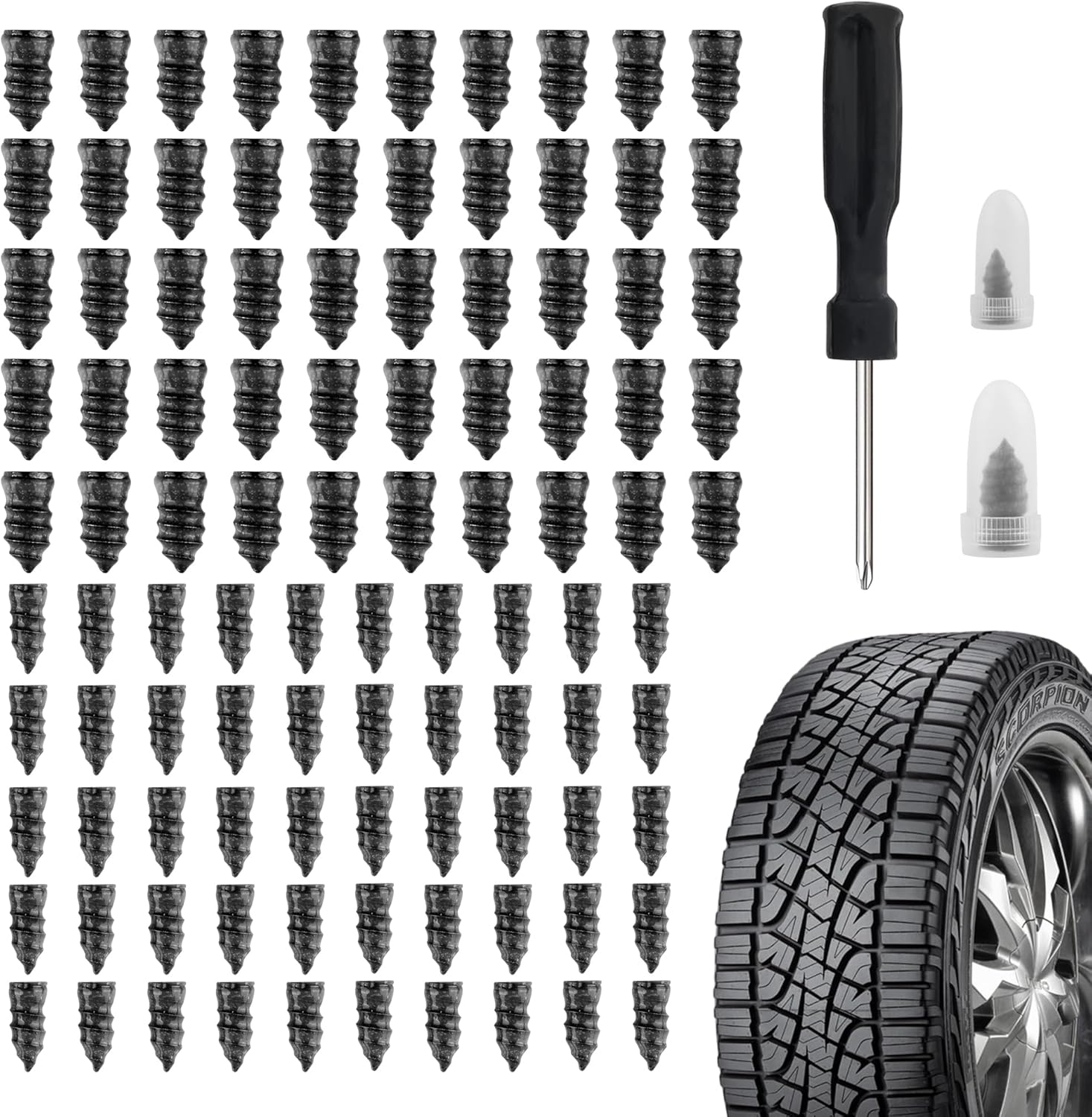
Salior’s tire plug kit provides a fast, reliable self-service fix for punctured or leaking tires without the need for flaring tools. Choose the correct plug size, then screw the nail into the puncture using the included screwdriver for an enhanced seal. The set is durable and convenient for on-the-go maintenance across multiple vehicle types.

TireJect Off-Road Tire Sealant Kit provides 5-in-1 sealing to help fix tread punctures up to 3/8", sidewall punctures up to 3/8", bead leaks, slow leaks, and minor dry rot on low-speed tires. It permanently seals with liquid rubber, recycled tire particles, and Aramid fibers, making it ideal for flats caused by thorns, nails, and screws. The included dispensing cap attaches to the valve stem for a no-mess installation, along with a metal valve core remover tool and valve stem cap. This kit is for off-road use only.

This screw-in tire plug kit seals punctures fast using the included screwdriver, letting you repair tread damage without removing the tire or using messy glue. It includes two plug sizes for different puncture types and uses high-density rubber for an airtight, heat-resistant temporary seal that helps you reach a tire shop safely. Compact and universal, it works on tubeless tires across cars, trucks, motorcycles, tractors, and more.
Which Tire Damage Is Too Large to Repair?
A tire should not receive a standard passenger-vehicle puncture repair when the injury falls outside accepted repair limits.
- Oversized injury: A puncture larger than 1/4 inch (6 mm) exceeds the normal USTMA passenger/light-truck puncture-repair limit.
- Sidewall or shoulder damage: Damage outside the approved tread repair area requires removal from service.
- Exposed cords or belts: Visible reinforcing material indicates damage beyond a simple rubber puncture.
- Bulges or separation: Distortion can indicate internal structural damage.
- Run-flat damage: Internal abrasion or other damage from operating without adequate pressure can make the tire unsuitable for repair.
- Excessive tread wear: Industry guidance says tires worn to their tread-wear indicators or about 2/32 inch (1.6 mm) remaining tread should not be repaired.
- Conflicting previous repairs: Overlapping repairs or a previous improper repair can disqualify the tire.
Michelin’s current repair guidance also emphasizes tread-only damage, the 1/4-inch limit, professional assessment, and the importance of whether the tire was driven while flat.
Can a Tire Be Repaired Twice?
Potentially. A tire can sometimes have more than one proper repair if each injury independently qualifies, the repairs do not overlap, the tire remains in serviceable condition, and the tire manufacturer’s policy allows it.
Do not assume that every new puncture can simply receive another patch. The technician should inspect:
- The location and size of the new injury
- The location and quality of earlier repairs
- Remaining tread depth
- Inner-liner and casing condition
- Evidence of underinflated or run-flat operation
- The tire manufacturer’s repair restrictions
If a new repair would overlap an existing one, or the tire contains an improper previous repair, USTMA guidance says the tire should not receive another standard puncture repair.
Temporary Plugs, Sealants, and Run-Flat Tires
A roadside string plug or emergency sealant may stop or slow an air leak long enough to deal with an emergency, but it is not the same as a proper permanent repair.
TIA states that on-the-wheel string plugs should be considered temporary rather than a complete repair because the inside of the tire has not been inspected or sealed correctly.
Note: Run-flat tires can have additional manufacturer-specific restrictions. Some run-flat damage may not be repairable after the tire has been driven with very low or zero pressure, even when the original puncture looks small.
If you use an emergency inflation or sealant kit supplied with your vehicle, follow its instructions and arrange a professional tire inspection as soon as practical.
[Products Worth Considering]

AUTOWN’s 68-piece tire repair kit helps you fix punctures and plug flats quickly and effectively. It includes a T-handle and spiral probe tool for easy insertion, while the steel patch and plug materials are designed for strong adhesion and long-lasting airtight performance. The compact case makes it convenient for roadside repairs across a wide range of vehicles.

The GRAND PITSTOP tubeless tire gun puncture repair kit quickly seals tire injuries without removing the tire, making it an easy DIY solution for flats and punctures. The mushroom plug technology grips from inside to help prevent air loss, while the portable design suits cars and motorcycles, including long-distance travel. Ideal for roadside reliability and everyday maintenance when you want fast, dependable sealing performance.

This AUTOWN flat tire repair kit is designed for quick, reliable puncture repairs using a plug kit and spiral probe tool to simplify installation. Built for durability and safe handling, it offers strong adhesion and flexibility to help maintain tire air tightness. With a portable storage case and a multi-vehicle approach, it’s suitable for cars, motorcycles, ATVs, tractors, lawn mowers, RVs, jeeps, and trucks.
What to Do if the Tire Was Intentionally Slashed
If you suspect vandalism, focus on safety first. Do not drive on the damaged tire simply to move the vehicle unless a qualified professional has determined that it is safe.
Before the tire is replaced, photograph the damage, the surrounding area, and any other affected parts of the vehicle if it is safe to do so. Keep the repair or replacement invoice. If appropriate, you can report the incident to local law enforcement and contact your insurer to ask whether your policy covers the damage.
Avoid confronting anyone you suspect caused the damage. Tire replacement and documentation can be handled without creating another safety risk.
Frequently Asked Questions
Is there a way to fix a slashed tire?
Sometimes. A small injury entirely within the repairable tread area may qualify if it is no greater than 1/4 inch (6 mm), the tire has no internal damage, and a technician approves it after removing the tire from the wheel. Sidewall, shoulder, belt-edge, cord, or major slash damage generally requires replacement.
Can a slit in a tire be repaired?
It depends on its depth, size, location, and the condition of the casing. A small tread injury may qualify, but a slit extending into the shoulder or sidewall, exposing cords, or damaging the casing should not receive a normal puncture repair.
What are the guidelines for patching a tire?
The tire should be removed from the wheel and inspected. For typical passenger and light-truck tires, a qualifying injury should be no greater than 1/4 inch (6 mm), remain entirely within the permitted tread repair area, and not overlap another repair. The injury channel must be filled and the inner liner sealed with an appropriate patch or combination repair unit.
What should I do if my tires are slashed?
Do not drive on a tire with major damage or rapid air loss. Use the correct spare if you can do so safely or call roadside assistance. If vandalism may be involved, photograph the damage before replacement and keep service records in case you decide to contact law enforcement or your insurer.
Can you drive slowly on a slashed tire?
Not if the slash is deep, the tire is losing air, the sidewall or shoulder is damaged, cords are visible, or a bulge has formed. Driving even a short distance on a flat or structurally damaged tire can create additional internal damage. Use a spare or roadside assistance instead.
Is a tire plug enough for a permanent repair?
No. USTMA and Tire Industry Association guidance calls for removing and inspecting the tire, filling the injury channel, and sealing the inner liner. A plug-only, outside-in repair does not complete those steps.
Conclusion
A slashed tire should be treated as a safety issue, not automatically as a simple puncture. Small damage confined to the repairable tread area may qualify for professional repair, but sidewall, shoulder, belt-edge, cord, or internal damage usually means replacement. Do not rely on an outside-in plug to make the decision. Have the tire removed and inspected so the shop can determine whether the casing is still safe for service.
Sources
- U.S. Tire Manufacturers Association — Tire Repair Basics — repairable tread area, 1/4-inch injury limit, off-wheel inspection, and plug-plus-patch requirements.
- Tire Industry Association — Tire Repair — professional inspection, non-repairable shoulder/sidewall damage, tread-depth limits, and problems with plug-only repairs.
- Michelin USA — Can My Tire Be Repaired? — tread-only repair criteria, 1/4-inch limit, off-wheel inspection, and run-flat/flat-driving considerations.
- National Highway Traffic Safety Administration — Tire Safety Guidance — regular inspection for cuts, punctures, bulges, cracks, and correct inflation practices.

