Whether your tires can legally stick out past the fenders depends on the state, vehicle type, and the specific rule being applied. Louisiana is a good example of why a simple “yes” or “no” can be misleading: the state statute sets a fender-width requirement, while the motor-vehicle inspection rules use a separate 1-inch protrusion standard. Inspection requirements are also changing in Louisiana during 2026 and 2027.
Quick Answer
In Louisiana, the answer is more nuanced than a simple “no.” R.S. 32:364 requires qualifying vehicles to use fenders or other protection at least as wide as the tires, while Louisiana’s motor-vehicle inspection rule states that tires may not extend more than 1 inch beyond fenders or attachments. Check current inspection applicability before modifying your setup.
Key Takeaways
- There is no single nationwide tire-protrusion limit; state rules differ.
- Louisiana R.S. 32:364 requires qualifying vehicles to use fenders, covers, guards, flaps, splash aprons, flares, or equivalent body protection, with the protective equipment at least as wide as the tires.
- Louisiana’s motor-vehicle inspection rule separately says tires may not extend more than 1 inch beyond fenders or attachments.
- R.S. 32:364 contains exemptions, so the fender rule does not apply identically to every vehicle.
- Louisiana’s inspection system is in a 2026–2027 transition, so older statements about inspection stickers and inspection failure need current verification.
- Wheel offset, spacers, wheel width and tire section width are major factors in whether a tire sits outside the fender line.
Note: This article provides general legal and vehicle-fitment information, not legal advice. Vehicle-equipment laws and inspection programs can change, so verify the current statute and inspection requirements for the place where your vehicle is registered and driven.
What Do Tire Coverage Laws Say?
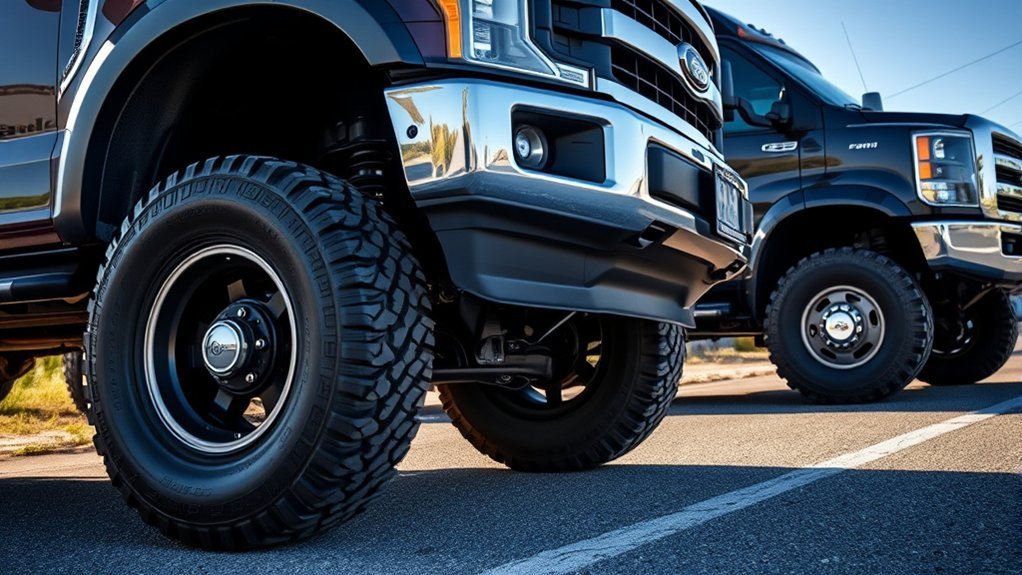
Tire-coverage laws are designed mainly to keep tires, wheels, and road debris from creating hazards for other road users. The exact standard varies by jurisdiction. Some laws focus on fender or mudguard width, some inspection rules measure how far tread can extend beyond a wheel housing, and some states provide exceptions for particular vehicle classes.
In Louisiana, R.S. 32:364 requires covered motor vehicles operated on state highways to have fenders, covers, flaps, splash aprons, fender flares, or equivalent body protection that effectively minimizes spray or splash to the rear. The statute also says the width of the protective equipment must be at least the width of the tires.
Louisiana Statute vs. the Inspection Rule
The statute and the inspection rule should not be treated as identical. R.S. 32:364 does not state a numeric 1-inch overhang allowance. However, Louisiana’s motor-vehicle inspection regulations state that tires shall not extend beyond fenders or attachments more than 1 inch for a safe condition.
That inspection language is available in the Louisiana motor-vehicle inspection regulations reproduced by the U.S. Environmental Protection Agency. Because the statute and inspection regulation use different wording, do not assume that passing the 1-inch inspection measurement automatically settles every possible equipment-law question.
Warning: Treat the Louisiana inspection rule’s 1-inch measurement as an inspection standard, not as blanket permission to run any tire 1 inch outside the body under every circumstance. The underlying statute still requires qualifying vehicles to meet its fender, guard, and spray-protection requirements.
Which Vehicles Are Exempt From Louisiana’s Fender Rule?
R.S. 32:364 includes several important exceptions. The section does not apply in the same way to vehicles exempt from registration, vehicles with an unladen weight under 1,500 pounds, vehicles that were not supplied with the required equipment when manufactured, or certain trucks and farm vehicles hauling agricultural or forestry products.
That means you should identify your vehicle class before applying a general passenger-truck or SUV rule to a lightweight specialty vehicle, older vehicle, farm vehicle, or another exempt category.
Can Tires Stick Out Past Fenders?
They can in some jurisdictions and vehicle classes, but there is no universal nationwide protrusion limit. In Louisiana, the safest reading is to consider both R.S. 32:364 and the applicable inspection rule rather than relying on a simple statement that “any protrusion is illegal” or that “1 inch is always legal.”
For a typical modified truck, SUV, or passenger vehicle, keeping the tire contained by properly sized fenders or flares gives you the clearest compliance margin. It also reduces the amount of water, mud, gravel, and other material the tire can throw toward vehicles behind you.
If you change wheel offset, add spacers, install wider wheels, or fit wider tires, remeasure the setup after installation. A combination that was covered with the factory wheels may extend noticeably farther outward after even one of those changes.
How Much Protrusion Is Allowed?
There is no nationwide number. The allowed amount depends on the jurisdiction, vehicle type, and whether you are looking at a general equipment statute, an inspection regulation, or another vehicle-class-specific rule.
For Louisiana, the state inspection regulation uses a maximum 1-inch extension beyond fenders or attachments as its inspection standard. R.S. 32:364 itself does not state that 1-inch number; it requires qualifying protective equipment to be at least as wide as the tires and to effectively minimize spray or splash.
Legal Protrusion Limits
When determining whether a setup is lawful, start with the actual rule that applies to your vehicle. Do not assume that a measurement posted on a forum, used in another state, or accepted at a previous inspection applies everywhere.
In Louisiana, check whether R.S. 32:364 applies to your vehicle and whether your vehicle is currently subject to the motor-vehicle inspection program. If it is subject to inspection, the 1-inch inspection language is directly relevant to the inspection process.
A tire that sits well outside the fender line can also raise separate equipment and safety concerns even when the vehicle is not currently required to obtain a routine safety-inspection sticker.
Fender Coverage Rules
Louisiana’s statutory rule focuses on effective spray protection and the width of the fender, cover, flare, flap, splash apron, body, or attachment used to provide that protection. The statute does not say that only factory sheet-metal fenders can satisfy the requirement.
That means a properly installed fender flare may be useful when wider wheels or tires move the outer tire edge beyond the factory fender. What matters is whether the completed setup meets the applicable coverage requirement, not simply whether a flare is advertised as being a certain number of inches wide.
Also remember that a tire’s section width includes its sidewalls, while some inspection rules in other states specifically refer to tread width. Read the actual wording before deciding where to measure.
Inspection Failure Risks
If your vehicle is subject to a Louisiana motor-vehicle safety inspection, tire extension beyond the inspection rule’s permitted amount can create a rejection issue. However, the inspection system is changing, so older articles that say every Louisiana passenger vehicle indefinitely requires the same annual safety inspection are no longer reliable.
Louisiana Act 701 of 2026 restructures the inspection system. Among other provisions, it states that from June 30, 2026 until January 1, 2027, law-enforcement officers may not issue a citation merely because a motor vehicle fails to produce or display a certificate of inspection.
For parishes outside areas subject to federally required inspection-and-maintenance programs, the broader Act 701 changes take effect January 1, 2027. For areas subject to federal Clean Air Act inspection requirements, the Act provides a separate effective mechanism tied to EPA action.
The Louisiana Department of Environmental Quality currently identifies Ascension, East Baton Rouge, Iberville, Livingston, and West Baton Rouge parishes as the five-parish vehicle emissions inspection-and-maintenance area.
The temporary restriction on inspection-certificate citations does not mean that vehicle-equipment laws such as R.S. 32:364 have disappeared. Fender and tire compliance should therefore be considered separately from inspection-sticker enforcement.
Do Fender Flares Keep You Legal?
Fender flares can help make a wider wheel-and-tire package compliant, but installing flares does not automatically make the setup legal. The flare must provide enough actual coverage to satisfy the rule that applies to your vehicle.
Measure the finished vehicle rather than relying only on the flare manufacturer’s advertised extension. Tire sidewall shape, wheel offset, spacers, suspension geometry, and vehicle load can all affect where the tire sits relative to the flare.
[Products Worth Considering]

Replace worn wheelchair rear tires with a universal 24x1 no-flat polyurethane foam option designed to mount tightly on 24-inch rims without the tire falling off. Installation is made easier with included tools and multiple methods, including using a pry bar or softening the tire in hot water to reduce resistance. The package includes two tires plus tie ropes for convenient fitting and handling.

Upgrade your 2024-2026 Tesla Model 3 Highland with REEVAA all-weather mud flaps designed for seamless fit along the original body lines. The set of four delivers strong splash protection against mud, gravel, and road debris while using OEM-grade durable materials. Installation is non-destructive with original hole positions and snap-in clips, and the aerodynamic design helps minimize impact on efficiency.

The Big Rig Defense Tire Thumper is a truck tire pressure checker that lets you quickly check multiple tires by giving them a firm whack. Listen for a reassuring thump and feel the stick bounce when a tire is fully inflated, helping you get back on the road safely. It features a comfortable, glove-friendly handle and a secure wrist strap for confident use on busy routes.
Fender Flare Coverage
For Louisiana vehicles covered by R.S. 32:364, fender flares are expressly among the types of devices that may provide the required protection. They should be securely installed and wide enough for the actual tire-and-wheel combination.
If you are modifying a truck or SUV, check coverage at all four wheels. Front and rear wheel offsets are not always identical, and aftermarket suspension or axle components can create different left-to-right positions.
Tire Protrusion Limits
Do not measure flare width alone. What matters is the tire’s position relative to the outer edge of the body or flare after the wheel and tire are installed and the vehicle is sitting normally.
Pro Tip: Hold a long straightedge vertically against the outermost fender or flare edge and measure horizontally to the tire. Check the front and rear of each tire as well as the widest sidewall area. If your jurisdiction regulates tread rather than total tire width, record the tread-edge measurement separately.
Why Inspections Fail Modified Rigs
Modified vehicles can run into inspection problems when the wheel-and-tire package no longer meets the applicable body, fender, tire, suspension, lighting, or safety requirements. Tire protrusion is only one possible issue.
| Issue | Why It Matters |
|---|---|
| Excessive tire protrusion | May exceed the applicable fender or inspection limit |
| Flares too narrow | May not provide the required tire coverage |
| Wheel spacers or low-offset wheels | Move the wheel and tire farther outward |
| Unsafe tire or wheel condition | Can create a separate inspection or road-safety problem |
| Wrong assumption about inspection rules | State programs and vehicle classes can have different standards |
If an inspection station rejects your vehicle, ask for the specific defect or regulation that caused the rejection. Compare that reason with the current rule before changing parts. If you believe the requirement has been applied incorrectly, contact the appropriate state vehicle-inspection or public-safety authority for clarification rather than relying on another shop’s informal opinion.
[Products Worth Considering]

Measure tire tread depth quickly and accurately with this LUMITECO dial gauge that reads in 1/32" increments up to 14/32". The color-coded green/yellow/red zones make it easy to judge tire wear and know when replacement is needed. A rugged, compact design with a protective pouch helps keep the gauge ready for use on cars, trucks, motorcycles, and more.

The SAFELIFE dial tire tread depth gauge measures tread depth in 1/32 inch increments with clear, easy-to-read 2-inch dial face. Color zones using a traffic light system help you quickly judge whether tread is low, marginal, or ample for safer driving. Built with a durable zinc cast body and a metal detect probe for precise, comfortable use across cars, motorcycles, trucks, and buses.

Accurately measure tire tread depth with a calibrated gauge marked from 0 to 1 inch in 1/32 inch increments. The color-coded bar helps you quickly identify tread condition ranges, supporting safe driving for trucks, motorcycles, automobiles, and passenger vehicles.
Which States Allow Tire Protrusion?
State rules differ enough that a setup legal in one state may not be acceptable in another. The examples below show why checking the exact statute or inspection regulation matters.
| State | Example Rule |
|---|---|
| Louisiana | R.S. 32:364 requires qualifying fenders or protective devices to be at least as wide as the tires; the motor-vehicle inspection rule separately uses a maximum 1-inch extension beyond fenders or attachments. |
| Massachusetts | Massachusetts General Laws Chapter 90, Section 19 generally restricts passenger-vehicle tire sidewall or tread from projecting beyond the fender or side body panel, with an exception stated for four-wheel-drive vehicles or vehicles otherwise modified and intended for off-the-way use. Other equipment requirements may still apply. |
| Pennsylvania | 67 Pa. Code §175.80 directs inspectors of covered passenger vehicles to reject a tire when its tread extends beyond the outer edge of the wheel housing, including fender flares. |
These examples should not be used as a fifty-state chart. Vehicle class, registration type, inspection category and separate mudguard or splash-protection rules can change the answer. Always check the current rule for the state where the vehicle is registered and operated.
Can Shops Install Unsafe Tires?
A tire or modification shop may decline a wheel-and-tire installation that it considers unsafe, incompatible, or likely to violate vehicle-equipment rules. Businesses can also have policies that are stricter than the minimum legal requirement.
A shop’s willingness to install a wheel-and-tire combination is not proof that the completed vehicle is legal for public-road use.
Some businesses use customer acknowledgements or liability forms for modified vehicles, while others simply refuse the work. A signed waiver does not change state law or guarantee that the vehicle will pass an applicable inspection.
Before buying wheels or tires, give the shop the vehicle year, model, suspension modifications, wheel size, wheel offset, spacer thickness if any, tire size, and current fender or flare width. That information makes it easier to identify a combination likely to stay within the body line.
What To Check Before Inspection?
If your vehicle is currently subject to inspection, check the wheel-and-tire setup before arriving. Even when routine inspection is not required, the same measurements are useful for checking road-use compliance.
- Confirm which state statute and inspection rule apply to your vehicle class.
- Check whether your vehicle falls within a statutory exemption.
- Measure each tire against the outer fender or flare edge.
- Measure both tread position and the widest sidewall position when the legal wording is unclear.
- Check wheel offset, spacer thickness, wheel width, and tire section width.
- Inspect the tires for rubbing at full steering lock and through normal suspension travel.
- Confirm that flares and mudguards are securely attached.
- Keep documentation for major wheel, tire, suspension, and flare modifications.
[Products Worth Considering]

These aluminum alloy tire valve stem caps with an O-ring seal help protect valve stems from corrosion while adding a clean, stylish look to your vehicle. The universal fit works across cars, trucks, motorcycles, bicycles, and more, making them an easy upgrade for everyday driving and off-road use. Installation is quick, and the included four-pack keeps all your tires dressed and protected.
Clean grills, fenders, fender flares, bumpers, and wheel wells with a long-handled brush built for detailed car washing. The soft, triple-flagged bristles and dense scrub coverage help lift dirt gently while making coverage fast and easy. Use it with your favorite car wash soap for tires and exterior surfaces, and it also works for bike, motorcycle, boat, or RV cleaning.

Vigorder rubber cement glue delivers superior adhesion and cures quickly within about 30 seconds for seamless rubber bonding. Once cured, it helps provide a strong, durable, waterproof seal that holds up to vehicle weight, pressure, and heat. Suitable for cars, motorcycles, trucks, bicycles, and off-road tires, it’s designed for emergency patch and maintenance repairs.
How Do You Measure Tire Protrusion?
Park the vehicle on level ground with the steering straight ahead and normal tire pressure. Place a straightedge vertically against the outermost fender or flare edge. A plumb line can also help establish a vertical reference.
Measure horizontally from that reference to the tire. Repeat the measurement at each wheel because axle position, body tolerances and suspension components can create small differences from side to side.
Do not assume a wheel’s advertised offset tells you the final protrusion by itself. Changing from a narrow wheel to a wider wheel at the same offset moves both the inner and outer wheel edges. Adding a spacer moves the entire wheel outward by approximately the spacer thickness.
How Wheel Offset, Spacers, and Tire Width Affect Protrusion
Lower positive offset generally moves the wheel farther outward compared with a higher positive offset of the same width. Wheel spacers also move the wheel outward. A wider wheel can place its outer edge farther outside the body even when the offset number appears similar.
Tire width matters too. Two tires mounted on the same wheel can have different section widths and sidewall shapes. Check the tire manufacturer’s published dimensions when planning a close-fitting setup, then verify the real vehicle after installation.
How Off-Road Mods Affect Legality?
Off-road modifications can improve clearance, traction, and stability on trails, but a modification designed for private land or off-road use does not automatically satisfy public-road equipment rules.
Wider axles, negative-offset wheels, spacers, larger tires and long-travel suspension can all push a tire beyond the original fender line. If the vehicle is also driven on public roads, evaluate the road-use requirements separately from its trail performance.
Fender Coverage Rules
A wider off-road tire may require a wider flare or other approved protective device to maintain appropriate coverage. In Louisiana, R.S. 32:364 expressly recognizes fenders, covers, flaps, splash aprons and fender flares as possible forms of protection for qualifying vehicles.
- Wider tires can increase outward protrusion.
- Wheel spacers move the entire wheel-and-tire assembly outward.
- Low-offset wheels can substantially change the outer position.
- Fender flares must be evaluated using the completed vehicle, not just their advertised width.
- Road-use requirements can still apply even when most of the vehicle’s use is off-road.
Inspection Risks
If an inspection requirement applies, a modified rig can be rejected when the setup exceeds the relevant inspection standard or has another unsafe condition. In Louisiana, the long-standing inspection regulation uses the 1-inch tire-extension threshold discussed above.
Because Louisiana’s inspection program is changing under Act 701, confirm whether your particular vehicle and parish are subject to a routine inspection when you are preparing the vehicle. Do not rely solely on an old inspection sticker, an older forum post, or the fact that a similar vehicle passed somewhere else.
Trail Build Tradeoffs
Off-road wheel-and-tire changes often involve a tradeoff between clearance and road compliance. More outward wheel position can create room between the tire and suspension components, but it can also increase protrusion beyond the body.
- More aggressive wheel offset can increase outward tire position.
- Wider tires can require wider flares.
- Spacers may create additional fender-coverage issues.
- Large tires should still clear the body and suspension through steering and suspension travel.
- A setup intended only for trails may need changes before public-road use.
The best approach is to decide how much outward position you actually need, calculate the wheel-and-tire change before buying parts, and leave enough coverage margin for real-world tire dimensions and vehicle tolerances.
Where To Find Your State’s Laws
Start with official government sources rather than forum summaries. Vehicle-modification rules are often split among statutes, administrative regulations, inspection manuals, and vehicle-class-specific provisions.
| Source | What to Check |
|---|---|
| State legislature | Fender, mudguard, wheel and vehicle-equipment statutes |
| State police / DMV / transportation agency | Inspection procedures and enforcement guidance |
| Administrative code | Detailed inspection and equipment standards |
| Environmental agency | Emissions-inspection areas and I/M requirements where applicable |
| Local code | Any additional municipal requirements that lawfully apply |
Community forums can help you understand what other owners have experienced, but they should not replace the text of the law. A post saying “one inch is legal everywhere” or “my truck passed last year” does not establish the current rule for your vehicle.
Frequently Asked Questions
How Far Can Your Tires Stick Out Past Your Fenders?
There is no nationwide measurement. In Louisiana, the motor-vehicle inspection regulation uses a maximum 1-inch extension beyond fenders or attachments, while R.S. 32:364 separately requires qualifying fenders or protective devices to be at least as wide as the tires. Other states use different standards.
Is It Illegal to Have Your Tires Stick Out?
It can be. Legality depends on the state, vehicle class, amount of protrusion, fender or flare coverage, and any applicable inspection rule. Do not assume that a setup legal in one state is legal in another.
Is a 1-Inch Tire Overhang Legal in Louisiana?
Louisiana’s motor-vehicle inspection rule says tires may not extend more than 1 inch beyond fenders or attachments. However, R.S. 32:364 itself does not create a general 1-inch statutory allowance; it sets separate fender, guard, width, and spray-protection requirements. Do not treat the inspection threshold as universal permission under every circumstance.
Do Fender Flares Fix Tire Protrusion?
They can. A properly sized flare moves the outer coverage line farther outward and may bring a wider tire inside the required limit. Measure the finished setup because wheel offset, spacers, wheel width, tire section width and body tolerances all affect the final position.
Do Police Investigate Tire Slashing?
Police can investigate intentional tire slashing as property damage or vandalism, although the response and investigation depend on local law, available evidence, and agency policy. Photograph the damage, preserve any surveillance footage, and contact the local law-enforcement agency. This issue is separate from tire-protrusion and fender-coverage laws.
Can Your Tires Stick Out Past Fenders in PA?
For passenger vehicles covered by Pennsylvania’s cited inspection procedure, inspectors are directed to reject a vehicle when tire tread extends beyond the outer edge of the wheel housing, including fender flares. Other vehicle classes can have different provisions, so check the rule that applies to your registration type.
Sources
- Louisiana Legislature — R.S. 32:364, Fenders and Mudguards — Louisiana fender-width requirements and statutory exemptions.
- U.S. EPA — Louisiana Motor Vehicle Inspection Regulations — Louisiana inspection requirements, including the 1-inch tire-extension standard.
- Louisiana Legislature — Act 701 of 2026 — 2026–2027 vehicle-inspection changes and effective-date provisions.
- Louisiana Department of Environmental Quality — Motor Vehicle Inspection and Maintenance — current five-parish emissions I/M program information.
- Massachusetts General Laws Chapter 90, Section 19 — Massachusetts passenger-vehicle tire-projection rule and specified exception.
- Pennsylvania Code §175.80 — passenger-vehicle inspection rule concerning tread extending beyond the wheel housing and fender flares.
Conclusion
Tires sticking out past the fenders are not governed by one universal U.S. limit. In Louisiana, R.S. 32:364 and the motor-vehicle inspection regulation use different wording: the statute sets fender and protective-device requirements, while the inspection rule uses a 1-inch tire-extension threshold. Statutory exemptions and Louisiana’s 2026–2027 inspection transition also matter.
Before changing wheels, tires, offset, spacers, or flares, measure the completed setup and check the current rule for your vehicle class and location. Keeping the tires well covered by properly fitted fenders or flares gives you more compliance margin, reduces road spray and debris, and avoids relying on an inspection threshold as though it were universal legal permission.