

Buying car insurance is easier when you make the decisions in the right order. Start with your state’s requirements and any lender or lease rules, then choose liability limits, physical-damage coverage, deductibles, and optional protections. After that, compare several quotes using the same coverage limits and deductibles. The cheapest premium is not automatically the best policy, so check the insurer, exclusions, effective date, and declaration page before you pay.
Quick Answer
To buy car insurance, check your state and lender requirements, choose the coverage and limits you need, gather driver and vehicle information, and request several comparable quotes. Match limits, deductibles, drivers, and optional coverage on every quote. Before paying, verify the insurer, policy effective date, exclusions, discounts, and declaration-page details.
Key Takeaways
- Understand liability, collision, comprehensive, uninsured/underinsured motorist, PIP, and Medical Payments coverage before comparing prices.
- Check your current state requirements and any lender or lease contract before choosing a policy.
- Compare quotes with the same coverage types, limits, deductibles, drivers, and vehicle-use information.
- Choose liability limits based on your financial exposure, while using your vehicle’s value to help decide whether collision and comprehensive still make sense.
- Review discounts, exclusions, optional coverage, the effective date, and the declaration page before considering the purchase complete.
At a Glance
| Time Required | About 30–60 minutes for an initial round of quotes; longer if the insurer needs additional underwriting information |
| Difficulty | Easy to moderate |
| Tools Needed | Driver information, vehicle/VIN details, current policy if you have one, lender requirements, and phone or internet access |
| Cost | Getting quotes is generally free; your premium depends on the insurer, location, drivers, vehicle, coverage, deductibles, and other rating factors |
Note: Auto-insurance laws and required coverages vary by state and can change. Use this guide for general education, then confirm current requirements with your state insurance department and, if the vehicle is financed or leased, your lender or lessor.
What Car Insurance Covers

Car insurance combines several types of protection. The exact coverages available or required depend on your state and policy, so it helps to understand what each one does before you compare prices.
| Coverage | What It Generally Pays For | Key Point |
|---|---|---|
| Liability | Injuries or property damage you are legally responsible for causing to other people | Required or tied to financial-responsibility rules in most states |
| Collision | Damage to your own vehicle after a collision, subject to the policy and deductible | Usually optional by law but commonly required by lenders or lessors |
| Comprehensive | Covered non-collision losses such as theft, hail, vandalism, fire, flooding, falling objects, or animal strikes | Also commonly required when a vehicle is financed or leased |
| Uninsured/Underinsured Motorist | Certain losses when an at-fault driver has no insurance or insufficient coverage | Requirements, options, limits, and property-damage protection vary by state |
| Personal Injury Protection (PIP) | Covered medical expenses and, depending on state law and policy terms, benefits such as lost income or replacement services | Required in some states and optional or unavailable in others |
| Medical Payments (MedPay) | Covered medical or funeral expenses for you and eligible occupants | Not the same coverage as PIP |
The National Association of Insurance Commissioners explains that most states require some type of insurance to drive legally and describes liability, collision, comprehensive, and uninsured-motorist coverage.
Pro Tip: Do not treat PIP and MedPay as interchangeable. Ask what each option pays, who is covered, whether a deductible applies, and how it coordinates with health insurance in your state.
How Much Car Insurance Do You Need?
You need enough insurance to satisfy any legal requirement that applies to you, but a legal minimum is only a starting point. Minimum liability limits can leave you personally responsible for costs that exceed the policy limit after a serious crash.
There is no universal liability limit that is right for every driver. Consider your income, savings, property, driving exposure, household drivers, and how much loss you could absorb without major financial hardship.
A state minimum is a legal floor, not a personalized recommendation for how much financial protection you need.
State Minimum Requirements
Most states require drivers to buy auto insurance or otherwise satisfy financial-responsibility rules, but the details differ. Do not rely on a national article alone to determine your legal minimum.
New Hampshire is an important exception to blanket statements that every state requires insurance. The New Hampshire DMV driver manual explains that the state has no general mandatory auto-insurance law, although drivers can become subject to financial-responsibility requirements and remain personally responsible for losses they cause.
In Texas, the minimum liability limits are currently $30,000 for bodily injury per person, $60,000 per accident, and $25,000 for property damage, commonly written as 30/60/25. The Texas Department of Insurance also warns that minimum limits may be too low to cover all losses from a serious accident.
| Coverage | Purpose | Required? |
|---|---|---|
| Liability | Pays covered losses you cause to others | Required in most states, subject to state financial-responsibility rules |
| PIP | Pays specified injury-related benefits | Required in some states; rules vary |
| Uninsured/underinsured motorist | Helps with qualifying losses caused by drivers with no or insufficient insurance | Required, offered, or optional depending on the state |
Before buying, verify the current requirements where your vehicle is registered. State insurance departments are the best place to confirm mandatory coverages, limits, and special rules.
Coverage Based On Value
Your vehicle’s value matters most when deciding whether to keep collision and comprehensive coverage. If an older vehicle has a low market value, compare what you pay for those coverages with the most you could reasonably receive after a covered total loss, minus any deductible.
That calculation does not mean liability limits should automatically drop as your car gets older. Liability coverage protects against injuries and property damage you cause to other people, so the potential loss can be large even when you drive an inexpensive vehicle.
For a newer, financed, leased, or valuable vehicle, collision and comprehensive coverage are more likely to be important. Review these choices regularly because the vehicle’s value, your loan balance, and your financial position change over time.
State Minimums and Lender Requirements
State rules and lender requirements solve two different problems. State law controls the minimum financial responsibility you need to drive legally. A finance or lease agreement can require additional coverage to protect the vehicle serving as collateral.
If you finance your car, your lender will commonly require collision and comprehensive coverage. The Consumer Financial Protection Bureau notes that auto finance contracts generally require borrowers to maintain collision and comprehensive insurance covering physical damage to the vehicle.
If you allow required physical-damage coverage to lapse, your contract may allow the lender or servicer to obtain collateral-protection or lender-placed coverage and charge you for it. That coverage may primarily protect the lender rather than provide the broad protection you would expect from your own auto policy.
Warning: Do not cancel an existing policy until the replacement policy is confirmed, paid as required, and scheduled to begin. Even a short lapse can leave you uninsured and may violate state, lender, or lease requirements.
Liability, Collision, and Comprehensive Coverage
Liability coverage is the foundation of most auto policies. Bodily-injury liability can pay covered claims involving injuries you cause to others, while property-damage liability can pay for covered damage you cause to another vehicle or other property. Liability does not generally pay to repair your own car.
Collision coverage pays for covered damage to your vehicle after it collides with another vehicle or object, subject to the deductible and policy terms.
Comprehensive coverage, sometimes described as “other than collision,” covers specified non-collision losses such as theft, vandalism, hail, fire, flooding, broken glass, falling objects, and animal strikes, depending on the policy.
You may hear agents, dealerships, or consumers use the term “full coverage.” It is informal shorthand, not one standardized insurance coverage. Ask exactly which coverages, limits, deductibles, endorsements, and exclusions are included instead of relying on that phrase.
[Products Worth Considering]

The Trivd Frol 1/2" air impact wrench delivers high performance torque up to 1500 ft-lbs with a twin hammer impact mechanism for strong, balanced blows. It features an ergonomic grip, compact lightweight design, and quick-stop control with 3 forward speeds up to 8000 RPM plus a reverse speed. Built for demanding automotive repair and tire shop work, the rear exhaust helps keep debris away from the surface.

Yieokei Tesla jack pads are molded rubber lifting pucks designed for 2016-2026 Model 3/Y/S/X, including Juniper, to fit securely in the jack hole. They cushion the underframe and help position the jack precisely at the factory jack points to reduce risk of battery, paint, or chassis damage. The set also includes a tire repair tool kit for emergency roadside fixes and comes with a portable storage case to keep everything organized.

Steelman white tire marking crayons provide high-contrast, semi-permanent marks for repairing and inspecting tires and equipment. They write on wet or dry, smooth or coarse surfaces including rubber, metal, glass, and wood, making them ideal for puncture location and damage outlining. The lead- and zinc-free crayons resist weather and fading yet wipe away when you no longer need the marks.
Add-Ons That Fill Coverage Gaps
Optional coverages can fill gaps that liability, collision, and comprehensive do not address. The right choices depend on how you use your vehicle and which expenses would be difficult for you to pay yourself.
Rental reimbursement can help pay for temporary transportation while your vehicle is being repaired after a covered loss, subject to daily and total limits.
Roadside assistance may cover services such as towing, jump-starts, lockout help, or flat-tire assistance according to the policy.
Gap coverage can be useful on some financed or leased vehicles. If a covered total loss leaves a difference between the vehicle’s covered value and the eligible loan or lease balance, gap coverage may pay some or all of that qualifying difference under its terms. Read the exclusions because not every charge in a loan balance is necessarily covered.
Custom parts and equipment coverage can provide added protection when aftermarket wheels, electronics, accessibility equipment, or other modifications exceed the standard policy’s allowance.
PIP or MedPay may also help with injury-related expenses, depending on where you live and what your policy offers.
If you drive for a rideshare, food-delivery, courier, or other paid service, tell the insurer how the vehicle is used. A standard personal policy may exclude or restrict commercial or delivery activity, and you may need an endorsement or another form of coverage.
[Products Worth Considering]

The Gurduenon scissor car jack tire changing kit is designed for quick flat-tire replacement with a lifting capacity of 2.5 tons and a scissor-lift range sized for many vehicles. The complete emergency set includes a ratchet wrench, lug wrench, gloves, a pencil tire pressure gauge, and a storage bag for convenient trunk or garage use. Universal compatibility makes it suitable for cars, SUVs, and other vehicles roadside assistance needs.

Slip the Powerbuilt tire step over your vehicle’s tire to reach roof racks, engine bays, truck boxes, and more without overreaching. Its adjustable, universal design fits tires with a cross tread width up to 13 inches, including car, truck, RV, and semi tires. The non-slip cheesegrater surface and anti-slip tape provide secure grip while the open design lets mud and debris pass through. Fold-flat storage with rubber bumpers helps keep your tire and the step protected between uses.

This roadside assistance kit helps drivers and passengers in urgent situations after an accident or breakdown, providing practical support while waiting for help. It includes a lightweight, compact tire inflator for fast inflation of standard vehicle tires, plus reinforced jumper cable protection for safer handling. Ideal for winter weather, road trips, camping, and travel, with everything stowed neatly in a trunk bag.
How to Compare Car Insurance Quotes
To compare car insurance quotes accurately, make each insurer price the same basic setup. A $900 quote with lower liability limits or a larger deductible is not automatically cheaper than a $1,000 quote providing materially stronger protection.
[Products Worth Considering]
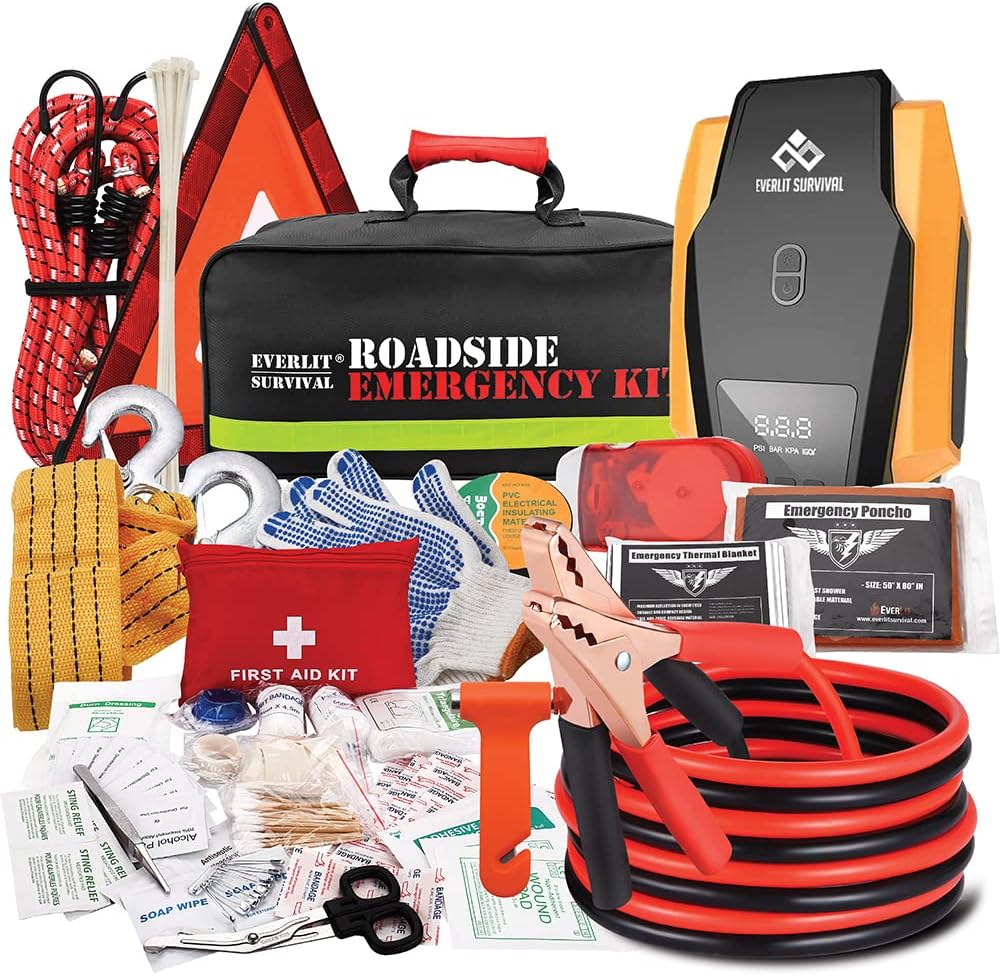
The Everlit Road Guardian emergency kit is designed for roadside breakdowns, combining essential safety gear and roadside tools in one compact bag. It includes a digital 12V auto tire inflator with preset and auto shutoff, plus 12-foot 8-gauge jumper cables to get you moving again. You also get a full 108-piece first aid kit, reflective warning tools, safety gloves, and emergency convenience items for safer travel.

These 4 prank tire valve stem caps glow in the dark to catch attention and create a fun reaction, making an ideal gag gift for friends or coworkers. Simply place them over existing valve stems for a quick, lossless installation without removing the original caps. Beyond the prank, the caps help block water, dust, and sand while supporting reliable tire protection.

This car D-wheel lock nut key provides an anti-theft solution for D-shaped wheel lock bolts, helping keep your wheels secure. It features a flower-shaped internal pattern that resists micro-adjustment theft while allowing removal and mounting of compatible locking nuts. Made for reliable performance under high torque, it’s easy to use with standard socket wrench turning for quick tire maintenance and emergency repairs.
Match Coverage Limits
Start by matching the coverage types and limits line by line. Use the same liability limits, UM/UIM selections, PIP or MedPay options, collision and comprehensive coverage, and optional benefits when possible.
- Verify that every quote covers the same drivers and vehicles.
- Use identical liability limits.
- Match collision and comprehensive selections.
- Match UM/UIM, PIP, and MedPay choices where available.
- Match rental reimbursement, roadside assistance, and other extras.
- Check whether any quote excludes a household driver or particular vehicle use.
When those details match, the premium comparison becomes much more meaningful.
Compare Deductibles Carefully
Next, match the deductibles. A deductible is the portion of a covered loss you are responsible for before applicable insurance benefits are calculated.
Higher collision or comprehensive deductibles generally reduce the premium, but they also increase the amount you must be ready to absorb after a claim. Compare options such as $500 and $1,000 only after asking yourself whether you could comfortably pay the larger amount on short notice.
Do not compare one insurer’s $500-deductible quote with another insurer’s $1,000-deductible quote and assume the cheaper premium represents better value.
Check Discounts And Extras
Insurance companies may offer discounts for combinations such as multiple vehicles, multiple policies, good driving history, driver education, safety equipment, anti-theft equipment, good-student eligibility, low mileage, or other insurer-specific programs.
Discounts vary by insurer and state, so avoid assuming that bundling or a multi-car policy will save a particular percentage. Ask each insurer which discounts are already reflected in the quote and which require additional documentation or enrollment.
Also verify payment fees, installment charges, telematics requirements, accident-forgiveness terms, roadside benefits, rental limits, and any other features that change the real value of the policy.
Check the Insurer Before Paying
Price is only one part of the decision. Confirm that the insurer and agent are authorized to do business in your state. Your state insurance department can also provide consumer information about complaints, licensing, and how to get help if a problem arises.
Check the quote carefully before entering payment information, especially if you reached the company through an advertisement, comparison site, phone call, or unfamiliar website.
Ways to Lower Your Car Insurance Premium
You can often reduce your premium without stripping away important protection. Start by getting quotes from several insurers because companies can price the same driver differently.
- Ask about bundling: Combining auto with homeowners or renters insurance may qualify for a discount, but the amount varies.
- Check multi-vehicle pricing: Households insuring more than one vehicle may qualify for lower rates.
- Keep a safe driving record: Tickets, at-fault accidents, and claims history can affect underwriting or rates.
- Consider a higher deductible: A higher physical-damage deductible generally reduces premium, but choose only an amount you can afford after a loss.
- Review annual mileage and vehicle use: Make sure the insurer has accurate information.
- Ask about usage-based insurance: Some insurers offer telematics programs that use driving data. Read the privacy and pricing terms before enrolling.
- Review coverage as the car ages: Collision or comprehensive may eventually become less economical on a low-value vehicle.
- Shop again periodically: Rates and discounts can change even when your driving habits do not.
Some insurers use credit-based insurance scores where state law permits. This is not the same as an ordinary lending credit score, and state restrictions vary. The NAIC’s 2026 guidance on credit-based insurance scores explains that some states restrict or prohibit particular uses of credit information. If credit information can legally affect your rate, reviewing your consumer reports for errors may be worthwhile.
What to Check Before Buying a Policy
Before you buy a car insurance policy, review the details one final time. Insurance is a contract, and small differences in limits or exclusions can matter far more than a small difference in premium.
- Confirm the named drivers. Make sure required household or regular drivers are handled correctly.
- Check each vehicle. Verify the year, make, model, VIN, and how the vehicle is used.
- Confirm liability limits. Do not assume the legal minimum is automatically enough for your finances.
- Review collision and comprehensive. Confirm deductibles and whether a lender or lessor requires the coverage.
- Review optional coverage. Check UM/UIM, PIP, MedPay, rental reimbursement, roadside assistance, gap protection, and endorsements that apply to you.
- Read exclusions. Pay special attention to delivery work, rideshare use, excluded drivers, business use, modifications, or regular access to vehicles you do not own.
- Confirm discounts. Make sure promised discounts actually appear in the quoted premium.
- Verify the effective date. The policy should begin before any prior coverage ends.
- Confirm payment terms. Check the down payment, installment schedule, fees, renewal term, and automatic-payment setting.
After the policy is issued, review the declaration page. The NAIC notes that this page summarizes important items such as the vehicles, policy term, limits, deductibles, premium, optional coverage, and discounts.
How to Start Your Auto Policy
The easiest way to start an auto policy is to prepare your information before requesting quotes, then work through the purchase in a fixed order.
Information to Gather Before Getting Quotes
Insurers commonly need enough information to identify the drivers, vehicle, location, and intended use. Have these details ready:
- Driver names, dates of birth, and driver’s-license information.
- Vehicle year, make, model, and VIN.
- The address where the vehicle is normally kept.
- Estimated annual mileage and primary use, such as commuting, pleasure, business, rideshare, or delivery.
- Information about other household or regular drivers.
- Your current insurance declaration page if you already have coverage.
- Relevant loan or lease information.
- Your desired policy effective date.
- Accurate accident, claim, and violation information when requested.
Step-by-Step: How to Buy Car Insurance
- Check your legal requirements. Confirm current minimum insurance or financial-responsibility rules with your state insurance department.
- Check your loan or lease. Find out whether collision, comprehensive, deductible limits, or other protections are contractually required.
- Choose your coverage. Decide which liability limits and optional protections match your financial risk.
- Choose deductibles. Pick amounts you could realistically pay after a covered loss.
- Request several comparable quotes. Give each insurer the same driver, vehicle, coverage, limit, deductible, and usage information.
- Compare more than price. Review exclusions, discounts, customer-service options, payment terms, and insurer licensing.
- Set the effective date and pay. Confirm when coverage becomes active and obtain proof of insurance.
- Review the issued policy. Check the declaration page and contact the insurer immediately if any driver, vehicle, limit, deductible, lienholder, or other detail is wrong.
If you are replacing another policy, keep the old policy active until the new coverage is confirmed. Then cancel the old one according to its terms so you do not create an unintended gap.
Sources
- National Association of Insurance Commissioners — Auto Insurance — coverage definitions, state-rule overview, rating factors, and consumer guidance.
- Texas Department of Insurance — Auto Insurance Guide — Texas 30/60/25 minimums, deductibles, discounts, coverage, and lender requirements.
- New Hampshire DMV — Driver Manual — New Hampshire insurance and financial-responsibility rules.
- Consumer Financial Protection Bureau — Supervisory Highlights, Issue 24 — auto-finance contracts and lender-required collision/comprehensive coverage.
- National Association of Insurance Commissioners — Credit-Based Insurance Scores — current guidance on insurers’ use of credit information and state restrictions.
Frequently Asked Questions
How do I decide how much car insurance coverage I need?
Start with your state requirements and any lender or lease rules. Then consider your income, savings, assets, household drivers, vehicle use, and ability to pay a large loss yourself. Vehicle value is especially relevant to collision and comprehensive coverage, while liability limits should reflect the potential harm you could cause to others.
Is 50/100/50 good insurance coverage?
50/100/50 means up to $50,000 of bodily-injury liability per injured person, $100,000 per accident, and $50,000 of property-damage liability, subject to policy terms. Whether that is enough depends on your state rules and financial exposure. The age of your own car does not determine how much liability protection you may need.
What should I not tell my insurance company?
Do not provide false, misleading, or guessed information. Answer application and claim questions accurately and disclose requested material facts such as drivers, vehicle use, mileage, modifications, accidents, or other information the insurer asks for. If you do not know an answer, say that you need to confirm it rather than guessing or hiding information.
What does 100/300/100 mean in car insurance?
It usually describes liability limits of $100,000 for bodily injury to one person, $300,000 total bodily injury per accident, and $100,000 for property damage per accident. Those are maximum policy limits for the applicable coverage, not a promise that every loss will be paid in full.
Do I need collision and comprehensive insurance on a financed car?
Usually, yes. Auto finance and lease contracts commonly require physical-damage coverage to protect the vehicle serving as collateral. Check your own contract for required coverages and maximum permitted deductibles.
Can I buy car insurance before I buy the car?
You can usually begin the quote process before completing the vehicle purchase. Once you know the exact vehicle and VIN, the insurer can confirm the final premium and effective date. Make sure coverage is active when required before you drive the vehicle away.
Can I switch car insurance companies at any time?
You can generally change insurers before renewal, subject to your policy’s cancellation terms and any applicable fees or refund rules. Set the new policy to begin before the old policy ends so there is no lapse in coverage, and keep confirmation of both the new effective date and the old policy cancellation.
Conclusion
Buying car insurance becomes much simpler when you separate legal requirements from the protection you actually want. Check your state and lender rules first, choose realistic liability limits and deductibles, and compare several quotes on equal terms. Then review exclusions, optional coverage, discounts, insurer details, and the effective date before paying. Once the policy is issued, read the declaration page and correct any errors right away. The best policy is not simply the cheapest one; it is the one that gives you the protection you intended to buy at a cost you can manage.
