

You can lower car insurance costs without blindly cutting protection. Start by comparing equivalent quotes from several insurers, checking every discount you qualify for, and reviewing how your deductible, vehicle, mileage, driving record, and optional coverages affect the price. The best savings depend on your insurer, state, vehicle, and personal rating factors, so compare the numbers before making a change.
Quick Answer
The fastest way to lower car insurance costs is to compare the same coverage with several insurers, then claim every discount you qualify for. You can also raise deductibles carefully, trim optional coverage that no longer makes sense, drive safely, and consider low-mileage or telematics programs. Never cut required or lender-required coverage just to save money.
Key Takeaways
- Compare at least three quotes using the same limits, deductibles, drivers, and vehicles.
- Ask about multi-policy, multi-car, safe-driver, good-student, low-mileage, anti-theft, payment, and approved driving-course discounts.
- Raise deductibles only when you have enough cash to pay them after a claim.
- Use actual insurance quotes and vehicle-loss data when choosing a cheaper car to insure.
- Review optional coverage on older vehicles, but keep coverage required by law, a lender, or a lease.
- Treat telematics and credit-based insurance scoring carefully because rules and pricing effects vary by insurer and state.
At a Glance
| Time Required | About 30–60 minutes for a policy review and initial quote comparison; an approved driving course takes longer. |
| Difficulty | Easy to moderate |
| Tools Needed | Current declarations page, driver’s-license information, VIN, estimated annual mileage, and loan or lease details |
| Cost | Usually free to compare quotes and review discounts; defensive-driving courses may charge a fee. |
Note: Auto-insurance requirements, rating rules, discounts, and policy terms vary by state and insurer. Use this guide as general consumer information and confirm any coverage change against your policy, state requirements, and lender or lease agreement.
Compare Car Insurance Quotes Before You Renew
One of the strongest ways to cut car insurance costs is to compare the same coverage across several insurers. The Insurance Information Institute recommends getting at least three price quotes because insurers can price the same driver differently.
Make the comparison fair. Use the same liability limits, uninsured or underinsured motorist limits, collision and comprehensive deductibles, listed drivers, vehicles, annual mileage, and optional coverages on every quote.
- Pull out your current declarations page.
- Choose the limits and deductibles you actually want.
- Request at least three equivalent quotes.
- Check which discounts are already included.
- Compare the total six-month or annual cost, not only the monthly payment.
- Confirm the new policy’s effective date before canceling your old coverage.
Pro Tip: A cheaper quote is not automatically a better policy. Compare limits, deductibles, exclusions, claims service, and company licensing along with price.
[Products Worth Considering]

This 2.5 ton scissor car jack kit is designed for quick emergency tire changes with a wide lift range from low sedans to higher SUVs. It includes the scissor jack, rubber pads, ratchet wrench, dual-size lug wrench, gloves, and a storage bag for convenient trunk or garage storage. The enlarged, cold-rolled steel base and non-slip pads help provide stable lifting while protecting the vehicle.
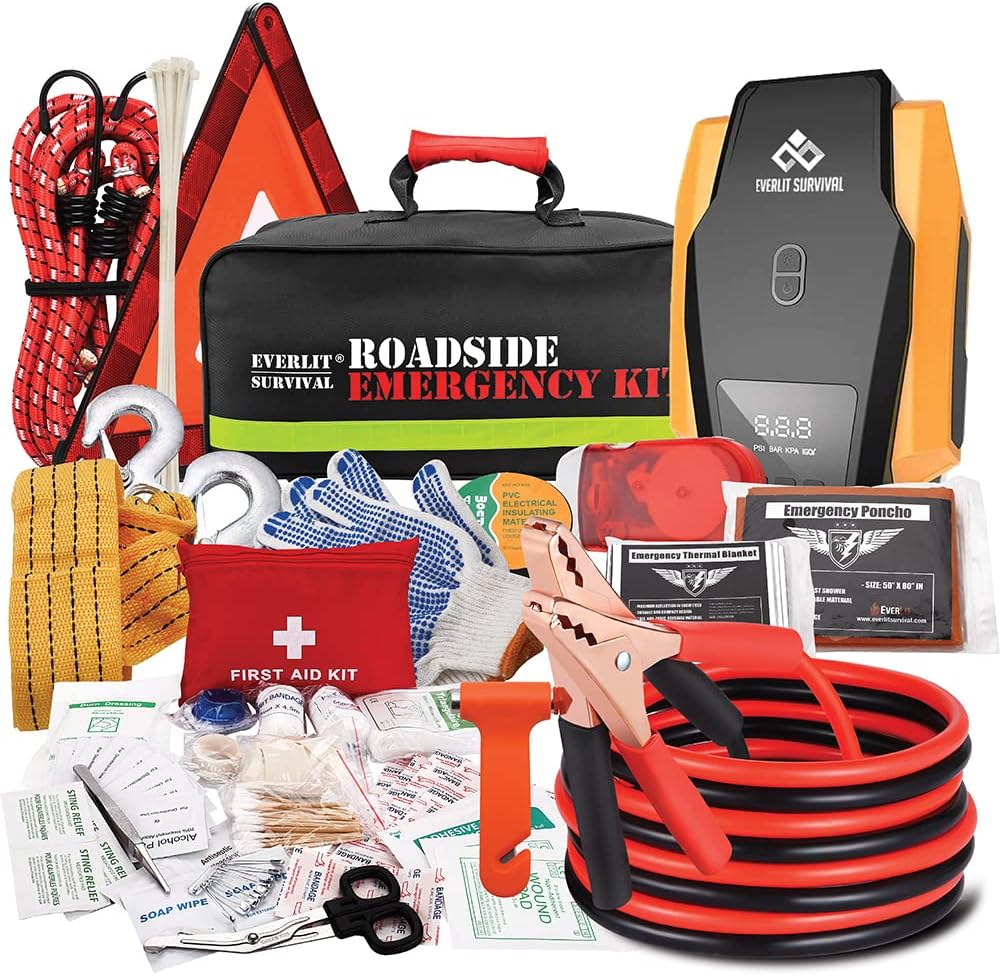
The Everlit Road Guardian emergency kit is designed for roadside breakdowns, combining essential safety gear and roadside tools in one compact bag. It includes a digital 12V auto tire inflator with preset and auto shutoff, plus 12-foot 8-gauge jumper cables to get you moving again. You also get a full 108-piece first aid kit, reflective warning tools, safety gloves, and emergency convenience items for safer travel.

Yieokei Tesla jack pads are molded rubber lifting pucks designed for 2016-2026 Model 3/Y/S/X, including Juniper, to fit securely in the jack hole. They cushion the underframe and help position the jack precisely at the factory jack points to reduce risk of battery, paint, or chassis damage. The set also includes a tire repair tool kit for emergency roadside fixes and comes with a portable storage case to keep everything organized.
Ask About Car Insurance Discounts

Ask your insurer about every discount you may qualify for because eligibility varies by company and state. The National Association of Insurance Commissioners lists common possibilities such as multi-policy, multi-vehicle, safety-equipment, and defensive-driving discounts.
Depending on the insurer, you may also find discounts or pricing benefits for:
- Maintaining a safe driving record
- Insuring several vehicles
- Bundling auto with homeowners, condo, or renters insurance
- Qualifying as a good student
- Completing an approved driver-education or defensive-driving course
- Driving fewer miles
- Using qualifying anti-theft or safety equipment
- Choosing paperless documents
- Setting up automatic payments
- Paying the policy term in full
There is no universal mileage cutoff or discount percentage. Some discounts also cannot be stacked with others. Ask the insurer to show which discounts are applied to your quote and what the final premium will be after all discounts.
Take a Defensive Driving Course
An approved defensive driving course may lower your premium, but check eligibility before paying for a class. Course rules can depend on your state, age, insurer, driving history, course provider, and how often the class must be repeated.
The course may cover hazard recognition, following distance, collision avoidance, distracted driving, and safer decision-making. Even when no insurance discount applies, those skills can still help you become a more defensive driver.
- Ask your insurer whether a course discount is available.
- Confirm the course provider is approved before enrolling.
- Ask how long the discount lasts.
- Find out whether you must submit a completion certificate.
Do not assume a course automatically removes license points or changes your insurer’s telematics score. Point rules vary by state, while telematics programs use actual driving data and operate separately from course-completion discounts.
Bundle Multiple Cars and Policies
Bundling can reduce insurance costs when you insure several cars or combine auto insurance with homeowners, condo, or renters coverage. Multi-policy and multi-car discounts are common, but the amount varies by insurer.
Bundling can also simplify billing and renewals because several policies may sit under one account. Convenience, however, does not guarantee the lowest total price.
A bundle is only a bargain when its final combined price beats comparable separate policies with the coverage you need.
Before renewing, compare the bundled quote with the cost of placing auto and home or renters insurance with different companies. Ask which discounts apply to each policy and whether changing one policy would affect the other.
[Products Worth Considering]

The Gurduenon scissor car jack tire changing kit is designed for quick flat-tire replacement with a lifting capacity of 2.5 tons and a scissor-lift range sized for many vehicles. The complete emergency set includes a ratchet wrench, lug wrench, gloves, a pencil tire pressure gauge, and a storage bag for convenient trunk or garage use. Universal compatibility makes it suitable for cars, SUVs, and other vehicles roadside assistance needs.

This roadside assistance kit helps drivers and passengers in urgent situations after an accident or breakdown, providing practical support while waiting for help. It includes a lightweight, compact tire inflator for fast inflation of standard vehicle tires, plus reinforced jumper cable protection for safer handling. Ideal for winter weather, road trips, camping, and travel, with everything stowed neatly in a trunk bag.

The Trivd Frol 1/2" air impact wrench delivers high performance torque up to 1500 ft-lbs with a twin hammer impact mechanism for strong, balanced blows. It features an ergonomic grip, compact lightweight design, and quick-stop control with 3 forward speeds up to 8000 RPM plus a reverse speed. Built for demanding automotive repair and tire shop work, the rear exhaust helps keep debris away from the surface.
Check Safety Ratings Before Buying
Before buying a vehicle, check its safety ratings as part of your research. The National Highway Traffic Safety Administration’s 5-Star Safety Ratings help you compare crash protection and certain crash-avoidance technologies.
Safety matters, but a strong crash rating does not guarantee a low insurance premium. Insurers also consider the vehicle’s claim history, repair cost, replacement cost, theft losses, performance, parts prices, and other rating factors.
- Check NHTSA crash and rollover ratings.
- Review IIHS crashworthiness and crash-avoidance information.
- Look at insurance-loss experience for the specific model.
- Request insurance quotes before signing the purchase agreement.
Advanced safety systems can reduce some crashes, but cameras, radar units, and other sensors can also make repairs and calibration more expensive after damage. That is another reason to check the actual insurance price instead of assuming that more safety technology always means a lower premium.
[Products Worth Considering]

This professional wheel and rim brush kit makes it easy to lift brake dust, grime, and dirt from wheels and tires without scratching finishes. The brushes feature soft, metal-free wool heads and a flexible 360-degree rim brush design for reaching hard-to-clean areas. Includes multiple brush types plus accessories for thorough car, motorcycle, and general vehicle detailing.

This car D-wheel lock nut key provides an anti-theft solution for D-shaped wheel lock bolts, helping keep your wheels secure. It features a flower-shaped internal pattern that resists micro-adjustment theft while allowing removal and mounting of compatible locking nuts. Made for reliable performance under high torque, it’s easy to use with standard socket wrench turning for quick tire maintenance and emergency repairs.

Activ Life LED bike wheel lights help you stand out and stay visible from all angles for safer night rides and commutes. Designed for easy, tool-free installation on standard wheels, they add bright, durable illumination that enhances both safety and style.
Choose a Car That Costs Less to Insure
Once you have checked vehicle safety, compare the factors that more directly influence insurance losses. The Highway Loss Data Institute’s insurance-loss data lets you compare how different makes and models perform under collision, comprehensive, property-damage liability, and injury coverages.
Look at:
- Repair costs: Expensive body panels, lighting, sensors, wheels, and electronics can raise claim severity.
- Replacement value: More expensive vehicles usually cost more to repair or replace.
- Theft experience: Models with high theft losses can cost more under comprehensive coverage.
- Performance: High-performance vehicles can produce different loss patterns than ordinary family vehicles.
- Claim experience: HLDI data show how often claims occur and how costly they tend to be.
For the most accurate answer, give your insurer or agent the exact model year, trim, VIN when available, and expected use. Comparing insurance quotes before buying can reveal a cost difference that safety ratings alone cannot show.
Raise Your Car Insurance Deductible
Raising a collision or comprehensive deductible can lower the portion of your premium charged for those coverages because you agree to pay more of a covered loss yourself.
The tradeoff is simple: you may save while no claim occurs, but you need more cash available if your vehicle is damaged.
If you have enough savings to cover the higher deductible without relying on debt, the change may make sense. If paying the deductible would create a financial emergency, a lower deductible can be worth the higher premium.
Lower Monthly Premiums
The Insurance Information Institute gives a commonly cited example: increasing a deductible from $200 to $500 could reduce collision and comprehensive coverage costs by about 15% to 30%, while moving to a $1,000 deductible could save 40% or more on those coverages.
Those percentages are examples, not a promise about your total policy. Liability, uninsured motorist, medical payments, personal injury protection, and other portions of your premium may not change when you raise a physical-damage deductible.
- Ask for your premium at several deductible levels.
- Calculate the annual savings.
- Compare the savings with the extra amount you would owe after a claim.
- Choose a deductible you could pay immediately if needed.
Balance Risk And Savings
Use the insurer’s actual quote to make the decision rather than relying only on a percentage from a general guide.
| Deductible | Possible effect | Best fit |
|---|---|---|
| $200 | Higher physical-damage premium, lower claim payment by you | Drivers who prioritize lower out-of-pocket claim costs |
| $500 | May lower collision/comprehensive costs | Drivers who can comfortably cover $500 |
| $1,000 | Potentially larger physical-damage savings | Drivers with enough cash reserves for a $1,000 claim expense |
A higher deductible lowers price because you retain more of the loss yourself. It is not a special reward for having a clean driving history.
Keep Your Driving Record Clean
Your driving record is an important auto-insurance rating factor. At-fault crashes and traffic violations may raise rates, while a clean record can help you qualify for more favorable pricing or safe-driver discounts.
The exact effect of a ticket or crash varies by insurer, state, violation, fault determination, and how long ago the event occurred. There is no universal 20% clean-driver discount.
- Follow speed limits and traffic laws.
- Avoid distracted and impaired driving.
- Review insurer records if a quote shows an accident or violation you do not recognize.
- Ask whether your insurer offers an eligible safe-driver discount.
An approved defensive-driving course may provide a separate discount in some circumstances, but do not assume it will erase a violation or remove points from your state driving record.
Improve Your Credit Score
In states where the practice is permitted, insurers may use a credit-based insurance score as one factor in underwriting or pricing. That is not the same thing as the ordinary credit score a lender uses to predict whether you will repay a loan.
The NAIC explains that credit-based insurance scores use information from a consumer’s credit history to estimate insurance-loss risk. State laws can restrict how those scores are used, so the impact is not the same everywhere.
Note: There is no universal consumer credit-score cutoff such as 600 or 750 that guarantees a particular auto-insurance rate. Insurance scoring models and state rules differ.
What you can do is keep the underlying credit information accurate. Pay obligations on time, control balances when possible, and review your credit reports for errors. The Consumer Financial Protection Bureau explains how to dispute inaccurate information with both the credit-reporting company and the company that supplied the data.
Pick an Annual or AutoPay Plan
Some insurers offer a discount for paying a policy term in full, using automatic payments, receiving documents electronically, or combining certain billing options. The savings amount and eligibility vary by company.
Compare the total annual cost under each payment option. A monthly installment can sometimes include installment fees, while paying in full may qualify for a discount with some insurers.
- Pay in full: Compare the full-term price with the total of all installments.
- AutoPay: Ask whether automatic payments earn a separate discount.
- Paperless billing: Check whether electronic documents affect price.
- Cash flow: Do not drain an emergency fund merely to earn a small payment-method discount.
The best option is the one that lowers your total cost without creating a cash-flow problem or increasing the chance that you will miss a payment.
Consider Low-Mileage and Usage-Based Insurance
If you now drive fewer miles because you work remotely, retired, changed jobs, or stopped commuting every day, tell your insurer your accurate annual mileage. Mileage is one factor insurers may use when pricing auto insurance.
Some companies offer traditional low-mileage discounts, while others offer pay-per-mile or usage-based insurance. There is no single mileage cutoff that applies to every carrier.
Telematics programs may use a smartphone app or vehicle device to measure information such as mileage, braking, acceleration, speed, time of day, or other driving patterns. The NAIC’s telematics guidance explains how usage-based pricing differs from traditional insurance.
Warning: Read a telematics program’s pricing and privacy terms before enrolling. Depending on the insurer and program, driving data may affect your future price rather than guaranteeing a discount.
Recheck Your Policy After Life Changes
Your insurance profile can change even when your car does not. Review your declarations page at each renewal and after major changes so your insurer is rating the correct information.
Check:
- Your home and garaging address
- Vehicle year, make, model, trim, and VIN
- Annual mileage and commuting use
- All drivers who should be listed
- Discounts that should be applied
- Loan or lienholder information
- Whether a vehicle is used for rideshare, delivery, or other commercial activity
If you have paid off an auto loan, ask whether the lienholder should be removed from your policy record. That is also a good time to review whether your collision and comprehensive coverage still fits the vehicle’s value and your financial situation.
Always give accurate information. Underreporting mileage, omitting a household driver who must be listed, or misrepresenting how the vehicle is used can create underwriting or claim problems.
Review Coverage and Cut Extras
You can sometimes trim unneeded coverage, but start by separating legally required or financially important protection from optional add-ons.
Warning: Do not reduce coverage below your state’s requirements. If your car is financed or leased, your lender or lessor may require collision and comprehensive coverage even though those coverages are generally not required by state auto-insurance laws.
If your car is older and its value has fallen substantially, review the cost of collision and comprehensive coverage against the amount the insurer would realistically pay after a total loss.
You can also review rental reimbursement, towing or roadside assistance, gap coverage, and other optional benefits for overlap with services you already have elsewhere.
Trim Unneeded Coverage
A quick policy audit can cut costs without stripping away protection you still need. Review your policy line by line and compare each optional coverage with the risk it protects.
The Insurance Information Institute offers a long-standing rule of thumb: if an older car is worth less than roughly ten times the annual cost of its collision and comprehensive coverage, those physical-damage coverages may no longer be cost-effective. It is a starting point for analysis, not an automatic rule.
- Collision: Compare the premium with your car’s current value and deductible.
- Comprehensive: Consider theft, hail, flood, fire, glass, animal-strike, and other non-collision risks before dropping it.
- Rental reimbursement: Decide whether you could manage transportation without it after a covered claim.
- Roadside assistance: Check for duplicate benefits through another membership, vehicle warranty, or credit-card program.
- Gap protection: Reassess it when the amount you owe falls relative to the vehicle’s value.
Do not cut liability coverage simply because your vehicle is old. Liability protects you against covered injuries and property damage you cause to other people, so your car’s market value is not the main factor in deciding how much liability protection you need.
Adjust Deductibles Carefully
A higher deductible can reduce the price of collision and comprehensive coverage, but it shifts more financial responsibility to you after a covered loss.
Ask your insurer for prices at several deductible levels instead of assuming a particular percentage. Then divide the annual premium reduction into the extra deductible you would assume. That helps you see how long it would take for the premium savings to equal the additional claim risk.
For example, if moving from a $500 deductible to $1,000 saves only a small amount each year, you may decide the extra $500 of claim exposure is not worthwhile. Another driver with a larger premium reduction and strong emergency savings may decide differently.
Review this choice at every renewal because your vehicle value, savings, premium, and driving situation can change.
Frequently Asked Questions
What are tricks to get cheaper insurance?
Start with strategies you can verify: compare equivalent quotes, ask for every eligible discount, maintain a safe driving record, review your deductible, update annual mileage, check for duplicated optional coverage, and consider bundling or usage-based insurance when the final price is competitive.
What are some ways to cut costs on car insurance?
Compare several insurers, raise collision or comprehensive deductibles if you can afford them, ask about discounts, drive safely, keep policy information accurate, consider lower-mileage options, and review optional coverage on an older vehicle. Do not reduce legally required or lender-required coverage simply to lower the bill.
What should I say to make car insurance cheaper?
Ask direct questions rather than using a negotiation script: “Which discounts am I eligible for?”, “What would my price be with a higher deductible?”, “Do you offer a low-mileage or telematics program?”, and “What is the total annual price if I bundle or pay in full?” The numbers matter more than special wording.
What should I not tell my insurance company?
Do not intentionally give false or incomplete answers about information the insurer asks for. Be accurate about drivers, address, mileage, vehicle use, accidents, and other requested underwriting facts. If you do not know an answer, say that instead of guessing. Accurate information helps prevent pricing, underwriting, and claim problems later.
How often should I compare car insurance quotes?
A good time to compare is before renewal and after a major change such as moving, adding or removing a vehicle, changing mileage, paying off a car loan, or changing household drivers. Keep the limits and deductibles consistent so the quotes are comparable.
Does raising my deductible lower every part of my premium?
No. Collision and comprehensive commonly have deductibles, so raising those deductibles can reduce the price of those coverages. It does not necessarily reduce liability, uninsured motorist, medical payments, personal injury protection, or every other part of the policy.
Can a telematics program make my insurance more expensive?
It can, depending on the insurer, state, and program. Some programs are designed mainly around discounts, while others can use driving data to produce either a discount or a surcharge. Read the pricing and privacy terms before enrolling.
Should I drop collision and comprehensive coverage on an older car?
Maybe, but compare the annual premium, deductible, vehicle value, and your ability to replace or repair the car yourself. Also check your loan or lease agreement first because a lender or lessor may require both coverages.
Conclusion
You can cut car insurance costs most effectively by comparing equivalent quotes, checking every available discount, keeping your driving and policy information accurate, and making deliberate choices about deductibles and optional coverage. Low-mileage plans, telematics, bundling, payment options, and a cheaper-to-insure vehicle can also help. Just make sure every saving still leaves you with the protection required by law, your lender, and your own financial situation.
Sources
- National Association of Insurance Commissioners — Consumer’s Guide to Auto Insurance — deductibles, discounts, premiums, and policy-shopping basics.
- National Association of Insurance Commissioners — Credit-Based Insurance Scores — how insurance scores differ from ordinary credit scores and how state restrictions apply.
- National Association of Insurance Commissioners — Telematics — usage-based insurance, mileage, and driving-data pricing.
- Insurance Information Institute — Nine Ways to Lower Your Auto Insurance Costs — quote shopping, deductible examples, and older-car coverage guidance.
- Insurance Institute for Highway Safety / Highway Loss Data Institute — Insurance Losses by Make and Model — vehicle claim frequency, severity, and overall insurance-loss comparisons.
- National Highway Traffic Safety Administration — 5-Star Safety Ratings — official U.S. crash, rollover, and vehicle-safety information.
