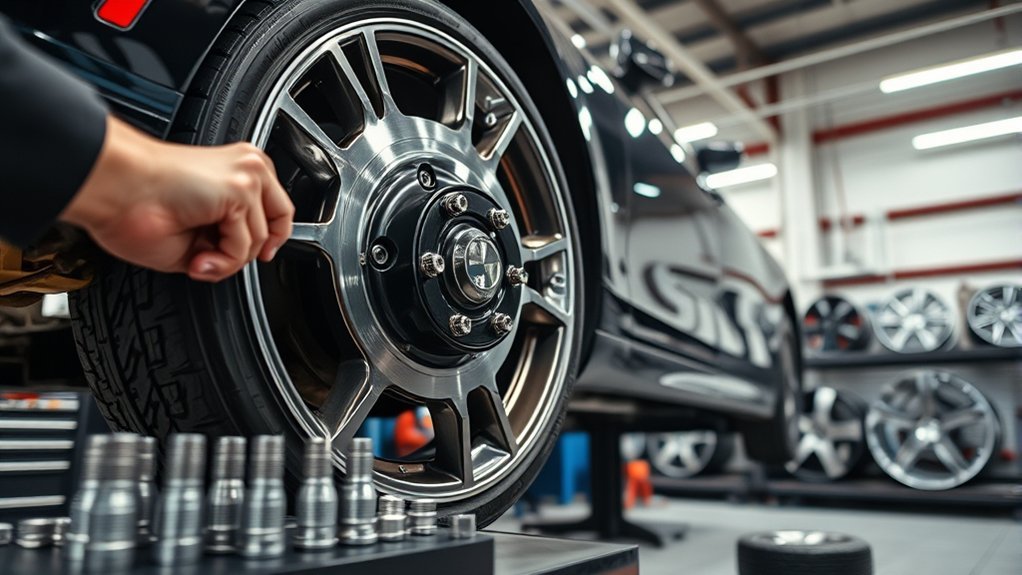
Rim installation commonly costs about $20 to $50 per wheel for a standard job, but the real price depends on what “installation” involves. Simply bolting on complete wheel-and-tire assemblies can be inexpensive, while transferring tires to new rims may require dismounting, mounting, balancing, TPMS work, and new hardware. Large wheels, low-profile tires, run-flats, and custom fitments can raise the total, so compare the complete service rather than the advertised base fee.
Quick Answer
For budgeting, expect roughly $20–$50 per wheel for many standard rim-installation or mount-and-balance jobs, with a set of four often starting around $80–$200. TPMS parts, run-flat or low-profile tires, oversized wheels, tire disposal, special hardware, and complex aftermarket fitment can push the final bill higher.
Key Takeaways
- A standard rim or wheel installation often falls around $20–$50 per wheel, but the exact service included in that price matters more than the headline rate.
- Moving existing tires onto new rims normally requires tire dismounting, mounting, balancing, and possibly TPMS or valve-stem service.
- Larger wheels, stiff low-profile or run-flat tires, specialty finishes, unusual fitments, and extra hardware can increase labor costs.
- Steel wheels are commonly among the least expensive choices, while cast alloy, flow-formed, and forged wheels generally move up in price.
- A simple wheel swap does not automatically require an alignment. Alignment is more relevant when you have uneven wear, steering pull, impact damage, suspension work, or another alignment symptom.
- Get an itemized quote covering mounting, balancing, TPMS, valve hardware, disposal, lug hardware, and any oversized-wheel surcharge before approving the work.
How Much Does Rim Installation Cost?
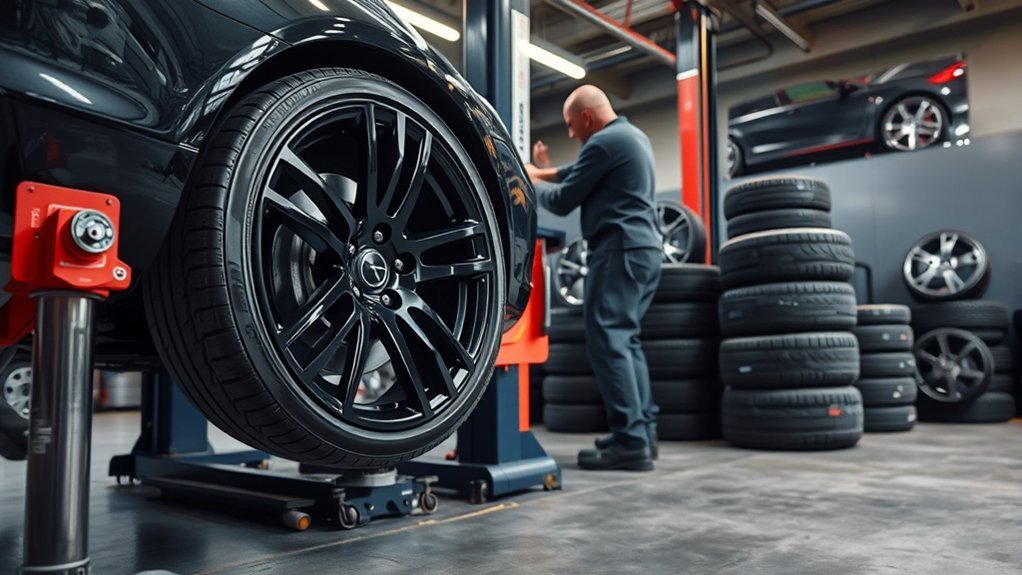
Rim installation commonly costs about $20 to $50 per wheel for standard passenger-vehicle work, but there is no single national rate because shops define “installation” differently.
For a current price reference, Walmart lists an $18-per-tire installation package for qualifying tires purchased from Walmart, including mounting and lifetime balance/rotation plus a service pack or valve stem. Discount Tire says typical tire shops may charge roughly $80 to $150 to mount and balance a set of four. These are useful benchmarks, not guaranteed prices for your vehicle.
The cheapest advertised installation price is not always the cheapest final bill. Compare what is actually included in mounting, balancing, TPMS work, hardware, and disposal.
What Does “Rim Installation” Actually Mean?
The term can describe two different jobs, and that difference has a major effect on price.
- Complete wheel-and-tire swap: Your tires are already mounted and balanced on the new rims. The technician removes the old assemblies, fits the new ones, checks clearance, torques the hardware, and verifies tire pressure.
- Tire transfer to new rims: The technician removes your existing tires from the old wheels, mounts them on the new rims, balances each assembly, handles valve or TPMS hardware as needed, then installs the assemblies on the vehicle.
The second job requires more equipment and labor, so it normally costs more. If you ask a shop for a quote, tell them whether the tires are already mounted on the new wheels.
Typical Rim Installation Price Scenarios
| Job | Planning Range | What Changes the Price |
|---|---|---|
| Basic standard wheel/tire service | About $20–$50 per wheel | Shop, vehicle, wheel size, tire construction, and included services |
| Four standard wheels | Often roughly $80–$200 | Whether mounting, balancing, valve hardware, and TPMS work are included |
| Specialty or oversized fitment | Can exceed the standard range | Run-flats, low-profile tires, large diameters, custom wheels, or unusual hardware |
Taxes, new TPMS sensors, new lug hardware, tire disposal, hub-centric rings, or other parts may be separate. If you buy rims and tires as a package, the retailer may bundle some of the work into the purchase price.
Pro Tip: When calling shops, ask for the “out-the-door price for all four wheels” and specify whether your existing tires must be moved to the new rims. That prevents a low mounting quote from hiding separate balancing, TPMS, disposal, or hardware charges.
Before service, confirm the bolt pattern, wheel diameter and width, offset, center bore, lug-seat type, load capacity, tire size, and brake clearance. You should also inspect each rim for visible cracks, bends, or shipping damage.
After new wheels are installed, follow your vehicle and wheel manufacturer’s instructions for torque checks. Tire Rack recommends re-torquing new-wheel hardware after the first 50 to 100 miles.
Why Do Rim Installation Costs Vary?
Your rim installation cost changes with wheel size, tire construction, vehicle design, TPMS requirements, shop labor rates, and the amount of fitment work required.
A straightforward factory-size wheel may take little extra inspection. A large aftermarket setup can require more careful tire-machine work, different lug hardware, hub-centric rings, sensor service, or additional clearance checks.
Rim Size Differences
Large-diameter wheels frequently cost more to service because they are commonly paired with wider or lower-profile tires that can be harder to mount without damaging the bead or wheel finish. The diameter itself is not the only factor; tire stiffness and wheel design matter too.
A common 17-inch wheel with a conventional tire may therefore be easier to service than a 22-inch wheel fitted with a stiff low-profile tire.
Fitment also becomes more important when you change diameter or width. A proper installer should verify:
- bolt pattern and wheel fastener compatibility;
- wheel width and tire-width compatibility;
- offset and backspacing;
- center bore and any required hub-centric ring;
- brake-caliper and suspension clearance;
- wheel and tire load capacity; and
- overall tire diameter if you are changing wheel size.
When plus-sizing, the goal is normally to keep the tire’s overall outside diameter reasonably close to the vehicle’s intended size. Large changes can affect speedometer readings and vehicle systems that depend on wheel-speed information.
Labor Rate Changes
Labor rates vary because independent tire shops, national chains, dealerships, and mobile installers have different overhead, equipment, technician skill levels, and regional costs.
You may also pay more when a technician must handle run-flat tires, very low-profile sidewalls, seized wheel hardware, corroded hubs, expensive finishes, or unusual aftermarket fitment.
Instead of comparing only the hourly rate, compare the complete job. A higher-priced installer may include balancing, TPMS service, follow-up torque checks, and other work that another shop bills separately.
How Much Do Rims Cost by Type?
The price of the rims themselves is separate from installation. Material, construction method, diameter, width, brand, load capacity, and finish can all affect what you pay.
Steel wheels are commonly positioned as a lower-cost, functional option. Alloy wheels offer far more styling and construction choices, while performance-oriented flow-formed and forged wheels can cost much more.
[Products Worth Considering]

Autel MX TPMS sensors combine 315MHz and 433MHz in a single easy-to-install press-in design for faster tire service. They support wireless programming with strong signal performance, and the sensors are clone-able for streamlined replacement. Built for reliability and tested to SAE standards, each sensor includes a series number for quality control.

These M14x1.5 closed-end chrome lug nuts are a one-piece replacement designed for secure fitment on compatible GM, Ford, and select Chrysler/Dodge models. Featuring a 60-degree conical seat and anti-rust chrome plating, they help resist corrosion and maintain a bright look for everyday driving. Built for long-term durability, they include OEM-style part references and are backed by 12 months of support.

Upgrade your wheels with MIKKUPPA closed-end lug nuts designed for reliable fit and corrosion resistance. The one-piece, cold-forged and heat-treated steel construction helps resist rust and stripping, while the integrated finish delivers a durable black appearance. Built to OEM standards with a conical 60-degree seat, these nuts provide a secure solution for compatible Ford, Honda, Jeep, and Chevrolet models.
Steel Rim Prices
Steel wheels are often cheaper than comparable alloy wheels, but there is no dependable price range based only on diameter. Vehicle fitment, width, bolt pattern, finish, brand, and load rating can easily matter more than whether the wheel is 15, 16, or 17 inches.
| Size | Typical Market Position | Notes |
|---|---|---|
| 15 in. | Often budget-focused | Price varies greatly by width and bolt pattern |
| 16 in. | Common replacement size | Widely used for daily and winter setups |
| 17 in. | Budget to midrange | Truck/SUV load ratings and width can raise price |
Steel-wheel durability and comparatively simple construction make them popular for winter use, work vehicles, and budget replacements. They are normally heavier than comparable alloy designs and usually offer fewer styling choices.
Do not buy a wheel based on diameter alone. The correct bolt pattern, center bore, offset, width, load rating, and brake clearance still have to match your vehicle.
Alloy Rim Prices
Alloy wheels cover a much wider price range. Discount Tire’s current aftermarket-wheel guide places entry-level cast wheels at roughly $125 to $250 per wheel, flow-formed wheels around $300 to $550, and premium forged wheels around $600 to $1,500 or more.
Those ranges are planning figures rather than universal prices. Brand, size, finish, vehicle application, and wheel specifications can move an individual product well outside them.
Alloy wheels are often lighter than equivalent steel wheels and offer more finish and spoke-design choices. However, saying that any alloy wheel automatically improves handling or braking would be misleading. Actual performance depends on wheel weight, stiffness, dimensions, tire choice, and the vehicle.
Maintenance matters too. Painted, polished, machined, and chrome-like finishes can require different cleaning care, and curb damage may be expensive to repair.
How Wheel Size Changes Rim Prices?
Wheel size can affect price because larger wheels normally use more material and are frequently sold in higher-performance or premium designs. However, diameter alone does not determine cost. A forged 17-inch performance wheel can cost far more than a basic 20-inch cast wheel.
| Wheel Size | Typical Price Effect |
|---|---|
| 15–16 in. | Often offers more basic or budget-oriented choices |
| 17–18 in. | Broad range from budget replacement to premium performance wheels |
| 19 in.+ | Premium pricing becomes more common, especially with wide or forged designs |
If you move to a different wheel diameter, remember that the rim is only part of the cost. You may also need different tires. The new combination must maintain adequate load capacity and safe clearance while keeping the overall tire diameter appropriate for the vehicle.
Note: “Rim” and “wheel” are often used interchangeably when shopping, although technically the rim is the outer portion of a wheel where the tire mounts. Shops and retailers usually understand “new rims” to mean replacement wheels.
[Products Worth Considering]

This 1/2-inch drive breaker bar delivers powerful leverage for loosening and tightening stubborn lug nuts and automotive fasteners. The 180-degree flex head helps you reach tight spaces at the angle you need, making tire and brake jobs easier. A spring-loaded ball detent design holds 1/2-inch sockets securely while the chrome-moly head provides durable strength for everyday use.

Replace worn or missing TPMS sensors with a pre-programmed 4-pack designed for compatible GM vehicles. These 315MHz sensors provide real-time tire pressure monitoring and alert you if pressure is too high, too low, or if a rapid air leak occurs. Most installations are ready with minimal relearn effort after mounting, helping improve safety and driving confidence.

Upgrade your wheels with MIKKUPPA M12x1.5 mag seat lug nuts built for secure, corrosion-resistant performance. These closed-end chrome lug nuts are a direct replacement for select Toyota models, including Camry, Corolla, RAV4, Sienna, Avalon, Highlander, Matrix, Venza, and Prius. Triple-chromium plating and cold-forged, heat-treated steel help deliver strength for daily driving and replacement needs.
What Installation Fees Include?
What an installation fee includes depends on the job and the shop. If tires must be mounted on the new rims, the package may include tire mounting, balancing, valve hardware, TPMS service, wheel installation, final inflation, and torque verification.
Discount Tire, for example, states that its tire installation charge can include labor, mounting, balancing, appropriate valve stems or TPMS rebuild kits, tire disposal, and other ongoing tire services. Other retailers structure their fees differently.
If your rims arrive with tires already mounted and balanced, much of that work has already been completed. The local job may only require removing the old assemblies, test-fitting the replacements, installing them, setting pressure, and torquing the wheel hardware.
Ask specifically whether your quote includes:
- dismounting tires from the old rims;
- mounting tires on the new rims;
- computer balancing;
- valve stems or TPMS service kits;
- TPMS transfer, programming, or relearn if required;
- new lug nuts, bolts, or wheel locks if needed;
- hub-centric rings or other approved fitment hardware;
- tire or old-part disposal; and
- a post-installation torque check.
What Extra Fees Come With New Rims?
Extra charges may appear when a basic advertised rate does not cover every part of the job.
Balancing is important whenever tires are mounted on different wheels. NHTSA recommends balancing new tires when they are installed, and balancing may also be needed when vibration develops.
TPMS costs depend on the vehicle. Direct TPMS uses sensors associated with the wheels, so a wheel change may involve transferring compatible sensors, replacing service parts, fitting new sensors, or performing a relearn. Indirect TPMS uses wheel-speed and other vehicle data and does not use the same type of wheel-mounted pressure sensor.
Other possible extras include:
- new rubber or metal valve hardware;
- replacement lug nuts or bolts;
- wheel locks;
- hub-centric rings;
- corrosion removal from hub mounting surfaces;
- road-force balancing when needed to diagnose vibration;
- oversized, run-flat, or low-profile tire surcharges; and
- disposal or shop-supply fees.
Ask whether the shop provides an installation workmanship warranty and whether a follow-up torque check is included.
How Much Do Custom Rims Cost?
Custom and aftermarket wheel prices vary enormously. Construction method is one of the biggest differences. Current aftermarket-wheel guidance from Discount Tire puts common market ranges roughly as follows:
| Rim Type | Typical Price | Notes |
|---|---|---|
| Cast alloy | $125–$250 | Common entry-level aftermarket construction |
| Flow-formed | $300–$550 | Often lighter than basic cast designs |
| Forged | $600–$1,500+ | Premium construction and pricing |
These are broad shopping ranges, not guaranteed prices. Premium brands, unusual offsets, large diameters, elaborate finishes, or vehicle-specific forged designs can cost substantially more.
You should also budget for compatible tires, TPMS hardware, center caps, correct lug hardware, installation, and possible shipping. Financing can spread the purchase cost over time, but compare the total financing cost rather than only the monthly payment.
For the best value, choose wheels that meet your fitment, load, durability, and driving needs before focusing on appearance.
[Products Worth Considering]

The 22800 wheel stud installer makes replacing wheel studs quick and secure, saving time and effort during tire service. It uses a ratchet or impact wrench to pull new studs firmly into place, helping when existing studs are too long. Compatible with most automotive wheels and light-duty truck wheel studs, it’s designed for easy, tool-assisted installation.

This professional wheel and rim cleaning brush set lifts brake dust, grime, and dirt with soft, scratch-free microfiber and synthetic wool fibers. The rim brush bends up to 360 degrees for easy access to hard-to-reach areas around spokes, lips, and faces. Ideal for thorough cleaning of car, truck, motorcycle, bicycle, RV, and more wheel and tire surfaces.

The Trivd Frol 1/2" air impact wrench delivers high performance torque up to 1500 ft-lbs with a twin hammer impact mechanism for strong, balanced blows. It features an ergonomic grip, compact lightweight design, and quick-stop control with 3 forward speeds up to 8000 RPM plus a reverse speed. Built for demanding automotive repair and tire shop work, the rear exhaust helps keep debris away from the surface.
Can You Install Rims Yourself?
Yes, you can install complete wheel-and-tire assemblies yourself if they are already correctly mounted and balanced, you understand safe vehicle lifting, and you have the correct equipment and torque specification.
That is very different from mounting a tire onto a bare rim. Tire mounting and balancing require specialized equipment and should generally be handled by a qualified tire shop.
At a Glance: DIY Pre-Mounted Wheel Swap
| Time Required | About 30–60 minutes for four assemblies if conditions are straightforward |
| Difficulty | Moderate; requires safe lifting and correct torque procedures |
| Tools Needed | Wheel chocks, suitable jack, jack stands, lug wrench or breaker bar, correct socket, and calibrated torque wrench |
| Cost | Little or no labor cost if you already own the proper tools; mounting and balancing are separate professional services |
Warning: Never work under or around a vehicle supported only by a jack. Use the lift points and procedures specified by the vehicle manufacturer, support the vehicle with properly rated jack stands, and do not drive until every wheel fastener has been tightened to the correct manufacturer torque specification.
For a pre-mounted wheel swap, park on a firm, level surface, secure the vehicle, loosen the wheel hardware before lifting, then raise and support the vehicle correctly. Remove the old assembly and clean dirt or loose corrosion from the mounting surface as appropriate.
Test-fit the replacement wheel. It must sit flush against the hub with proper brake and suspension clearance. Hand-start the lug nuts or bolts so you do not cross-thread them.
Snug the hardware in the vehicle-appropriate crisscross or star sequence, then apply final torque with an accurate torque wrench according to your owner’s manual or manufacturer specification.
Tire Rack specifically advises against relying on an impact gun for final wheel torque. It also recommends checking the torque of newly installed wheels again after the first 50 to 100 miles.
During the first drive, stop and investigate any rubbing, new vibration, unusual steering behavior, or warning light rather than assuming it will disappear.
How Much Do Tire Shops Charge to Install Rims?
Tire-shop pricing usually depends on the actual work performed rather than the rim alone. Basic mount-and-balance work often falls near the lower end of the overall price range, while oversized, low-profile, run-flat, custom, or TPMS-intensive jobs can cost more.
The best way to compare shops is to describe the exact same job to each one: wheel diameter, tire size, whether the tires are currently mounted on other rims, whether the wheels are aftermarket, and whether your vehicle has direct TPMS sensors.
Typical Installation Fees
For standard passenger-vehicle work, budgeting around $20 to $50 per wheel is reasonable before unusual parts or specialty labor. Current national-retailer examples can be lower: Walmart lists an $18-per-tire installation package for qualifying Walmart tire purchases, while Discount Tire states that typical tire shops may charge about $80–$150 to mount and balance four tires.
Those figures show why you should compare scope as well as price. One package may include valve service and lifetime balancing, while another quote may cover only the immediate mounting labor.
- Standard sedan and crossover fitments are commonly easier and less expensive.
- Large truck/SUV wheels, low-profile tires, run-flats, and premium finishes may require more time or specialized equipment.
- Outside-purchased wheels or tires may be priced differently from products bought from the installer.
Extra Service Charges
Additional fees may include balancing, direct-TPMS service, valve hardware, new wheel fasteners, disposal, hub-centric rings, or extra labor for seized or corroded components.
A shop may also charge differently for road-force balancing or other vibration diagnostics. That service is not automatically necessary for every new wheel installation, but it can help when conventional balancing does not resolve a vibration complaint.
Request a written, itemized estimate before the work begins. It should show enough detail for you to identify which charges are required for your vehicle and which are optional services.
How To Budget For Your Rim Upgrade
Start with a total budget that covers more than the rims. Include any tires, mounting, balancing, TPMS work, lug hardware, center caps, hub-centric rings, taxes, shipping, and other fitment parts your setup may require.
If you change wheel diameter, confirm your tire plan before placing the order. An existing 17-inch tire cannot be installed on an 18-inch wheel simply because the overall wheel/tire combination looks similar; the tire’s rim-diameter designation must match the wheel.
- Compare at least two or three complete installation quotes.
- Tell each shop the exact wheel and tire sizes so the quotes cover the same work.
- Ask whether mounting, balancing, valve hardware, TPMS work, disposal, and follow-up torque checks are included.
- Verify fitment before paying for custom wheels that may be difficult to return after tires are mounted.
- Keep extra room in your budget for unexpected hardware or fitment requirements.
Budget for the complete wheel-and-tire system—not just the price of the rims. Tires, sensors, hardware, balancing, and proper fitment can materially change the final cost.
Correctly fitted wheels should match the vehicle’s mechanical requirements rather than simply filling the wheel opening. Saving money on an incompatible setup can create far more expensive problems later.
Frequently Asked Questions
How Long Does Rim Installation Usually Take?
A straightforward four-wheel swap may take roughly 30–60 minutes once the vehicle is being worked on. Transferring tires, balancing them, servicing TPMS hardware, correcting corrosion, or handling specialty tires can take longer. Shop queue time is separate from actual installation time.
Do Rim Installations Affect Vehicle Insurance?
Replacing a damaged factory wheel with an equivalent wheel normally is not the same issue as adding expensive aftermarket wheels. Custom rims may not be fully covered under a standard policy, depending on the insurer and policy. If you install valuable aftermarket wheels, ask your insurer whether you need custom-parts or equipment coverage.
Can Old Tires Fit on New Rims?
Yes, if the tire’s rim diameter matches the new wheel and the wheel width is approved for that tire size. The tire must also be in safe condition and suitable for the vehicle’s load and performance requirements. A tire shop should inspect the beads and overall condition before transferring used tires.
Are Wheel Alignment Services Needed After Installation?
Not automatically. Simply replacing wheels does not normally change the suspension’s alignment settings. Have the alignment checked if the vehicle pulls, the steering wheel sits off-center, the tires show irregular wear, you hit a pothole or curb, suspension components were changed, or the installer identifies another reason for a check. Checking alignment when installing new tires can also help protect the new tread from existing misalignment.
Will Larger Rims Reduce Fuel Efficiency?
They can, but a larger rim does not automatically reduce fuel economy. The result depends on the weight of the complete wheel-and-tire package, tire width, tire rolling resistance, inflation pressure, and changes in overall diameter. Heavy plus-size combinations can hurt efficiency, acceleration, ride quality, and braking more than a carefully selected lightweight setup.
Do New Rims Need New TPMS Sensors?
Not always. Vehicles with direct TPMS may be able to reuse compatible sensors, although service parts or replacement sensors may be appropriate depending on condition and compatibility. Vehicles with indirect TPMS do not use the same type of pressure sensor inside each wheel. Ask the installer what your specific vehicle requires.
How Do I Know Whether Aftermarket Rims Will Fit?
Check more than the diameter. The bolt pattern, width, offset, center bore, wheel load rating, lug-seat design, brake and suspension clearance, tire size, and overall tire diameter must all work with the vehicle. Test-fit the wheel before mounting tires when there is any uncertainty.
Conclusion
Your rim installation cost depends less on the word “installation” than on the actual work the shop must perform. A straightforward standard job may fall around $20–$50 per wheel, while tire transfer, balancing, TPMS parts, low-profile or run-flat tires, unusual hardware, and custom fitment can increase the total.
Before buying, confirm that the rims match your bolt pattern, offset, center bore, width, load requirements, tire size, and brake clearance. Then request a written quote showing exactly what is included. If you install pre-mounted assemblies yourself, use proper lifting equipment and torque every fastener to the vehicle manufacturer’s specification.
That approach gives you a safer fit, a more accurate budget, and fewer expensive surprises after the wheels are already on the car.
Sources
- National Highway Traffic Safety Administration — TireWise — tire sizing, balancing, alignment, tire pressure, and TPMS guidance.
- Tire Rack — Tire & Wheel Package Installation — wheel fitment, brake clearance, safe installation, torque procedures, and post-installation checks.
- Tire Rack — Proper Wheel Lug Torque — correct torque technique and the 50–100-mile re-torque recommendation for new wheels.
- Discount Tire — Aftermarket Wheels Guide — current wheel-construction price ranges, fitment considerations, and mounting/balancing cost guidance.
- Walmart Auto Care Center — Tire Installation Services — current published installation, mounting, balancing, valve-service, and re-torque pricing examples.
- Progressive — Tire and Custom Wheel Insurance Coverage — insurance considerations for aftermarket and custom rims.