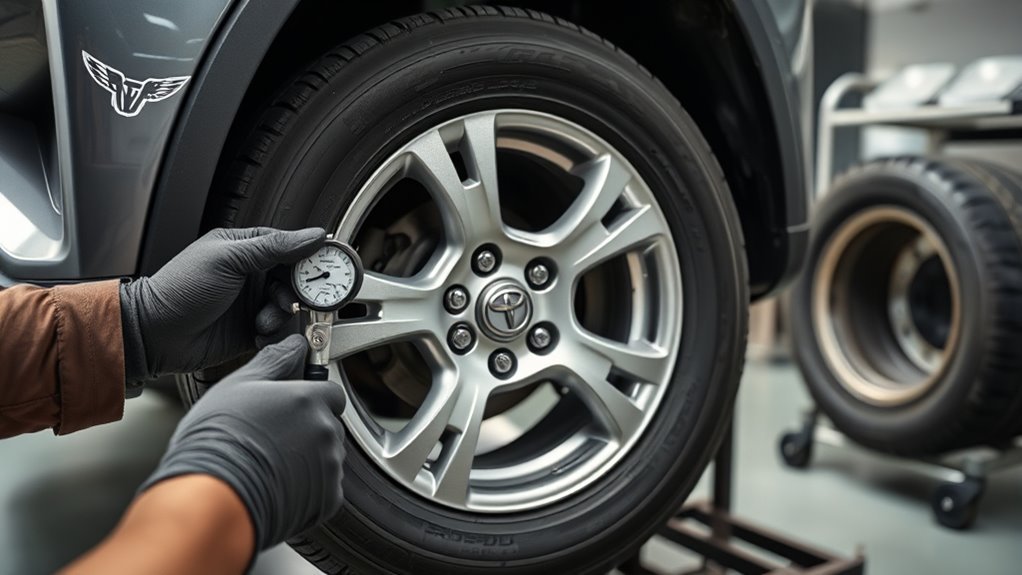
A bent rim on a Toyota RAV4 is not just a cosmetic problem. It can cause vibration, slow air loss, uneven tire wear, poor handling, and in serious cases a tire leak or wheel failure. The safest fix starts with a careful inspection: decide whether the wheel is only lightly bent, needs professional straightening, or should be replaced.
Quick Answer
To fix a bent Toyota RAV4 rim, stop driving normally, check for air loss, cracks, vibration, and tire damage, then have the wheel inspected by a qualified tire or wheel shop. Minor bends may be repairable, but cracked, leaking, severely deformed, or repeatedly bent wheels should be replaced.
Key Takeaways
- Do not ignore steering-wheel vibration, thumping, slow tire-pressure loss, or a visible bend after hitting a pothole or curb.
- A professional shop should check wheel runout, bead sealing, tire damage, balance, and nearby suspension parts before the RAV4 goes back into normal use.
- Repair is usually only worth considering for a minor bend with no crack, no air leak, and no structural damage.
- Toyota’s wheel guidance warns against using defective wheels, and RAV4 wheels with TPMS need the correct tire pressure warning valves and transmitters when replaced.
At a Glance
| Time Required | 10–20 minutes for a driveway safety check; 30–90 minutes for professional inspection, balancing, or wheel swap. |
| Difficulty | DIY inspection is easy; straightening, leak testing, and balancing should be handled by a qualified shop. |
| Tools Needed | Tire pressure gauge, flashlight, tread-depth gauge or coin, jack and spare tire tools if changing to the spare, and a torque wrench for final wheel-nut tightening. |
| Cost | Typical bent-wheel repair may run about $75–$250 per wheel; replacement can range from budget steel or aftermarket wheels to higher-priced OEM alloy wheels, plus mounting, balancing, TPMS service, and labor. |
Understanding the Causes of Bent Rims on Your Toyota RAV4
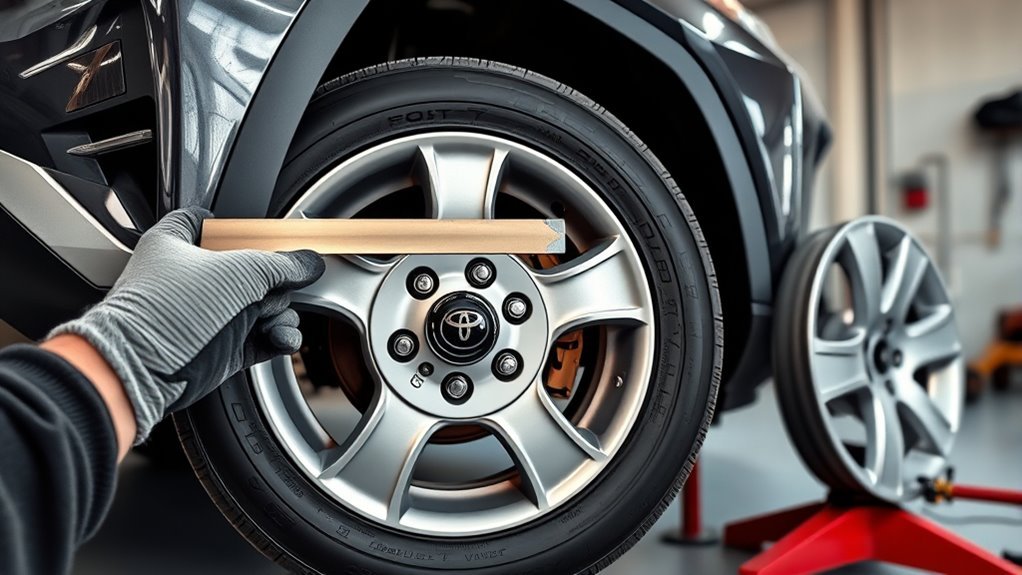
Most bent RAV4 rims come from impact damage. Common causes include potholes, curb strikes, road debris, deep driveway lips, and rough off-road or gravel-road impacts. The faster the impact and the lower the tire sidewall, the more force reaches the wheel.
Underinflated tires make the problem worse because the tire has less air pressure to cushion the rim. The National Highway Traffic Safety Administration tire-safety guide explains that proper tire pressure, vehicle load limits, road-hazard avoidance, and regular tire inspections are key steps for avoiding tire failure. Overloading your RAV4 can also add stress to the tires and wheels, so check the tire and loading placard on the driver-side door jamb and follow Toyota’s RAV4 vehicle load limit guidance.
Note: A tire can look normal and still be underinflated. Use a tire pressure gauge when the tires are cold, and compare the reading with the RAV4’s tire placard, not the maximum pressure printed on the tire sidewall.
Recognizing Signs of a Bent Rim
A bent rim can feel like a tire balance issue, alignment problem, or worn suspension part. Look for these clues after a pothole hit or curb strike:
- Steering wheel vibration: often felt at road speed, especially if the front wheel is bent.
- Seat or floor vibration: can point to a rear wheel issue.
- Rhythmic thumping or wobbling: usually from one corner of the vehicle.
- Slow tire-pressure loss: the bead may not seal correctly against the wheel.
- Uneven tire wear: a bent wheel can make the tire roll unevenly.
- Vehicle pulling or wandering: this may also indicate tire, alignment, or suspension damage from the same impact.
- Visible wheel lip damage: dents, flat spots, cracks, or fresh curb rash near the tire bead.
Warning: Do not keep driving normally if the tire is losing air, the wheel is cracked, the RAV4 shakes violently, or the rim is visibly deformed. Install the spare if safe to do so, or have the vehicle towed.
What to Do Immediately After Hitting a Pothole or Curb
- Slow down and find a safe place to stop. Avoid sudden braking or sharp steering if the vehicle is vibrating.
- Check tire pressure. If pressure is low or dropping, do not continue driving on that tire.
- Inspect the wheel and tire. Look for cracks, bulges, cuts, bead-area gaps, or a bent outer lip.
- Use the spare if needed. Follow your RAV4 owner’s manual and only change the tire on a flat, stable surface.
- Get a professional inspection. A shop can spin the wheel, measure runout, check for leaks, balance the assembly, and inspect the tire and suspension.
Repair vs. Replacement Costs: Making the Right Choice?
Repair cost depends on wheel material, bend location, wheel size, finish, and whether the tire also needs work. Minor straightening may be cheaper than replacement, but a low repair price is not worth it if the wheel is cracked, leaking, or structurally weakened.
| Damage Level | Likely Fix | Typical Cost Range | Best Choice |
|---|---|---|---|
| Small outer-lip bend, no crack, no leak | Professional straightening and balance | About $75–$150+ | Repair may make sense after inspection. |
| Moderate bend, vibration, or bead leak | Straightening, leak check, mount and balance, or replacement | About $150–$250+ repair; replacement varies widely | Compare repair quote with replacement price. |
| Crack, severe deformation, repeated air loss, or damaged bolt holes | Wheel replacement | Replacement wheel, tire service, TPMS service, and labor | Replace. Do not rely on a structural repair. |
Replacement pricing is not one-size-fits-all. Steel wheels, aftermarket wheels, used wheels, and OEM alloy wheels can have very different prices. The safest way to price a RAV4 wheel is to search by VIN or exact part number through Toyota’s official RAV4 parts catalog or a Toyota dealer.
[Products Worth Considering]

Upgrade your Toyota’s wheels with durable aluminum alloy valve stem caps that help protect valve cores from corrosion and direct exposure to road grime, clay, water, and snow. Rubber rings improve sealing to help prevent air leakage and maintain stable tire pressure for safer driving. These caps are easy to install or remove without tools and add a unique, stylish look to your car.

Upgrade your wheels with MIKKUPPA M12x1.5 mag seat lug nuts built for secure, corrosion-resistant performance. These closed-end chrome lug nuts are a direct replacement for select Toyota models, including Camry, Corolla, RAV4, Sienna, Avalon, Highlander, Matrix, Venza, and Prius. Triple-chromium plating and cold-forged, heat-treated steel help deliver strength for daily driving and replacement needs.

These M14x1.5 closed-end chrome lug nuts are a one-piece replacement designed for secure fitment on compatible GM, Ford, and select Chrysler/Dodge models. Featuring a 60-degree conical seat and anti-rust chrome plating, they help resist corrosion and maintain a bright look for everyday driving. Built for long-term durability, they include OEM-style part references and are backed by 12 months of support.
The Benefits of Professional Rim Repair Services
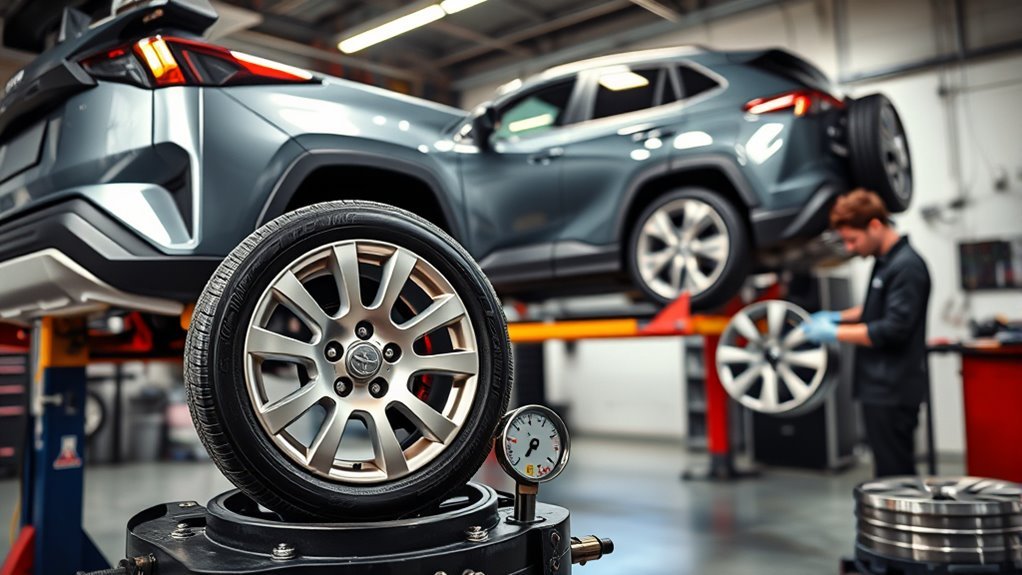
A professional wheel shop does more than look at the bend. A proper inspection usually includes spinning the wheel, checking radial and lateral runout, inspecting for cracks, checking the bead seal, balancing the wheel and tire, and looking for tire or suspension damage from the same impact.
- Runout measurement: confirms whether the wheel is still round and true.
- Leak testing: finds air loss around the bead, valve stem, or damaged rim area.
- Wheel balancing: reduces vibration after repair or replacement.
- Tire inspection: checks for sidewall bubbles, cuts, belt damage, and uneven wear.
- TPMS care: protects the RAV4’s tire pressure warning valve and transmitter during tire or wheel work.
Toyota’s RAV4 wheel guidance warns against using cracked or deformed wheels and notes that tire pressure warning valves and transmitters must be installed when wheels are replaced on vehicles with TPMS. That is why professional service is usually the safer choice for anything beyond a basic visual inspection.
[Products Worth Considering]

This VEVOR tire bead breaker uses a slide-hammer impact and wedge tip to separate tire beads from rims quickly and efficiently without damaging hub surfaces. The long handle and sturdy steel construction help reduce user strain while providing reliable, portable tire changing for cars, trucks, and more. Ideal for home mechanics and repair shops handling multiple vehicle tire sizes.

Upgrade your wheels with MIKKUPPA closed-end lug nuts designed for reliable fit and corrosion resistance. The one-piece, cold-forged and heat-treated steel construction helps resist rust and stripping, while the integrated finish delivers a durable black appearance. Built to OEM standards with a conical 60-degree seat, these nuts provide a secure solution for compatible Ford, Honda, Jeep, and Chevrolet models.

These aluminum alloy tire valve stem caps with an O-ring seal help protect valve stems from corrosion while adding a clean, stylish look to your vehicle. The universal fit works across cars, trucks, motorcycles, bicycles, and more, making them an easy upgrade for everyday driving and off-road use. Installation is quick, and the included four-pack keeps all your tires dressed and protected.
DIY Fixes for Bent Rims: Tips and Considerations
For a Toyota RAV4, the safest DIY role is diagnosis, pressure checking, and temporary wheel changing—not hammering an alloy wheel back into shape. A hammer-and-block approach can damage the wheel, tire bead, finish, or structure, and it does not confirm whether the wheel is safe at highway speed.
Tools You’ll Need
- Tire pressure gauge
- Flashlight
- Tread-depth gauge or coin
- Soapy water in a spray bottle for a simple bead/valve leak check
- RAV4 jack, lug wrench, and spare tire tools if changing the tire
- Torque wrench for final wheel-nut tightening
If you remove and reinstall a wheel, Toyota’s RAV4 flat-tire guidance lists wheel nut torque as 76 ft·lbf (103 N·m). Use the correct wheel nuts for the wheel, tighten in a crisscross pattern, and have the torque checked as soon as possible if you used the emergency lug wrench on the roadside.
Safety Precautions First
| Step | Action | Why It Matters |
|---|---|---|
| Wear safety gear | Use gloves, eye protection, and closed-toe shoes. | Bent metal and damaged tires can have sharp edges. |
| Secure the RAV4 | Park on level ground, set the parking brake, and use wheel chocks if available. | Prevents vehicle movement while inspecting or changing a tire. |
| Inspect before driving | Check for cracks, bulges, air loss, and visible rim deformation. | A leaking or cracked wheel is not safe for normal driving. |
| Balance after repair | Have the wheel/tire assembly balanced by a shop. | Balancing helps prevent vibration and uneven tire wear. |
When to Seek Help
Have the RAV4 inspected by a professional if any of these apply:
- The tire loses pressure overnight or during a short drive.
- You see a crack, flat spot, or bend near the bead seat.
- The steering wheel shakes, the vehicle pulls, or the tire thumps.
- The wheel was hit hard enough to damage the tire sidewall.
- The TPMS light comes on after the impact.
- The wheel has already been repaired once.
Pro Tip: If the RAV4 still vibrates after a wheel repair, ask for a road-force balance and a runout check. If those pass, the impact may have damaged the tire, hub, bearing, or suspension instead of only the rim.
Replacement Options: New vs. Restored Rims
If the wheel is cracked, severely bent, leaking, or structurally questionable, replacement is the safer route. Your main choices are new OEM, new aftermarket, used OEM, or professionally refurbished/remanufactured wheels. Match the wheel size, offset, bolt pattern, center bore, load rating, and TPMS compatibility for your exact RAV4 trim.
[Products Worth Considering]

Upgrade your Toyota tire setup with these corrosion-resistant, leak-proof valve stem caps designed to help protect the valve core from water, snow, and road grime. The caps feature a snug rubber seal and durable copper alloy construction to resist rust and oxidation while maintaining stable tire pressure. Ideal for replacing worn original caps and keeping your wheels looking clean and stylish.

TireJect Off-Road Tire Sealant Kit provides 5-in-1 sealing to help fix tread punctures up to 3/8", sidewall punctures up to 3/8", bead leaks, slow leaks, and minor dry rot on low-speed tires. It permanently seals with liquid rubber, recycled tire particles, and Aramid fibers, making it ideal for flats caused by thorns, nails, and screws. The included dispensing cap attaches to the valve stem for a no-mess installation, along with a metal valve core remover tool and valve stem cap. This kit is for off-road use only.

Steelman white tire marking crayons provide high-contrast, semi-permanent marks for repairing and inspecting tires and equipment. They write on wet or dry, smooth or coarse surfaces including rubber, metal, glass, and wood, making them ideal for puncture location and damage outlining. The lead- and zinc-free crayons resist weather and fading yet wipe away when you no longer need the marks.
New Rim Benefits
- Correct fit: OEM wheels are designed for the RAV4’s brake, hub, and suspension clearances.
- Known condition: no hidden pothole damage, previous straightening, or unknown weld repair.
- Clean bead seat: helps the tire seal properly.
- Warranty potential: genuine Toyota parts may include parts warranty coverage when purchased through authorized channels.
Cost of Restored Rims
A restored or remanufactured rim may save money, especially when matching a factory style. The risk is condition uncertainty. Before buying, confirm the wheel is not cracked, welded, severely straightened, or out of round. Also confirm it matches your RAV4’s year, trim, drivetrain, wheel size, and TPMS setup.
Note: A used wheel is not automatically a bad choice, but it should be inspected for cracks, runout, previous repairs, bead-seat damage, and corrosion before installation.
Aesthetic Considerations for Rims
A wheel replacement is also a visual choice. A single mismatched wheel may stand out, especially on trims with machined or dark-finish alloys. If appearance matters, compare the spoke design, finish, diameter, and part number before ordering.
- New OEM rim: best match for factory appearance and fit.
- Aftermarket rim: more style options, but fitment must be verified carefully.
- Used OEM rim: often a good match, but condition must be checked.
- Refinished rim: can look good, but quality depends heavily on the shop.
Preventive Rim Care Tips for Longevity
You cannot avoid every pothole, but you can reduce the chance of bending a rim:
- Check tire pressure monthly: cold tire pressure should match the RAV4’s tire placard.
- Avoid overloading: follow the tire and loading information label and Toyota’s load-limit guidance.
- Slow down on rough roads: impacts at speed bend wheels more easily.
- Avoid sharp curb contact: curb strikes can bend the rim lip and damage the tire sidewall.
- Inspect after hard hits: look for fresh curb rash, cracks, bulges, and pressure loss.
- Fix vibration early: driving on a vibrating wheel can wear tires and stress suspension parts.
Also keep the wheel clean, especially in winter climates where road salt can encourage corrosion around the bead seat. Corrosion can cause slow leaks even when the rim is not visibly bent.
Post-Repair or Replacement Checklist
Before you consider the job finished, confirm the following:
- The repaired or replacement wheel holds air for at least 24–48 hours.
- The wheel and tire assembly has been balanced.
- The TPMS sensor works and the tire pressure warning light is off after proper reset or driving procedure.
- The RAV4 no longer vibrates at the speeds where the problem appeared.
- The tire sidewall has no bubble, cut, or internal damage warning signs.
- The lug nuts are tightened to the correct RAV4 specification.
- Alignment is checked if the vehicle pulls, the steering wheel is off-center, or the impact was severe.
Frequently Asked Questions
Can I drive with a bent rim temporarily?
Only for a very short distance and only if the tire holds air, the vibration is mild, and there is no visible crack or severe deformation. If the tire is leaking, the RAV4 shakes badly, or the rim is visibly damaged, use the spare or call for a tow.
How long do rim repairs typically last?
A properly repaired minor bend can last for years if the wheel is not cracked, the repair is done correctly, and the wheel is balanced afterward. Severe bends, cracks, bead leaks, or repeated repairs are better handled with replacement.
Will a bent rim affect my vehicle’s alignment?
A bent rim does not automatically change suspension alignment, but it can create pulling, vibration, and uneven tire wear that feel like an alignment problem. If the impact was hard or the RAV4 pulls after the wheel is repaired or replaced, have the alignment and suspension checked.
Can I visually assess the severity of a rim bend?
You can spot obvious cracks, dents, flat spots, curb rash, and air leaks, but you cannot reliably measure wheel runout by eye. A wheel can look acceptable and still be out of round, so vibration or pressure loss should be checked by a shop.
Are there warranties for repaired rims?
Some wheel repair shops offer a limited workmanship warranty, but coverage varies. Ask whether the warranty covers straightness, leaks, finish quality, and how long the coverage lasts. Warranties usually do not cover new pothole or curb damage.
Should I repair or replace a cracked RAV4 wheel?
Replace it. A cracked wheel can leak air and may fail under load. Welding or cosmetic repair may make a wheel look better, but it does not always restore the wheel’s original strength or safety margin.
Conclusion
Fixing a bent rim on a Toyota RAV4 starts with safety, not guesswork. Check for air loss, cracks, vibration, and tire damage first. A minor bend may be repairable by a qualified wheel shop, but a cracked, leaking, severely bent, or structurally questionable wheel should be replaced. After any repair or replacement, confirm proper balance, TPMS operation, tire pressure, and wheel-nut torque before returning to normal driving.
Sources
- Toyota Owners — RAV4 Hybrid Wheels — backs wheel replacement, TPMS, genuine wheel, and defective-wheel safety guidance.
- Toyota Owners — RAV4 Vehicle Load Limits — backs load-limit and overloading safety guidance.
- Toyota Owners — RAV4 Hybrid Flat Tire Procedure — backs the 76 ft·lbf / 103 N·m wheel nut torque reference.
- NHTSA TireWise — supports tire safety, tire maintenance, and tire-pressure awareness.
- NHTSA Tire Safety Brochure — supports proper tire pressure, vehicle load limits, road-hazard avoidance, and regular tire inspection.
- Toyota Official RAV4 Parts Catalog — supports VIN- and model-specific wheel part lookup.