
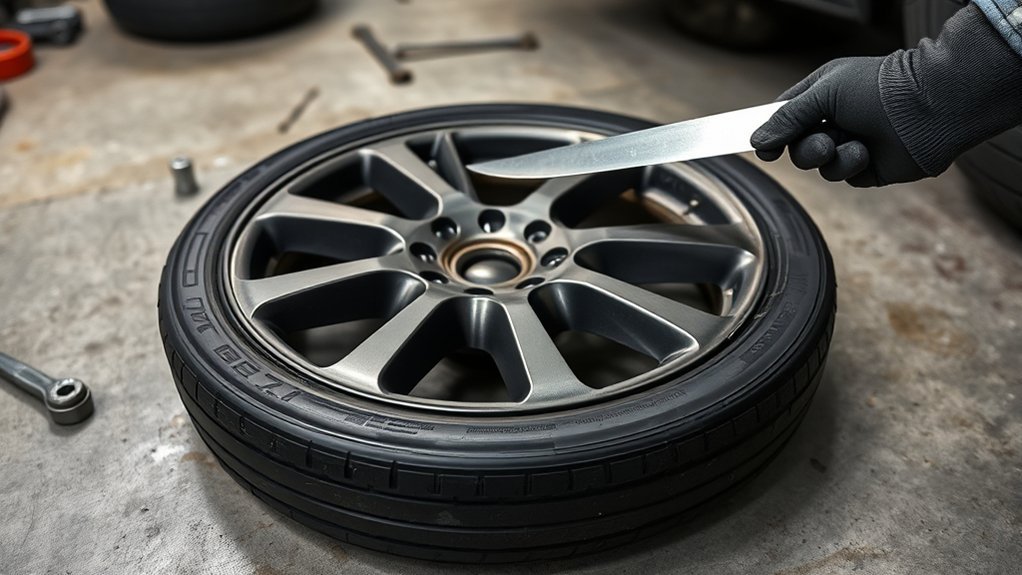
A new tire should not be mounted on a bent rim until the wheel has been inspected and the damage resolved. A bend can affect the bead seal, wheel runout, balance, and structural strength even when the tire still appears to hold air. The safest next step is to inspect the wheel, check your vehicle manufacturer’s repair rules, and repair or replace it as required.
Quick Answer
Do not mount a new tire on a rim you know is bent until the wheel has been inspected. USTMA says a bent, cracked, corroded, or damaged rim/wheel should be removed from service. A qualified shop should check the bead seat, cracks, and runout, then follow your vehicle maker’s repair or replacement rules.
Last checked: September 30, 2026. Safety guidance and figures were verified against authoritative sources.
Key Takeaways
Key Takeaways
- A rim that looks only slightly bent can still have bead-seat, runout, or hidden structural damage.
- Holding air does not prove a bent wheel is safe; the wheel also needs to run true and meet the vehicle maker’s requirements.
- Cracks, elongated lug holes, severe deformation, repeated air loss, and bead-seat damage are strong reasons to stop using the wheel.
- Some shops straighten wheels, but several vehicle manufacturers prohibit structural wheel repairs such as bending, straightening, or welding.
- A new tire can also be damaged during mounting if the wheel or tire bead is not in serviceable condition.
Can You Put a New Tire on a Bent Rim?
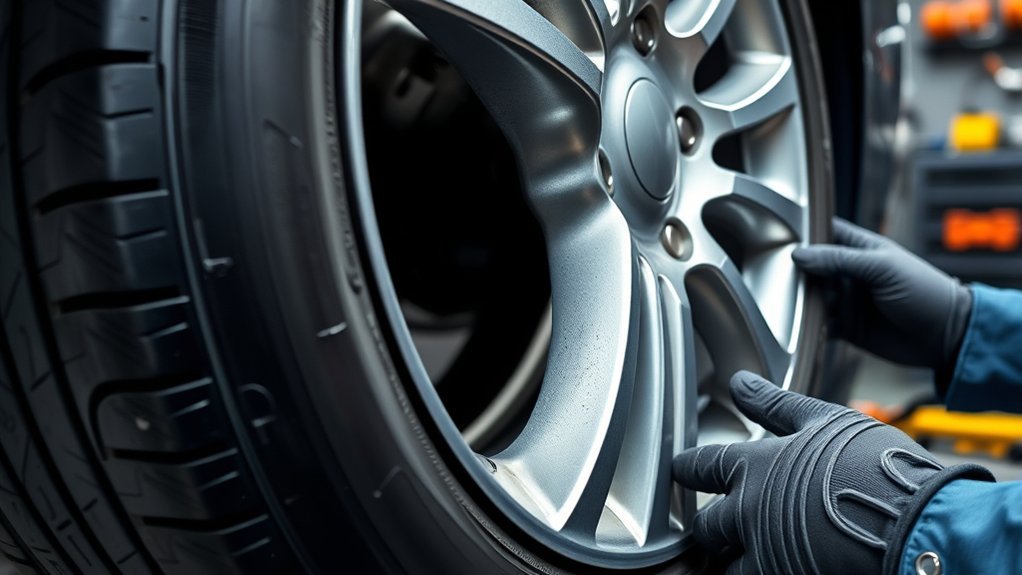
Physically, a tire may fit onto a mildly deformed wheel, but that does not mean the assembly is safe to return to service. The U.S. Tire Manufacturers Association’s Tire Care and Safety Guide lists a bent, cracked, corroded, or damaged rim/wheel among conditions that call for removal from service.
The tire bead needs a smooth, correctly shaped seating surface to seal against the wheel. A bend can also create radial runout, which makes the wheel move up and down as it turns, or lateral runout, which creates side-to-side movement.
A tire that mounts and holds air can still be on a wheel with excessive runout, hidden cracking, or damage outside the visible bead area.
Vehicle-maker rules matter too. For example, Nissan states that it does not approve steel or aluminum wheel repairs involving welding, bending, hammering, straightening, re-machining, reforming, or adding material. Other manufacturers publish their own restrictions, so a wheel that one independent repair shop is willing to straighten may still be considered non-repairable by the vehicle manufacturer.
Before you spend money mounting a new tire, have the wheel inspected. That protects the tire bead, reduces the chance of repeated leaks and vibration, and avoids paying for mounting and balancing twice if the wheel ultimately needs replacement.
How to Spot a Bent Rim Before Mounting
Start with a clean wheel and look for dents, flat spots, cracks, corrosion, or an uneven flange. Then rotate the wheel slowly and watch both the inner and outer edges for side-to-side wobble or an area that rises and falls during rotation.
Check the bead seat, which is the surface where the tire bead seals against the wheel. Damage here matters even when the visible face of the wheel still looks normal.
- Look along both wheel lips for flat spots, waviness, or sharp bends.
- Inspect around the spokes, lug holes, center bore, and valve opening.
- Clean dirt, old bead sealer, and heavy corrosion before judging the surface.
- Compare opposite sides of the rim for obvious differences in shape.
- Use a fixed pointer or dial indicator if you know how to measure runout safely.
A straight edge may reveal a local bend, but visual inspection alone cannot establish structural integrity. Many bends occur on the inner barrel, where they are difficult to see while the wheel remains on the vehicle.
If the wheel was damaged in a pothole or curb strike, inspect the tire too. The same impact can pinch or damage the sidewall, bead, or internal tire structure even when the tire does not immediately go flat.
What a Bent Rim Does to Tire Sealing
A bent wheel can prevent the tire bead from making continuous contact with the bead seat. That can create a slow leak, intermittent pressure loss, or difficulty getting the bead to seat evenly during inflation.
The exact effect depends on where the deformation is located.
| Rim issue | Sealing effect |
|---|---|
| Lip bend | Bead may not seat evenly |
| Bead-seat distortion | Air can escape at the contact surface |
| Radial or lateral runout | Wheel may wobble even if pressure initially holds |
Repeated pressure loss is especially important because driving underinflated creates heat and additional tire stress. If one tire repeatedly loses pressure and a puncture or valve leak is not found, the wheel-to-tire sealing area should be inspected.
Do not assume bead sealer is a permanent answer to a deformed wheel. The bead needs the correct wheel shape and an undamaged contact surface, not simply enough sealant to hide a mechanical problem.
When Is a Bent Rim Still Safe to Use?
Do not judge a bent wheel as safe simply because the bend looks small or the tire still holds pressure. Industry guidance and vehicle-maker rules can be stricter than what a visual inspection suggests, so serviceability should be decided after inspection against the specifications that apply to your vehicle.
USTMA’s consumer safety guidance lists a bent or damaged rim/wheel as a remove-from-service condition. Some independent wheel specialists do straighten selected wheels, but several manufacturers prohibit that type of structural repair entirely.
Bend Severity Limits
Runout is one way a shop measures how far the wheel departs from a true rotation. Radial runout measures up-and-down movement, while lateral runout measures side-to-side movement.
The federal in-use inspection standard in 49 CFR §570.10 specifies that lateral and radial runout at the rim bead area should not exceed one-eighth of an inch of total indicated runout. That figure is an inspection criterion, not universal permission to reuse every wheel below that amount.
- Use the vehicle or wheel manufacturer’s specification when one is available.
- Do not treat the federal inspection figure as a substitute for an OEM repair rule.
- Cracks, elongated bolt holes, or evidence of prohibited repair can disqualify a wheel regardless of measured runout.
- Measure both radial and lateral movement through a full revolution.
If your manufacturer prohibits straightening a structurally damaged wheel, replacement is the appropriate path even when a repair shop believes the bend can be corrected.
Bead Seal Integrity
A proper bead seal is necessary, but it is only one part of deciding whether the wheel can remain in service. Stable pressure does not rule out excessive runout, spoke damage, a hidden crack, or damage at the mounting face.
| Check | Meaning |
|---|---|
| Bead sits evenly | Sealing surface may be uniform |
| Slow pressure loss | Bead, valve, tire, or wheel needs diagnosis |
| Stable pressure | Seal is holding, but other wheel checks still matter |
| Pressure drops quickly | Stop using the assembly until inspected |
After tire installation, a service professional should verify that the bead is fully seated and that the assembly retains pressure. If the same tire repeatedly needs air, find the cause instead of continuing to top it off.
Visible Damage Checks
Visible damage can quickly rule out a wheel that should not receive a new tire. Look beyond curb rash and paint loss for changes to the metal itself.
- Check both bead seats and wheel lips.
- Look for cracks or sharp folds around the barrel and spokes.
- Inspect lug holes for elongation or distortion.
- Make sure the center bore and mounting face are not visibly deformed.
- Check for heavy corrosion around the bead seat and valve opening.
Cosmetic scuffs are different from structural deformation. If the metal has changed shape, cracked, or lost material, have the wheel evaluated before any new tire is mounted.
Signs You Shouldn’t Mount a New Tire
Do not proceed with tire installation when the wheel has obvious structural damage, cannot maintain a reliable seal, or fails the inspection criteria that apply to the vehicle. Mounting a new tire does not correct a damaged wheel.
The strongest warning signs are visible deformation, tire-bead damage, recurring air loss, cracks, and excessive wobble.
Visible Rim Deformation
A pronounced flat spot, buckle, or distorted flange shows that the wheel is no longer maintaining its intended shape. The more severe the deformation, the more likely it is to affect sealing, balance, and running true.
Check both sides because a pothole can bend the inner barrel while leaving the front face almost untouched.
- Watch the inner and outer lips while the wheel rotates.
- Look for unequal gaps between a fixed reference point and the rim.
- Inspect the spoke-to-barrel area after a hard impact.
- Check the hub-mounting surface and lug holes for distortion.
If the wheel visibly wobbles, do not assume balancing weights will solve it. Balancing corrects weight distribution; it does not straighten a physically deformed wheel.
Tire Bead Damage
A damaged tire bead can make a new or existing tire unsafe even if the wheel is later replaced. Cuts, torn rubber, broken bead wires, severe chafing, or flattened areas can prevent correct seating and weaken the tire.
USTMA warns that bead damage during mounting can lead to tire failure. Tire mounting should therefore be done by trained personnel using the correct equipment and procedure.
Warning: Do not force a tire bead over a damaged or distorted wheel flange. Tire mounting and inflation can involve enough stored energy to cause serious injury if the tire, wheel, size, or procedure is wrong.
If a bead is cut or distorted during an attempted installation, stop and have the tire inspected rather than trying to reseat it repeatedly.
Persistent Air Leaks
Repeated air loss means something in the tire-and-wheel assembly is not sealing correctly. Possible causes include a puncture, valve leak, bead damage, corrosion, or a distorted wheel.
- Check pressure with an accurate gauge.
- Inspect the valve and valve core.
- Check the bead area for bubbles during an appropriate leak test.
- Inspect the rim lip and bead seat for corrosion, cracks, and deformation.
- Stop driving if pressure falls rapidly.
Do not rely on repeated reinflation as a repair. Underinflation increases tire heat and can cause additional internal damage.
Can a Bent Rim Be Repaired First?
Some wheel-repair businesses straighten selected bent wheels, but whether your wheel should be repaired depends first on the vehicle manufacturer’s rules. A repair that is physically possible is not automatically an approved repair.
For example, Nissan’s published wheel-repair position says repairs involving welding, bending, hammering, straightening, re-machining, reforming, or adding material are not approved on its steel or aluminum wheels. It limits repair to minor cosmetic sanding or polishing that removes finish rather than metal.
Other manufacturers publish similar restrictions, while independent repair businesses may offer wheel straightening. This is why material alone does not answer the question. Steel may deform differently from aluminum alloy, but the OEM procedure for your vehicle remains the key reference.
If structural repair is permitted for your wheel, a qualified specialist should inspect it, measure runout, check for cracks, perform the approved process, and verify the finished wheel before mounting and balancing the tire.
Note: Because a wheel is a safety-critical load-bearing part, ask the vehicle manufacturer, dealer, or qualified wheel-and-tire professional whether structural repair is permitted for your exact vehicle and wheel.
Do not treat welding a cracked wheel as a routine fix. Some shops offer crack welding, but several manufacturers prohibit structural welding or reconditioning. A cracked wheel should be evaluated against the vehicle maker’s requirements before any repair is considered.
[Products Worth Considering]

Autel MX TPMS sensors combine 315MHz and 433MHz in a single easy-to-install press-in design for faster tire service. They support wireless programming with strong signal performance, and the sensors are clone-able for streamlined replacement. Built for reliability and tested to SAE standards, each sensor includes a series number for quality control.

Malco tire mounting and demounting lubricant is a ready-to-use tire lube formulated to reduce friction during tire installation for passenger cars, light trucks, farm tires, and heavy-duty equipment. It provides rust-inhibiting protection to help reduce corrosion on rims and wheels, and helps support proper tire bead seating during inflation to reduce air leakage. The silicone-free, soap-free formula is whitewall safe to help prevent discoloration on whitewall tires and sensitive sidewall markings.

Keep your tires performing with these valve core removal tools designed to quickly disassemble and reinstall standard valve cores. The compact, portable design makes it easy to carry for bicycle, motorcycle, car, or truck repairs. Durable stainless steel construction helps you handle routine tire maintenance with less hassle.
How Tire Shops Check a Bent Rim
A tire shop usually starts with a visual inspection, then rotates the wheel on equipment that makes runout easier to see or measure. This separates a simple balance problem from physical deformation of the wheel.
The technician may remove the tire if damage is hidden by the bead or inner sidewall.
- Inspect the inner and outer wheel lips.
- Look for cracks, corrosion, missing material, and bead-seat damage.
- Measure radial and lateral runout.
- Inspect the hub bore, mounting face, lug holes, and valve area.
- Check whether the tire itself has impact or bead damage.
- Compare the findings with the vehicle or wheel manufacturer’s specifications.
If the wheel is allowed to remain in service, the final tire-and-wheel assembly should be checked for correct bead seating, pressure retention, and balance.
If the shop recommends straightening, ask whether your vehicle manufacturer permits that type of repair. That question is especially important after a hard pothole strike or collision.
[Products Worth Considering]

This professional wheel and rim cleaning brush set lifts brake dust, grime, and dirt with soft, scratch-free microfiber and synthetic wool fibers. The rim brush bends up to 360 degrees for easy access to hard-to-reach areas around spokes, lips, and faces. Ideal for thorough cleaning of car, truck, motorcycle, bicycle, RV, and more wheel and tire surfaces.

These universal tire valve stem caps help protect your valve core from dust, debris, moisture, and corrosion, supporting more stable tire pressure. The aluminum alloy design resists long-term wear, while the sealing construction helps help prevent air leakage. They twist on easily for quick installation and help safeguard driving safety across cars, SUVs, trucks, and motorcycles.
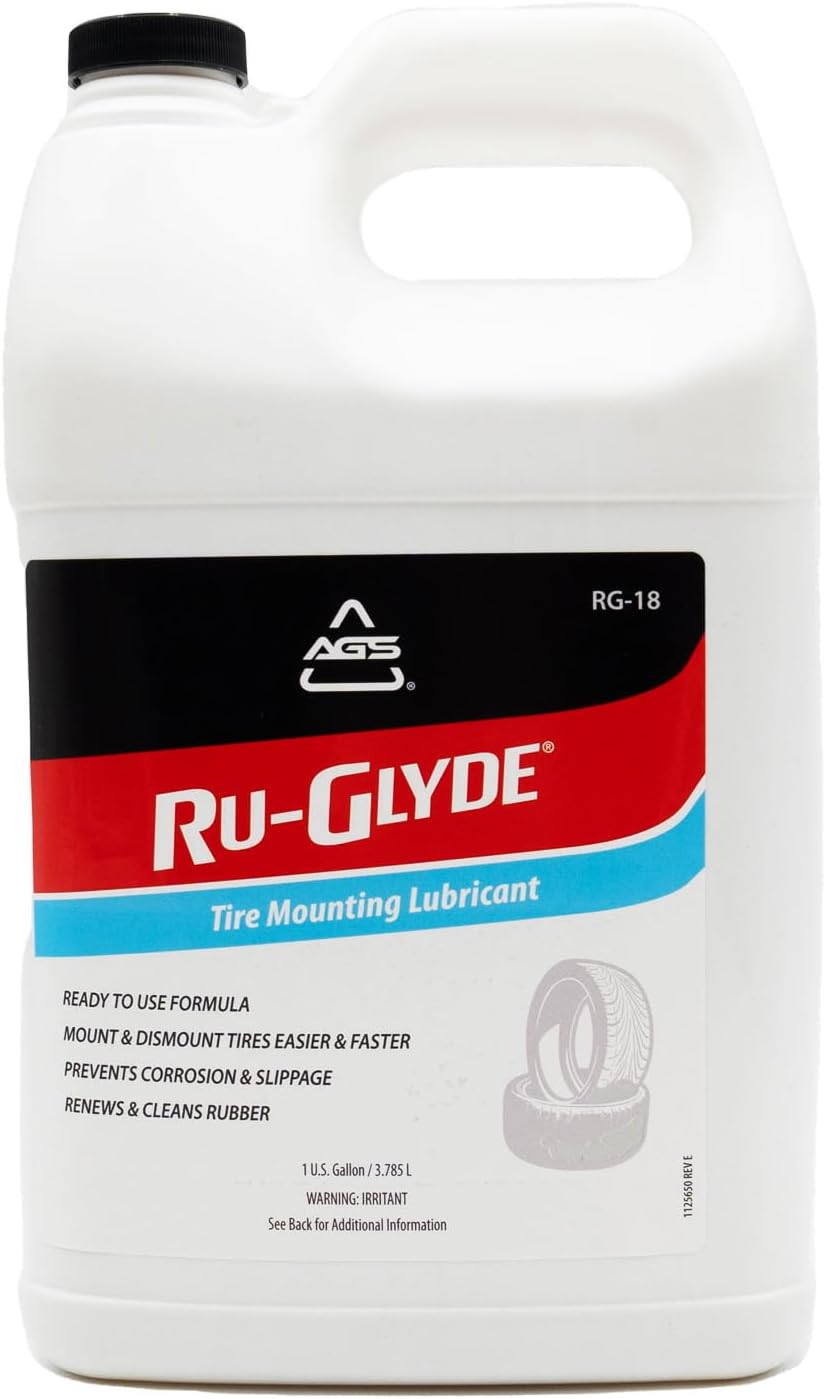
Ru-Glyde tire mounting lubricant from AGS seats tire beads smoothly on the first try with a thick, stay-put formula. It is ready to use with no mixing or dilution, helps prevent rim rust, and dries completely without causing bead slip residue. The water-based formula also conditions aged rubber, making it useful for sidewalls, gaskets, and door seals while remaining safe for tire, wheel, and technicians.
What Happens If You Ignore Rim Damage?
Ignoring a bent wheel can turn one impact into several problems. The tire may leak, wear unevenly, vibrate, or suffer additional stress if it cannot run and seal normally.
A wheel that moves side to side or up and down can also create a recurring vibration that balancing alone cannot correct. That vibration may be felt in the steering wheel, seat, or floor depending on the affected wheel and the rest of the vehicle.
If pressure is repeatedly lost, the tire can spend time underinflated. Underinflation increases heat buildup and can damage the tire internally, so the wheel problem may eventually ruin a tire that was otherwise usable.
Handling can also feel less predictable if a wheel is significantly deformed. A sudden new vibration after a pothole or curb strike should therefore be inspected rather than dismissed as a cosmetic issue.
If vibration becomes severe, pressure is dropping, or visible damage is present, reduce speed safely and stop driving when you can do so safely. Use an appropriate spare or arrange professional assistance instead of continuing at highway speed.
Bent Rim vs. Cracked Rim
A bent rim has changed shape, while a cracked rim has a fracture through the metal. Both require attention, but a crack raises a more direct structural concern because the wheel material is no longer continuous.
- A bent wheel often shows radial or lateral runout.
- A cracked wheel may leak air where the fracture reaches the bead or barrel.
- Bends can occur on the inner barrel even when the wheel face looks normal.
- Cracks may occur near the lip, barrel, spokes, lug holes, or center area.
- A crack should not be assumed safe because it is short or currently holds air.
The federal in-use inspection standard for wheel assemblies calls for no visible cracks, no elongated bolt holes, and no indication of welding repair. Vehicle manufacturers can impose additional restrictions.
Do not decide between repair and replacement from appearance alone. Use the wheel manufacturer’s or vehicle manufacturer’s specifications together with a professional inspection.
[Products Worth Considering]
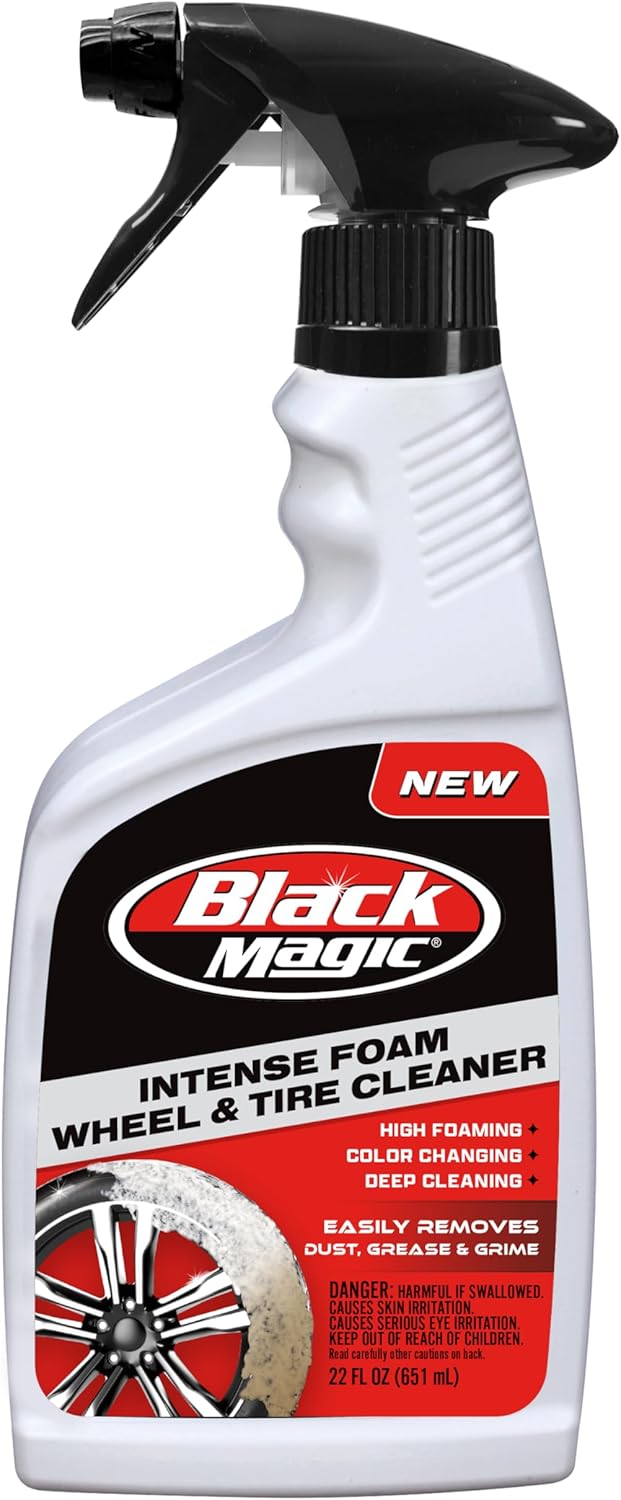
Black Magic Intense Foam Wheel & Tire Cleaner uses a high-foaming action to lift away dirt, grime, and brake dust without scrubbing. The color-changing formula helps show contaminants being dissolved as foam turns from white to brown. Safe for all wheel types and even wheel wells, it leaves a like-new, slick finish with a fresh cherry scent.

This 3-piece wheel brush set makes it easy to clean wheels and tires with soft, scratch-free brushes designed for lifting brake dust and grime. The flexible rim brush bends up to 360 degrees to reach hard-to-access areas for a thorough clean, while the comfortable grip helps control during detailing. A dedicated detailing brush supports gentle cleaning for sensitive surfaces, including interior use.

Upgrade your wheels with MIKKUPPA closed-end lug nuts designed for reliable fit and corrosion resistance. The one-piece, cold-forged and heat-treated steel construction helps resist rust and stripping, while the integrated finish delivers a durable black appearance. Built to OEM standards with a conical 60-degree seat, these nuts provide a secure solution for compatible Ford, Honda, Jeep, and Chevrolet models.
What to Do Before Replacing the Tire
Inspect the wheel before paying to mount a replacement tire. The goal is to make sure the new tire is going onto a wheel that can seal correctly, run true, and meet the applicable service requirements.
- Clean the wheel. Remove dirt, loose corrosion, old sealant, and brake dust that can hide damage around the bead seat.
- Inspect both wheel lips. Look for bends, flat spots, sharp folds, cracks, or missing metal.
- Check the bead-seat area. Heavy corrosion or deformation can prevent reliable sealing.
- Spin and measure the wheel. Check radial and lateral runout instead of relying only on appearance.
- Inspect the tire after the impact. A pothole or curb can damage the bead, sidewall, or internal structure as well as the wheel.
- Check the valve and TPMS hardware. Make sure the valve area is not damaged before installing the replacement tire.
- Confirm tire fitment. Use the correct tire size, type, load capacity, and other specifications required by the vehicle manufacturer.
- Check the OEM wheel-repair policy. If the wheel is structurally bent, find out whether straightening or other repair is permitted.
- Repair or replace the wheel first when required. Do not install an expensive new tire just to discover that the wheel still leaks or vibrates.
A straight, undamaged wheel gives the new tire the best chance to seal, balance, and wear normally.
Frequently Asked Questions
How Much Does Bent Rim Repair Typically Cost?
Bent rim repair prices vary by wheel material, size, damage, finish, and local labor. Published U.S. pricing shows simple repairs may start below $100, while one tire chain lists wheel straightening starting at $135 per wheel. Always compare the inspected repair quote with the cost of an approved replacement wheel.
Can a Bent Rim Damage My Wheel Sensors?
Yes, an impact or incorrect tire-service procedure can damage TPMS hardware mounted at the wheel. However, the specific claim that about 30% of wheel-sensor failures follow impact damage could not be confirmed from the authoritative material reviewed. Inspect the valve and sensor after a hard wheel impact or service-related damage.
How Long Can I Drive on a Slightly Bent Rim?
Do not use a known bent wheel for normal driving while waiting indefinitely for repair. If you notice rapid pressure loss, strong vibration, a crack, or major deformation, stop driving and use a suitable spare or professional assistance. Even a mild-looking bend should be inspected before continued service.
Will Tire Pressure Monitoring Detect a Bent Rim Leak?
A TPMS may warn you when a leaking tire becomes significantly underinflated, but it cannot tell you that a bent rim caused the loss. The leak could also come from the tire, valve, bead, corrosion, or another wheel problem, so the assembly still needs inspection.
Can Rim Bending Affect Highway Driving Stability?
Yes, a bent wheel can cause vibration, wobble, or a rhythmic disturbance that becomes more noticeable as road speed changes. Severe deformation or pressure loss can also affect handling. Have a new vibration after an impact checked before continuing prolonged highway driving.
Can I Straighten a Bent Rim Myself?
You should not use hammering, uncontrolled heat, or improvised straightening on a road wheel. You may worsen the deformation or create damage that is difficult to see. Some vehicle manufacturers prohibit structural wheel straightening altogether, so check the OEM policy before authorizing any repair.
Conclusion
Do not treat a bent rim as a harmless mounting inconvenience. Inspect the wheel before installing a new tire, and replace or repair it only in a way your vehicle manufacturer allows. A reliable bead seal, acceptable runout, sound metal, and correct fitment all matter; simply holding air is not enough.
Sources
- U.S. Tire Manufacturers Association, Tire Care and Safety Guide: damaged-rim removal guidance, tire inspection, impact damage, and inflation safety.
- U.S. Tire Manufacturers Association, TISB 43: tire-bead damage risks during mounting.
- Electronic Code of Federal Regulations, 49 CFR §570.10: wheel integrity and runout inspection criteria.
- Nissan North America Collision Position Statement, Steel and Aluminum Wheel Repair: manufacturer restrictions on structural wheel repair.
- National Highway Traffic Safety Administration, TireWise: tire-pressure and TPMS safety guidance.
- Capital One Auto Navigator, Bent Wheels: How to Fix Them: published repair starting-price context and wheel-material discussion.
- Sullivan Tire and Auto Service, Wheel Straightening: published wheel-straightening starting price and service information.
