
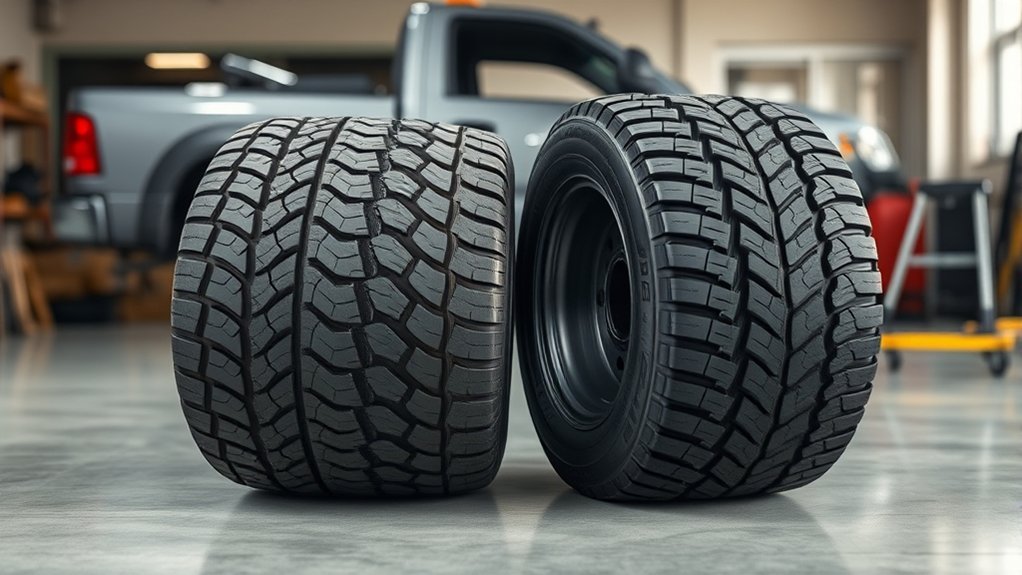
Choosing between 8 ply vs 10 ply tires is really a choice between different load capabilities, construction, pressure requirements, and driving needs. An 8-ply-rated tire can be a strong choice for everyday use when it meets your vehicle’s required capacity, while a 10-ply-rated tire may suit heavier towing and hauling. The key is to compare the actual tire specifications, not the ply number by itself.
Quick Answer
Choose an 8-ply-rated tire (commonly Load Range D) when it meets your vehicle’s required load capacity and you value a more compliant unloaded ride. Choose a 10-ply-rated tire (commonly Load Range E) when your actual towing or payload needs require its higher load-and-pressure capability. Always compare size, load index, and the manufacturer’s load-inflation data—not ply rating alone.
Key Takeaways
- Modern 8-ply and 10-ply ratings describe strength classes, not the literal number of layers inside the tire.
- Load Range D is commonly associated with an 8-ply rating, while Load Range E is commonly associated with a 10-ply rating.
- A higher load range can provide more load-and-pressure capability, but maximum capacity still depends on tire size and load index.
- Ride comfort, road noise, fuel economy, and puncture resistance also depend heavily on tread design, tire weight, construction, and inflation pressure.
- Use your vehicle specifications and the tire manufacturer’s load-inflation data before choosing a different load range.
8 Ply Vs 10 Ply Tires: Key Differences
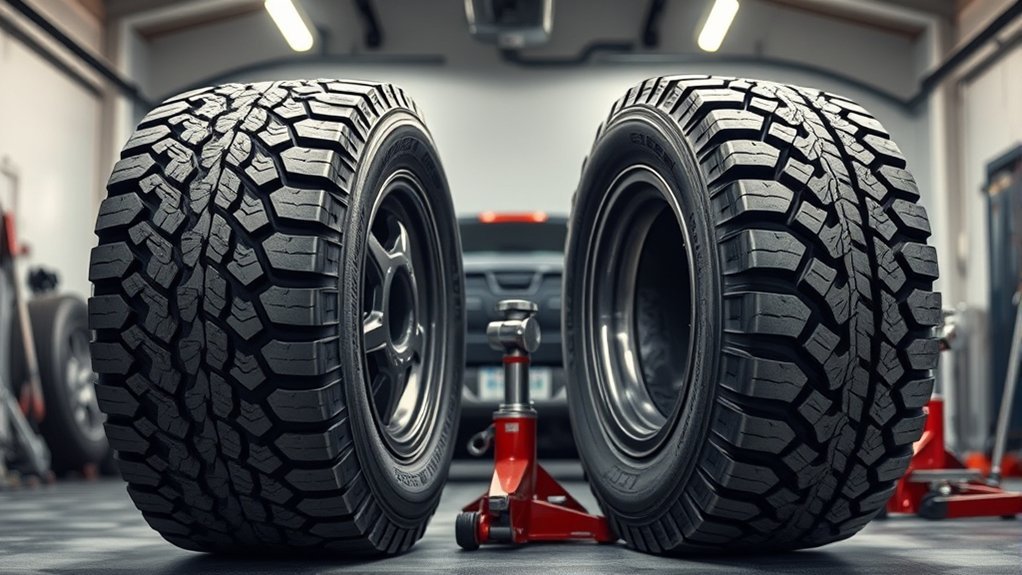
The biggest difference is the tire’s load-and-inflation capability. In modern light-truck tires, “8 ply” commonly refers to Load Range D strength, while “10 ply” commonly refers to Load Range E strength.
Those numbers do not mean a modern tire contains eight or ten physical fabric layers. A manufacturer example lists tires as 8-Ply Load Range D and 10-Ply Load Range E, while the USTMA tire care manual explains that modern radial tires commonly use only one or two body plies plus reinforcing belts and other components.
| Factor | 8 Ply | 10 Ply |
|---|---|---|
| Common LT load range | Load Range D | Load Range E |
| Load-and-pressure capability | Generally lower | Generally higher |
| Unloaded ride | Often more compliant | Often firmer |
| Best reason to choose | Meets required load with less heavy-duty construction | Higher capacity is required for the application |
There is no universal weight capacity for every 8-ply or 10-ply tire. Tire size matters. For example, one manufacturer load-inflation table lists an LT265/70R17 at 2,910 pounds of single-tire capacity at the Load Range D limit shown in that table, while the Load Range E version reaches 3,195 pounds at its higher listed pressure.
That example shows why you should compare the exact size and load table instead of assuming every “10 ply” tire carries a fixed amount more than every “8 ply” tire.
[Products Worth Considering]
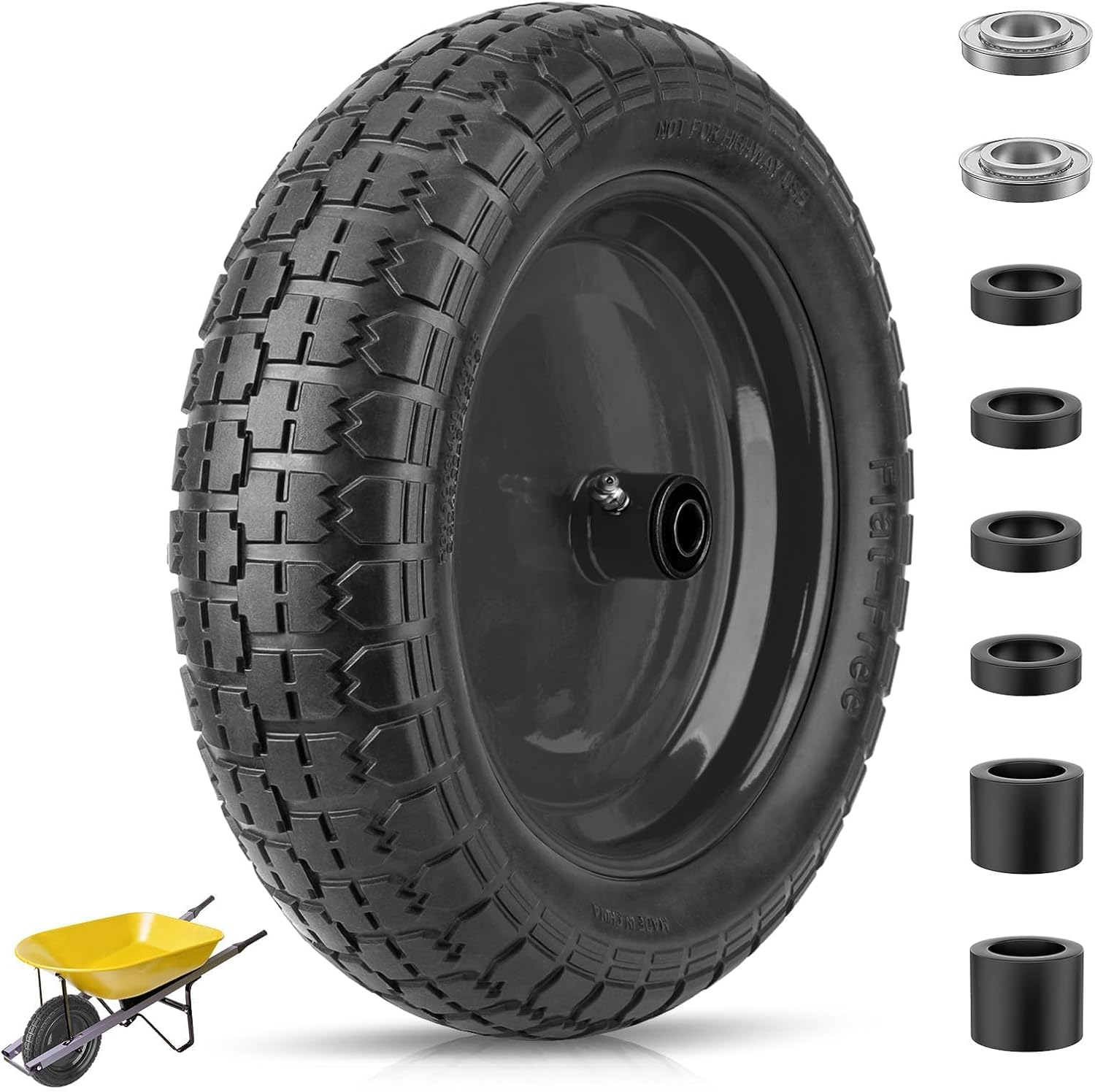
This flat-free TICONN wheelbarrow tire features durable polyurethane foam construction that never needs inflation, helping prevent punctures and reducing maintenance on rough outdoor terrain. With a 300 lb max load capacity and stable steel rim design, it supports safer transport for yard work and hauling tasks. An adapter kit with ball bearings and nylon spacers is included for easier fit and customization across common wheelbarrow and cart axle setups.

A concentrated tire and tube mounting compound designed to help simplify mounting rubber tires and tubes on passenger, semi truck, construction, and OTR applications. Its ultra-thick formula packs beads effectively and includes rust inhibitors to help protect against corrosion during use.

TP-M13W combination repair unit kit includes wrapped stems with matching patches for fast, reliable tire repairs. It’s suitable for both radial and bias ply tires and is designed for chemical or heat vulcanization. Gray vulcanizing gum with blue backing helps create a strong bond, with the stem portion wrapped for added effectiveness.
How 8 Ply Tires Compare on Load and Comfort
An 8-ply-rated tire can provide plenty of capacity for many pickups, SUVs, vans, and trailers when its published load rating meets the application. Its main advantage is avoiding more heavy-duty capability than you actually need.
However, you should not choose it simply because you expect every 8-ply tire to be lighter, quieter, or softer. Those characteristics vary between tire models.
Load Capacity Limits
An 8-ply-rated tire generally has less maximum load-and-pressure capability than a comparable 10-ply-rated version. The exact limit comes from the tire’s size, load index, load range, inflation pressure, and single or dual application.
Do not use ply rating as a substitute for the load index or load-inflation table. The tire must support the real weight placed on it while also meeting the vehicle manufacturer’s requirements.
A stronger tire also does not give the truck permission to exceed its vehicle, axle, suspension, wheel, or towing limits. Tire capacity is only one part of the complete load system.
Ride Comfort Benefits
Load Range D tires can feel more compliant than comparable Load Range E tires, especially on an unloaded truck. That difference can come from carcass construction, tire weight, and the pressure required for the load.
Still, ply rating alone does not determine comfort. Two tires with the same load range can ride very differently because of their sidewall design, tread pattern, rubber compound, tire size, and recommended inflation.
The same applies to road noise. An aggressive all-terrain or mud-terrain tread can be noisier than a highway tread regardless of whether the tire carries an 8-ply or 10-ply rating.
What 10 Ply Tires Offer for Towing and Hauling
A 10-ply-rated tire is most useful when you genuinely need the higher load-and-inflation capability commonly associated with Load Range E. This can matter on trucks that regularly carry substantial payload or tow while placing significant weight on the rear axle.
The advantage is capacity and load support, not an automatic improvement in every area of tire performance.
[Products Worth Considering]

Secure your vehicle during transport with this 4-pack of heavy-duty tire tie down straps designed for trailers and hauling. The ratchet system with flat hooks and D-rings helps you tension the straps quickly, while the wheel-friendly design protects tires. With high break strength and corrosion-resistant hardware, these straps provide reliable, confidence-inspiring tie-down security for cars, trucks, and UTVs.

Check tire pressure with the Milton S-925 pencil gauge built for trucks, RVs, and bicycles. It features a single-head chuck with a built-in deflator valve, and it displays readings in both PSI and kPa for convenient use. The gauge is designed for accurate, repeatable pressure checks within its working range.

This heavy-duty tire pressure gauge combines measurement, inflation, and deflation in one compact tool for quick roadside and garage use. Its dual-head chuck helps reach inner and outer dual-wheel positions, while the clear indicator bar makes readings easy to see. Built for durability, it supports a wide pressure range and works across cars, trucks, RVs, SUVs, and motorcycles.
Greater Load-Carrying Strength
When comparable D- and E-range tires are available in the same size, the E-range version may support a greater maximum load because it can be engineered for a higher load-and-pressure range. Always verify the actual specification before assuming that difference.
| Factor | 8 Ply | 10 Ply |
|---|---|---|
| Load range | Commonly D | Commonly E |
| Casing duty | Moderate LT service | Higher-capacity LT service |
| Deflection under load | Depends on construction and pressure | Depends on construction and pressure |
| Weight capacity | Check exact tire specification | Often higher in a comparable size |
For towing, calculate the load actually carried by the tow vehicle. Trailer tongue weight adds to the load on the vehicle, so a tire needs adequate capacity at the required inflation pressure without exceeding any vehicle ratings.
Improved Trailer Stability
A suitable higher-capacity tire can help maintain predictable tire support when the tow vehicle is heavily loaded. However, installing a 10-ply-rated tire does not fix poor trailer loading, excessive tongue weight, worn suspension parts, or an overloaded axle.
Inflation pressure is especially important. NHTSA tire-pressure guidance says to use the vehicle manufacturer’s Tire and Loading Information Label or owner’s manual for the specified pressure rather than treating the maximum pressure molded into the tire as the normal setting.
If you install a different tire type or size that requires another pressure to carry the original load, use tire- and vehicle-manufacturer fitment guidance instead of guessing.
Better Heat Resistance
A 10-ply rating does not automatically mean the tire will run cooler. Correct inflation and loading are more important because excessive flex from underinflation generates heat and stresses the tire.
The USTMA tire-pressure guidance specifically warns that underinflated tires generate excessive heat buildup and stress. It also recommends checking pressure before carrying heavy loads or towing.
Higher load capability can provide the capacity needed for demanding service, but you still need the correct cold inflation pressure for the actual load. Never use a higher load range as a reason to overload the vehicle.
8 Ply Vs 10 Ply Tires for Off-Road and Daily Driving
For daily driving and off-road use, the better choice depends on more than ply rating. Tread design, sidewall construction, tire weight, terrain, inflation, and load all affect how the tire behaves.
An 8-ply-rated tire may provide a more compliant feel, while a 10-ply-rated tire may be appropriate when greater load capacity is needed. Neither rating guarantees better traction or puncture resistance by itself.
| Condition | 8-Ply | 10-Ply |
|---|---|---|
| Rocks | May feel more compliant | Damage resistance depends on tire design |
| Mud | Tread design matters most | Tread design matters most |
| Highway | Often more compliant | Can feel firmer |
| Cargo | Suitable within rated capacity | Often provides greater capacity |
| Daily driving | Good when D meets requirements | Useful when heavier service requires E |
For rocky off-road use, look at the individual tire’s sidewall protection, tread construction, load rating, and manufacturer guidance. A Load Range E label by itself is not a standardized puncture-resistance score.
Fuel economy works the same way. Tire weight, rolling resistance, tread pattern, inflation, and size all matter, so you cannot assume every 8-ply tire will use less fuel than every 10-ply tire.
[Products Worth Considering]

Keep your tires properly inflated with this analog VONDIOR tire pressure gauge, designed for fast, easy readings without batteries. The swiveling, two-axis hose and large glow dial help you measure at any tire angle with instant visibility. Built with a protective rubber shield, it supports durable, low-maintenance use for cars and trucks.

Replace worn wheelchair rear tires with a universal 24x1 no-flat polyurethane foam option designed to mount tightly on 24-inch rims without the tire falling off. Installation is made easier with included tools and multiple methods, including using a pry bar or softening the tire in hot water to reduce resistance. The package includes two tires plus tie ropes for convenient fitting and handling.

This professional wheel and tire cleaning brush kit helps you scrub rims, hubs, spokes, and tires with scratch-free, ultra-fine bristles. The brushes can bend 360 degrees for deep reach into crevices, bolts, and intricate wheel details, while the kit supports both wet washing with cleaners and dry dust removal. Easy to rinse, quick to air-dry, and designed for convenient maintenance with hanging holes.
How to Choose the Right Ply Rating
Choose the tire by starting with your vehicle’s required size and load capacity, then determine whether Load Range D or E is appropriate for how you use the vehicle. Do not start by automatically buying the highest ply rating available.
Use this order:
- Check the vehicle’s original tire size and specifications on the tire placard or in the owner’s manual.
- Confirm the replacement tire meets the required load capacity and speed rating.
- Estimate your real passenger, cargo, accessory, and towing loads.
- Compare the exact tire’s load index and manufacturer load-inflation table.
- Confirm the wheel, tire, and vehicle are suitable for the required inflation pressure.
The USTMA replacement guidance recommends using the size, load index, and speed rating specified by the vehicle or tire manufacturer and warns against choosing a replacement with less load-carrying capacity than originally specified.
Load range tells you useful information about tire capability, but the exact size, load index, inflation requirement, and vehicle limits decide whether a tire is suitable.
Note: If you are changing from a passenger tire to an LT tire, changing tire size, or selecting a different load range than the original equipment, have a qualified tire professional confirm the fitment, required pressure, wheel capability, and load capacity.
When 8 Ply Tires Are the Better Choice
An 8-ply-rated tire is often a sensible choice when Load Range D fully satisfies the vehicle’s load requirements and you do not need the additional capacity of an E-range tire. This is common for trucks that spend much of their time unloaded or lightly loaded.
The benefit is not that 8-ply tires are universally better on pavement. It is that you can avoid buying more tire capacity, pressure capability, and often more robust construction than your actual use requires.
| Use case | 8 ply benefit | Limit |
|---|---|---|
| Highway driving | May provide a more compliant unloaded ride | Comfort still depends on tire design and pressure |
| Light towing | Adequate when rated for the actual axle load | Less maximum capacity than some E-range alternatives |
| Paved/gravel routes | Can balance LT strength and everyday use | Damage resistance is model-specific |
A 10-ply-rated tire becomes the more relevant option when the D-range alternative cannot provide the required load capacity at an appropriate pressure, or when the vehicle or tire manufacturer specifies the higher load range for the application.
Frequently Asked Questions
Do Ply Ratings Directly Indicate Tire Weight Capacity?
No. Ply rating is a strength classification, not a direct statement of how many pounds a tire can carry. Check the tire size, load index, load range, maximum load marking, and manufacturer load-inflation data to determine its actual capacity.
Can I Mix 8-Ply and 10-Ply Tires on One Vehicle?
Avoid mixing different tire specifications unless the vehicle or tire manufacturer permits the combination. Different load ranges can have different construction and pressure requirements, so matching the required size, load index, speed rating, construction, and axle fitment is the safer approach.
Do 10-Ply Tires Always Reduce Fuel Economy?
No. A 10-ply rating alone does not determine fuel economy. Tire weight, size, tread design, rubber compounds, rolling resistance, inflation pressure, vehicle alignment, and driving conditions can all affect how much energy the tire uses.
Are Ply Ratings the Same as Actual Tire Layers Today?
No. Modern ply ratings are legacy strength classifications and do not tell you the literal number of body plies inside a tire. Modern radial tires can use a small number of strong body plies along with steel belts and other reinforcement materials.
How Does Tire Pressure Affect Ride Quality in Each Ply Rating?
Inflation pressure strongly affects how a tire carries its load and how firm it feels. Higher pressure generally reduces tire deflection, while insufficient pressure creates excessive flex and heat. Use the pressure required for your vehicle and tire combination rather than inflating every tire to its sidewall maximum.
Conclusion
Choose between 8 ply and 10 ply tires by matching the tire to the load, pressure, vehicle specifications, and type of driving you actually do. Load Range D can be enough for many everyday and moderate-load applications, while Load Range E can provide additional capacity when your towing or hauling demands require it. The safest choice is the tire that meets the complete specification, not simply the highest ply rating.
Sources
- Toyo Tires load-range examples: Supports the common 8-ply/Load Range D and 10-ply/Load Range E terminology.
- U.S. Tire Manufacturers Association Care and Service Manual: Supports modern radial construction, load range, replacement fitment, and inflation guidance.
- Manufacturer load-inflation tables: Supports the load-and-pressure example and the need to match inflation to load.
- NHTSA TireWise: Supports tire sizing, vehicle placard pressure, inflation, and tire-design guidance.
- USTMA Tire Care Essentials: Supports proper inflation and heat-buildup guidance.
- USTMA Replacing Tires: Supports replacement size, load index, speed rating, and load-capacity guidance.

