

There is no single U.S. rule that makes every tire too old to sell at one exact age. Instead, you need to judge the tire by its DOT date code, condition, service and storage history, manufacturer guidance, recalls, and the law where it will be sold or installed. For normal road use, a tire that has reached a manufacturer’s maximum recommended service age should not be treated as acceptable simply because the tread still looks good.
Quick Answer
There is no universal federal sell-by age for used tires. NHTSA says some vehicle and tire makers recommend replacement between six and 10 years regardless of tread. Major tire makers such as Michelin and Bridgestone call for closer professional inspection after five years and replacement at 10 years from manufacture.
Key Takeaways
- The last four digits of the DOT Tire Identification Number show the production week and year.
- Age alone is not the only test; tread, cracking, bulges, repairs, inner-liner damage, recalls, and storage history matter too.
- A tire can become unserviceable before reaching an age limit if it is worn, damaged, improperly repaired, or deteriorated.
- Manufacturer recommendations differ, so check both the tire maker and the vehicle maker before reselling older stock.
- Used-tire requirements can vary by state, and some states prohibit installation when specific unsafe conditions are present.
How Old Is Too Old for a Tire?

For a tire being considered for resale, there is no single age that automatically answers the question in every case. The safest approach is to compare its manufacturing date with the tire maker’s and vehicle maker’s guidance, then inspect its physical condition and history.
The National Highway Traffic Safety Administration says some vehicle and tire manufacturers recommend replacing tires that are six to 10 years old, regardless of treadwear. NHTSA also warns that aging cannot always be detected just by looking at the tire.
That distinction matters when selling an older tire. A tire that is five or six years old is not automatically unsafe solely because of its age, but it deserves closer scrutiny. A tire at or beyond a manufacturer’s maximum service-life recommendation should not be represented as suitable for normal road service simply because it has deep tread.
Warning: Never rely on tread depth alone when deciding whether an older tire is fit for resale. Internal damage, aging, improper repairs, underinflation history, and heat exposure may not be obvious from the outside.
Tire Age Limits by Manufacturer
Tire manufacturers do not all describe service life in exactly the same way. That is why a seller should use the guidance for the specific tire brand and the vehicle on which it will be installed rather than applying one homemade cutoff to every tire.
[Products Worth Considering]

A concentrated tire and tube mounting compound designed to help simplify mounting rubber tires and tubes on passenger, semi truck, construction, and OTR applications. Its ultra-thick formula packs beads effectively and includes rust inhibitors to help protect against corrosion during use.

Steelman white tire marking crayons provide high-contrast, semi-permanent marks for repairing and inspecting tires and equipment. They write on wet or dry, smooth or coarse surfaces including rubber, metal, glass, and wood, making them ideal for puncture location and damage outlining. The lead- and zinc-free crayons resist weather and fading yet wipe away when you no longer need the marks.

Measure tire tread depth quickly and accurately with this LUMITECO dial gauge that reads in 1/32" increments up to 14/32". The color-coded green/yellow/red zones make it easy to judge tire wear and know when replacement is needed. A rugged, compact design with a protective pouch helps keep the gauge ready for use on cars, trucks, motorcycles, and more.
Manufacturer Age Standards
Major manufacturers generally combine age with inspection and condition. The following examples show why there is no universal six-year or 10-year rule that applies identically to every brand.
| Manufacturer | Age Guidance |
|---|---|
| Michelin | After five years of service, have the tire thoroughly inspected at least annually by a trained professional. Michelin recommends replacement at 10 years from manufacture as a precaution, even if tread remains. |
| Bridgestone | Professional inspection becomes especially important after five years. Bridgestone recommends taking tires manufactured 10 years earlier or more out of service. |
| Continental | Continental says the service life of an individual tire cannot be predicted by chronological age alone, but recommends replacing tires more than 10 years old even if they appear usable. |
These policies are documented in the current guidance from Michelin, Bridgestone, and Continental.
Vehicle manufacturers can also specify their own replacement recommendations. If the vehicle maker gives a shorter limit for the application, follow that guidance.
Brand Warranty Policies
A warranty deadline and a safe service-life recommendation are not the same thing. A tire can lose warranty coverage yet remain serviceable, or it can become unsafe because of damage long before a warranty expires.
Before selling older unused inventory, confirm the current warranty terms for that exact brand and product. Also disclose the manufacturing date instead of describing an older tire as equivalent to freshly produced stock.
How to Check a Tire’s DOT Date Code
The DOT Tire Identification Number, or TIN, gives you the manufacturing date needed to calculate tire age. On tires produced since 2000, the last four digits identify the production week and year.
- Find the marking beginning with DOT on the sidewall.
- Locate the final four numerical digits of the complete TIN.
- Read the first two digits as the production week.
- Read the last two digits as the production year.
- Record the code as part of your resale inspection.
For example, a code ending in 2319 means the tire was produced during the 23rd week of 2019. NHTSA notes that the complete TIN may appear on only one side of the tire, so you may need to inspect the inner sidewall as well.
If the date portion is missing, defaced, or unreadable, do not guess the tire’s age. Lack of a usable TIN also makes recall checking and traceability more difficult.
[Products Worth Considering]
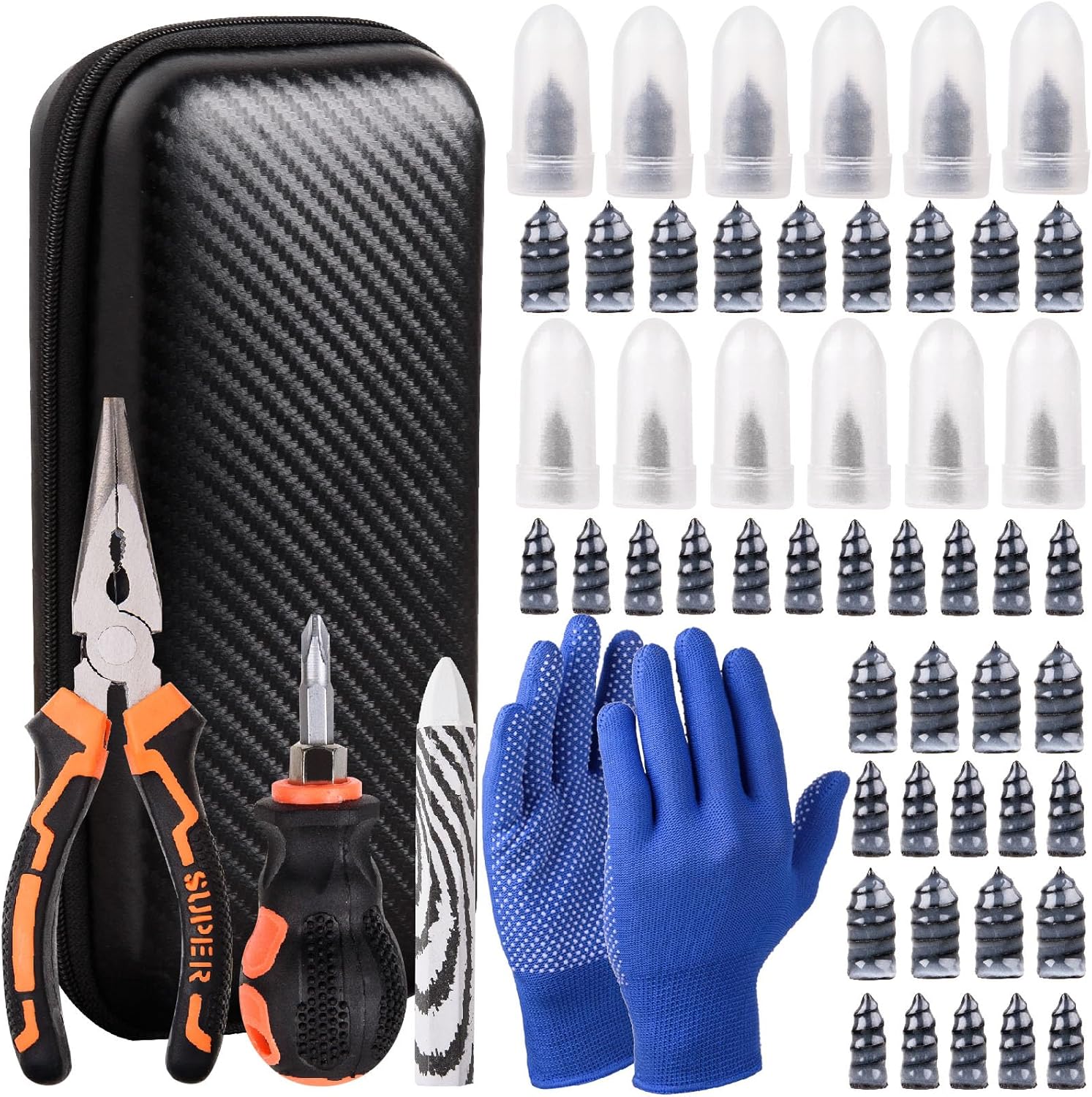
This tire sidewall puncture repair kit fixes flats fast without removing the tire, helping you get back on the road in minutes. It includes self-tapping repair nails, essential tools, gloves, and a portable storage bag for convenient roadside use. Designed for tubeless tires, it helps create a tight, leak-resistant seal for cars, motorcycles, trucks, SUVs, and ATVs.

Monitor tire tread wear with a smart, color-coded depth gauge that shows clear condition ranges at a glance. The bar is range marked for fast, easy readings, helping you maintain safer traction and performance. Each gauge is portable with a pocket clip, and the set includes 20 units for daily use and sharing.

Vigorder rubber cement glue delivers superior adhesion and cures quickly within about 30 seconds for seamless rubber bonding. Once cured, it helps provide a strong, durable, waterproof seal that holds up to vehicle weight, pressure, and heat. Suitable for cars, motorcycles, trucks, bicycles, and off-road tires, it’s designed for emergency patch and maintenance repairs.
Why Tire Age Matters Even With Good Tread
Tread depth measures wear, but it does not tell you everything about the condition of the tire’s rubber and internal structure. Time, heat, storage, inflation, load, impacts, and environmental exposure all affect tire service life.
The U.S. Tire Manufacturers Association’s used-tire guidance warns that a used tire may have an unknown maintenance, repair, and storage history. Some inner-liner damage or improper repairs cannot be properly assessed until the tire is removed from the wheel.
Rubber Aging Risks
Rubber and other tire components change as they age. Heat, sunlight, ozone, poor storage, and demanding service conditions can accelerate deterioration.
- Check the sidewalls and tread for cracking or weather checking.
- Look for bulges, blisters, cuts, or deformation.
- Verify the production date rather than estimating age by appearance.
- Ask how and where the tire was stored.
- Reject a tire if deterioration or damage makes its condition questionable.
Hidden Structural Weakness
A tire can have plenty of tread yet still contain damage that is not obvious from an exterior inspection. Prior underinflation, overloading, impact damage, improper repair, or inner-liner damage can affect its suitability for continued service.
That is especially important when evaluating a used tire from an unknown vehicle. If its maintenance and repair history cannot be established, a proper professional inspection becomes more important than the cosmetic condition of the tread.
Tread Versus Age
Age and tread answer different questions. Tread tells you how much usable rubber remains at the road surface, while age helps identify how long the tire’s materials have been exposed to storage and service conditions.
NHTSA says tires are unsafe and should be replaced once tread is worn to 2/32 inch. Age-related manufacturer recommendations can require removal even when considerably more tread remains.
For resale, check both. A young tire with severe damage can be unacceptable, and an old tire with deep tread can also be beyond its recommended service life.
Signs a Tire Is Too Old to Sell
Visible aging damage is a strong reason not to sell a tire for road use, regardless of its DOT date. Inspect the entire tire, not just the tread face that is easiest to see.
Look for cracking, weather checking, hard or damaged-looking rubber, bulges, blisters, distorted areas, exposed reinforcing material, damaged beads, irregular tread, and evidence of separation. Persistent air loss is another reason for professional inspection.
Also check the inner liner after demounting a used tire. A clean exterior does not prove that the inside has never been damaged by low-pressure operation or an improper repair.
Note: If you are selling or installing used tires professionally, have a trained tire technician evaluate questionable tires. A visual age check alone cannot establish that a used tire is safe for continued service.
When Used Tires Should Be Rejected
A used tire should be rejected when it has unsafe wear, structural damage, an unacceptable repair, an unresolved recall, or deterioration that makes continued road service questionable. These defects matter even when the tire is relatively young.
- Tread at or below 2/32 inch
- Exposed cords or reinforcing plies
- Bulges or signs of internal separation
- Inner-liner or bead damage
- Sidewall or shoulder damage that is not safely repairable
- Severe cracking or other deterioration
- A missing or defaced identification number where traceability is required
- An improper puncture repair
For passenger and light-truck tires, USTMA repair guidance limits repairable punctures to the tread area and to no more than 1/4 inch (6 mm) in diameter. The tire must be removed from the wheel for inspection, and a proper repair uses both a repair stem and an inner-liner patch; a plug alone is not an acceptable industry repair.
Before resale, also search the tire’s identifying information in the NHTSA recall database. A tire affected by an unresolved safety recall should not be returned to normal road service as though no recall exists.
What Rules Apply to Used Tires?
There is no single nationwide U.S. age-based sell-by rule for all used tires. Federal tire requirements, recalls, state vehicle-equipment rules, consumer-protection laws, and industry safety recommendations can all affect a resale decision.
State requirements are not identical. For example, Ohio Revised Code Section 1345.022 prohibits a supplier from installing an “unsafe used tire” on specified passenger cars. Its criteria include tread at 2/32 inch or less, exposed reinforcing plies, certain improper repairs, inner-liner or bead damage, a defaced or removed DOT TIN, and indications of internal separation.
That example should not be treated as the law in every state. Before selling or installing used tires, confirm the rules in the jurisdiction where the transaction and installation take place.
Keep an inspection record with the DOT date code, tread depth, visible condition, repair history if known, and the disposition of rejected tires. Documentation does not make an unsafe tire safe, but it supports a consistent inspection process.
How to Store Used Tires Properly
Proper storage slows avoidable deterioration, although it does not stop the aging clock. Keep tires indoors in a clean, cool, dry area away from direct sunlight, heat, ozone-producing equipment, fuels, oils, and solvents.
Store tires in a clean, dry, cool place away from sunlight, ozone, fuels, and chemicals.
The storage position also depends on whether the tire is mounted on a wheel. According to Michelin’s tire-storage guidance, tires mounted on rims can be stacked or hung. Unmounted tires should stand upright rather than being stacked or hung.
- Clean and dry tires before long-term storage.
- Keep them away from direct sunlight and heat sources.
- Keep gasoline, oil, solvents, and similar chemicals away from the rubber.
- Avoid electric motors, generators, welding equipment, and other ozone sources.
- Store unmounted tires upright and shift their position periodically.
- Store mounted tires according to the tire maker’s instructions.
Poor storage can accelerate aging. It cannot be corrected later simply by cleaning the tire or finding that its tread still looks unused.
[Products Worth Considering]

The Airmoto portable tire inflator quickly and accurately fills car, truck, SUV, motorcycle, and bicycle tires up to 120 PSI with auto shut-off when your target pressure is reached. Its large LCD, multi-unit pressure display, and digital gauge make it easy to dial in settings and verify readings, while the built-in LED flashlight helps in low light. The included polyurethane hard carrying case and storage mesh pocket keep the inflator and accessories protected and organized.

This screw-in tire plug kit offers quick, DIY tire repairs for punctures from nails, screws, and sharp debris. Simply screw the vacuum tire mending nail into the puncture for a fast roadside fix, designed to create a strong, air-tight seal. It fits most tubeless tires for cars, trucks, motorcycles, and more, helping you avoid costly replacements until professional service is available.

The SAFELIFE dial tire tread depth gauge measures tread depth in 1/32 inch increments with clear, easy-to-read 2-inch dial face. Color zones using a traffic light system help you quickly judge whether tread is low, marginal, or ample for safer driving. Built with a durable zinc cast body and a metal detect probe for precise, comfortable use across cars, motorcycles, trucks, and buses.
Sell Or Scrap An Aged Tire
The decision should be based on serviceability, not on whether someone is willing to buy the tire. Start with the DOT date, then inspect condition, repairs, recall status, storage history, and applicable manufacturer and legal requirements.
As a practical resale policy, treat tires approaching the manufacturer’s inspection threshold more cautiously and document their condition. Do not sell a tire for normal road use after it has reached the applicable manufacturer or vehicle maker’s maximum recommended service life.
Scrap or recycle tires with structural damage, serious age deterioration, unrepairable injuries, unsafe tread depth, evidence of separation, or other disqualifying defects. Do the same when an inspection cannot establish that a questionable tire is fit for service.
That approach protects the buyer better than relying on appearance alone and gives you a repeatable standard for older inventory.
Frequently Asked Questions
Can a Tire Age Vary by Storage Conditions?
Yes. Heat, sunlight, ozone, chemicals, moisture, and poor storage can accelerate deterioration, while proper indoor storage reduces unnecessary exposure. Storage does not stop aging, so you still need to use the DOT manufacture date and the applicable manufacturer guidance.
Do Winter Tires Have Different Age Limits?
Not as a universal rule. Follow the winter tire manufacturer’s service-life guidance and inspect age, tread, cracking, damage, and storage history just as you would with other tires. Do not assume a winter tire is serviceable simply because its tread blocks remain deep.
Are Run-Flat Tires More Sensitive to Aging?
There is no universal shorter age limit for every run-flat tire. Use the tire manufacturer’s specific guidance and inspect for damage, pressure-loss history, repairs, and age. Run-flat designs can also have manufacturer-specific restrictions on whether a damaged tire may be repaired.
Does Tire Age Affect Resale Value?
Yes. An older manufacturing date gives the buyer less remaining time before manufacturer age recommendations become relevant, even if the tread is deep. Disclosing the DOT date and known storage and service history lets the buyer judge the tire accurately.
Can Retreading Extend a Tire’s Sellable Life?
Retreading can return a suitable casing to service, but it does not erase the casing’s age or make damaged material acceptable. The casing still has to meet the retreader’s inspection requirements and any regulations or manufacturer restrictions that apply to its intended use.
Is There a Federal Age Limit for Selling a Used Tire?
There is no single federal age-based sell-by limit that applies to every used tire. Age recommendations come from tire and vehicle manufacturers, while states can impose their own requirements for unsafe tires, tread depth, repairs, or installation.
Can You Sell a 10-Year-Old Tire With Good Tread?
You should not treat good tread as proof that a 10-year-old tire is suitable for road service. Michelin and Bridgestone recommend replacement at 10 years from manufacture, and Continental recommends replacing tires manufactured more than 10 years earlier even when they still appear usable.
Conclusion
A tire is too old to sell for normal road service when it has reached the applicable manufacturer or vehicle maker’s retirement recommendation, or when its condition makes it unsafe sooner. Read the DOT date code, inspect the entire tire, check repairs and recalls, and apply local law rather than judging it by tread alone.
Sources
- National Highway Traffic Safety Administration TireWise: tire aging, DOT date codes, tread depth, and manufacturer replacement ranges.
- Michelin — When to Replace Tires: five-year inspection and 10-year replacement guidance.
- Bridgestone — Replacement Guidance: inspection after five years and replacement at 10 years.
- Continental — How Long Does a Tire Last?: condition-based service life and 10-year removal recommendation.
- U.S. Tire Manufacturers Association — Used Tires: risks from unknown use, storage, maintenance, and hidden damage.
- USTMA — Tire Repair Basics: repairable tread-area puncture limits and proper repair procedure.
- Ohio Revised Code Section 1345.022: example of state unsafe-used-tire installation criteria.
- Michelin — Storing My Tires: storage conditions and positioning for mounted and unmounted tires.

