
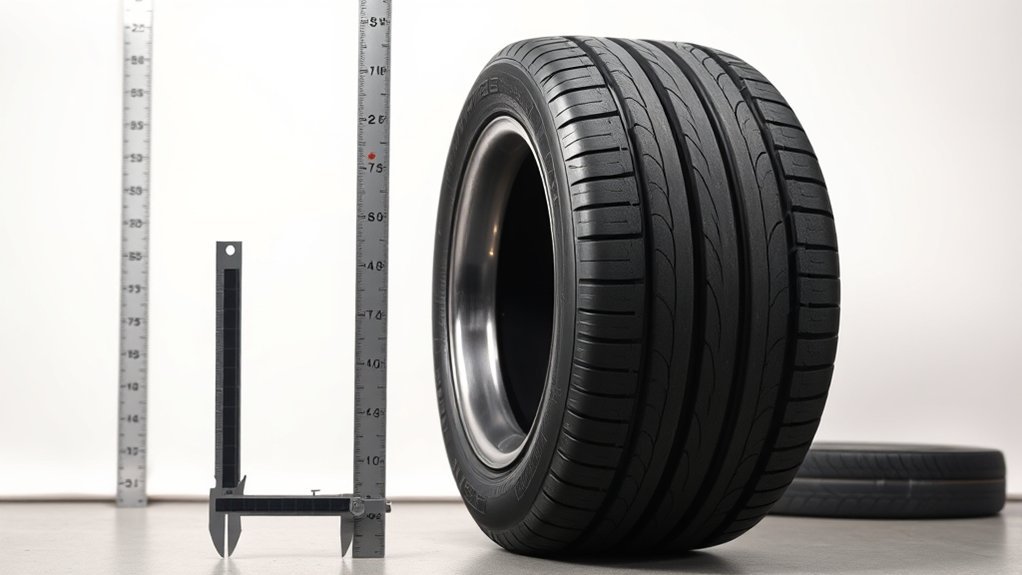
A 265 tire is about 10.4 inches wide, but that number only tells you the tire’s nominal section width. To know the tire’s height, you need the full size code, such as 265/70R17. In that common size, the tire is about 31.6 inches tall, which makes it closer to a 32-inch tire than a true 33-inch tire.
Quick Answer
A 265 tire is about 10.4 inches wide because 265 millimeters equals 10.43 inches. Its height depends on the full tire size. A 265/70R17 is about 31.6 inches tall, with a 7.3-inch sidewall, so it is usually called a 32-inch tire, not a true 33.
Key Takeaways
- A 265 tire has a nominal section width of about 10.4 inches.
- The number 265 does not tell you the full tire height by itself.
- A common 265/70R17 tire measures about 31.6 inches tall.
- A 265/70R17 is closer to a 32-inch tire than a true 33-inch tire.
- Changing tire size can affect clearance, gearing feel, odometer readings, and speedometer accuracy.
What Is a 265 Tire in Inches?
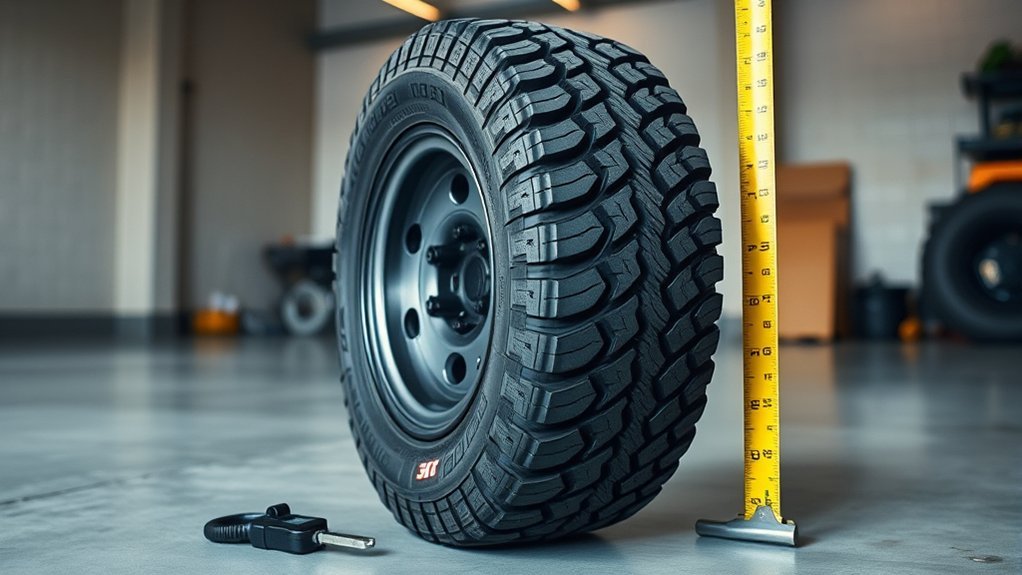
A 265 tire is about 10.4 inches wide. The 265 number is the tire’s nominal section width in millimeters, measured from sidewall to sidewall. Tire makers use millimeters for this part of metric tire sizing, so the conversion is simple:
265 mm ÷ 25.4 = 10.43 inches
That does not mean every 265 tire is the same height. A tire marked 265/50R20, 265/70R17, and 265/75R16 can all have the same nominal width but different overall diameters. The full code matters because the second number is the aspect ratio, and the final number is the wheel diameter.
For tire markings, Michelin explains that the first number is the nominal section width in millimeters, while the aspect ratio shows sidewall height as a percentage of that width. Bridgestone also notes that the rim diameter is listed in inches after the construction letter.
Note: “265” answers the width question. To answer the height question, you need the full tire size, such as 265/70R17.
How Wide Is a 265 Tire?
A 265 tire is about 10.4 inches wide. More precisely, 265 millimeters converts to 10.43 inches. This width is the nominal section width, so the real measured width can vary slightly by tire model, tread design, load range, and wheel width.
Compared with a 245 tire, a 265 tire is about 20 mm wider, or roughly 0.8 inch wider. Compared with a 285 tire, a 265 tire is about 20 mm narrower. That width change can affect steering feel, contact patch shape, sidewall position, and fender clearance.
265 Width in Inches
| Measurement | Value |
|---|---|
| Nominal width | 265 mm |
| Width in inches | 10.43 inches |
| Rounded width | About 10.4 inches |
Width Compared to 245, 275, and 285
Width comparisons are easy because the first number is in millimeters. A 265 tire sits in the middle of many common truck and SUV sizes.
| Tire Width | Approx. Inches | Compared With 265 |
|---|---|---|
| 245 mm | 9.6 in | About 0.8 in narrower |
| 265 mm | 10.4 in | Baseline |
| 275 mm | 10.8 in | About 0.4 in wider |
| 285 mm | 11.2 in | About 0.8 in wider |
How Tall Is a 265 Tire?
A 265 tire’s height depends on the aspect ratio and wheel diameter. For example, a 265/70R17 is about 31.6 inches tall, but a 265/50R20 is much shorter even though both tires start with 265.
Here is the basic math for a 265/70R17:
- Width: 265 mm, or 10.43 inches
- Aspect ratio: 70%, so sidewall height is 70% of 265 mm
- Sidewall height: 185.5 mm, or about 7.3 inches
- Wheel diameter: 17 inches
- Overall diameter: 17 + 7.3 + 7.3 = about 31.6 inches
The formula is:
Overall tire diameter = wheel diameter + 2 × sidewall height
What Does 265/70R17 Measure?
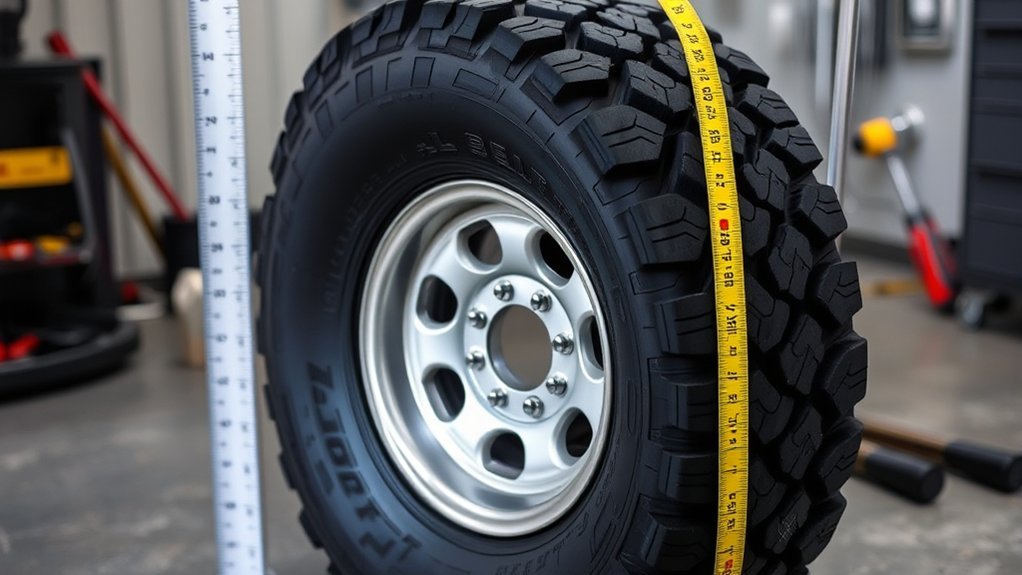
A 265/70R17 tire measures about 31.6 inches tall, about 10.4 inches wide, and has a sidewall height of about 7.3 inches. It fits a 17-inch wheel because the final number in the size code is the rim diameter.
| 265/70R17 Measurement | Approx. Value |
|---|---|
| Section width | 10.4 inches |
| Sidewall height | 7.3 inches |
| Wheel diameter | 17 inches |
| Overall diameter | 31.6 inches |
| Circumference | About 99.2 inches |
| Revolutions per mile | About 638 |
This is why a 265/70R17 is often grouped with “32-inch” tires. It is close to 32 inches, but it is not a true 33-inch tire.
Is a 265 Tire the Same as a 33?
No, a 265 tire is not automatically the same as a 33-inch tire. A common 265/70R17 is about 31.6 inches tall, so it is closer to a 32-inch tire. A true flotation size such as 33×12.50R17 is designed around a 33-inch overall diameter and is also much wider than a 265 tire.
Some metric tires are marketed close to 33 inches. For example, 285/70R17 is often treated as a near-33-inch size because it is about 32.7 inches tall. A 285/75R17 is taller again at about 33.8 inches. Those are not the same as a 265/70R17, and they may require more clearance.
Warning: Do not buy tires based only on the “32” or “33” nickname. Check the full tire size, approved rim width, load index, speed rating, wheel offset, suspension clearance, and the vehicle tire placard before installing a larger tire.
How Does a 265 Compare to 245, 275, and 285?
To compare tire sizes fairly, use the same aspect ratio and wheel diameter. The table below compares common /70R17 examples. If the aspect ratio or wheel diameter changes, the height changes too.
| Size | Width | Sidewall | Overall Diameter | Compared With 265/70R17 |
|---|---|---|---|---|
| 245/70R17 | 9.6 in | 6.8 in | 30.5 in | Narrower and about 1.1 in shorter |
| 265/70R17 | 10.4 in | 7.3 in | 31.6 in | Baseline |
| 275/70R17 | 10.8 in | 7.6 in | 32.2 in | Wider and about 0.6 in taller |
| 285/70R17 | 11.2 in | 7.9 in | 32.7 in | Wider and about 1.1 in taller |
A wider tire can add road contact, but wider is not always better. It can also add weight, increase rolling resistance, change steering feel, and create rubbing at the fender liner, upper control arm, mud flap, or bumper edge. Always compare the new size with your original equipment tire size before buying.
[Products Worth Considering]

AUTOWN’s 68-piece tire repair kit helps you fix punctures and plug flats quickly and effectively. It includes a T-handle and spiral probe tool for easy insertion, while the steel patch and plug materials are designed for strong adhesion and long-lasting airtight performance. The compact case makes it convenient for roadside repairs across a wide range of vehicles.

Upgrade your 2024-2026 Tesla Model 3 Highland with REEVAA all-weather mud flaps designed for seamless fit along the original body lines. The set of four delivers strong splash protection against mud, gravel, and road debris while using OEM-grade durable materials. Installation is non-destructive with original hole positions and snap-in clips, and the aerodynamic design helps minimize impact on efficiency.

ETENWOLF T300 is a calibrated digital tire pressure gauge for accurate readings from 3 to 200 PSI across light and heavy-duty vehicles. It includes thermal compensation for reliable performance in extreme cold or heat, with an auto shut-off to extend battery life and an LED for easier reading. The sturdy design supports rugged everyday use, making it ideal for pickups, RVs, and industrial applications.
Rim Fit Considerations for a 265 Tire
Rim width depends on the exact 265 tire size and tire model. A common 265/70R17 passenger tire is often approved for roughly 7 to 9-inch wheels, while some LT versions are listed closer to 7 to 8.5 inches. However, you should always confirm the approved rim-width range on the tire manufacturer’s spec sheet.
Also check:
- Wheel diameter: the tire’s rim size must match the wheel diameter exactly.
- Load index: the replacement tire must meet or exceed the vehicle requirement.
- Speed rating: follow the vehicle manufacturer’s required rating.
- Wheel offset: offset changes where the tire sits inside the wheel well.
- Clearance: check full steering lock, suspension compression, fender liners, brake components, and mud flaps.
- Inflation pressure: use the vehicle placard or tire professional guidance, not just the maximum pressure on the sidewall.
NHTSA’s TireWise safety guidance is a good starting point for tire care, pressure, recalls, and safety basics.
[Products Worth Considering]

Measure tire tread depth quickly and accurately with this LUMITECO dial gauge that reads in 1/32" increments up to 14/32". The color-coded green/yellow/red zones make it easy to judge tire wear and know when replacement is needed. A rugged, compact design with a protective pouch helps keep the gauge ready for use on cars, trucks, motorcycles, and more.

This VEVOR tire bead breaker uses a slide-hammer impact and wedge tip to separate tire beads from rims quickly and efficiently without damaging hub surfaces. The long handle and sturdy steel construction help reduce user strain while providing reliable, portable tire changing for cars, trucks, and more. Ideal for home mechanics and repair shops handling multiple vehicle tire sizes.

This digital tire pressure gauge with built-in inflator helps you accurately check and adjust tire pressure for safer driving and better fuel efficiency. It supports multiple units (PSI, KPA, BAR, KG/CM²) and reads within 1% for reliable results. The 3-in-1 design inflates, deflates, and measures, with a quick-connect air chuck and compatible hose setup for cars, trucks, SUVs, RVs, and motorcycles.
Will a 265 Tire Affect Speedometer Accuracy?
Yes, a 265 tire can affect speedometer accuracy if its overall diameter is different from the tire your vehicle was calibrated for. The direction of the error depends on whether the new tire is larger or smaller than the original tire.
- Larger-than-stock tire: the vehicle travels farther per wheel rotation, so the speedometer usually reads lower than your actual speed.
- Smaller-than-stock tire: the vehicle travels less distance per wheel rotation, so the speedometer usually reads higher than your actual speed.
For example, if your vehicle came with a 245/70R17 tire at about 30.5 inches tall and you switch to a 265/70R17 at about 31.6 inches tall, the new tire is about 3.6% larger in diameter. If the speedometer shows 60 mph, your actual speed may be about 62 mph, assuming no recalibration.
Pro Tip: Compare the new tire against your original tire size, not against a generic 265 number. That gives you the real percentage change for speedometer, odometer, gearing feel, and clearance.
Fitment Checklist Before Switching to 265 Tires
Before moving to a 265 tire, especially from a narrower stock size, check the full setup instead of relying on the width alone.
- Find your original tire size on the driver-door placard or in the owner’s manual.
- Compare overall diameter, width, circumference, and revolutions per mile.
- Confirm the new tire’s load index and speed rating meet the vehicle requirement.
- Check the tire maker’s approved rim-width range.
- Inspect clearance at full steering lock in both directions.
- Check suspension and fender clearance with the vehicle loaded.
- Confirm whether the speedometer or ECU needs recalibration.
- Ask a qualified tire shop if the size is outside your vehicle’s recommended range.
Specs can vary by tire model. For example, BFGoodrich and Goodyear both list multiple 265/70R17 options with different load ranges, speed ratings, and intended uses. That is why the exact tire model matters.
[Products Worth Considering]

AZUNO’s digital tire inflator delivers stable, accurate pressure readings with a bright LCD and a 0.1 resolution display for confident inflation. It supports one-handed operation for inflating and quick deflating, and it’s built with rugged steel and brass components for reliable shop or garage use. With multi-unit pressure display and compatibility across cars, SUVs, motorcycles, and trucks, it’s a convenient accessory for everyday tire maintenance.

Protect your spare wheel with a waterproof, dustproof tire cover made to resist sun and harsh weather. The elastic band design makes it easy to install and remove without tools, while reinforced stitching helps it keep its shape. Available in multiple sizes, it fits common RV, trailer, Jeep, SUV, and truck spare tires.

Switch to tubeless with this Muc-Off rim tape designed to create an airtight seal for smooth-running setups. The pressure-sensitive adhesive offers the right stretch for strength and durability, while the semi-transparent material helps you locate the valve hole quickly. It includes four seal patches for a secure finishing seal after wrapping.
Frequently Asked Questions
Is a 31-inch tire the same as a 265?
Not exactly. A 31-inch tire describes overall diameter, while 265 describes nominal width in millimeters. A 265/70R17 is about 31.6 inches tall, so it is close to a 31-to-32-inch tire, but “265” by itself does not guarantee a 31-inch diameter.
What size is a 33-inch tire?
A true flotation 33-inch tire may be labeled 33×12.50R17, 33×12.50R18, or a similar size. In metric sizing, 285/70R17 is often close to 33 inches at about 32.7 inches tall, while 285/75R17 is taller at about 33.8 inches. Always check the manufacturer’s actual diameter.
Is a 265 tire the same as a 33?
No. A common 265/70R17 is about 31.6 inches tall, so it is closer to a 32-inch tire. Some other 265 sizes can be taller or shorter, but a 265 width does not automatically equal a 33-inch tire.
Is a 265 or 285 tire taller?
If the aspect ratio and wheel diameter are the same, a 285 tire is taller than a 265 tire because the sidewall height is calculated as a percentage of tire width. For example, 285/70R17 is about 32.7 inches tall, while 265/70R17 is about 31.6 inches tall.
Can I replace 245 tires with 265 tires?
Sometimes, but it depends on the full size, wheel width, offset, clearance, load index, and speed rating. A 265 is about 0.8 inch wider than a 245, and if the aspect ratio is the same, it will usually be taller too. Check fitment before installing.
What rim width do I need for 265/70R17 tires?
Many 265/70R17 passenger tires are approved for about 7 to 9-inch wheels, while some LT versions may list about 7 to 8.5 inches. The correct answer depends on the exact tire model, so always confirm the approved rim-width range in the manufacturer’s specifications.
Conclusion
A 265 tire is about 10.4 inches wide, but its height depends on the full tire code. A common 265/70R17 measures about 31.6 inches tall, so it is usually considered a 32-inch class tire rather than a true 33. If you are comparing 245, 265, 275, and 285 tires, compare the full size, not just the first number. That keeps your fitment, clearance, speedometer accuracy, and driving feel much easier to predict.
Sources
- Michelin: Tire Markings Explained — supports tire width, aspect ratio, rim diameter, load, speed, and pressure-marking explanations.
- Bridgestone Americas: How to Read & Determine Tire Size — supports tire-size code structure, aspect ratio, rim diameter, load index, and speed rating guidance.
- NHTSA TireWise — supports tire safety, pressure, recall, and consumer-awareness guidance.
- BFGoodrich 265/70R17 Tire Options — supports real-world 265/70R17 fitment examples across tire models and load ranges.
- Goodyear 265/70R17 Tire Options — supports current availability of 265/70R17 tires across multiple models and specifications.

