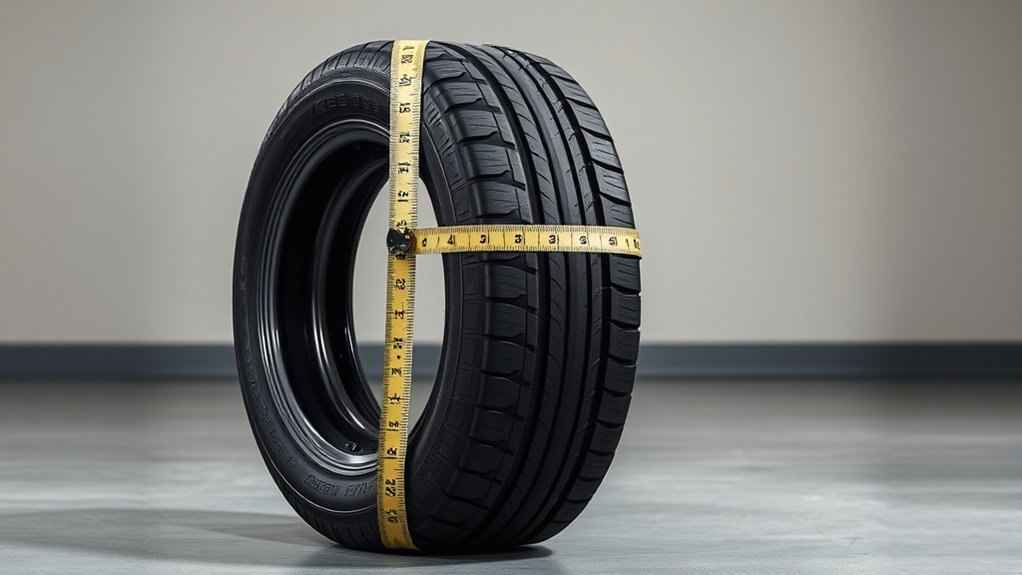
A 305 tire is 305 millimeters wide, which is about 12.0 inches. That number tells you the tire’s nominal section width, not its full height. To know how tall a 305 tire is, you also need the aspect ratio and wheel diameter, such as 305/70R18 or 305/75R16.
Quick Answer
A 305 tire is about 12.0 inches wide. It is not automatically a 33-inch or 35-inch tire because height depends on the aspect ratio and wheel diameter. For example, a 305/70R18 is about 34.8 inches tall, while a 305/70R16 is about 32.8 inches tall.
Key Takeaways
- A 305 tire is about 305 mm wide, or roughly 12.0 inches.
- The full tire size matters. In 305/70R18, 305 is width, 70 is aspect ratio, and 18 is wheel diameter.
- A 305/70R18 has a nominal sidewall height of about 8.4 inches and an overall diameter of about 34.8 inches.
- A 305 tire is not always equal to a 33-inch or 35-inch tire. The aspect ratio changes the height.
- Before installing 305 tires, check your vehicle placard, owner’s manual, wheel width, offset, load rating, and clearance.
At a Glance
| Time Required | 5 minutes to decode the size; 20–30 minutes to check basic clearance points. |
| Difficulty | Easy for the math; moderate for fitment checks. |
| Tools Needed | Tape measure, tire-size calculator, vehicle placard, owner’s manual, and tire manufacturer specs. |
| Cost | $0 to compare sizes; mounting, balancing, alignment, lift, trimming, or recalibration costs vary by vehicle. |
What Does a 305 Tire Size Mean?
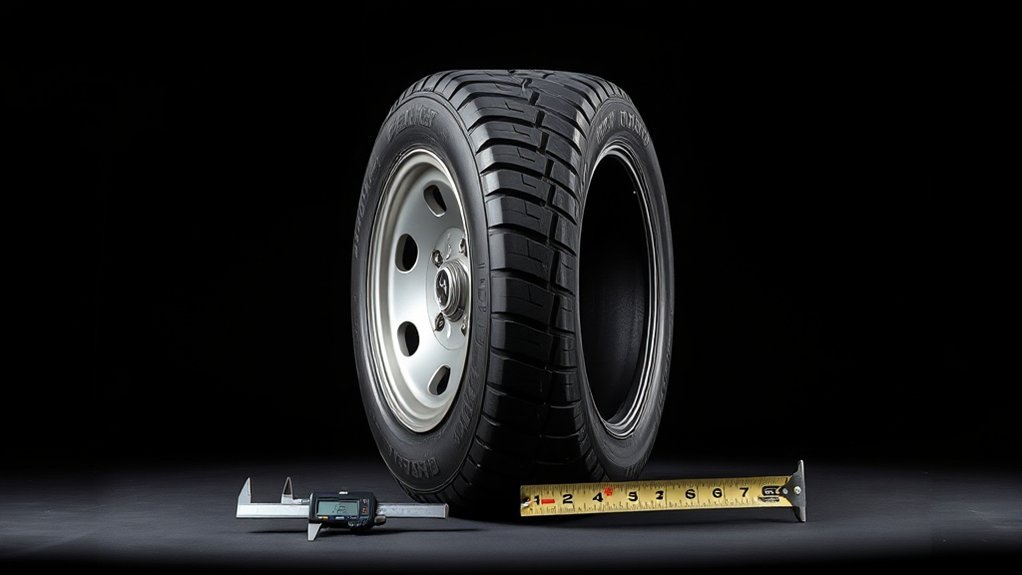
A 305 tire size means the tire’s nominal section width is 305 millimeters. In inches, that is about 12.0 inches because 305 ÷ 25.4 = 12.01.
You will usually see 305 as part of a full tire size, such as 305/70R18. Each part of that code matters:
- 305 = nominal section width in millimeters.
- 70 = aspect ratio, meaning the sidewall height is 70% of the tire’s width.
- R = radial construction, the common construction type for modern passenger and light-truck tires.
- 18 = wheel diameter in inches.
So, in a 305/70R18 tire, the sidewall height is 70% of 305 mm. That equals 213.5 mm, or about 8.4 inches. The overall diameter is two sidewalls plus the 18-inch wheel, which gives a nominal height of about 34.8 inches.
You can confirm the meaning of sidewall markings through tire-maker and tire-safety resources such as Michelin’s tire markings guide and Tire Rack’s sidewall guide.
Note: Tire-size math gives nominal dimensions. Actual mounted height and width can vary by brand, tread design, load range, inflation pressure, and wheel width.
How Wide Is a 305 Tire in Inches?
A 305 tire is about 12.0 inches wide. The exact conversion is:
305 mm ÷ 25.4 = 12.01 inches
This width is one reason 305 tires are common on trucks, SUVs, and off-road builds. A wider tire can create a larger footprint, but it also needs more room inside the wheel well.
Width affects several fitment points:
- Fender clearance: The tire may contact the outer fender or flare.
- Inner clearance: The tire may rub the control arms, sway bar, frame, or liners.
- Wheel width: The tire must be mounted on a wheel width approved by the tire manufacturer.
- Offset and backspacing: The wheel position changes where the tire sits under the vehicle.
- Steering lock: A tire that clears straight ahead may rub when the wheel is turned fully left or right.
Pro Tip: Measure clearance with the steering turned both ways. Also check clearance when the suspension compresses, because rubbing often shows up when turning into a driveway, braking hard, or driving off-road.
How to Calculate the Height of a 305 Tire
To find the height of a metric tire, you need the width, aspect ratio, and wheel diameter. The basic formula is:
- Sidewall height in inches: tire width × aspect ratio ÷ 25.4
- Overall diameter: sidewall height × 2 + wheel diameter
For a 305/70R18 tire:
- Sidewall height: 305 × 0.70 = 213.5 mm
- Sidewall height in inches: 213.5 ÷ 25.4 = 8.4 inches
- Overall diameter: 8.4 + 8.4 + 18 = 34.8 inches
This is why the full size matters. A 305/70R18 is much taller than a 305/35R20 even though both start with 305.
How Tall Is a 305 Tire?
A 305 tire can be roughly 32, 33, 34, or 35 inches tall depending on the full size. The 305 only tells you the width. The aspect ratio and wheel diameter decide the height.
| Tire Size | Width | Sidewall Height | Nominal Overall Diameter |
|---|---|---|---|
| 305/70R16 | 12.0 in | 8.4 in | 32.8 in |
| 305/70R17 | 12.0 in | 8.4 in | 33.8 in |
| 305/70R18 | 12.0 in | 8.4 in | 34.8 in |
| 305/75R16 | 12.0 in | 9.0 in | 34.0 in |
The 305/70R18 size is often discussed as a “35-inch class” tire because it is close to 35 inches, but it is not exactly 35 inches. A true 35-inch tire, such as 35×12.50R17, uses flotation sizing and has its own manufacturer-specific measured diameter.
Common 305 Tire Sizes by Wheel Diameter
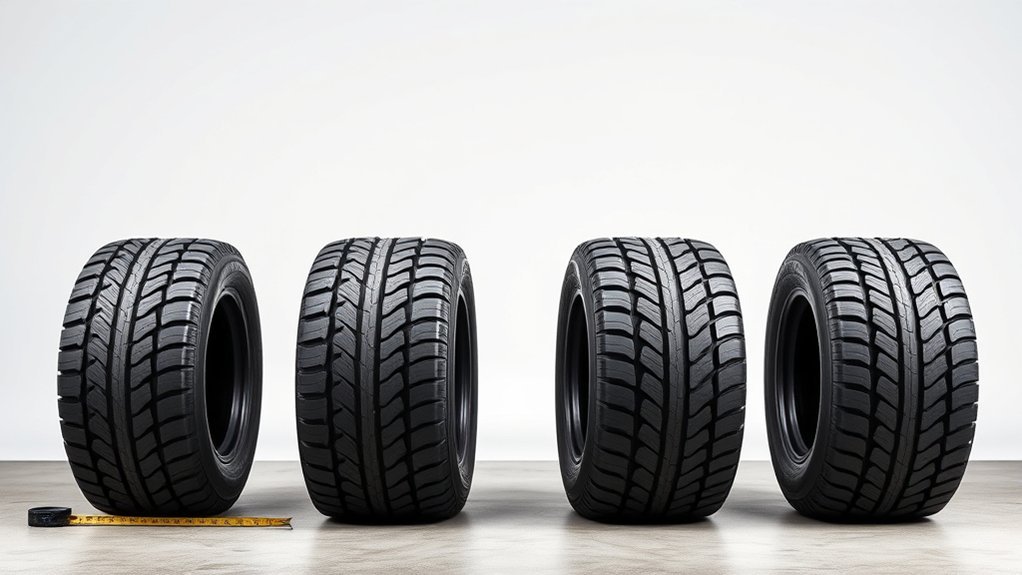
Common 305 tire sizes use the same width but change the wheel diameter and sometimes the aspect ratio. That changes the stance, clearance needs, gearing effect, and ride feel.
- 305/70R16: about 32.8 inches tall. This is closer to a 33-inch tire than a 35-inch tire.
- 305/70R17: about 33.8 inches tall. This is a common truck and off-road size.
- 305/70R18: about 34.8 inches tall. This is close to a 35-inch tire but still depends on actual manufacturer specs.
- 305/75R16: about 34.0 inches tall. The taller 75-series sidewall adds height without changing width.
Two tires with the same printed size can measure differently once mounted. Tread design, casing shape, load range, and the measuring rim can all change real-world section width and overall diameter.
[Products Worth Considering]

Protect tire valves from water, dust, and sand to help prevent leaks and support safe driving. These universal stem caps install quickly by hand and feature durable aluminum alloy construction with an inner sealing ring for better air retention. Compatible with cars, SUVs, trucks, motorcycles, and bicycles for everyday convenience.

ETENWOLF T300 is a calibrated digital tire pressure gauge for accurate readings from 3 to 200 PSI across light and heavy-duty vehicles. It includes thermal compensation for reliable performance in extreme cold or heat, with an auto shut-off to extend battery life and an LED for easier reading. The sturdy design supports rugged everyday use, making it ideal for pickups, RVs, and industrial applications.

The Big Rig Defense Tire Thumper is a truck tire pressure checker that lets you quickly check multiple tires by giving them a firm whack. Listen for a reassuring thump and feel the stick bounce when a tire is fully inflated, helping you get back on the road safely. It features a comfortable, glove-friendly handle and a secure wrist strap for confident use on busy routes.
Is a 305 Tire the Same as a 33 or 35 Inch Tire?
No. A 305 tire is not automatically the same as a 33-inch or 35-inch tire. The number 305 only tells you the tire width in millimeters.
Use the full size to compare:
- 305/70R16 is about 32.8 inches tall, so it is close to a 33-inch tire.
- 305/70R17 is about 33.8 inches tall, so it sits between many 33-inch and 35-inch tires.
- 305/70R18 is about 34.8 inches tall, so it is close to a 35-inch tire.
- 305/75R16 is about 34.0 inches tall, so it is taller than many 33s but not a true 35 by nominal math.
If you are comparing metric and flotation sizes, compare actual manufacturer specs, not just the size name. Look for section width, overall diameter, approved rim width range, revolutions per mile, load index, and speed rating.
Will a 305 Tire Fit Your Vehicle?
A 305 tire can fit many trucks and SUVs, but it is not a universal fit. A tire that looks right on paper can still rub the fender liner, control arm, sway bar, bumper, or frame.
Warning: Do not choose a 305 tire by width alone. Check the vehicle tire placard, owner’s manual, wheel size, load rating, speed rating, and clearance. If the new size is not listed by the vehicle manufacturer, ask a qualified tire professional before installing it.
| Fitment Check | Why It Matters |
|---|---|
| Vehicle placard and owner’s manual | Shows the original tire size, cold inflation pressure, and manufacturer guidance. |
| Wheel diameter | The tire’s rim diameter must match the wheel diameter exactly. |
| Approved wheel-width range | A 12-inch-wide tire needs a wheel width approved by the tire maker. |
| Offset and backspacing | Changes inner and outer clearance, even with the same tire size. |
| Fender and liner clearance | Prevents rubbing when steering, braking, or compressing the suspension. |
| Load index and speed rating | The replacement tire must meet the vehicle’s load and speed needs. |
| Speedometer and gearing | A taller tire can change speedometer reading, acceleration, braking feel, and shift behavior. |
The safest starting point is the tire information placard, certification label, and owner’s manual. NHTSA TireWise explains that recommended cold tire pressure comes from the vehicle placard or certification label, not the tire sidewall. The U.S. Tire Manufacturers Association Tire Care and Safety Guide also advises following the vehicle manufacturer’s replacement recommendations and restrictions.
[Products Worth Considering]

This manual duck head tire changer kit makes tire installation and removal simpler by letting you embed the duck head into the tire with applied pressure. The integrated design and durable steel construction help reduce friction and improve efficiency and safety during use. Suitable for 16–21 inch wheels, it’s convenient for cars, trucks, SUVs, and ATV tires, with 24-hour after-sales support.

This professional wheel and tire cleaning brush kit helps you scrub rims, hubs, spokes, and tires with scratch-free, ultra-fine bristles. The brushes can bend 360 degrees for deep reach into crevices, bolts, and intricate wheel details, while the kit supports both wet washing with cleaners and dry dust removal. Easy to rinse, quick to air-dry, and designed for convenient maintenance with hanging holes.

Milton S-921 pencil tire pressure gauge helps you maintain optimal tire pressure for passenger cars with accurate readings in PSI and kPa. It features a built-in deflator valve for convenient pressure adjustments, plus a single chuck head and nylon indicator bar for easy use on the go. Built from durable plated brass and designed for reliable performance, it’s a practical road trip and cold-weather maintenance tool.
Load Index, Speed Rating, and Pressure Also Matter
Size is only part of the tire choice. The numbers and letters after the size, such as 126Q or 128S, describe load index and speed rating. The load index tells you how much weight the tire can carry when properly inflated. The speed symbol gives the tire’s speed capability under specified conditions.
Do not assume every 305 tire has the same load capacity. A passenger-metric 305 tire, an LT 305 tire, and a different load range can behave very differently. For towing, hauling, off-road use, or heavy trucks, this matters as much as width and height.
Also remember that the maximum pressure on the tire sidewall is not the same as the recommended daily driving pressure for your vehicle. Use the vehicle placard, owner’s manual, or tire professional guidance for the correct cold inflation pressure.
[Products Worth Considering]
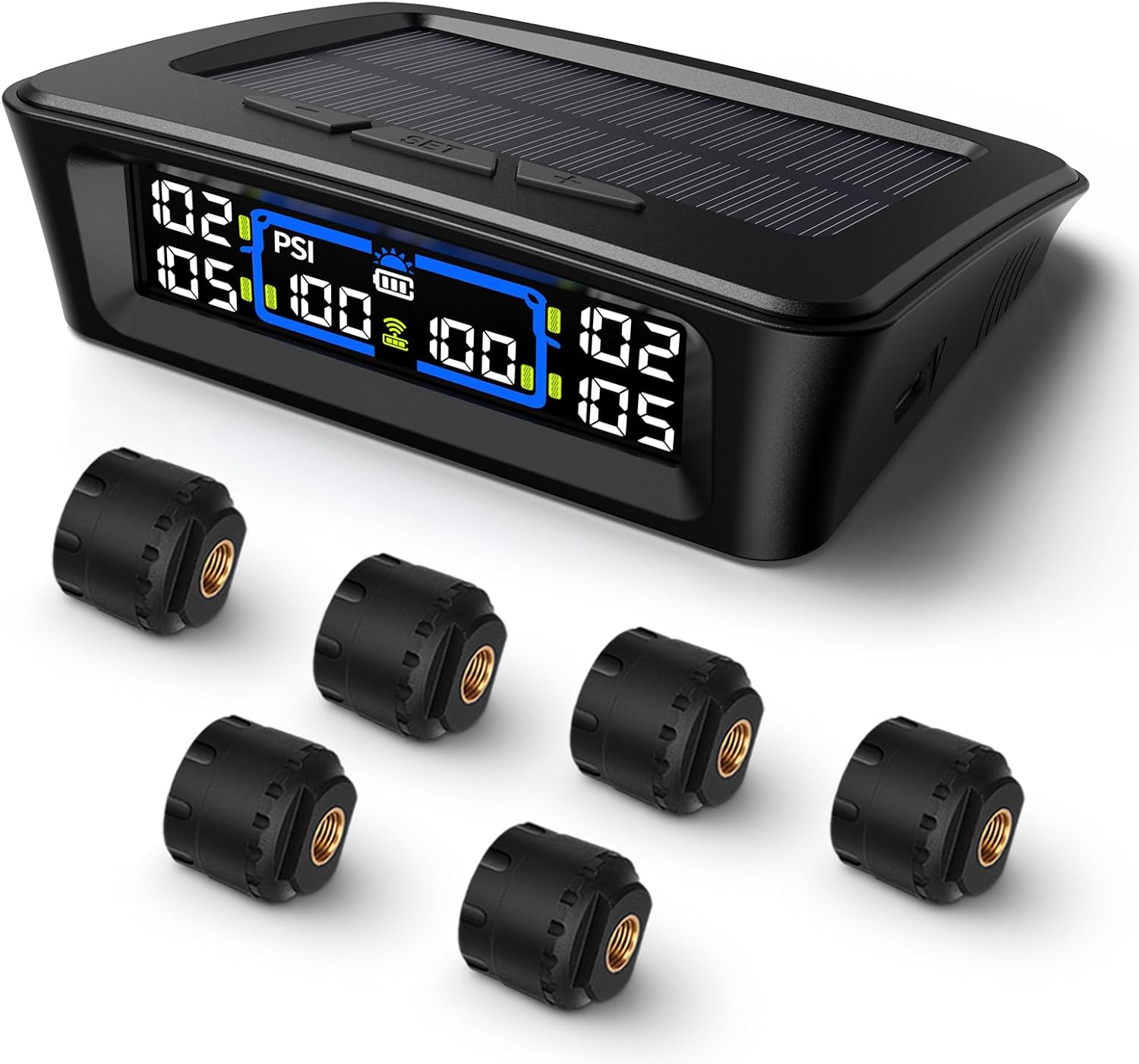
The Tymate TM12 RV TPMS delivers real-time tire pressure and temperature monitoring with a stable 433Hz display for safer long-distance driving. It supports simultaneous monitoring across vehicle and trailer zones, includes six alarm modes for pressure, temperature, leakage, battery, and signal loss, and features easy DIY installation with auto calibration. Power is supplied via USB-C charging or solar recharging, with a wide 0–144 PSI range and up to 50 ft signal coverage for RVs and towable trailers.

The Chemical Guys Big Blue Stiffy Heavy Duty Cleaning Brush is designed for deep scrubbing of tires, upholstery, and carpets. Stiff synthetic bristles help lift tough dirt, grime, and tar while the ergonomic grip makes scrubbing comfortable and controlled. Use it with wheel and tire cleaners followed by dressings and protectants to help enhance and extend a lasting shine.

Measure tire tread depth quickly and accurately with this LUMITECO dial gauge that reads in 1/32" increments up to 14/32". The color-coded green/yellow/red zones make it easy to judge tire wear and know when replacement is needed. A rugged, compact design with a protective pouch helps keep the gauge ready for use on cars, trucks, motorcycles, and more.
Frequently Asked Questions
What tire size is 305 equal to?
A 305 tire is equal to about 12.0 inches in width. It is not equal to one fixed overall height. A 305/70R18 is about 34.8 inches tall, while a 305/70R16 is about 32.8 inches tall.
Is a 305 the same as a 35-inch tire?
Not always. A 305/70R18 is about 34.8 inches tall, so it is close to a 35-inch tire. But a 305/70R16 is about 32.8 inches tall, and a 305/75R16 is about 34.0 inches tall. Always check the full size and the tire maker’s actual specs.
Is a 305 tire equal to a 33?
Sometimes, but not always. A 305/70R16 is about 32.8 inches tall, which is close to a 33-inch tire. A 305/70R18 is about 34.8 inches tall, so it is much closer to a 35-inch tire.
Is a 305 tire bigger than a 285?
A 305 tire is wider than a 285 tire by 20 mm, or about 0.8 inch. It is only taller if the aspect ratio and wheel diameter make it taller. For example, 305/70R17 is taller than 285/70R17, but 305 width alone does not prove total height.
Do I need a lift for 305 tires?
It depends on the vehicle, wheel offset, suspension setup, and exact tire size. Some trucks can fit certain 305 tires with minor changes, while others may need a lift, leveling kit, trimming, different wheels, or no change at all. Check clearance before buying.
Conclusion
A 305 tire is about 12.0 inches wide, but its height depends on the full size code. A 305/70R18 is about 34.8 inches tall, a 305/70R17 is about 33.8 inches tall, and a 305/70R16 is about 32.8 inches tall. That is why 305 does not automatically mean 33 inches or 35 inches.
Before you buy, compare the full tire size, actual manufacturer specs, wheel-width range, load index, speed rating, vehicle placard, and clearance points. That extra check helps you avoid rubbing, poor handling, incorrect load capacity, and speedometer changes.
Sources
- Michelin: Tire Markings Explained — backs up tire sidewall code, load rating, speed rating, and pressure guidance.
- Tire Rack: How Do I Calculate Tire Dimensions? — backs up the tire-width, sidewall-height, and overall-diameter formulas.
- Tire Rack: How Do I Read My Tire Size on My Sidewall? — backs up section width, aspect ratio, radial construction, and wheel diameter definitions.
- NHTSA TireWise — backs up vehicle placard and cold tire-pressure safety guidance.
- U.S. Tire Manufacturers Association: Tire Care and Safety Guide — backs up replacement tire safety, placard checks, and professional fitment guidance.
- Tire Industry Association: Reading a Tire Sidewall — backs up load index, speed symbol, and DOT sidewall information.