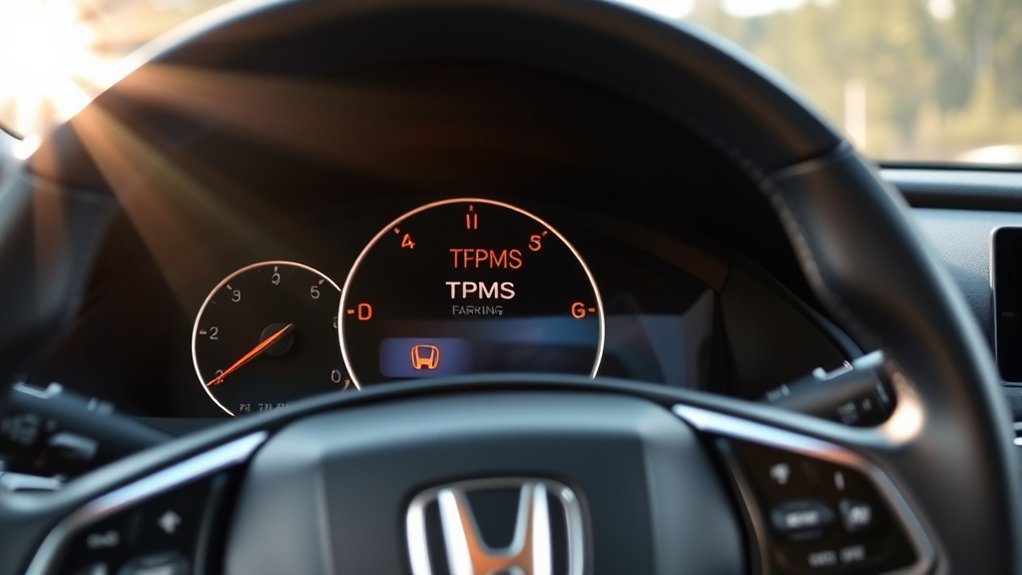
If your Honda Accord’s TPMS isn’t working, start with the basics before you reset anything. Check all tire pressures when the tires are cold, compare them with the driver-side door-jamb placard, then recalibrate the system only after the pressures are correct. If the light flashes before staying on, treat it as a possible TPMS malfunction and plan for a diagnostic check.
Quick Answer
When a Honda Accord TPMS light stays on, check cold tire pressure first, inflate each tire to the door-jamb PSI, then run the correct TPMS calibration for your model year. A light that flashes for about a minute before staying on usually points to a system fault, sensor issue, or calibration problem.
Key Takeaways
- A solid TPMS light usually means at least one tire may be underinflated, so check tire pressure before resetting the system.
- A TPMS light that flashes, then stays on, often means the TPMS system itself needs diagnosis.
- Honda Accord reset steps vary by model year. Some use a TPMS button, while many newer models use a menu-based calibration.
- Do not recalibrate TPMS before setting the correct cold tire pressure, or the system may learn the wrong baseline.
- If you replaced tires, swapped winter wheels, or changed TPMS sensors, you may need a shop scan tool or sensor registration.
At a Glance
| Time Required | 10 minutes for pressure checks; about 20 to 30 minutes of normal driving for many calibration cycles |
| Difficulty | Easy for pressure checks and menu calibration; moderate if sensor diagnosis is needed |
| Tools Needed | Accurate tire pressure gauge, air pump, owner’s manual, and optional TPMS scan tool |
| Cost | Usually free if pressure correction and calibration fix it; diagnostic or sensor replacement costs vary by shop |
Why Is My TPMS Warning Light On?
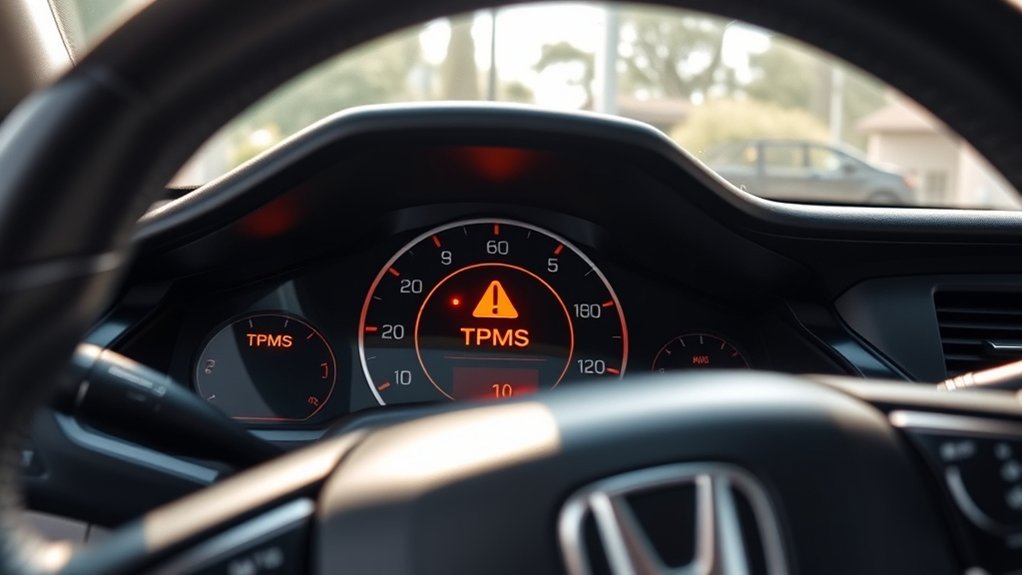
Your TPMS warning light usually comes on because one or more tires may be significantly underinflated. The safest first step is simple: pull over when safe, inspect the tires, then check pressure with a gauge. Do not rely on appearance alone because a tire can be underinflated without looking flat.
The light can also come on after a tire rotation, tire replacement, wheel swap, or pressure adjustment if the system needs calibration. Cold weather can trigger the light too, because tire pressure often drops when temperatures fall. A tire that was barely within range yesterday may fall below the warning threshold on a cold morning.
Warning: If the TPMS light flashes for about 60 to 90 seconds and then stays on, do not treat it like a normal low-pressure alert. That pattern can mean the TPMS system is malfunctioning, so check tire pressure manually and schedule service.
The National Highway Traffic Safety Administration explains that TPMS can use direct tire sensors or indirect wheel-speed data. Your exact Honda Accord procedure depends on the model year, trim, and system type.
Check Tire Pressure Before Resetting TPMS
Never reset or calibrate TPMS before the tire pressure is correct. If you calibrate while a tire is low, the system may learn the wrong baseline and keep giving false or delayed warnings.
- Let the tires cool: For the most accurate reading, check pressure before driving or after the car has been parked for at least three hours.
- Find the correct PSI: Use the Tire and Loading Information label on the driver-side door jamb, not the maximum PSI printed on the tire sidewall.
- Check every tire: Measure all four tires. If your Accord has a spare tire, check it too because TPMS may not monitor it.
- Adjust pressure: Add or release air until each tire matches the placard value for your exact car and tire size.
- Inspect the tires: Look for nails, cuts, bulges, cracked valve stems, uneven wear, or a tire that keeps losing air.
NHTSA recommends checking tire pressure at least once a month when tires are cold. TPMS is helpful, but it is not a replacement for regular tire maintenance.
[Products Worth Considering]

This TPMS sensor training and relearn reset tool is customized for Ford, Lincoln, and Mercury vehicles to help activate tire pressure programming after sensor replacement or tire rotation. It can activate individual tire pressure sensors with one-button operation, helping prevent TPMS warning light illumination. It is not a sensor programming tool and cannot program replacement sensors—use it to trigger/activate sensors only.

The VEHLIVE SU-50448 II TPMS relearn tool provides a fast activation reset to restore accurate tire pressure monitoring after sensor replacement or tire rotation. It supports 315 MHz and 433 MHz GM series sensors and helps clear dashboard pressure warnings. With simple two-button operation and horn-confirmed relearning order, you can reprogram sensors conveniently at home.
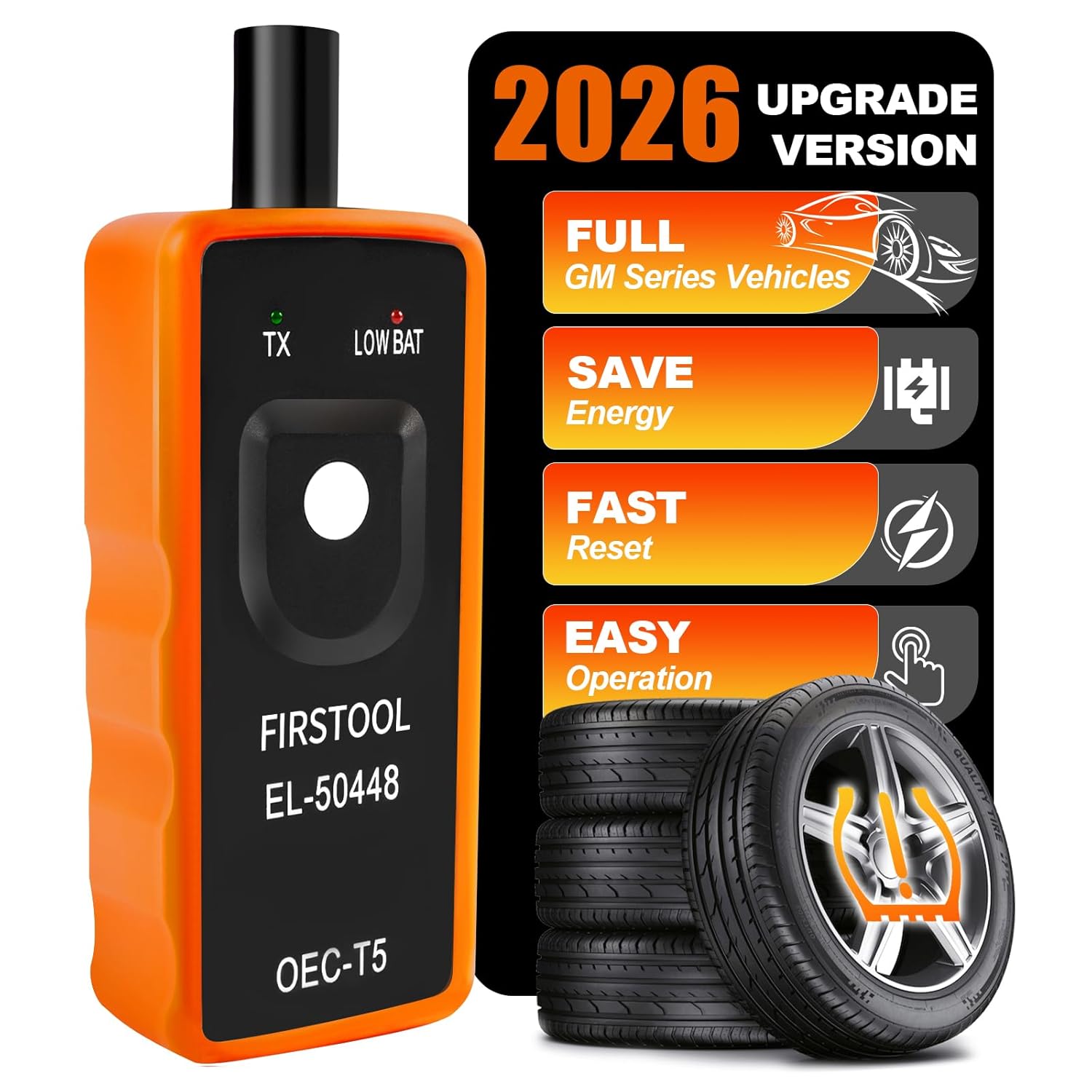
This TPMS relearn tool helps you quickly activate, match, and reset GM tire pressure sensors to keep the vehicle monitoring system working properly. It clears tire pressure alarms and dashboard warning lights after sensor replacement or tire rotation, and supports learning for common 315/433 MHz TPMS sensors. Designed for simple one-button operation, it can help you avoid unnecessary trips to repair shops.
How to Reset or Recalibrate Honda Accord TPMS
Honda Accord TPMS reset steps are not the same for every year. Use the method that matches your vehicle. If you are unsure, check your exact owner’s manual through the official Honda owner manual portal or your local Honda owner resources.
[Products Worth Considering]

The UYYE TPMS relearn tool helps activate and relearn tire pressure monitor sensors quickly, typically in minutes. It supports TPMS learn mode resetting using a simple three-step process: enter learn mode, position the tool near the valve stem, and press the learn button. Designed for specific GM models, it streamlines sensor programming and reduces trips to dealers or tire shops.
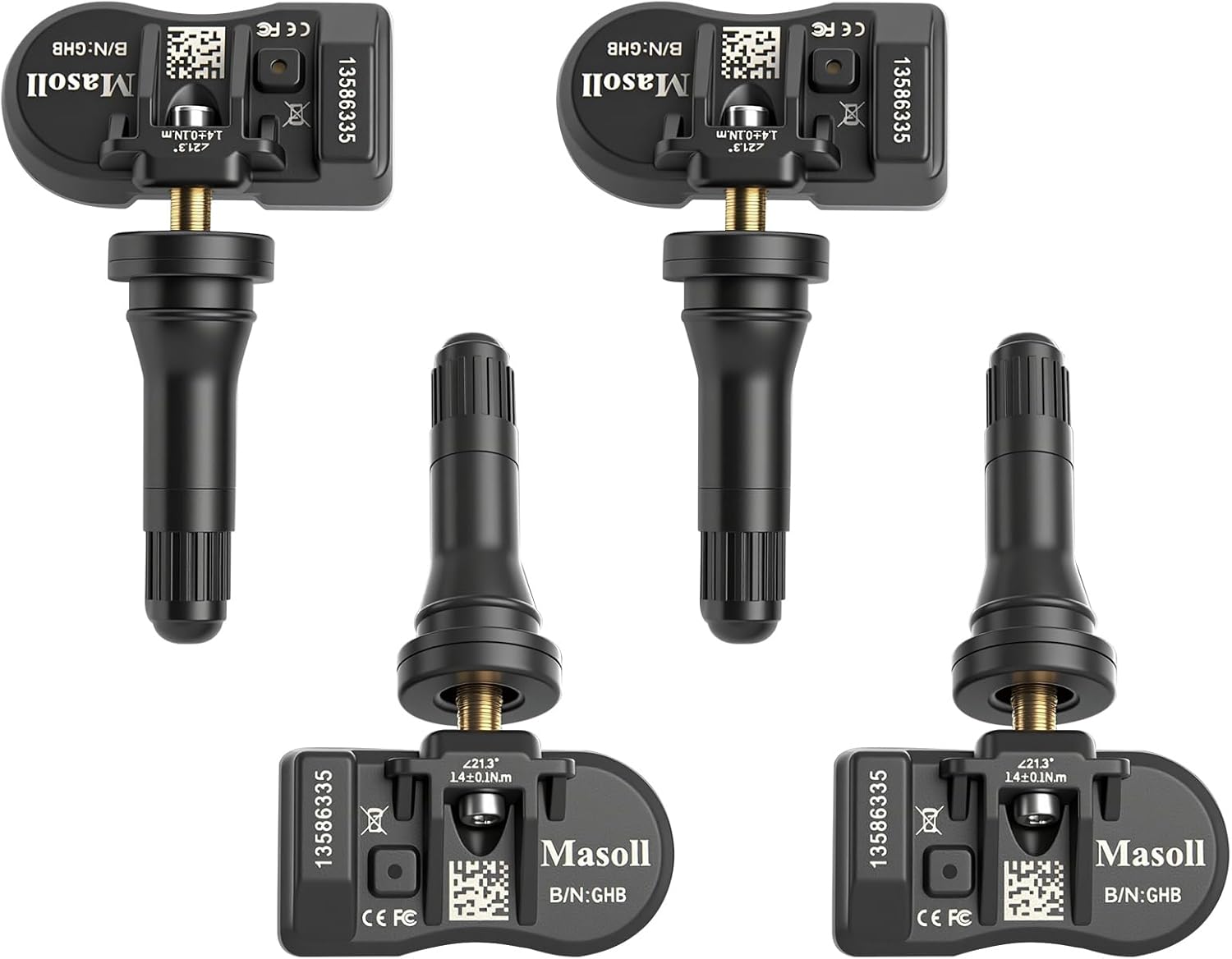
Masoll TPMS sensors are designed for most GM vehicles after 2006, helping you clear tire pressure warnings with OEM-level 315/433MHz compatibility. The 4-pack includes pre-programmed sensors, but re-learning is required after installation using a GM TPMS relearn tool or scan tool. Built with a dual-antenna design and a long-life CR2050 battery, these sensors deliver reliable performance in extreme temperatures with corrosion-resistant valve construction.

Replace your worn or missing TPMS sensors with pre-programmed, direct-fit sensors for compatible Ford, Lincoln, and select Mazda models. Each sensor comes ready to activate with a scan tool, helping restore accurate tire pressure monitoring and trouble-free installation. Built with a long-life CR2032 battery and tested before factory release, this set provides dependable performance with a one-year warranty.
For Menu-Based TPMS Calibration
Many newer Accords use menu-based calibration. After setting the correct tire pressure, look for a path similar to this:
- Turn the vehicle on or set it to accessory mode.
- Open Settings on the audio screen or driver information interface.
- Select Vehicle or Vehicle Settings.
- Choose TPMS Calibration.
- Select Calibrate or Initialize.
- Drive normally so the system can learn the tire-speed baseline.
For Button-Equipped TPMS Systems
Some Accords use a physical TPMS button. After adjusting the tires to the placard PSI, turn the ignition on, press and hold the TPMS button until the indicator blinks, then drive normally. The exact button name and location can vary, so confirm it in your owner’s manual.
For Direct TPMS Sensor Replacement
If your Accord uses direct TPMS sensors and a sensor was replaced, the system may need sensor registration with a TPMS scan tool. A simple button reset may not fix a missing, dead, incompatible, or unregistered sensor.
Pro Tip: Do the calibration after pressure correction, tire rotation, tire replacement, or wheel swaps. Avoid recalibrating repeatedly while troubleshooting because it can make the system harder to diagnose.
What’s the Difference Between Direct and Indirect TPMS?
Direct TPMS uses pressure sensors mounted in the wheels. These sensors send tire-pressure information to the vehicle. If a sensor battery dies, a sensor breaks, or a replacement sensor is not registered correctly, the TPMS light may flash or stay on even when the tires are properly inflated.
Indirect TPMS does not measure air pressure inside each tire. Instead, it uses wheel-speed data and other vehicle information to estimate when one tire is rotating differently from the others. This type usually needs calibration after pressure changes, tire rotation, or tire replacement.
| TPMS Type | How It Works | Common Fix |
|---|---|---|
| Direct TPMS | Uses in-wheel pressure sensors | Correct tire pressure, inspect sensors, register replacements if needed |
| Indirect TPMS | Uses wheel-speed data to estimate pressure changes | Set tire pressure, then run TPMS calibration and drive normally |
As a general rule, many older Accords use direct TPMS, while many later models use indirect calibration. Do not rely on year alone when buying sensors or troubleshooting. The owner’s manual and a TPMS scan tool give the most reliable answer for your specific vehicle.
Steps to Take When TPMS Calibration Doesn’t Work

If your TPMS calibration fails or the warning light returns, work through the problem in order. This helps you avoid replacing sensors when the real issue is pressure, tire size, or calibration timing.
- Recheck cold tire pressure: Confirm each tire matches the driver-side door-jamb placard.
- Look for leaks: Check for nails, slow leaks, damaged valve stems, or a tire that loses pressure overnight.
- Confirm tire size: Mismatched tire sizes or uneven wear can confuse indirect TPMS systems.
- Repeat calibration once: Start calibration only after pressure is correct, then drive normally for the required learning cycle.
- Check recent work: If tires, wheels, or sensors were replaced, confirm compatible parts were installed.
- Scan the system: A shop can read TPMS and ABS-related fault codes that a basic code reader may miss.
Note: On indirect TPMS systems, an ABS or wheel-speed sensor problem can sometimes affect TPMS calibration. If the ABS or stability-control light is also on, have the car diagnosed instead of repeatedly recalibrating.
[Products Worth Considering]

Keep your tires properly inflated with this analog VONDIOR tire pressure gauge, designed for fast, easy readings without batteries. The swiveling, two-axis hose and large glow dial help you measure at any tire angle with instant visibility. Built with a protective rubber shield, it supports durable, low-maintenance use for cars and trucks.
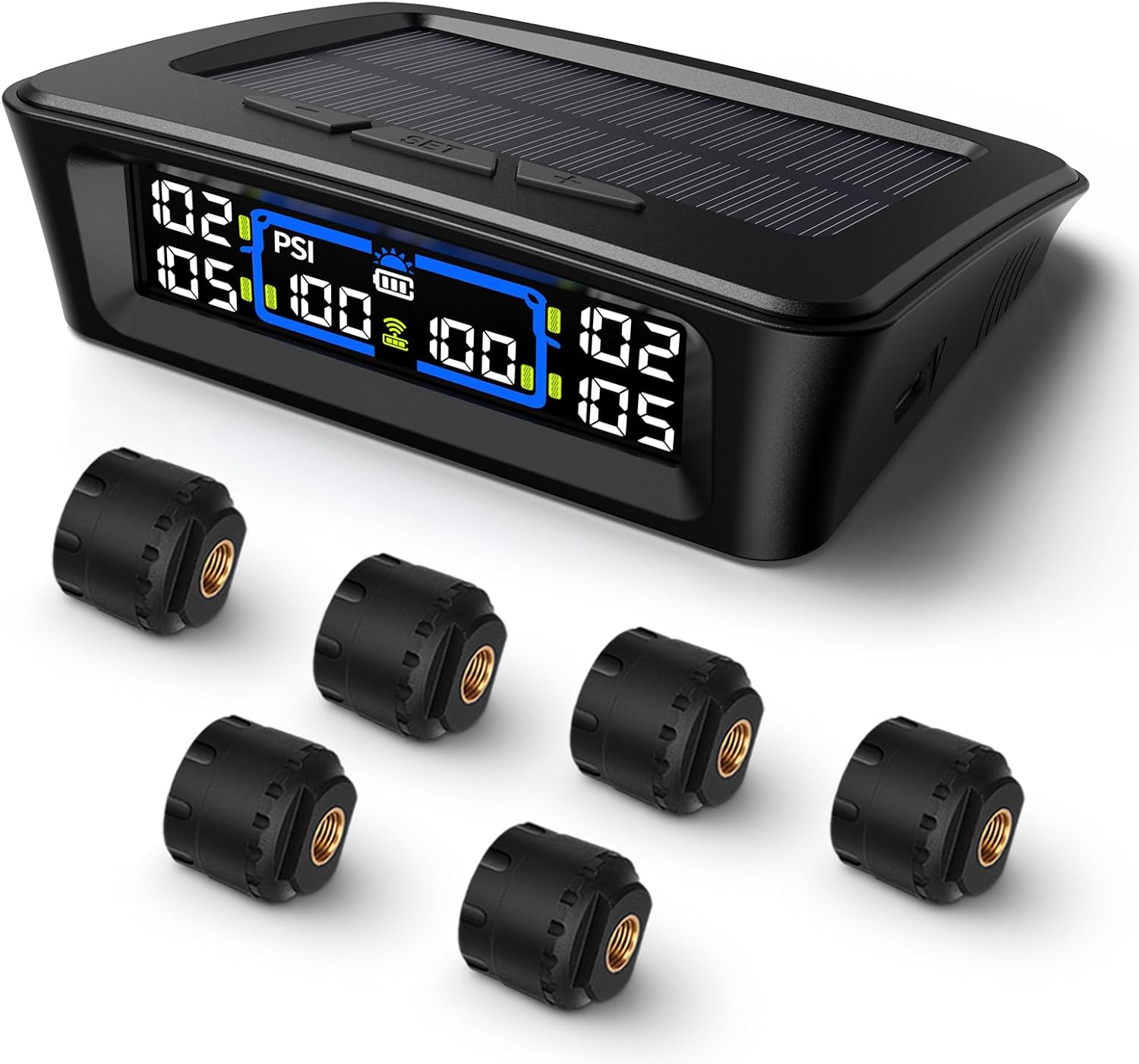
The Tymate TM12 RV TPMS delivers real-time tire pressure and temperature monitoring with a stable 433Hz display for safer long-distance driving. It supports simultaneous monitoring across vehicle and trailer zones, includes six alarm modes for pressure, temperature, leakage, battery, and signal loss, and features easy DIY installation with auto calibration. Power is supplied via USB-C charging or solar recharging, with a wide 0–144 PSI range and up to 50 ft signal coverage for RVs and towable trailers.

The Tymate TM2 RV tire pressure monitoring system keeps you informed with a color LCD display, automatic backlight, and solar charging for dependable operation. It supports up to 10 tire positions with four pre-paired sensors, while offering multiple alarm modes for fast leak detection, pressure extremes, temperature alerts, and low-signal warnings. Built-in monitoring uses accurate readings and reliable 433.92MHz communication to help protect your RV, trailer, truck, or SUV.
When to Seek Professional Help for Persistent TPMS Issues
Seek professional help if the TPMS light stays on after you set tire pressure and complete the correct calibration process. A shop can test direct sensors, check sensor IDs, scan TPMS fault codes, and inspect wheel-speed data on indirect systems.
| Issue | Action Required |
|---|---|
| TPMS light stays on after correct pressure and calibration | Have TPMS and tire condition checked |
| TPMS light flashes, then remains on | Schedule diagnostic service for a system malfunction |
| Light appeared after new tires or winter wheels | Confirm correct tire size, sensor compatibility, and calibration |
| Direct TPMS sensor was replaced | Register or program the sensor with the correct scan tool |
| Tire keeps losing air | Repair or replace the tire before recalibrating TPMS |
Do not ignore visible tire damage, a tire that looks low, steering pull, vibration, or a sudden pressure loss. TPMS is a warning system, not a tire repair system. If a tire is damaged or badly underinflated, avoid highway driving and get help safely.
Frequently Asked Questions
Can I drive with a malfunctioning TPMS?
You can usually drive carefully to a repair shop if all tires are properly inflated and undamaged, but you should not ignore the warning. If the TPMS light flashes, a tire is visibly low, or you see tire damage, avoid long or high-speed driving until the issue is checked.
How often should I check my Honda Accord tire pressure?
Check tire pressure at least once a month and before long trips. Use a gauge when the tires are cold, and follow the PSI on the driver-side door-jamb placard for your exact Accord.
What causes Honda Accord TPMS sensors to fail?
Direct TPMS sensors can fail from sealed battery wear, impact damage, corrosion, incompatible replacement sensors, or programming problems. Indirect TPMS problems may come from incorrect calibration, mismatched tire sizes, uneven tire wear, or wheel-speed sensor faults.
Do winter tires need TPMS sensors on a Honda Accord?
It depends on your TPMS type. If your Accord uses direct TPMS, each winter wheel usually needs a compatible sensor. If your Accord uses indirect TPMS, the wheels usually do not need in-wheel pressure sensors, but you should recalibrate after installing the winter tires.
Can I replace Honda Accord TPMS sensors myself?
You may be able to buy compatible sensors yourself, but direct TPMS sensors sit inside the wheel and usually require tire dismounting, installation, and sensor registration. Most drivers should have a tire shop or Honda technician handle replacement and programming.
Why does my TPMS light come on after tire rotation?
The system may need calibration after the tires move to different wheel positions. First set all tires to the correct cold PSI, then run the TPMS calibration process for your Accord. If the light flashes or returns, scan the system for faults.
Conclusion
A Honda Accord TPMS problem is easiest to solve when you follow the right order: check cold tire pressure, inspect the tires, confirm the correct reset method, then recalibrate only after everything is set correctly. A solid warning light usually starts with tire pressure, while a flashing light points more strongly toward a TPMS system fault.
If the warning keeps returning after proper pressure and calibration, get the system scanned. A technician can confirm whether you have a failing direct sensor, an unregistered replacement sensor, an indirect TPMS calibration problem, or a wheel-speed sensor issue. Fixing the cause protects tire life, handling, fuel economy, and your safety on the road.
Sources
- NHTSA TireWise: Tire Safety Ratings and Awareness — supports TPMS warning-light meaning, direct vs indirect TPMS explanation, malfunction-light behavior, and tire-safety guidance.
- NHTSA Tire Safety: Everything Rides On It — supports cold tire-pressure checks, placard PSI guidance, monthly pressure checks, and tire-maintenance steps.
- Honda Owner’s Manuals & Guides — supports checking the exact owner’s manual for model-year-specific Honda TPMS calibration procedures.