
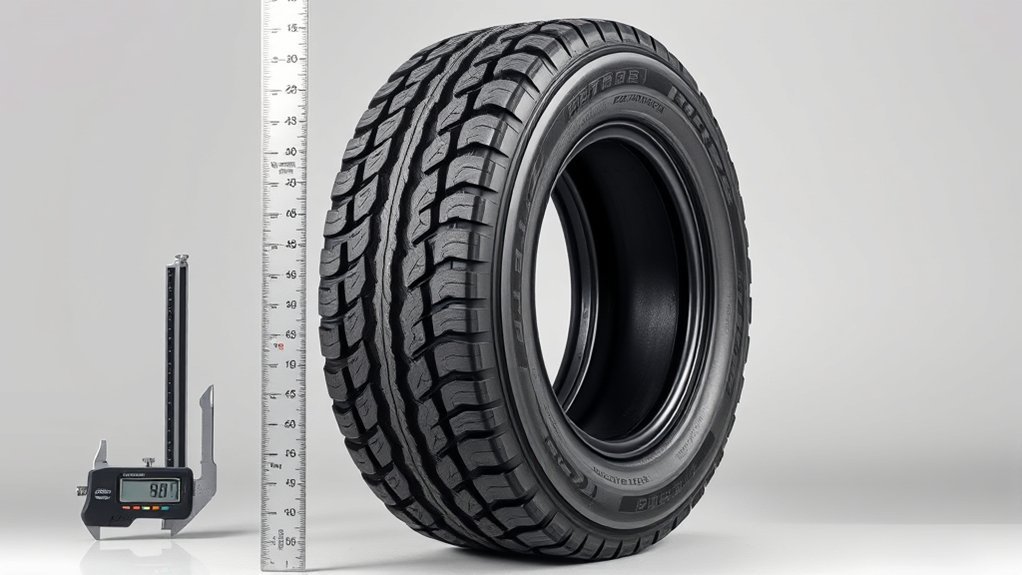
A 265/70R16 tire is about 30.6 inches tall, 10.4 inches wide, and has a sidewall height of about 7.3 inches. Its circumference is roughly 96.1 inches, which works out to about 659 revolutions per mile. Those numbers help you compare tire fitment, ground clearance, gearing, and speedometer changes before you install a different size.
Quick Answer
A 265/70R16 tire is about 30.6 inches tall, 10.4 inches wide, and 7.3 inches from rim to tread. It has a circumference of about 96.1 inches and makes about 659 revolutions per mile. Exact specs can vary slightly by tire model and manufacturer.
Key Takeaways
- A 265/70R16 tire is about 30.6 inches tall, or about 778 mm in overall diameter.
- The 265 number means the tire is 265 mm wide, which equals about 10.4 inches.
- The 70 aspect ratio means the sidewall height is 70% of 265 mm, or about 7.3 inches.
- Its circumference is about 96.1 inches, giving it roughly 659 revolutions per mile.
- Before changing sizes, confirm rim width, load index, speed rating, inflation pressure, and wheel-well clearance.
What Is a 265/70R16 Tire Size?
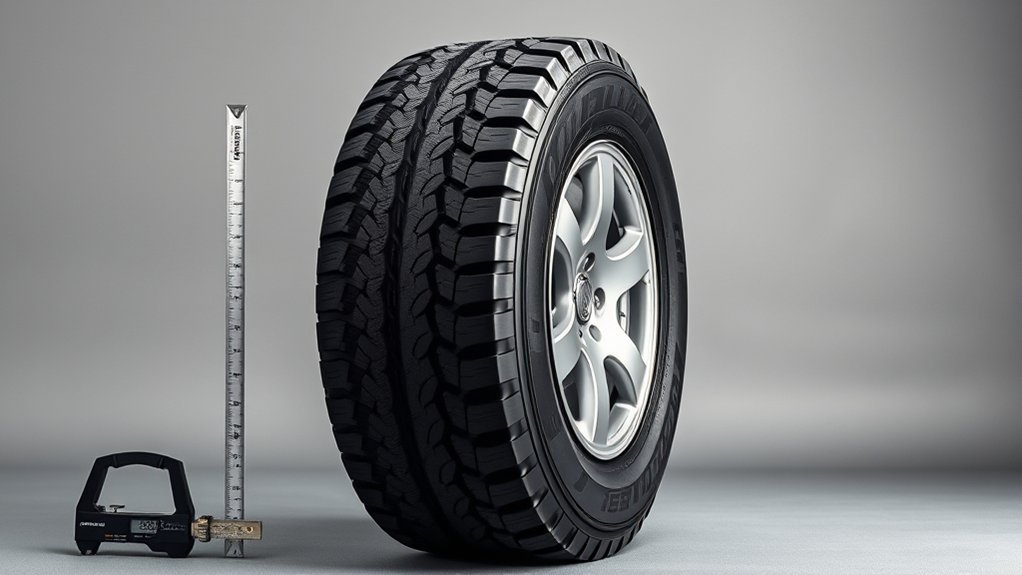
A 265/70R16 tire size tells you the tire’s width, sidewall height, construction type, and wheel diameter. The first number, 265, is the tire’s section width in millimeters. The second number, 70, is the aspect ratio. That means the sidewall height equals 70% of the tire’s width. The letter R means radial construction, and 16 means the tire fits a 16-inch wheel.
For this size, the math gives you a tire that is about 30.6 inches tall. That height matters because it affects ground clearance, wheel-well clearance, gearing, speedometer readings, and how the vehicle feels on the road. A 265/70R16 is common on SUVs, pickups, and light trucks, but fitment still depends on your exact vehicle, wheel size, trim, suspension, and load requirements.
Note: Tire-size calculators use math based on the size code. Real-world measured specs can vary slightly by brand, tread design, load range, and inflation pressure.
How Tall Is a 265/70R16 Tire?
A 265/70R16 tire is about 30.6 inches tall, or about 778 mm in overall diameter. This measurement includes the 16-inch wheel opening plus the sidewall above and below the wheel.
| Measurement | 265/70R16 Value | Why It Matters |
|---|---|---|
| Overall diameter | 30.6 in / 778 mm | Affects clearance, gearing, and stance |
| Section width | 10.4 in / 265 mm | Affects wheel fitment and contact patch |
| Sidewall height | 7.3 in / 186 mm | Affects ride comfort and impact absorption |
| Circumference | 96.1 in / 2,442 mm | Affects distance traveled per wheel rotation |
| Revolutions per mile | About 659 | Affects speedometer and odometer readings |
| Common approved rim width | About 7–9 in for passenger tires; 7–8.5 in for LT tires | Helps confirm safe wheel compatibility |
How to Calculate 265/70R16 Tire Dimensions
You can estimate a 265/70R16 tire’s dimensions with a few simple steps. The numbers are rounded because real tires can measure slightly differently once mounted, inflated, and loaded.
- Width: 265 mm ÷ 25.4 = about 10.4 inches.
- Sidewall height: 265 mm × 0.70 = 185.5 mm, or about 7.3 inches.
- Overall diameter: 16 inches + 7.3 inches + 7.3 inches = about 30.6 inches.
- Circumference: 30.6 inches × 3.1416 = about 96.1 inches.
- Revolutions per mile: 63,360 inches per mile ÷ 96.1 inches = about 659 revs/mile.
The most useful number for fitment comparisons is overall diameter, because it affects clearance, gearing, and speedometer accuracy more directly than width alone.
What Are the Width, Sidewall, and Circumference?
A 265/70R16 tire has a section width of 265 mm, a sidewall height of about 186 mm, and a circumference of about 96.1 inches. These measurements work together. Width affects the tire’s footprint, sidewall height affects ride comfort and flex, and circumference affects how far the vehicle travels per wheel rotation.
Tire Width
The 265 in 265/70R16 means the tire’s section width is 265 mm, or about 10.4 inches. Section width is measured across the tire’s widest point, not just the tread face. This width can affect wheel clearance, steering clearance, fender clearance, and how the tire sits on the rim.
A wider tire can give the vehicle a more planted look, but it can also increase rubbing risk if the wheel offset, suspension, or fender clearance is tight. Always compare the tire width against your current size and check clearance at full steering lock.
Sidewall Height
The 70 in 265/70R16 means the tire’s sidewall height is 70% of its 265 mm width. That gives you about 185.5 mm, or about 7.3 inches, of sidewall. A taller sidewall usually improves impact cushioning and off-pavement comfort, while a shorter sidewall can feel sharper on pavement.
| Metric | Value | Practical Effect |
|---|---|---|
| Tire width | 10.4 in | Footprint and clearance |
| Sidewall height | 7.3 in | Ride comfort and flex |
| Diameter | 30.6 in | Clearance and gearing |
| Revolutions per mile | About 659 | Speedometer and odometer behavior |
Circumference Details
A 265/70R16 tire has a circumference of about 96.1 inches. Circumference matters because your vehicle moves that distance each time the tire makes one full rotation. A larger circumference means the vehicle travels farther per rotation, while a smaller circumference means it travels less distance per rotation.
This is why tire-size changes can affect speedometer readings, odometer readings, transmission shift behavior, and fuel-economy tracking. The effect depends on the difference between your original tire size and the new tire size.
How Does 265/70R16 Affect Your Speedometer?
A 265/70R16 tire affects your speedometer only when it differs from the size your vehicle was calibrated to use. If the new tire is taller than the original size, your actual speed can be higher than the speedometer shows. If the new tire is shorter, your actual speed can be lower than the speedometer shows.
For example, if your original tire is much smaller than 265/70R16, the taller 265/70R16 will travel farther with each rotation. That can make the speedometer read low. If your original tire is almost the same diameter, the difference may be small enough that you barely notice it.
Warning: Do not choose tire size by diameter alone. Confirm the size in your owner’s manual or Tire and Loading Information Label, then verify load index, speed rating, rim width, inflation pressure, and clearance with a qualified tire installer.
What Are the Closest Alternatives to 265/70R16?
The closest alternatives to 265/70R16 are sizes with a similar overall diameter. Width also matters, but diameter has the biggest effect on speedometer readings, gearing, and clearance. The table below compares common 16-inch alternatives using calculated dimensions.
| Size | Approx. Diameter | Difference vs 265/70R16 | What Changes |
|---|---|---|---|
| 245/75R16 | 30.47 in | -0.14 in / -0.45% | Narrower, nearly same height |
| 255/70R16 | 30.06 in | -0.55 in / -1.80% | Slightly narrower and shorter |
| 275/65R16 | 30.07 in | -0.53 in / -1.74% | Wider but slightly shorter |
| 275/70R16 | 31.16 in | +0.55 in / +1.80% | Wider and taller |
| 265/75R16 | 31.65 in | +1.04 in / +3.41% | Same width, taller sidewall |
Pro Tip: Treat a 3% diameter difference as a screening guideline, not a final approval. Some vehicles tolerate small changes well, while others need recalibration, trimming, different wheels, or manufacturer-approved sizing.
[Products Worth Considering]

Upgrade your wheels with MIKKUPPA closed-end lug nuts designed for reliable fit and corrosion resistance. The one-piece, cold-forged and heat-treated steel construction helps resist rust and stripping, while the integrated finish delivers a durable black appearance. Built to OEM standards with a conical 60-degree seat, these nuts provide a secure solution for compatible Ford, Honda, Jeep, and Chevrolet models.

These M14x1.5 closed-end chrome lug nuts are a one-piece replacement designed for secure fitment on compatible GM, Ford, and select Chrysler/Dodge models. Featuring a 60-degree conical seat and anti-rust chrome plating, they help resist corrosion and maintain a bright look for everyday driving. Built for long-term durability, they include OEM-style part references and are backed by 12 months of support.

This manual duck head tire changer kit makes tire installation and removal simpler by letting you embed the duck head into the tire with applied pressure. The integrated design and durable steel construction help reduce friction and improve efficiency and safety during use. Suitable for 16–21 inch wheels, it’s convenient for cars, trucks, SUVs, and ATV tires, with 24-hour after-sales support.
Closest Metric Matches
The closest metric match by height is 245/75R16. It is about 30.47 inches tall, which is only about 0.14 inches shorter than a 265/70R16. The main difference is width: 245/75R16 is narrower, so it may provide more clearance in some wheel wells while keeping a similar overall diameter.
If you want a slightly wider option, 275/70R16 is about 31.16 inches tall. That is roughly 0.55 inches taller than 265/70R16. It may improve clearance and stance, but it can also increase rubbing risk.
Size Difference Guide
When you compare tire sizes, focus on three checks: diameter, width, and load rating. Diameter affects speedometer readings and gearing. Width affects inner and outer clearance. Load rating confirms whether the tire can safely carry the vehicle’s weight.
Never assume a tire fits because the diameter looks close. Wheel offset, rim width, suspension height, fender shape, brake clearance, and steering angle can all change the result.
How Does 265/70R16 Compare to 265/75R16?
The 265/70R16 and 265/75R16 share the same 265 mm section width, but the 265/75R16 is taller. A 265/70R16 is about 30.6 inches tall, while a 265/75R16 is about 31.6 inches tall. That makes the 265/75R16 about 1.0 inch taller overall.
The difference comes from the aspect ratio. The 70-series tire has a sidewall equal to 70% of 265 mm. The 75-series tire has a sidewall equal to 75% of 265 mm. Because a tire has sidewall above and below the wheel, that small aspect-ratio change adds about an inch to the total diameter.
In real driving, the 265/75R16 can provide slightly more ground clearance and a more cushioned ride over rough surfaces. It can also change acceleration feel, braking feel, shift behavior, and speedometer readings. If your vehicle was built for 265/70R16, confirm clearance before moving to 265/75R16.
[Products Worth Considering]

Upgrade your 2024-2026 Tesla Model 3 Highland with REEVAA all-weather mud flaps designed for seamless fit along the original body lines. The set of four delivers strong splash protection against mud, gravel, and road debris while using OEM-grade durable materials. Installation is non-destructive with original hole positions and snap-in clips, and the aerodynamic design helps minimize impact on efficiency.

The 22800 wheel stud installer makes replacing wheel studs quick and secure, saving time and effort during tire service. It uses a ratchet or impact wrench to pull new studs firmly into place, helping when existing studs are too long. Compatible with most automotive wheels and light-duty truck wheel studs, it’s designed for easy, tool-assisted installation.

Protect tire valves from water, dust, and sand to help prevent leaks and support safe driving. These universal stem caps install quickly by hand and feature durable aluminum alloy construction with an inner sealing ring for better air retention. Compatible with cars, SUVs, trucks, motorcycles, and bicycles for everyday convenience.
Will 265/70R16 Fit Your Vehicle?
A 265/70R16 may fit many SUVs, pickups, and light trucks, but it is not a universal fit. Start with your vehicle’s owner’s manual or the Tire and Loading Information Label on the driver-side door edge or doorjamb. That label tells you the manufacturer’s recommended tire size and cold inflation pressure.
Then compare the 265/70R16 against your current tire and wheel setup. You need enough clearance around the fender liner, bumper, control arms, sway bar, and mud flaps. You should also check clearance while turning the steering wheel fully left and right, not just while the vehicle is parked straight.
- Check OE size: Use the owner’s manual or door placard as your starting point.
- Check rim width: A 265/70R16 commonly fits about 7–9 inch wide wheels for passenger tires, with a slightly narrower range for some LT tires.
- Check load index: The tire must meet or exceed your vehicle’s load requirement.
- Check speed rating: Use a tire with an appropriate speed rating for the vehicle and driving conditions.
- Check clearance: Inspect inner and outer clearance at full steering lock and under suspension compression.
- Check the spare: A very different spare size can affect drivetrain behavior on some vehicles.
- Check calibration: Larger or smaller tires may require speedometer or TPMS-related service depending on the vehicle.
If you have any doubt, ask a tire dealer or installer to verify fitment before purchase. A size that works on one trim or suspension setup may rub on another.
[Products Worth Considering]

The Chemical Guys Gerbil Wheel & Rim Brush is designed to safely clean wheels, rims, exhaust tips, tires, and engine bay components without scratching delicate finishes. Its soft natural bristles help lift brake dust, grime, and buildup while conforming to tight spaces and intricate contours. A comfort grip handle delivers control for extended detailing sessions.

This car D-wheel lock nut key provides an anti-theft solution for D-shaped wheel lock bolts, helping keep your wheels secure. It features a flower-shaped internal pattern that resists micro-adjustment theft while allowing removal and mounting of compatible locking nuts. Made for reliable performance under high torque, it’s easy to use with standard socket wrench turning for quick tire maintenance and emergency repairs.

Black Magic Intense Foam Wheel & Tire Cleaner uses a high-foaming action to lift away dirt, grime, and brake dust without scrubbing. The color-changing formula helps show contaminants being dissolved as foam turns from white to brown. Safe for all wheel types and even wheel wells, it leaves a like-new, slick finish with a fresh cherry scent.
Frequently Asked Questions
Is a 265/70R16 a 33-inch tire?
No. A 265/70R16 tire is about 30.6 inches tall, so it is not a true 33-inch tire. A 33-inch tire is roughly 2.4 inches taller overall, which can create much larger clearance, gearing, and speedometer changes.
Is a 31-inch tire the same as a 265 tire?
No. The 265 number describes tire width in millimeters, not overall height. A 265 tire can be close to 31 inches tall, shorter than 31 inches, or taller than 31 inches depending on its aspect ratio and wheel diameter.
How much taller is a 75 tire than a 70 tire?
When the width and wheel diameter stay the same, a 75-series tire is taller than a 70-series tire. For 265/75R16 vs 265/70R16, the 75-series tire is about 1.0 inch taller overall because it has a taller sidewall above and below the wheel.
How much taller is a 265/75R16 than a 265/70R16?
A 265/75R16 is about 31.65 inches tall, while a 265/70R16 is about 30.61 inches tall. That makes the 265/75R16 about 1.04 inches taller overall, or about 3.4% larger in diameter.

