

You can disable tire pressure sensors or make TPMS inactive on some vehicles, but that is usually the wrong way to solve a warning light. A tire pressure monitoring system gives you an early warning when tire pressure becomes significantly low or when the monitoring system develops a fault. In most cases, diagnosing the pressure, sensor, or relearn problem is safer and more useful than trying to suppress the system.
Quick Answer
On some vehicles, TPMS can be made inactive, but disabling a working system is a poor fix for a warning light. In the U.S., federal law restricts repair businesses from knowingly making required TPMS inoperative, while owner and inspection rules can vary by state. Diagnose low pressure, sensor faults, or relearn issues instead.
Last checked: September 30, 2026. Dates and figures were verified against official sources.
Key Takeaways
- A solid TPMS warning usually means significant underinflation; a light that flashes for about a minute and then stays on generally signals a TPMS malfunction.
- Federal rules require covered vehicles to warn when pressure reaches the regulatory threshold, but TPMS does not replace monthly checks with an accurate pressure gauge.
- U.S. federal law specifically prevents certain vehicle businesses from knowingly making required safety equipment inoperative; state rules for private vehicles and inspections can differ.
- A generic OBD-II code reader may not diagnose TPMS. Many faults require a TPMS-capable scan or activation tool.
- Direct TPMS sensor batteries commonly last about 5 to 10 years and are normally sealed inside the sensor.
What Does TPMS Do?
)
TPMS, or tire pressure monitoring system, warns you when one or more tires become significantly underinflated. Depending on the vehicle, it measures pressure directly at the wheels or estimates pressure loss using wheel-speed and other vehicle data.
Under Federal Motor Vehicle Safety Standard No. 138, covered U.S. vehicles must illuminate the low-pressure warning when one or more tires reach the regulatory threshold: 25% below the manufacturer’s recommended cold inflation pressure or the applicable minimum pressure specified by the standard, whichever is higher.
That threshold is not a target for normal driving. Your tires should still be kept at the cold inflation pressure printed on the vehicle’s tire-and-loading placard.
Direct TPMS uses pressure sensors associated with the wheels. Indirect TPMS does not use individual pressure sensors inside each tire; instead, it analyzes wheel-speed and other vehicle information to detect changes associated with underinflation.
TPMS warns you about significant pressure loss, but it does not replace regular pressure checks with a gauge.
NHTSA TireWise recommends checking tire pressure at least monthly when the tires are cold. NHTSA defines a cold tire for this purpose as one that has not been driven for at least three hours.
Also, not every TPMS display identifies the exact tire. Some vehicles show individual tire pressures or positions, while others provide only a general warning symbol.
Can TPMS Be Disabled?
Yes, a TPMS can sometimes be made inoperative, depending on the vehicle and system design. However, disabling it does not repair low tire pressure, a dead sensor battery, incompatible wheels, damaged hardware, or a communication fault.
Direct systems depend on functioning wheel sensors and communication with the vehicle. Indirect systems work differently and may not have removable pressure sensors at all.
Trying to suppress the warning can also create another problem: you may no longer know when a tire loses pressure during normal driving.
Legal And Safety Risks
The main safety risk is simple: without a functioning TPMS, you lose an automatic warning for significant underinflation. A tire can look normal while still being substantially low.
Underinflation increases tire flex and heat. It can also reduce tread life, affect handling and stopping performance, and contribute to tire failure.
The legal issue needs more precision than simply saying that disabling TPMS is always illegal. In the United States, federal law restricts specific commercial entities from knowingly making required vehicle safety equipment inoperative, while state and local rules can impose additional requirements.
Common Disable Methods
A TPMS may become inactive when required sensors are missing, incompatible wheel hardware is fitted, system components are disconnected, or vehicle electronics are altered. These approaches do not correct the underlying tire or TPMS problem.
For example, removing a functioning direct TPMS sensor can leave the vehicle unable to receive pressure information from that wheel. An incompatible replacement wheel or sensor can also cause the system to report a malfunction.
If you changed tires or wheels and the warning appeared afterward, first confirm that the correct sensors are installed and that any manufacturer-required programming, registration, calibration, or relearn procedure has been completed.
Why Does the TPMS Light Stay On?
The TPMS light usually stays on because a tire is significantly underinflated or because the monitoring system has detected a malfunction. How the light behaves can help you tell those two situations apart.
A solid low-pressure warning generally means you should check tire pressures as soon as it is safe. Cold weather can trigger the warning when already-marginal pressure falls further overnight.
A combined TPMS warning that flashes for 60 to 90 seconds and then remains illuminated indicates a system malfunction under the federal TPMS standard. That sequence normally repeats at later start-ups until the malfunction is corrected.
Possible causes include a depleted sensor battery, damaged sensor or valve hardware, an incompatible replacement wheel or sensor, an unregistered sensor ID, or another communication problem.
If all tires are correctly inflated and the warning continues, do not assume an ordinary engine-code reader will identify the cause. TPMS faults may require a vehicle-compatible TPMS activation tool, TPMS-capable scanner, or manufacturer diagnostic equipment.
[Products Worth Considering]

This TPMS relearn tool helps you quickly activate, match, and reset GM tire pressure sensors to keep the vehicle monitoring system working properly. It clears tire pressure alarms and dashboard warning lights after sensor replacement or tire rotation, and supports learning for common 315/433 MHz TPMS sensors. Designed for simple one-button operation, it can help you avoid unnecessary trips to repair shops.
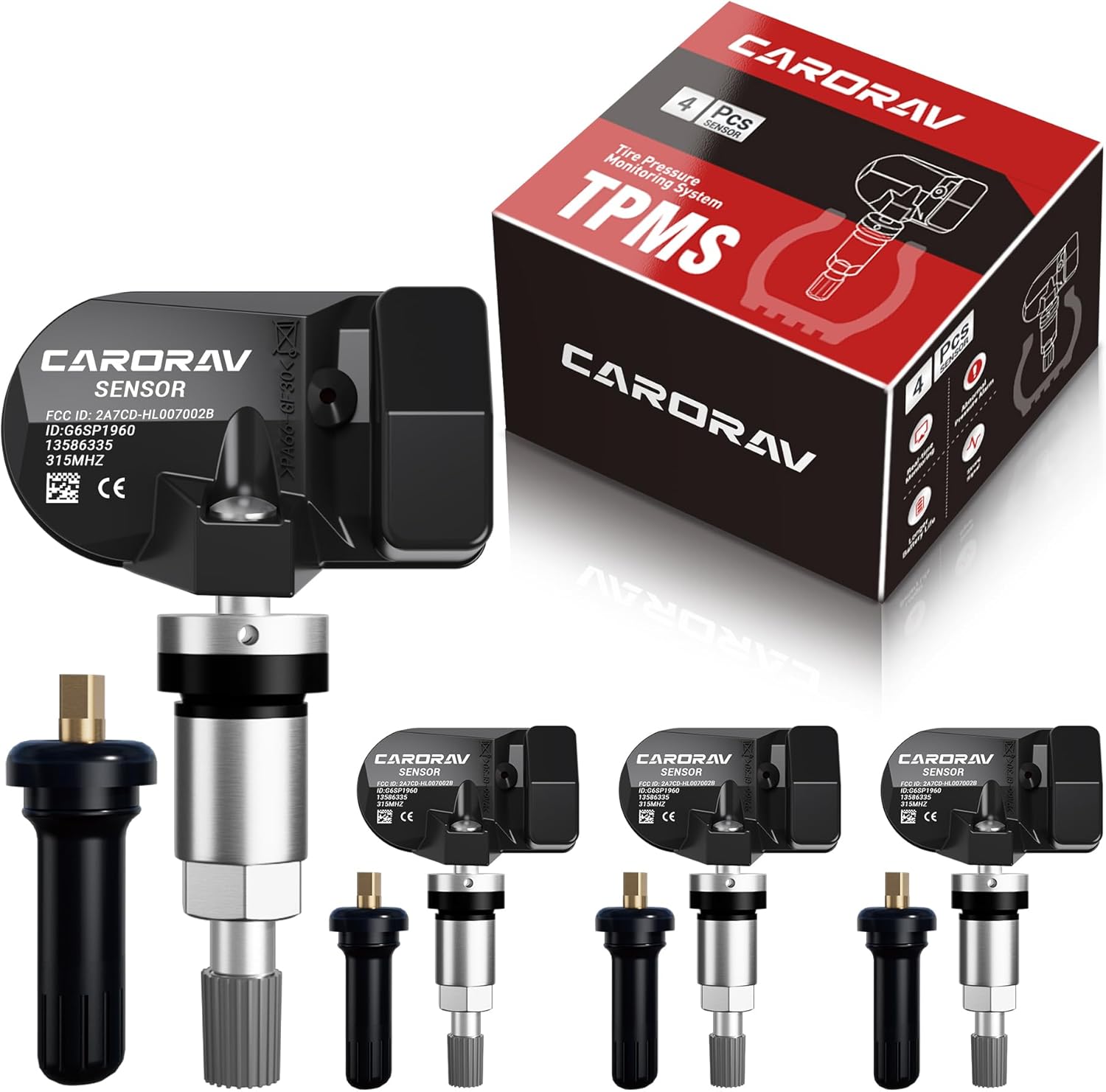
Replace worn or missing TPMS sensors with CARORAV pre-programmed GM-compatible sensors for a smoother installation experience. These 315MHz replacement sensors help monitor tire pressure in real time with long battery life, and they are designed to withstand harsh temperatures. Manual or OBDII relearn may be required to reset the system for proper recognition.
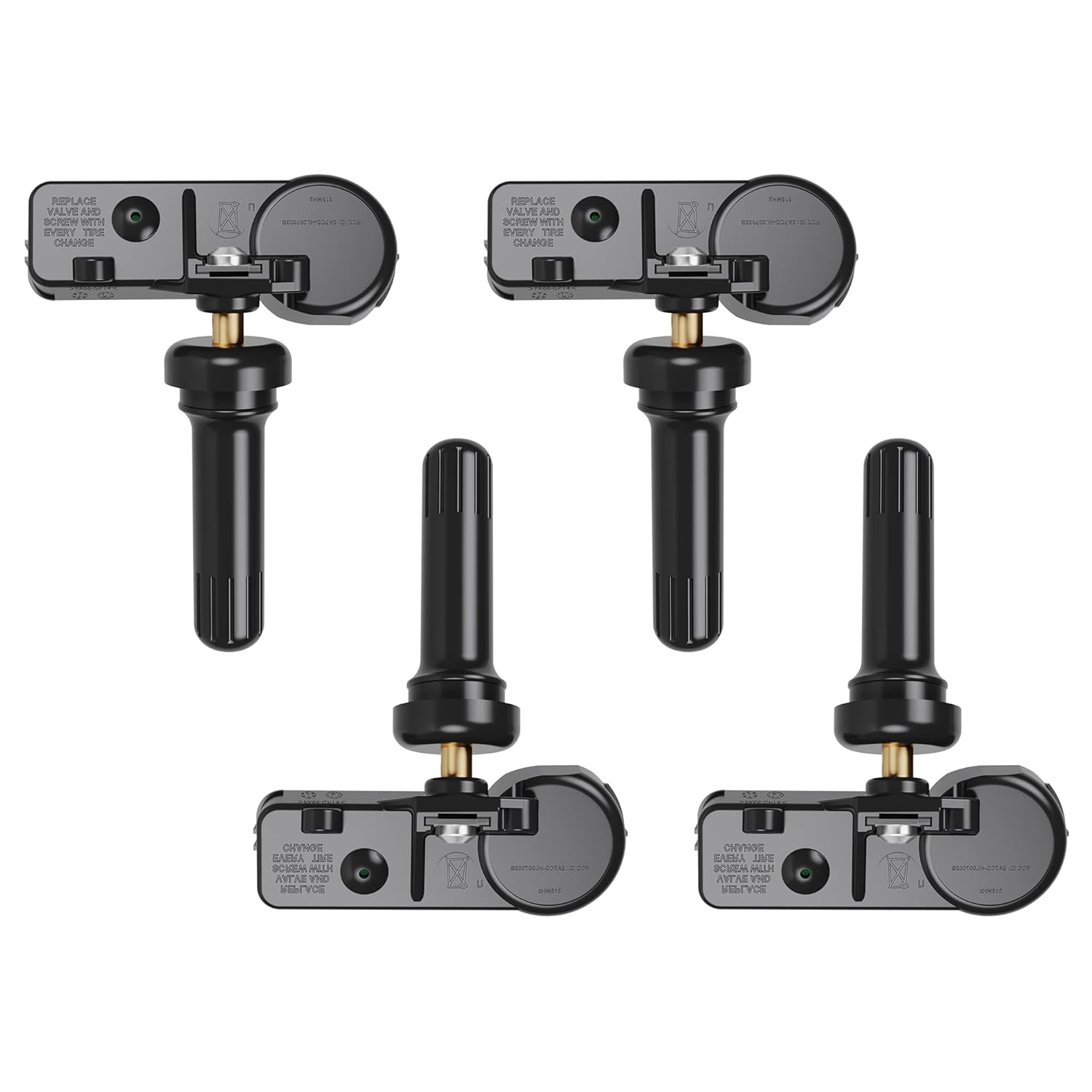
Replace worn or faulty TPMS sensors with this brand new 315MHz GM-compatible replacement set for select Chevy, GMC, Buick, Cadillac, and similar vehicles. These sensors are pre-programmed for your make/model/year and typically only require activation with a scan tool. Built for long service life with a high-temperature battery, they help maintain reliable tire pressure monitoring for safer driving.
What Happens If You Turn TPMS Off?
If TPMS is made inoperative, you lose some or all of its ability to alert you to significant pressure loss or system faults. You then have to depend more heavily on manual pressure checks and visual tire inspections.
Without working TPMS, a slow pressure loss can continue without the dashboard warning that would normally draw your attention to it.
Possible consequences include:
- A slowly leaking tire may go unnoticed longer.
- Underinflation can increase tire heat during extended driving.
- Low pressure can accelerate irregular or premature tire wear.
- The vehicle may store TPMS-related faults or keep a malfunction indicator illuminated.
You should still check tire pressures manually even with a functioning TPMS. Without one, those checks become even more important because there is no automatic backup warning for significant underinflation.
Is It Legal to Disable TPMS?
In the United States, the legal answer depends on who disables it and which state or local rules apply. Federal law does not support the broad claim that every private vehicle owner automatically violates federal law merely by personally making TPMS inoperative.
The federal “make inoperative” prohibition specifically applies to manufacturers, distributors, dealers, rental companies, and motor vehicle repair businesses. State laws, inspection requirements, contract terms, and other legal obligations may still matter.
Federal TPMS Rules
FMVSS No. 138 applies to passenger cars, multipurpose passenger vehicles, trucks, and buses with a gross vehicle weight rating of 10,000 pounds or less, except vehicles with dual wheels on an axle. The federal phase-in culminated with covered vehicles manufactured on or after September 1, 2007.
NHTSA also explains that passenger cars, light trucks, and vans from model year 2008 onward are required to come equipped with TPMS.
The federal service-provider rule is especially important. In a 2011 TPMS interpretation, NHTSA said a repair business would violate the federal make-inoperative prohibition if it replaced a functioning TPMS-equipped wheel-and-tire setup with assemblies that lacked functioning TPMS and thereby knowingly made the system inoperative.
NHTSA also stated that a repair business could not disable another part of the system, such as its malfunction indicator, merely because a customer did not want a failed sensor repaired.
State Inspection Laws
State inspection treatment is not uniform. A TPMS warning does not automatically mean every U.S. state will reject the vehicle, and online lists claiming that particular states universally require working TPMS can become outdated or inaccurate.
A NHTSA tire-related research report found substantial differences among state practices and noted examples where TPMS warnings were advisory rather than automatic grounds for rejection.
| Checkpoint | What you need | Result |
|---|---|---|
| TPMS warning light | Check your current state safety-inspection rules | Pass/fail treatment varies by jurisdiction |
| Tires | Correct pressure and safe tire condition | May be inspected separately from TPMS |
| Emissions OBD | Emission-related MIL and readiness requirements | TPMS is not an emissions-readiness monitor |
TPMS should also not be confused with an emissions OBD inspection. EPA inspection-and-maintenance guidance focuses OBD emissions testing on emission-related malfunction indicators, diagnostic information, and readiness monitors. A state may separately operate a vehicle safety inspection with different rules.
Disabling Legal Risks
For a repair shop, dealer, rental company, manufacturer, or distributor, knowingly making federally required TPMS inoperative can create a federal compliance issue. For a private owner, state and local rules still need to be considered.
Modification may also complicate later service, resale discussions, or warranty claims if the altered system is related to the problem being repaired. Those consequences depend on the facts and applicable terms rather than occurring automatically in every case.
Note: This section summarizes U.S. federal rules, not legal advice. State and local requirements can differ, so check the current rules where the vehicle is registered before modifying a required safety system.
How Do You Fix a TPMS Warning Light?
Start by determining whether the warning indicates low tire pressure or a system malfunction. Then work from the tires themselves toward the sensors and vehicle electronics.
Warning: If a tire is visibly flat, badly damaged, rapidly losing pressure, or causing unstable handling, stop in a safe location. Do not keep driving simply to see whether the TPMS light clears.
- Check the warning pattern. A solid low-pressure symbol usually points to underinflation. A warning that flashes for about a minute and then stays on usually points to a system malfunction.
- Inspect all tires. Look for obvious punctures, sidewall damage, bulges, embedded objects, or a visibly low tire.
- Measure pressure when cold. Use an accurate gauge and compare each reading with the recommended cold pressure on the driver’s door placard or tire-and-loading label.
- Correct low pressure. Inflate the tire to the vehicle manufacturer’s specified cold pressure. Do not use the maximum pressure molded into the tire sidewall as the normal vehicle setting.
- Watch for repeated pressure loss. If the same tire becomes low again, have it checked for a puncture, valve leak, bead leak, wheel problem, or other cause.
- Allow the system to update. Some vehicles clear the warning automatically after correct pressure is restored and the vehicle is driven. Others require a manufacturer-specific reset or calibration procedure.
- Check recent tire or wheel work. If the fault began after installing, rotating, or replacing wheels or sensors, confirm compatibility and whether the vehicle requires sensor registration or relearning.
- Diagnose a persistent malfunction. If pressure is correct but the malfunction warning remains, use a TPMS-capable diagnostic tool or have a qualified tire or automotive technician identify which sensor or component is not communicating.
Do not repeatedly reset the system without correcting the cause. A reset can establish a new reference on some indirect systems, but it does not repair a leak or revive a failed direct sensor.
[Products Worth Considering]

Replace your worn or missing TPMS sensors with pre-programmed, direct-fit sensors for compatible Ford, Lincoln, and select Mazda models. Each sensor comes ready to activate with a scan tool, helping restore accurate tire pressure monitoring and trouble-free installation. Built with a long-life CR2032 battery and tested before factory release, this set provides dependable performance with a one-year warranty.

Replace worn or malfunctioning GM TPMS sensors with this 433MHz pre-programmed sensor set designed for compatibility with many Chevrolet, Buick, GMC, and Cadillac models. It includes guidance for proper OBDII relearning/pairing after installation and supports reliable long-term operation with a high-performance CR2032 battery. Quality tested for durability and performance to help restore accurate tire pressure monitoring.
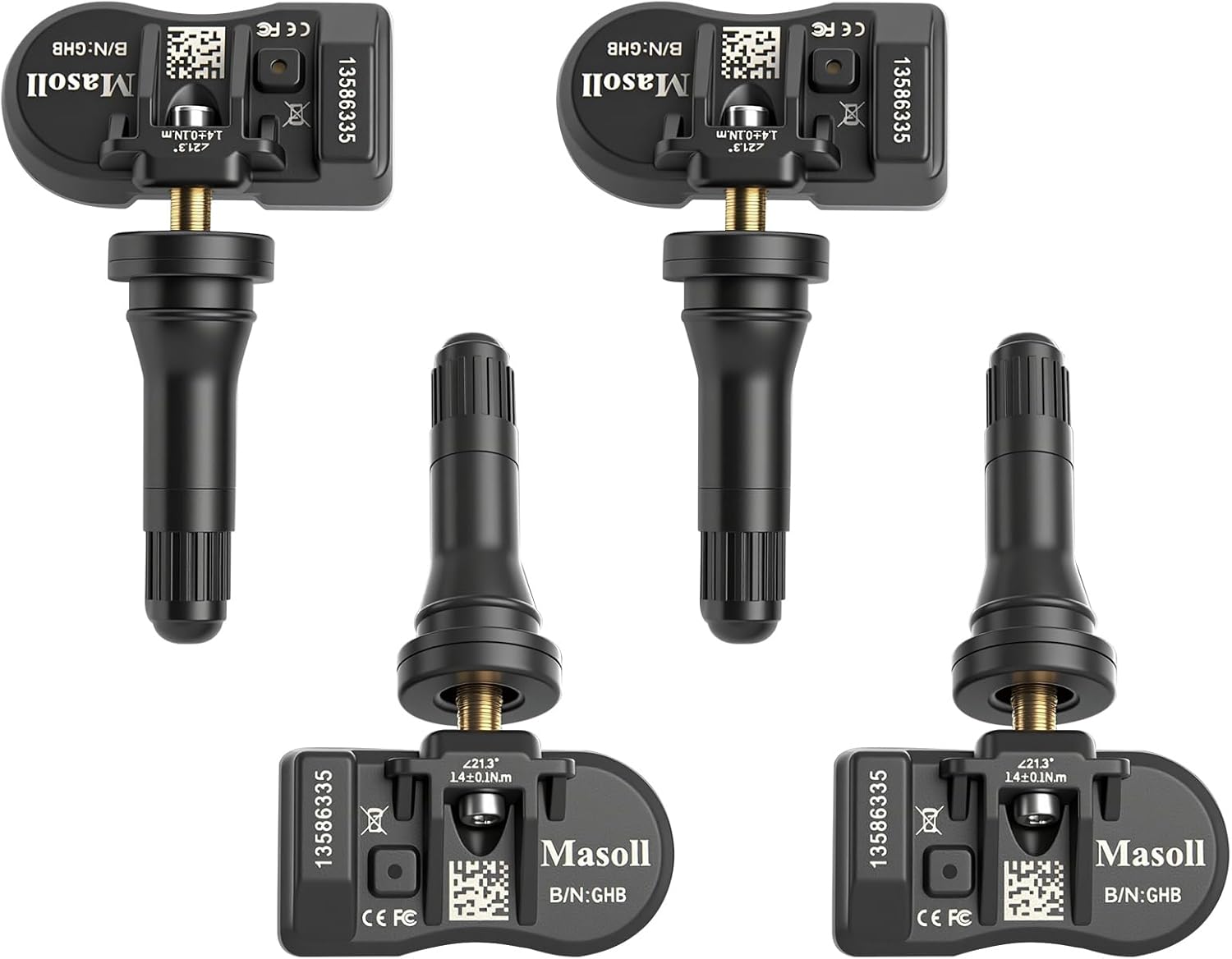
Masoll TPMS sensors are designed for most GM vehicles after 2006, helping you clear tire pressure warnings with OEM-level 315/433MHz compatibility. The 4-pack includes pre-programmed sensors, but re-learning is required after installation using a GM TPMS relearn tool or scan tool. Built with a dual-antenna design and a long-life CR2050 battery, these sensors deliver reliable performance in extreme temperatures with corrosion-resistant valve construction.
When Should You Replace a TPMS Sensor?
Replace a direct TPMS sensor when testing shows that its sealed battery is depleted, it no longer transmits correctly, or the sensor or valve hardware is damaged beyond service. You do not need to replace a working sensor simply because the TPMS light came on once.
According to REDI-Sensor battery guidance, direct TPMS sensors commonly have an operational life of about 5 to 10 years, depending on the sensor, vehicle use, and operating conditions. Their batteries are generally sealed and are not separately serviceable.
Common reasons for replacement include:
- The sensor no longer responds to a TPMS activation or diagnostic tool.
- Diagnostic testing identifies a depleted internal battery.
- The sensor housing or valve assembly is physically damaged.
- Corrosion prevents the sensor or valve hardware from sealing or functioning correctly.
When installing a replacement, use a sensor compatible with the vehicle’s required protocol and specifications. Depending on the vehicle, the new sensor may then need programming, registration, or a relearn procedure before the warning clears.
Replacing tires alone does not automatically mean every vehicle requires TPMS recalibration. If the same functioning sensors remain installed, no relearn may be necessary. Follow the vehicle manufacturer’s procedure rather than resetting the system by assumption.
[Products Worth Considering]

The Tymate TM2 RV tire pressure monitoring system keeps you informed with a color LCD display, automatic backlight, and solar charging for dependable operation. It supports up to 10 tire positions with four pre-paired sensors, while offering multiple alarm modes for fast leak detection, pressure extremes, temperature alerts, and low-signal warnings. Built-in monitoring uses accurate readings and reliable 433.92MHz communication to help protect your RV, trailer, truck, or SUV.

Autel MX TPMS sensors combine 315MHz and 433MHz in a single easy-to-install press-in design for faster tire service. They support wireless programming with strong signal performance, and the sensors are clone-able for streamlined replacement. Built for reliability and tested to SAE standards, each sensor includes a series number for quality control.

This TPMS sensor training and relearn reset tool is customized for Ford, Lincoln, and Mercury vehicles to help activate tire pressure programming after sensor replacement or tire rotation. It can activate individual tire pressure sensors with one-button operation, helping prevent TPMS warning light illumination. It is not a sensor programming tool and cannot program replacement sensors—use it to trigger/activate sensors only.
Frequently Asked Questions
How Long Do TPMS Sensors Usually Last?
Direct TPMS sensors commonly last about 5 to 10 years because their internal batteries are sealed and eventually run down. Actual life varies with sensor design, use, and temperature. Indirect TPMS does not use battery-powered pressure sensors in each wheel.
Can Cold Weather Trigger a TPMS Warning?
Yes. Cold weather can lower tire pressure enough to cross the warning threshold, especially if the tires were already marginally low. Check and adjust pressure when the tires are cold to the vehicle placard value rather than waiting for the light to go out as the tires warm.
Do All Vehicles Use Direct TPMS Systems?
No. Direct TPMS uses pressure sensors in the wheels, while indirect TPMS estimates underinflation using wheel-speed and other vehicle data. Your owner’s manual or service information can identify which system your vehicle uses.
Can Aftermarket Wheels Affect TPMS Readings?
Yes, if the wheels or sensors are incompatible with the vehicle’s TPMS. Missing sensors, wrong sensor protocols, or some wheel-and-tire combinations can trigger a malfunction. The replacement setup must allow the system to function as intended.
Will Replacing Tires Require TPMS Recalibration?
Not always. If the same working sensors stay with the vehicle, a simple tire replacement may not require a relearn. Relearning or calibration is more likely after sensor replacement, wheel changes, rotation on some models, or when the owner’s manual specifically calls for it.
Can a Car Pass Inspection With the TPMS Light On?
Maybe. TPMS inspection rules vary by state, and a TPMS warning is not automatically the same as an emissions OBD failure. Check the current rules for the state where the vehicle is registered before assuming the light will pass or fail.
Conclusion
You may be able to disable tire pressure sensors or otherwise make TPMS inactive, but repairing the actual pressure or system fault is the better approach. A working TPMS gives you warning coverage that manual checks alone cannot provide while you are driving.
I once saw a car come in with one tire 18 psi low; the driver had no idea until the tread was damaged. Whether the problem is low pressure, a failed sensor, incompatible wheels, or a relearn issue, identify the cause and restore normal monitoring rather than hiding the warning.
Sources
- Electronic Code of Federal Regulations, 49 CFR 571.138: Federal TPMS application, warning threshold, malfunction indicator, and phase-in requirements.
- NHTSA TireWise: TPMS basics, model-year coverage, warning-light behavior, cold-pressure checks, and tire-maintenance guidance.
- NHTSA TPMS Interpretation 11-003978: Application of the federal make-inoperative prohibition to TPMS service and replacement-wheel scenarios.
- NHTSA Tire-Related Surveys: Results and Implications: Research on state TPMS inspection requirements and differences among state practices.
- U.S. EPA Vehicle Emissions Inspection and Maintenance Guidance: Emissions-related OBD inspection and readiness-monitor requirements.
- REDI-Sensor TPMS Battery Guidance: Typical direct-sensor battery life and sealed-battery replacement information.

