
How to Jack Up a Toyota 4Runner Safely for Tire Work

To safely jack up your Toyota 4Runner for tire work, start by using a floor jack and jack stands rated for the vehicle’s weight. Confirm you’re on level ground and engage the parking brake. Lift the vehicle at designated jack points—front skid plate and rear differential—placing jack stands underneath for stability. Always chock the opposite tires. Use a calibrated torque wrench to tighten lug nuts to 83 ft-lbs in a crisscross pattern. Discover more essential tips to keep your process safe and efficient.
Essential Tools and Safety Preparations for Jacking Up Your 4Runner
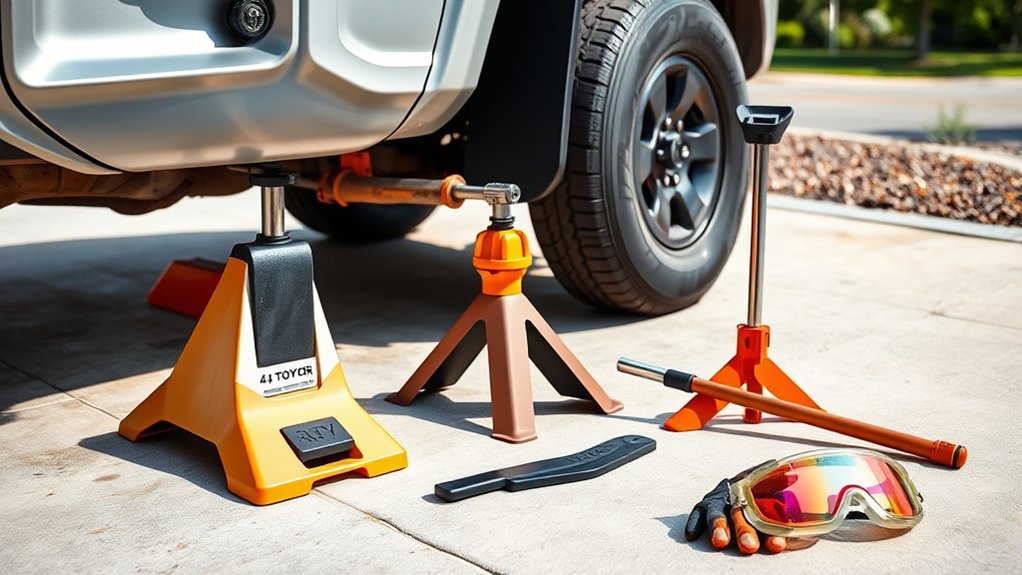
When you’re ready to jack up your Toyota 4Runner, it’s essential to gather the right tools and confirm safety preparations are in place. Start by using a floor jack and jack stands rated for your vehicle’s weight; avoid emergency bottle jacks since they’re less stable. Familiarize yourself with the designated jack points located on the front crossmember and beside the rear differential. Make sure your 4Runner is on firm, level ground and use wheel chocks on the opposite tires to prevent rolling.
Before lifting, inspect all jacking equipment for wear or damage. Check that the jack stands are stable and can securely support the vehicle’s weight. When lifting, employ proper lifting techniques to maintain control and safety. Once elevated, lower the vehicle slowly onto the jack stands, monitoring their position to ensure even weight distribution and prevent any shifting. This careful approach will help you work confidently on your 4Runner.
Choose the Right Jacking Points on Your 4Runner
Selecting the correct jacking points on your Toyota 4Runner is essential for a safe and stable lift. Proper jack point identification guarantees you can perform lifting techniques effectively without risking damage or imbalance. Follow these steps:
Selecting the right jacking points on your Toyota 4Runner ensures a safe lift and prevents damage or imbalance.
- Front Jack Point: Use the reinforced circular area of the front skid plate to lift both front wheels simultaneously. Center the jack to maintain balance.
- Rear Jack Point: Position the jack at either side of the rear differential pumpkin to lift both rear wheels safely.
- Inspect Jack Points: Check for structural integrity, avoiding areas near the oil drain bolt to prevent damage.
- Marking Jack Points: Consider marking jack points with paint for quicker identification, especially if you’re unfamiliar with your vehicle’s layout.
Always refer to the Factory Service Manual for precise diagrams and instructions specific to your 4Runner model.
Secure the Vehicle With Jack Stands for Stability
Securing your Toyota 4Runner with jack stands is important for safety and stability during any maintenance work. After lifting, immediately place the jack stands on firm, level ground, ideally near the designated jack points on either side of the rear differential or front crossmember. Make certain that you choose proper jack stand placement to handle your vehicle’s weight; a minimum of 3 tons is recommended for the rear and 6 tons for the front.
Before starting any work under the vehicle, double-check the stands’ positioning to confirm they’re secure and not tilting. This step is essential to prevent any accidental collapse. Regularly inspect your jack stands for wear or damage, as maintaining their reliability is critical for your safety. By following these guidelines, you enhance not only your safety but also your confidence while performing tire work on your 4Runner.
Chocking Your Tires: The Right Way
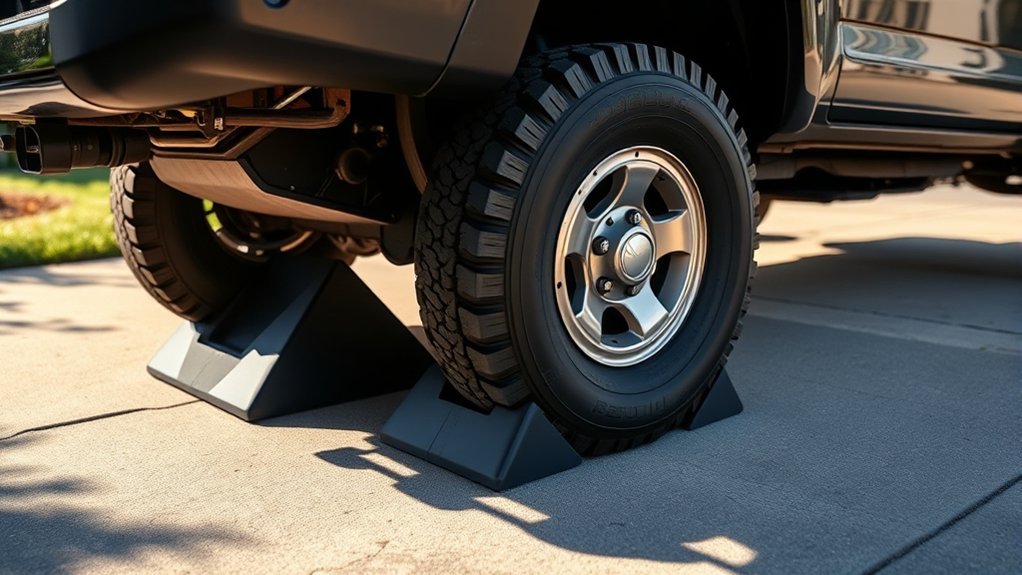
Chocking your tires is an essential step in preventing roll-off while working on your Toyota 4Runner. Proper tire safety guarantees you can focus on the task without worry. Follow these steps for effective chocking:
Chocking your tires is crucial for safety, ensuring stability while you work on your Toyota 4Runner.
- Position the chocks: Always chock the tires on the opposite side of the vehicle being lifted. For instance, if you lift the front left tire, chock the rear right tire.
- Secure placement: Confirm the chocks fit snugly against the tires for maximum stability before lifting the vehicle.
- Choose durable materials: Use wheel chocks made from rubber or heavy-duty plastic to effectively prevent movement.
- Conduct stability checks: Before lifting, check the chocks for wear or damage to ensure they’ll secure the vehicle properly.
How to Lower Your Spare Tire
When you need to lower your spare tire, start by locating the access panel in the rear cargo area; this panel provides access to the lowering screw. Assemble the jack handle extension and securely insert it into the lowering screw. To initiate the lowering process, rotate the screw counterclockwise. Keep turning until the spare tire is fully lowered to the ground.
Once it’s down, carefully detach the holding bracket from the center hub to free the tire for use. This method guarantees effective spare tire maintenance, allowing for quick access when needed.
After using the spare, remember to crank the flat tire back up, securing it in place with the bracket. Properly following these lowering techniques will not only keep your spare tire ready for action but also maintain the integrity of your 4Runner’s tire system.
Safety Tips for Jacking Up Your Toyota 4Runner
Before you start jacking up your Toyota 4Runner, inspect all equipment carefully to confirm everything is in good condition. Position the jack securely at the designated jack points, making sure it’s on firm, level ground. This will help prevent accidents and guarantee your safety while you work.
Equipment Inspection Essentials
Inspecting your equipment is essential for safely jacking up your Toyota 4Runner. Proper jack maintenance and adherence to weight ratings can prevent accidents. Follow these steps:
- Inspect the Jack and Stands: Check for wear, damage, and guarantee they meet the weight ratings necessary for your 4Runner.
- Examine Jack Points: Confirm that the jack points on your vehicle are structurally sound and free from rust or debris.
- Test Jack Operation: Ensure your jack lifts smoothly to the required height without excessive effort.
- Verify Jack Stands: After placement, make sure the jack stands are stable and double-check their positioning before going under the vehicle.
Proper Jack Placement
Ensuring proper jack placement is essential for safely lifting your Toyota 4Runner, as improper techniques can lead to accidents or damage. Always use a floor jack at designated jack points: the front jack point is on the front crossmember, while the rear jack points are on either side of the rear differential for maximum jack stability. Center the jack on each point to maintain jack alignment; slight adjustments might be necessary for precision. After lifting, immediately place jack stands for added safety, since the stock jack isn’t reliable for maintenance. Additionally, use wheel chocks on the opposite side to prevent unintended movement. Finally, inspect jack points for structural integrity to avoid instability, particularly near the oil drain bolt area.
Torque Specs You Need for Lug Nut Installation
When installing lug nuts on your Toyota 4Runner, you need to use the recommended torque specification of 83 ft-lbs. Make sure to utilize a calibrated torque wrench for accurate tightening, as this prevents potential wheel detachment. After installation, re-torque the lug nuts within 100 miles to guarantee they stay secure.
Recommended Torque Values
For a Toyota 4Runner, the recommended torque specification for lug nut installation is 83 ft-lbs (112 Nm). For ideal torque accuracy and effective lug nut maintenance, follow these steps:
- Use a Reliable Torque Wrench: This prevents over-tightening, which can damage threads.
- Tighten in a Crisscross Pattern: This guarantees even pressure distribution across the wheel.
- Re-Torque After 100 Miles: After installation or rotation, check the torque to keep them secure.
- Consult Your Manual: Always verify specifications for your specific model year.
Impact Wrench Considerations
Using an impact wrench can greatly speed up the lug nut installation process, but you must choose one that delivers adequate torque. For most Toyota 4Runner models, aim for a minimum torque of 80-100 ft-lbs. Always consult your owner’s manual for specific torque settings, as they may vary by model year and trim. Remember to use an anti-seize lubricant on the threads to prevent corrosion and ease future removal. When tightening, follow a crisscross pattern to distribute pressure evenly and avoid warping.
| Impact Wrench Type | Recommended Torque (ft-lbs) |
|---|---|
| Electric | 80-100 |
| Pneumatic | 90-110 |
| Cordless Lithium-Ion | 80-100 |
| Torque Wrench (manual) | 80-100 |
| Impact Driver | 70-90 |
Re-Torque After Installation
After installing new lug nuts on your Toyota 4Runner, it’s crucial to re-torque them within 100 miles to ensure they stay securely fastened. Here’s how to guarantee you’re on point with re-torque frequency and lug nut importance:
- Use a torque wrench: Apply the manufacturer’s specified torque, typically around 83 ft-lbs for most models.
- Tighten in a crisscross pattern: This distributes pressure evenly and prevents warping.
- Check after 25-50 miles: This accounts for any settling or loosening.
- Regular inspections: Always inspect lug nut torque, especially after tire rotations or installations.
Following these steps keeps your wheels secure, enhancing your vehicle’s safety and performance.
Top Mistakes to Avoid While Jacking Up Your 4Runner

When jacking up your Toyota 4Runner, it’s crucial to avoid common mistakes that could lead to accidents or damage. First, never jack from the oil drain bolt area; this can damage engine components, resulting in costly repairs. Always use a floor jack instead of an emergency bottle jack to guarantee vehicle stability and safety during maintenance.
Make sure the jack is centered on the designated jack points, specifically the reinforced areas on the front skid plate and the rear differential; improper placement can lead to vehicle stability issues. After lifting, immediately place jack stands under the vehicle for proper support to minimize the risk of it rolling off the jack. Finally, familiarize yourself with your factory service manual‘s diagrams to confirm you’re lifting your 4Runner correctly and safely, avoiding common jacking errors that could compromise your safety.
Frequently Asked Questions
How to Raise a Toyota 4runner?
To raise your Toyota 4Runner, position the jack at designated points, guaranteeing stability. Follow safety tips: use jack stands, inspect jack points, and secure wheels with chocks. This guarantees a safe, effective lifting process.
Conclusion
By following these steps, you can safely jack up your Toyota 4Runner for tire work. Remember, properly securing your vehicle is essential. For instance, a DIY enthusiast once neglected to use jack stands, leading to a near miss when the vehicle slipped. Always prioritize safety and double-check your setup before starting any work. With the right tools and precautions, you’ll guarantee a smooth and secure tire change every time.

Related Articles

Can You Drive on a Plugged Tire Long Term Safely
Never trust a plugged tire forever—here's the hidden danger that could blow out without warning.
Read More
How to Plug a Tire on a 4Runner in an Emergency
Learn the essential steps to plug a tire on your 4Runner in an emergency and discover tips that could save you in unexpected situations.
Read More
How Long Does a Tire Patch Last on a 4Runner Tire
Just how long can a vulcanized patch survive on your 4Runner's tire before hidden dangers emerge?
Read More