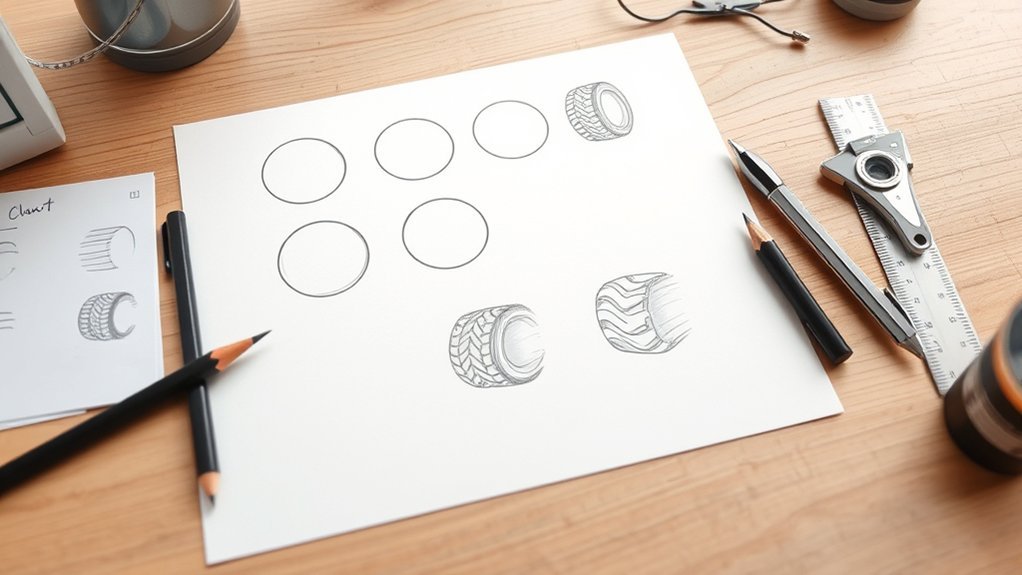
Learning how to draw a tire is easier when you treat it as a simple cylinder first, then build the rim, tread, grooves, and shading on top. Start light, check the symmetry often, and save the darkest lines for the final pass so the tire stays round, clean, and realistic.
Quick Answer
To draw a tire, sketch two matching ellipses for the outer and inner edges, connect them into a short cylinder, add a centered rim, then build curved tread lines around the outside. Finish with zigzag grooves, thicker outer line art, gray shading, black inner shadows, and small highlights.
Key Takeaways
- Use two smooth ellipses to build the tire’s outer edge and inner opening.
- Keep the rim centered so the whole wheel looks balanced.
- Follow the tire’s curve when adding tread lines, grooves, and sidewall details.
- Real tire tread includes raised blocks, ribs, grooves, and small cuts called sipes, so vary the pattern without making it messy.
- Shade the inner opening darkest, the lower rubber slightly darker, and the top curve lighter for a rounded look.
At a Glance
| Time Required | 15–25 minutes |
| Difficulty | Beginner |
| Tools Needed | Pencil, eraser, paper, ruler, compass or circle template, black pen, gray pencil or marker |
| Cost | Free if you already have basic drawing supplies |
Gather Your Drawing Supplies
You can draw a tire with only a pencil and paper, but a few simple tools make the shape cleaner. Use a ruler for guide marks, a compass or round template for the rim, and an eraser so you can adjust the ellipses before darkening the final line art.
- Pencil: Start with light sketch lines.
- Eraser: Clean up construction lines after the tire shape is correct.
- Compass or circle template: Helps keep the rim centered.
- Black pen or darker pencil: Use this for the final outline.
- Gray pencil or marker: Adds rubber texture, shadows, and highlights.
Warning: Do not press hard at the beginning. Heavy construction lines make the tire harder to correct, especially if the outer oval or rim is slightly off-center.
[Products Worth Considering]

Measure tire tread depth quickly and accurately with this LUMITECO dial gauge that reads in 1/32" increments up to 14/32". The color-coded green/yellow/red zones make it easy to judge tire wear and know when replacement is needed. A rugged, compact design with a protective pouch helps keep the gauge ready for use on cars, trucks, motorcycles, and more.

The 22800 wheel stud installer makes replacing wheel studs quick and secure, saving time and effort during tire service. It uses a ratchet or impact wrench to pull new studs firmly into place, helping when existing studs are too long. Compatible with most automotive wheels and light-duty truck wheel studs, it’s designed for easy, tool-assisted installation.

Accurately measure tire tread depth with a calibrated gauge marked from 0 to 1 inch in 1/32 inch increments. The color-coded bar helps you quickly identify tread condition ranges, supporting safe driving for trucks, motorcycles, automobiles, and passenger vehicles.
Draw the Tire Sidewall
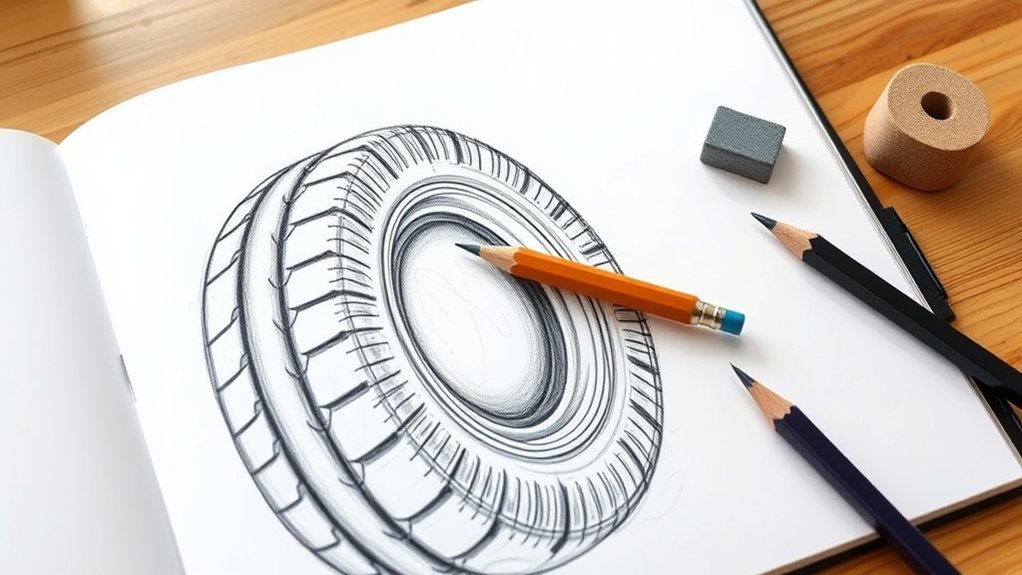
Start the sidewall by sketching two proportionate ellipses for the tire’s outer and inner edges. A tire viewed from an angle should look like a rounded cylinder, so the shapes should be oval, not perfect circles. Keep both ellipses smooth and symmetrical so the tire feels realistic.
Connect the outer curves with gentle side lines to form the tire’s thickness. Keep your hand light so you can adjust the shape until the sidewall looks balanced. Add a small curved line along the inner edge to show depth and separate the front face from the back edge.
Pro Tip: Draw a faint center line through the tire before adding the rim. If the rim, hub, and tread pattern all line up with that center line, the wheel will look much more believable.
Add the Inner Rim
Draw a smaller circle or ellipse inside the tire outline to create the inner rim. Keep it centered inside the tire opening. If the rim sits too high, low, or far to one side, the whole tire will look tilted by accident.
Draw the Inner Circle
Use a compass, template, or careful freehand line to draw the inner rim. Match the shape to the angle of the tire. If the tire is shown straight on, the rim can be close to a circle. If the tire is angled, the rim should become an ellipse that follows the same tilt as the tire opening.
Add Rim Depth
Add depth to the rim by drawing a second, smaller ring inside the first one. This inner ring creates a lip and helps the wheel feel solid. Then sketch simple spokes from the center outward. Keep the spokes evenly spaced so the rim design looks intentional instead of crowded.
Refine the Rim Shape
Clean up the rim with smooth, confident lines. Add a small hub in the center, then place simple bolt marks around it if your tire drawing needs more detail. Keep the rim design simple for a beginner sketch, or add sharper spokes if you want a sportier wheel.
Sketch Even Tire Treads
First, mark evenly spaced points around the tire so your tread pattern stays balanced. Real tires use tread features such as blocks, ribs, grooves, and sipes to manage grip and water movement, so a few well-placed details will make your drawing feel more authentic.
Mark Even Tread Spacing
Lightly sketch guide marks along the outer surface of the tire. Space them evenly, but do not make them too close together. A common beginner mistake is adding so many tread lines that the tire turns into a dark stripe. Leave enough space for each groove to be readable.
Repeat Curved Tread Lines
With the spacing marked out, sketch curved tread lines that follow the tire’s circumference. Use light pencil strokes first. Let each line bend with the tire’s form instead of drawing straight vertical marks. This keeps the rubber surface looking round.
Balance Tread Pattern Shape
Build the tread pattern with repeated curved segments. Keep the main spacing consistent, then vary small details to avoid a stiff copy-and-paste look. For example, you can alternate short diagonal grooves with longer center grooves, or add tiny siping marks inside larger tread blocks.
Add Grooves and Depth

Now add grooves by drawing evenly spaced zigzag lines along the outer side of the tire. Keep the spacing consistent so the tread feels real and balanced. As you work, vary the groove depth slightly so the tire does not look flat.
Use curved lines where the tread wraps around the tire. Place each groove with care so the pattern supports the tire’s shape instead of crowding it. Then shade inside the deeper cuts to push those areas back and make the raised tread blocks stand out.
Note: A drawing does not need every real tread detail. Choose a clear pattern that suggests blocks, grooves, and sipes, then repeat it neatly around the tire.
Refine the Tire Line Art
Carefully refine the tire’s outline so the curves stay smooth and symmetrical. This is the stage where the sketch begins to look finished. Thicken the outer edge slightly, keep inner details lighter, and erase extra construction marks.
- Trace the outer edge with steady pressure to unify the silhouette.
- Tighten the sidewalls and tread details with crisp, controlled marks.
- Shape the rim, spokes, and hub with defined edges.
- Use heavier line weight on the outer tire and lighter line weight inside the rim.
- Step back and compare the left and right sides before coloring.
[Products Worth Considering]

This metal-free wheel and tire cleaning brush uses dense, fluffy synthetic wool to safely clean rims, spokes, fenders, and engine areas without worrying about damaging surfaces. Its flexible, comfortable design helps you reach detailed areas while maintaining durability, and the extra absorbent fibers work well with wheel spray cleaners for faster cleanup. Reusable and washable performance helps prevent grime and build-up for cleaner vehicles and easier maintenance at home.

Clean wheels and rims with soft feathered bristles that safely remove dirt and road grime while helping restore original luster. The short non-slip handle makes it easy to scrub in tight wheel wells, and the brush is suitable for vehicles and hard-to-reach areas. It can also be soaked and rubbed to help restore bristles to their shape after use.
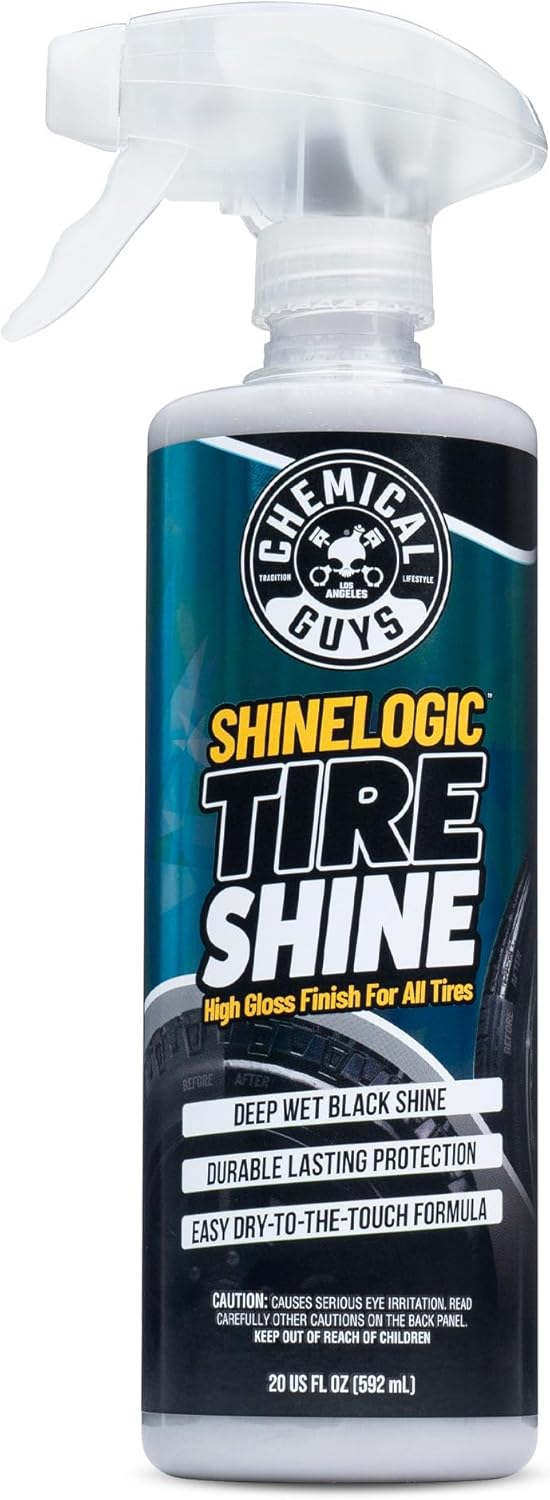
Chemical Guys ShineLogic Tire Shine delivers a deep wet black, high-shine finish for rubber tires with a sleek look. It’s designed for durable, one-step application with minimal drips, streaks, or runs, and it helps produce effortless, long-lasting shine. Choose aerosol or trigger spray for easy use on cars, trucks, motorcycles, RVs, and more.
Color the Tire Drawing
With the line art cleaned up, bring the tire to life with color. Use shades of gray on the outer rubber, deep black inside the tire opening, and light gray highlights on the upper curve. This contrast makes the tire look round instead of flat.
| Area | Color | Effect |
|---|---|---|
| Outer edge | Medium gray | Soft rubber texture |
| Inner opening | Black | Deep shadow |
| Top curve | Light gray | Bright reflection |
| Lower arc | Dark gray | Weight and depth |
| Surface marks | Gray-black | Wear and texture |
For extra realism, add a few small highlights with white or pale gray where light would hit the rubber. Then add tiny wear lines, dust marks, or small chips along the tread. Keep these details subtle so they support the drawing instead of overpowering it.
Common Tire Drawing Mistakes and Easy Fixes
If your tire drawing looks wrong, the problem is usually the basic shape, not the details. Check the large forms first before redrawing the tread.
- The tire looks flat: Add darker shading inside the inner opening and under the lower arc.
- The rim looks off-center: Redraw a faint center line and align the hub, rim, and inner ring to it.
- The tread looks messy: Erase every other groove and rebuild the spacing more slowly.
- The tire looks like a coin: Thicken the sidewall and add a back edge so it reads as a cylinder.
- The outline looks shaky: Turn the paper as you draw so your hand can follow the curve naturally.
A realistic tire drawing starts with one strong idea: make the tire read as a rounded cylinder before adding tread, rim details, or texture.
[Products Worth Considering]

Monitor tire tread wear with a smart, color-coded depth gauge that shows clear condition ranges at a glance. The bar is range marked for fast, easy readings, helping you maintain safer traction and performance. Each gauge is portable with a pocket clip, and the set includes 20 units for daily use and sharing.

Rubber Care delivers a beautiful dark black satin/matte finish on tires and other rubber or plastic surfaces, drying to the touch without oily shine. Its ceramic aircraft-grade formula helps repel dirt and brake dust residue, keeping surfaces cleaner longer. Triple nano ceramic polymer technology provides best-in-industry UV protection, restoring and protecting rubber while also working on weather stripping and de-ice boot care.

Slip the Powerbuilt tire step over your vehicle’s tire to reach roof racks, engine bays, truck boxes, and more without overreaching. Its adjustable, universal design fits tires with a cross tread width up to 13 inches, including car, truck, RV, and semi tires. The non-slip cheesegrater surface and anti-slip tape provide secure grip while the open design lets mud and debris pass through. Fold-flat storage with rubber bumpers helps keep your tire and the step protected between uses.
Frequently Asked Questions
How do you draw a simple tire step by step for beginners?
Start with two matching ellipses, connect them to form the tire’s sidewall, add a smaller centered rim, then draw curved tread lines around the outside. Finish by darkening the outline, adding grooves, shading the inner opening black, and blending gray tones across the rubber.
What is the 4 8 8 method of drawing?
The 4 8 8 method is a simple practice structure: begin with 4 basic shapes, add 8 important details, then make 8 cleanup or refinement passes. For a tire, the basic shapes can be the outer ellipse, inner ellipse, rim, and hub. The details can include tread, grooves, spokes, bolts, shadows, highlights, sidewall marks, and texture.
How do you draw a tyre?
To draw a tyre, sketch two slightly arched ellipses, connect them into a thick cylinder, and place a smaller rim inside the opening. Add curved tread lines, zigzag grooves, and darker shading inside the tyre. Use gray tones on the rubber and lighter highlights along the top curve.
What is the 3% rule for tires?
The 3% rule for tires is a sizing guideline, not a drawing rule and not a tread-depth replacement rule. It generally means a replacement tire should stay within about 3% of the original tire’s overall diameter so speedometer accuracy, clearance, and vehicle systems are not thrown off. For tread wear, passenger tires are commonly considered worn out at 2/32 inch of remaining tread.
How can I make tire treads look realistic in a drawing?
Make the tread lines follow the tire’s curve, keep the spacing even, and add small breaks or diagonal cuts so the pattern does not look flat. Shade the grooves darker than the raised tread blocks. Real tire tread commonly includes blocks, ribs, grooves, and sipes, so suggest those features with a clean repeated pattern.
Conclusion
You’ve now built a solid tire drawing from the sidewall to the final color. Keep practicing, and you’ll notice your ellipses get cleaner, your rim stays more centered, and your tread spacing becomes easier to control. Focus on the big cylinder shape first, then add the rim, grooves, shadows, and highlights. With a few careful passes, a basic outline can turn into a realistic tire that looks sturdy and ready to roll.
Sources
- NHTSA TireWise — supports the note that tire design and tread design affect performance, handling, traction, and ride characteristics.
- Yokohama Tire: Tread Design — supports tread anatomy terms such as sipes, blocks, ribs, and grooves.
- U.S. Tire Manufacturers Association: Tire Care Essentials — supports the 2/32 inch worn-tread replacement guidance.
- Michelin: Treadwear Indicator Bars — supports the explanation of treadwear indicators at 2/32 inch.
- Tire Rack: Selecting the Right Tires — supports the corrected explanation of the 3% tire diameter guideline.