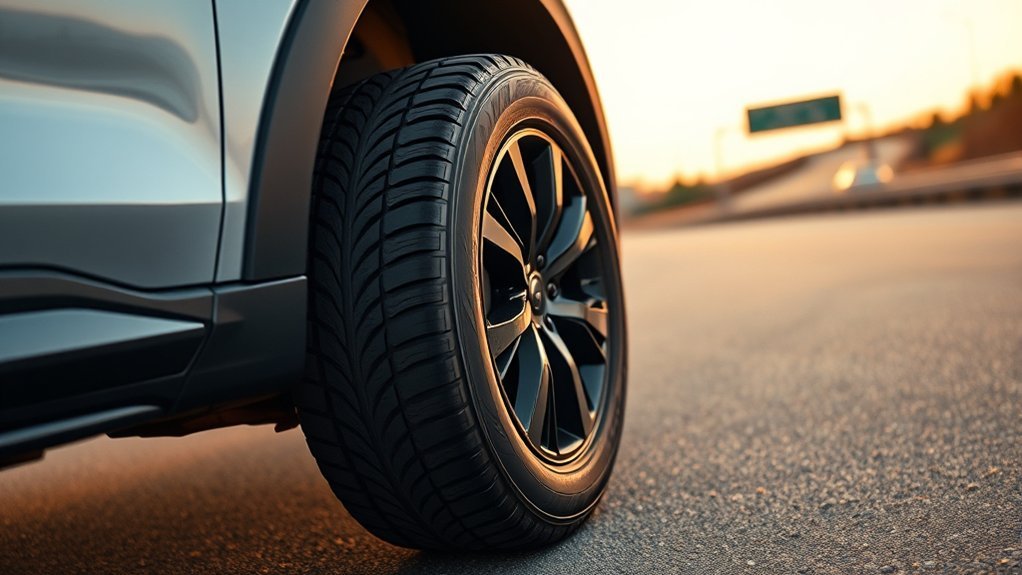
An HT tire, also written as H/T, is a highway-terrain tire made mainly for paved roads. It is the tire you choose when most of your driving happens on streets, highways, and maintained gravel roads, and you want a quieter ride, steady wet-road control, long tread life, and better efficiency than a more aggressive off-road tire usually provides.
Quick Answer
An HT tire is a highway-terrain tire designed for paved-road driving. It usually gives trucks, SUVs, and crossovers a smooth, quiet ride with dependable dry and wet traction, even tread wear, and good fuel efficiency. It can handle light snow or packed gravel, but it is not the best choice for deep mud, rocky trails, ice, or severe winter roads.
Key Takeaways
- HT means highway terrain, so the tire is built mainly for paved roads, commuting, and long highway trips.
- HT tires are usually quieter and more fuel-efficient than aggressive all-terrain tires because they use smoother tread patterns.
- They can work in rain and light snow, but severe winter driving is better served by tires with the three-peak mountain snowflake symbol or by dedicated winter tires.
- HT tires are not the same as LT tires. LT describes light-truck construction, while HT describes the tire’s road-use category.
- Always match tire size, load index, speed rating, and inflation pressure to your vehicle’s door placard or owner’s manual.
What Is an HT Tire?
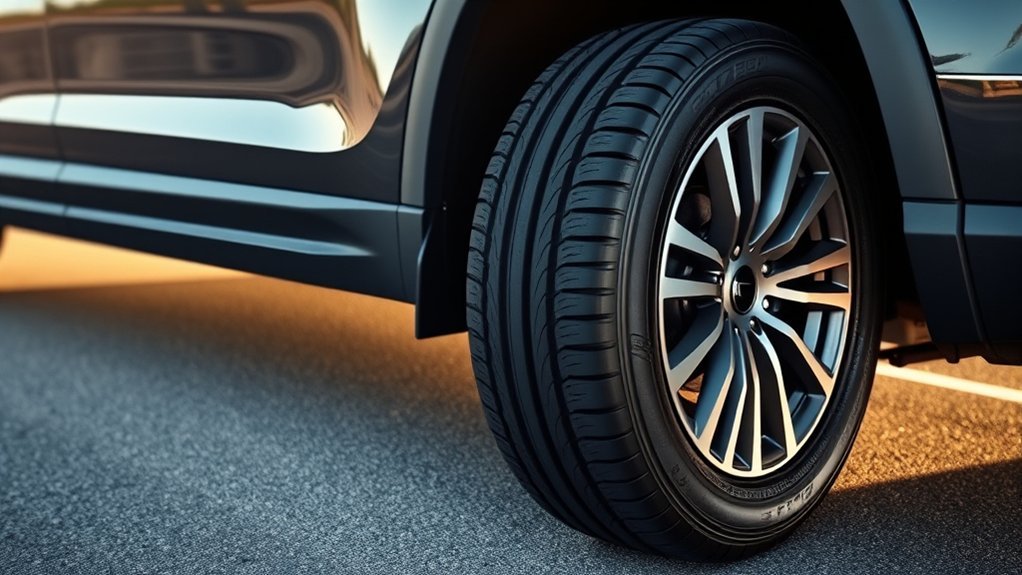
An HT tire is a highway-terrain tire. The “H/T” label describes the tire’s intended use: mostly highway, city, and other paved-road driving. Many tire retailers also group these tires under “highway all-season” because they are common on pickups, SUVs, crossovers, Jeeps, vans, and light trucks used mainly on the road.
Compared with an all-terrain tire, an HT tire usually has a less aggressive tread pattern, smaller voids between tread blocks, and more continuous contact with the road. That design helps reduce road noise, improve steering stability, support even tread wear, and lower rolling resistance. Lower rolling resistance can improve fuel economy because the tire wastes less energy as it rolls.
Most HT tires are made for daily driving, road trips, school runs, commuting, and towing on pavement. Some models include siping and grooves for rain and light snow; for example, tires with enhanced siping may improve biting edges in mixed weather. Still, an HT tire should not be treated like a mud-terrain tire, rock-crawling tire, or dedicated snow tire.
Note: “HT” describes the tire’s terrain category. “LT” describes light-truck construction. A tire can be both, such as an LT-metric highway-terrain tire for a heavier pickup or towing setup.
HT Tire Benefits for Daily Driving
HT tires make the most sense when your vehicle spends most of its life on pavement. Their strengths are comfort, predictable handling, tread life, and efficiency rather than maximum off-road bite.
Smooth, Quiet Ride
HT tires usually ride quieter than aggressive all-terrain tires because their tread blocks are closer together and less likely to slap the pavement. That matters on long highway drives, where tire hum can make a cabin feel louder and more tiring.
The smoother tread also helps the tire maintain steady contact with the road. You get more predictable steering, calmer lane changes, and better ride comfort over normal city and highway surfaces.
Long-Lasting Tread Life
Because HT tires are built for paved-road use, they often focus on even wear and long service life. A good HT tire can be a cost-conscious choice for commuters, families, and truck or SUV owners who do not need aggressive trail traction every week.
To get the most from the tread, rotate the tires on schedule, keep them inflated to the vehicle manufacturer’s recommended pressure, and check alignment if you notice uneven wear. Consistent wear with routine rotations can help an HT tire stay quieter and last longer.
Better Fuel Efficiency Potential
HT tires often use road-focused tread designs that can reduce rolling resistance compared with heavier, more open off-road tread patterns. According to the U.S. Department of Energy, a 10% reduction in rolling resistance can reduce fuel spending for typical vehicles by about 1% to 2%. That does not guarantee every HT tire will beat every AT tire on fuel economy, but it explains why smoother highway tires are often the efficiency-friendly choice.
HT tires are pavement specialists: quiet, stable, efficient, and comfortable, but not built for deep mud, sharp rocks, or severe winter roads.
HT Tire vs. AT Tire: Which Is Better?
HT tires are better if you drive mostly on pavement. AT tires are better if you regularly drive on dirt, gravel, job sites, muddy roads, hunting roads, forest roads, or rough rural routes. Neither tire type is automatically “best” for everyone; the better choice depends on where you drive most often.
| Tire Type | Best For | Main Trade-Off |
| HT / H/T | Highway driving, commuting, towing on pavement, quiet rides, wet and dry road control | Limited grip in deep mud, rocks, loose dirt, and severe winter conditions |
| AT / A/T | Mixed pavement and off-road use, gravel, dirt, light trails, rural roads | Usually more road noise, more weight, and lower efficiency than HT tires |
| LT | Heavier loads, towing, work trucks, some commercial or heavy-duty uses | Can ride firmer and cost more; must match the vehicle’s required load capacity |
| Winter / snow | Cold weather, packed snow, deep snow, and icy roads | Not ideal for warm-weather year-round driving unless it is an all-weather tire designed for that use |
[Products Worth Considering]

The SAFELIFE dial tire tread depth gauge measures tread depth in 1/32 inch increments with clear, easy-to-read 2-inch dial face. Color zones using a traffic light system help you quickly judge whether tread is low, marginal, or ample for safer driving. Built with a durable zinc cast body and a metal detect probe for precise, comfortable use across cars, motorcycles, trucks, and buses.

Keep your tires properly inflated with this analog VONDIOR tire pressure gauge, designed for fast, easy readings without batteries. The swiveling, two-axis hose and large glow dial help you measure at any tire angle with instant visibility. Built with a protective rubber shield, it supports durable, low-maintenance use for cars and trucks.
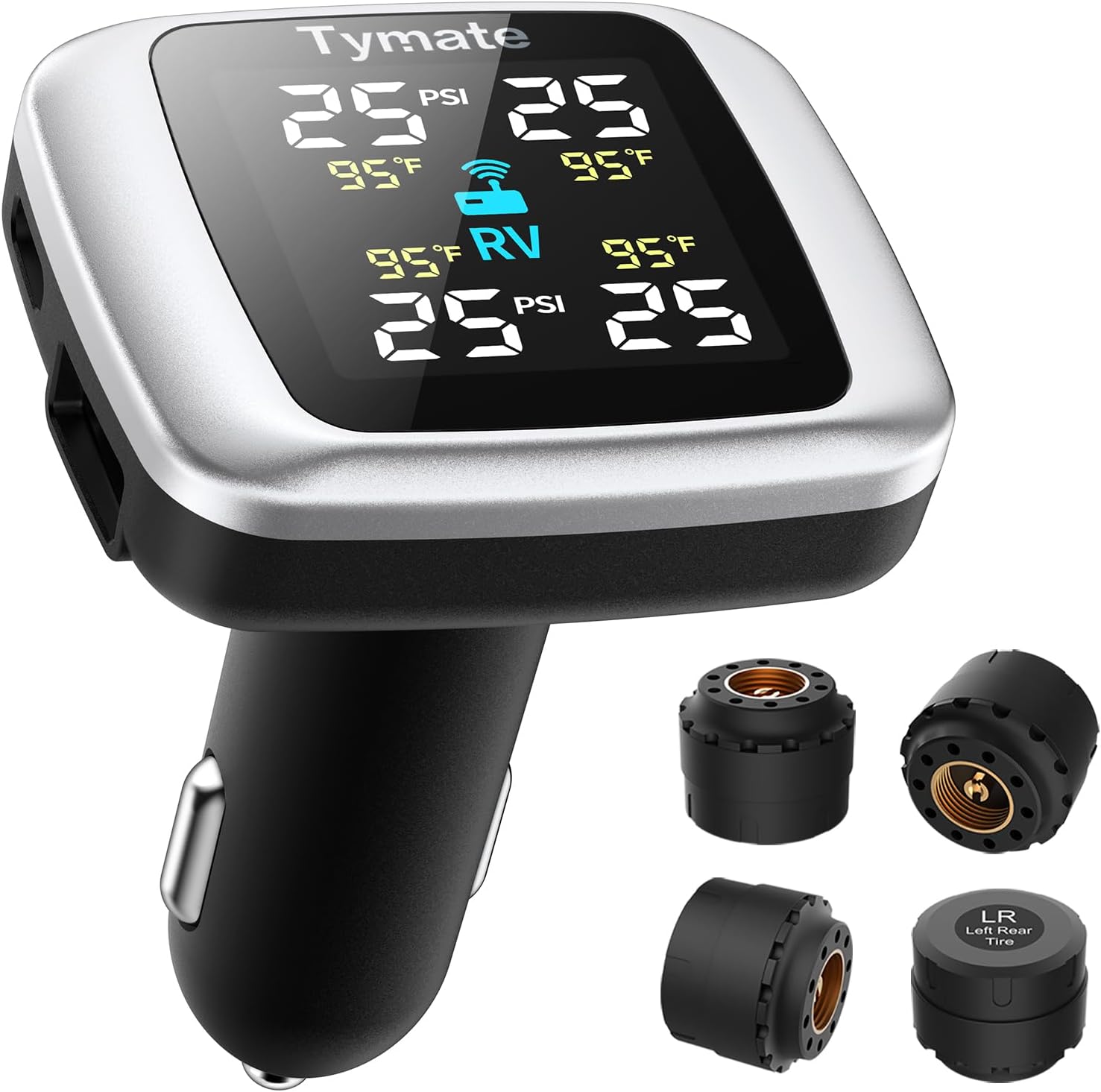
Tymate TM7 is a wireless tire pressure monitoring system that delivers real-time pressure and temperature readings for safer driving. It includes four external sensors, a bright color LCD display with adjustable backlight, and six alarm modes for high/low pressure, fast leakage, high temperature, and sensor signal or battery issues. The system covers a wide 0–144 PSI range and plugs into your vehicle’s cigarette lighter socket for quick DIY setup.
Highway Comfort and Efficiency
If you want a quiet cabin, stable steering, and better mileage potential, H/T tires usually win. Their shallower, road-focused tread pattern is made for highways, city streets, and long commutes. Many all-season tires follow the same comfort-first idea, especially for crossovers and SUVs that rarely leave pavement.
All-Terrain Versatility and Grip
A/T tires use deeper tread blocks, wider voids, and tougher shoulder designs to improve grip on loose or uneven ground. That helps on gravel, mud, grass, dirt, and mild trails. The trade-off is that A/T tires often create more road noise and may reduce fuel economy compared with a smoother H/T tire.
Choose A/T if you regularly leave pavement. Choose H/T if your “off-road” driving is mostly a gravel driveway, packed campground road, or occasional construction-site parking area.
How HT Tires Perform on Wet and Dry Roads
On dry pavement, HT tires are usually steady and predictable. They are designed to give good straight-line stability, controlled braking, and a composed feel at highway speeds. That is why many trucks and SUVs used for family travel, commuting, and towing come with highway-style tires from the factory.
In rain, the grooves and sipes in a good HT tire help move water away from the contact patch. This supports wet braking and helps reduce the risk of hydroplaning. Tires with effective water evacuation are especially useful if you drive through frequent spring storms or standing water.
Pro Tip: Do not judge wet traction by tread depth alone. Also compare UTQG traction grades, professional test results, and owner feedback for the exact tire model and size you plan to buy.
Are HT Tires Good in Snow?
HT tires can be good enough for light snow, cold rain, and occasional slush when the tire is an all-season model with suitable tread depth. They are not the best choice for deep snow, hard-packed snow, or ice.
Many HT tires carry an M+S marking, which means “mud and snow.” That marking does not make the tire a dedicated winter tire. For stronger snow capability, look for the three-peak mountain snowflake symbol. The U.S. Tire Manufacturers Association defines severe-snow-use tires by snow-grip performance criteria and the mountain/snowflake sidewall marking.
Warning: If you regularly drive on ice, steep snowy roads, or deep winter accumulation, do not rely on a basic HT tire just because it says M+S. Choose a 3PMSF-rated all-weather tire or a dedicated winter tire.
For drivers in mild climates, an HT tire can be a practical year-round option. For drivers in harsh winter areas, dedicated winter tires or severe-snow-rated all-weather tires provide safer braking, cornering, and acceleration when temperatures drop and snow builds up.
HT Tire Sizes, Load Ratings, and Fitment
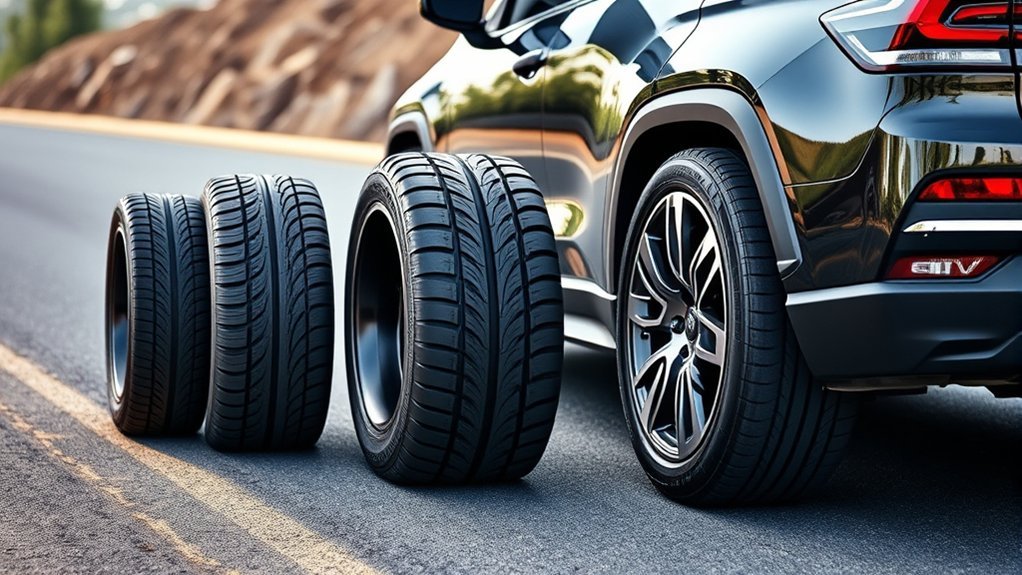
Fitment matters as much as tread design. Start with the tire size and inflation pressure listed on your vehicle’s driver-side door placard or in the owner’s manual. The National Highway Traffic Safety Administration recommends using the owner’s manual or Tire and Loading Information Label to find the correct tire size.
A size such as 265/70R17 tells you the tire width, aspect ratio, construction type, and wheel diameter. In simple terms:
- 265 is the tire width in millimeters.
- 70 is the aspect ratio, meaning sidewall height is 70% of the tire width.
- R means radial construction.
- 17 means the tire fits a 17-inch wheel.
Also check the load index and speed rating. The load index is a number showing the maximum weight the tire can carry when properly inflated. The speed rating is a letter showing the tire’s tested speed capability and related performance characteristics. For light trucks, you may also see load range letters such as C, D, or E, which indicate stronger construction and higher pressure capacity for heavier loads.
Do not replace a tire with one that has a lower required load capacity than your vehicle needs, especially if you tow, haul, carry tools, or drive a full-size SUV with passengers and cargo.
TPMS also matters. Federal rules require tire pressure monitoring systems on many passenger vehicles, light trucks, vans, and multipurpose passenger vehicles under 10,000 pounds GVWR, but TPMS is only a warning system. You should still check pressure monthly with a gauge because underinflation can hurt safety, tread life, and fuel economy.
A high UTQG rating can help you compare treadwear, traction, and temperature resistance, but it should not be your only buying factor. Match the tire to your vehicle, load, climate, and driving style.
[Products Worth Considering]

Monitor tire tread wear with a smart, color-coded depth gauge that shows clear condition ranges at a glance. The bar is range marked for fast, easy readings, helping you maintain safer traction and performance. Each gauge is portable with a pocket clip, and the set includes 20 units for daily use and sharing.
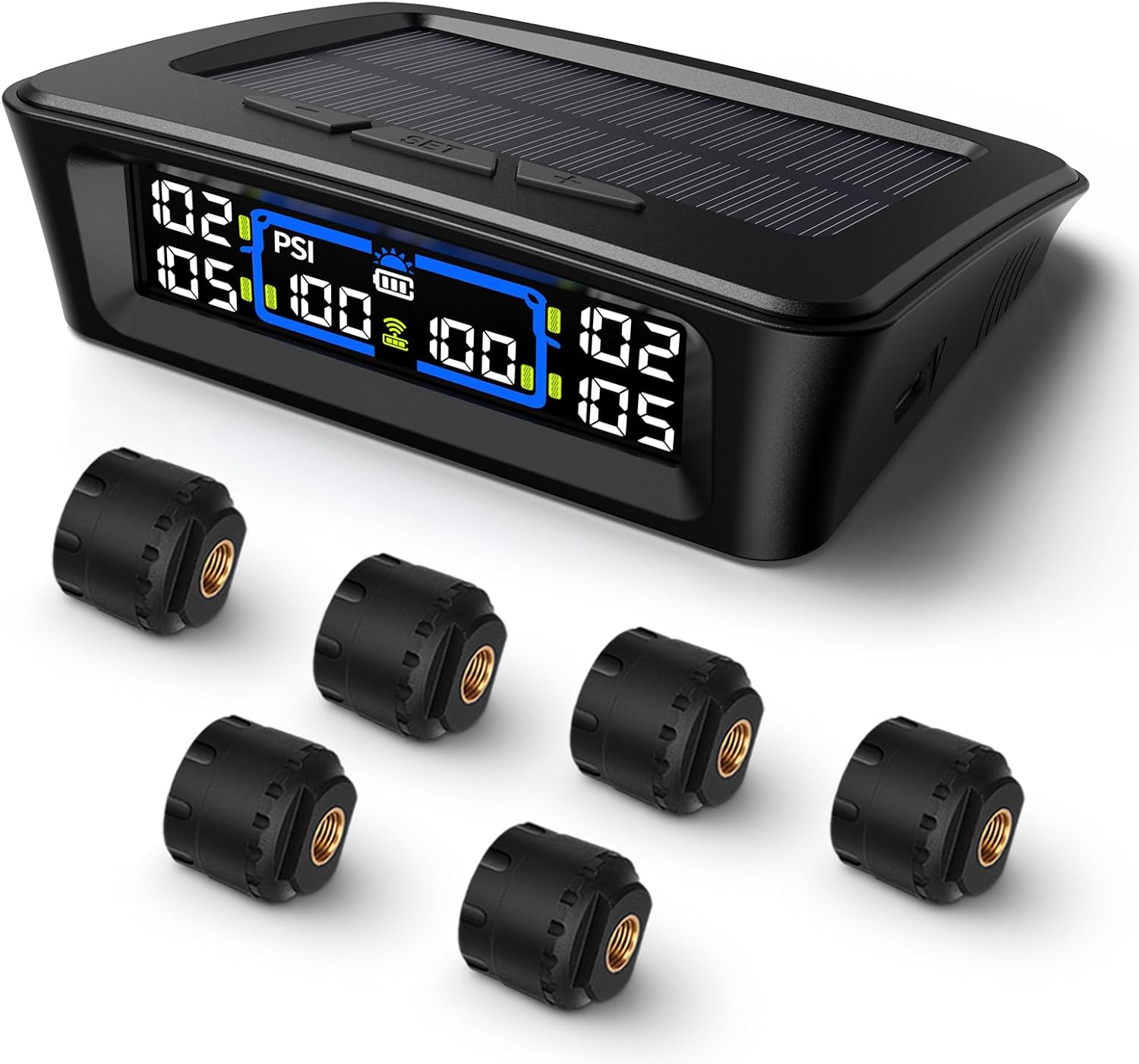
The Tymate TM12 RV TPMS delivers real-time tire pressure and temperature monitoring with a stable 433Hz display for safer long-distance driving. It supports simultaneous monitoring across vehicle and trailer zones, includes six alarm modes for pressure, temperature, leakage, battery, and signal loss, and features easy DIY installation with auto calibration. Power is supplied via USB-C charging or solar recharging, with a wide 0–144 PSI range and up to 50 ft signal coverage for RVs and towable trailers.

Vigorder rubber cement glue delivers superior adhesion and cures quickly within about 30 seconds for seamless rubber bonding. Once cured, it helps provide a strong, durable, waterproof seal that holds up to vehicle weight, pressure, and heat. Suitable for cars, motorcycles, trucks, bicycles, and off-road tires, it’s designed for emergency patch and maintenance repairs.
When an HT Tire Is the Better Choice
An HT tire is the better choice when comfort, tread life, and road manners matter more than trail grip. It fits drivers who want dependable performance without the extra noise and weight of a more aggressive tire.
- Choose HT tires if you drive mostly on highways, city streets, suburbs, or maintained rural roads.
- Choose HT tires if you want a quieter ride for commuting or family travel.
- Choose HT tires if you tow or haul mainly on pavement and the tire’s load rating matches your vehicle’s requirements.
- Choose HT tires if you only see light snow, rain, or occasional packed gravel.
- Avoid HT tires if you regularly drive in deep mud, loose sand, rocky trails, heavy snow, or icy mountain conditions.
Regular rotation is still important. Regular rotation helps prevent irregular wear, which can make even a quiet HT tire become noisy over time.
How to Choose the Right HT Tire
To choose the right HT tire, start with your vehicle’s required size and load capacity, then compare models by wet traction, ride comfort, tread life, snow rating, warranty, and price.
- Confirm the correct size. Use the door placard or owner’s manual, not guesswork.
- Match or exceed the required load index. This is especially important for trucks, SUVs, vans, and towing setups.
- Check the speed rating. Use a rating that meets your vehicle manufacturer’s requirement.
- Compare wet traction. Rain performance matters more for most drivers than mild off-road ability.
- Decide how much winter traction you need. Choose 3PMSF-rated tires or dedicated winter tires for serious snow.
- Read current test results and owner reviews. Compare noise, ride, treadwear, and braking for the exact tire model.
- Check TPMS and installation needs. Make sure sensors are serviced or relearned correctly after installation.
If you want a premium ride, reliable all-season manners, and low cabin noise, models in the highway all-season category are often the right place to start. Some drivers also compare premium touring options such as the Goodyear Assurance Finesse, especially on crossovers and SUVs that stay on pavement.
[Products Worth Considering]

The TYAMATE TM8 solar-powered wireless TPMS delivers real-time tire pressure and temperature monitoring with six alarm modes for safer driving. A vibrant color LCD display shows readings clearly while windshield mounting keeps it hands-free and easy to read. With a wide 0–87 PSI range, strong 433.92 MHz signal transmission, and quick sensor pairing, it’s ideal for RV, sedan, SUV, MPV, and truck use.

The 22800 wheel stud installer makes replacing wheel studs quick and secure, saving time and effort during tire service. It uses a ratchet or impact wrench to pull new studs firmly into place, helping when existing studs are too long. Compatible with most automotive wheels and light-duty truck wheel studs, it’s designed for easy, tool-assisted installation.

Measure tire tread depth quickly and accurately with this LUMITECO dial gauge that reads in 1/32" increments up to 14/32". The color-coded green/yellow/red zones make it easy to judge tire wear and know when replacement is needed. A rugged, compact design with a protective pouch helps keep the gauge ready for use on cars, trucks, motorcycles, and more.
HT Tire Maintenance Tips
Good maintenance makes an HT tire safer, quieter, and longer-lasting. NHTSA recommends checking tire pressure at least once a month when tires are cold, replacing tires when tread is worn to 2/32 inch, and following the vehicle manufacturer’s guidance for tire rotation.
- Check pressure monthly. Use the cold PSI listed on the door placard, not the maximum pressure printed on the tire sidewall.
- Inspect tread monthly. Replace tires at 2/32 inch minimum tread depth, or earlier if wet traction has declined.
- Rotate on schedule. Many vehicles use a 5,000- to 8,000-mile interval, but your owner’s manual is the final guide.
- Watch for age and damage. Cracks, bulges, cuts, vibration, or repeated pressure loss need professional inspection.
- Recheck after towing or hauling. Loads increase stress, heat, and pressure sensitivity.
Frequently Asked Questions
What’s the difference between LT and HT tires?
LT means light truck and describes tire construction for heavier loads, towing, or work use. HT means highway terrain and describes the tire’s intended driving surface. You can have an LT-metric HT tire, but the terms do not mean the same thing.
Are HT tires all-season?
Many HT tires are all-season tires, but not every HT tire performs the same in winter. Check the sidewall and product details. M+S can be acceptable for light snow, while the three-peak mountain snowflake symbol is the stronger sign of severe-snow capability.
Which is better, AT or HT tires?
HT tires are better for quiet highway driving, fuel-efficiency potential, and daily comfort. AT tires are better for gravel, dirt, light trails, and mixed surfaces. Choose based on where you actually drive most, not just how aggressive the tire looks.
Are HT tires good in snow?
HT tires can handle light snow if they have enough tread and the right all-season design. They are not ideal for ice, deep snow, or steep winter roads. For harsh winter driving, choose dedicated winter tires or tires with the three-peak mountain snowflake symbol.
Can I use HT tires for towing?
Yes, if the tire size, load index, load range, and inflation pressure match your vehicle and trailer setup. Never choose a lower load capacity than the manufacturer requires. For heavy towing, an LT-metric HT tire may be more appropriate than a P-metric HT tire.
Do HT tires last longer than AT tires?
They often can, especially on pavement, because HT tires are designed for even road wear. Actual tread life depends on the tire model, alignment, pressure, rotation schedule, load, climate, and driving habits.
Conclusion
An HT tire is the right tool when your truck, SUV, crossover, or van spends most of its time on pavement. It gives you the road-focused mix many drivers want: a quieter ride, stable handling, long tread life, wet and dry traction, and better efficiency potential than a more aggressive off-road tire. Choose an AT tire if you regularly leave pavement, choose a 3PMSF or winter tire for serious snow, and always match the tire’s size, load index, speed rating, and pressure to your vehicle’s requirements.
Sources
- NHTSA TireWise: Tire Safety Ratings and Awareness — supports tire sizing, UTQG, pressure checks, tread depth, rotation, tire type basics, TPMS maintenance guidance, and winter tire cautions.
- Tire Industry Association: Reading a Tire Sidewall — supports tire width, aspect ratio, rim diameter, load index, speed symbol, DOT/TIN, and UTQG explanations.
- eCFR 49 CFR § 571.138: Tire Pressure Monitoring Systems — supports TPMS warning-system requirements and underinflation-warning context.
- U.S. Department of Energy: Materials Approach to Fuel-Efficient Tires — supports the relationship between rolling resistance and fuel economy.
- U.S. Tire Manufacturers Association TISB 37 — supports severe-snow-use tire criteria and the three-peak mountain snowflake marking.
- Tire Rack: Highway All-Season Tires — supports highway all-season category traits such as smooth highway performance, dry/wet/light-snow capability, comfort, and tread life.